
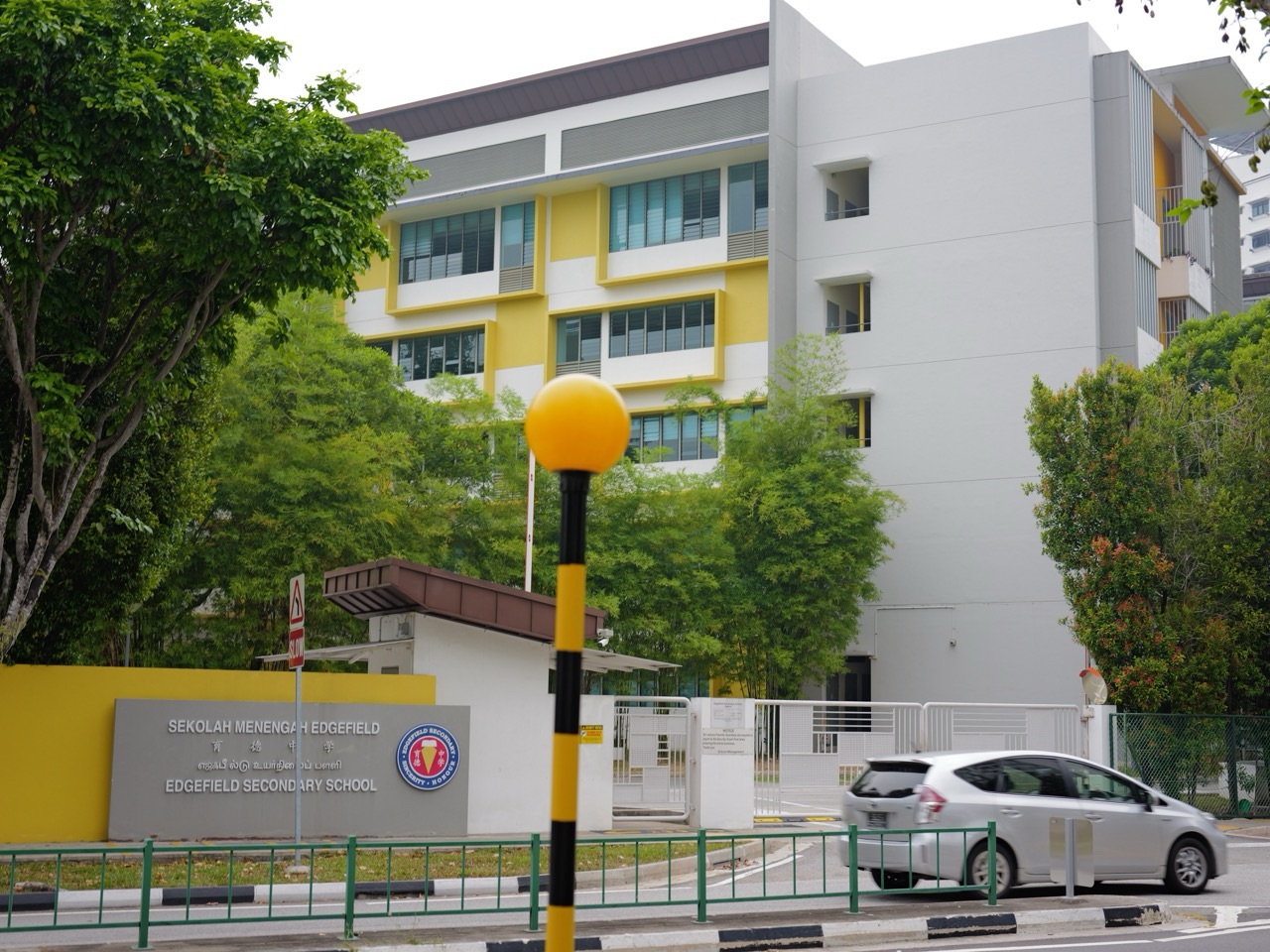
PG3 is Posting Group 3, an entry group used in Singapore’s Secondary 1 school posting under Full Subject-Based Banding. For a Punggol family considering local secondary schools, PG3 tells you the entry route and usually the starting level of most subjects, but it does not tell you which school will suit a particular child. School choice calls for a separate comparison of classroom experience, subject options, co-curricular activities (CCAs), travel, support and the pupil’s own interests.
The practical local shortlist may include Edgefield Secondary School, Greendale Secondary School, Punggol Secondary School and Yusof Ishak Secondary School, together with suitable schools in Sengkang, Pasir Ris or elsewhere. The right school is not automatically the closest, the one with the most attractive building or the one with the most competitive historical cut-off point. Check the actual admission-year Posting Group availability and MOE information, then ask whether the student can live and learn there well on an ordinary Tuesday.
- PG3 is the admission group; G3 is a subject level. Do not confuse the two.
- Check official admission-year eligibility and historical PSLE Score ranges before shortlisting.
- Compare school culture, subject choices, CCAs, facilities, inclusion and academic support.
- Test the route from home during a realistic school morning and after CCA.
- Use all six regular S1 school choices and rank by actual preference, following MOE guidance.
- Let your child help evaluate schools instead of treating the decision as an adult status competition.
- Review each school’s current official information; historical profiles and photographs are not guarantees.
Quick Read: school fit versus school posting
PG3 is an eligibility framework, not a school endorsement. Compare real offerings and an ordinary school day. The list below is a research worksheet: confirmation of any actual intake, programme, CCA or subject must come from up-to-date official information.
| Check | Useful question | Evidence to record |
|---|---|---|
| Eligibility | Does this school admit my child’s chosen Posting Group? | MOE admission-year page |
| Learning | What subjects, feedback and support are offered? | Current official school information |
| CCA | What can my child actually participate in? | Offerings and selection process |
| Commute | Can my child reach school calmly every day? | Realistic route trial |
| Fit | Can the child imagine belonging and contributing? | Child’s own observations |

Chapters
- A school is an everyday environment, not a brand name
- The PG3 boundary is a filter, not a ranking
- Start with the four Punggol school profiles
- Edgefield Secondary: questions worth carrying to a visit
- Greendale Secondary: look beyond one headline strength
- Punggol Secondary: find out how daily learning is organised
- Yusof Ishak Secondary: assess the whole learning ecosystem
- There are valid options beyond Punggol
- A realistic morning commute trial
- Evaluate school culture without guessing from one afternoon
- Compare CCAs as a real weekly commitment
- Compare subjects offered, but avoid predicting combinations
- How support for learning gaps changes the school comparison
- Inclusion and individual needs deserve early attention
- The difference between a school photograph and a school experience
- Build a weighted fit matrix, not a league table
- A sample conversation at the kitchen table
- Keep school choice and the six-choice application separate
- What changes when a child is on the PG2–PG3 boundary
- Think in three timescales: week, year and four years
- A thirty-minute final check before submitting
A school is an everyday environment, not a brand name
Imagine a pupil choosing between two secondary schools. In the first, the pupil loves an available club, can reach the gate without changing buses and feels comfortable with the way teachers explain learning. In the second, relatives praise the school’s reputation, but the journey is difficult and the child cannot name a single activity they want to join. The second school may still be excellent, but a family should not confuse its reputation with fit for this particular child.
Secondary school is where pupils build habits across hundreds of school days. The time spent waiting for buses, meeting friends, recovering after tests, asking a teacher for help and choosing a CCA all shapes the learning experience. A school decision is therefore partly academic, partly social and deeply practical. This is especially important for a PG3 entrant adjusting to new subject demands and a faster working rhythm.
Start with a description of the child rather than a list of school names: enjoys discussion, needs clear routines, likes engineering projects, walks confidently to public transport, finds noisy spaces tiring, or wants to try a performing art. Each observation becomes a question to investigate at the school.
The PG3 boundary is a filter, not a ranking
Under the current Full SBB framework, PSLE Scores 4–20 generally correspond to PG3 eligibility, while pupils scoring 21 or 22 may choose PG2 or PG3. These figures determine entry eligibility, but not the quality of a school for an individual learner. A school’s indicative PG3 posting range reflects earlier admissions; it should never be presented as a fixed standard of teaching or an estimate of the child’s intelligence.
Some schools have different offerings, learning environments and intake patterns. Before comparing anything else, check whether each candidate school takes pupils through the applicable Posting Group in the intended year. An attractive list is not useful if the family has misunderstood eligibility. If the child has a choice between PG2 and PG3, settle that decision using the official rules rather than assuming both groups can be distributed across individual school choices.
Once eligibility is established, place the cut-off information in its proper role: a guide to posting probability, not a definition of school culture. A family should want both a realistic application and a school where the pupil can take part in learning without sacrificing everyday wellbeing.
Start with the four Punggol school profiles
Edgefield Secondary School, Greendale Secondary School, Punggol Secondary School and Yusof Ishak Secondary School are useful starting points for a Punggol family’s research. Each has its own location, community, official information and range of experiences. The names form a geographical shortlist, not a statement that all four will admit a particular PG3 applicant or offer identical programmes. Use MOE SchoolFinder and the schools’ official current pages before finalising an application.
Do not rely exclusively on a single ‘top ten’ list. A school ranking cannot tell you whether a pupil feels welcome during a visit, whether an offered subject combination will be suitable later or how much time the commute will consume. Read the school’s stated values and current CCA list, then examine what students actually do during an ordinary school week. A strong fit is evident in details, not just attractive adjectives.
Keep one page per school. Write the school address, official contact channel, admission-year data source, questions about programmes, subjects, support, transport and CCA opportunities. Add a date next to every fact. Families comparing the 2027 entry should not silently reuse programme descriptions or cut-offs from 2023 without checking.
Edgefield Secondary: questions worth carrying to a visit
For Edgefield Secondary School, approach the research as a conversation about classroom learning and the learner’s interests rather than a search for superlatives. Look at the school’s own description of its applied learning, student development, subject options and CCAs. Ask how a new Secondary 1 pupil is helped to find a place within the wider student community. Explore what opportunities exist for a learner who likes presenting, organising projects or taking responsibility in a team.
If the student enjoys an activity mentioned in an older school profile, confirm that it still operates for the next intake and whether places, auditions or selection processes apply. Activities can evolve, and the fact that a school once featured a programme does not mean every child will enter it. Also enquire about learning support for a child whose confidence varies from subject to subject under Full SBB.
The parent can leave the visit with three grounded notes: what the pupil wants to try, what support information needs confirmation, and how the daily journey would work. Those notes are more useful than a simple ‘good school’ or ‘bad school’ label.
Greendale Secondary: look beyond one headline strength
Greendale Secondary School is another Punggol option to investigate through official channels. If a child is interested in technology, creative problem-solving, outdoor activities or teamwork, read the school’s current CCA and learning-programme information with those interests in mind. The purpose is not to declare a programme guaranteed or to make a recommendation from an old brochure. It is to identify the most relevant questions and determine whether the school’s environment encourages that particular pupil.
Ask how the school introduces project work and what students are expected to do independently. For a PG3 entrant, the transition from primary learning to secondary demands can be substantial. A project-rich opportunity is attractive when the child understands the academic workload and still has energy to participate. It can be less attractive if parents imagine every activity will automatically translate into an award.
Record the journey to the real student entrance. A journey that looks short on a map can feel different after a long day, during rain or when a CCA ends later than ordinary dismissal. A school visit is incomplete until the transport assumptions have been tested.
Punggol Secondary: find out how daily learning is organised
Punggol Secondary School gives local families another setting to compare. Study the current official information on academic subjects, student development and CCAs. Instead of asking whether a school is ‘academic enough’ for PG3, ask how teaching supports understanding, how pupils learn from feedback and how students move from a familiar classroom task to an unfamiliar question. These questions help reveal the mechanics of learning behind broad publicity phrases.
A student who enjoys environmental topics, leadership or collaborative tasks may want to investigate the programmes currently described by the school. Make no assumption that a preferred opportunity is automatically available or mandatory. Ask which experiences are open to Secondary 1 students, how participation is selected and how timetables fit with homework and rest.
Photographs of school facilities are useful orientation tools, but a family should distinguish verified features from impressions. A bright library or attractive court can improve a visit; it cannot replace teacher guidance, peer relationships and a sustainable commute.
Yusof Ishak Secondary: assess the whole learning ecosystem
Yusof Ishak Secondary School is also located in Punggol. Families may find current school descriptions of interdisciplinary learning, school spaces, language activities, sustainability or other programmes. Follow these interests with direct checks: Which are school-wide experiences, which are elective, what is the expected workload and how does the school support pupils whose strengths develop unevenly?
Parents of a child interested in technology may look at classroom tools and the opportunities to use them meaningfully. Parents of an avid reader may ask about libraries, literature, public speaking or bilingual experiences. Those are examples of questions, not claims that a specific place is guaranteed. A pupil should leave an open house knowing something about actual learning, not merely remembering the architecture.
Because a PG3 pupil normally begins most subjects at G3, the family should also ask how staff identify early difficulty, communicate with parents and advise on subject-level decisions. Excellent facilities are most useful when paired with sound teaching and a supportive culture.
There are valid options beyond Punggol
A family living near Punggol’s boundary may find that a suitable school in Sengkang or Pasir Ris is easier to reach than a geographically closer school across the estate. The nearest school by straight-line distance is not always the easiest by public transport. A direct bus can sometimes provide a steadier journey than a train and transfer, while another family’s location may favour the reverse.
Do not invent a ‘Punggol-only’ boundary for school choice. The official posting exercise is not restricted to the estate simply because the child lives there. Families should consider eligible schools that match their preferences and transport tolerance. The relevant school choice rules and admissions criteria remain those set by MOE, not the boundaries of a local article.
A useful geographic exercise is to draw three travel rings: easy daily journeys, manageable journeys with a trade-off, and journeys that would require a special reason. Put candidate schools inside those rings only after checking actual routes. It is more informative than a list organised by name alone.
A realistic morning commute trial
Choose a school day and leave home around the time the pupil would normally need to travel. Walk to the relevant bus stop, LRT or MRT station and include time for lifts, road crossings and the final walk to the school gate. Avoid treating the travel time shown by a routing app at midnight as the complete answer. Compare the route using the child’s likely pace, not an adult rushing without a bag.
During the trial, ask the pupil to navigate the last stretch. Is the correct gate obvious? What if one bus is full? Is there a safe waiting area? Does the student know whom to call if something goes wrong? For families considering a longer journey, consider whether the child is likely to arrive hungry, rushed or drained before the first lesson.
Repeat the thinking for an after-CCA dismissal. An easy morning trip may become difficult if fewer transport services operate later or if the child is tired. Commuting affects homework time and sleep, so a longer route needs to earn its place by offering a meaningful benefit for the child.
Evaluate school culture without guessing from one afternoon
School culture can be difficult to assess from websites because every school naturally wants to share its best moments. Look for ordinary evidence: how student leaders welcome visitors, whether staff explain support clearly, how pupils discuss mistakes and how the school describes values through actions. Ask children who attend for experiences while remembering that one person’s experience may not represent the whole environment.
A nervous visitor may be quiet during an open house yet blossom after finding friends. Another pupil may be impressed by an exhibition but struggle with the daily pace. Families should avoid treating a single short visit as conclusive. Combine observations, the child’s preferences and reliable school information. Where possible, attend official information sessions and ask follow-up questions.
An especially useful question is, ‘What happens when a capable pupil starts falling behind?’ Listen for a concrete process: feedback, consultation, school-based support and communication. A school’s approach to repair can matter more than its promotional description of success.
Compare CCAs as a real weekly commitment
Co-curricular activities are part of secondary development, not ornaments on an application list. Ask the child to shortlist one activity they already enjoy and one new activity they genuinely want to try. Review the school’s actual CCA offerings and participation arrangements. A popular activity might involve selection, training demands, performances or weekend commitments. Confirm, do not assume.
If the child loves sport, ask about training schedules, injury prevention and travel after sessions. If the child likes performing arts, ask about rehearsal time and opportunities to participate at different experience levels. If the child enjoys computing, ask what members actually create and whether beginners are supported. A promising CCA is one the child can sustain with interest and time.
The family should place CCA commitments into the same weekly timetable as homework, transport, sleep and family obligations. A PG3 pupil can benefit enormously from a meaningful activity, but not from a calendar that leaves no recovery time. The best CCA is not necessarily the one with the most medals.
Compare subjects offered, but avoid predicting combinations
Secondary 1 subject arrangements are not the same as upper-secondary combinations. Some families start planning Additional Mathematics, laboratory sciences and particular humanities subjects before the child has experienced one secondary lesson. It is reasonable to ask about longer-term opportunities, but it is misleading to assume a child automatically receives a desired combination merely because the child enters through PG3.
Look at each school’s current subject offerings and selection criteria, and ask how students are advised when they approach subject-combination decisions. If a pupil is excited by Mathematics, ask how foundational reasoning is developed. If interested in languages, ask about available language pathways and eligibility. If fascinated by design, examine where practical work and general education intersect.
Subject-level flexibility under Full SBB means the child’s eventual profile may be mixed. The school and MOE requirements should guide individual decisions. An informed parent wants to know what choices may become possible, what evidence is used to decide, and how the child can prepare without narrowing identity prematurely.
How support for learning gaps changes the school comparison
Two schools can both be suitable for PG3 entrants while differing in the way they describe consultation, academic support, student wellbeing and parent communication. A family with a child who struggles with comprehension should ask how reading skills are supported across subjects. A family whose child races through Mathematics without checking should ask how accuracy and explanatory working are taught. Ask about school practices, not an imagined universal programme.
Take one recent piece of schoolwork to a conversation if appropriate. Rather than saying, ‘My child is weak,’ say, ‘My child can calculate correctly but loses the relationship in multi-step problems.’ A specific need helps a teacher explain possible assistance. School staff may not be able to assess an unfamiliar pupil during a visit, but they can describe processes and points of contact.
Consider support as part of fit, not as proof a school is less prestigious. A school that explains the route from difficulty to improvement clearly may offer exactly the environment a capable but uneven learner needs.
Inclusion and individual needs deserve early attention
Where a pupil has an identified learning, mobility, sensory or other educational need, families should enquire directly about the school’s current facilities, processes and available support. Do not assume a modern building answers every accessibility question. Ask about the actual route between classrooms, support arrangements and the information the school needs for an appropriate transition.
Families should focus on practical specifics and privacy: What helps the pupil learn? Which situations require a plan? Who can be contacted before admission or during orientation? Where appropriate, seek guidance from the primary school and MOE’s official resources. A child’s support needs are not a reason to treat their interests or ambitions as irrelevant.
School fit includes safety, dignity and participation. The student should feel able to join lessons, make friends and receive help without being reduced to a diagnosis. That is an educational consideration, not an optional extra.
The difference between a school photograph and a school experience
Good school photography shows spaces and moments. It may help a family recognise the entrance, imagine classrooms or identify an attractive activity. It cannot show how a student responds after failing a test, how teachers manage a difficult conversation or whether the daily journey suits a child. For that, ask for a process, a timetable or an explanation from current school sources.
A familiar local building can create comfort, and that matters. Yet a pupil might attend a school nearby and still feel socially isolated, or travel farther and build strong friendships. Parents should not pretend any outcome is guaranteed. The comparison should contain enough concrete questions to reduce uncertainty, while accepting that no family can know every future detail.
Record what you know separately from what you infer. ‘The official school site lists this CCA’ is a fact as of the date checked. ‘My child will love this CCA’ is a hypothesis that must be tested with the child. That small discipline improves decisions.
Build a weighted fit matrix, not a league table
Make five columns: learning environment, child interest, commute, CCA fit and available support. Ask the child to choose the two columns that matter most to them. A family might give a longer journey low weight if an appropriate specialised programme genuinely meets the pupil’s needs; another might prioritise sleep and a local peer network. The scoring is a discussion aid, not a scientific ranking of schools.
For each candidate school, enter one verified fact and one open question under each column. If an item has no evidence, mark it ‘unknown’ rather than assigning a confident score. Invite each family member to explain their rating. Often the most useful outcome is discovering disagreement: a parent values convenience while a child fears losing a favourite activity.
Revisit the matrix after a visit or a transport trial. A good decision process allows evidence to change minds. It does not require every school to be assigned a number out of ten, nor does it use a home-made score to predict posting.
A sample conversation at the kitchen table
Parent: ‘These two schools both appear possible based on the information we have. What are you most curious about?’ Child: ‘I want to keep playing badminton, and I don’t want to leave home before sunrise.’ Parent: ‘Then let’s check which schools actually offer the activity, what selection involves and how the route works.’ That conversation identifies verifiable questions while allowing the child’s preferences to shape research.
A second child may answer, ‘I like Science projects but I am worried that the classes will be too hard.’ The parent’s best next move is not to promise effortless grades. Ask what kind of challenge the child enjoys, where they currently need help and how each school supports students in G3 subjects. Discuss how to ask teachers questions and manage a difficult week.
Finish the discussion with a small task: the child researches one school, the parent checks official eligibility, and together they test a route. Shared work builds secondary-school independence before Secondary 1 even begins.
Keep school choice and the six-choice application separate
After the comparison, families must convert preferences into a real S1 posting list. The ordinary exercise asks for six school choices in order of preference. MOE’s guidance recommends using all six and including a range of indicative cut-off points, including two or three schools where the child’s score is better than the historical cut-off. Those are risk-management steps, not a guarantee of allocation.
The posting system considers PSLE Score first and applies tie-breakers when needed, including citizenship, school choice order and computerised balloting. Choice order therefore matters, but it should reflect genuine preference within a balanced list. Do not disguise an unrealistic list with confident language about a school being ‘safe’. More specific 2026 or 2027 posting details should be checked against the relevant MOE instructions.
Successful DSA applicants have different arrangements from ordinary S1 applicants. Families should follow their official admission instructions rather than trying to squeeze every pupil into one standard workflow.
What changes when a child is on the PG2–PG3 boundary
A pupil with a PSLE Score of 21 or 22 may have to choose between two Posting Groups before settling the school list. This is why the family should not use a spreadsheet that mixes PG2 and PG3 admission chances in the same six-choice submission. Under the current guidance the selected Posting Group applies to all choices. Research both possible starting environments and the child’s readiness first.
Ask whether most G3 work would be an engaging stretch or a constant emergency. Ask whether starting most subjects at G2 would provide constructive mastery or insufficient challenge. Those questions deserve evidence from subject ALs, independent schoolwork, teachers and the pupil. They cannot be answered by a school’s name alone.
For a detailed decision framework, use the companion article on the PSLE 21–22 choice. This school-fit guide stays focused on campus life, learning environment and practical options rather than repeating the eligibility rules in full.
Think in three timescales: week, year and four years
In the first week, practical success means arriving on time, understanding the timetable, finding friends and knowing how to ask for help. In the first year, success involves stable academic foundations, participation in a CCA, accurate feedback habits and increasingly independent homework. Over four years, a pupil may develop new interests and adjust subject combinations as appropriate under school and MOE criteria.
Parents sometimes jump straight to university or a future profession when choosing a Secondary 1 school. Ambition is welcome, but a specific future course cannot be reliably predicted from a twelve-year-old’s preferences. A school that supports strong foundations and broad exploration may provide better future flexibility than one chosen around a narrow adult assumption.
Make one question for each timescale. Week: Can my child reach school calmly? Year: Can my child learn, belong and recover from setbacks? Four years: Are there meaningful opportunities for growth and informed choices? A shortlist that answers all three is more robust.
A thirty-minute final check before submitting
Open the official MOE and school pages rather than relying on saved screenshots. Check the candidate schools against the child’s chosen Posting Group, verify the dates of the cut-off information and confirm the order of preferences. Make sure the shortlist is geographically possible and that transport has not been guessed. If a programme is central to the decision, verify its availability with the school.
Ask the child which choice they would prefer if each school offered a place. If the answer differs from the form’s current order, talk it through. Check the contact information, any separate DSA situation and the submission instructions for the actual year. Then keep the acknowledgement and stop treating every rumour as a reason to reorganise the list.
Once the application is complete, shift the family’s attention to sleep, reading, friendship, independence and the first few weeks. A good transition continues after the school list is submitted.
Frequently asked questions about PG3 school options
Is PG3 a school ranking?
No. PG3 is a Posting Group used to facilitate Secondary 1 entry and guide initial subject levels. It does not rank secondary schools or permanently classify a child. Compare actual school environments independently.
Do all Punggol secondary schools admit PG3 every year?
Do not assume any school’s admission-year intake from an old article. Check MOE SchoolFinder, current S1 posting information and each school’s official channels for the relevant year.
Can I choose a school outside Punggol?
Yes, families can consider eligible schools beyond their home estate under the general posting rules. Think about the actual commute and the child’s preferences as well as admission likelihood.
Is the nearest school always the best?
No. Distance is important because it affects sleep and energy, but programmes, culture, subject options, peers and support matter too. Test actual travel rather than relying on straight-line distance.
Should a PG3 pupil choose the school with the lowest PSLE cut-off?
Not automatically. Cut-off points reflect earlier admission outcomes, not a universal quality measure. Fit and eligibility should lead the decision.
What if my child does not know which CCA they want?
That is normal. Look for a range of activities they could explore. Ask about introductory opportunities and selection rules, and let them discover interests rather than inventing a fixed passion.
Do all schools offer Additional Mathematics?
Upper-secondary subject offerings and selection criteria vary. Check current official school information and avoid promising a subject combination before the pupil reaches the relevant stage.
Can a PG3 child take a subject at G2 later?
Full SBB provides subject-level flexibility at appropriate stages, subject to criteria and school guidance. A family should ask the school how it evaluates suitability rather than assuming an automatic change.
How important is school culture?
It shapes whether a pupil feels able to participate, seek help and build friendships. Look for evidence from visits and official explanations, while remembering that no single anecdote represents an entire school.
Can a strong CCA compensate for a difficult commute?
Sometimes a meaningful programme may justify travel, but weigh the actual timetable, transport reliability and energy costs. The pupil should be involved in judging the trade-off.
Do we need to rank all six schools?
MOE recommends using all six options in the regular S1 posting exercise and placing schools in genuine preference order, with a balanced range of historical cut-offs. Follow the official instructions for your child.
Where should we verify future admission information?
Use MOE’s S1 posting material, SchoolFinder and the schools’ current official information. Check the dates of pages and tables, particularly when planning a future intake.
Continue the PG3 series: PG3 PSLE 21–22 choice · PG3 G3 English and Mathematics readiness · PG3 first 100 days under Full SBB
Official sources and local school profiles
- MOE parent kit: choose a secondary school with your child
- MOE Full Subject-Based Banding overview
- Punggol: PSLE 21–22 PG2 or PG3 choice
- Edgefield Secondary: local school guide
- Greendale Secondary: local school guide
- Punggol Secondary: local school guide
- Yusof Ishak Secondary: local school guide
- Punggol: secondary schools compared
Your next step
Pick three candidate schools. Ask your child to research one, complete a real morning-journey trial for another and read the latest official subject and CCA information for all three. Then build a balanced six-choice school list using MOE’s current rules. The aim is not to win a school-name contest. It is to choose a place where your child can learn, belong and gradually become more independent.


