
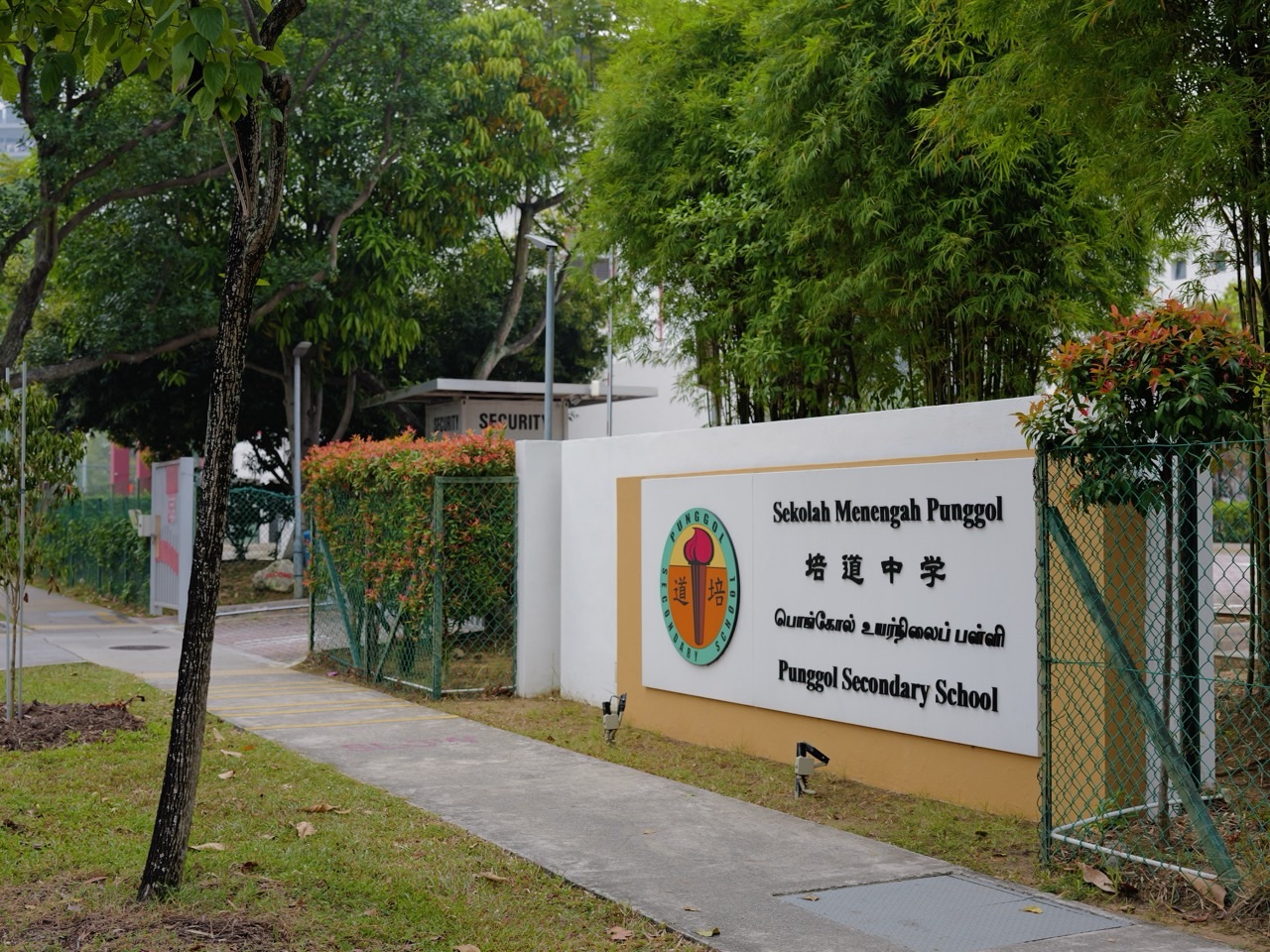
PG3 is Posting Group 3, used to admit students to Secondary 1 under Singapore’s Full Subject-Based Banding (Full SBB). It generally means most subjects begin at G3, but it does not guarantee an automatic place in Additional Mathematics, separate Physics or Biology, pure Humanities or any particular Secondary 3 combination. For Punggol families, the important later decision is how a pupil’s Secondary 1–2 learning, interests, school offerings and academic results shape a realistic upper-secondary subject combination.
Under Full SBB, a student may ultimately take subjects at different G levels and sit the Singapore-Cambridge Secondary Education Certificate (SEC) examination in the relevant graduation year. The SEC begins with the 2027 graduating cohort, while the new Post-Secondary Admissions Exercise starts in 2028. Those dates do not mean a child entering Secondary 1 in 2027 sits the SEC that same year. This guide explains how to research actual Punggol school options, interpret subject-combination forms and build future pathways without promising choices that are governed by school criteria.
- PG3 concerns entry to secondary school; subject combinations are later school-based decisions.
- Each school publishes the assessment and allocation criteria for Secondary 3 choices. Work from Secondary 1 and 2 can help pupils judge their readiness.
- Do not assume a PG3 entrant automatically receives pure Sciences, Additional Mathematics or an eight-subject package.
- Examples from current school websites show that different schools publish different combinations and criteria.
- SEC begins in 2027 for pupils graduating that year, recording the subject levels taken.
- MOE’s revised post-secondary admissions arrangements begin in 2028, with a new exercise and updated criteria.
- Use official school subject-combination briefings and SEAB syllabuses for the actual pupil’s year.
In this guide
- Timeline: from PG3 entry to future decisions
- Why the Secondary 3 decision is not settled at PSLE
- PG3 and G3: two labels serving different purposes
- A timeline from entry to the SEC
- What changes from lower secondary to upper secondary
- Actual Punggol evidence: Edgefield's Year 3 information
- Nearby example: Pasir Ris Secondary's 2027 combinations
- Read 'pure Science' and 'combined Science' carefully
- Additional Mathematics is not automatic
- Humanities choices are not a consolation prize
- Arts, design, computing and accounts deserve careful consideration
- What a selection form can and cannot tell you
- Grades matter, but not every grade means the same thing
- A decision matrix based on evidence, not prestige
- Do not confuse SEC subject codes with school entry codes
- What the SEC changes for a family
- What grade levels mean in the SEC
- MOE's 2028 post-secondary admissions changes
- Junior College aspirations and the L1R4 change
- Polytechnic options and mixed subject levels
- A two-year preparation approach instead of a four-year prediction
- How to talk when a desired combination is unavailable
- Punggol family checklist for a Year 3 briefing
- The lasting point: PG3 opens doors but does not choose what lies behind them
- Frequently asked questions
- Official regulations, school examples and related guides
- Your next step
Timeline: from PG3 entry to future decisions
| Stage | Focus | Check with |
|---|---|---|
| Secondary 1 | Settle in and explore strengths | Current school subject information |
| Secondary 2 | Review upper-secondary subject packages | School’s applicable selection booklet |
| Secondary 3–4 | Study selected subjects at applicable levels | School and relevant SEAB syllabuses |
| 2027 graduating cohort | First SEC examination | SEAB 2027 SEC information |
| 2028 admissions | First new Post-Secondary Admissions Exercise | MOE PSE rules and course criteria |

Why the Secondary 3 decision is not settled at PSLE
Families can become so focused on the PSLE posting group that they treat the next four years as a prewritten script. A student arrives through PG3, therefore the family assumes the child will study Additional Mathematics, separate Chemistry and Physics and a particular humanities elective. That prediction is not justified. Upper-secondary subject allocation occurs later, after the pupil has spent time learning with teachers and showing aptitude across different areas.
Secondary 1 and 2 matter because they give the child experiences that cannot be inferred from a PSLE total. A pupil who expected to enjoy Science may discover a love of History. Another who found primary arithmetic frustrating may become interested in algebraic structure. A third may have exceptional design skills that were invisible in standard academic results. These discoveries should inform the choices made later.
The family’s job is to keep doors open through sound learning habits and curiosity, then use the receiving school’s current selection guidance. It is not to tell a twelve-year-old that a subject list chosen by an adult today is the only respectable future.
PG3 and G3: two labels serving different purposes
Posting Group 3 is a framework for Secondary 1 admission and the typical initial level of most subjects. G3 is the level of an individual subject within Full SBB. Those concepts are connected but not interchangeable. A student may ultimately have a mixed subject-level profile, subject to eligibility and school advice. School form classes under Full SBB bring together learners with different profiles.
This matters when interpreting later subject-combination forms. A school may describe a package for students who take mostly G3 subjects, but another may show options for pupils with a mixture of G3 and G2. Parents should read the actual subjects and levels in each package. An attractive name at the top of a table is not enough.
Ask the school which results and requirements are relevant for the child’s present subject-level profile. Do not automatically assume that every rule from the former Express, Normal (Academic) or Normal (Technical) streams still applies unchanged.
A timeline from entry to the SEC
For a typical four-year secondary journey, Secondary 1 introduces the subject experience, Secondary 2 deepens foundations and leads into subject-combination decisions, and Secondary 3–4 provide more specialised upper-secondary learning. Individual routes and arrangements can differ. The pupil’s actual school programme and school-based guidance determine important details.
From 2027, graduating students take the SEC rather than the previous separate N- and O-Level examinations. SEAB explains that the certificate records subjects taken at G1, G2 and G3 levels. The grading structures correspond to the respective subject levels, and examination standards remain aligned with those levels. There is one common certificate reflecting the individual profile.
For a child starting Secondary 1 in 2027, an ordinary four-year progression points toward a later examination year, not the first 2027 SEC sitting. Parents must distinguish school entry year, subject-combination year and examination year when reading online guides or buying practice materials.
What changes from lower secondary to upper secondary
Lower-secondary education exposes pupils to a broader curriculum and develops basic methods of inquiry. Upper-secondary choices allow more focus. Students may consider Additional Mathematics, Science configurations, Humanities electives, arts, design, computing, accounts or other subjects where available. The exact selection is not uniform across Singapore, and programmes may change according to school staffing, demand and resources.
Think of this as moving from discovery to deliberate commitment. A pupil who has enjoyed designing prototypes may want an applied subject. Another who thrives in mathematical reasoning may wish to explore Additional Mathematics. A student who enjoys examining conflicting evidence may be drawn toward History or Geography. Interest matters, but so do relevant foundations and school criteria.
Parents should ask two questions for each option: ‘Can my child reasonably handle the course?’ and ‘Would my child find the course meaningful enough to sustain effort?’ A subject combination that looks impressive on a tuition brochure can become a poor choice if it ignores either question.
Actual Punggol evidence: Edgefield's Year 3 information
Edgefield Secondary School publishes an official Year 3 Subject Combination page, updated in August 2026, that displays different option tables for G3 and mixed G3/G2 subject profiles. This is useful because it shows the type of information a family should expect to examine: subject packages, required core subjects and possible electives. It should not be treated as an unchanging national subject list.
Open the current school page when the pupil approaches Secondary 2 subject selection and review every row carefully. Check what the school calls each option, which subjects it includes, whether there are prerequisites and how application preferences are handled. If a chart is embedded as an image, make sure you are viewing the latest year rather than an old screenshot forwarded through a chat group.
The 2026 page is evidence about what the school published at that time. It is not a guarantee that all packages will be offered to a later cohort. School staff and official updates should clarify the applicable rules.
Start with the table that matches the child
The three tables on Edgefield Secondary’s published page help illustrate why a family should begin with the subject profile it has now. The page presents a set for G3 students, a separate set for students with G3 and G2 subjects, and another set for students with G3, G2 and G1 subjects. Print or open the table your child’s school tells you to use. If the family is unsure because one subject level has changed since the last report, ask which table applies before starting to rank options. Edgefield Secondary’s Year 3 combination tables
A parent can transcribe the relevant option as a sentence. “Option A would give me these core subjects and one choice from this column.” Then let the child read the same row aloud. If one reads a box as “and” while the other reads it as “or”, the answer matters. A subject set can have a compulsory pairing or several alternatives that occupy one place. Ask whether the form requires you to rank the complete option, the selectable elective inside it or both.
A school website can provide different views of the same year. Punggol Secondary’s 2027 booklist, for example, gives a Secondary 3 download covering all subject levels. A family can use the list to locate materials once it confirms the child’s allocation. If a title in the booklist seems to suggest an option that does not appear on the selection form, query the school before ordering. The selection notice answers what your child can request. The booklist answers what materials a pupil may need after the relevant subjects have been assigned. Punggol Secondary’s 2027 booklists
Nearby example: Pasir Ris Secondary's 2027 combinations
Pasir Ris Secondary School publishes its 2027 Secondary 3 G3 and other subject-combination information. The G3 examples include configurations with English, Mother Tongue, Mathematics, Humanities, Science choices and possible electives such as Additional Mathematics or Art, depending on the option. The official page also says allocation depends on performance, aptitude, vacancies and school resources.
This example is useful because it makes the concept of selection concrete. A pupil cannot assume that selecting an option on a form creates a seat. Nor can parents infer that the same options exist at Edgefield, Greendale, Punggol or Yusof Ishak Secondary. Each school has its own published combinations and criteria, and future years may differ.
When researching schools near Punggol, a good habit is to record the exact year, web address and qualifying statement beside each subject list. Without these details, comparison tables quickly become mixtures of incompatible information.
Work through the trade-off in two published packages
Pasir Ris Secondary’s 2027 G3 examples show how a timetable can open one option while narrowing another. One package lists separate Chemistry, Additional Mathematics and a choice between Physics and Biology. A different package lists a combined Science choice and gives an elective slot that can include Additional Mathematics, Art, Design and Technology or Principles of Accounts. The latter package therefore helps a family ask whether the child wants to use the elective slot for mathematics or an applied or creative interest. Read the complete school table before interpreting a single line. Pasir Ris Secondary’s 2027 subject-combination tables
The school’s page also says a quality pass in the relevant lower-secondary subjects is required for certain options and that small groups may affect whether a combination runs. A pupil can be eligible and still face an allocation decision. A family that sees “quality pass” should ask how the school defines it for that subject and year. It should also ask what the child can do if an eligible elective is oversubscribed or attracts too few pupils. Those questions make the second choice as meaningful as the first. Pasir Ris Secondary’s allocation principles
Suppose a pupil likes mathematics and art, has the relevant subject grades and is trying to choose between two permissible combinations. Ask which activity they would choose to study in a structured, assessed course, then consider other ways to sustain the second interest. A school CCA may support art without reproducing what the examination subject teaches. Personal mathematics enrichment may sustain an interest without counting as Additional Mathematics. Keep the practical alternatives clear enough that the child knows what they gain, what they give up and what remains available.
Read 'pure Science' and 'combined Science' carefully
Parents often use short phrases such as ‘triple Science’, ‘double Science’ or ‘combined Science’ as though every school means exactly the same package. The formal subject names and codes matter. A combination may contain separate Sciences, a combined Science paper with two component disciplines, or other arrangements. Check the actual school table and the relevant SEAB syllabus rather than translating informal labels into promises.
For example, Chemistry can appear as a separate subject in one package while Physics and Chemistry may be assessed together as a combined Science option in another. Those are not automatically equivalent in syllabus scope or study demands. A student should understand what subjects are actually being taken and how they will be examined.
A good school enquiry asks, ‘What is the exact subject name, subject level, and selection criterion?’ Avoid asking only, ‘Does this school offer the top Science stream?’ The latter question risks importing old streaming assumptions into the Full SBB system.
Count the formal subjects before comparing workloads
A school conversation becomes clearer when the student names the exact pairing. In the 2027 SEC G3 catalogue, Science (Physics, Chemistry) is a single listed syllabus, K326. Physics and Chemistry are also listed as individual syllabuses, K323 and K324 for that year. The catalogue includes other combined Science pairings. The fact that a pairing exists in the catalogue tells you it is an examination syllabus. Check the school table to see which specific pairing the school offers in the relevant package. SEAB’s 2027 G3 school-candidate syllabuses
An invented pupil likes the experimental side of Science but also spends time in a demanding sport. Their family might ask two subject teachers about the mix of written explanations, quantitative problems and practical tasks in the actual alternatives. They can then put the regular sessions on a school-week timetable and give the pupil enough time to review work. A schedule that looks balanced on a Sunday evening can become hard to keep when competitions and project deadlines coincide. Ask how the school stages work across the term and which expectations are relevant to each option.
If the family is checking a possible later course, write down the course and the exact subject requirement from the institution’s current page. Ask the school’s Education and Career Guidance counsellor what the requirement means for each of the offered combinations. Different science arrangements develop overlapping skills, and equivalence for any specific future admission requirement needs official confirmation.
Additional Mathematics is not automatic
G3 Additional Mathematics is a recognised upper-secondary option, but a PG3 student’s eligibility to take it depends on the receiving school’s subject-selection requirements. Strong Lower Secondary Mathematics performance and reasoning may be relevant; the actual thresholds and places must be checked. Never promise a pupil a place because they had a high PSLE Mathematics AL or because a friend took the subject.
Additional Mathematics asks students to extend their algebraic understanding and work with a more abstract mathematical language. Preparation is better focused on expressions, equations, graphs and logical working than on memorising difficult formulas out of context. If a learner is still unstable with fractions or negative numbers, rushing into advanced chapters may not be helpful.
Ask the school whether a specific combination includes Additional Mathematics and what evidence is used to assign it. If the child does not qualify for one desired package, seek official guidance on realistic alternatives instead of assuming the entire future has closed.
Ask for evidence from ordinary Mathematics lessons
A student considering Additional Mathematics can bring two examples when speaking with the school. One might be a problem they solved independently by choosing and explaining a method. The other might show work they corrected after feedback and can now solve again. Together they support a better question for the teacher. “Which part of my current working suggests I could handle the new course, and which part would benefit from more time?”
For example, a child may understand how to draw a graph and still struggle to explain the connection between its shape and an equation. Another pupil may manipulate algebraic expressions accurately but stop when the task uses unfamiliar wording. These are different preparation needs. Ask the teacher to identify a few common lower-secondary tasks that can make the gap visible before the selection window. A reliable understanding of current coursework gives a useful basis for deciding how much extra mathematics the student wants to take on.
Humanities choices are not a consolation prize
History, Geography, Literature and Social Studies develop ways of interpreting evidence, context and human experience. A pupil who enjoys reading sources and building supported arguments may be well suited to deeper Humanities learning. Another may prefer experimental work but benefit from a Humanities elective that strengthens reasoning and communication. A balanced secondary education recognises both.
Upper-secondary options may include combinations of Social Studies with a Humanities elective, as shown in published school examples, and some schools offer additional separate Humanities subjects. The actual school and year determine what is available. Parents should read both the compulsory portion and any optional components of the subject package.
Do not treat Humanities solely as a box to fill for a future aggregate score. Interest and skill can turn the subject into a genuine intellectual strength. The eventual post-secondary rules matter, but they should not be the only reason a child studies a field.
Arts, design, computing and accounts deserve careful consideration
Some pupils find their strongest academic engagement in practical design, digital creation, visual art, music, commerce or accounting principles. These areas can require disciplined thinking, communication and substantial coursework or practice, not merely an easier timetable. A family should examine the content and workload rather than treating nontraditional choices as less demanding.
School offerings vary. Pasir Ris Secondary’s official example includes options such as Art, Design and Technology or Principles of Accounts in particular configurations. Other schools may list different subjects, or may not have sufficient enrolment for a proposed subject in a particular year. Parents should not carry a list from one school into another as though it were a national entitlement.
Ask what the pupil actually enjoys doing: constructing a model, analysing a business transaction, coding a program or making an artwork. The best choice builds on a demonstrated interest and a readiness to practise the skills that field requires.
What a selection form can and cannot tell you
A subject-combination form may display a list of packages, a rank order, criteria and a deadline. It might look definitive, but schools can still have conditions concerning academic merit, available places, timetable compatibility and student preferences. The form should be read alongside the official briefing, not interpreted as a catalogue where every item can be purchased.
Some schools explain what happens if several students select the same option and capacity is limited. Others publish selection criteria or advise students individually. The family should identify which portions are rules, which are examples and which are provisional. Where the language is unclear, ask the school rather than guessing based on an earlier cohort’s experience.
Keep submission receipts and a copy of the final choices. More importantly, ensure the child understands why the preferred option was ranked first. Students are more likely to sustain work in a course they have helped select.
Track each step through allocation separately
A school may publish several separate dates. One is when the student ranks choices. Another may be for parental acknowledgement, followed by the allocation result and any school-defined review window. Assumption English School’s 2026 exercise for 2027 Secondary 3, for example, lists separate submission, acknowledgement, allocation and appeal stages. It also describes both overall results and subject-specific grades where relevant. Use that as an example of the sequence to check at your child’s own school, then follow the actual dates and instructions issued there. An example of a Secondary 2 allocation notice
Before pressing submit, read back the complete first option and identify what you ranked for the other places. Some school forms may use different letters or descriptions from the briefing slides. If a child rearranges the ranking after a teacher discussion, verify the final version and parental acknowledgement where required. When the result appears, check what was allocated and ask which action comes next. Keeping the briefing dates separate from the booklist deadline makes it easier to resolve an uncertainty before buying materials.
If a combination includes a technical subject, a specialist programme or a further application, ask where the required information is published. Some opportunities may have an application outside the ordinary selection form. A family should record that separate step only when it is confirmed for the child’s cohort. Write down whom to contact if the online form displays a different eligible list from the one the family was expecting.
Grades matter, but not every grade means the same thing
Subject selection often uses school results as evidence of readiness. Yet a parent should distinguish an isolated poor test from a persistent conceptual difficulty. A pupil who loses marks through misunderstanding algebraic equality has a different repair need from one who simply misread the timing of a test. The first may require foundational teaching; the second may require planning or assessment habits.
Look at the work behind the score. Can the student solve unfamiliar problems independently? Do they explain Science evidence clearly? Can they interpret sources rather than copying phrases? Does writing improve after feedback? These habits provide more information about likely success in a demanding combination than ranking students by a single assessment percentage.
Still, official school criteria cannot be bypassed by a family’s private view of readiness. Where the child falls short of an option, talk to teachers about both the requirements and legitimate alternative choices.
Make the question about the published criterion
When a parent reads “relevant subject results”, the natural question is which results the school will use. It might mean a specific subject’s grades, an overall result, or another criterion described in the briefing. If the page gives a threshold, check which assessment or reporting period it covers. If performance changed over the year, ask how the school uses the officially designated record and what teachers recommend now. Eligibility and teacher advice can both tell the family something useful even when they answer different questions.
For a student taking some subjects at G2 and some at G3, record the level beside the grade. Show that simple list to the school if a requirement is unclear. Ask whether the school is allocating an elective, assessing a request for a subject-level change, or handling both at the same time. This matters because a child can be interested in a course while the school needs to confirm which level and combination are available.
A decision matrix based on evidence, not prestige
Create a table with columns for subject, current enjoyment, independent performance, workload, future relevance and school availability. Ask the child to give examples under each heading. ‘I enjoy Chemistry because I like explaining reactions’ is more useful than ‘Everybody says Chemistry is important.’ ‘I find literature discussions engaging’ tells you something that a generic ranking cannot.
Add the school’s actual selection criteria and the date they were checked. Where the family cannot verify a requirement, mark it unknown. A plan with honest gaps is more valuable than one filled with copied assumptions. Use the table to start a school conversation rather than to override the school.
After the child ranks options, challenge the plan constructively. What would make the top choice difficult? Which alternative would still be meaningful? What would the pupil do if the first package were unavailable? A thoughtful second choice is an expression of agency, not defeat.
Do not confuse SEC subject codes with school entry codes
SEAB publishes 2027 SEC G3 syllabus codes, including English Language K300, Mathematics K310 and Additional Mathematics K341. Those codes identify examination syllabuses for the 2027 graduating examination year. They are not PG3 posting codes, nor are they a universal list of subjects guaranteed to every 2027 Secondary 1 student.
A lower-secondary student will study through the school’s own teaching programme before reaching upper-secondary examination syllabuses. Syllabuses, school resources and pathways can be revised over the years. Parents who build an entire tuition plan from the wrong examination-year code may be preparing for an assessment that does not match their child’s timeline.
The safe practice is to record the year beside every code. Use the current SEAB school-candidate list for the pupil’s actual examination year when published, and confirm with the school which subject and level the student is enrolled in.
What the SEC changes for a family
SEAB explains that the SEC starts in 2027 for graduating cohorts and replaces the separate N- and O-Level certification structure. Students sit examinations at the applicable G1, G2 or G3 level and receive one certificate reflecting the subjects and levels they took. Standards are maintained at the corresponding levels. The certificate gives a clearer picture of the student’s individual subject profile.
The examination calendar has one written sitting for Mother Tongue subjects and places English Language and Mother Tongue written examinations in September, with most other written examinations in October and November. Non-written components such as oral or practical assessments can occur earlier. These are official arrangements for the SEC examination framework, not a reason to make a Secondary 1 pupil practise national papers immediately.
Families should separate curriculum preparation from examination-year administration. When the pupil is in an examination cohort, use SEAB’s then-current timetable, syllabus, registration and grading pages. Older screenshots may omit later changes.
What grade levels mean in the SEC
The SEC does not apply a single identical grade scale to every subject level. SEAB lists G1 grades A to E, G2 grades 1 to 6 and G3 grades A1 through 9. A learner who takes some subjects at different levels receives results reflecting those individual choices. Grade mapping is used for certain aggregate calculations in post-secondary progression, not as a claim that all subjects were assessed at the same standard.
Parents sometimes compare a G2 grade of 1 directly with a G3 A1 without understanding different examination levels. These are not interchangeable raw performance measures. When an admission pathway uses grade mapping, follow SEAB and MOE’s exact applicable rules, including which subjects can contribute to the relevant aggregate.
Do not attempt to forecast a child’s future mapped aggregate from early Secondary 1 school marks. The sensible response is to strengthen the subject skills now and investigate the correct future pathway when it becomes relevant.
MOE's 2028 post-secondary admissions changes
MOE announced a new Post-Secondary Admissions Exercise (PSE) from 2028, in connection with the first SEC results released in January 2028. The exercise will integrate applications across relevant post-secondary routes such as JC, Millennia Institute, polytechnics and ITE. MOE has also announced changes to criteria, including revised JC aggregate calculation and polytechnic subject-level treatment.
Those policies are important, but families should resist turning them into a simple claim that every PG3 pupil automatically qualifies for a particular route. Eligibility still depends on the subjects and levels actually taken, grades and the requirements of the intended course. Rules may be clarified or revised before a younger cohort reaches that stage.
Use the latest MOE PSE information at the time of application. A good early decision preserves academic fundamentals and interests without assuming that the year-one posting label determines the student’s eventual destination.
Junior College aspirations and the L1R4 change
MOE has announced that, from the 2028 admission exercise, the Junior College aggregate moves from L1R5 to L1R4, using five subjects instead of six. The change is intended to give pupils more room to develop a broader range of competencies and interests. This is a post-secondary admission rule, not a statement that a student should take only five subjects at school.
Families who aspire to JC should study the official subject and level requirements for the actual admission year. A choice of Additional Mathematics, Sciences or Humanities can be relevant, but the details of course entry and subject prerequisites must not be invented from a simplified internet chart. Current official information is more reliable than a remembered rule from an older examination system.
A pupil should also be allowed to explore what JC, polytechnic and other pathways genuinely involve. An ambition written by a parent in Primary 6 need not become a life sentence.
Polytechnic options and mixed subject levels
From the 2028 intake, MOE’s revised Polytechnic Year 1 admission criteria allow a G2 subject to be used in the ELR2B2 aggregate under specified requirements. This reflects the greater flexibility of Full SBB and the new examination framework. The detailed conditions, including which subjects must be at G3, matter. A casual phrase such as ‘one G2 subject counts now’ is insufficient advice for a future applicant.
Students interested in applied learning may want to investigate polytechnic course content and prerequisites as they develop subject choices. A technical course may require confidence in Mathematics or relevant science; a design course may involve portfolios or other requirements. Nothing about a PG3 entry alone settles that suitability.
Keep subject strengths broad where possible and revisit official admissions criteria when selecting actual post-secondary courses. Earlier exploration should inform choices, not replace formal eligibility checks.
A two-year preparation approach instead of a four-year prediction
In Secondary 1, build reliable comprehension, mathematical reasoning, scientific explanation and source-analysis habits. Encourage participation in common-curriculum subjects and CCAs, because they help pupils discover capacities outside traditional written papers. Make the first year about sustainable learning and meaningful exploration, not collecting an advanced subject list.
In Secondary 2, notice repeated strengths and interests. Collect examples of independent work, ask teachers about readiness and attend the school’s subject-combination briefing. Compare the actual published packages and conditions. Discuss with the pupil which course demands sound engaging and which may become an unhealthy burden.
This process is more reliable than deciding at PSLE that a child ‘must’ enter a particular Science combination. The student will be older, have better evidence and understand school life. A good plan can change in response to learning.
Use Education and Career Guidance before the choices are due
Education and Career Guidance can help a Secondary 2 student explore a subject interest before making a binding school choice. Yusof Ishak Secondary’s guidance page includes choosing a Secondary 3 subject combination among the objectives of its Secondary 2 programme. It also explains how students can book time with the school’s ECG counsellor. A pupil can bring two combinations, an example of work they enjoy and a question about what each option might prepare them to do. Yusof Ishak Secondary’s Education and Career Guidance
The student does not need a career plan beforehand. Try asking them to describe a task they return to voluntarily. A student who keeps revising a prototype may want to learn more about applied problem-solving. A student who follows arguments about public issues may be curious about analysing sources. An ECG conversation can turn these observations into useful questions about the school’s real options. A teacher can then help the pupil compare the demands of the relevant subjects.
Make a second choice before the first one becomes urgent
An invented student wants separate Sciences and Additional Mathematics, and the school notice says that available places can affect allocation. The student and parent read the requirements and choose a preferred option. Before submission they deliberately look for a second choice that builds on a different strength. The child discovers that they would also welcome a package with combined Science and an elective they enjoy. They ask whether Additional Mathematics is in that particular package and whether including it would use the same slot as the other elective.
This preparation helps even if the first choice is allocated. The family has learnt how to read the table and what decisions follow from using a particular slot. If the second option is allocated, the child starts with a reason to engage in it. Ask what they would look forward to on an ordinary Tuesday in the alternative combination. If neither the child nor parent can name an answer, return to the options while there is time to check a better alternative.
How to talk when a desired combination is unavailable
Children may feel disappointed if their preferred combination is not offered or if they do not meet a selection criterion. Parents should acknowledge the disappointment while looking for concrete reasons and alternatives. Ask the school whether the issue concerns a prerequisite, performance, capacity or an unavailable subject. Avoid telling the child a single allocation means their future is ruined.
A meaningful alternative might still develop relevant skills. A student who cannot take one Science package may pursue another suitable combination and continue learning through projects and reading. Another may find satisfaction in a Humanities or applied subject they had overlooked. Do not invent equivalence between courses; investigate what each actually teaches.
Where the school provides an official appeal or review process, follow its instructions and deadlines. Do not promise an exception. Respectful enquiry and a realistic second plan teach more than an angry comparison with classmates.
Respond to an allocation discrepancy with one clear question
If the allocation differs from the confirmed application, the family can ask the school to clarify which rule affected the outcome. A specific enquiry is easier to answer. “Our acknowledged choices showed Option B first. The allocation is Option C. Could you explain whether Option B was unavailable, whether a requirement was unmet or whether capacity affected the result? Is there a review process for this cohort?” Attach the receipt only if the school requests it or its instructions ask you to include it.
Avoid comparing the child’s grade with hearsay about another student. The relevant assessment period or subject profile could differ. Ask what school documents to use for the combination actually allocated and when teachers can explain the next steps. If the child has a legitimate reason to request review, submit it through the school’s published channel and keep the alternative workable while waiting.
Punggol family checklist for a Year 3 briefing
Bring the pupil’s present subject-level profile, recent school results and a list of genuine interests. Ask for the latest combination booklet, prerequisites, selection timetable, ranking procedure and contact point for questions. Record whether offerings depend on demand or resources. If a particular subject is central to the plan, verify the exact code or name at the right stage.
Discuss practical matters too. Which packages contain substantial coursework or laboratory time? How might the timetable affect CCAs? Will the student have enough room to learn independently and rest? A very full package should be chosen for educational reasons rather than because other families might admire its appearance.
After the briefing, let the child explain their preferred combination aloud using three reasons supported by evidence. Help them identify a workable alternative and keep the official submission record. That is the beginning of responsible ownership of an academic path.
Record the decision in a way your child can check
One short line per option is enough to start. Write the package label, the formal subject and level for each uncertain item, which choices share a slot and the school’s stated selection condition. Beside it, record the practical question the child needs answered, such as how often extended project work takes place. Leave space for the date and source of the reply. Compare it with the official form just before the two of you sign off.
When the pupil sees their confirmed combination, make a second note for January. Write which subjects require books, which require an equipment list and which teaching materials the school will supply. Your child can then carry the practical decisions forward from the briefing into the first week of Secondary 3.
The lasting point: PG3 opens doors but does not choose what lies behind them
A posting group is one early administrative decision. Upper-secondary subjects are later educational decisions, and the SEC records the level of each subject at examination. They are related, but they are not the same event. Confusing them can push families toward premature certainty about a child’s future strengths and destinations.
The right sequence is to settle into school, learn carefully, discover interests, read the school’s current options and then make supported choices. Do not build hopes on a guessed cut-off, a copied subject list or a tuition provider’s promise that every PG3 entrant will take the same subjects.
Give the child room to become a different learner from the one who sat PSLE. Secondary education should expand capability, not freeze identity at age twelve.
Frequently asked questions
Does PG3 guarantee Additional Mathematics at Secondary 3?
No. School-offered packages and selection criteria determine whether the pupil can take Additional Mathematics.
When is a subject combination selected?
Typically students consider upper-secondary combinations during Secondary 2, following their school’s actual briefing and process.
Can a child take a mixture of G2 and G3 subjects?
Full SBB supports subject-level flexibility according to eligibility and school guidance. Do not assume every combination exists at every school.
Are all Punggol schools offering identical G3 subject packages?
No. Check the exact current school pages, availability and criteria. Do not transfer one school’s list to another.
Are separate Science and combined Science the same?
No. They refer to different subject arrangements and syllabus scope. Confirm formal subject names and codes.
Does SEC begin in 2027?
Yes, for the 2027 graduating cohort. It does not mean a child beginning Secondary 1 in 2027 sits the SEC immediately.
What does SEC show?
It records the subjects and G1, G2 or G3 levels taken and uses the relevant subject-level grading structures.
Will the new PSE begin in 2028?
MOE announced a Post-Secondary Admissions Exercise starting in 2028 with the first SEC graduating cohort.
Is L1R4 the new JC aggregate?
MOE announced L1R4 from the 2028 JC admission exercise. The subject requirements and applicable rules must be checked for the student’s admission year.
Can G2 subjects matter for polytechnic admission?
Yes, under specified revised rules from the 2028 intake. Do not treat all G2 subjects as unrestricted substitutes; use current MOE criteria.
Should a Secondary 1 pupil start Additional Mathematics tuition?
Not automatically. Strengthen foundational algebra and check genuine readiness before adding extra workload.
What if a student does not get the preferred combination?
Ask the school for the reason, official review possibilities and meaningful alternatives. A single combination does not define a person’s worth or all future options.
Continue the Punggol PG3 guide series: PG3 Science and Humanities · PG3 Mother Tongue and Higher Mother Tongue · PG3 Secondary 1 posting appeals and transfers
Official regulations, school examples and related guides
- Edgefield Secondary School: Year 3 subject combinations (2026 publication)
- Pasir Ris Secondary School: 2027 Secondary 3 G3 and other subject combinations
- SEAB: 2027 SEC G3 syllabuses for school candidates
- SEAB: what the SEC certificate and grades mean
- MOE 2026: new Post-Secondary Admissions Exercise in 2028
- MOE 2025: revised JC L1R4 criteria from 2028
- MOE 2024: full SBB and polytechnic criteria changes
- What is PG3: Science and Humanities foundations
- What is PG3: English and Mathematics foundations
Your next step
If the child is in Secondary 1, focus on transferable subject skills and explore interests. If the child is in Secondary 2, obtain the receiving school’s current Year 3 combination guide, note every condition and discuss the choices with the pupil and teachers. Separate school rules from SEAB examination-year syllabuses and MOE post-secondary requirements. A responsible choice uses evidence available for the actual cohort.
More Punggol Posting Group 3 guides
- PSLE scores and Posting Group 3 eligibility
- How to choose and rank six secondary schools
- G3 subjects and Full Subject-Based Banding
- From the PSLE syllabuses to Secondary 1
- The First 100 Days of Secondary 1
- The SEC and Pathways to JC, Polytechnic or ITE
- Secondary 1 Costs and Financial Assistance for 2027


