
PG3 means Posting Group 3, an admission route to Secondary 1 under Singapore’s Full Subject-Based Banding. It does not create an exclusive PG3 outdoor camp or change the basic purpose of Physical Education. MOE’s Physical Education syllabus, implemented for secondary levels from 2025, includes Outdoor Education and expects a four-day, three-night outdoor adventure learning cohort camp by the end of Secondary 1, as well as a five-day, four-night experience by the end of Secondary 3. The actual school’s schedule, location, safety procedures and arrangements must be checked with its current notices.
In Punggol, the distinction between national curriculum and school signature programmes matters. Punggol Secondary School’s May 2026 PE page describes a Secondary One Cohort Adventure Camp and other school events. Greendale Secondary’s current Learning for Life Programme (LLP) emphasises Outdoor Adventure, with examples including kayaking, rock-climbing and orienteering. These are school-specific descriptions, not guaranteed activities for every 2027 pupil. The aim is to develop safe decision-making, confidence, cooperation and an appreciation of places—not simply endure an exciting camp to earn a certificate.
- PG3 is an entry Posting Group; common PE and Outdoor Education are shared experiences under Full SBB.
- The 2025-implemented secondary PE syllabus describes a four-day, three-night camp by the end of Secondary 1 and a longer camp by the end of Secondary 3.
- Outdoor learning develops navigation, risk awareness, planning, teamwork, environmental care and responsibility.
- Punggol Secondary’s PE page names a Secondary One Cohort Adventure Camp; Greendale has an Outdoor Adventure LLP.
- Schools determine actual reporting instructions, locations, activities, supervision, accessibility arrangements and packing requirements.
- Parents should disclose relevant health, allergy and mobility needs confidentially through authorised school channels.
- A well-prepared student can follow instructions, ask for help, manage personal items and participate safely without treating camp as a competitive test.
Definition lock: camps, PE and school signature programmes
| Experience | Framework | What to verify |
|---|---|---|
| Outdoor Education lessons | MOE secondary PE curriculum, implemented 2025 | Receiving school’s activities and progression |
| Secondary 1 cohort camp | MOE syllabus expects four days, three nights by end of Sec 1 | Actual dates, location, activity and safety instructions |
| Secondary 3 cohort camp | MOE syllabus describes five days, four nights | Applicable school’s future arrangements |
| School LLP | Distinctive student-development programme | Real school theme and participation |

Guide contents
- Why an outdoor camp is an educational experience
- PG3 does not mean one camp for ‘stronger’ students
- The current national PE syllabus and the camp milestones
- Secondary 1 outdoor learning begins with a sense of place
- Navigation is about checking rather than guessing
- Reading the weather is part of outdoor competence
- Water activities require trained supervision and clear rules
- Height-related activities must not become dares
- Orienteering teaches decisions under uncertainty
- Packing a bag is an exercise in resource management
- Managing personal hygiene during a camp
- Food, hydration and allergies need an actual plan
- Sleep and homesickness are part of the transition
- Teamwork means sharing decisions fairly
- Risk awareness is neither recklessness nor avoidance
- Environmental care belongs in the same lesson as adventure
- The difference between common Outdoor Education and an LLP
- Punggol Secondary’s PE programme provides local context
- Edgefield has a different school-development emphasis
- Inclusion matters when the activities are unfamiliar
- What to do if a pupil is afraid of an activity
- How to prepare without buying a new adventure wardrobe
- Reflecting after camp can make the learning last
- What a 2027 Punggol parent should verify
Why an outdoor camp is an educational experience
A student may think an adventure camp is a break from lessons. It can certainly be enjoyable, but its educational purpose is deeper. In an unfamiliar setting, pupils must read instructions, manage personal needs, cooperate with peers and make safe decisions when ordinary routines change. These experiences connect knowledge to action. A pupil who can explain a safety rule in a classroom has another opportunity to practise it responsibly in a supervised environment.
Outdoor Education also changes the scale of the learning space. Students can begin with their school grounds and neighbourhood before encountering more unfamiliar locations. The MOE syllabus emphasises developing a relationship with place, including respecting other people and the natural environment. This is why simple navigation, observation and reflection can matter alongside exciting activities.
Parents should discuss what the child hopes to learn, not merely whether the camp sounds fun or frightening. Confidence grows through preparation, safe participation and reflection. It does not require every student to enjoy the same activity equally.
PG3 does not mean one camp for ‘stronger’ students
Under Full SBB, pupils enter school through Posting Groups and may take individual academic subjects at different G levels. PE and Outdoor Education sit within shared learning experiences rather than a separate PG3 national examination pathway. The child’s academic entry group is not a measure of whether they can navigate a route, cooperate in a tent group or respect safety procedures.
Physical confidence, outdoor experience and emotional readiness vary widely. One pupil may be an excellent reader but have never stayed away from home overnight. Another may be comfortable with outdoor sports yet anxious about meeting new classmates. A good preparation plan recognises those differences. It does not use PG3 to predict courage, fitness or leadership.
Ask the receiving school how its cohort is organised and how support is provided where needed. Avoid inventing a policy that all pupils from a particular Posting Group must undertake a more difficult route.
The current national PE syllabus and the camp milestones
MOE’s 2024 publication of the Physical Education syllabus states that implementation begins in 2025 for secondary and pre-university students. Its Outdoor Education section describes a four-day, three-night outdoor adventure learning cohort camp by the end of Secondary 1 and a five-day, four-night camp by the end of Secondary 3. The outcomes are developed progressively across school years through lessons and appropriate authentic experiences.
These are curriculum expectations, not a published schedule for a particular school in 2027. Parents should not infer that a camp occurs during a named week, at a particular island, or with identical activities across all campuses. Schools communicate cohort details and safety arrangements using their official channels.
A family can use the syllabus to understand why navigation, basic outdoor care and group decision-making are taught. The school remains the source for the practical details that determine what a child should bring and when they must report.
Secondary 1 outdoor learning begins with a sense of place
The MOE framework for Secondary 1 emphasises connecting with the student’s environment and community. Pupils can learn to observe their immediate surroundings, identify landmarks and understand how a place is used by different people. This is not simply tourism. It develops attention, navigation and respect for the relationship between people and their environment.
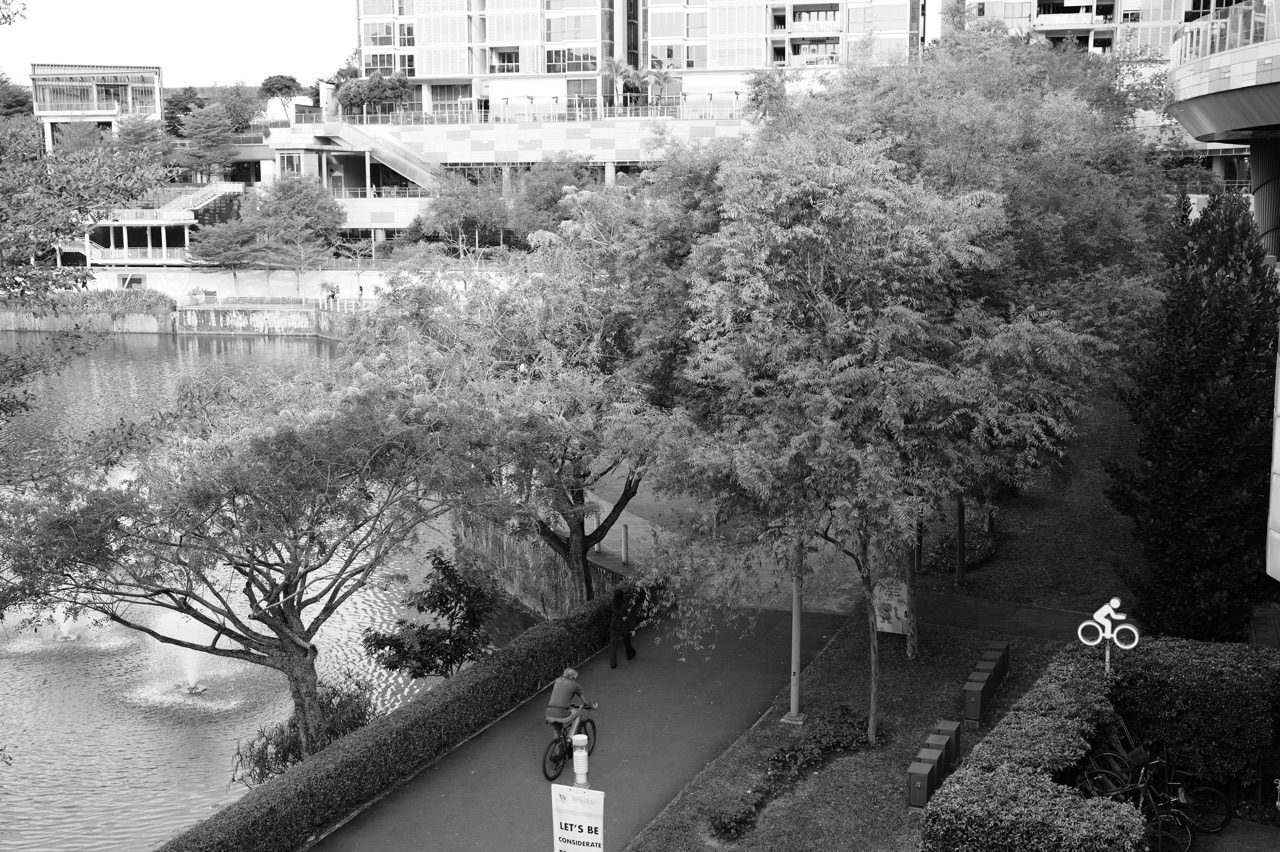
A Punggol child may already know the route to a neighbourhood park, but using that space thoughtfully is different from walking through it. Where are the crossings? Which paths are shared with cyclists? What changes when it rains? How should the child respond to a closure or construction barrier? These questions encourage observation before action.
Any family walk is an informal practice activity, not a substitute for a school-led lesson. Stay on public routes, follow local rules and avoid entering restricted or hazardous areas.
Navigation is about checking rather than guessing
Students can learn to orient themselves using maps, landmarks, route descriptions and teacher-approved tools. Good navigation begins by confirming the intended destination, identifying a safe route and checking where decisions must be made. A teenager who is confident with a phone may still need practice comparing the screen with the actual surroundings.
Try an easy supervised exercise. Ask the child to identify two landmarks between home and a public library, then describe a safe return route. If a path is blocked, discuss where to seek official information and how to ask a trusted adult for help. The aim is independent judgement within safe limits, not sending a young person into an unfamiliar location alone.
In a school activity, the approved group route and leader’s instructions take priority. Students should not deviate to prove that they know a shortcut.
Reading the weather is part of outdoor competence
Singapore’s weather can change quickly, and heat, heavy rain and thunderstorms affect outdoor plans. Students should understand that a forecast is useful but not a guarantee. Teachers and organisers make activity decisions according to their safety procedures, current conditions and official advice. Pupils should not use an outdated screenshot to argue that an activity must continue.
A family can practise checking the forecast before an ordinary walk, then observe whether the sky and conditions support the plan. Discuss what to do if a thunderstorm approaches: follow official safety instructions, seek appropriate shelter and avoid risky open or exposed locations. Do not invent exact school weather thresholds or independent rescue procedures.
Outdoor learning should reinforce respect for changing conditions. Choosing to stop an activity when a responsible supervisor says it is unsafe is a sign of judgement, not weakness.
Water activities require trained supervision and clear rules
Greendale Secondary’s 2026 LLP information includes kayaking among examples of outdoor adventure experiences. That does not mean every student in every cohort will kayak or that a family can safely reproduce school water activities at home. Water-based activities demand trained supervision, appropriate equipment, medical and swimming information where relevant, and a safety plan.
Parents should read the official activity notice and disclose relevant concerns through the school’s process. If a pupil is anxious about water, discuss the concern early rather than instructing the child to hide it. The school can explain how students are briefed and how individual needs are handled within its procedures.
A teenager does not need to prove fearlessness to demonstrate courage. Asking questions, using approved safety gear and following instructions are responsible forms of participation.
Height-related activities must not become dares
Rock-climbing and similar supervised adventure activities can challenge coordination, problem-solving and self-confidence. They also involve safety systems that students should not improvise. A school activity should be run by authorised personnel using appropriate equipment and procedures. Parents must not assume that a publicly accessible climbing wall can be used as a substitute for formal training.
Students may experience different levels of comfort with heights. Encourage them to report genuine distress or relevant health concerns to the supervisor. A child who participates within approved boundaries can learn about planning and self-management without being pressured to accept unnecessary risks.
Parents can discuss the learning afterward: Did the child listen carefully? How did the group cooperate? What helped them handle uncertainty? These questions are more meaningful than comparing who climbed highest.
Orienteering teaches decisions under uncertainty
Orienteering can involve reading a map, finding an approved route and making choices as conditions change. The educational focus is on planning, interpreting evidence and working together safely. Participants may need to consider landmarks, directions and time without allowing competition to override instructions. Exact tasks and difficulty vary by school programme.
One pupil may be quick with maps but impatient with teammates. Another may move slowly yet notice an important sign. A good group uses both strengths. Students can practise listening, checking assumptions and explaining a route before taking it. These are transferable habits also useful in project work.
Teach children that getting temporarily confused should trigger a safe pause and a request for guidance, not a sprint into an unfamiliar area. The ability to recognise uncertainty is itself an outdoor skill.
Packing a bag is an exercise in resource management
A school camp packing list can look ordinary, but following it requires reading, planning and responsibility. The child must identify required items, distinguish them from optional extras and keep belongings organised. Overpacking can create inconvenience, while missing essential items can reduce comfort or safety. The actual school-issued list should be followed rather than a generic internet list.
Parents can help a pupil check the inventory, then let them pack independently under supervision. Ask what each item is for and where it will be stored. If a document or medication has special handling requirements, follow the school’s instructions and qualified professional advice. Do not place sensitive medical details in a public group chat.
Packing is a chance to practise competence before the event. When students know where their belongings are, they spend less energy worrying and more energy participating.
Managing personal hygiene during a camp
Living away from home for several days means attending to ordinary needs: washing, changing clothes, managing wet items and keeping the sleeping area reasonably organised. These tasks can feel unfamiliar to a student who has always relied on adults. Parents can introduce simple routines well before camp without turning preparation into a lecture about maturity.
Teach the child how to separate clean and used clothing and how to check that personal items are accounted for. Discuss how to seek help if a routine or facility is confusing. For menstrual or other personal-care needs, plan discreetly and follow school guidance. No pupil should feel that a private physical need is a reason for embarrassment.
Competence in self-care contributes to comfort and participation. The point is not spotless luggage; it is that the child can look after themselves with appropriate supervision.
Food, hydration and allergies need an actual plan
Students require suitable meals and access to safe drinking water during outdoor activities. Families should read the school’s provisions and any instructions about permitted snacks or water containers. Do not assume that every student may bring any food or that meals can be skipped without consequence. Individual allergies or medically significant dietary needs must be communicated appropriately.
Parents sometimes worry that a child will not enjoy camp meals. Encourage reasonable flexibility while distinguishing preference from safety. If a pupil has a severe allergy, follow the medical plan and school instructions; this article cannot determine safe substitutions. Inform staff through the official channel rather than relying on the child to explain an urgent condition for the first time at the campsite.
Discuss ordinary hydration and rest habits without inventing universal amounts or turning the event into a fitness test. Appropriate needs depend on activity, environment and individual circumstances.
Sleep and homesickness are part of the transition
A first overnight camp may be the longest time a pupil has spent away from familiar home routines. Excitement and uncertainty can appear together. Some children sleep easily; others find unfamiliar sounds, sleeping arrangements and social situations difficult. Parents should acknowledge these possibilities without promising that everyone will feel comfortable immediately.
Before camp, practise small independence steps: organising toiletries, settling bedtime routines and identifying the adult in charge when help is needed. If the child has a significant existing concern, discuss it discreetly with the school. Avoid arranging unofficial private calls or pickups that conflict with school instructions.
After camp, ask what the child learned about managing unfamiliar situations. A student who sought help appropriately or settled more confidently by the final day has made meaningful progress.
Teamwork means sharing decisions fairly
Outdoor activities often involve groups in which the result depends on cooperation rather than one individual’s speed. Pupils may share responsibilities for navigation, equipment, communication or reflection. The educational challenge is to use different strengths fairly, including those of quieter students. A highly confident pupil can learn to listen; a reserved pupil can learn to contribute a specific idea.
One useful family exercise is to plan a short supervised outing together. Ask the child to list what must be decided and who will check each item. Then ask how the group should respond if someone is tired or unsure. The point is to practise inclusive decision-making, not reproduce a formal camp activity.
Leadership at camp is visible in practical acts: checking that everyone understands the plan, following safety instructions and helping teammates without taking over their responsibilities.
Risk awareness is neither recklessness nor avoidance
Students sometimes interpret bravery as doing the most difficult or exciting thing. Outdoor Education teaches a different principle: meaningful challenge must be accompanied by responsible risk awareness. A pupil should understand that hazards can be identified, controls can be applied and activities can be stopped when conditions are unsuitable. Trained adults manage the overall risk assessment.
A student might notice slippery ground, a loose item or confusion about directions. The correct response is to tell the responsible instructor and follow guidance, not improvise an unsafe rescue or conceal the problem. Small observations can prevent larger difficulties when they are communicated promptly.
Parents can praise good judgement directly. ‘You noticed the conditions and asked before continuing’ is a more useful compliment than ‘You weren’t scared at all.’ Responsible confidence includes knowing when to seek support.
Environmental care belongs in the same lesson as adventure
Outdoor Education seeks to build connection with places and their inhabitants. This includes consideration for plants, wildlife, other visitors and community facilities. A camp is not only an opportunity to move through a landscape; it is a setting for learning how behaviour affects the environment. Respect is shown through ordinary decisions rather than grand slogans.
During a family walk in Punggol, ask whether shared paths are being used responsibly, whether litter is handled properly and whether animals are observed from a suitable distance. The child can explain why an apparently small action matters. Do not encourage collecting wildlife, entering protected spaces or organising unsupervised clean-ups to produce a photograph.
The educational goal is a student who can enjoy an outdoor setting and also leave it in good condition for others.
The difference between common Outdoor Education and an LLP
All students can encounter Outdoor Education through the PE curriculum, but schools may also provide distinctive Learning for Life Programmes. Greendale Secondary’s Outdoor Adventure LLP is an example: the school describes experiences including kayaking, climbing and orienteering, linked to character, teamwork and leadership. Other schools choose different signature themes and approaches.
An LLP is not the same as a CCA, a camp or an individual achievement certificate. It is part of a school’s broader student-development identity. Parents should examine who participates, how activities are structured and whether the intended learning fits their child. An online page may feature exceptional events without describing the everyday programme in full.
Do not assume that the most adventurous-looking LLP is the best educational fit for every teenager. A school with a different focus may provide strong common PE and Outdoor Education learning while meeting the child’s needs in other ways.
Punggol Secondary’s PE programme provides local context
Punggol Secondary School’s official PE page, updated in May 2026, lists a Secondary One Cohort Adventure Camp, Cross Country and Games Carnival among experiences that develop skills, values and collaboration. It also shows outdoor and cycling-related activities. These are grounded examples of the school’s programme description at that date, not a promise of identical scheduling or participation for every 2027 intake.
A family can use the page to ask what the upcoming cohort camp involves, how students prepare and which activities are common to the year group. Do not infer exact routes, overnight locations or equipment requirements from photographs. The school will issue operational information when appropriate.
Connect the programme to the pupil’s needs. If the child is unfamiliar with outdoor activities, ask how preparation is taught. If the child has relevant access concerns, discuss them early and respectfully.
Edgefield has a different school-development emphasis
Edgefield Secondary’s 2026 Learning for Life page describes character education through sport anchored on Taekwondo. That is not the same signature approach as Greendale’s Outdoor Adventure LLP. It illustrates why a parent’s comparison should separate the national common PE syllabus from a school’s distinctive focus.
A pupil interested in physical activity may respond well to many different environments. The family should investigate the school’s current curriculum and participation arrangements instead of assuming that a particular programme guarantees better fitness, examination scores or admission outcomes. Staff can explain the real commitments.
Look for fit rather than novelty. A teenager who feels safe, supported and motivated to practise regularly can build lasting skills in an ordinary school programme as well as in a high-profile signature experience.
Inclusion matters when the activities are unfamiliar
Students have different physical capacities, support needs and levels of confidence. A child may need particular guidance for mobility, sensory needs, health conditions or communication. Parents should discuss relevant information with the school through approved confidential channels before a camp. A diagnosis alone cannot tell a general article what adjustment is appropriate.
The school can explain participation and safety procedures for the actual activity. Parents should not promise that a pupil will be exempt from every challenge or required to undertake every activity unchanged. Suitable decisions consider learning goals, safety, professional input and school resources.
An inclusive camp allows pupils to contribute meaningfully within appropriate arrangements. Students can learn responsibility, respect and cooperation without being measured against one narrow physical ideal.
What to do if a pupil is afraid of an activity
Fear can arise from unfamiliar equipment, height, water, separation from home or worry about being judged. The first step is to identify which part feels difficult. Telling a child simply to ‘be brave’ gives little usable guidance. Ask what they understand about the activity, what they are uncertain about and whether they know how the instructor will explain safety procedures.
Share significant concerns with the school rather than negotiating unofficial exceptions through classmates. A teacher or qualified instructor can explain the activity and appropriate participation options. Parents should not attempt a risky version at home to prove that the child can cope.
The educational outcome is not necessarily the disappearance of fear. It may be a student’s improved ability to ask informed questions, follow instructions and handle a challenge within safe boundaries.
How to prepare without buying a new adventure wardrobe
Families may be tempted to buy expensive outdoor shoes, bags and gadgets before reading the school notice. That can waste money, especially when the school provides particular equipment or restricts what may be brought. Begin with the official list and clarify any item that is unfamiliar. Where financial assistance is relevant, contact the school privately.
Help the child understand the function of everyday items, such as keeping clothes dry or carrying water appropriately. Fit and practicality matter more than brand. Any specialist protective equipment for supervised activities should be used as instructed by authorised organisers, not independently substituted without approval.
A well-prepared family focuses on safety, comfort and clarity. Consumer spending is not evidence that the child is ready for camp.
Reflecting after camp can make the learning last
After an outdoor experience, a pupil may remember the funniest moment or most difficult task. Both are useful starting points. Ask what decision the group made, what evidence they considered and how the result affected others. Then ask what the child would do differently. This turns an enjoyable memory into a clearer lesson about judgement and responsibility.
A reflection need not be a long essay. Three sentences can identify the situation, the action and the learning. ‘We were uncertain about the route, stopped and asked the instructor to check’ demonstrates a safety habit. ‘I helped a teammate organise equipment so we could begin on time’ shows cooperation. The student’s own account matters more than a polished adult narrative.
With appropriate permission, the child may keep a private note or school-approved reflection. Do not publicly share classmates’ photographs or sensitive stories without consent.
What a 2027 Punggol parent should verify
Ask the receiving school about the actual 2027 Outdoor Education timetable, camp dates, location and duration; supervision and safety arrangements; packing list; dietary and medical information forms; and contact procedures. Check whether there are school-specific LLP activities or CCAs relevant to the child’s interests. Use current school communications, not an old cohort’s shared PDF.
Parents should also confirm transport and reporting details. If the school organises a camp away from campus, follow its official instructions for arrival, departure and emergency contact. Avoid inventing unofficial pick-up arrangements or assuming students may leave an activity independently.
The best preparation produces a pupil who understands what to do, where to ask for help and why the rules matter. PG3 is only the admission context; outdoor competence is built through guided experience.
Frequently asked questions
Does PG3 mean an advanced camp?
No. PG3 is a posting group; Outdoor Education forms part of shared PE learning rather than an exclusive PG3 camp qualification.
Is the four-day, three-night Secondary 1 camp in MOE’s syllabus?
Yes. The PE syllabus implemented from 2025 describes this camp as a cohort milestone by the end of Secondary 1.
Does every school hold camp in the same month?
No. Check the actual school’s current cohort calendar and notices.
Does Greendale have an outdoor LLP?
Its May 2026 school page describes Outdoor Adventure, with examples including kayaking, climbing and orienteering. The actual activities for a future cohort must be verified.
Does Punggol Secondary mention an adventure camp?
Yes. Its May 2026 PE programme page refers to a Secondary One Cohort Adventure Camp.
Can parents assume kayaking is included for every student?
No. A school programme page may describe examples without promising identical activities to every future cohort.
Should we practise climbing at home?
Do not improvise risky activities. Follow authorised supervision, safety systems and school instruction.
What if my child has a medical condition?
Share relevant information securely with the school and follow qualified professional and school safety guidance.
What if a child is homesick?
Prepare ordinary independence routines and discuss significant concerns with school staff; avoid treating anxiety as a moral failure.
Do parents need to buy costly camping gear?
Use the official school packing list and ask about approved alternatives or assistance before buying.
Can a camp replace ordinary PE lessons?
No. Outdoor camps complement progressive learning through the broader PE curriculum.
What is the most useful skill to teach before camp?
Reading instructions, communicating uncertainty, managing belongings and seeking appropriate help are broadly transferable.
Continue the PG3 curriculum and programmes series: PG3 Art and Music | PG3 Food and Consumer Education | PG3 ALP and LLP school programmes
MOE and verified Punggol school resources
- MOE 2024 Physical Education syllabus (implemented at Secondary level from 2025)
- Punggol Secondary School PE Programme: cohort adventure camp and games
- Greendale Secondary: Outdoor Adventure Learning for Life Programme
- Edgefield Secondary: character education through sports and Taekwondo
- Punggol PG3: LEAPS 2.0, leadership and VIA
- Punggol PG3: first 100 days of secondary school
Your next step
Obtain the actual school’s 2027 Outdoor Education and cohort-camp information when issued. Practise one safe navigation and packing routine at home, and talk to the pupil about asking for help, respecting team members and listening to instructors. Treat the camp as a supervised learning experience, not a test of toughness or a guarantee of a particular adventure activity.


