
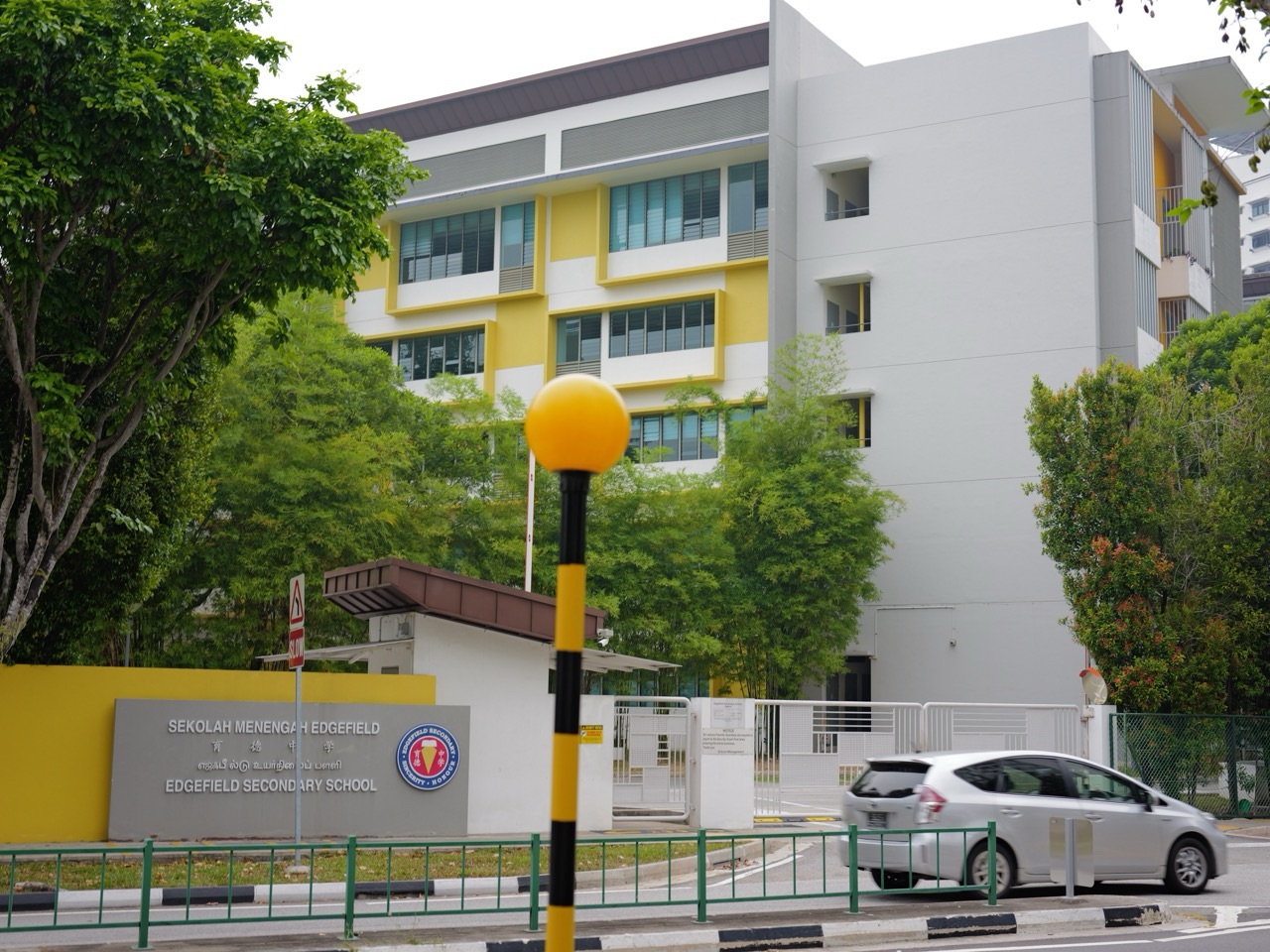
Posting Group 2 (PG2) is a Secondary 1 admission pathway, not a limit on taking part in a Punggol secondary school’s Applied Learning Programme (ALP) or Learning for Life Programme (LLP). These programmes help students connect academic learning with real-world problem-solving, creativity, values, leadership and community participation. In 2026, the four mainstream Punggol secondary schools describe genuinely different signatures: Edgefield Secondary emphasises entrepreneurial and future-ready problem-solving alongside Taekwondo character education; Greendale Secondary develops Design, Technology and Engineering and Outdoor Adventure; Punggol Secondary identifies Environment Education and Community and Youth Leadership; and Yusof Ishak Secondary offers sustainability-focused STEM and leadership for social action.
For families preparing a Secondary 1 posting decision or supporting a newly admitted PG2 student, the useful question is what the child will actually do in these programmes. An ALP is not the same as an examinable G2 or G3 subject, and an LLP is not a guarantee of a formal student-leader appointment or an automatic CCA bonus point. School-wide experiences, elective opportunities, selected competitions, enrichment and CCA activities may have different eligibility and participation arrangements. Check each school’s dated 2026 programme pages and its current 2027 school instructions before promising that an individual pupil will receive a particular activity.
- PG2: Posting Group 2 is used for admission; a pupil can have diverse academic and non-academic interests.
- ALP: Applied Learning Programme—connecting knowledge and skills to authentic problems or applications.
- LLP: Learning for Life Programme—developing values, character, leadership and participation through purposeful experiences.
- Edgefield ALP: G.E.M., entrepreneurial thinking and a Future Ready Programme involving complex practical scenarios.
- Edgefield LLP: Character Education through Sports, anchored on Taekwondo; check current cohort arrangements.
- Greendale ALP: STEM Design, Technology and Engineering, including coding, Arduino, design thinking and practical projects.
- Greendale LLP: Outdoor Adventure, including skills such as kayaking, rock-climbing and orienteering where organised.
- Punggol Secondary: Environment Education ALP and Community and Youth Leadership LLP according to its 2026 principal’s message.
- Yusof Ishak ALP/LLP: S4TEM@YI sustainability and smart-city STEM; YI LEAD+ leadership and community service.
- Next step: Ask which experiences are compulsory for the cohort, which are selected opportunities, and how the child can participate meaningfully.
Definition lock: ALP and LLP are not academic streams
The terms Applied Learning Programme and Learning for Life Programme describe school experiences, not the subject-level bands of Full Subject-Based Banding. Under Full SBB, PG2 is the student’s admission group, and G1, G2 and G3 refer to the curriculum demand of individual subjects. An ALP may draw upon Science, Mathematics, technology, the arts or design; an LLP may use sport, service, outdoor activity or leadership to develop values and skills. Neither automatically changes a student’s formal G level.
This distinction is valuable because parents sometimes assume that a pupil at G2 cannot join a demanding innovation activity or develop sophisticated leadership. That is not a reasonable conclusion from the posting label. Students bring varied strengths: one may reason well with real materials, another may communicate clearly with peers and another may excel in planning. These abilities can be exercised and developed in authentic projects regardless of the single total PSLE Score used for entry.
At the same time, school-based opportunities have real rules. A programme may be school-wide at one stage and selective at another. A challenge involving drones, robotics or overseas learning may require application or selection. A school’s promotional description is evidence that the experience exists in its programme, not a contractual promise that every child will personally receive the identical activity in 2027.
This article focuses on the four local schools’ public programme identities and how PG2 families can interpret them responsibly. The separate school-choice guide owns admissions and PSLE score ranges, while the LEAPS article explains formal co-curricular recognition.
What applied learning is supposed to achieve
Applied learning asks students to use classroom knowledge to address a tangible or authentic problem. A pupil may know how an electric circuit works in a Science lesson yet discover that designing a working alarm also requires careful testing, troubleshooting and communication. A student may understand percentages in Mathematics yet need to choose a sensible way to estimate water usage in a sustainability project. The activity bridges formal concepts and practical decisions.
The valuable step is explanation. A model that works once may not reveal understanding. Ask the student why they chose a particular design, how they evaluated another option and what evidence supports the result. If the prototype fails, what would they test next? The pupil is learning how knowledge transfers, not merely creating an attractive object.
Applied learning also encourages interdisciplinary reasoning. Real problems do not arrive labelled as “Mathematics Chapter Four” or “Science Topic Two”. A town-planning or environmental challenge may need data, language, digital tools and social understanding. Students must decide which ideas are relevant. The ability to make that selection is a form of deeper learning that examination drills may not always exercise.
Families should therefore ask what a programme teaches rather than only what equipment is used. A child can benefit from an activity involving ordinary cardboard if it develops careful design thinking; a glamorous robotic demonstration is educationally limited if pupils never understand or test what they are doing.

What a Learning for Life Programme adds
Learning for Life Programmes place stronger emphasis on values, social participation, leadership and personal development. The particular vehicle varies. One school may use sport to develop respect and resilience; another may use outdoor challenge or community service. A good experience makes the intended values visible through actual decisions and reflection.
For example, resilience is not simply continuing regardless of pain or danger. It may mean preparing for a challenge, responding constructively to a setback and learning when to ask for help. Leadership is not necessarily being chosen as the loudest pupil. It can mean listening carefully, organising a group or making sure someone else can participate. Respect is not a slogan on a wall; it is visible in how students respond to different abilities.
Parents can discuss LLP experiences by asking about one moment when the child had to make a decision. Was there a disagreement? Did the team consider safety? Did somebody need extra support? What did the pupil learn about themselves? These questions help the experience become transferable to other areas of life.
LLPs should not be mistaken for automatic LEAPS 2.0 attainment. Some related activities may be recognised under relevant school and MOE criteria, but formal co-curricular levels depend on the actual records and requirements. Ask the school rather than promising a bonus point from attendance at one programme.
Edgefield Secondary: the G.E.M. Applied Learning Programme
Edgefield Secondary School’s official Applied Learning Programme page, updated in August 2026, describes G.E.M.—Growing the Edgefield Mindset. Its central idea is developing problem-solving, entrepreneurial and future-ready capabilities. The programme encourages creative thinking, collaboration, spotting opportunities and learning constructively from failure. It is closely linked to the school’s broader Future Ready Programme.
The public page gives examples of scenario-based challenges: using drones to search in a disaster simulation, considering food and water shortages, exploring the experience of diverse communities and investigating responses to rising sea levels. These examples show an educational approach, not a prediction that every future pupil will undertake each scenario. The important feature is the expectation that students connect knowledge with a practical decision.
Imagine a PG2 pupil who enjoys solving problems but lacks confidence in extended academic writing. A hands-on design challenge may give the student a starting strength. The teacher can ask the learner to explain the decision in a short, structured report, connecting practical reasoning with clearer language. Another pupil who writes well but avoids trying unfamiliar ideas can practise making and testing a proposal. Applied learning reveals different routes into competence.
Parents attending Edgefield’s open house should ask which G.E.M. experiences the current Secondary 1 cohort undertakes, whether later enrichment is selected and how project learning is assessed. The goal is to understand the real teaching sequence, not simply admire the programme title.
Edgefield’s Future Ready Programme: the problem behind the prototype
Edgefield describes its Future Ready Programme as addressing complex social, technological and environmental scenarios. The school’s examples are memorable because the problems have consequences: an emergency search, scarcity of resources or adaptation to changing sea levels. But the lesson is not simply that students can operate technology. They must identify constraints, design a possible response and evaluate it.
Take the illustrative disaster search scenario. A successful response requires understanding area, time and the value of better information. Pupils might discuss what an aerial perspective reveals, where data remain uncertain and how a team should prioritise action. The topic naturally draws on mathematical estimation, scientific observation, digital systems and communication. The underlying skill is making reasoned decisions with limited information.
A parent can help by asking the student to explain the trade-off, not merely the gadget. Would a faster tool always be safer? What is lost if data are incomplete? Who needs to receive the result? These questions turn an exciting demonstration into critical thinking. The child learns that even an impressive technology has limits.
For a PG2 pupil, the opportunity to practise such reasoning is not a substitute for learning core G2 or G3 subjects. It can make the academic ideas more meaningful and show where foundational skills need strengthening.
Edgefield LLP: character through Taekwondo

Edgefield’s Learning for Life Programme page, updated in September 2026, describes Character Education through Sports, anchored on Taekwondo. It states that Year 1 and Year 2 students participate in Taekwondo training during curriculum time, with further opportunities in upper secondary under school arrangements. The programme connects physical practice to self-discipline, respect, resilience and responsible conduct.
This is more than a fitness story. A pupil may learn to repeat a movement carefully, follow safety instructions and persist through a skill that initially feels awkward. The values become meaningful when the student behaves respectfully towards an opponent or helps a less confident peer. Parents should ask how teachers guide reflection and how skills are transferred to everyday school conduct.
A teenager’s physical capacity, comfort and medical considerations vary. Do not assume that every child should train without adjustments or that advanced competition is compulsory. The school should explain its current programme and any appropriate modifications or support. A student can learn valuable character lessons without being on an elite team.
This LLP may particularly appeal to families who value structured physical education, but it should not be used to rank children by strength or to claim that other schools lack values education. Each school develops values through a different vehicle.
Greendale Secondary: Design, Technology and Engineering
Greendale Secondary School’s official Applied Learning Programme page, updated in July 2026, describes a STEM programme in Design, Technology and Engineering. Students are introduced to designing, coding and building, including the use of Arduino microcontrollers and practical prototyping methods. The programme links technical work with design thinking, problem-solving and sustainability.
The page describes Secondary 1 experiences in coding and electronics using examples such as LEDs, buzzers and servo motors. It also mentions three-dimensional modelling, 3D printing and laser cutting. These details show why a student should be asked to explain a project rather than merely hold it up for a photograph. Lighting an LED is easy to admire, but the educational question is how the pupil decided the inputs, outputs and control logic.
Greendale’s hydroponics and aquaponics context is another strength of the public description. Students can explore technology as a tool for sustainability rather than something separate from community needs. A simple sensor or controller raises useful questions about reliable measurements, environmental variables and the limits of automation.
For a PG2 pupil, this can create opportunities to connect G2 Mathematics reasoning and Science concepts with actual construction. A student who finds textbook variables abstract may better understand them when controlling a device, provided the teacher makes the connection explicit.
Greendale: building complexity across Secondary 1 and 2
The school’s ALP description sets out a developmental sequence. Secondary 1 pupils learn foundational coding and electronics, while Secondary 2 pupils encounter more advanced applications, mobile interfaces and emerging technologies. Greendale also describes a Singapore Institute of Technology Community Challenge in which students work with community partners and use design thinking to propose solutions to real problems.
The interesting feature of this programme is iteration. A pupil might propose a device that works in theory but discover practical constraints in construction. Another might design a solution that a user cannot operate comfortably. The next step is to gather feedback and revise the concept. This teaches that successful engineering is not simply getting the first idea onto paper.
A family can ask the child how the problem was defined, which alternative was rejected and what was changed after testing. Those questions are more useful than asking only whether the pupil won a competition. A real community problem also demands listening to people who experience it; technical cleverness alone may not produce a helpful solution.
The official page mentions selected enrichment and external opportunities. Families should distinguish participation in the standard learning sequence from selective competitions or overseas experiences. The 2026 description should not be advertised as a universal 2027 entitlement for every student.
Greendale LLP: Outdoor Adventure and responsible risk
Greendale’s Learning for Life Programme page, updated in May 2026, identifies Outdoor Adventure as the vehicle for character development. It describes activities such as kayaking, rock-climbing and orienteering, and connects them to teamwork, leadership, personal growth and risk awareness. Actual activities and participation depend on the school’s programme and safety arrangements.
Outdoor learning can reveal strengths not always visible in a classroom. A quiet student may excel at reading a map, encouraging a nervous peer or preparing equipment carefully. Another may learn that confidence requires checking safety information rather than acting impulsively. These are meaningful experiences when instructors build reflection into the activity.
Parents should avoid equating resilience with ignoring fear or injury. Appropriate challenge involves safety, supervision, preparation and the possibility of asking for help. Students with health, physical or other educational support needs may require an individual discussion with the school about suitable participation and arrangements.
The purpose of an Outdoor Adventure LLP is not to produce an elite climber from every student. It is to help teenagers develop sound judgement, cooperation and confidence through appropriate experience. A pupil who learns to assess a risk and communicate a concern may have gained something more enduring than a photograph at the summit.
Punggol Secondary: Environment Education as applied learning
Punggol Secondary School’s official principal’s message, updated in May 2026, states that its ALP is in Environment Education. The programme aims to help students appreciate the relationship between Science and Nature in sustainable living. The school also emphasises developing self-directed, adaptable and future-ready students. These are valuable programme signals, but the exact activities and timetable should be checked in the current school documents.
Environment Education becomes substantive when pupils investigate systems rather than merely repeat the word “green”. A student might explore resource use, biodiversity, waste, energy or the connections between urban life and natural habitats in a school-approved project. The school should specify actual tasks; these are examples of how environmental thinking can be taught, not claims about what every Punggol Secondary pupil has completed.
The educational opportunity is to connect observation with evidence. A child who notices litter near a waterway should not immediately conclude that one activity causes all local pollution. They can learn to collect appropriate observations, identify other possible explanations and propose proportionate improvements. That is scientific method applied to civic life.
For PG2 students, the programme can connect subject knowledge with a familiar town. Punggol’s parks, waterways and built environment provide meaningful context, but local familiarity does not remove the need for careful reasoning. Useful environmental education asks how systems actually work.
Punggol Secondary LLP: Community and Youth Leadership
The same 2026 principal’s message identifies Community and Youth Leadership as Punggol Secondary’s Learning for Life Programme. Its stated aim includes developing active citizens who care for people and contribute to the community. The educational question is how a pupil learns to move from good intentions to responsible, useful action.
Leadership can start small. A student might learn to organise a team, listen to a younger pupil’s difficulty or prepare materials for a school-supported service activity. Good leadership requires a willingness to understand the people being helped rather than treating them as a background for the student’s achievements. A meaningful project begins with a real need and an honest assessment of what can be done.
A parent can ask what role the child actually played and how the pupil evaluated the outcome. Did the initiative reach its intended participants? Was feedback collected? What would the team change next time? These questions connect service, planning and reflection to lifelong skills.
The school’s programme description should not be translated into a promise that every student will hold a leadership title. Opportunities and recognition can have criteria. A pupil who contributes reliably without formal office can still learn and demonstrate responsibility.
Yusof Ishak Secondary: S4TEM@YI for sustainable and smart cities
Yusof Ishak Secondary School’s official ALP page describes S4TEM@YI, a STEM programme focused on sustainability and smart-city development. The programme includes interdisciplinary learning, experiences involving urban farming, coding and aeronautics, and collaboration with external experts. The school’s public examples make the environment of Punggol especially relevant because the town is changing through technology, residential development and the nearby digital district.
The programme encourages students to apply Science, Technology, Engineering and Mathematics to social and environmental questions. A pupil may encounter a design challenge requiring both scientific understanding and a consideration of who will use the outcome. For example, an urban farming activity can raise questions about water, light, nutrients, energy use and practical constraints. The engineering solution should respond to evidence rather than appearance.
Yusof Ishak’s page also discusses STEM clubs and robotics opportunities for students who wish to deepen their interests. These extracurricular opportunities should not be confused with the core ALP. Parents should ask which activities are school-wide and which require selection, extra time or CCA participation.
A PG2 student who likes practical scientific work may find such experiences motivating. That does not mean the student automatically becomes eligible for a particular university or technical career. The programme can help the child discover and develop interests, while formal academic subject and post-secondary requirements remain distinct.
Yusof Ishak LLP: YI LEAD+ and leadership for the greater good
Yusof Ishak Secondary School’s Learning for Life Programme, YI LEAD+, is described on its official 2026 page as nurturing honourable leaders for tomorrow. It highlights student leadership development, communication, collaboration, critical thinking, ethical judgement and service to peers and the wider community. The emphasis is on influence used for the benefit of others, not simply on authority.
A teenager might learn that leading a group is harder than giving instructions. Members have different ideas, limited time and competing responsibilities. The leader must hear concerns, divide work fairly, make a decision and accept accountability for the outcome. These skills matter in classrooms, CCAs, workplaces and family life.
The official page includes opportunities for leadership workshops, camps, dialogues and student-led community initiatives. But a parent should not assume that every individual pupil receives identical leadership training or a senior appointment. Check the relevant cohort’s programme structure and how students can participate.
For a PG2 learner, ethical leadership is not dependent on a particular subject level. A student who is attentive to others and follows through on responsibilities can develop into a valued contributor. The LLP is one structured setting in which those capabilities may be exercised.
How the four Punggol programmes differ without making a league table
The school descriptions reveal different educational emphases. Edgefield connects entrepreneurial thinking with future-oriented problem-solving and character education through Taekwondo. Greendale centres engineering design and Outdoor Adventure. Punggol Secondary foregrounds environment and community leadership. Yusof Ishak combines sustainability-focused STEM with leadership for the greater good. These differences are meaningful when tied to a particular child.
A pupil who loves experimenting with electronics may be especially curious about Greendale’s published engineering sequence. Another who enjoys practical environmental questions may explore Punggol Secondary or Yusof Ishak. A child interested in scenario planning and entrepreneurial creativity may want to ask more about Edgefield. But these are reasons to investigate, not definitive ranking outcomes. A teenager can discover unexpected interests in any school.
School culture, teacher support, actual subject levels, CCAs, commuting and admissions eligibility remain important. A signature programme should not erase those factors. A family that chooses the farthest possible campus solely because of an attractive ALP headline may create a difficult daily routine without understanding how much of the advertised opportunity is guaranteed.
The responsible comparison asks what is taught, who participates, what evidence of learning is produced and how the experience fits the pupil’s whole life.
What to ask at an open house about ALP
Ask whether the programme is experienced by all pupils at a particular year level or whether some activities are selected. If the school shows a drone, robot, design prototype or garden, ask what students were required to think through. How was the problem identified? Which skills were taught? What were the success criteria? Did students revise their work using feedback?
A well-designed project should create an opportunity for a pupil to learn something transferable. A learner might discover how to formulate a testable question, calculate a resource estimate or explain a design decision. The equipment is interesting, but the reasoning provides the educational value. Ask a student guide to describe one mistake made during a project and what happened next.
Also ask how the school supports a pupil who begins with limited technical experience. An ALP should not be treated as an activity only for children who already own programming devices or have private robotics lessons. Different schools may provide different levels of scaffolding, so ask about the actual entry expectations.
Finally, confirm timing and resources. Some experiences occur during curriculum hours, while optional enrichment can affect CCA and home schedules. A parent should know which commitments are real before presenting the programme as a reason to choose the school.
What to ask at an open house about LLP
For an LLP, begin with the intended character outcome rather than the activity title. If the school uses sport, how are respect and resilience taught and discussed? If it uses outdoor adventure, how do students learn responsible risk assessment and support one another? If it uses service or leadership, how is a real community need identified and addressed?
Ask what happens when a child is shy, physically inexperienced or unsure about a particular task. Good character education should make meaningful participation possible for diverse learners. The current school can describe safety and support arrangements where relevant. Parents should avoid promising a teenager that an unfamiliar activity will be effortless.
Reflection matters. After a project or challenge, students should be encouraged to explain what they learned about teamwork, ethics or responsibility. A long day of activities without reflection may still be enjoyable, but it may miss an opportunity to make the learning explicit.
The most revealing open-house question can be simple: “Could a current student tell us about a time the programme changed how they approached a problem?” An authentic example can convey more than a list of adjectives.
A PG2 student can contribute without being the top scorer
Applied and character-based programmes offer valuable settings for pupils with uneven academic profiles. A teenager may struggle with extended essays but excel at organising materials and testing a design. Another may be academically strong but uncertain when working with peers. Both can improve by engaging in projects that require different strengths.
Teachers can help pupils recognise and name these capabilities. A student who is meticulous about recording data is learning reliability and scientific judgement. A student who listens carefully to people affected by a community problem is practising empathy. A pupil who revises a failed prototype is building persistence based on evidence. These skills are relevant to future study and work, even if they do not immediately change a subject grade.
Parents should reinforce the distinction between recognition and comparison. “You explained how your design worked” is a more useful observation than “Your team is better than the other group.” The first describes a capability the child can practise again. The second may encourage competition without deeper understanding.
An ALP or LLP is successful when it helps the teenager become a more capable and responsible learner, not merely accumulate a list of programme names for a portfolio.
How applied learning can strengthen G2 Mathematics and Science
Suppose pupils are designing a system to monitor water use. The project may involve reading measurements, plotting data and deciding which comparison is appropriate. A student who finds ratios abstract can begin to see why proportional reasoning matters. But the teacher must make the connection explicit, or the activity may remain a novelty.
In a coding task, an instruction such as “repeat three times” can help a pupil recognise patterns, sequencing and conditional logic. In an environmental investigation, choosing a variable to measure can develop scientific method. In a design project, making a model may reveal geometric constraints. The applied context gives concepts a purpose.
A PG2 family can ask the child to explain the mathematical or scientific principle behind one project. If the teenager says only “we made a machine,” prompt a deeper account. What quantity was measured? What changed? Why was a particular material selected? How was success tested? This discussion can reinforce both academic and applied learning.
The programme should not be used to replace syllabus mastery. A child who cannot solve an equation still needs appropriate instruction, even if the student enjoys robotics. The strongest education joins sound foundations with meaningful application.
Language skills can develop through ALP and LLP too
An engineering idea does not become useful if nobody can understand the proposal. A community project needs clear instructions and respectful conversation. A design report must distinguish evidence from assumption. These are language tasks, even when the activity is described primarily as STEM or leadership.
Parents can ask a student to produce a short explanation of a project for an unfamiliar reader. What problem was being solved? What did the team try? What evidence shows that the result worked? What would be changed? The answer develops structure, precision and audience awareness, skills that also matter in G2 or G3 English.
In an LLP activity, students may need to listen carefully to group members, explain a safety decision or present a reflection. A quiet child can practise contributing one relevant observation before attempting a longer explanation. The goal is meaningful communication, not performative confidence.
These connections make experiential learning educationally valuable across academic profiles. A pupil need not be the strongest writer in class to begin learning how to communicate a technical or social idea clearly.
The difference between ALP, LLP and CCA
An ALP is a signature school learning programme with an applied-learning emphasis. An LLP focuses on character, values and life capabilities. A CCA is a co-curricular activity in which the student participates according to school allocations and arrangements. They may intersect—for example, a pupil interested in an ALP technology topic might also join a robotics CCA—but they are not synonyms.
The distinction prevents parents from reading a school’s ALP description and assuming a pupil can choose the entire subject as a formal examination elective. A Secondary 1 robotics activity does not automatically mean the school offers G2 Computing at upper secondary. Likewise, an LLP involving leadership does not mean every participant becomes a prefect or receives the same LEAPS level.
Each activity has its own purpose and administrative conditions. A student may encounter some programme elements during school hours and others through elective extension or CCA. Ask where each activity belongs in the timetable and how attendance or achievements are recorded.
For a family making school choices, it is helpful to map these offerings separately. The resulting picture is more honest than a long promotional list that blends required lessons, optional clubs, selected competitions and formal examined subjects into one supposed entitlement.
The relationship with LEAPS 2.0 recognition
LEAPS 2.0 recognises Participation, Achievement, Leadership and Service through the applicable framework. Some experiences linked to an LLP, CCA or school-endorsed project may contribute to a student’s record if they meet the recognised criteria. But attendance at an ALP session does not automatically translate into a formal bonus point. Parents should ask the school how each activity is classified.
A child who completes a school-endorsed service project might develop leadership and community awareness, and some related work may be recorded according to the official school procedures. Another who undertakes a classroom design exercise may gain significant skills without a separate co-curricular attainment. Both experiences can be educationally valuable.
Families should avoid selecting a school or programme solely because they imagine a guaranteed two-point bonus at graduation. The LEAPS outcome depends on attainment across domains and the rules applied to the student. A strong co-curricular record also does not override missing examination prerequisites for a post-secondary course.
The proper educational order is to choose meaningful participation, follow the school’s procedures and recognise formal attainment accurately when it occurs.
Are programmes different for G1, G2 and G3 pupils?
Some ALP or LLP experiences may be designed for a broad school cohort, while particular activities may be adapted or offered selectively. Families should not assume that every programme is split by Posting Group or that everyone takes an identical lesson. The school’s timetable, curriculum design and support arrangements matter.
A student who studies Mathematics at G2 may be capable of sophisticated project planning and practical design. The teacher can provide suitable mathematical support without excluding the pupil from meaningful problem-solving. Another pupil may take a more demanding subject but need help with collaboration. The relevant differences are specific skills and support needs, not the global judgement that one group should lead and another should only observe.
Ask the school how participation works for students with different learning profiles. What support is available if a child struggles with written explanation, a physical activity or technology? Which tasks are core to the curriculum, and which are enrichment opportunities? Clear answers are especially important for families planning suitable support in advance.
A genuinely flexible approach maintains educational challenge while recognising that students learn and contribute in different ways.
How to compare a signature programme with the commute
An attractive ALP can tempt a family to overlook daily travel. But secondary school is not a one-day exhibition. A pupil will attend lessons, CCAs and other activities across years. Time spent on the bus, LRT or walking route affects sleep, homework, exercise and family life. A school programme has to be evaluated within that ordinary schedule.
For the four Punggol schools, check the actual address and realistic journey from the family’s home. Edgefield is on Punggol Field, Greendale on Edgedale Plains, Punggol Secondary on Edgefield Plains and Yusof Ishak on Sumang Walk. The route may vary greatly depending on the household’s neighbourhood and transport connections.
Ask whether optional programme extensions have later dismissal times, extra trips or specific equipment requirements. The child’s interest may justify those commitments, but the family should know the actual cost in time and energy. A highly engaged student who gets adequate rest may learn more than one who attends several prestigious activities while chronically exhausted.
The right choice balances programme fit with formal admissions eligibility, a workable daily routine, subject options and student wellbeing. No single school signature determines the entire experience.
A ten-question ALP and LLP research checklist
Begin with the actual programme name and official source. Which year was the page last updated? What is the central learning objective? Which activities are compulsory for all students and which require selection? What classroom concepts are applied? How does the school provide feedback? What evidence of learning does the child produce?
Next ask about logistics. How often does the activity take place, what safety or equipment requirements exist, and what happens for a pupil needing appropriate support? Are there additional expenses? Can a student deepen the interest through a CCA or elective, and are those opportunities genuinely available to the cohort?
Then ask about impact. How can a student explain what changed in their thinking? Does the programme require iteration after failure? Does it encourage ethical decisions or contribution to others? Are pupils learning to evaluate evidence or simply repeat an attractive presentation?
Finally, ask the child which programme evokes real curiosity. An adult can research the facts, but the pupil has to participate. A school should be chosen for the teenager who will attend, not the parent who is impressed by a brochure.
Three hypothetical PG2 students choosing experiences
The hands-on technical learner. This pupil enters through PG2, finds some abstract mathematics difficult and enjoys building simple electronic projects. The family asks about Greendale’s Design, Technology and Engineering programme and Yusof Ishak’s STEM experiences, then considers actual school eligibility, transport and the child’s broader needs. The project interest becomes motivation to improve mathematical and scientific foundations, not a substitute for them.
The creative problem-solver. Another pupil enjoys discussing future challenges and finding unusual solutions. Edgefield’s public Future Ready and G.E.M. programme descriptions invite further investigation. The family asks which year-level activities are ordinary curriculum and which are selected enrichment. The pupil learns to explain a proposal, test evidence and cope constructively when an idea fails.
The community-minded teenager. A third pupil is interested in environmental matters and helping neighbours. Punggol Secondary’s environment and youth-leadership themes, and Yusof Ishak’s sustainability and community leadership programmes, may be worth exploring. The family checks actual programme experiences and whether the student can participate meaningfully without overloading the timetable.
These examples are fictional, not recommendations based on live vacancies or guarantees of a particular school place.
What happens if the child is assigned a different school?
A family may choose a school partly because of its ALP or LLP and receive a different posting outcome. The child should not be told that this has ended all opportunities for applied learning. Other schools have their own programmes, subjects and CCAs. A teenager may discover new interests after joining a different community.
The next action is to read the assigned school’s current programme information, attend orientation and ask the child what sounds engaging. If the pupil already has a strong interest, ask what appropriate opportunities exist within the school or through approved activities outside class. Avoid promising a club or course without checking selection and timetable rules.
A child may also develop the same transferable skills through ordinary classroom work. Problem-solving, collaboration, evidence and leadership do not exist only inside one branded programme. A motivated student can learn to plan a project, communicate results and reflect on decisions across many contexts.
Parents should help the teenager begin positively in the actual school rather than spend the first term mourning a signature programme at another campus. School fit evolves through participation and relationships, not only the original shortlist.
Frequently asked questions about PG2, ALP and LLP
Can a PG2 student participate in an ALP?
PG2 itself does not bar participation. Actual activities, year-level design and any selection rules are determined by the school.
Is an ALP the same as G2 Science or Computing?
No. An ALP is an applied-learning experience, while G2 Science or Computing is a formal subject at a defined level. The two may connect but are not interchangeable.
Does every student at Edgefield learn Taekwondo?
Edgefield’s September 2026 LLP page describes Taekwondo training for Years 1 and 2 during curriculum time. Check the current cohort’s timetable and arrangements, including appropriate individual support.
What is Greendale’s main applied-learning focus?
Its July 2026 official page describes a STEM ALP in Design, Technology and Engineering, including coding, Arduino, design thinking and practical building experiences.
Does Greendale’s Outdoor Adventure LLP guarantee an overseas trip?
No. The school describes outdoor experiences and other opportunities, but individual activity access and selection conditions must be confirmed. Do not assume every pupil participates in a particular trip.
What does Punggol Secondary say its ALP and LLP focus on?
Its May 2026 principal’s message identifies Environment Education as its ALP and Community and Youth Leadership as its LLP. Ask the school for the current detailed programme.
What is S4TEM@YI?
It is Yusof Ishak Secondary’s sustainability and smart-city focused STEM Applied Learning Programme, according to the school’s published page.
Is YI LEAD+ a guaranteed student-leader appointment?
No. It is a leadership-development programme with experiences and opportunities. Formal leadership roles and participation arrangements follow the school’s current criteria.
Does ALP automatically earn LEAPS points?
No. LEAPS 2.0 attainment has its own domains and recognition requirements. The school can explain whether a particular activity contributes.
Can an ALP replace a weak Mathematics foundation?
No. Applied contexts may make concepts meaningful, but the pupil still needs appropriate teaching and independent mastery of the formal subject syllabus.
Should parents choose only from schools whose ALPs match a current hobby?
No. Consider school culture, admissions eligibility, teaching, CCA, subject-level offerings, commute and the teenager’s broader interests. Interests can change.
How can a family verify the 2027 programme?
Use each school’s current official page, prospectus, open house and instructions. A 2026 description is a useful starting point but not a guarantee that every activity is unchanged.
Your Next Step
Read the current official ALP and LLP descriptions of the schools your child is genuinely considering. Ask what each programme teaches, which activities pupils actually undertake and whether some opportunities require selection. Then discuss which kind of problem the teenager would enjoy solving and how the programme fits the child’s broader education and weekly routine.
This PG2 article owns the Applied Learning and Learning for Life comparison across the four Punggol secondary schools. The general school-choice guide deals with PSLE posting and historical ranges; the LEAPS guide deals with co-curricular points; the subject-level article explains G1/G2/G3 curriculum readiness. Those separate roles keep the information useful without duplicating an entire admissions guide.
Official school sources and related reading
- Edgefield Secondary: Applied Learning Programme, G.E.M., August 2026
- Edgefield Secondary: Learning for Life Programme, Taekwondo, September 2026
- Greendale Secondary: Applied Learning Programme, DTE, July 2026
- Greendale Secondary: Learning for Life Programme, Outdoor Adventure, May 2026
- Punggol Secondary: Principal’s message describing Environment Education and Youth Leadership, May 2026
- Yusof Ishak Secondary: S4TEM@YI Applied Learning Programme
- Yusof Ishak Secondary: YI LEAD+ Learning for Life Programme
- MOE SchoolFinder
- eduKatePunggol: PG2 school choice
- eduKatePunggol: PG2 LEAPS, CCAs and leadership


