
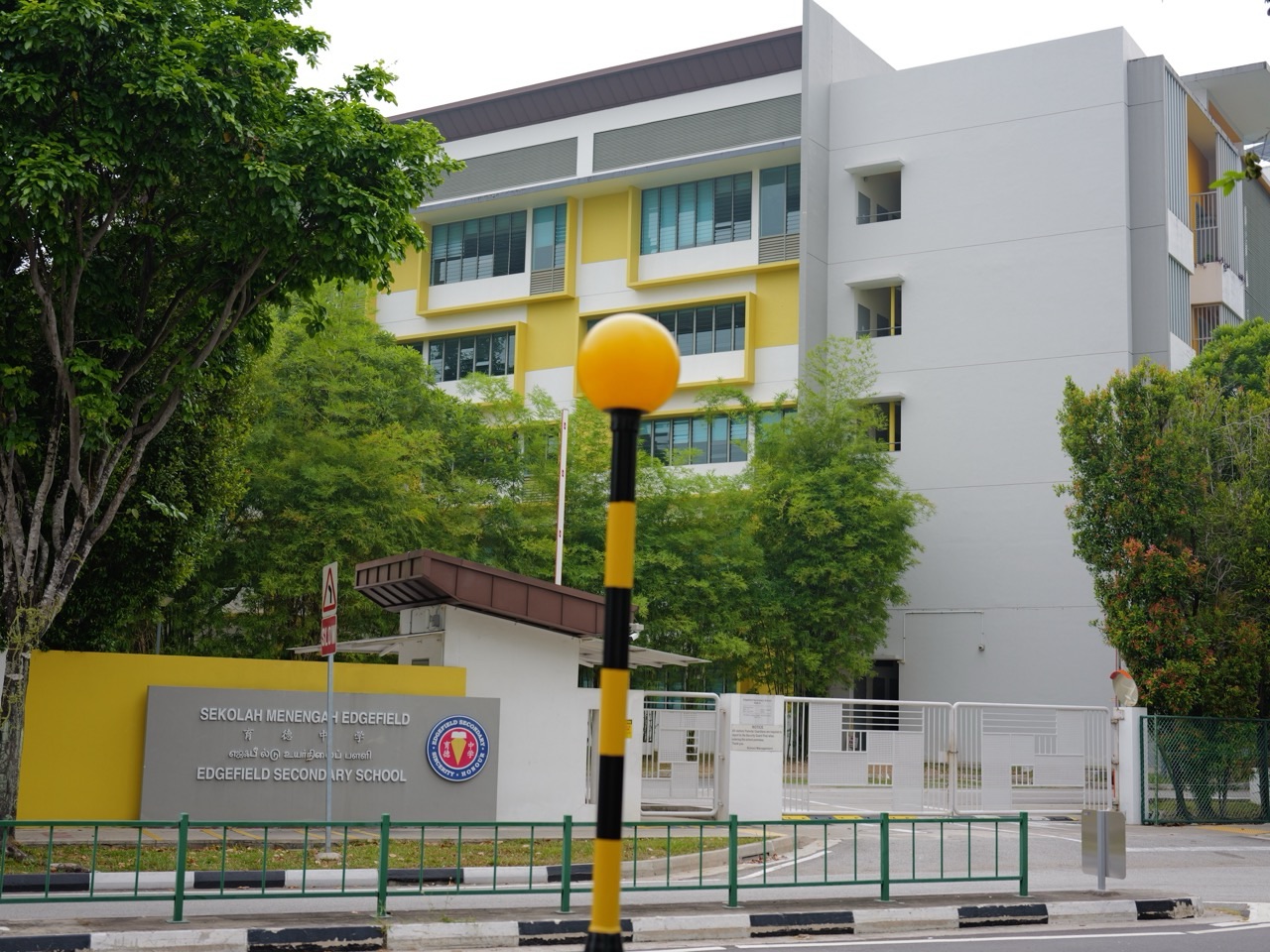
PG3 means Posting Group 3, a Secondary 1 admission route under Singapore’s Full Subject-Based Banding system. It does not determine which school-based Applied Learning Programme (ALP) or Learning for Life Programme (LLP) a student is automatically entitled to join. ALPs connect classroom knowledge with real-world applications; LLPs develop character and life competencies through authentic experiences. In Punggol, these programmes are useful school-choice considerations precisely because different secondary schools offer different emphases.
Official 2026 school pages show the variety. Edgefield Secondary describes its G.E.M. entrepreneurial ALP and Taekwondo-centred LLP. Greendale Secondary highlights Design, Technology and Engineering learning with coding and an Outdoor Adventure LLP. Punggol Secondary describes Environment Education and Community and Youth Leadership. Yusof Ishak Secondary explains a sustainability-focused STEM ALP and a leadership-oriented YI LEAD+ LLP. Parents should compare actual learning, participation and suitability instead of treating one school’s signature programme as a guaranteed future career or a substitute for Secondary 1 posting eligibility.
- PG3 determines an entry posting route; ALP and LLP describe school-based distinctive learning opportunities.
- ALP connects subject knowledge to authentic problems through design, research, inquiry or application.
- LLP develops character, relationships, responsibility and life competencies through shared experiences.
- Edgefield: G.E.M. entrepreneurship and character through sports anchored on Taekwondo.
- Greendale: Design, Technology and Engineering ALP and Outdoor Adventure LLP.
- Punggol Secondary: Environment Education ALP and Community and Youth Leadership LLP.
- Yusof Ishak Secondary: S4TEM@YI sustainability/smart-city STEM and YI LEAD+ leadership.
- Read official current school pages; programme descriptions do not establish a guaranteed place, activity, DSA offer or examination advantage.
Definition lock: PG3, ALP and LLP across four local schools
| School | Published ALP focus | Published LLP focus |
|---|---|---|
| Edgefield Secondary | G.E.M. entrepreneurial mindset | Character through sport and Taekwondo |
| Greendale Secondary | Design, Technology and Engineering | Outdoor Adventure |
| Punggol Secondary | Environment Education | Community and Youth Leadership |
| Yusof Ishak Secondary | S4TEM@YI sustainable smart-city STEM | YI LEAD+ honourable leadership |

In this guide
- School signature programmes are useful, but they are not admission shortcuts
- Definition lock: what is an Applied Learning Programme?
- Definition lock: what is a Learning for Life Programme?
- Why ALP and LLP should be considered together
- Edgefield: Growing the Edgefield Mindset (G.E.M.)
- What a student can learn from a simulated entrepreneurial problem
- Edgefield’s LLP: character through Taekwondo
- Greendale’s ALP: Design, Technology and Engineering
- What coding and prototyping can teach without creating a gadget obsession
- Greendale’s SIT Community Challenge and collaborations
- Greendale’s LLP: Outdoor Adventure
- Punggol Secondary’s ALP: Environment Education
- A local sustainability question students can investigate
- Punggol Secondary’s LLP: Community and Youth Leadership
- Yusof Ishak’s ALP: S4TEM@YI sustainable smart-city STEM
- What a sustainable smart-city project might involve
- Yusof Ishak’s LLP: YI LEAD+
- How the four schools differ in one comparison
- ALP and LLP are not the same as DSA
- ALP and LLP do not guarantee a particular CCA
- Look for evidence of real learning rather than polished showcases
- How a Punggol parent can use school open houses
- How to evaluate fit for a child who is undecided
- What to ask about assessment and progress
- The Punggol Digital District connection is a context, not a promise
- A four-week family comparison exercise
- Avoid four common programme misunderstandings
- The lasting purpose: apply ideas and contribute to people
School signature programmes are useful, but they are not admission shortcuts
Parents often discover an attractive school project and assume that a child who enters through PG3 will automatically gain the most advanced opportunities in that programme. That is an unsafe conclusion. Posting Group eligibility and actual Secondary 1 allocation are governed by MOE’s admission framework. A school’s ALP or LLP explains part of the learning environment available after entry, but it does not by itself override admission criteria.
A good school choice therefore has at least two stages. First, establish which schools are realistic and eligible for the child’s entry route and actual PSLE information. Second, examine the school experience: academic subjects, wellbeing, transport, CCAs and signature programmes. A school may offer impressive activities but still be a poor everyday fit if the commute or workload is unsustainable.
Treat ALP and LLP as meaningful evidence about a school’s priorities, not an entitlement printed on an admissions form. When a particular event or advanced experience matters to a family, ask who participates, how students are selected and whether that opportunity is planned for the relevant cohort.
Definition lock: what is an Applied Learning Programme?
An Applied Learning Programme connects academic knowledge to practical, authentic contexts. A student might use design thinking to identify a community problem, build a prototype, interpret environmental data or apply coding to a physical system. The distinguishing feature is not the presence of shiny equipment. It is the process of using ideas from different subjects to respond to a real question or need.
Good applied learning begins with evidence. What is the problem? Who experiences it? What constraints exist? Which concepts could help? How would a proposed idea be tested? A pupil who only repeats a demonstration without understanding the purpose has not achieved the same depth as one who can explain why the design works or fails.
Different schools choose different themes, so there is no single universal ‘PG3 ALP syllabus’. Compare each school’s official description and ask for an ordinary example of student work. The school’s specific programme is the relevant unit of research.
Definition lock: what is a Learning for Life Programme?
A Learning for Life Programme provides structured experiences to develop character, values and useful life competencies. It may involve outdoor education, sport, leadership, community contribution or the arts, depending on the school. The lesson is not confined to a written assessment. Students learn by participating, reflecting on responsibilities and considering how their actions affect others.
A genuine LLP experience has a purpose beyond collecting attendance marks. For example, a pupil may learn to cooperate under uncertainty during an outdoor activity, or organise an initiative that responds to a community need. The student should be able to identify what decision they made, what they learned and how they would act more responsibly next time.
An LLP differs from the general CCA selection exercise. They can intersect, but parents should not assume the school labels every CCA as its LLP or promises that a formal leadership post is available to all participants.
Why ALP and LLP should be considered together
Applied learning emphasises making knowledge useful in context; life learning emphasises character and responsibility while acting in context. Many strong school experiences involve both. A student designing an environmental solution must reason scientifically, communicate with peers and consider the needs of the people affected. The technical project and social responsibility are connected, but they remain distinct educational objectives.
A family can ask two questions after any school presentation. What will the student learn to do? What will the student learn about working with others and behaving responsibly? If a programme answers only the first, the parents can enquire about character development. If it answers only the second, they can ask how learning is structured and evaluated.
The pair is useful in school choice because it gives a fuller picture than a list of academic subjects. It does not, however, guarantee that every pupil will pursue every specialist activity on a public brochure.
Edgefield: Growing the Edgefield Mindset (G.E.M.)
Edgefield Secondary’s official Applied Learning Programme page describes G.E.M., or Growing the Edgefield Mindset, as its entrepreneurial and future-ready approach. The programme aims to strengthen inventive thinking, collaboration, opportunity recognition and resilience after setbacks. Its school page gives examples of future-focused scenarios and student-created solutions, illustrating how abstract abilities can be developed through realistic problem-solving situations.
One example described by the school is its ARTasFEST carnival, which provides opportunities for students to plan and operate different parts of an event. The 2025 account includes involvement in merchandise booths, food arrangements, games and performances across different cohorts. Those details are historical school evidence; parents should not assume an identical event schedule or role allocation in every future year.
A pupil interested in commerce, design, teamwork or communicating with customers may find this theme appealing. Ask how the ordinary cohort experiences relate to advanced activities, how participation works and whether the child will be able to develop a genuine interest rather than simply run an assigned stall.
What a student can learn from a simulated entrepreneurial problem
Imagine a class asked to help visitors navigate a crowded event. A weak response might be to print a colourful sign and declare the problem solved. A stronger process asks where visitors become confused, watches how people use the space, proposes several options and tests one with feedback. The entrepreneurial skill lies in noticing needs and evaluating whether a solution helps.
The activity can involve Mathematics to measure waiting times, English to write clear signs, visual design to improve information and social awareness to consider different visitors. Students learn that ‘innovative’ does not mean unnecessarily complex. Sometimes the best solution is simpler than the first idea.
This is an original illustration of applied thinking, not a claim that Edgefield teaches that exact navigation project. Parents can use the example to ask whether the school’s ALP creates opportunities to test and improve ideas.
Edgefield’s LLP: character through Taekwondo
Edgefield’s Learning for Life Programme page, updated in September 2026, identifies character education through sports anchored on Taekwondo. It states that Years 1 and 2 have Taekwondo training during curriculum time, with two periods per week totalling about an hour, while later years may continue through additional opportunities. Its stated values include respect, resilience, discipline and compassionate leadership.
This is a different kind of signature programme from an entrepreneurial ALP. A pupil can learn to follow instructions, manage frustration and respect peers through structured physical practice. Families should not confuse the school-based experience with a guaranteed competitive Taekwondo career or a place on a national team. Recognition and performance opportunities follow their own rules.
If the child has relevant mobility or health needs, discuss participation and support directly with school staff. The purpose is accessible development within appropriate arrangements, not a promise that every pupil will perform the same movement identically.
Greendale’s ALP: Design, Technology and Engineering
Greendale Secondary’s Applied Learning Programme page, updated in July 2026, describes a Design, Technology and Engineering focus that invites students to design, code and build. The school gives examples including Arduino microcontrollers, electronics, computer-aided design, prototyping and sustainability-related learning using hydroponics or aquaponics. This is concrete evidence of a distinctive technology-oriented pathway within the school experience.
The learning should be understood as problem-solving rather than a guarantee that each student becomes a software developer. Programming a component to switch on is useful, but the deeper question is why the system should behave that way and how it could be tested. A pupil needs to read instructions, detect errors, revise a model and cooperate with peers.
Ask Greendale for the actual upcoming cohort’s modules, tools and safety instructions. School descriptions can evolve with equipment and partnerships. A current web page is a stronger source than a generic claim that all Singapore secondary schools use the same robot.
What coding and prototyping can teach without creating a gadget obsession
Consider a hypothetical device intended to remind users to water a plant. The student must decide what problem is being addressed, what information is required and whether the proposed reminder solves a meaningful need. A prototype may fail because the trigger is inaccurate or the interface confuses the user. That failure is not proof the child lacks talent; it gives evidence for revision.
Design thinking encourages observation, empathy and experimentation. Computational thinking adds precise logic, sequencing and debugging. Combining the two can teach students to explain a system to a person who does not already know how it works. This is a stronger educational outcome than merely assembling an impressive device for a photograph.
Parents should be cautious about purchasing advanced kits before reading the school’s actual requirements. Learning basic logic and explaining design choices can begin with simple, low-cost tasks and teacher-approved materials.
Greendale’s SIT Community Challenge and collaborations
The school’s official ALP page describes a Secondary 2 SIT Community Challenge, in which students collaborate with a community partner and develop solutions using design thinking. It also names opportunities to share ideas with reviewers and receive feasibility feedback. This illustrates how an ALP can connect teenage work to institutions and people outside the classroom.
Families should not promise that every student personally meets an industry leader or travels overseas. Such experiences may depend on cohort activities, selection and school arrangements. The reliable point is that the school describes real-world problem-solving as an important part of its approach. Ask how all pupils experience the core learning before focusing on exceptional showcases.
A child interested in collaborative design might enjoy the opportunity to listen to users, develop a proposal and explain why it is feasible. The strongest project evidence is the reasoning behind the solution, not the number of photographs taken with guests.
Greendale’s LLP: Outdoor Adventure
Greendale’s Learning for Life Programme page, updated in May 2026, describes Outdoor Adventure as a way to develop resilience, teamwork and risk awareness through concrete experiences. The school names activities such as kayaking, rock-climbing and orienteering. This focus distinguishes its LLP from Edgefield’s Taekwondo-centred character education.
Parents should separate the official programme theme from the individual camp or CCA. A school page may list examples that do not apply identically to all pupils or all years. Activities involving water, height or unfamiliar equipment require trained supervision and school safety procedures. No family should infer that a child must attempt an activity without appropriate support.
Ask what lower-secondary pupils learn about navigation, group decision-making and safe participation. A useful LLP develops judgement, not a desire to take unnecessary risks.
Punggol Secondary’s ALP: Environment Education
Punggol Secondary School’s principal’s message describes an Applied Learning Programme in Environment Education, linking Science and Nature to sustainable living. The school’s broader learning identity emphasises self-direction, adaptability and future readiness. Parents can treat that as evidence of its environmental focus while checking the current programme page for specific cohort activities.
An environmental learning experience might ask students to analyse how human choices affect water use, waste or public spaces. The important educational sequence is to identify a problem, gather relevant evidence and consider realistic improvements. A good project should not invent carbon savings or present one small action as a complete solution to a global problem.
Punggol’s waterways, housing and public spaces can help families understand why environmental inquiry feels locally relevant. These are examples of possible contexts; do not claim that the school runs a particular fieldwork trip without official evidence.
A local sustainability question students can investigate
Imagine a class noticing that some school bins fill more quickly than others. A useful inquiry would define the question, record observations at appropriate times and consider whether bin size or location affects the comparison. The student should not simply count one full bin and declare the whole school wasteful. Evidence needs context.
From the data, learners might propose clearer signs or a better placement plan, then ask what evidence would show an improvement. The approach uses Mathematics for comparisons, Science for reasoning and design for communication. It also requires permission, safe conduct and respect for school operations.
This is a hypothetical teaching exercise, not a claim about Punggol Secondary’s actual waste management. It illustrates the analytical habits an environment-focused ALP can support.
Punggol Secondary’s LLP: Community and Youth Leadership
The same Punggol Secondary principal’s message identifies Community and Youth Leadership as the school’s Learning for Life Programme. Its emphasis is contribution: helping young people develop character and the capacity to serve others. This can be meaningful for pupils whose interests are not primarily technical. Community learning asks how students understand needs and work responsibly with people.
A thoughtful service initiative begins by asking who is affected, what assistance is appropriate and who has consented to participate. A student might be enthusiastic about helping younger learners, but enthusiasm does not remove the need for planning, supervision and respect. Meaningful leadership should focus on impact rather than collecting a title.
Parents should ask the school which experiences are school-wide, how student leaders are trained and how reflection is used. Do not assume every pupil receives a formal appointment or that each activity is automatically counted under a particular award scheme.
Yusof Ishak’s ALP: S4TEM@YI sustainable smart-city STEM
Yusof Ishak Secondary’s Applied Learning Programme is named S4TEM@YI, or STEM for the Strategic Development of a Sustainable and Smart City. The official page describes interdisciplinary work, urban farming, coding, aeronautics and collaboration with relevant partners. It connects STEM learning with sustainability and smart-city questions rather than limiting the idea of technology to programming alone.
Students may encounter questions about urban space, resource efficiency, data or the way technologies interact with people. A promising design is not necessarily the one with the most electronics; it is the one that addresses a real need using evidence and realistic constraints. The programme’s connection to the wider Singapore Green Plan is educational context, not a guarantee that a specific project will be funded or adopted.
Parents should check which activities are core, which are selected opportunities and how they relate to school subjects. A child interested in Science and community challenges may find the theme motivating, but the actual daily school environment still matters.
What a sustainable smart-city project might involve
Consider a hypothetical Punggol problem: people need clear information about which public route is more shaded during a warm afternoon. Students could begin by mapping routes, recording observations safely and considering the limitations of one day’s data. They could create a simple information design that explains the difference without claiming to have measured every weather condition.
Such a project combines geographic observation, data handling, design, public communication and responsible technology use. It also requires careful ethical judgement: collecting people’s private movements or publishing identifiable photographs would not be justified by a classroom objective. A strong solution considers privacy and access alongside convenience.
This example is a learning prompt rather than a confirmed Yusof Ishak project. It helps families evaluate whether the school’s interdisciplinary approach fits the kind of questions their child enjoys.
Yusof Ishak’s LLP: YI LEAD+
Yusof Ishak Secondary’s Learning for Life Programme page, updated in August 2026, describes YI LEAD+ as nurturing honourable leaders. It identifies leadership training, dialogue, guided reflection, school initiatives and community contribution as ways students develop communication, collaboration and ethical decision-making. The programme frames leadership as serving others rather than seeking personal recognition.
A pupil may begin by contributing reliably to a group task and later develop the confidence to plan or lead something more complex. Families should not assume that participation guarantees a student council appointment or a particular leadership award. The learning may be valuable even when the child does not hold a formal title.
Ask how pupils are encouraged to reflect on decisions and where responsibility is shared. A strong LLP should help students see the difference between influencing others constructively and merely telling teammates what to do.
How the four schools differ in one comparison
At Edgefield, the published ALP theme is entrepreneurial thinking and the LLP theme is sports-based character development. At Greendale, the ALP emphasises engineering design and coding while the LLP emphasises outdoor adventure. Punggol Secondary pairs environment education with community and youth leadership. Yusof Ishak combines sustainable smart-city STEM with leadership for the greater good. These distinctions provide a more useful starting point than an unsupported ranking.
Every school still teaches the national curriculum and provides broader learning experiences. A strong themed programme does not mean the school is exclusively focused on that field, and an appealing school website cannot show every detail of teacher-student relationships. Families should read the signature themes alongside actual subject arrangements, CCAs, journey times and support needs.
Use a comparison table as a discussion tool rather than a mechanism to declare one school universally superior. Ask which experiences the child would want to participate in, not which words sound most prestigious.
ALP and LLP are not the same as DSA
Direct School Admission is a separate process that considers talent and other published criteria in designated areas. A school may have a signature programme and also offer DSA in related talent areas, but the two concepts are not interchangeable. Participation in an ALP after admission does not automatically qualify a pupil for DSA, nor does admiration of a programme create an entry entitlement.
Greendale’s school pages, for example, describe DSA talent areas alongside its ALP and LLP. Parents must use the current school DSA page for the actual admissions exercise and check selection criteria and commitments independently. A student who enters through ordinary S1 posting can still participate in applicable school learning opportunities according to school arrangements.
Do not construct an application strategy from marketing phrases alone. Verify which route is being discussed, what the applicant must demonstrate and what obligations follow an accepted offer.
ALP and LLP do not guarantee a particular CCA
An ALP may inspire interest in robotics or entrepreneurship, while an LLP may encourage outdoor activity or leadership. That does not mean the relevant CCA is automatically allocated. Clubs, teams and performing groups have their own selection procedures, schedules and capacity. A child may experience a school-wide programme without joining the corresponding CCA.
A family should list the options separately: core ALP experience, LLP experiences, elective extensions and possible CCAs. Ask who takes part in each and whether any opportunities require selection, fees or additional time. This avoids promising the child a particular activity without evidence.
Better planning produces a sustainable week. A teenager excited by both a technology project and a sport needs room for homework, meals, sleep and travel. The right school experience is one the pupil can continue to enjoy.
Look for evidence of real learning rather than polished showcases
Schools naturally showcase their strongest projects and events. These can be inspiring, but parents should also ask what an ordinary Secondary 1 pupil learns during a normal term. What is taught before a student can design a complex solution? How are failed prototypes handled? Do teachers provide feedback? Can pupils explain their decisions rather than simply operate equipment?
During an open house, look for student explanations. A teenager who can describe the original need, two rejected options and how the final idea was tested demonstrates meaningful understanding. A display of impressive devices with no explanation of the reasoning reveals less. Asking good questions helps families distinguish genuine applied learning from spectacle.
The same standard applies to LLP. Ask what pupils learn about responsibility and how reflection informs later behaviour. A dramatic camp photograph is not, by itself, proof of character development.
How a Punggol parent can use school open houses
Prepare three questions before attending. First, which ALP and LLP experiences are common to all Secondary 1 pupils? Second, which advanced activities involve selection or extra commitments? Third, how does the school support a pupil who enjoys the theme but has little prior experience? These questions are relevant to all four local schools even though their answers may differ.
Bring the child and let them ask one question. A school visit should not be an adult-only comparison exercise. Afterward, ask which activity felt meaningful and which claims need verification. Record the date of official information rather than relying solely on memory or forwarded photographs.
A family’s shortlist should remain grounded in posting eligibility, school fit and sustainable transport. Signature programmes add important texture, but they do not eliminate the need to choose a practical daily learning environment.
How to evaluate fit for a child who is undecided
Many twelve-year-olds do not know whether they prefer engineering, enterprise, environment or leadership. That is normal. Secondary school is supposed to expose students to unfamiliar ideas. Rather than demanding an early career plan, ask which kinds of tasks the pupil currently finds interesting: making something, investigating patterns, organising a group or exploring an outdoor setting.
Observe how the child responds when a task becomes difficult. A pupil may love assembling a model but dislike debugging; another may enjoy helping people but need support planning projects. These are skills that can develop. A good ALP or LLP should provide thoughtful teaching rather than assume all entrants are already talented.
Choose a school that supports exploration and growth, not one that requires the child to present a fully formed professional identity at Primary 6.
What to ask about assessment and progress
An ALP or LLP may involve projects, reflections, presentations or other forms of feedback, according to the school. Parents should not assume every activity contributes directly to G3 subject grades. Ask which work is curricular, which is co-curricular, how participation is recorded and how the student is supported when a task is challenging.
A child may demonstrate learning by revising a prototype after testing, explaining a community need or working effectively with peers. These outcomes may not be captured in a traditional timed paper. Nevertheless, academic knowledge remains important, and an interesting project is not a reason to ignore foundational reading, Mathematics or Science difficulties.
Keep progress questions specific. ‘What can my child now explain or do independently?’ is more useful than ‘How many trophies does this programme produce?’
The Punggol Digital District connection is a context, not a promise
Punggol Digital District and the Singapore Institute of Technology provide a useful local backdrop for thinking about technology, sustainability and applied research. Greendale’s official ALP page, for example, specifically describes a community challenge involving SIT. Other schools may also reference various partners and learning journeys. Those links must be understood as documented activities, not automatic internship or university admission routes.
Parents may imagine that a school near a technology district guarantees direct access to corporate projects. Geography alone does not create such entitlement. Check the actual school’s published collaborations and whether they involve the relevant cohort. A one-off event can be educational without becoming a permanent programme.
Use the neighbourhood as a way to encourage questions about how technology affects people and places. Do not convert it into an unfounded claim about future employment.
A four-week family comparison exercise
In week one, ask the child to read the four schools’ current official programme pages and identify the ALP and LLP themes in one sentence each. In week two, choose one project example and ask what problem it tries to solve. In week three, explore one small safe task at home, such as evaluating the clarity of an informational sign or comparing how two routes are used. These are informal family activities, not school assignments.
In week four, revisit the school shortlist with actual transport and curriculum information. Ask whether the programme descriptions still match the child’s interests and whether any attractive option depends on selection. Mark unclear details for a direct school enquiry. The exercise turns a vague preference into an evidence-based conversation.
A short, thoughtful comparison can be more useful than watching hours of promotional videos. The aim is an informed student who can explain why a school might suit them.
Avoid four common programme misunderstandings
First, do not confuse PG3 with automatic access to a particular ALP or LLP extension. Second, do not treat an ALP as the same thing as a CCA or DSA talent area. Third, do not assume a school programme description is a promise that every listed activity will recur in the next year. Fourth, do not assume that a programme with the most technology or public events is necessarily the best educational fit.
A family can avoid these mistakes by checking four things: current school policy, who participates, what learning is expected and how the programme fits daily life. Any missing answer should be recorded as unknown rather than filled with a confident assumption. This habit also protects against accidental SEO misinformation on local school guides.
Children benefit when adults model careful research. ‘We know the school offers this programme theme, but we need to ask whether your cohort attends that workshop’ is accurate and respectful.
The lasting purpose: apply ideas and contribute to people
ALPs and LLPs matter because they connect schoolwork with decisions beyond a textbook page. Students may encounter technology, business, environmental systems, physical challenges and community needs, but the deeper learning is about reasoning and responsibility. A project can fail technically and still teach careful investigation; a service activity can be modest and still develop empathy.
For parents, the measure is not whether the child can place an impressive programme name in an online profile. It is whether the child becomes better able to notice a need, ask a useful question, test an idea, cooperate with others and improve after feedback. Those capacities have applications in later education and ordinary adult life.
PG3 starts one part of the secondary-school journey. The school environment should help the child turn subject knowledge into capability and capability into constructive contribution. That is a stronger reason to choose a school than prestige alone.
Frequently asked questions
Does PG3 automatically admit a child to a school’s ALP or LLP?
No. PG3 is a posting group. Programme participation and extensions follow the receiving school’s actual arrangements and criteria.
What is the basic difference between ALP and LLP?
ALP applies knowledge to real-world problems; LLP emphasises character and life learning through authentic experiences.
What is Edgefield Secondary’s ALP?
Its official 2026 page describes G.E.M., an entrepreneurial and future-ready programme.
What is Edgefield Secondary’s LLP?
The school describes character education through sports, anchored on Taekwondo.
What is Greendale Secondary’s ALP?
The school describes a Design, Technology and Engineering STEM ALP involving design, coding and building.
What is Greendale Secondary’s LLP?
Its current page describes Outdoor Adventure as a context for developing resilience, teamwork and responsible risk awareness.
What is Punggol Secondary’s ALP?
The principal’s 2026 message identifies Environment Education, connecting Science and Nature for sustainable living.
What is Punggol Secondary’s LLP?
The principal’s message identifies Community and Youth Leadership as its distinctive focus.
What is Yusof Ishak Secondary’s ALP?
It publishes S4TEM@YI, an interdisciplinary sustainable smart-city STEM approach.
What is Yusof Ishak Secondary’s LLP?
Its YI LEAD+ programme emphasises honourable leadership and contribution to the greater good.
Does a signature ALP guarantee a robotics CCA or DSA offer?
No. ALP, CCA and DSA are different arrangements; verify the requirements for each.
How should a parent compare these programmes?
Use the child’s interests, ordinary cohort participation, teacher guidance, school fit, commute and current official information—not a prestige ranking.
Continue the PG3 curriculum and programmes series: PG3 Art and Music | PG3 Food and Consumer Education | PG3 Outdoor Education and cohort camps
Verified school programme sources
- Edgefield Secondary: G.E.M. Applied Learning Programme
- Edgefield Secondary: character through sports LLP
- Greendale Secondary: Design, Technology and Engineering ALP
- Greendale Secondary: Outdoor Adventure LLP
- Punggol Secondary: Principal’s Message on Environment ALP and Community Leadership LLP
- Yusof Ishak Secondary: S4TEM@YI ALP
- Yusof Ishak Secondary: YI LEAD+ LLP
- Punggol PG3: school fit, CCAs and commute
- Punggol PG3: outdoor learning and school camps
Your next step
Open the current official ALP and LLP pages for each eligible school on your shortlist. Ask what an ordinary Secondary 1 student actually learns, which activities need selection, and how commitments fit travel, subjects and CCAs. Let the child choose two experiences they would genuinely enjoy. Build the final school list on verified admission information and whole-school fit rather than a single impressive signature programme.


