
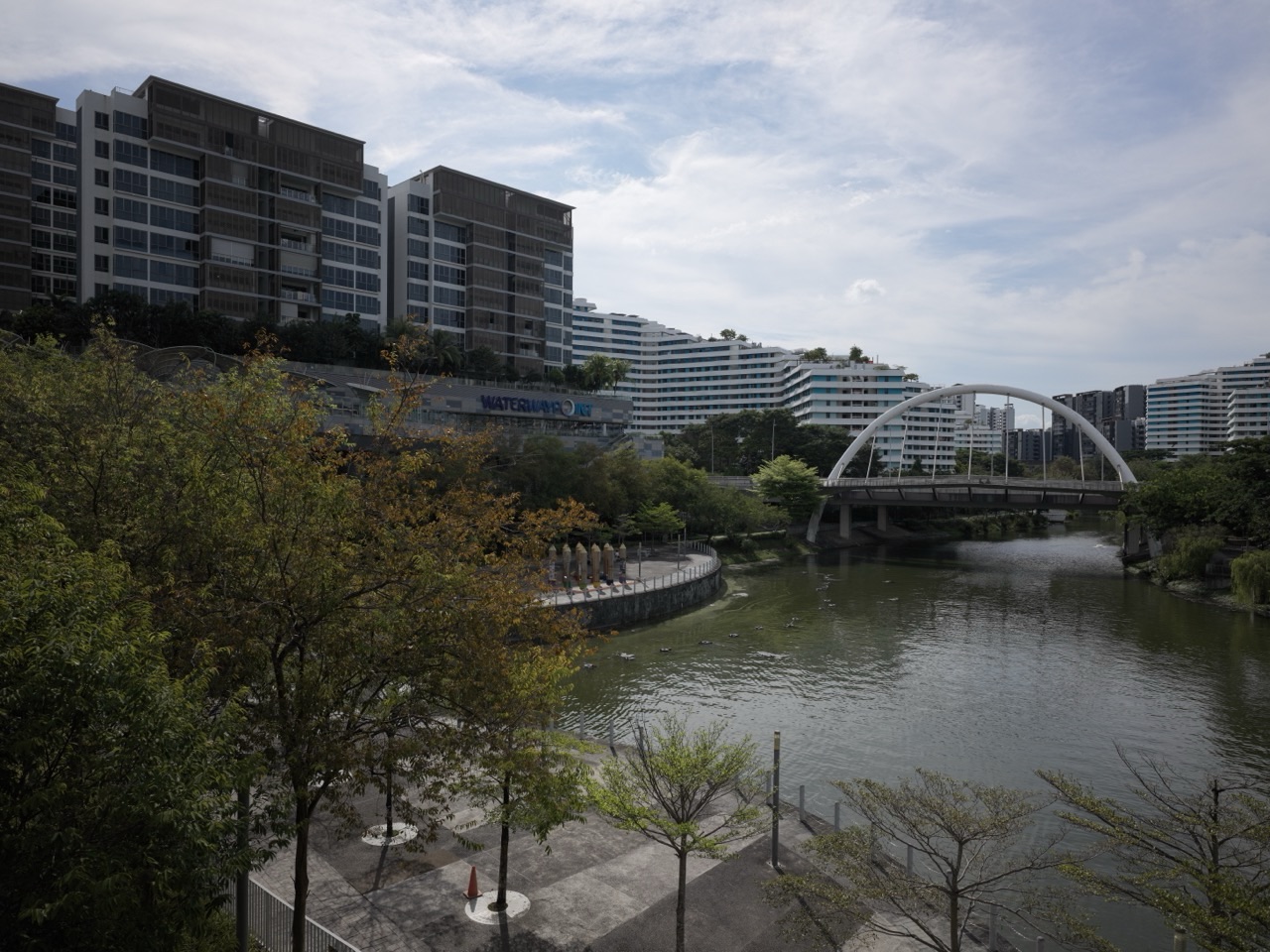
Where are the best beginner photography walks in Punggol? Start with Punggol Waterway Park and choose one easy out-and-back section around a suitable bridge, planted water edge or the preserved Old Punggol Road bus stop. NParks highlights Sunrise Bridge for morning views and Jewel Bridge for sunset. You can practise composition with an ordinary phone—no professional camera, all-day hike or risky position over water is required. For a more natural landscape, Coney Island Park offers coastal and forest scenes, but opens only 7am–7pm and requires visitors to stay on designated trails.
This Nature Photography Walks in Punggol 2026 guide teaches phone-camera composition, framing, natural light, basic exposure, observation and simple editing alongside route planning, wildlife ethics, safe bridge photography, children’s privacy, Coney Island restrictions and commercial permit rules. It is a skill-based companion to Sunrise Bridge versus Jewel Bridge, which answers the specific landmark-choice question. For the general town experience, see Life in Punggol 2026.
Punggol phone photography: quick answers
| Reader question | Best starting answer | What you should not assume |
|---|---|---|
| Do I need a DSLR camera? | No. A phone camera is enough for learning framing, light and careful observation. | More expensive equipment does not guarantee better photos. |
| Which bridge for sunrise? | NParks identifies Sunrise Bridge on the eastern side of Waterway Park. | The name does not guarantee clear sunrise weather. |
| Which bridge for sunset? | NParks describes Jewel Bridge as a sunset-viewing landmark. | A colourful sky cannot be promised. |
| Can I photograph the preserved bus stop? | NParks highlights the old Punggol Road bus stop and preserved historic road stretch. | Respect site access and other visitors. |
| Where for nature landscapes? | Coney Island Park has coastal and forest habitats. | Use its 7am–7pm gate hours and designated trails. |
| Where for bird photography? | Waterway Park and designated Coney Island bird hides. | Do not chase birds, play calls or disclose nest locations. |
| May I bring a tripod? | Only if it is appropriate and does not obstruct public use. | Commercial activity and equipment setups may need permission. |
| Does commercial filming need permission? | NParks says commercial photography/filming in parks requires advance permit application. | Do not assume personal sightseeing rules cover paid shoots. |
| Can I use flash on nocturnal wildlife? | No; NParks warns artificial light can disturb or harm nocturnal animals. | Coney Island closes at 7pm in any case. |
| Can I use a drone? | Only where NParks and CAAS rules permit it; many areas prohibit drones. | A public park is not automatically legal airspace. |
| What if haze or lightning appears? | Check official NEA/MSS guidance and postpone outdoor photography when needed. | A photo opportunity never overrides safety. |
1. Photography can turn an ordinary Punggol walk into a learning experience
A phone-camera walk changes how someone notices familiar streets. The tree beside a bridge becomes a shape against the sky. A winding Waterway path becomes a leading line. The reflection of an HDB block reveals the connection between water infrastructure and housing. None of this requires travelling to a famous tourist destination. A familiar ten-minute walk can become rewarding when you have one visual question to explore.
NParks’ photography activity guide includes Punggol Waterway Park among its suggestions for scenery along waterways. It also recommends other locations according to whether visitors want greenery, heritage, sunrise, sunset or wildlife. That is useful for choosing a subject before choosing an expensive lens. Ask what you want to photograph, then select a suitable legal vantage point.
A resident interested in buildings may enjoy the Waterway’s bridge geometry. Another may want close-ups of aquatic planting or reflections. A young child might photograph patterns in a safe public path, while a working adult wants a calm after-work creative walk. These are different starting points. Good photography teaching meets the person at their interest rather than demanding everyone chase the same sunrise.
Photography also involves movement, but it is not a race. You might walk, pause, look, take one photo and return. The walk can contribute everyday physical activity depending on distance and intensity, while the creative process offers enjoyment. It does not need to be measured as an exact workout or a prescribed mental-health treatment.
2. Four real Punggol Waterway subjects worth learning to frame
| Subject | Why NParks identifies it | A safe composition idea |
|---|---|---|
| Sunrise Bridge | Named for early-morning sunrise views from the eastern park area. | Include a small part of the bridge and the lit sky. |
| Jewel Bridge | A dome-like structure associated with Waterway sunset viewing. | Use its arch or shape as a visual frame. |
| Kelong Bridge | Designed to refer to Punggol’s historical fishing structures. | Photograph the form with surrounding water and greenery. |
| Old Punggol Road bus stop | Preserved transport and heritage feature. | Compare a closer detail and a wider heritage context. |
| Waterway aquatic plants | NParks describes planted species along the engineered waterway. | Use layers of foreground foliage and distant bridges. |
| Walking and cycling paths | A visible part of Punggol’s everyday mobility landscape. | Compose without obstructing or staging unsafe movement. |
NParks’ official Waterway Park page identifies Sunrise, Jewel and Kelong bridges, plus the preserved old Punggol Road bus stop. Its self-guided 4.2 km park walk connects some features, but a beginner photographer does not need to complete the entire route. Pick one subject close to a manageable entrance. A short trip allows repeated comparison of different angles without fatigue.
The distinction between bridge names matters for a family meeting point. Someone searching for sunrise photographs might go to Jewel Bridge because they remember it from a sunset article. A good plan uses the actual bridge, approach path and orientation, not just a phrase copied from social media. The site’s bridge comparison guide handles the morning-versus-evening choice.
Avoid overstating the quality of a particular morning. Sunrise can be obscured by cloud, rain or haze; a sunset may lack colour. A photographer can still capture bridge form, wet paths or contrasting shapes, provided conditions are safe. The result of a walk is not a failed outing simply because the sky did not look like an edited advertising poster.
3. The first phone-camera skill: simplify the frame
A photograph is often clearer when it has one obvious subject. If you are photographing a bridge, decide whether the viewer should first notice its arch, the water reflection or a person crossing it. Move only along safe public surfaces to change the composition. Avoid stepping onto a planted verge, approaching a water edge or climbing a barrier just to remove an awkward foreground object.
The phone screen is a small rectangle. Look at its corners before pressing the shutter. Are there unwanted signs, partial faces or bright rubbish bins? Can a slight change in your own position—without leaving the path—make the subject clearer? Sometimes the best improvement is not a new filter but a less cluttered viewpoint. A parent can teach this in two minutes during a short stroll.
Use the grid feature if your phone has one. Placing an obvious line or subject away from dead centre can make a picture feel balanced, although the so-called rule of thirds is a compositional option rather than a law. Bridges can also suit symmetrical framing. A good visual explanation should tell the learner why the choice makes the subject easier to read, not merely tell them to obey a template.
Try taking two images from exactly the same permitted position: one with the bridge centred and one with more sky or water visible. Compare what each communicates. One might emphasise geometry, while the other feels spacious. This controlled comparison is more educational than taking hundreds of random photographs with slightly different filters.
4. Light changes the same scene more than most phone settings
Morning and evening light can produce softer angles and longer shadows than midday sun, while overcast conditions can reduce harsh contrasts. But no time of day guarantees a perfect picture. The same Waterway bridge may look completely different after rain, beneath grey skies or at sunset. A photographer can observe those changes without needing to claim an exact “best hour” for every day of the year.
Use the phone’s exposure control when available. If you tap a bright sky, the camera may darken the bridge and buildings. If you tap the dark bridge, the sky may become too pale. You can experiment with a modest adjustment rather than turning the whole image unnaturally bright. Learning to notice highlights and shadows helps across phones and cameras.
Reflections can be attractive, but do not try to approach the waterline dangerously for a mirror image. A public bridge or stable path already offers views across the water. Wind and ripples may change the surface; there is no need to wait at an unsafe edge for perfectly smooth water. Keep the camera secure and avoid leaning over rails with loose straps.
If it begins to rain, consider ending the outing instead of treating wet bridges as a creative challenge. Slippery surfaces, high water and lightning carry risk. A beautiful photograph is never worth falling, particularly when visiting with children or someone with balance limitations.
5. A practical five-photo creative exercise
| Photo | Task | What to compare afterwards |
|---|---|---|
| 1 — Subject | Photograph one bridge from an approved viewpoint. | Is the subject immediately recognisable? |
| 2 — Pattern | Find repeated railings, paths or planted lines. | How do repetition and direction guide the eye? |
| 3 — Colour | Capture a plant or building with a clear colour contrast. | Does the background distract from the subject? |
| 4 — Scale | Show water, a bridge and distant housing in one frame. | Can the viewer understand Punggol’s built landscape? |
| 5 — Detail | Choose a close lawful view of texture, signage or architecture. | Does the photograph communicate a different story? |
This exercise can be done in a short safe Waterway segment, and none of the photos requires involving another person without consent. It also works for older beginners who prefer a gentle pace and a rest between frames. If one image is difficult, skip it and return to an easier subject. The learning objective is observation and explanation, not completing a social-media challenge at any cost.
After returning home, ask which photograph explains Punggol most clearly. A close-up might show a preserved historic feature; a broad landscape might show how bridges connect an urban town. There is no need to declare one objectively best. A useful discussion is why the photographer selected a particular composition and what the viewer can learn from it.
6. Coney Island photography uses conservation rules, not a studio rulebook
Coney Island Park has coastal forest, beach and wildlife scenes. It is an appealing destination for photographers who want textures and natural habitats rather than shopping centres. But it operates from 7am to 7pm, and NParks requires visitors to stay on designated trails and respect ecological areas. Its terrain can be rugged in places, and some features may not be accessible during maintenance.
Use the official Coney Island page to identify the West entrance near Punggol Point and East entrance near Lorong Halus. Do not begin a long photography walk in late afternoon without enough time to return before closing. A sunset composition that requires staying inside after the gate’s operating window is not an acceptable plan. Instead, choose a suitable public coastal location that legally remains open.
NParks’ Enjoying Nature Responsibly explains why night photography and bright artificial lights can disturb nocturnal animals and why wildlife needs dark periods without human intrusion. Do not use camera flash or strong artificial light on wildlife at night. The absence of a good natural-light photograph is not permission to disturb an animal.
A family may enjoy photographing leaves, permitted trail curves or a wide landscape near a park entrance without going deep into rugged sections. Photographic creativity is not improved by ignoring habitat rules. The Coney Island map-reading guide helps with entrances and safe route decisions before choosing photography targets.
7. Wildlife photography: the subject’s welfare comes first
The Nature Photographic Society Singapore’s Ethical Guidelines in the Field, following a December 2025 professional discussion with NParks and other organisations, emphasise the welfare of wildlife subjects. It cautions against baiting, deliberately startling animals for flight shots, disturbing nesting birds or publicly revealing sensitive locations. This is relevant to Punggol because the Waterway and Coney Island both attract photographers interested in birds and otters.
A good wildlife photograph can show an animal small in its habitat. There is no ethical requirement to fill the frame with feathers or fur. If the bird moves away, calls anxiously or changes behaviour because of the photographer, withdraw. A longer lens, if available, is an option for experienced users; if not, choose a wider environmental photograph rather than moving closer.
Do not use recorded bird calls to lure wildlife, especially near nests. Do not prune branches for a better view, place food to manipulate animal behaviour or crowd a rare animal with other photographers. If an owl is resting during the day, allow it to remain undisturbed. Wildlife viewing is a privilege, not an obligation to produce a close-up for an online feed.
Publishing matters as much as taking the picture. Avoid attaching precise map coordinates to nesting or rare wildlife photographs and think carefully about whether posting a real-time location could draw a crowd. A child’s project can use general habitat labels such as “Punggol Waterway area” without identifying a vulnerable nest. The objective is responsible learning and long-term conservation.
8. Photography of people: parks are shared, not private sets
The Waterway is used by families, students, workers, runners, pet owners and people with disabilities. A photographer should not ask strangers to move because they interrupt a composition, nor block a bridge or narrow path with a tripod. If you want a portrait of a friend, choose a safe unobstructed public area and respect nearby people. Avoid capturing identifiable children or publishing their images without appropriate permission.
For a family portrait, explain the activity to children and choose a comfortable spot. There is no need to sit on fragile planted areas or cross a barrier to achieve a symmetrical view. If another person appears clearly in the background, consider waiting, changing angle or cropping rather than publishing an unnecessarily intrusive image.
Photography has a privacy dimension even when a general public scene may lawfully be captured. Think about who will see the photograph, whether the subjects expected it and whether it identifies a particular child, home entrance or personal routine. Responsible editing may mean leaving a photograph unposted rather than assuming everything visible outdoors is suitable for public distribution.
9. Casual photos and commercial shoots have different permission requirements
NParks’ photography activity page says commercial photography and filming in its parks require a permit application at least two weeks in advance. This should not be confused with ordinary visitor photography using a personal phone. But if someone intends to organise a paid commercial photoshoot, bring elaborate lighting or occupy space for a brand campaign, they need to understand the relevant permit requirements before proceeding.
The NParks services and park-permit page provides the current application route. A commercial shoot involving a school group, company or professional photographer may also require other approvals, safety plans and rights concerning participants. The correct way to plan is to ask the relevant park authority and property operator, not to assume a personal visitor’s freedom automatically covers commercial use.
Drones require separate attention. NParks prohibits drone flying in nature parks and nature reserves and restricts it in other specified parks, while Civil Aviation Authority of Singapore rules also apply. A landscape that looks spectacular from above is not a legal drone launch zone merely because you can stand on a public walkway. Verify NParks signs and CAAS rules before any drone activity. For most beginners, an ordinary phone on the ground is simpler and more responsible.
10. Map the Waterway photography outing for different abilities
| Participant | Useful starting route | Why it works |
|---|---|---|
| Absolute beginner | A short path beside a familiar Waterway access point. | Easy return and time to compare compositions. |
| Parent with stroller | An accessible, safe Waterway segment with benches. | Flexible pace and no need to enter rugged Coney Island trails. |
| Older resident | A comfortable viewpoint near a suitable rest area. | Less prolonged walking or heavy equipment. |
| Teenage photography learner | A supervised bridge or heritage-feature observation. | Links visual storytelling with local history. |
| Nature specialist | A permitted Coney Island trail and hide area. | Different habitats with strict conservation rules. |
| After-work adult | A suitable Waterway sunset route with a clear return. | Connects leisure with the normal commute. |
The route should begin from your actual transport point. Residents in Northshore and Punggol Coast may prefer different public paths from those living near Oasis or Waterway Point. The guide’s purpose is not to prescribe one long walk through every bridge. A repeatable short outing often offers more learning because you can revisit the same subject under different light.
If someone has mobility restrictions, check the exact surface and accessibility rather than assuming an entire park is uniformly suitable because a summary page says “wheelchair accessible”. The Waterway’s public paths include rest areas, but individual bridges, slopes and diversions can differ. A safe and satisfying photography lesson may consist of just one well-chosen accessible viewpoint.
11. Simple editing: improve clarity without inventing a different place
Most smartphones have basic crop, exposure, contrast and colour controls. Start with modest changes. Remove distracting empty space if it makes the subject clearer, straighten a tilted horizon when appropriate and avoid excessive sharpening that creates halos around bridge railings. The aim is to help the viewer understand what you actually saw, not to transform the scene into a fictional landmark.
For family memories or creative art, strong colour effects can be fun when clearly treated as artistic choices. For educational or documentary use, preserve factual context. Do not silently remove important signs or people if that changes what the photograph claims about a venue. A heavily edited image of a clear sky should not be used as supposed proof that haze was absent on the day.
When sharing a photograph with a description, identify the actual location and date correctly. Punggol Park in Hougang is not Punggol Waterway Park; Sunrise Bridge is not Jewel Bridge. Accurate captions improve the value of an image for other residents and students. If you cannot identify a bird or structure confidently, use a broad description rather than inventing the name.
12. Five photographic skills explained through the Waterway
| Skill | Punggol example | Learning question |
|---|---|---|
| Composition | Jewel Bridge and surrounding water. | What is the main subject? |
| Leading lines | Railings beside the park connector. | Where does the eye travel? |
| Depth | Foreground leaves, midground bridge, distant flats. | Can the viewer read three distances? |
| Exposure | Bright sky and darker bridge silhouette. | Which detail should remain visible? |
| Timing | Same permitted viewpoint across safe visits. | How does light change the scene? |
| Ethical choice | A distant bird near planted habitat. | Can it be photographed without disturbance? |
A short photo journal can help beginners improve. Choose one subject and take two or three deliberate photographs rather than dozens without reflection. Record what you were trying to communicate. A week later, repeat the same viewpoint if conditions are suitable. Differences in light and composition may become easier to understand when the underlying subject remains familiar.
For school learning, this is an example of controlling variables. If the same person takes images from the same viewpoint but at different times, they can discuss light and weather. If they change both position and time, the comparison is harder to explain. A young learner need not use complicated camera jargon; “I kept the bridge in the same place and the sky changed” is a clear observation.
13. A four-visit Punggol photo-walk progression
| Visit | Focus | One simple task | Useful result |
|---|---|---|---|
| 1 — Notice | Subject and framing. | Photograph a familiar bridge from a safe legal point. | A clearly identifiable subject. |
| 2 — Compare | Light and exposure. | Revisit when conditions are suitable and compare two frames. | Understanding of changing shadows. |
| 3 — Tell a story | Waterfront, heritage or nature. | Create a three-image sequence using permitted paths. | Images with coherent context. |
| 4 — Review | Ethics, captions and sharing. | Select a few accurate photos and describe them. | A thoughtful, safe photo record. |
These visits are not a four-week performance challenge. A person may do them on separate weekends, while a busy parent may need longer. Photography develops through attention and feedback, not simply increasing distance or taking more pictures. The activity should remain enjoyable; a poor-weather day can be used to review images indoors instead of forcing an outdoor session.
14. Three Punggol photography learner examples
A secondary-school student photographing the Waterway for Geography
The student wants to demonstrate how Punggol’s built landscape connects with its waterway. They select a public viewpoint and take a wide photo showing a bridge, the canal and nearby housing, followed by a closer image of planted vegetation. They caption both with the correct location and avoid claiming a cause from what the image alone cannot show. A photograph can support a geographical explanation without proving every historical or environmental fact.
A parent teaching smartphone photography to a child
The family plans a short outing near Waterway Point. Rather than asking the child to photograph strangers, the parent gives a simple task: take one picture of a pattern, one of a bridge and one of a colour. They stay away from railings and keep the path clear for cyclists. The child learns how changing camera position affects framing, with no pressure to obtain professional results.
A wildlife enthusiast at Coney Island
The photographer hopes to capture a bird named on NParks’ park page. On arrival they see other visitors pointing toward a potential nesting site. Rather than using playback or approaching, they observe from a permitted distance and decide not to share exact location coordinates. The resulting wide habitat image tells an honest nature story without increasing pressure on the animal.
15. Weather, air quality and the choice to postpone
Waterfront photography can involve direct sun, strong reflections, wet surfaces and open exposure to storms. Check MSS heat-stress readings for prolonged outdoor plans and MSS lightning information when thunderstorms threaten. A person should not stand on a bridge with an exposed tripod during lightning risk. An image is replaceable; a serious injury is not.
During haze, the current official Singapore haze website informs outdoor activity decisions. A photograph may look atmospheric in poor visibility but that is not a reason to seek unnecessary exposure. Some people, including those with lung or heart conditions, may require greater caution. In unsuitable conditions, process existing photographs or learn camera functions indoors.
Coney Island’s gates close at 7pm even when a photographer wants twilight pictures. Do not stay after hours or attempt a shortcut through vegetation. NParks also warns against wildlife flash photography and disturbance during night hours. A responsible photographer plans a sunset viewpoint in an actually permitted place rather than turning a conservation park into an unauthorised night set.
16. A safe photo-walk packing checklist
- A charged phone or suitable camera with enough storage for the outing.
- An actual permitted park entrance and a short return route.
- Comfortable footwear and water appropriate to the weather and participants.
- A simple subject or theme rather than a long mandatory shot list.
- Knowledge of bridge names and the park’s published visiting rules.
- Awareness of cyclists, pedestrians and accessibility needs on shared paths.
- No plan to climb railings or step into planted or restricted areas.
- No birdcall playback, bait or disturbance of wildlife.
- Discretion around children’s faces and wildlife nesting locations.
- Weather checks for lightning, heat stress, heavy rain and haze.
- Commercial permit enquiries where a paid photoshoot is intended.
- Current CAAS/NParks verification before considering drones.
- Enough time to exit Coney Island before 7pm if visiting.
- A willingness to put the camera away and enjoy the walk.
17. Frequently asked questions
Where is the best Punggol photography spot for a complete beginner?
A short accessible section of Punggol Waterway Park is a practical starting point.
Which bridge is associated with sunrise?
NParks names Sunrise Bridge on the eastern side of Waterway Park.
Which bridge is associated with sunset?
NParks highlights Jewel Bridge for sunset viewing.
Can I photograph Kelong Bridge?
It is an official Waterway Park heritage feature, subject to safe public access and other visitors.
What is the preserved Punggol heritage bus stop?
NParks identifies an old Punggol Road bus-stop shelter and nearby preserved road section.
Do I need an expensive DSLR?
No. A smartphone can teach framing, light, exposure and accurate captioning.
Does a phone grid help?
It can assist composition, but no grid rule replaces a clear subject and safe viewpoint.
Is the entire Waterway connector necessary?
No. NParks lists its length as 8.4 km, but a photo walk can be much shorter.
Can I photograph wildlife at Coney Island?
Yes from suitable permitted trails with ethical distance; avoid baiting, call playback and nesting disturbance.
What time does Coney Island close?
7pm, with opening at 7am under NParks information.
Can I use flash to photograph an owl at night?
NParks warns that bright artificial light can disturb nocturnal animals; avoid it and respect park closure.
Can I publish the exact location of a rare nest?
Avoid disclosing sensitive nest or breeding locations in line with ethical guidance.
Do commercial photoshoots need permission?
NParks says commercial photography or filming in its parks requires a permit application at least two weeks ahead.
Are personal travel photos commercial?
Ordinary personal photos differ from paid organised commercial activity; ask NParks when unsure about your use.
Can I launch a drone anywhere at Punggol?
No. Check the specific park’s restrictions and CAAS airspace requirements.
Can I use a tripod across a path?
Do not block a shared route or create a trip hazard; choose an appropriate permitted spot.
Can children join phone photography walks?
Yes with age-appropriate supervision, safe routes and respect for others’ privacy.
What if the sky is grey?
Focus on geometry, pattern or a safe environmental detail; colour-rich weather is never guaranteed.
Does photo walking count as exercise?
It can add light movement depending on actual walking, but it is not automatically sustained aerobic exercise.
How can I get better without expensive gear?
Repeat a suitable subject, compare framing and light and reflect on what each image communicates.
Can I take photos during haze?
Follow official air-quality guidance; postpone prolonged outdoor activity when unsuitable.
Explore more in eduKate’s Punggol lifestyle and learning library
- Life in Punggol — master lifestyle guide
- Sunrise Bridge versus Jewel Bridge
- Birdwatching in Punggol
- Coney Island Map-Reading and Orienteering
- Punggol Waterway Science Trail
- Calm Things to Do in Punggol
- Dog Walking along Punggol Waterway
- Community Gardening in Punggol
- Coney Island Park Clean-Up Volunteering
- eduKateSG — Punggol Geography and Mobility
- eduKateSG — Waterway Park and Student Life
Official and first-party references
- NParks — Photography in Parks and Commercial Permit Requirements
- NParks — Waterway Bridges, Heritage and Park Visiting
- NParks — Waterway 4.2 km Nature Walk
- NParks — Coney Island Access and Opening Hours
- NParks — Wildlife, Night Photography and Flash Ethics
- Nature Photographic Society Singapore — Ethical Field Guidelines, 2025
- NParks — Park Rules, Drones and Shared Paths
- NParks — Park Permit Services
- MSS — Heat Stress
- MSS — Lightning
- Official Singapore Haze Guidance
Reviewed 20 October 2026. This is educational beginner photography, local route and conservation guidance, not live tour availability or permission for commercial filming, drones or restricted access. Park signs, wildlife needs, accessibility and weather conditions always take priority. Examples are fictional; no particular sunrise, sunset or wildlife sighting is guaranteed.


