
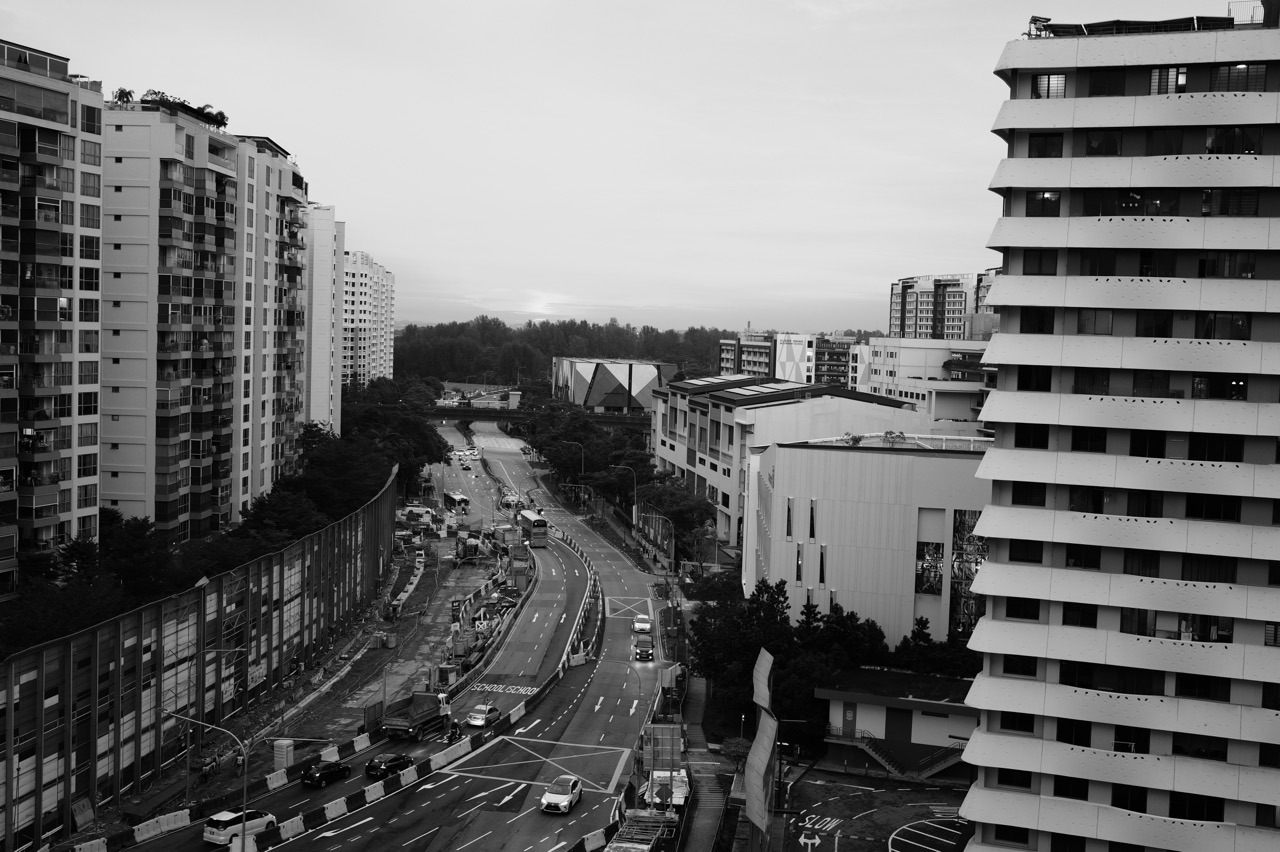
Should a Punggol family continue painting, sanding or installing new cabinets during a haze episode? It depends on the work, but renovation can add pollutants indoors when families are already trying to keep outdoor smoke out. Painting, adhesives and new boards can release gases, while drilling and sanding can create dust. The useful plan is to reduce pollution at its source, coordinate the contractor’s schedule and ventilation requirements, and avoid occupying heavily renovated rooms prematurely—not simply seal every window and run a particle purifier.
There is also a specific 2026 Singapore rule worth knowing: from 1 January 2026, interior paints sold for local use cannot contain formaldehyde at or above 0.01% by weight. NEA’s April 2026 guidance on formaldehyde in interior products explains the control and separate precautions for furniture boards, adhesives and off-gassing. For today’s outdoor smoke reading, check haze.gov.sg.
Quick answer: four renovation decisions to make
First, check the work type. Cosmetic painting, major hacking, new cabinets, air-con installation and electrical alterations have different safety and regulatory requirements. Second, review pollutant sources—fine dust, vapours from paints or adhesives, and emissions from newly installed composite materials are not identical.
Third, ask whether the work can safely proceed with an appropriate ventilation plan when outdoor air is poor. Fourth, decide whether the room should be unoccupied or the family temporarily relocated during particular high-emission tasks. The decision is more important than the colour of the new paint.
A haze episode does not automatically ban all residential renovations. It does make planning exposure, ventilation and scheduling more important. Only the actual owner and qualified contractor can resolve a particular building and safety plan.
Why this problem is different from regional smoke
Transboundary haze can raise outdoor particle concentrations across parts of Singapore. Renovation occurs inside the dwelling and may introduce additional particles or chemical gases. The fact that both can affect air quality does not mean one solution works equally for both.
An air cleaner with good fine-particle filtration may reduce suspended dust or smoke particles under suitable conditions. But ordinary particle filtration is not a proven complete solution for gases such as formaldehyde or the wide range of VOCs released by building products. NEA specifically highlights source reduction and ventilation for formaldehyde problems.
This is the key tension during haze: families may want to limit polluted outdoor air temporarily, while newly installed materials may require appropriate ventilation for off-gassing. Adding high-emission work to an occupied, tightly closed room can be a poor trade-off.
The dedicated Punggol Haze at Home guide explains smoke particle management; this page owns renovation emissions and project timing.
The new 2026 interior-paint formaldehyde control
NEA’s official Formaldehyde in Interior Building Products guidance states that interior paints manufactured, imported or sold for local use from 1 January 2026 cannot contain formaldehyde at 0.01% or more by weight.
Industrial and outdoor paints have different treatment and labelling requirements. The prohibition is specific to formaldehyde content in interior paint products. It does not establish that all paints are free of every other volatile chemical, and it does not set a blanket formaldehyde emission limit for every piece of cabinetry.
Ask the contractor for the actual product details and an appropriate specification. A verbal promise that the colour is “eco-friendly” is not a substitute for identifying the paint or other material and checking relevant requirements.
There is no basis to announce that a specific Punggol renovation contractor is violating the rule simply because the room smells of paint. Odours and compliance are different questions.
What about cabinets, laminate and adhesives?
NEA’s April 2026 guidance notes that composite wood products, adhesives and other building materials can be sources of formaldehyde or other chemical emissions. It advises consumers to communicate with their interior designer or contractor about low-formaldehyde materials and suitable ventilation.
At that time, NEA reported there were no specific Singapore regulatory formaldehyde-content requirements for other building products such as composite wood and adhesives, while additional controls were under review. This distinction matters. The January 2026 paint rule must not be misreported as applying identically to all plywood, glue or furniture.
Low-emission materials may carry relevant certification from schemes such as the Singapore Green Building Council or Singapore Environment Council. A certification should be read for the actual product and claimed parameter, rather than assuming an undefined green label guarantees a particular room concentration.
Even a lower-emission material may need appropriate curing and ventilation time. Ask for the manufacturer’s instructions and plan occupancy accordingly.
Why a freshly renovated room may need ventilation for weeks
Some products can release chemicals into the surrounding air after installation, a process commonly described as off-gassing. The rate and duration vary with the material, amount installed, temperature, room conditions and ventilation.
NEA advises consumers to plan formaldehyde-emitting installations early in a project and include time for ventilation before reoccupation; in some cases, it suggests allowing several weeks for post-completion ventilation rather than rushing back into a heavily renovated area.
That is planning guidance, not a statement that every flat must be vacant exactly 21 days or that an odour-free room has automatically passed a laboratory test. Exposure and reoccupancy decisions depend on the materials and circumstances.
If poor outdoor air coincides with the planned ventilation period, speak with the contractor about safe ways to manage the schedule. Do not treat a closed window as an alternative to following the material’s necessary ventilation precautions.
Why sanding and hacking create a second exposure category
Dust generated by sanding, cutting, drilling or hacking may be visible or very fine, depending on the material and task. The size distribution and composition can vary considerably. Some tasks need specific worker controls and safe containment.
The US EPA’s remodeling indoor-air guide warns that surface preparation and sanding can release dust and that paints, varnishes, sealants and adhesives can introduce VOCs.
Those sources are different from a regional smoke plume. If a room is being sanded, the immediate need is to plan appropriate containment, dust collection and work practices—not simply interpret the regional North PM2.5 reading as if it measured the job.
Do not encourage family members, especially children, to remain in the work area just to observe how materials are cut or removed.
HDB renovation rules still apply during haze
HDB states that flat owners must engage contractors listed in its Directory of Renovation Contractors for renovation works in HDB flats. Certain works also require HDB permits and appropriately licensed specialists.
HDB’s Important Information on Renovations explains that wall demolition and hacking require prior written approval and that owners must follow prescribed renovation times and neighbour-notice requirements.
Haze does not waive those obligations. Nor does it give a contractor permission to discharge dust into common corridors, block escape routes or ignore building systems.
Verify the current rules for the proposed work rather than relying on a generic online checklist. Condominiums may also have separate management rules, so don’t automatically apply HDB provisions to a private building.
Why a listed contractor is not an all-purpose quality guarantee
HDB explains that listed contractors are aware of renovation requirements and structural protection matters, but the directory is not an HDB guarantee of workmanship or price. The actual scope, material specifications, programme and contractual obligations still matter.
For a haze-sensitive project, ask the contractor to identify high-dust and high-emission stages before work begins. Request the actual products proposed, their installation instructions and the planned approach to containment, ventilation and cleaning.
For windows, electrical and air-conditioning works, HDB’s renovation guidance also identifies when appropriately qualified or licensed specialists are required. Never improvise modifications to window frames, exhaust systems or electrical circuits in the name of stopping haze.
A signed, clear schedule is more useful than a broad verbal promise that the entire job is “dust-free and smell-free”.
Planning a renovation when haze is already forecast
Start with the tasks that can be performed with minimal pollutants or disruption, such as finalising specifications, confirming materials, scheduling access or reviewing quotations. Ask whether high-emission works can sensibly be sequenced for a period when the necessary ventilation can be provided.
Some work is unavoidable and time-sensitive, such as a serious plumbing leak or essential safety repair. In such a case, control the risk through appropriate professional methods and occupant arrangements rather than postponing every repair without thought.
A discretionary cosmetic painting job may have more scheduling flexibility. If the outdoor smoke conditions are poor and the family cannot provide suitable ventilation without losing a safe place to stay, rescheduling could be a reasonable decision.
There is no official universal “stop renovating whenever PSI reaches 100” rule for every home. Project-specific decisions require an assessment of the work, conditions and affected residents.
A three-phase plan: before, during and after
Before work: Verify permits and contractors, check the material list, agree on how dust and emissions will be controlled, arrange necessary ventilation and decide who will occupy which rooms. Review NEA’s current air-quality outlook.
During work: Keep children and other nonessential occupants away from dusty or chemically intensive tasks, follow the contractor’s appropriate controls, avoid using corridors as storage, and monitor for problems such as unusual dust spread or leaks. Follow all product, electrical and fire-safety directions.
After work: Clean appropriately using dust-control methods, carry out the agreed ventilation and off-gassing period, verify that surfaces and equipment are safe, and address any persistent odour or moisture issue before returning to normal occupancy.
Each stage answers a different question. The schedule should be documented rather than improvised after the flat fills with a strong smell.
Worked example: a cabinet installation and painting schedule
Imagine a fictional HDB family with a five-day home project: cabinet delivery on Monday, installation on Tuesday and Wednesday, painting on Thursday, and cleaning on Friday. The parents hope to move a child back into the newly renovated bedroom on Friday night.
Now assume Thursday and Friday are expected to have poor regional outdoor-air conditions. There may be insufficient time for the materials’ recommended ventilation and any necessary inspection. The family should not infer that a shiny dry surface means chemical emissions have ended.
A better plan is to confirm the materials and instructions in advance, sequence emission-producing work earlier where practicable, discuss whether a temporary alternative room is suitable, and allow a realistic post-installation period.
The example does not prescribe a universal safe number of hours. It teaches families to identify the conflict before the invoice is paid and a child is asked to occupy the room.
How to communicate with a contractor without inventing technical requirements
A useful set of questions includes: “Which paint, board and adhesive products will be installed? What are their documented formaldehyde and VOC characteristics? What containment and dust controls will you use? How will ventilation be provided while complying with haze and building conditions? When should the room be occupied again?”
Ask which parts of the project require permits and who is responsible for the specialist works. A contractor should be able to distinguish structural approval, practical workmanship, chemical exposure concerns and product warranty.
Do not insist that a HEPA purifier replaces all ventilation or that the contractor seal up a ventilation shaft. Proper ventilation and fire safety are engineering requirements, not design preferences that can be overridden by a household haze screenshot.
Where expert testing is appropriate, engage competent independent professionals and agree on the relevant measurement and method.
The formaldehyde and PM2.5 difference
Formaldehyde is a gaseous chemical that can be released by certain building materials. PM2.5 describes airborne particles no larger than a defined aerodynamic diameter. A sensor that measures one does not automatically measure the other.
A basic portable particle purifier may capture fine dust or smoke particles but cannot be assumed to remove formaldehyde effectively. NEA says the evidence for air cleaners removing volatile organic compounds such as formaldehyde is limited and emphasises choosing low-emission materials and ventilation.
Likewise, a VOC meter may not tell the family how much fine particulate smoke is present. A broad “air quality” reading needs to identify the actual pollutant, instrument and units.
This distinction prevents a costly mistake: buying one appliance for the wrong source of pollution.
Is a low-VOC label enough to guarantee safe occupancy?
No product label can replace consideration of actual room conditions, the amount of material installed, its emission rate, curing and ventilation. A lower-emission product can be preferable without guaranteeing zero exposure under every circumstance.
Ask for certifications tied to the actual item rather than a marketing phrase. NEA’s guidance references SGBC and Singapore Green Labelling Scheme directories for eligible products. The product should be checked against relevant documents and any updated regulatory rules.
A smell-free room also does not prove every substance is absent, just as a strong odour does not by itself establish that a formaldehyde limit was exceeded. Appropriate assessment uses suitable evidence.
For a sensitive resident, including someone with chronic lung disease, talk to a healthcare professional about individual concerns.
What about a purifier while painting?
A particle air cleaner can be useful for certain airborne particles, but it should not be relied upon as the primary control for vapours released by paint, adhesives or new cabinetry. Use low-emission products and appropriate project ventilation.
The product’s filtration technology, sorbent materials and independent performance testing matter for any gas-removal claim. Ordinary HEPA performance against particles does not mean the purifier can remove all VOCs.
Do not run an appliance near solvents or paints in a way that conflicts with the device’s electrical safety warnings. Professional work areas and occupied bedrooms should not be treated as interchangeable spaces.
If work requires special controls, ask the contractor and relevant qualified professionals to design them. A general neighbourhood blog cannot authorise unsafe improvised ventilation.
Neighbours matter during a renovation
Punggol blocks have shared corridors, lifts and adjacent flats. Renovation dust, debris movement and noise can affect neighbours, particularly where a household already includes someone more sensitive to smoke or particulate matter.
HDB’s renovation page sets neighbour-notification requirements and permitted working times. Giving clear notice before work and maintaining common areas can reduce unnecessary conflict.
A courteous update need not reveal private medical details. It might simply identify the expected dates of higher-dust tasks and who to contact about a specific operational concern.
If an apparent environmental problem persists, report the actual observations through the suitable HDB, Town Council or government feedback route, rather than assuming a visible cloud automatically proves a regulatory offence.
Why permanent window sealing is a bad renovation solution
Some owners consider sealing every gap and vent when haze becomes a recurring problem. Reducing unwanted infiltration can be beneficial in certain circumstances, but modifications must respect the building’s intended air pathways, moisture control and fire and electrical safety.
A home also produces its own pollutants from cooking, cleaning and occupancy. Newly installed building materials may need substantial ventilation. Permanently eliminating safe air exchange can compound those indoor sources.
Qualified professionals should assess building modifications. Do not block gas-related ventilation, fire-safety provisions, bathroom exhaust or other essential components.
For moisture consequences of prolonged closure, use Punggol Haze and Humidity.
Dust cleaning after works
Before occupants use a newly renovated area, arrange suitable cleanup of dust and debris. Wet methods may reduce the resuspension of settled ordinary particles on appropriate surfaces. Use equipment and techniques suited to the materials and safety requirements.
Avoid dry sweeping clouds of dust into an occupied room or spraying strong chemicals merely to mask the smell of freshly installed materials. Some specialist contamination may require professional cleaning rather than ordinary household wiping.
Cleaning a surface is not the same as removing chemicals continuing to off-gas into the room. The source and ventilation schedule must still be considered.
Check that electrical fittings, windows, doors and water systems are functioning safely and that any ventilation requirements have been met.
Worked example: what does the renovation budget actually include?
Suppose a fictional family budgets S$4,000 for cabinet and painting work, plus S$300 for a temporary arrangement during a high-emission period and S$150 for appropriate cleaning. The planned cash total is S$4,450.
These figures are invented teaching amounts, not current quotations. More importantly, financial planning should also allow for possible schedule changes and verified contractor obligations. A low sticker price is poor value if the household has not accounted for necessary ventilation or work quality.
Do not attribute the entire renovation cost to haze. The incremental cost caused by the changed environmental conditions is a separate category from the project that the family intended to undertake anyway.
For an explanation of incremental costs, see Punggol Haze Household Costs.
Seven mistakes to avoid when renovating in haze season
- Scheduling major indoor emissions and immediate reoccupation without an adequate ventilation plan.
- Assuming a low-formaldehyde interior paint has zero VOC emissions from all materials.
- Believing a particle HEPA purifier automatically removes every gas released by adhesives and cabinets.
- Using unlisted contractors for HDB renovation works or bypassing required permits.
- Blocking ventilation or escape routes to keep out outside smoke.
- Treating a strong odour as proof of a specific chemical concentration without testing.
- Assuming every home project must stop at one fixed PSI threshold, rather than assessing actual work and safety requirements.
A sensible plan makes the limitations explicit and asks the contractor to address them before work begins.
Frequently asked questions
Are formaldehyde-containing interior paints banned in 2026?
From 1 January 2026, Singapore controls the manufacture, import and sale of interior paints for local use containing formaldehyde at or above 0.01% by weight. See NEA’s official guidance for precise scope and exceptions.
Is the same ban applied to all wood cabinets and adhesives?
No. NEA’s April 2026 guidance says there were no equivalent specified regulatory formaldehyde-content requirements for those other building products at that time, though it recommends selecting lower-emission products.
Should I postpone every renovation because of haze?
No blanket rule applies to all tasks. Consider the materials, dust production, required ventilation, actual current conditions, occupants and contractual circumstances. Some urgent repairs may need to proceed with appropriate professional controls.
Can I use a HEPA purifier instead of ventilating after painting?
HEPA particle filtration alone is not a reliable substitute for controlling VOC and formaldehyde sources and providing necessary ventilation. Follow material instructions and NEA guidance.
Does a fresh paint smell always prove a dangerous formaldehyde level?
No. Smell alone cannot determine the particular substance or its concentration. The source and product information matter, and persistent or concerning issues may require competent evaluation.
How long should the room remain empty?
There is no universal number given here. NEA recommends planning adequate post-installation ventilation and sometimes extending it for weeks where formaldehyde-emitting materials are involved. Follow specific professional and material advice.
Do I need an HDB renovation permit?
Some work types require permits, while others do not. HDB requires listed contractors for flat renovations and identifies work involving demolition, windows, electrical or other specialised systems separately.
Is a listed contractor guaranteed to do good work?
HDB’s listing is not a guarantee of workmanship or price. Verify contracts, material specifications, permits and responsibilities.
Can a family remain in an adjacent room during sanding?
That depends on the task, containment, airflow, occupants and professional safety arrangements. Do not assume the next room is protected simply because its door is closed.
What if a neighbour’s work causes visible dust during haze?
Document the observation accurately and use appropriate site, HDB, Town Council or official feedback channels. Avoid unsupported allegations. The local dust guide covers the distinction.
Continue reading in the Punggol haze library
The Punggol Haze Check owns current measurements and activity advice. Punggol Haze at Home covers suitable particle filtration. Punggol Haze and Humidity covers moisture, condensation and mould.
For separate local environmental issues, see Punggol Haze vs Construction Dust. This renovation guide’s distinct contribution is project scheduling, formaldehyde regulation, source control and indoor reoccupation.
Official sources and publication note
Reviewed 17 October 2026. This is general household information rather than a technical certification, indoor-air test report, legal advice or substitute for licensed renovation contractors.
- NEA: Formaldehyde in Interior Building Products, updated April 2026
- NEA: Interior Paint Formaldehyde Controls from 1 January 2026
- HDB: Important Information on Renovations
- HDB: Renovation Permit Applications and Specialists
- HDB: Finding Listed Renovation Contractors
- US EPA: VOCs and Indoor Air
- US EPA: Indoor Air Concerns During Remodeling
A better Punggol renovation is not simply fast and beautiful. It is well specified, appropriately authorised, safely carried out and sensible about the air people will breathe after the workers leave.
Punggol Haze: Connected Guide Collection
Explore related guides about comfortable HDB living, planning renovations, travel insurance and airport operations. These are different practical questions; for current air-quality decisions check NEA’s live advisories.
- Haze, humidity, mould and closed HDB windows
- Haze insurance claims: flight delays, medical bills and exclusions
- Haze flights: Changi, Seletar, visibility and travel
- Punggol Haze Check: One-Hour PM2.5 and 24-Hour PSI
- Why Is Punggol Hazy? Regional smoke and weather
- eduKateSG: Singapore Haze and Regional Connectivity


