
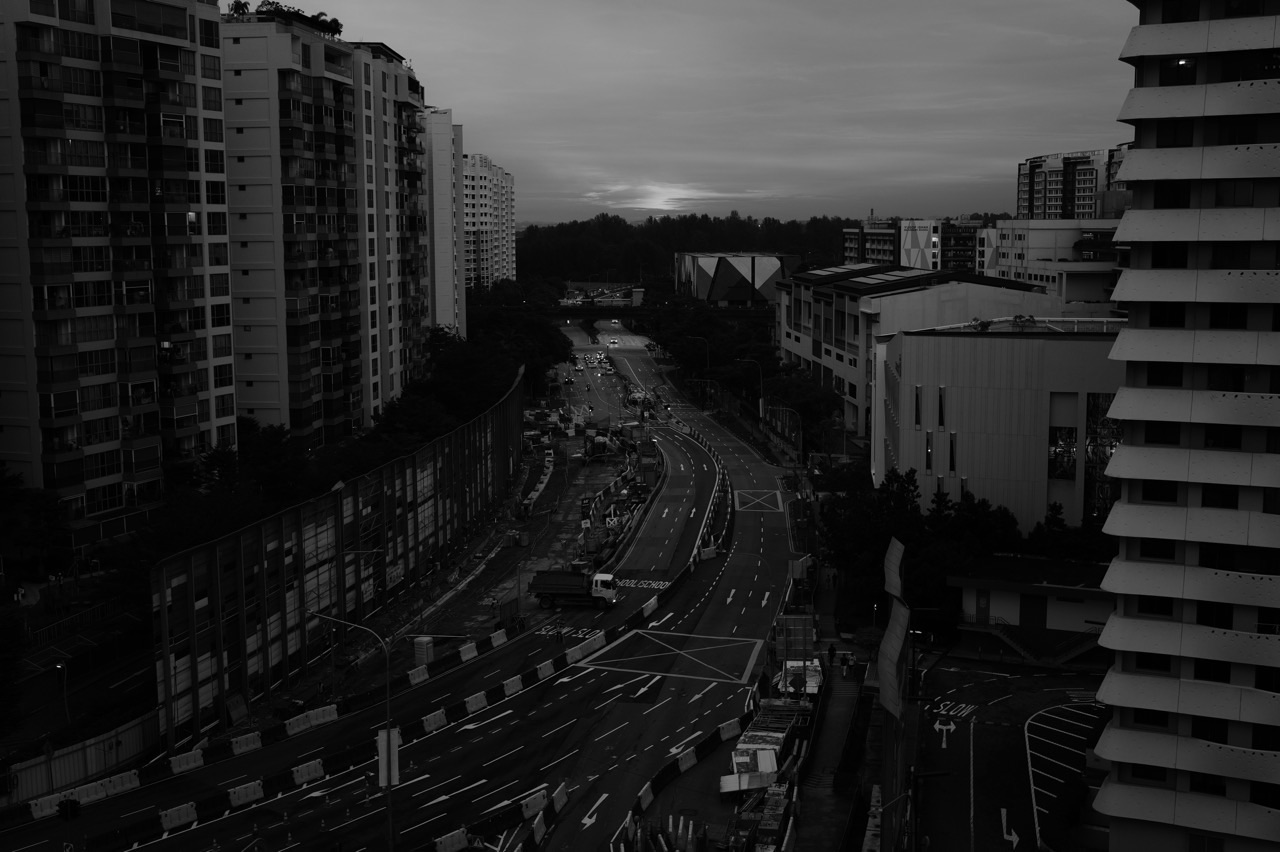
Is that smoky smell in Punggol regional haze, nearby construction dust or a local source? Start by checking NEA’s latest one-hour PM2.5 reading and its time stamp. A broad rise in official regional readings can be consistent with a wider haze episode, while a burst of visible dust near a particular activity may point toward something local. Neither a grey skyline nor a burning smell proves which source is responsible. NEA’s air pollution FAQs explain that visibility is influenced by water vapour and that a burning smell may come from gases or local burning without a corresponding rise in the measured particles. If there is a potentially unsafe fire, seek emergency assistance rather than trying to identify it alone.
For Punggol HDB residents, identifying the source is only the first step. Reduce exposure according to MOH guidance, move away from a localized dust plume, protect the indoor room where vulnerable family members spend time, and document a persistent neighbourhood problem without accusing an unverified site or resident. This quick information guide covers the waterfront, town-centre construction, apartment corridors, renovation work, traffic dust, cooking or barbeque smoke, and the practical difference between a region-wide PM2.5 advisory and a local municipal report.

Reading route: A five-minute source check before blaming the nearest building site · The grey building across the street is not a pollution meter · Three patterns that suggest what to investigate next · Balcony and corridor dust: clean safely, without adding pollution · BBQ, incense, smoking and cooking exhaust: different local sources · Kids, seniors and people with asthma: put care before investigation · Better evidence makes neighbourhood conversations better
A five-minute source check before blaming the nearest building site
Notice what you actually know. Is there a smell, a visible cloud, gritty residue on the sill, or an official air-quality measurement? Those are four different observations. Record the time and general location, check the NEA regional reading, and look for an observable nearby activity only from a safe position. A site that happens to be close by is not automatically responsible. Fine smoke can travel far; local sources can affect one corridor or street more than another.
If symptoms or official readings call for precautions, protect people first instead of investigating. People with chronic heart or lung disease, children and older residents may need additional protection. Only after immediate safety is handled should a resident gather the details useful to a building manager, contractor or government feedback channel. A calm chronological record is more useful than a message accusing someone on the basis of smell alone.
What makes transboundary haze different from local dust?
Transboundary haze commonly involves smoke from vegetation or peat fires carried by regional winds. NEA monitors pollutants over broad Singapore reporting regions. Construction dust is often generated by specific nearby works such as cutting, excavation, material movement or vehicle activity. Both can contribute particulate matter to the air, but their geographic spread, timing and particle mixtures may differ.
Neither category is a neat visual label. Regional haze can arrive on the same day as local renovation dust. An apartment may also receive cooking exhaust, cigarette smoke or pollution from nearby traffic. The scientifically defensible answer is often that several sources may be present. Do not describe the local site as ‘proven to cause the haze’ without actual evidence of emissions and wind direction.
PM2.5 and PM10 are sizes, not names of pollution sources
PM2.5 means particulate matter with aerodynamic diameter of 2.5 micrometres or less; PM10 refers to particles of diameter 10 micrometres or less, including the PM2.5 fraction. Some mechanical dust sources contribute substantial larger particles, while combustion sources may contain fine particles. It would be wrong to claim construction sites only produce PM10 and forest fires only produce PM2.5. Different activities and conditions create mixtures.
A low-cost home particulate sensor may provide a rough trend, but it is not identical to NEA’s certified monitoring system. Its performance can be affected by humidity, calibration and placement. NEA cautions that unofficial indexes may use lower-cost sensors and incompatible calculations. When sharing a screenshot, label what instrument was used and avoid comparing an app’s AQI directly against Singapore’s 24-hour PSI.
The grey building across the street is not a pollution meter
On humid mornings in Punggol, distant flats or the Waterway can appear washed out even when the measured particulate situation differs from a smoky dry afternoon. Light scattering by moisture affects visibility. Conversely, pollution can exist when the sky looks blue. The NEA FAQ explicitly warns that visibility alone is not a good measure of air quality.
Use the sky as a clue to look up official data, not as a threshold for letting children do strenuous sport. A photo may be helpful as part of a dated observation of local dust, but the photo cannot determine chemical composition or the actual concentration of PM2.5. The latter requires appropriate monitoring. The Punggol haze photography guide shows how to preserve photographic context without making medical claims.
Why a burning smell and PM2.5 sometimes disagree
NEA explains that smoke from peat and vegetation fires contains a complex mixture of gases as well as particles. Some gases create an acrid smell and are not the same as the particulate measurements in the haze index. The same is true of local burning, which can sometimes cause odour without a region-wide increase. A person’s sense of smell also varies and cannot be used to calculate a concentration.
The correct action depends on the situation. A brief odour with no identified danger may warrant checking official readings and protecting a sensitive person. Smoke visibly coming from a possible fire warrants immediate safety action. If a recurring smell seems to originate from one local activity, document the facts and report it through the appropriate management or environmental feedback channel. Do not enter a worksite or confront anyone in a dangerous location.
Why Punggol offers several plausible air sources
Punggol combines high-rise homes, shops, major roads, public transport, waterfront parks and developing districts. Construction and maintenance can occur in growing neighbourhoods, while restaurants, delivery traffic and domestic cooking contribute different local air sources. This mix is not unique to Punggol and does not mean the town is inherently more polluted than another estate. The causes of a specific observation need evidence.
At Punggol Waterway Park, a person may notice an inland smoky smell that has been transported regionally; near a loading area they may notice intermittent local dust. Those possibilities do not establish which cause applied on any date. A useful neighbourhood guide helps residents ask better questions instead of assigning blame. It also recognises that vulnerable people need precautions regardless of whether the source is local or distant.
Three patterns that suggest what to investigate next
Pattern A: NEA readings rise across several regions, the official haze bulletin discusses transboundary smoke, and the distant skyline looks milky. That combination supports following the wider haze advisory. Pattern B: the official reading does not show a broad rise but dusty material appears near an active local earth-moving operation. This suggests a local nuisance to investigate, not proof that no fine pollution is present. Pattern C: a corridor briefly smells of burnt food near a cooking source while distant visibility remains normal. This may be localized smoke or another odour.
The patterns are teaching examples, not diagnoses. Real observations can overlap. If the situation has unknown risk, reduce unnecessary exposure and seek professional advice where necessary. Never use a single family member’s nose or a consumer sensor to make a formal finding about a contractor or neighbour.
Make an evidence log that a responsible agency can use
Record the date, time, general location, weather, the type of observation and whether it repeated. Note if a specific activity was visible without taking photographs inside private spaces. A plain record might say, ‘At 2:15pm a brief cloud of visible particulate material crossed an open footpath near a construction boundary; a second episode occurred at 3:05pm.’ This is more actionable than, ‘The entire neighbourhood is toxic today.’
If safe, take a time-stamped photo from a public place without photographing identifiable neighbours unnecessarily. Do not publish a worker’s face or another person’s apartment on social media to provoke accusations. Send an appropriate description through official feedback channels. The purpose is to help the responsible party assess the problem, not to produce a viral image.
Which reporting route fits a local environmental issue?
For environmental concerns, NEA lists the NEA online feedback form and myENV as official feedback channels. OneService can route municipal issues to a relevant town council or government agency without requiring residents to identify the correct department in advance. A recurring source inside a private building may also need its managing agent or responsible operator to investigate.
Construction noise regulations are separate from dust complaints. Do not quote a permitted decibel level as proof of a dust violation. If a noise problem also exists, it follows its own regulatory framework. A person who suspects a dangerous fire should contact emergency services instead of sending only a routine municipal complaint. Match the report to the real problem and keep the description factual.
Balcony and corridor dust: clean safely, without adding pollution
When outdoor conditions are poor, it may be sensible to avoid an optional hour of balcony scrubbing. A damp cloth or appropriate wet cleaning can prevent loose dust from becoming airborne compared with vigorously brushing it into the air. Follow product instructions, avoid mixing cleaning chemicals and take care on wet floors or near balcony edges. Never lean over a high-rise railing to photograph or remove debris.
The presence of dust on a surface does not by itself tell you how much airborne PM2.5 exists today. Dust can have accumulated over many days. A layer of gritty construction residue is worth documenting, but it should not be used as a substitute for an official regional reading. Punggol balcony gardens and cleaning addresses home vegetable and laundry decisions more fully.
Reducing exposure indoors while keeping the flat comfortable
During poorer outdoor air, keep external openings closed where feasible, minimise avoidable indoor smoke sources and use a correctly sized portable air cleaner if available. NEA recommends considering smoke CADR and room size rather than trusting a decorative ‘anti-haze’ label. Air-conditioning alone is not proof of effective particle filtration. Follow manufacturer maintenance instructions and provide suitable ventilation again when outdoor conditions improve.
A resident should not seal vents or interfere with a building’s designed life-safety systems to stop a smell. A room needs to remain safe and liveable. In a household with chronic respiratory disease, follow individual clinical advice and keep prescribed medication accessible. The Punggol indoor air guide has the detailed purifier and window explanations, so this article concentrates on identifying and documenting different sources.
Indoor renovation dust is another distinct exposure problem
A room being sanded, painted or drilled can produce particles and chemical emissions even while the outdoor NEA reading is Normal. That is why a household should not assume ‘no haze’ means every indoor renovation task is safe. Follow the contractor’s appropriate dust-containment practices, worksite safety procedures and the product guidance for coatings and adhesives. Avoid allowing children to play near active work or using ordinary household vacuum methods on hazardous construction residues without proper equipment.
Do not generalise from this page to asbestos, silica exposures or any other specialised hazardous building material. Those situations require competent assessment and appropriate professional controls. If a household has concerns about renovation materials or strong fumes, stop the unnecessary exposure and seek qualified advice. A haze-focused portable air purifier should not be represented as the sole control for every type of workplace dust or chemical vapour.
BBQ, incense, smoking and cooking exhaust: different local sources
Punggol families may smell local cooking smoke, incense or tobacco smoke in a corridor at times. This is not automatically transboundary haze. Avoid generating extra indoor smoke while trying to reduce particulate exposure during a regional episode. If a neighbour’s recurring activity creates a nuisance, first consider the appropriate building-management or official feedback route and communicate politely where safe and suitable.
Don’t assume that pouring fragrance into a diffuser, lighting a candle or using an ozone-generating gadget removes particulate pollution. Some such actions add indoor emissions or create separate hazards. Better first steps are source reduction, sensible separation from the immediate plume and appropriate filtration or ventilation according to conditions. The goal is comfort and health, not to make a room smell like perfume.
What if official regional readings are low but one spot feels dusty?
A regional NEA reading is a valid public measurement for its reporting region, not a monitor at every Punggol staircase, worksite gate or bus stop. A localized dust event can occur without dominating a regional average. This is not evidence that NEA readings are wrong. It means two different spatial questions are being asked: broad ambient conditions and an individual local source.
For the individual, move away from the avoidable plume, consider their health, and report repeated visible dust through suitable channels. For society, rely on the certified official monitoring system when interpreting Singapore-wide haze advisories. Mixing a local complaint with a national PSI threshold does neither question justice. It is possible to trust the official monitor and still ask for a local problem to be investigated.
Will an N95 solve a dusty worksite or smoky corridor?
A well-fitted respirator may reduce inhaled particles under appropriate conditions, but its suitability depends on the task, wearer, fit and ability to tolerate it. MOH does not generally recommend N95 masks for ordinary brief commutes. Construction workers or other people facing occupational dust hazards need employer risk assessment and properly selected respiratory protective equipment, not generic consumer advice from a local lifestyle article.
A respirator cannot remove all gas or chemical exposures, substitute for source control or make a dangerous place safe by itself. People with heart or lung disease may need individual advice about tight-fitting protection. Children should not automatically be given adult respirators. This article prioritises reducing exposure and identifying the source rather than promising a mask solves everything.
Kids, seniors and people with asthma: put care before investigation
A parent seeing haze and dust at the same time may feel compelled to investigate immediately. If a child is coughing or an older adult has breathing difficulties, first move them to a suitable indoor environment, follow prescribed medical care and assess whether healthcare help is needed. MOH identifies susceptible groups and advises reducing outdoor exposure at higher pollution bands. Worsening symptoms should not wait for a dispute about a nearby construction site.
Talk to children in simple language: ‘Some smoke may come from far away, and some dust may come from work nearby. We use official measurements and safer choices rather than guessing.’ This teaches careful reasoning without creating fear. The Punggol haze health guide explains when to seek advice, while this page keeps the focus on evidence about the source.
Worked case: a Punggol apartment near a redevelopment site
Imagine a family notices fine grit appearing on a balcony on two afternoons. They also see a hazy horizon. The family checks official NEA regional data and finds a Normal one-hour PM2.5 band for the period, but the balcony dust appears again when visible local work is happening. They avoid insisting that the site ’caused the Singapore haze’; instead, they record the observations and use a municipal feedback channel with clear timings and images where safe.
At home they postpone optional balcony cleaning, damp-wipe relevant surfaces when feasible and ensure a family member with asthma has a comfortable indoor space. If the official PM2.5 band later rises regionally, they follow the new advisory too. The worked case shows how several different evidence streams inform different actions without requiring a private resident to identify particulate composition or blame a contractor.
Frequently asked questions: Punggol dust, smoke and haze
Does a bad smell mean PM2.5 is high? Not necessarily; NEA explains odour and particle readings can differ. Does a grey sky prove regional haze? No; humidity changes visibility. Can a construction site produce fine particles? Yes, local works can create a mix of particles; source attribution requires evidence. Is PM10 the same as dust? PM10 is a size category, not a source label.
Who should I report repeated local dust to? Consider NEA feedback or OneService, and building management where appropriate. Are regional NEA readings invalid if my corridor seems dusty? No; a local event and a broad monitoring region are different spatial scales. Should I buy an N95? Follow MOH advice and any task-specific safety instructions. Can I use photos as proof of exact PM2.5? No; a photograph records appearance, not particle concentration.
Better evidence makes neighbourhood conversations better
Punggol’s growing town is full of visible activity. That includes construction, green spaces, transport, cooking and family life, while regional winds can bring pollution from far outside Singapore. A realistic guide should respect that complexity. It should neither dismiss a family’s local concern nor assign blame to a nearby site without evidence.
Use official air-quality information for public haze decisions, factual observations for local complaints, sensible indoor protection for the household and medical care for concerning symptoms. The result is a calmer, fairer and more useful response to an unpleasant day.
| Observation | What it can suggest | What it cannot establish |
|---|---|---|
| High official regional one-hour PM2.5 | Wider fine-particle air-quality issue | That one Punggol project caused it |
| Visible dust near a specific activity | A potentially local source worth documenting | Exact particle composition without testing |
| Burning smell in one corridor | An odour requiring context and care | A numerical PM2.5 concentration |
| Milky distant skyline | Reduced visibility | The precise air-pollution band |
| Dust on balcony after several days | Deposited material accumulated on surfaces | The current hourly exposure level |
More Punggol haze guides worth reading
This air-source identification reference answers one distinct question. When you need the current public health instruction, use NEA and MOH. To connect the science, household and neighbourhood questions, follow the topic-specific links below rather than assuming one page answers everything.
- One-hour PM2.5 vs forecast 24-hour PSI
- Why Punggol is hazy: regional smoke and wind
- HDB indoor air and air cleaners
- Reading PM2.5 graphs and wind maps
- Local dust, smoke and transboundary haze
- Punggol haze photography and visibility
- Punggol tuition and study continuity during haze
- Punggol eco-town design and haze resilience
- eduKateSG air-quality monitoring literacy
- eduKateSG Things to Do in Punggol hub
- Balcony dust and household cleaning
- Punggol nature during haze
Sources and editorial review
Reviewed 17 October 2026. No actual neighbourhood pollution event, construction complaint, health diagnosis, park closure or live sensor reading is inferred from the illustrative photographs or hypothetical examples. Authorities, schools and facility operators make current decisions. Official primary resources and the latest advisories are more authoritative than static article examples.


