
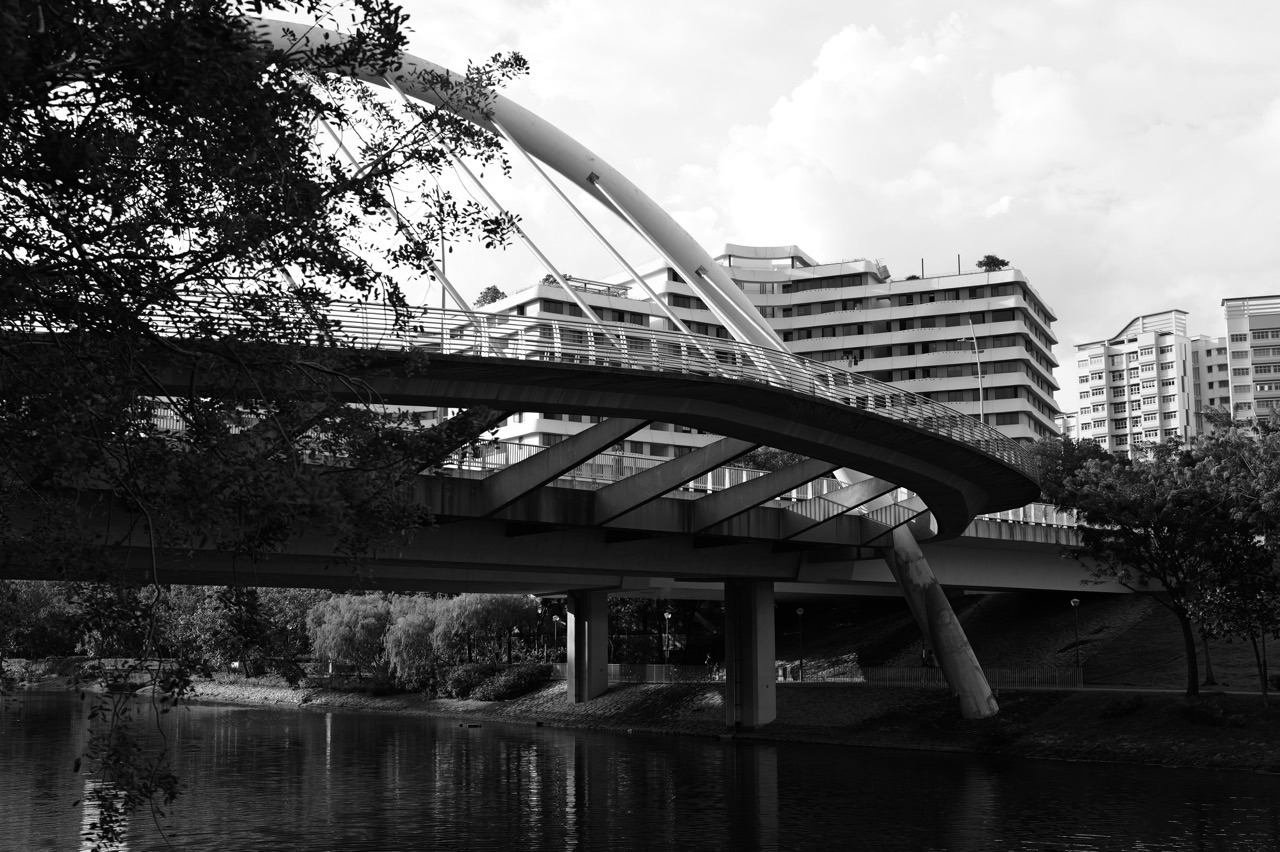
Does Punggol Waterway, its greenery or its Eco-Town design protect the neighbourhood from transboundary haze? Punggol’s trees, waterfront, cycling paths and smart buildings make the town more liveable, but none provides a town-wide guarantee of clean air during a regional smoke episode. HDB identifies Punggol as Singapore’s first Eco-Town, selected in 2010, and its 4.2-kilometre man-made Waterway is a landmark of waterfront planning. The air-quality decision still belongs to NEA’s official readings and MOH’s personal guide, not whether a path feels breezy or looks green.
Punggol haze is a useful real-world test of what sustainable urban design can—and cannot—do. Walkable links, shade, open public spaces, water management, greener buildings, nearby community services and good transit each solve genuine problems. Smoke particles carried across Southeast Asia pose a different regional challenge. This guide shows residents, Geography students and urban planners how to separate environmental benefits from unverified filtration claims, compare the Punggol Waterway with Punggol Digital District, and design a neighbourhood that stays usable when outdoor activities must change.

Jump to: What does Punggol Eco-Town actually mean? · Heat and haze are two different environmental loads · Transit-rich planning reduces travel burden, not the need to read PM2.5 · Nearby clinics, care and public services are part of climate resilience · A design exercise: one neighbourhood, four different hazards · Four urban-planning myths about Punggol haze · A great Eco-Town is honest about what it can do
What does Punggol Eco-Town actually mean?
HDB’s official account says Punggol was selected as Singapore’s first Eco-Town in 2010, functioning as a living laboratory for sustainable public-housing ideas. Examples include waterway development, efficient buildings, smart Northshore technologies and greener precinct planning. These are broad environmental and neighbourhood benefits, not a public claim that Punggol’s air is always cleaner than other towns during transboundary haze.
An Eco-Town should make daily life more resource-efficient, comfortable and connected. It cannot prevent a regional smoke plume from reaching its open-air paths simply through good branding. The strongest interpretation is to ask which environmental load each design decision addresses: energy use, heat, drainage, walking convenience, social connection, or indoor pollutant control. Once those mechanisms are separated, expectations become more accurate.
The waterway cleans water, not an entire region’s smoky air
HDB describes the 4.2-kilometre Punggol Waterway as a man-made connection through the town, incorporating greenery and sustainability features. Floating wetlands and freshwater mangrove elements contribute to water and habitat functions, and landscaped paths offer recreation. The phrase ‘water-cleaning plants’ refers to aquatic and ecological processes. It does not establish that a person standing beside the canal inhales less PM2.5 during haze.
Likewise, do not confuse the length of the Waterway itself with the longer park connector route. NParks lists the Punggol Waterway Park Connector at approximately 8.4 kilometres, while HDB’s 4.2-kilometre figure describes the waterway. These numbers answer different mapping questions. Neither is a guaranteed safe running distance when the MOH outdoor activity advisory calls for reducing or avoiding exertion.
What trees can do well—and what not to assume
Trees offer shade, soften landscapes, create habitat and improve comfort in tropical heat. In some settings, vegetation can alter airflow or capture a share of airborne particles locally, depending on species, density, siting and weather. That complex behaviour should not be reduced to the slogan that ‘trees remove Singapore’s haze’. A person cannot assume that a tree-lined path has a reliably lower PM2.5 concentration than a nearby street without actual measurement.
Punggol’s parks remain valuable even when haze affects them. When the air is suitable, their greenery supports walking, wellbeing and urban biodiversity. When regional smoke makes outdoor exercise inappropriate, shade does not override the advisory. Honest eco-design celebrates what nature does provide without asking it to perform an unmeasured filtration miracle.
Heat and haze are two different environmental loads
A shaded walkway can reduce solar exposure and make a school or station journey more comfortable. A covered linkway can keep a child dry in rain. Neither mechanism automatically removes fine smoke particles from surrounding outdoor air. An urban designer must specify which hazard is being addressed before claiming a successful intervention. Heat, flooding, intense rainfall and haze can also occur in different combinations.
That distinction matters on a day when the sky is bright and the one-hour PM2.5 band is High. The shade may help with heat, but it does not make strenuous activity appropriate. Similarly, a drizzly day may reduce temperature but still have changing air quality. Good resilience planning treats these loads together without confusing their measurements or assuming one piece of infrastructure solves all of them.
Punggol Digital District: green and connected does not mean pollution-proof
URA’s 2026 Punggol Digital District guidelines describe a public-transport-oriented, walkable and cycling-friendly district, integrated with landscaping, sky terraces and waterfront connections. The district includes SIT, JTC developments, Punggol Coast MRT and public spaces. URA identifies the Green Mark Platinum target and environmental sustainability as part of the design direction. These are substantive features of a well-planned district.
None of them proves that every room or pedestrian corridor has identical particulate filtration. Building design, ventilation, maintenance and the actual operating mode matter. A new office may have sophisticated systems, but a public blog cannot infer the clean-air delivery rate for a particular classroom or cafe from its architecture photograph. The URA’s official PDD urban-design guidelines describe planning intent, not real-time air readings.
The important difference between urban porosity and filtered enclosure
URA encourages physical and visual porosity in Punggol Digital District rather than wall-like blocks at waterfront approaches. That can make pedestrian networks more connected and the district feel open. Yet an open, breezy urban space is still exposed to the surrounding atmosphere. Filtered indoor spaces achieve a different goal by controlling particle entry and cleaning indoor air. The best neighbourhood may need both types rather than pretending they are substitutes.
For a family deciding between a long outdoor promenade and a library, this explains the practical difference. The promenade is an asset for good-air days and everyday recreation. A suitable enclosed indoor venue may be an alternative when outdoor air is poor. The venue’s actual air management, access conditions and personal health still matter. Urban design is about providing choices, not declaring every green space an environmental refuge.
Transit-rich planning reduces travel burden, not the need to read PM2.5
Punggol’s MRT, LRT, buses and connected pedestrian routes can reduce reliance on private cars and make necessary journeys more manageable. The PDD guidelines emphasise walking and cycling networks and convenient links from Punggol Coast MRT. On a haze day, proximity to services can reduce an individual’s unavoidable time outdoors, particularly where a direct safe route is available. That is a practical resilience benefit.
But a shorter trip is not proof of zero exposure, and a roofed walkway is not automatically filtered. A caregiver may choose the closest suitable indoor destination rather than traverse the whole waterfront. A runner may skip outdoor exercise altogether in a High one-hour PM2.5 band. The town’s connectivity helps residents adapt, but the public-health decision still depends on official data, symptoms and activity intensity.
Smart buildings are not a substitute for Singapore’s certified air monitoring
Smart-city branding sometimes leads people to assume that every lamp post or building façade contains a haze sensor. That is not a justified inference. NEA operates Singapore’s official ambient air-quality monitoring system and publishes regional one-hour PM2.5 and 24-hour PSI information. A consumer device or building sensor, where one exists, may measure something useful but should not be treated as numerically identical to the certified public network without calibration and context.
A well-designed Punggol environmental dashboard should show source, pollutant, unit, location scale and time period. It should separate a forecast from a measurement and attach explanatory health guidance without making medical decisions for individual residents. The Punggol haze data-literacy guide explores those concepts more deeply. Data becomes useful when its limits are respected.
Why resilient neighbourhoods need good school continuity
A town that serves children well needs more than shaded playgrounds. It needs schools and caregivers able to adjust outdoor PE and CCA while preserving learning and social connection. Singapore’s 2026 haze readiness statements describe school contingency arrangements, enclosed spaces with air purifiers and monitoring of current air quality. These institutional practices complement physical urban design by keeping routines functioning during temporary environmental disruptions.
For Punggol, a well-connected school environment also includes safe transport routes and clear parent communications. A waterway-adjacent excursion can be postponed without losing its Geography lesson; students can use maps and data instead. A classroom may adjust its activities based on official guidance without declaring the entire school closed. See Punggol schools during haze for the specific school procedure distinctions.
Nearby clinics, care and public services are part of climate resilience
When haze aggravates symptoms, access to appropriate healthcare matters. A neighbourhood with a choice of clinics, reliable public transport and relatives who can help a vulnerable person has a form of resilience that is not visible in an architectural rendering. The 2026 Haze Subsidy Scheme addresses a separate issue: the affordability of specified medical care for eligible residents. Accessibility, costs and clinical urgency all shape whether a household can respond safely.
A good town plan therefore includes practical paths for caregivers and people using mobility aids, rather than simply maximising the number of waterfront attractions. Public services, accessible transfers and meaningful shelter information should be discoverable. The environment may be regional, but the response is often local: a family member collects medication, a neighbour checks on a senior, and a school changes an activity in time.
HDB flats: a comfortable room needs its own air-quality strategy
A sustainably designed building may conserve energy or maximise natural light and ventilation under ordinary conditions. During smoke haze, some households may temporarily close outdoor windows and use appropriate particle filtration to reduce infiltration. This is not a contradiction of good tropical design; it is an operational response to unusual outdoor air conditions. NEA says portable air cleaner CADR must be considered alongside the size of the enclosed space.
The best home solution should be practical and proportionate. Do not seal required ventilation or fire-safety systems. Maintain suitable indoor comfort, minimise indoor burning and reopen ventilation when outdoor conditions improve as appropriate. Residents with chronic respiratory conditions may need additional clinical advice. This distinguishes a building’s overall environmental performance from the specific job of controlling smoke particles inside one room.
A connected path network gives families more ways to adapt
Punggol’s network of bridges, park connectors and street-level routes makes ordinary journeys flexible. During haze, the existence of an alternative path can be helpful if it reduces long exposed travel or makes an accessible connection possible. It does not follow that people should continue a leisure stroll merely because a connector was thoughtfully designed. Exposure also depends on how long and how hard people move outdoors.
A practical family map can mark schools, the LRT, One Punggol, the library, home, clinics and the Waterway. Draw a direct necessary route and a separate optional recreation route. Then ask which one matters today and which can wait. This is a very concrete version of urban resilience: good infrastructure supports choices, while informed judgement selects the appropriate one.
A design exercise: one neighbourhood, four different hazards
Imagine planning a block near Punggol Waterway. Rain suggests sheltered links and proper drainage; heat suggests shade and cooling; regional haze suggests verified information, protected indoor spaces and suitable filtration; an older population suggests accessible lifts, nearby services and comfortable routes. A single intervention may have co-benefits but should not be oversold. A covered path may help rain and heat but not assure low PM2.5.
Ask students to assign one primary purpose to each design feature, then list any secondary benefits and uncertainties. This avoids claiming that a rooftop garden prevents all pollution or that an air purifier protects against floods. It creates more disciplined Geography and systems-thinking answers. The Punggol Geography on Sustainable Urban Neighbourhoods page connects this to wider local learning.
Worked example: a Punggol family between a park and the library
A family has two options for Saturday: an hour walking the Waterway or a short suitable indoor visit to Punggol Regional Library. A current High one-hour PM2.5 band makes prolonged or strenuous outdoor plans unsuitable under MOH guidance, especially for the child with asthma in the group. The family chooses the library or home, checks the indoor venue and direct journey, and keeps the park trip for another day when readings and symptoms permit it.
The Waterway has not become a failed piece of infrastructure. It remains valuable for ecological, recreational and town-identity reasons. The library and transport connections offer a complementary function during environmental stress. The smartest town is not one in which every place must be used every day; it is one in which households have credible alternative routes to wellbeing.
Punggol Waterway and Punggol Digital District: two different planning scales
At town scale, the 4.2-kilometre Waterway brings landscape, recreation and the memory of a coastal settlement into residential life. At district scale, PDD integrates workplaces, SIT, public transit, shops and public spaces with sustainability objectives. Neither is designed as a sealed national air-cleaning machine. They improve how people move, work and enjoy an increasingly dense town.
Haze demonstrates the need for coordination beyond town planning: regional fire prevention, national monitoring, healthcare support, institutions, workplaces and ordinary family choices. Punggol is an excellent local example because the visible public spaces make those connections understandable. The eduKateSG global-connectivity haze study provides the cross-border perspective while this page remains grounded in urban design.
Four urban-planning myths about Punggol haze
Myth one: trees by a canal automatically purify all fine smoke. They do not provide a verified town-wide filtration guarantee. Myth two: a breezy coast is always safer than an inland HDB estate. Current measured conditions matter. Myth three: a Green Mark Platinum district has no indoor PM2.5 exposure. Environmental ratings and specific ventilation performance should not be confused. Myth four: a sheltered walkway is the same as a filtered indoor room. Weather protection and particle control have different mechanisms.
The healthier habit is to ask what each feature demonstrably does, what has been measured, and what remains uncertain. Punggol can rightly celebrate its sustainable design without creating a false sense of immunity. That is a much stronger story for residents and for Geography students than the claim that a nice park cancels a regional pollution event.
What would we actually measure in a resilient town?
A good Punggol environmental assessment could track more than the number of trees or length of paths. It might consider reliable access to transport, the time taken to reach essential services, availability of appropriate indoor public spaces, clear delivery of official alerts, safe continuity for schools and workplaces, and whether residents with mobility needs can make necessary journeys. These are meaningful dimensions of resilience.
But avoid turning them into invented live performance scores. If a metric needs a survey, a sensor or verified institutional dataset, state that requirement. For example, a researcher might investigate how long households spend outdoors on an unavoidable commute, but a blog should not publish fictitious averages. Credible planning makes the gap between a useful question and the evidence needed to answer it explicit.
Frequently asked questions: Punggol Eco-Town and haze
Does Punggol Waterway clean haze from the air? Its greenery and wetlands have water/ecological benefits, not verified town-wide smoke filtration. Do trees make park connectors safe during High PM2.5? Follow MOH advice rather than assuming. Is Punggol Digital District pollution-free because it is green? No blanket claim follows from an environmental design rating. Are covered links equivalent to an indoor air-filtered room? No.
How long is the Waterway? HDB describes a 4.2-kilometre man-made waterway; the park-connector route may be longer. Does the whole town have PM2.5 sensors on every block? Do not assume so; NEA’s official system reports larger regions. What is the most useful local response? Correctly read official information, protect vulnerable people, choose suitable indoor or outdoor activities and preserve necessary services. Can students study this? Yes—it is an excellent Geography and Science systems problem.
A great Eco-Town is honest about what it can do
Punggol is a good place to see sustainable development in everyday life. A child can cross a waterway bridge, a commuter can reach Punggol Coast MRT, and a family can enjoy landscapes that have been intentionally woven into public housing. These are real achievements. They need not be exaggerated into claims of immunity from regional smoke.
Haze asks a town to combine environmental design with national monitoring, institutional readiness and sensible personal decisions. Greenery improves the experience of place; accurate measurements guide health choices; accessible services help people adapt. Together, those mechanisms are more valuable than any single impressive photograph of a green city.
| Eco-Town feature | What it helps | What cannot be assumed |
|---|---|---|
| Trees, shaded streets and park connectors | Heat comfort, habitat and pleasant walking | Town-wide PM2.5 filtration during haze |
| 4.2 km Punggol Waterway | Water management, landscape and recreation | Water removes regional smoke exposure |
| Green Mark buildings and PDD | Sustainable design and energy performance | Every indoor room has identical air filtration |
| MRT, LRT and walkable connections | Accessible services and shorter journeys | A covered walkway is filtered air |
| Official NEA regional readings | Public air-quality assessment | A certified sensor outside every Punggol flat |
| Indoor community spaces | Alternative activities when suitable | Every enclosed venue has medical-grade clean air |
Explore more of eduKate’s connected Punggol haze reference
This Punggol sustainable urban design article answers a deliberately narrow question. For immediate outdoor decisions use one-hour PM2.5 and 24-hour PSI planning; for personal health follow MOH’s updated haze guidance. Read other chapters by the actual decision you need, without assuming that every hazy day is identical.
- Punggol haze: which official air-quality indicator to check
- Punggol HDB home air, HEPA and CADR
- Punggol school haze procedures and CCA
- Why regional smoke reaches Punggol
- Regional haze compared with local construction dust
- Punggol photography and visibility during haze
- Punggol tutoring and study continuity during haze
- Punggol Eco-Town resilience and urban planning
- Punggol air-quality charts and measurement literacy
- eduKateSG MOE air-quality literacy reference
- eduKateSG Things to Do in Punggol master hub
- Punggol sustainable urban Geography
- Haze and Punggol nature habitats
- Punggol Waterway visitor guide
- Things to Do in Punggol for Science and Technology Lovers
- eduKateSG Singapore Haze as a regional connectivity problem
Official sources, dates and limits
Reviewed 17 October 2026. This guide is educational: it does not announce a school or tuition centre closure, diagnose a medical condition, promise a clean indoor environment or report a live pollution reading. Venue hours, advisories and public arrangements can change. The worked examples are illustrative and should not be mistaken for a real child, household or institutional notice.
- HDB: Punggol first Eco-Town, Waterway and smart Northshore
- HDB: Punggol sustainability Explorer Trail and Waterway
- HDB: Floating wetland systems and green innovations
- URA: 2026 Punggol Digital District urban design guidelines
- URA: Punggol Digital District sustainability and public spaces
- NEA: Visibility, monitoring and regional reporting
- NParks: Punggol Waterway Park


