
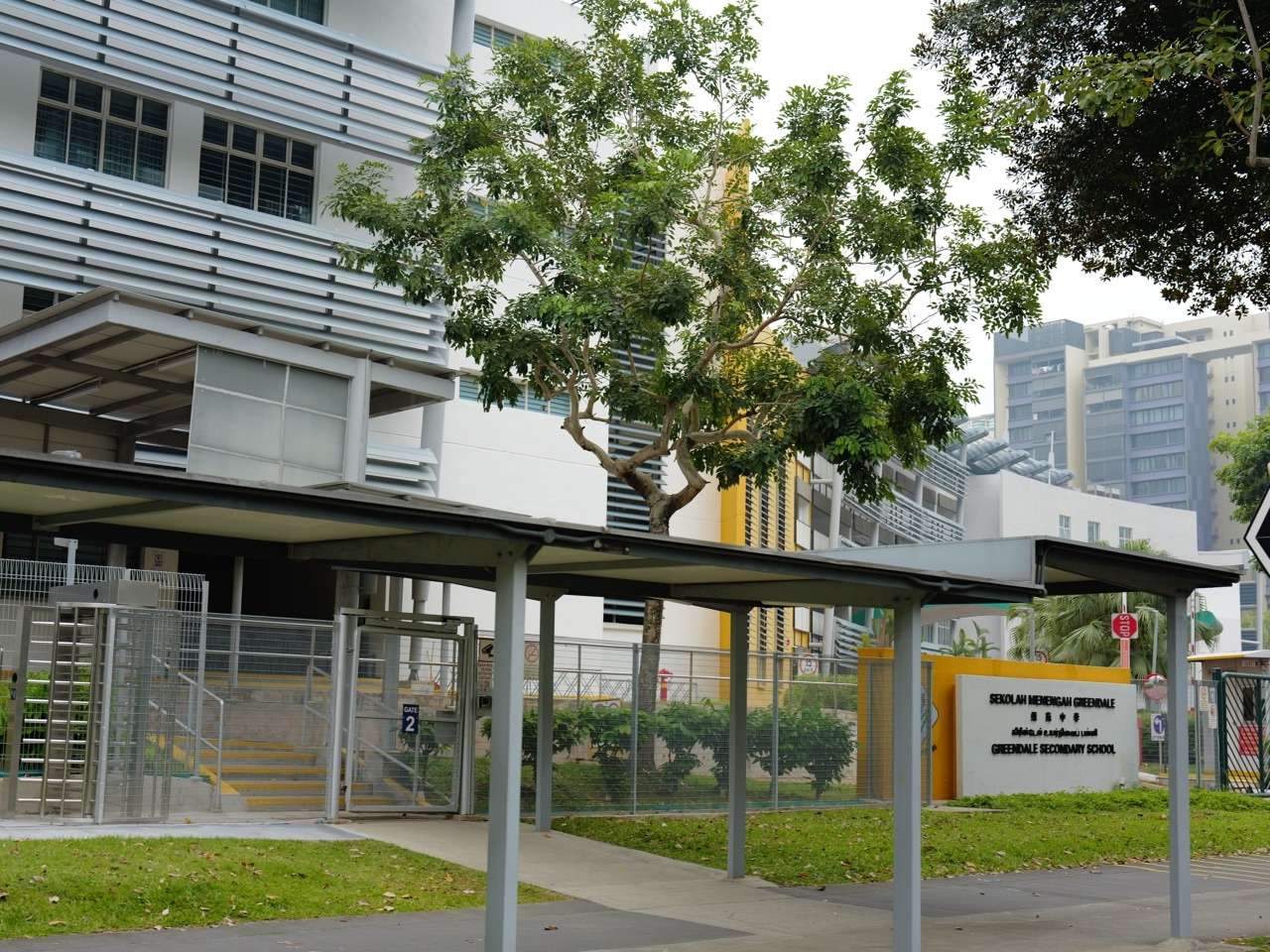
When haze affects schools in Punggol, parents should check the latest official air-quality guidance and their school’s actual announcement—not assume that lessons, PE, CCAs or national exams are automatically cancelled. Singapore’s MOE schools prepare to continue learning indoors where appropriate, adapt outdoor activities, monitor one-hour PM2.5 during the day, and use contingency arrangements if the haze becomes severe. Preschools follow ECDA-specific precautions, which may be more restrictive for young children.
This Punggol haze school and preschool guide covers haze school closure rules, Punggol primary and secondary school routines, PE and CCA cancellations, preschool pickup, O-Level and PSLE exam planning, indoor classrooms, outdoor learning trips and the messages parents should expect. It is a specialised companion to the existing Punggol PSI versus PM2.5 guide and family haze routine guide.
The quick answer for parents and students
- Do not assume school closure from a news headline. MOE may consider closure if the next-day 24-hour PSI forecast is Hazardous, above 300, taking all relevant information into account. A closure is an official decision, not an automatic mathematical outcome.
- Expect adaptations before closure. MOE’s October 2026 preparedness update describes continuing lessons in suitable indoor spaces, using air purifiers, avoiding outdoor activities when necessary and monitoring one-hour PM2.5 during the day.
- Preschools have separate ECDA requirements. At Very Unhealthy air quality, the October 2026 notice requires preschools to cease outdoor activities and strenuous indoor activity, and to take additional indoor and child-health precautions.
- Check the specific institution. A Punggol school, preschool or enrichment provider can communicate operational changes that a regional PSI number does not reveal.
- Prioritise health during examinations. SEAB and schools have procedures for exam arrangements and special consideration when a candidate becomes unwell.
Use NEA’s live haze service, the MOH haze health guide and the institution’s direct notices. This article explains the system; it does not issue school-specific operational orders.
Why Punggol parents ask different haze questions
A preschool parent wants to know whether outdoor play has stopped and whether their child can stay safely inside. A Primary school parent may be concerned about recess, sports day, school transport and after-school care. A Secondary school parent may ask about CCAs, PE, laboratory activities, oral examinations or national examination papers.
These questions cannot all be answered by saying, “The PSI is unhealthy.” They involve different age groups, programmes and authorities. ECDA sets requirements for preschools, MOE schools manage primary and secondary learning, and SEAB coordinates national examinations.
Punggol includes schools and educational institutions such as Punggol Cove Primary School, Northshore Primary School, Oasis Primary School, Edgefield Primary School, Greendale Secondary School and Yusof Ishak Secondary School, among others. The existence of a school in the town does not mean its current haze announcement is identical to another school’s.
A useful parent guide therefore provides the national decision framework, then tells families to follow the relevant institution rather than guessing what a specific campus has decided.
Learn the two time horizons before discussing closure
For tomorrow’s planning, look at NEA’s 24-hour PSI forecast and accompanying health advisory during the haze season. This forecast helps authorities and organisers prepare for next-day activity decisions. The 24-hour PSI has familiar labels such as Good, Moderate, Unhealthy, Very Unhealthy and Hazardous.
For what children may do in the next hour, the one-hour PM2.5 concentration provides more immediate information. Schools can monitor it through the day to adapt to changing conditions. It is measured in micrograms per cubic metre, not on the same scale as PSI.
Punggol falls within the North air-quality reporting region. That is a public regional guide, not a separate official reading from a school hall or playground. The intensity and duration of a specific activity, plus student health, still matter.
Parents who mix a one-hour PM2.5 concentration with a 24-hour PSI forecast may misread the situation. Our dedicated Punggol haze check gives a direct explanation without repeating it across every school decision.
Does PSI above 300 automatically close every Punggol school?
No. The official 9 October 2026 Government Haze Task Force statement says MOE will consider closing schools when the forecast air quality for the next day is Hazardous, with 24-hour PSI above 300. MOE takes into account available forecasts, public-health guidance and the disruption closure could create for family care arrangements.
The phrase will consider is not interchangeable with will definitely. Do not announce a closure to parents merely because a single reading or a social-media screenshot exceeded a threshold at a different time.
A formal decision should be communicated by MOE and schools through their channels. If the school has not issued a closure instruction, check for updates rather than circulate speculative instructions about staying home.
Where there is a closure, schools and families need care arrangements. That is precisely why the ministry weighs more than a single number and prepares alternatives in advance.
What MOE said about classes during the October 2026 haze
The Government Haze Task Force described MOE schools as ready to keep students in enclosed indoor spaces with appropriate air purifiers, observe those with existing heart or lung conditions, and adapt classroom activities as necessary.
The statement explained that classroom lessons can continue, perhaps with more seated activities, while outdoor activities are avoided when conditions require it. Schools monitor one-hour PM2.5 readings and adapt throughout the day. Staff should send unwell students for medical attention.
This is a preparedness framework for schools. It is not proof that a particular Punggol classroom has a purifier switched on at this minute, nor a guarantee that every building has identical systems. Operational details come from the school.
For parents, the message is reassuring but precise: learning can often continue while the outdoor layer of the school day changes. The change may involve PE locations, breaktime activities, enrichment or a field trip rather than the entire academic timetable.
How preschool haze precautions differ from school precautions
ECDA’s public preschool haze FAQ tells early childhood centres to use the 24-hour PSI forecast for planned outings and the one-hour PM2.5 concentration for immediate activities. That reflects the importance of timing for younger children.
In the October 2026 national preparedness notice, ECDA required preschools to cease all outdoor activities and strenuous indoor activities when air quality was Very Unhealthy. Children with chronic heart or lung conditions were to be exempted from indoor physical activities as specified in the notice.
Preschools were also required to provide suitable indoor environments with doors and windows closed and fans or air conditioners operating, and to prepare at least one enclosed room with air purifiers for children who may become unwell. They were to monitor health and ensure prescribed medicines for children with asthma, heart or respiratory conditions were available.
These requirements are not identical to a parent deciding whether to walk through a mall. Follow the centre’s current arrangements, and tell staff about relevant individual needs using its usual confidential channels.
A realistic preschool morning in Punggol
Imagine a preschool child who normally arrives at 8am, enjoys outdoor play late in the morning and is collected by a grandparent after lunch. A parent sees the forecast and wonders whether to cancel the entire day.
The first action is to check the centre’s message. Has it replaced outdoor play with quieter indoor activities? Are drop-off and pickup running normally? Does it need updated health information about the child? These practical questions do more good than guessing a closure from the skyline.
If the child has an existing condition, the family should follow the treating clinician’s instructions and inform the centre appropriately. If the child becomes unwell during the day, the centre should communicate with the parents and obtain medical attention where required.
The key is a normal rhythm with an adjusted environment: arrival, indoor care, meals, rest and pickup can remain familiar even while the outdoor play programme changes.
Primary school: PE, recess and outdoor learning
Primary school children may spend time outdoors during PE, recess, assembly, games and excursions. These parts of the schedule are flexible in ways that core classroom learning may not be. During poor haze, reducing prolonged or strenuous outdoor exposure is a central public-health principle.
An indoor PE replacement need not reproduce the full physical exertion of the outdoor lesson. The school’s risk assessment, available space and current advisory determine what is appropriate. Quiet movement, a seated learning activity or postponement may be chosen according to circumstances.
Recess remains important. Children need food, rest and social contact even if the venue or activity is different. Parents should not tell pupils to remain perfectly still all day unless a healthcare professional or institution has given such a specific instruction.
A school excursion to Punggol Waterway or Coney Island involves different risks from a ten-minute classroom transfer. Schools should review the length and intensity of an outdoor excursion against current conditions, not treat the educational value of the trip as a reason to ignore the advisory.
Secondary school: CCAs, sports training and outdoor leadership
Secondary school CCAs may involve sustained exercise, outdoor service, camps, drills or fieldwork. A three-hour sports session is clearly different from walking between classrooms. Activities can be modified, moved or suspended when current official advice and school arrangements call for it.
A student may feel disappointed by a postponed training session, especially ahead of a competition. Teachers and parents can acknowledge that disappointment while explaining the reason for a changed plan: fewer avoidable hours of exertion in polluted air.
Not every CCA is strenuous. Art, debating, library-based activity or an appropriately managed indoor rehearsal may continue under suitable arrangements. The relevant distinction is actual exposure and effort, not the fact that a programme carries the label CCA.
If an organiser proposes to move a vigorous outdoor activity into a non-air-conditioned hall, the risk still needs to be assessed. “Indoors” is not a guarantee that exertion and air quality are automatically suitable for all participants.
What happens to field trips and Coney Island nature learning?
Punggol students may study plants, habitats, urban waterways or environmental science outdoors. Haze creates a teachable moment, but that does not require exposing students to poor air in order to learn about it.
A teacher can substitute an indoor investigation of official wind maps, satellite fire observations, PM2.5 values or geography diagrams. Students can explore the relationship between a fire source, atmospheric transport, regional monitoring and health advice without needing to stand outdoors observing smoke.
The Punggol outdoor haze activity guide describes how visitors can change park and nature plans. School organisers should also follow their institution’s approval and safety processes.
An outdoor educational activity can be rescheduled. The learning objective can often survive the date change, and a careful indoor substitute may add useful analysis rather than simply replace a lesson with free time.
National examinations: do haze readings postpone the PSLE or O-Levels?
National examinations require official decisions. A high haze number on a phone is not a notice that an examination paper has been rescheduled. SEAB and MOE have procedures for examination continuity, candidate welfare and exceptional disruptions.
On 9 October 2026 the Government Haze Task Force said schools had arranged enclosed spaces such as halls and classrooms, with air purifiers, so national examinations could continue if haze conditions worsened unexpectedly. This planning is intended to protect candidates and limit unnecessary disruption.
If school closures coincide with national examinations, the statement says affected papers would be rescheduled and the examination period extended; announcements would accompany the closure decision, and school and private candidates would be notified through their respective channels.
A student who is unable to sit for or complete an examination because of illness should prioritise health. Schools can escalate cases to SEAB for existing special-consideration procedures. The exact requirements and eligibility should be confirmed through the student’s school or SEAB; do not invent a guaranteed grade outcome.
Worked scenario: a Secondary 4 student on examination morning
Imagine a fictional Secondary 4 student living near Punggol Central. A national paper is scheduled in the morning, and haze has been visible outside for two days. The student’s family receives an unofficial message saying all exams will be cancelled.
A responsible first step is to check the school’s direct notice and the latest official announcements. The parent does not simply stay home on the strength of an anonymous screenshot. If the examination is proceeding, the student follows the stated reporting and venue instructions.
Suppose the student has an existing respiratory condition. The family keeps prescribed treatment available and follows the clinician’s plan, while communicating through the school’s appropriate channel. If the student becomes unable to attend or complete the paper, the family contacts the school promptly and follows the formal process.
This protects two priorities at once: health and fair assessment. Rumours should not cause a candidate to miss a paper, and an examination timetable should not prevent a genuinely unwell student from seeking care.
What if the school closes: the childcare decision
A closure decision is not just a message to students. Families must decide who can supervise a child, how parents can work and where children can spend time indoors safely. This is one reason national policy considers the practical effects of closure.
Prepare a realistic caregiver list in advance. Identify who can collect or look after younger children, and how the family will communicate if plans change quickly. Do not assume grandparents can always travel or provide care, particularly if haze guidance recommends caution for older adults.
If a parent needs flexible work arrangements, check the employer’s policy and MOM’s haze-related workplace guidance. Some families can work from home; others need a more carefully arranged caregiver plan. Neither option should be assumed available to everyone.
Older students may be more independent, but they still need clear expectations about schoolwork, rest, meals and staying informed. Avoid converting a closure into an unstructured day of anxiety.
Should children wear N95 masks on the school journey?
MOH and NEA say N95 or equivalent masks are generally not required for brief journeys between home and school or work or while indoors. Decisions about vulnerable individuals and unavoidable prolonged exposure differ, and use requires a suitable fit.
A normal children’s novelty mask labelled “N95” should not be assumed to have an internationally recognised child-specific N95 certification. The priority remains reducing unnecessary strenuous and prolonged outdoor exposure and following school and clinical guidance.
For a child with chronic heart or lung disease, consult the child’s healthcare professional about any individual mask concerns. A respirator can increase breathing effort and should not be imposed without considering fit and comfort.
Parents should not mistake mask-wearing for permission to keep a child in outdoor sports for hours contrary to the applicable advisory.
Indoor classroom air: what actually matters?
An indoor classroom can reduce direct outdoor exposure, but “indoors” is not a single air-quality specification. Room layout, doors, windows, air-conditioning, ventilation and filtration affect the air students breathe.
Government preparedness guidance describes keeping students in appropriate enclosed indoor spaces and operating air purifiers when needed. Families do not need to calculate every school’s clean air delivery rate, but they can ask about arrangements through ordinary school communication channels if a student has a particular health need.
At home, NEA recommends reducing smoke entry when outdoor conditions worsen, limiting indoor sources of pollution and reopening for ventilation when conditions improve. Schools and preschools follow their own building and safety procedures; parents should not issue improvised instructions to block vents or disable systems.
Our Punggol Haze at Home covers the household version of this question, including HEPA filtration and smoke CADR.
Teachers need a decision process, not just a number
A class teacher facing a change in conditions needs to know the institution’s protocol, the relevant official source, the activity involved and how to communicate with families. One high screenshot without a timestamp is not a sufficient safety plan.
A useful routine is check, classify, adjust, inform, record. Check the current guidance; classify the activity by duration, intensity and students’ needs; make the authorised adjustment; communicate clearly; record the operational change when required.
For outdoor subjects, plan indoor alternatives in advance. For students with known conditions, follow the relevant school procedures and care instructions without publishing personal medical details.
The goal is not to turn teachers into meteorologists. It is to make authorised decisions using trustworthy public-health information and school-specific arrangements.
The student information-literacy lesson hiding inside the haze
Haze provides an opportunity to teach the difference between data, forecasts and policy decisions. Students can label an NEA one-hour PM2.5 concentration, a 24-hour PSI forecast and a school notice as three different kinds of information.
For a Mathematics exercise, students can build a labelled timetable: a reading recorded at 8am, a lesson scheduled at 10am, and a forecast for the next day. They can ask which pieces of information are current for each decision, without incorrectly subtracting a PSI index from a PM2.5 concentration.
For Science and Geography, students can study particle size, wind transport, remote sensing and the limitations of visual judgement. For English, students can write a short factual update that includes a date, source and clear instruction without exaggeration.
Our connected Punggol atmospheric chemistry article and Why Is Punggol Hazy? develop the science further. A child should understand the phenomenon, not be frightened by a weather map.
What should schools tell parents?
Good messages are specific and limited. A useful example is: “Based on current official haze guidance, today’s planned outdoor PE activity has moved indoors. Regular lessons continue. We will inform families if any further changes are required.” It gives the practical decision without pretending to predict all later conditions.
If a message involves closure, reporting time or examination arrangements, it should state the confirmed action, the effective date or session, and where the family can verify it. A vague message that says “haze is very bad everywhere” leaves parents unable to act.
Parents can respond with relevant information: “My child has a clinician-provided asthma plan on file; please let us know if the required care arrangements differ today.” Private medical information should be handled through appropriate channels, not circulated to class chat groups.
For a school programme with a scheduled outdoor event, a clear alternative venue or postponement policy may reduce more confusion than a long scientific explanation.
What should parents avoid saying to students?
Avoid announcing that Punggol air is uniquely dangerous compared with every other town without evidence. Avoid telling a student that school will definitely close at a particular PSI threshold unless an authorised notice says so. Avoid interpreting an old government situation update as if it were today’s operational instruction.
Also avoid dismissing genuine symptoms because the reading is moderate. The regional index describes outdoor conditions over a defined period; a child’s health can require attention for many reasons. The correct response to concerning symptoms is individual care.
Try conversational language: “The school is changing outdoor PE today. Normal learning continues. We will check the next update before tomorrow’s activity.” It is reassuring because it is precise, not because it promises something nobody can verify.
Children and teenagers often handle changed plans better when adults explain the purpose and what will happen next.
A parent’s twelve-point before-school checklist
- Check NEA’s latest haze reading and timestamp.
- Use the correct North-region information for Punggol.
- Read the next-day forecast if tomorrow’s schedule matters.
- Check whether the preschool, school or exam authority has sent an actual notice.
- Confirm whether planned outdoor PE, CCA, trips or sports have changed.
- Keep prescribed medicines and existing individual care plans accessible.
- Tell the relevant school staff about needs through the appropriate private channel.
- Plan a normal short school journey without unnecessary detours or waiting outdoors.
- Make an indoor alternative available for cancelled leisure activity.
- Confirm who can collect a younger child if the institution requests it.
- Do not circulate unverified closure rumours or undated screenshots.
- Seek medical attention for concerning symptoms regardless of a single PSI value.
This checklist is designed to avoid extra work. In many cases, the answer is that school operations continue with an adjusted outdoor schedule. The parent’s job is to follow confirmed instructions, not invent an entire new school calendar.
What about university students in Punggol Digital District?
Higher education students and staff may attend classes, laboratories and activities in the Punggol Digital District, including the Singapore Institute of Technology campus. Their academic programmes, work placements and building operations differ from a Primary school timetable.
The October 2026 government notice said schools and Institutes of Higher Learning were ready to adopt appropriate haze measures in line with national health advice. A university-specific decision should be obtained directly from the institution; do not infer a university closure from a preschool advisory.
Outdoor events, sports and fieldwork may be reviewed separately from indoor lectures. Students commuting from another town may encounter a different travel pattern than a resident near Punggol Coast MRT.
For all learners, the distinction remains constant: the outdoor air-quality measure informs exposure planning, while the institution determines its actual academic and operational arrangements.
Frequently asked questions from Punggol parents
Will Punggol schools close when the PSI is 201?
Not automatically. The official October 2026 statement says MOE would consider school closure if the next-day forecast is Hazardous, above 300, with other information taken into account. Follow a school or ministry notice, not a threshold interpreted on social media.
Are preschools required to stop outdoor play during very unhealthy haze?
The October 2026 government notice says ECDA requires preschools to cease outdoor and strenuous indoor activities in the Very Unhealthy range and take specified indoor precautions. Always follow the current centre and ECDA communications.
Can a school still hold a lesson if outdoor PE is cancelled?
Yes. MOE described plans to continue classroom learning indoors while modifying outdoor activities. Specific operations depend on school instructions and current conditions.
Will PSLE or O-Level papers be postponed automatically?
No. Candidates must follow official SEAB and school announcements. Government preparedness plans include enclosed exam venues and special rescheduling arrangements if school closures coincide with national examinations.
What if a child is unwell on exam day?
The student’s health takes priority. Contact the school immediately, seek appropriate medical care and follow the official SEAB special-consideration or other applicable procedures.
Should I buy N95 masks for every child?
NEA and MOH say N95 respirators are not generally required for brief school commutes or indoor settings. Children have particular fitting considerations. Follow individual clinical and official advice rather than buying masks as a blanket response.
Does Punggol have its own official school PSI reading?
NEA places Punggol in the North reporting region. Its public regional values are not a certified measurement from each school gate or classroom.
Will tomorrow’s forecast tell me the exact outdoor PE decision?
The forecast informs planning. Schools also monitor conditions during the day and make operational decisions. Tomorrow’s final activity arrangement may change as new information arrives.
Can parents demand that a school follows a screenshot from a different region?
A screenshot is not a substitute for the current official local-region reading and school procedure. Share credible concerns with the school and ask for its current arrangements.
What if grandparents normally collect the child?
Include their health needs and travel constraints in the family’s plan. If a changed collection arrangement is necessary, notify the institution and follow its authorised pickup procedures.
Reading route through the eduKate Punggol haze library
This page owns educational institutions and learning continuity. The Punggol Haze Preparedness guide owns the family’s next-48-hours timetable. The Punggol Haze Check owns indicator selection. The Punggol Haze Health Guide owns human health and mask questions.
For a walk, cycle or school field trip around Punggol Waterway, use Punggol Haze Outdoor Activities. For home study spaces and room filtration, use Punggol Haze at Home. These links deliberately lead to the detailed topic rather than repeating everything here.
Official sources and editorial update
This guide was checked on 17 October 2026. The national Haze Task Force statement dated 9 October 2026 is used as a sourced operational policy example. A school-specific announcement, exam notice or later official update may supersede it.
- NEA: live Singapore haze readings and official regional guidance
- Ministry of Health: Haze and Personal Health Advisory
- NEA: Singapore Ready to Step Up Haze Response, 9 October 2026
- MOE: Haze Management and Emergency Preparedness
- ECDA: What should preschools do in the event of haze?
- Punggol Haze Check: PM2.5 and PSI
- Punggol Haze Preparedness: A 48-Hour Family Plan
A good haze school plan protects learning and health at the same time. Parents need accurate messages, students need calm guidance, and schools need room to make authorised changes as conditions evolve. The result can be a normal day of learning with fewer unnecessary hours outdoors.
Continue Through Punggol’s Haze Reference Library
Use the connected local guides below when your next question moves from this page to another topic. Always use NEA’s current readings for actual air-quality decisions.
- Punggol haze and pets — Dog, cat and bird wellbeing
- Punggol haze at work — Workers, riders and businesses


