
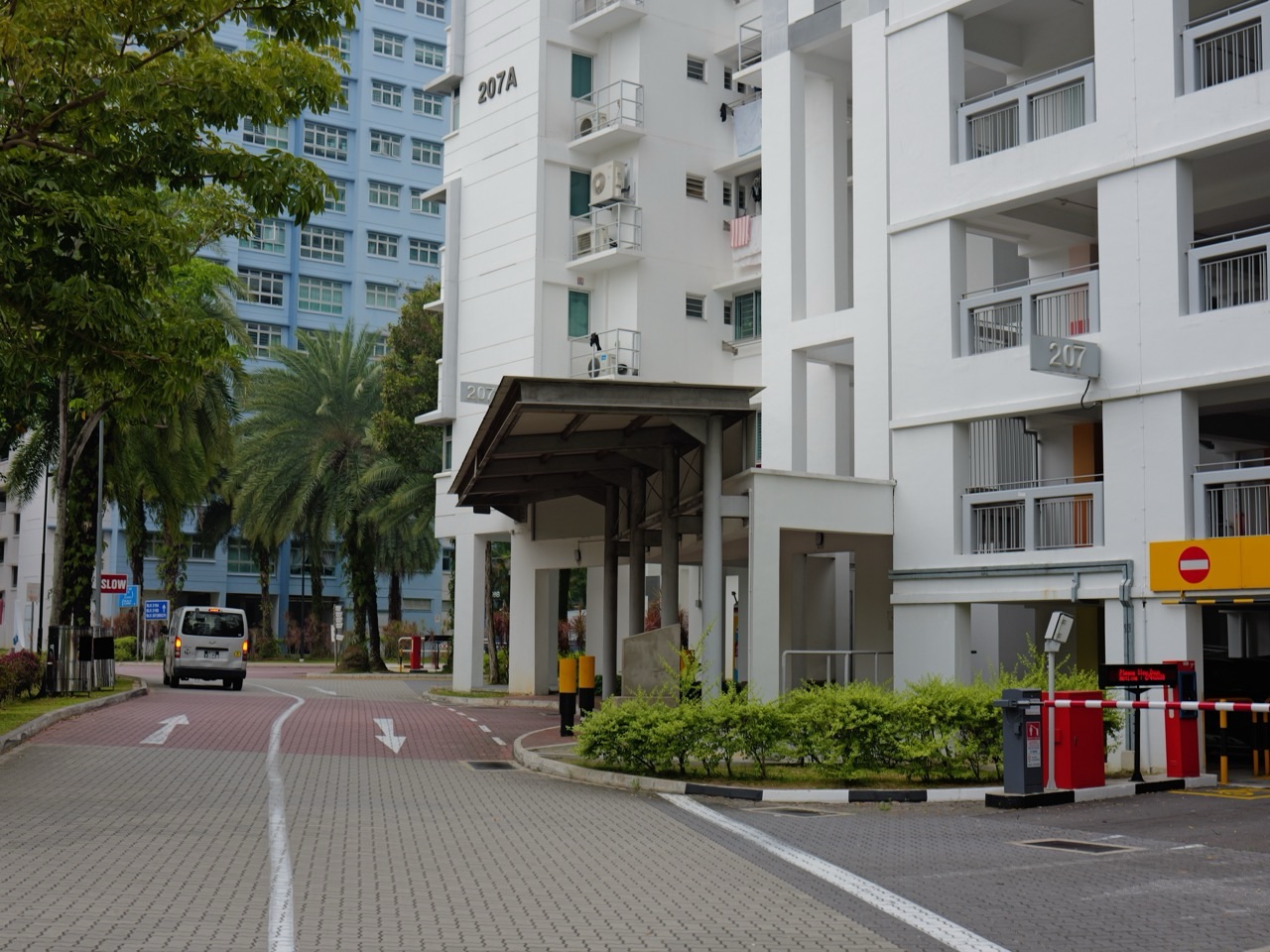
A Punggol family’s migrant domestic worker needs the same sensible haze precautions as everyone else: follow current NEA and MOH advice, reduce avoidable prolonged outdoor chores as appropriate, and discuss necessary school pickups and grocery errands fairly. A helper should not be assigned every exposed task merely because the rest of the household wants to stay indoors. MOM’s specific domestic worker employment, high-rise safety, rest-day and medical-care rules also continue to apply.
This guide makes the family plan practical. It covers Punggol HDB laundry and windows, childcare, eldercare, respiratory symptoms, safe work communication, fair rest days, legal duties and a worked example of a household adjusting its timetable without making the helper invisible.

Find your answer: The first rule: protect everyone who lives and works in the household · Have a two-minute conversation about the day · Shopping and food delivery should be assigned fairly · Older relatives may need care that does not require long outdoor trips · N95 masks: not an automatic order for every errand · Agree on a clear way for the worker to raise concerns · Six mistakes to avoid when planning domestic work during haze
The first rule: protect everyone who lives and works in the household
What should a Punggol family ask its migrant domestic worker to do during haze? Start with the same official air-quality and health advice that applies to the rest of the household. Reduce avoidable prolonged outdoor tasks as the advisory requires, plan essential school pickups and groceries together, and provide a comfortable indoor environment. A helper is a person who may also have asthma, an infection or other health concerns, not an unlimited substitute for everyone else’s outdoor exposure.
Singapore’s MOM domestic worker employment rules make employers responsible for their worker’s upkeep and maintenance, including acceptable accommodation, food and medical treatment. Those responsibilities matter on an ordinary day and remain important during a smoke episode. This guide covers practical planning and dignity without claiming that every workplace-specific PSI table automatically creates an identical legal duty for domestic employment.
Domestic employment is not the same as an outdoor construction job
MOM publishes workplace haze guidelines for employers managing outdoor work under the Workplace Safety and Health framework. Migrant domestic workers operate under specific Work Permit regulatory conditions and domestic employment rules; do not automatically transplant every industrial PPE, risk-assessment or stop-work obligation into an HDB household as though the legal schemes were identical. The public-health recommendations from MOH still matter for anyone who may be exposed.
The practical test is straightforward. Would this duty keep someone outside for a long period or involve strenuous effort? Could it be postponed, shared, changed or handled indoors? Is the person well enough to do it? The employer should discuss those questions with the worker rather than command the same outdoor tasks regardless of conditions. Use official MOM sources for the exact rights and obligations of an MDW.
Use current one-hour PM2.5 and tomorrow’s PSI forecast correctly
NEA’s one-hour PM2.5 reading is intended for near-term activity decisions, and the forecast 24-hour PSI helps with tomorrow’s planning during haze season. The numbers have different units and time scales. A plan for collecting a child from school this afternoon should not rely on an old screenshot of next week’s forecast. Check the reading and MOH’s personal guide near the actual time.
At Elevated PM2.5, healthy people are advised to reduce strenuous outdoor activity, while vulnerable people should avoid it. At High, healthy people should avoid strenuous activity and vulnerable people should avoid all outdoor activity for the next hour. At Very High, healthy people should minimise outdoor time and vulnerable people should avoid it. These are general health recommendations, not a reason to make the helper responsible for outdoor errands that the family chooses to avoid itself.
Have a two-minute conversation about the day
Before the morning routine, ask which duties require going outside, whether the worker feels well, and what instructions are needed for any change. Share the official NEA and MOH source rather than presenting a frightening chain message as fact. Agree who handles groceries, student care pickups, medication collection and unavoidable cleaning. A brief shared plan prevents everyone assuming the helper will simply do all external tasks.
A useful conversation also allows the worker to say they are uncomfortable, short of breath or unsure about an instruction. They should be able to request appropriate care without public group-chat disclosures. Good communication is a practical form of safety. It keeps the family functioning and avoids turning a smoke episode into a test of who can endure more discomfort.
Do not order unnecessary high-rise window cleaning in haze
Outdoor haze is rarely a good reason to schedule an extra round of balcony or exterior window scrubbing. Wet cleaning may be useful inside the home when needed, but cleaning the outside of high-rise windows has special risks unrelated to PM2.5. MOM requires a safety agreement and restrictions governing when an MDW may clean exterior window panes. Families must follow these conditions at all times.
Do not let a dusty-looking balcony tempt anyone to lean over a Punggol HDB railing, reach beyond a window or improvise safety equipment. Employer responsibility for high-rise safety is a real issue even on a clear day. Check MOM’s safety-agreement guidance before any exterior window task, and postpone unnecessary balcony work rather than adding exposure and fall risk.
Laundry and balcony tasks can wait when appropriate
Families may be concerned that laundry hanging outdoors will pick up dust or smell. A clothes-drying plan can be adapted based on household facilities, current conditions and safe practices. A worker should not be asked to stand on an exposed balcony for a lengthy optional task merely because the family’s routine says that is the normal time. Indoor drying, when practical and safe for the home’s moisture needs, may be an option.
Avoid overcrowding a damp, poorly ventilated bedroom with wet clothes if it could create moisture problems. Do not promise that every indoor method is harmless either. The goal is a manageable trade-off, not an absolute ‘never open a window again’ rule. The Punggol balcony and laundry haze guide discusses surface cleaning and household plants in more detail.
Shopping and food delivery should be assigned fairly
A Punggol household may normally ask its helper to collect groceries or meals at One Punggol or Waterway Point. When haze worsens, consider whether one necessary outing could combine errands, whether another adult can help, or whether an appropriate delivery service reduces exposed walking. A delivery service can shift outdoor exposure to a rider, so customers should provide clear instructions and realistic expectations.
Do not treat a worker’s availability as evidence they should be sent out multiple times while everyone else remains comfortably indoors. A shorter, safer trip organised by agreement is often better than several uncoordinated trips. Food hygiene remains a separate responsibility: keep meals properly stored and do not allow groceries to linger at unsafe temperatures. The Punggol haze meals and groceries guide covers the wider food decision.
School pickup: remember the worker’s health and authorised handover
A helper may accompany a primary-school student between home, an LRT stop, a student care programme or a school gate. The journey may be necessary even when an optional waterfront walk is not. Confirm the actual school and centre instructions, choose a safe direct route and avoid prolonged unnecessary outdoor waiting. A child should never be sent with an unauthorised person because a parent heard that school might close.
A practical plan includes the name of the adult collecting the child, pickup time, approved school instructions and a way to reach the employer. If the helper is unwell or has a medical condition, discuss suitable alternate pickup arrangements. The Punggol student care and haze guide explains authorised after-school handovers without assuming all providers use the same system.
Care for children indoors without turning every hour into homework
Children who cannot do ordinary outdoor play may spend more time at home with a caregiver or helper. A predictable mix of reading, meal breaks, quiet creative activities and suitable play can keep the afternoon comfortable. Schoolwork can continue according to the child’s needs, but a cancelled CCA is not a reason to demand three extra hours of intense tuition or physically demanding indoor games.
The employer should give clear, age-appropriate instructions and ensure necessary supervision. Where the child has asthma or another care plan, prescribed medicines and clinical directions take priority. Do not ask a domestic worker to decide medical treatment based only on a shared PSI screenshot. For educational alternatives, use Punggol haze learning projects as optional ideas rather than a rigid programme.
Older relatives may need care that does not require long outdoor trips
A helper may assist an older member of a Punggol household with meals, routine care or a planned medical appointment. If haze conditions are poorer, reduce unnecessary outdoor exposure for the older person while preserving their preferences and dignity. A necessary healthcare appointment may still need a carefully planned transport route. If a grandparent has chronic heart or lung disease, follow MOH’s more cautious advice and any clinician-specific plan.
The helper should not be expected to diagnose a new breathing problem. Employers should provide an emergency contact procedure and access to relevant prescribed medication instructions from clinicians. Serious symptoms such as chest pain or severe breathing difficulty require urgent healthcare attention. A well-designed plan protects both the older family member and the worker supporting them.
A helper needs the same comfortable indoor air as everyone else
When outdoor air is poor, a family may close windows and use suitable particle filtration according to official recommendations. The worker’s sleeping and resting space needs consideration too. It would be unfair to keep a filtered living room exclusively for the family while leaving a worker’s only available room with preventable smoke entry or excessive heat. Accommodation must remain acceptable, and air cleaning does not eliminate the need for safe living conditions.
Indoor smoke sources also matter. Avoid adding candles, incense or smoky cooking to a space you are trying to keep cleaner, and respect household religious or cultural practices while discussing how and when ventilation can be managed safely. Air-conditioning alone does not guarantee effective smoke filtration. The Punggol indoor smoke guide explains how ordinary activities contribute particles.
If the worker has asthma or other relevant conditions
MOH says people with chronic heart or lung disease are more susceptible to haze effects. A domestic worker may also have asthma, respiratory allergies, pregnancy-related needs or an acute illness. Do not assume a person is healthy simply because they usually handle strenuous chores. If symptoms worsen, facilitate appropriate medical assessment and follow the worker’s existing prescribed treatment instructions.
MOM states that MDW employers are responsible for medical treatment as part of the worker’s upkeep in Singapore. Do not make healthcare conditional on whether a household chore is completed first. Medical details should be kept private and discussed through appropriate channels. An employer is not expected to prescribe new medication or decide that a mask alone solves a respiratory problem.
N95 masks: not an automatic order for every errand
MOH does not generally recommend N95 masks for ordinary brief commutes from home to work or school. Longer unavoidable exposure in poorer air may warrant suitable protection under relevant guidance, but tight-fitting respirators can make breathing harder and require proper fit and tolerance. Do not assume that every MDW needs one for each indoor household task, or that an N95 is permission to continue strenuous outdoor work.
Discuss the actual duration of a necessary trip and the worker’s health. Follow public-health advice and any clinician instruction instead of relying on an internet mask slogan. The more useful first decision is often to shorten or reorganise exposure, postpone unnecessary outdoor work and ensure a comfortable indoor rest arrangement. The Punggol haze health guide explains respirator cautions.
Rest days remain important during a haze episode
MOM’s employer guide provides rules and resources about MDW rest days, wellbeing and work arrangements. An unexpected haze day should not automatically erase a worker’s agreed rest time or social contact. A person may prefer to keep a planned rest-day outing, but should understand current official advice and have the freedom to make an informed decision within the employment rules. Discuss changes respectfully rather than making unilateral assumptions.
A worker who wants to check the air before meeting friends can use the same NEA and MOH resources as the household. The employer may offer information or appropriate practical support, not threaten or shame the worker for a legitimate rest-day need. Social wellbeing matters for the whole home, including someone whose family lives overseas.
Keep domestic-work deployment within the actual rules
MOM states that an MDW may work only for the declared employer and at the residential address declared under her Work Permit, performing domestic chores. Special circumstances such as taking care of an employer’s child or parent at a relative’s home have a distinct notification and consent process. A haze-related childcare inconvenience does not remove these requirements.
Do not send the helper to work at a shop, food stall, home business or other person’s household because the employer is too busy or the air outside seems unsuitable for the employer. MOM explicitly prohibits illegal deployment for non-domestic business tasks. Family flexibility should be built around lawful duties and good communication, not around assigning new work outside the permitted arrangement.
Agree on a clear way for the worker to raise concerns
An effective household haze plan answers who checks the official reading, who decides whether an optional task can wait, how health symptoms are reported, where prescribed medicine is stored and who handles urgent childcare collection. Keep messages simple and in a language the worker comfortably understands. MOM highlights safe communication and adequate supervision for household tasks.
Avoid a schedule that changes every hour because another family member forwards a new rumour. A stable plan can still be updated when the official advisory changes or someone becomes ill. A worker should not feel that reporting breathlessness is disobedience. Clarity helps everyone make sensible decisions without arguments or needless fear.
Protection does not require buying every ‘haze product’
A family may feel compelled to stock masks, air purifiers, special supplements and cleaning gadgets. Start with the measures that official sources actually support: reduce unnecessary exposure, make indoor space more comfortable, minimise smoke sources and seek care if needed. A well-sized air cleaner may help, but a product labelled ‘anti-haze’ is not a guarantee of performance.
Employers should bear responsibility for the normal safe operation of their household rather than asking the worker to buy personal protective items or medical treatment as a substitute for household planning. Monitor recurring costs such as filter changes through the manufacturer’s instructions. The Punggol haze household costs article has practical budgeting examples.
Worked example: a Punggol family with a helper and two children
Imagine two parents commuting to work, a Primary 3 child attending student care and a preschooler whose operator modifies outdoor activities. The family’s helper usually makes an afternoon grocery trip and collects one child. On a poorer-air day the employer checks official advice, confirms both school messages and discusses a workable plan with her. One adult orders essential groceries, the helper makes only the necessary authorised pickup using a direct route, and the younger child enjoys a quiet indoor story session.
The helper’s own comfort and health are included in the discussion. If she feels unwell, the family shifts pickup duties to another authorised adult and arranges appropriate care. No one schedules balcony washing because smoke has left some residue. The example is hypothetical, but it illustrates a humane home routine that protects the people providing care as well as those receiving it.
Six mistakes to avoid when planning domestic work during haze
First, treating the helper as immune to haze. Second, assigning every optional outdoor errand to her. Third, ordering exterior window cleaning without following MOM’s high-rise safety restrictions. Fourth, ignoring a worker’s symptoms while focusing solely on a child’s wellbeing. Fifth, assuming an N95 removes the need to adjust strenuous work. Sixth, using an emergency as an excuse to break Work Permit or rest-day rules.
The alternative is a shared plan based on a reliable current reading, clear task priorities, safe working practices and respectful communication. One household’s routine will differ from another because of childcare, health, work and building arrangements. But fairness, medical care and safety remain good principles throughout.
Frequently asked questions about domestic helpers and Punggol haze
Should a helper still collect children from school? It depends on the necessary trip, official advice, health and authorised pickup arrangements. Should she clean balcony windows after haze? Avoid unnecessary exterior work and follow MOM’s strict high-rise window-cleaning conditions. Is every ordinary commute an N95 situation? MOH does not generally recommend one for brief commuting. Can a helper take over work at my Punggol shop while I’m busy? No, illegal business deployment is prohibited.
Who pays for a helper’s medical care in Singapore? MOM states that employers are responsible for medical treatment under the relevant rules. Does haze automatically cancel her rest day? Do not assume so; follow MOM rest-day requirements and discuss sensible plans. Can a worker report symptoms? Yes, communication and appropriate care are essential. Where should the family check air quality? NEA’s official portal.
Good family care includes the person doing the caring
Punggol families often rely on helpers to make school mornings, groceries and eldercare run smoothly. Haze may change an outdoor timetable, but it should not mean transferring every inconvenience to the person whose work is already helping the family. A short conversation and an adjusted plan can make a bigger difference than panic purchases.
Check official advice, arrange necessary work safely, respect rest and health needs, and keep prescribed care and emergency contacts ready. The measure of a good household haze response is that everyone can get through the day with dignity, not that the to-do list was completed at any cost.
planning-table
| Task | Practical haze question | Employer action |
|---|---|---|
| Optional balcony cleaning | Can it wait safely? | Postpone when appropriate; obey high-rise restrictions |
| School or student care pickup | Who is authorised and well enough? | Choose direct route and backup caregiver |
| Groceries | Can necessary errands be consolidated? | Share duties or use reasonable delivery |
| Indoor cooking | Will smoke add more particles? | Minimise indoor smoke sources and plan ventilation appropriately |
| Medical symptoms | Does worker or family member need clinical help? | Facilitate care promptly; urgent symptoms take priority |
| Rest day | What are actual agreed rights and plans? | Follow MOM requirements and communicate respectfully |
reading
- Punggol Haze Check: one-hour PM2.5 and PSI
- Punggol haze caregiving for seniors
- Punggol haze student care and pickup
- Punggol haze indoor smoke sources
- eduKateSG Punggol haze daily lifestyle companion
sources
Reviewed 17 October 2026. This article is not individual legal, employment or medical advice. Migrant domestic workers are governed by specific MOM Work Permit and welfare conditions; do not interpret general industrial workplace guidelines as identical legal duties for domestic households. Seek official advice for particular disputes and urgent medical care for serious symptoms.
- MOM: Migrant domestic worker employment rules and upkeep
- MOM: Employer guide, rest days and wellbeing
- MOM: High-rise window-cleaning safety agreement
- MOM: Household tasks and safety supervision
- MOM: Domestic workers cannot work for the employer’s business
- NEA: Current haze readings and forecast
- MOH: Haze health and activity guidance


