
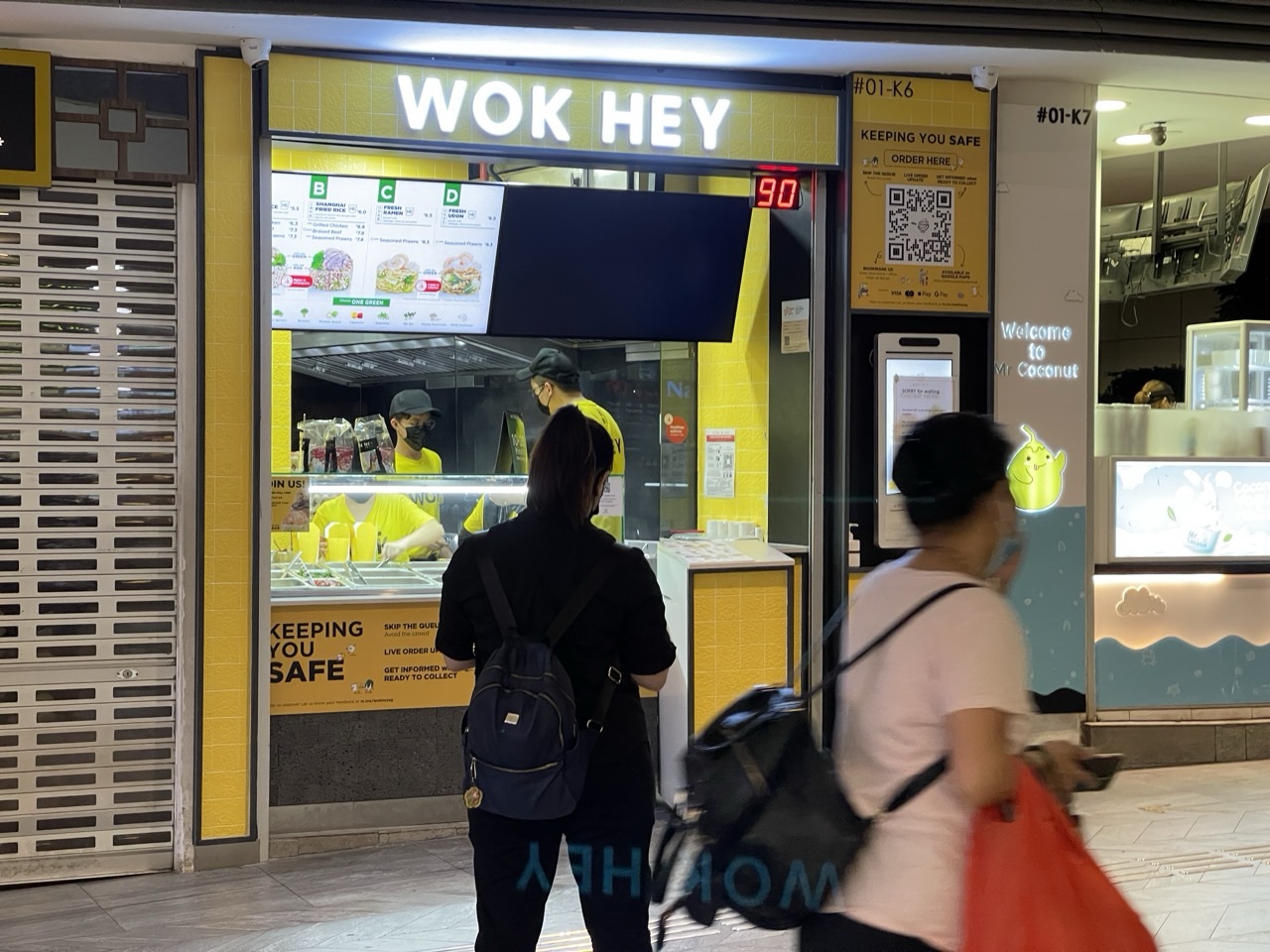
Can you eat at One Punggol Hawker Centre, shop at Waterway Point or order delivery when it is hazy? Yes, everyday food and groceries can usually be planned with sensible adjustments, but the right approach depends on outdoor exposure, the actual dining environment and everyone’s health. Check NEA’s current one-hour PM2.5 before an immediate trip and MOH’s 24-hour PSI forecast guidance when planning ahead. An outdoor hawker table, an enclosed shop, a short takeaway pickup and a delivery rider’s entire shift are different situations.
This Punggol haze food guide helps families decide between eating out, takeaway, grocery shopping and home meals in 2026. It separates two questions that are often confused: how much polluted outdoor air people inhale, and whether food has been stored, handled and delivered hygienically. Singapore Food Agency rules on cooking, temperature control and food handling still matter, but there is no basis to claim that every meal cooked or sold during haze is automatically contaminated. Shorter, well-planned errands may protect time, comfort and vulnerable family members without turning dinner into a crisis.

Quick navigation: The five-minute dinner decision: go out, collect, deliver or cook? · Takeaway collection: shorten unnecessary exposure without rushing · SFA temperature guidance still matters on a smoky day · Waterway Point, Punggol MRT and a sensible food pickup route · Hawker staff, couriers and the people keeping Punggol fed · Five food-and-haze claims to question
The five-minute dinner decision: go out, collect, deliver or cook?
Begin with the people, not the restaurant advertisement. Who is going outside, and for how long? A healthy adult collecting a meal on a direct route and a grandparent with chronic lung disease sitting for an hour in an open-air dining area face different health considerations. MOH’s guidance becomes more restrictive as air quality worsens, especially for children, older adults, pregnant people and those with chronic heart or lung conditions. If someone is coughing or breathless, personal wellbeing should take precedence over a booking.
Next, choose the least complicated workable meal: eat comfortably indoors when the venue environment is suitable, take food home from a short collection trip, arrange delivery or cook with ingredients already in the flat. None is automatically perfect. A delivery journey affects the rider; a takeaway queue can still be outdoors; cooking at home may be easier when household supplies are available. A balanced plan considers convenience, cost, worker welfare and the real exposure rather than treating a particular app or mall as a safety certification.
Punggol dining geography: know which space is actually enclosed
One Punggol is an integrated community hub with a hawker centre on Level 2, while Waterway Point and the wider town centre offer different food and retail spaces. Northshore Plaza and the Punggol Coast area serve other neighbourhoods. For a family in Sumang, a convenient nearby food outlet may avoid unnecessary cross-town travel. Yet the name of a building does not reveal the level of air filtration in every stall, corridor or eating area.
A naturally ventilated hawker centre may feel breezy, but a breeze does not guarantee low PM2.5. Conversely, the existence of air-conditioning does not prove a building is free of fine particles. Choose the actual seat, the time outside and the family’s health needs. If the planned venue is crowded or uncomfortable, a flexible takeaway option can be useful. One Punggol’s integrated hub guide explains what facilities occupy the complex, not a live air-quality measure for its dining spaces.
One Punggol Hawker Centre: make the meal about what you need
A hawker meal can remain part of normal Punggol life during a haze period, provided the family follows current official advice and assesses where the meal will be eaten. The People’s Association identifies the hub’s hawker centre on Level 2; it is one of several co-located facilities. If prolonged sitting in a naturally ventilated area is not suitable for someone in the group, consider takeaway or a different dining arrangement rather than demanding the venue shut.
Food and air are two different decisions. The hawker or operator remains responsible for safe handling of food, and the customer should consider ordinary food hygiene and storage. Haze does not create a reliable shortcut for assessing whether a meal is safe to consume just by looking at the sky. If a household member has a serious food allergy, dietary restriction or illness, those requirements remain separate and should not be forgotten in the haze discussion.
Takeaway collection: shorten unnecessary exposure without rushing
The appeal of takeaway is simple: a single short collection journey can replace an extended outdoor dining experience. Plan the actual walking time, check that the stall is open and consolidate collection with another necessary errand where possible. Avoid an exposed queue that becomes unexpectedly long. If the official advisory restricts outdoor activity or a household member is vulnerable, consider whether someone else can complete the trip.
Shortening exposure should not mean dangerous road crossings, hurried cycling or running from the station. A covered route helps with weather but does not filter outdoor particles. Once food is collected, carry it in clean, suitable packaging and eat it promptly or store it safely according to the food’s requirements. Food hygiene and personal air-exposure protection should be managed together, not traded against each other.
Food delivery: the customer’s short exposure may be the rider’s long shift
Delivery services can make a hazy day easier for someone who should avoid unnecessary outdoor exposure. But remember the person behind the order. A rider may make dozens of short trips, spending much of a shift outdoors, and can face substantial cumulative exposure even when each individual delivery seems quick. Customers should not pressure riders to travel dangerously or hurry through affected roads. Workers, employers and platforms should refer to the applicable haze safety measures.
Singapore’s Ministry of Manpower provides guidance for employers managing prolonged or strenuous outdoor work, including risk assessment, rest, task modification and suitable respiratory protection where warranted. The exact legal arrangement varies with the worker. A Punggol family can help by giving accurate delivery directions, receiving an order promptly and using the service respectfully. The Punggol commute and outdoor work guide explains workplace responsibilities in greater detail.
Does haze automatically make cooked food unsafe?
A common worry is that all food sold outdoors must be unsafe because the air looks smoky. That conclusion is not supported merely by a visible haze episode. Food safety depends on the food, how it is prepared and handled, protection from contamination, temperature and storage, as well as other factors. Singapore Food Agency provides general safe-food practices and guidelines for food delivered to consumers. Haze-air exposure risk for the diner should be assessed separately.
This does not mean food should be left uncovered or handled casually. A clean covered container, sensible transport and correct hot or cold holding remain appropriate. If food is exposed to visible dirt or mishandled, those are normal food-safety concerns requiring action. Do not claim that a particular PM2.5 concentration proves whether a meal is safe to eat: the air-quality index was not created as a cooked-food inspection method.
SFA temperature guidance still matters on a smoky day
Singapore Food Agency advises consumers to eat cooked food as soon as practical and keep food that is not meant for immediate consumption at safe temperatures. It recommends rapid refrigeration at 4°C or below or keeping appropriate hot food at 60°C or above; food should be thoroughly reheated where appropriate. Temperature abuse and cross-contamination remain issues whether the sky is clear, rainy or hazy.
This is especially relevant when an order sits at the door while a family continues a long telephone call or when someone leaves takeaway on the kitchen counter for hours. Consider separating portions for later meals and chilling them promptly. Do not use haze as a reason to improvise a new storage rule. Follow SFA’s food-specific guidance and any labels or instructions on the meal. The household’s safety plan can be ordinary and effective rather than elaborate.
Grocery shopping: one planned trip rather than five accidental ones
Haze can make an otherwise pleasant stop at the supermarket feel tiring, particularly for someone with respiratory symptoms. A shopping list helps: group necessary items by where they are sold, choose the nearest realistic store, consider a suitable indoor route and carry groceries without rushing. If a person is vulnerable to haze effects, ask whether someone else can collect the items or whether an accessible delivery option exists.
Buy what the household actually needs, including medication-related supplies when applicable, but avoid the assumption that haze requires hoarding unusual foods or expensive supplements. Balanced meals, ordinary pantry staples and drinking water are useful. Fresh vegetables, fruit, grains and protein can be chosen by normal dietary needs. Food cannot neutralise inhaled PM2.5; what reduces the haze exposure is changing time and exertion outdoors and improving the indoor environment where possible.
A Punggol grocery budget that does not turn haze into panic buying
A practical haze budget has more than a food bill. There is the cost of delivery, the cost of making several trips, the time required to cook, and the strain on anyone asked to carry heavy groceries outdoors. A simple meal plan for three days can help families shop proportionately. Include familiar ingredients that can be stored properly rather than purchasing whatever social media calls a ‘lung cleansing’ food.
If money is tight, start with the nearest affordable and accessible option. Buying ready-to-eat takeaway every day may be less practical than a short planned grocery trip and home cooking; for another family with health needs, delivery may be appropriate. The best decision is contextual, not an online list of compulsory haze-season purchases. Neighbours may be able to share errands in a considerate, voluntary way, especially for older residents.
Waterway Point, Punggol MRT and a sensible food pickup route
Waterway Point is integrated with the town-centre transport environment, which makes it convenient to combine a necessary station transfer and a food collection. But some pedestrian approaches and waterfront-adjacent spaces are open to the outdoor air. Choose an actual stall and route, not a slogan that the entire trip will be ‘inside’. The amount of outdoor time depends on where the household starts, how long the queue is and which entrances are used.
A family that normally adds a Waterway Park stroll after dinner can make a separate exercise decision. Eating a meal is not automatically permission for prolonged outdoor walking, and a better smell near the water is not a reliable air-quality measurement. On a more polluted evening, take food home directly if that is suitable, preserve the mealtime and save the waterside walk for another day. Things to Do Near Punggol MRT explains the everyday geography.
Northshore and Punggol Coast households have different shortest errands
A resident of Punggol Northshore should not be told that every haze-day meal requires travelling to Punggol Central. Northshore Plaza and surrounding neighbourhood outlets may offer more direct options, while homes nearer Punggol Coast or the Digital District have their own routes. The advantage of local shopping is often reduced journey complexity. It does not prove one neighbourhood has cleaner ambient air than another.
Use the current NEA regional reading and the personal advisory; then compare the actual walk, lift access, seating and return route. A household with a stroller or an older relative may value simple connections even more than the shopping list. If an outlet’s hours or access have changed, make a phone or website check rather than forcing a speculative detour. Lifestyle guidance should remove friction, not create an unnecessary race across the town.
Infants, older relatives, allergies and chronic disease
Families caring for infants, older adults or people with chronic heart and lung conditions often have two sets of concerns during haze: the air and the person’s ordinary health or dietary needs. Both matter. A grandparent on a prescribed diet should continue that plan rather than switch to a supposed haze detox menu. A young child should receive suitable meals and fluids; if they are wheezing or unusually breathless, food is not a substitute for assessment and treatment.
Before ordering or collecting a meal, check food allergies and texture needs as usual. Keep prescribed medications available, follow clinician instructions and consider whether someone else can make the outdoor trip. A family can enjoy eating together at home without demanding that a vulnerable person join a long or strenuous excursion. Care is sometimes as simple as arranging dinner so everyone can participate comfortably.
Hawker staff, couriers and the people keeping Punggol fed
A restaurant or hawker staff member may work many hours near cooking heat, ventilation openings or outdoor service areas. Food and beverage work has its own occupational and hygiene requirements, and a smoke-haze episode can add exposure concerns. Employers should consider the worker’s actual duties, rest arrangements and any applicable MOM guidance. It is not appropriate for customers to assume that stall staff are less vulnerable simply because they work around cooking or steam.
Couriers, cleaners and suppliers contribute to the entire food journey. Keep communications realistic when schedules change; a delayed order during an adverse environmental episode is not evidence of poor effort. For food establishments, safe packing and temperature control still apply. SFA’s delivery-business guidance discusses maintaining hot and cold chains, packaging ready-to-eat meals hygienically and preventing cross-contamination. That guidance exists independently of a particular haze forecast.
Outdoor dining, picnics and BBQ plans
A weekend picnic by Punggol Waterway or an outdoor BBQ is typically optional and easy to move. Check the forecast for planning and the latest one-hour PM2.5 just before any decision. If official advice makes a prolonged outdoor gathering unsuitable, reschedule rather than forcing everyone to remain for the full meal. Rain shelters do not filter haze, and the presence of greenery cannot guarantee lower exposure.
Food-handling rules also remain important. Barbecues require attention to thorough cooking, cleanliness and hot/cold storage. The Singapore Food Agency warns that preparing food outdoors can make temperature control and hygiene more challenging. That is not a claim that haze automatically causes food poisoning; it is a separate normal food-safety reason to plan carefully. A home meal can preserve the gathering while the outdoor venue waits for more suitable conditions.
Worked example: three generations, dinner and a hazy Friday
Imagine two adults, a school-age child and a grandparent with chronic lung disease living near Punggol Central. Their Friday routine is a leisurely waterway walk followed by dinner. The latest official information calls for reduced outdoor exertion, and the grandparent has additional vulnerability. They separate the plan into its components: the meal matters socially; the long promenade walk is optional; the grandparent’s wellbeing is central.
One adult makes a short, direct collection of familiar food while everyone else prepares the table and chooses music. The family still eats together. The grandparent does not need to join an exposed queue, and the child helps unpack and safely serve the meal. If conditions improve on another day, the family can reconsider the waterfront walk. The plan is not less enjoyable because it has fewer kilometres; it is better matched to the people who are actually there.
Five food-and-haze claims to question
Claim one: all hawker food is unsafe whenever the PSI is Unhealthy. Air-quality indices are not food inspection tests. Claim two: any air-conditioned dining room is particle-free. Filtration and ventilation vary. Claim three: drinking a special tea or juice removes smoke particles from the lungs. No such detox effect is established. Claim four: takeaway guarantees no exposure. Collection may still involve queues and travel. Claim five: delivery eliminates all outdoor work. It transfers some outdoor activity to the courier.
The helpful replacements are straightforward: read air guidance for the people, inspect ordinary food hygiene for the meal, shorten unnecessary journeys, plan for vulnerable relatives and respect the people who work outdoors. This approach gives the community useful advice without inventing medical benefits or food-contamination fears.
Frequently asked Punggol haze food questions
Can we eat at One Punggol Hawker Centre during haze? Consider the actual seating environment, current official air guidance and family health. Is delivery better than takeaway? It depends on each person’s situation; be considerate of outdoor workers. Does haze mean all food must be thrown away? No; food safety is assessed through handling, storage and contamination, not a sky photograph. Should we buy a haze detox drink? Ordinary hydration is useful but does not remove inhaled pollutants.
Can I leave hot takeaway on the counter? Follow SFA’s time and temperature guidance rather than leaving cooked food out unnecessarily. Is a mall food court a clean-air shelter? Not automatically; building conditions vary. Should we cancel a waterfront picnic? Follow the forecast and current PM2.5, and adapt prolonged outdoor plans when guidance calls for it. Where is the worker-safety detail? Read the Punggol haze work and commute guide.
Keep the family meal. Change the journey when necessary.
Haze can interrupt Punggol’s outdoor pleasures without removing the ordinary joys of eating together. One well-planned errand, a comfortable meal and a clear understanding of food hygiene can preserve much of a household’s normal day. There is no need to choose between panic and pretending the outdoor air is always fine.
Use official sources for air exposure and for food safety, respect individual health and think about the workers involved. Then sit down and enjoy dinner. The waterway walk can return when the air and family circumstances make it a good idea.
| Meal choice | Haze question | Food hygiene question |
|---|---|---|
| Eat at a hawker centre | How long outdoors, and who is vulnerable? | Is food handled safely and served appropriately? |
| Collect takeaway | Is the queue or travel avoidably long? | Will food be eaten promptly or stored properly? |
| Order delivery | What outdoor work does the rider still do? | Was food packaged and temperature maintained? |
| Cook at home | Is the room comfortable and reasonably protected? | Are food handling and storage appropriate? |
| Outdoor picnic/BBQ | Does the official advisory suit the duration? | Can food be cooked and stored safely outdoors? |
Continue through eduKate Punggol’s connected haze library
Each guide below has a separate reader question. For the current outdoor air, use NEA’s latest readings and the MOH health advisory, rather than a dated article or a photograph. The PM2.5 versus PSI explanation shows why immediate decisions and tomorrow’s forecast are different.
- Punggol haze PM2.5 versus PSI
- Why Punggol becomes hazy
- Punggol haze at home
- Punggol haze health and symptoms
- Punggol outdoor sports in haze
- Punggol school day and haze
- Punggol commuting and outdoor workers
- Punggol 48-hour haze preparedness
- Punggol pets during haze
- Punggol indoor activities
- Return to running and cycling after haze
- Sleep and wellbeing in Punggol haze
Official sources, review date and editorial limits
Reviewed 17 October 2026. Local examples are illustrative and do not establish real-time restaurant opening, a venue’s filtration quality, a delivery service guarantee, a medical diagnosis or any individual person’s exposure. Food hygiene and haze-air exposure are different risk questions; follow the appropriate official source for each.
- Singapore Food Agency: food safety tips
- SFA: temperature control in cooked food
- SFA: food delivery business hygiene and cold/hot chains
- SFA: food safety glossary and barbecues
- PA: One Punggol hub facilities
- MOM: workplace haze protection


