
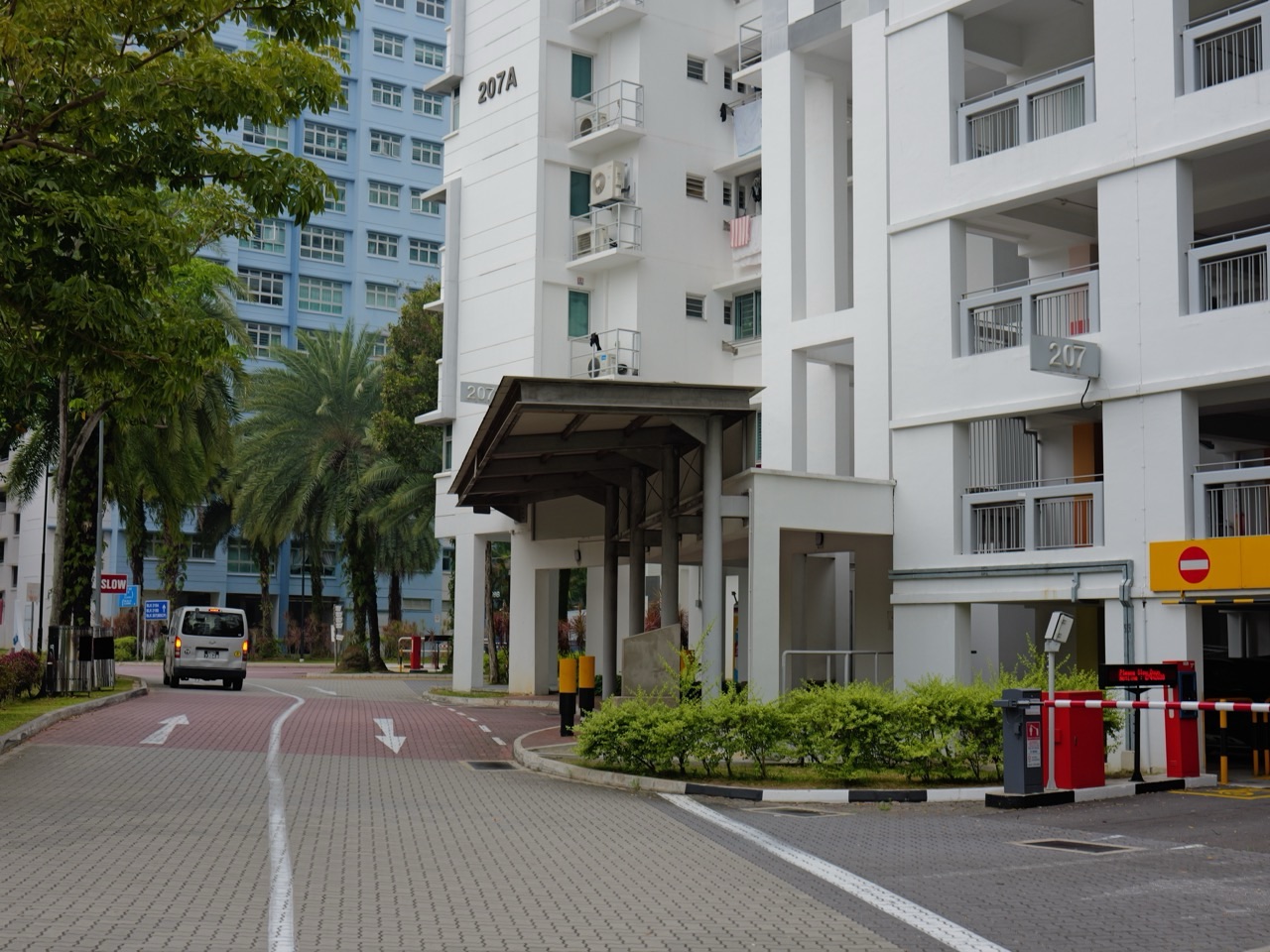
What should you do at home when Punggol’s haze starts to clear? First check NEA’s latest air-quality readings and health advice, not just the appearance of the sky. When outdoor air quality has improved sufficiently for your household, reopen suitable windows and doors to ventilate, clean settled dust with appropriate damp methods, check your existing air purifier and air-conditioning filters, and return gradually to normal routines. You do not need to disinfect every possession, replace every HEPA filter immediately or spend a full day performing an emergency deep clean.
This Punggol post-haze home reset guide covers the first 24 hours after outdoor air improves, with practical attention to HDB flats in Punggol Central, Northshore, Waterway and nearby neighbourhoods. It is a maintenance and transition protocol, not another full explanation of how smoke enters a flat. For prevention during a smoky episode, see Punggol Haze at Home.
The quick answer: five decisions after haze
Check the outdoor air: Read NEA’s latest North-region one-hour PM2.5 band and health guidance, along with the forecast when planning ahead. Ventilate when suitable: Reopen the appropriate windows and doors once outdoor air improves. Remove what actually settled: Use damp wiping and mopping rather than stirring up dust. Inspect existing equipment: Follow filter and air-conditioning maintenance instructions without panic buying. Resume activities sensibly: Revisit school, exercise and household plans using the latest advice and individual health needs.
The goal is not to eliminate every particle in an inhabited home. Ordinary indoor air quality involves multiple sources: cooking, cleaning products, human activity, moisture and incoming outdoor air. Haze may temporarily change the balance, but long-term sensible ventilation remains important.
There is no universal official rule that says every Punggol flat must open windows for exactly two hours after a haze episode. Weather, ventilation design and personal circumstances vary.
Step 1: decide whether outdoor air has actually improved
A pale-blue sky or the disappearance of a smoky smell may be encouraging, but neither is a calibrated air-quality measurement. NEA’s haze service publishes one-hour PM2.5 and 24-hour PSI information for the five reporting regions. Punggol is included under North.
For near-term activity, read the one-hour PM2.5 band and personal guide. For the next day, use the 24-hour PSI forecast and health advice where applicable. A lower one-hour concentration may be welcome while a rolling 24-hour PSI still reflects earlier polluted hours.
The exact moment a family chooses to open a bedroom window may also depend on rain, outdoor traffic, personal respiratory conditions and the actual ventilation available. There is no requirement to rush into a long outdoor task merely because the most recent number improved.
If a family member has persistent symptoms or a clinician’s care plan, respond to their needs rather than relying solely on the regional reading.
Step 2: reopen windows and doors appropriately
Singapore HealthHub’s haze guidance specifically advises keeping doors and windows closed when outdoor haze worsens and reopening them when outdoor air quality improves. This provides a straightforward principle for an adaptable household.
Opening suitable windows can help remove stale air and some indoor-generated pollutants. But it is not a contest to open every window as widely as possible. Consider the home’s normal safety arrangements, weather and each room’s requirements.
Do not remove window restrictors, obstruct fire-safety equipment or disable essential mechanical ventilation. If using air-conditioning, follow the appliance’s instructions and avoid wasting energy through unnecessary simultaneous cooling and wide-open windows.
A household that has been closed for several smoky days may appreciate a sensible ventilation period, followed by ordinary daily ventilation practices as conditions permit.
Why stale indoor air matters after a smoky period
When windows remain shut, a home can accumulate pollutants from indoor sources, along with moisture and odours. Cooking, smoking, some cleaning chemicals, room occupancy and other activities can contribute to the indoor environment.
The correct post-haze transition is therefore not always “keep everything sealed because yesterday was smoky”. It is to use current outdoor-air information to decide when and how to return to adequate ventilation.
NEA’s updated April 2026 ventilation guidance emphasises balancing outdoor air quality, filtration, air-conditioning and building operation.
Although those engineering guidelines are aimed principally at non-residential premises, the underlying distinction is useful: ventilation and filtration are not the same function. A portable particle air cleaner cannot replace every need for fresh-air exchange.
Step 3: damp-wipe surfaces that actually collected dust
HealthHub recommends wet-cleaning methods such as damp wiping and mopping for removing settled dust, because they generally avoid the airborne resuspension associated with dry dusting. This is relevant during haze and once the air improves.
Start with places that actually need attention: appropriate windowsills, tables, smooth furniture tops, reachable ledges and washable floors. Follow the material’s care instructions, especially for wood, electronics and painted finishes.
Rinse or replace a dirty cloth when necessary, and avoid shaking dusty textiles into the air. Do not spray disinfectant into a room to “kill” smoke particles; haze pollution is not inherently an infection-control problem.
If dust is minimal, a routine clean may be enough. The advice is to clean sensibly, not to create a costly or exhausting all-day project.
Why dry dusting may worsen the immediate room air
When a dry cloth or broom stirs settled dust, some particles can become airborne again. This is particularly unhelpful when household members have been trying to reduce particle exposure.
A damp cloth can capture surface particles more directly, provided the method is suitable for the material being cleaned. A moist mop works for many common tiled floors, but should not be used unsafely around electrical outlets or on materials that cannot tolerate water.
A properly maintained vacuum with suitable filtration may be appropriate for household cleaning, but not every vacuum retains fine particles equally. NEA’s general wet-cleaning advice remains a practical first option for many exposed smooth surfaces.
The key principle is reducing resuspension while dealing with actual deposits, not treating every object as a hazardous laboratory sample.
Step 4: inspect, don’t automatically replace, the purifier filter
An air purifier may have run longer during haze. That does not mean every filter is necessarily exhausted the moment the smoke episode improves. Replacement intervals depend on the appliance design, filter type, use conditions and manufacturer instructions.
Check whether the device indicates service is due, whether a relevant pre-filter needs routine maintenance, and whether replacement filters are available and compatible. Follow the manufacturer’s method for inspecting or replacing components.
Do not wash an HEPA filter unless it is specifically designated as washable. Water can damage media intended for dry filtration. Avoid opening a heavily loaded filter where dust can be shaken into occupied air, and handle used filters in a way that reduces unnecessary dispersal.
If the air cleaner is functioning normally and maintenance is not due, there is no scientific basis in this guide for requiring a new expensive filter after every slightly hazy day.
Step 5: check the air conditioner without over-servicing it
Standard home air-conditioning units control temperature and may capture some coarse dust at their screens, but a typical cooling filter is not necessarily equivalent to a correctly sized fine-particle air cleaner.
After a smoky period, check the normal service schedule, visible filter condition, airflow and any unusual smells or faults. Follow the manufacturer’s instructions for routine safe cleaning or contact qualified servicing personnel when needed.
Avoid the automatic conclusion that a short haze episode requires an intensive chemical wash. An expensive service should have an actual reason, such as a documented fault or relevant maintenance condition.
The Punggol Haze Household Costs guide helps compare equipment and electricity expenses, while the separate indoor-air guide covers what different appliances actually do.
A simple 24-hour reset schedule
First decision: Check the official current air quality and decide whether appropriate ventilation can resume. Next household task: Open suitable windows or doors if conditions permit and clean exposed smooth surfaces that have actual dust accumulation. Later in the day: Inspect filters against maintenance instructions and review wet laundry or moisture problems.
That evening: Return to ordinary bedtime and study routines if the relevant environment is comfortable; do not make children participate in unnecessary heavy cleaning. Next morning: Check NEA again before significant outdoor exertion or a planned long excursion. A return to normal should respond to the current conditions, which may change.
These are stages, not rigid mandatory times. A home with an infant, a leaking pipe or a serious medical need may have different priorities. Adjust the sequence to the household rather than treating a generic checklist as a legal requirement.
What about bedding, curtains and soft furnishings?
Curtains, rugs, cushions and bedding may collect some dust or odours, but there is no official basis for throwing away or washing every textile after any report of regional haze. Evaluate actual condition and the material’s care instructions.
If a washable curtain near an open window has persistent smoky smell or visible deposits, a normal suitable cleaning may help. If the fabric has been kept indoors and is clean, routine care may be enough. Vigorous beating or shaking can release settled dust into the room.
Avoid exposing a household member with a respiratory condition to unnecessary clouds of fabric dust. Choose a careful cleaning sequence and consider professional advice for unusually affected or delicate materials.
The purpose is comfort and cleanliness, not a ritual that claims to neutralise every molecule from a smoke episode.
Children’s toys, school bags and study tables
After haze, families may be keen to “sterilise” everything their children touched. Ordinary settled dust from smoke does not automatically mean the room is contaminated by germs. For smooth washable toys and desks, appropriate routine cleaning is usually a more sensible response than excessive chemical disinfectant.
A child’s study space may be near a window or balcony door, where dust can accumulate. Wipe accessible shelves and the desktop as needed. Keep electrical devices dry and follow their care instructions.
Children can help with simple age-appropriate tasks, such as putting books away or wiping a safe washable surface, but they should not be asked to clean high windows, heavy furniture or risky electrical equipment.
Returning to normal schoolwork and play matters too. House cleaning should not become a source of avoidable family anxiety.
Indoor laundry, moisture and mould after closed-window days
If windows were kept closed for an extended smoky spell, wet laundry and bathroom steam may have contributed to indoor humidity. Check whether clothes are dry, bathrooms drain correctly, and a cupboard or wall has a persistent moisture problem.
A dehumidifier can help with suitable moisture control but does not replace a particle air cleaner. An air cleaner cannot fix a leak. These equipment types address different problems and should not be confused.
When outdoor air improves, appropriate ventilation can support routine moisture management. A permanently sealed flat may accumulate indoor-generated pollutants or moisture, while wide-open windows during renewed smoke may worsen particle infiltration.
Our Punggol Haze and Humidity guide covers the moisture trade-off in detail.
Balconies, service yards and plants
A balcony may have visible dust on railings, ledges, outdoor furniture and leaves. When current outdoor air-quality guidance permits the necessary activity, target actual deposits with safe, appropriate methods.
Avoid leaning beyond railings, using ladders in exposed locations or hosing material toward neighbours. Do not block drains or create slippery surfaces while cleaning.
Plants can be cared for according to their normal watering needs. Some species tolerate gentle leaf wiping or rinsing, while others do not. There is no reason to assume all plants exposed to haze must be discarded.
For home-grown herbs, food hygiene requires clean water, appropriate growing practices and proper washing before eating. See the Punggol Balcony Gardens and Haze guide for those specific issues.
What should happen to used N95 masks?
A disposable N95 respirator is not intended for unlimited use. Follow the manufacturer’s instructions and any current relevant health guidance, including the circumstances in which its use is appropriate.
Used disposable masks and dirty replacement filters should be handled without shaking off captured material. Do not dump loose filters in corridors, try to burn them or assume they belong in an ordinary recycling bin merely because they contain paper-like material.
Waste guidance varies with the item and contamination. For ordinary household waste, follow Singapore’s appropriate collection guidance and product instructions. E-waste and batteries from devices may require separate disposal routes.
The existing Punggol Haze Waste Guide covers N95 masks, HEPA filters, old equipment and recycling choices.
The difference between normal filter maintenance and a chemical wash
An air-conditioning contractor may offer several cleaning or servicing products. A standard scheduled service, filter cleaning, drain repair and a more invasive chemical wash have different purposes.
A short haze period does not, by itself, prove a coil needs an aggressive treatment. The correct maintenance action depends on observable faults, manufacturer instructions and competent diagnosis.
For a portable purifier, the filter’s replacement schedule depends on the equipment and conditions. An automatic replacement after every haze day can be expensive and unnecessary; continuing to use an exhausted filter indefinitely is also inappropriate.
Document the date of the last filter replacement and follow the actual equipment manual. That is better than changing maintenance schedules based on a dramatic skyline photograph.
A family with an older relative: prioritise effort carefully
For an older person or anyone with chronic heart or lung conditions, the home’s post-haze routine should remain manageable. Do not ask someone to spend hours cleaning outdoor balconies or lugging heavy furniture simply because the official air quality has improved.
Assign the most useful light tasks first: reopen suitable windows when appropriate, wipe high-use surfaces safely, review medications and comfort, and keep a current official source accessible.
The family can leave optional decorative cleaning to another time. Haze exposure is influenced by duration and exertion; a vigorous outdoor cleanup is still an outdoor activity and should reflect the latest health guidance.
If anyone has concerning symptoms, individual medical advice matters more than completing a household checklist. For more about vulnerable groups, see Punggol Haze Health.
Returning to outdoor exercise is another decision
A clearer sky may make Waterway running, cycling or playground time more appealing again. The indoor cleaning decision and the outdoor exercise decision should not be merged into one blanket “everything is safe now” announcement.
Check NEA’s latest personal guide, the intensity and duration of the planned activity, and participants’ health. A short relaxed walk differs from intense sports training lasting two hours.
A family may resume normal movement when conditions permit without immediately attempting to make up all previously missed vigorous sessions. The right pace depends on ordinary fitness and health needs as well as air quality.
For an activity-specific plan, see Punggol Haze Exercise Restart Planner. The home reset is about the environment where people live, not sports performance.
What if haze returns the next afternoon?
A temporarily improved reading does not guarantee that all regional burning has stopped. Smoke transport and weather can change again. Make your household reset reversible rather than assuming the episode can never return.
Keep the NEA link bookmarked. If the current advice changes, review windows, time outdoors and vulnerable family members’ plans. There is no need to undo every bit of cleaning or discard useful items.
A helpful family message might say: “The outdoor air has improved, so we have ventilated and done ordinary damp cleaning. We will check again before tomorrow’s park outing.” That is more accurate than announcing a permanent all-clear.
Flexible routines allow the household to return to normal without being surprised by normal forecast uncertainty.
Three common post-haze spending mistakes
Buying equipment too late without evaluating it. A purifier or filter should meet an actual room need, not a panic-shopping impulse after conditions have already improved. Ordering intensive cleaning automatically. Routine dusting and correct maintenance often address ordinary deposits; specialist work requires a reason. Discarding serviceable belongings. A smoky odour or dusty sill is not proof that every textile or household item is hazardous waste.
The best financial response separates real costs from imagined ones. If the household already has suitable filtration, correct cleaning tools and ordinary repair arrangements, no large extra purchase may be necessary.
For worked electricity and filter costs, see Punggol Haze Household Costs.
A simple post-haze household checklist
Before cleaning: Confirm the latest air-quality information and decide which rooms need attention. For ventilation: Open suitable windows and doors when outdoor conditions allow and follow building-safety requirements. For settled particles: Damp-wipe reachable hard surfaces and mop where appropriate instead of vigorous dry dusting. For appliances: Check the existing purifier and air-conditioner maintenance schedules before buying parts or services.
For fabrics: Launder only where ordinary soiling, odour or care instructions justify it. For moisture: Ensure showers, laundry and any leaks are managed so dampness does not persist. For children and vulnerable relatives: Choose safe, nonstrenuous household tasks rather than overloading them with an exhausting cleanup.
Finally, review outdoor conditions again before substantial exercise, especially if regional smoke sources remain active. This is a household reset, not a promise that weather will stay unchanged.
Frequently asked questions
How long should I open my Punggol HDB windows after haze?
There is no fixed official number of minutes that is right for every flat. HealthHub advises reopening for ventilation when outdoor air quality improves. Choose an appropriate duration and arrangement based on the actual room, weather and household needs.
Do I have to clean the entire flat the day haze ends?
No. Focus on actual settled dust, hygiene and comfort, and use sensible damp methods where suitable. A normal routine clean may be enough if there has been little indoor dust accumulation.
Should I throw away my HEPA filter immediately?
Not automatically. Follow the manufacturer’s replacement schedule and the device’s actual condition. An ordinary short episode does not establish that every filter is exhausted, and washing a non-washable HEPA filter may damage it.
Is a chemical aircon wash necessary after haze?
Not by default. Haze alone is not proof that an intensive service is needed. Check routine maintenance, airflow, faults and the manufacturer’s instructions, and seek qualified help when necessary.
Can I leave the air purifier running once the outdoor air improves?
A purifier may still be useful for indoor particle sources or individual preferences, but it does not replace suitable ventilation. Use it according to the room’s needs, filter instructions and actual conditions rather than assuming it must run forever.
Can I vacuum instead of damp-mopping?
Vacuum performance varies with equipment and filtration, and some activities can resuspend settled particles. HealthHub recommends damp wiping or mopping as useful methods that generally avoid generating dusty air. Use methods appropriate to the surfaces and devices involved.
Must I wash all curtains and bedding?
No universal requirement is supported. Launder fabrics according to their condition and care instructions, particularly if visibly dirty or persistently smoky. Avoid excessive handling and unnecessary spending.
Does a smoky smell mean every surface is dangerous?
Not necessarily. Odour can reflect gases or residues, but it does not establish a measured contamination level for every object. Investigate persistent unusual smells and follow appropriate cleaning or safety guidance.
Will a dehumidifier get rid of haze particles after the air clears?
A dehumidifier principally removes moisture, not fine particles. If an appliance also offers filtration, its particle-cleaning performance must be evaluated separately. See the separate Punggol Humidity Guide.
Is it safe to let children help with post-haze cleaning?
Age-appropriate simple tasks may be fine when conditions are suitable. Avoid making children clean high windows, handle unsafe chemicals, reach electrical equipment or perform prolonged strenuous outdoor chores.
What if someone still coughs after the air improves?
Respond to symptoms and relevant individual healthcare advice. Smoke irritation is one possibility among others, and a family cannot diagnose the cause from an air-quality graph. Seek medical attention for persistent or concerning symptoms, and urgent care for severe breathing problems.
Does improved one-hour PM2.5 mean the 24-hour PSI must immediately be good?
No. The 24-hour PSI incorporates longer-term pollutant readings, so it can remain elevated while the more recent one-hour PM2.5 concentration falls. Read each measure with its period and units.
Do balcony plants need special anti-haze spray?
No general recommendation supports using chemical ‘anti-haze’ sprays on plants. Provide species-appropriate care and clean suitable leaf surfaces gently when actually necessary, without compromising outdoor safety.
Can an older relative begin long outdoor exercise straight away?
Use the current NEA health advice and the person’s health and usual activity level. A household reset does not replace the need to assess duration, exertion and individual susceptibility for outdoor activity.
Will haze return after a clear morning?
It may, depending on source fires, winds and weather. A clear period is useful but not a guarantee about the rest of the week. Check official updates when making further plans.
What the 24-hour reset actually achieves
A good post-haze routine gives the family an orderly way back to everyday life. The practical outputs are clear: an appropriately ventilated flat when outdoor conditions allow, clean high-use surfaces, properly maintained equipment, normal moisture control and realistic plans for school and recreation.
It does not guarantee a sterile room, eliminate every source of indoor pollution or certify that no further regional smoke will arrive. Those are claims that household cleaning cannot support.
The checklist is most valuable because it avoids unnecessary purchases and work. A family can protect what matters, restore comfort and preserve time for normal activities without mistaking haze precautions for permanent isolation.
Continue reading in the Punggol haze ecosystem
For live readings and forecasts, use Punggol Haze Check. For windows, room sizing and filtration, use Punggol Haze at Home. For humidity and mould prevention, read Punggol Haze and Humidity.
For balcony and laundry maintenance, see Punggol Haze and Balcony Gardens. For safe return to sports, use Punggol Haze Exercise Restart. For recurrent smoke and changing weather, read Why Punggol Haze Changes Hourly.
These pages cover different reader decisions. This guide specialises in the home transition after outdoor air improves, without replacing the detailed prevention articles.
Official sources and editorial note
Reviewed 17 October 2026. The 24-hour sequence is a practical household organising framework, not a government-mandated cleaning schedule. Always follow any later official air-quality or healthcare advice relevant to your circumstances.
- NEA: Air Pollution FAQ and Haze Household Guidance
- HealthHub: How to Protect Yourself Against the Haze
- NEA: Updated Guidance on Ventilation and Indoor Air Quality, April 2026
- US EPA: Wildfires and Indoor Air Quality
- US EPA: How to Create a Cleaner-Air Room
- NEA: Current Haze Readings and Health Advisories
The useful lesson is simple: clean what needs cleaning, maintain what needs maintaining, and let your home return to its normal healthy routine as the outdoor air permits.
Punggol Haze: Further Reading in This Series
Continue through these connected guides, each covering a different question about haze around Punggol. For today’s decisions consult NEA’s live air-quality advice.


