
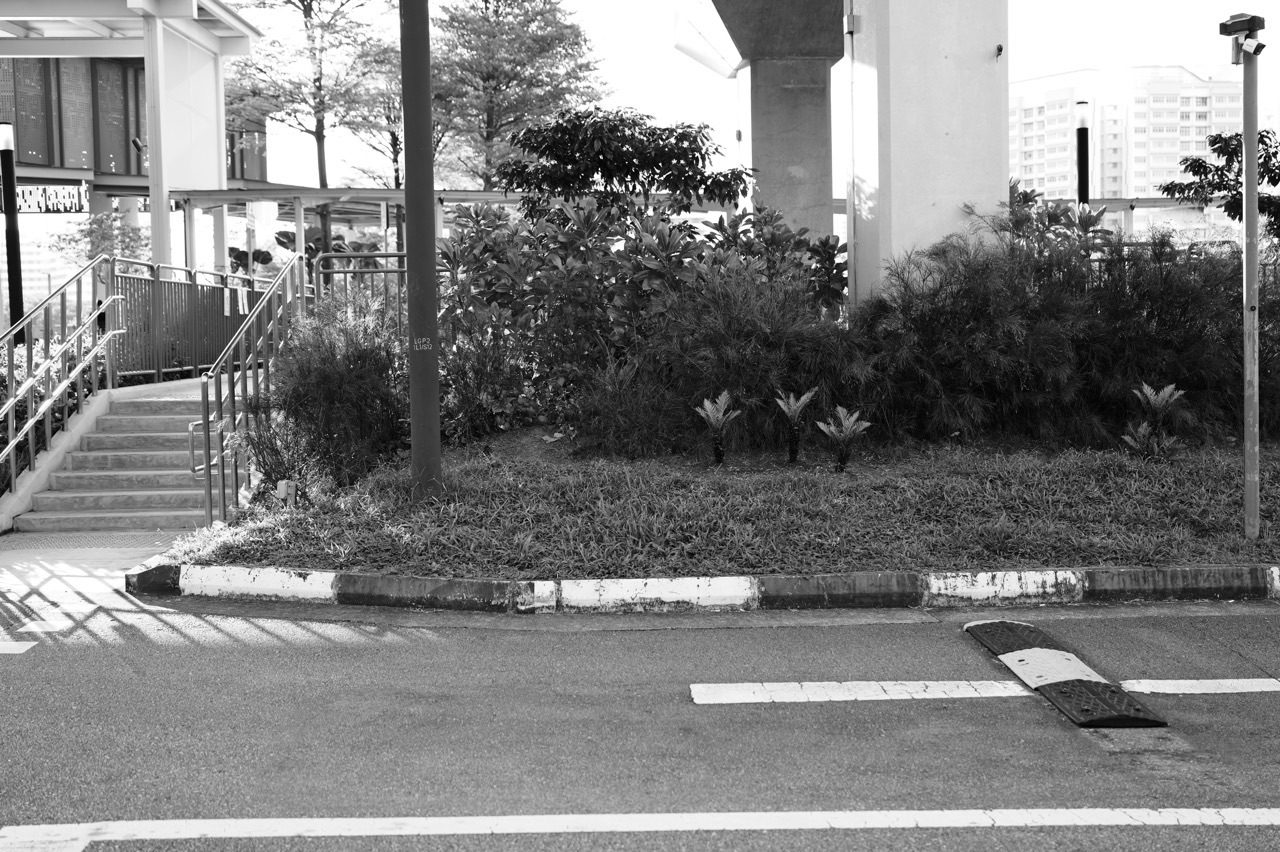
Education in Punggol can include learning to notice that places do not stay still. A child growing up in Punggol may see new buildings, transport connections, public spaces and neighbourhood routines appear within a few years. What feels permanent during childhood may later become history.
For families interested in Punggol education, local history, geography and place-based learning, documenting change can turn the town into a long-running family project. A photograph, map note, journal entry or conversation with an older relative can preserve evidence that becomes more valuable with time.
The aim is not to predict the future. It is to teach children how to observe the present carefully enough that future comparisons are possible.
1. Children Often Assume the Present Is Permanent
Schools, stations, shops, paths and empty plots can feel as though they have always existed. Older photographs quickly challenge that assumption. This is the beginning of historical thinking: the present is one moment in a sequence.
2. Repeated Photos Create Evidence
Choose one viewpoint and photograph it every few months or once a year. Construction, vegetation, traffic or public use may change. The value comes from consistency. The same viewpoint makes comparison easier.
3. Maps Show Relationships
A map can record where the family lived, which route was used to school, where a favourite playground stood or how travel changed after a new connection opened. Children learn that geography is not only names of places. It is relationships between places.
4. Family Memory Is a Source—With Limits
Parents and grandparents can describe what a place used to look like. These memories are valuable but should not automatically be treated as perfectly precise. Children can compare memory with photographs, maps and records.
5. Date the Evidence
A photograph becomes more useful when the family knows when and where it was taken. A short caption can preserve context that memory may lose. This is archival discipline at a family scale.
6. Ask What Changed and What Stayed
Historical thinking is not only a list of new things. What remained stable? Which routes still matter? Which landmarks persist? Which uses changed while the structure stayed? Continuity is as important as change.
7. Let the Child Make Predictions Carefully
What might this empty site become? How might a new transport link change movement? These questions can be useful as scenarios, not certainties. Later, the family can compare the prediction with what actually happened.
8. Construction Teaches Process
A finished building hides its stages. Repeated observation reveals sequencing: site preparation, structure, enclosure, fit-out, access and eventual use. The child sees that large outcomes are assembled over time.
9. Local History Builds Belonging
Children can feel differently about a town when they know something about what existed before them. Place becomes layered rather than disposable. That knowledge can create a stronger sense of stewardship.
10. Do Not Invent Certainty Where Evidence Is Weak
If the family does not know what happened, say so. “We are not sure” is an honest historical statement. Children should learn that missing evidence is different from a licence to guess.
11. A Simple Family Punggol Archive
- One folder by year.
- A few photographs from consistent viewpoints.
- Short captions with date and place.
- Maps showing important family routes.
- Notes from conversations with older relatives.
- Questions that remain unresolved.
12. Older Students Can Analyse Change
Secondary students can move beyond description. Why might a transport change matter? Who uses a new facility? What trade-offs appear when land use changes? Local observation becomes systems thinking.
13. The Archive Should Stay Small Enough to Use
Thousands of unlabelled photographs become difficult to interpret. A smaller curated record can be more valuable than constant documentation. Selection is part of the learning.
14. Education in Punggol Can Create Future Memory
The child who photographs a familiar path today may one day hold evidence of a place that no longer looks the same.
Documenting change teaches attention, source discipline and respect for place. It also gives families something rare: a record of the town and the child growing together.
Turn family documentation into a source method
A useful local archive is not simply a collection of photographs. It is a record with dates, viewpoints, captions, source notes and enough context that another person can understand what the image shows and what it does not show. Children can learn this discipline gradually.
The educational value comes from the difference between “I took a picture” and “I created evidence another person can interpret later”.
Use repeat viewpoints to make change visible
Choose a small number of viewpoints the family already passes: a station entrance, a waterfront segment, a construction edge, a familiar junction or a community facility. Photograph from approximately the same location several months apart.
Repeated viewpoints make sequencing easier to see. The child can compare what appeared, disappeared, opened, moved or changed function without relying entirely on memory.
Caption the evidence before memory edits it
A useful caption can contain date, place and a short direct description: “Construction fencing beside the path”, “new station entrance open”, “shop unit still vacant”, “tree line visible behind hoarding”. Avoid turning the caption into a claim about motives or future outcomes unless a reliable source supports it.
This teaches a valuable distinction between description and interpretation.
Keep first-hand observation separate from public sources
A family photograph shows what was visible from one place at one time. An official map may show planned land use. A planning announcement may describe intended future development. A news report may provide dates or context. These are different evidence classes.
Children should learn to label them honestly rather than blending them into one story.
Build a three-column source sheet
| What we observed | What a source says | What we infer |
|---|---|---|
| Direct photo, map sketch, journey note | Official plan, archive, library source, published record | Our current explanation, clearly labelled as interpretation |
This simple separation helps prevent overclaiming and teaches the child that a good explanation can include uncertainty.
Use maps to preserve route memory
Family life is organised around routes that may later change: school walks, LRT transfers, library journeys, paths beside construction, former bus stops or a favourite shortcut. Add these routes to a simple annual map.
The map records not only places but relationships. It shows which parts of Punggol mattered to the family and how access evolved over time.
Record ordinary places, not only landmarks
History is often documented through major buildings and official events. Family memory also lives in ordinary spaces: the sheltered walkway used every rainy morning, the food stall after tuition, the playground beside a grandparent’s block, the crossing where the child first travelled independently.
These details make the archive human without pretending that personal memory is the same as public history.
Use oral history carefully
Ask grandparents, long-term residents or family members what they remember about a place. Record who is speaking, approximately when they experienced it and which parts are memory rather than verified fact.
A child can then compare memory with maps, photographs or published sources and notice both agreement and difference.
Teach that memory can be meaningful without being exact
A grandparent may remember that a place “felt empty” long before the child was born. That statement can reveal experience even if it cannot precisely establish population, dates or boundaries. The learner should preserve the memory as testimony while using other sources for measurements and chronology.
This is a mature historical habit: respect the source and respect its limits.
Use change logs for infrastructure
When a station, mall, public path, school or other facility changes, create a short log: announced, under construction, partially open, operational, later altered. Children learn that “future” is not a single state.
This is especially useful in a fast-changing town where plans, construction and completed infrastructure can coexist in the same family conversation.
Do not turn planned future into present fact
Plans can change. Timelines can move. Facilities can open in phases. A careful local archive therefore labels planned, announced, under construction and operating separately.
The child learns that responsible future-facing writing requires evidence and date context.
Build one annual Punggol capsule
- Five to ten selected photographs.
- One family route map.
- Three important changes noticed that year.
- One short interview or memory note.
- One official or library source that explains a change.
- One unanswered question for the next year.
This is enough to create continuity without generating an unmanageable archive.
Use file naming that survives time
Names such as “IMG_4831” become meaningless. A simple naming rule—year, place, short description—makes the archive searchable later. For example: “2026_PunggolCoast_station-entrance” or “2026_Waterway_family-route”.
The child learns that organisation is part of evidence preservation.
Keep personal privacy inside the archive method
Families should avoid publishing children’s routines, home details, school identifiers, precise schedules or other sensitive information merely because an image is historically interesting. Documentation can remain private.
The archive’s value does not depend on public exposure.
Primary students can document before they analyse
Younger children can choose photographs, label places, draw maps and describe visible change. They do not need to produce complex causal explanations.
The first skill is accurate noticing.
Secondary students can compare competing explanations
Older students can ask why a change happened, who benefits, what trade-offs appeared, what an official source claims and what remains uncertain. They can compare maps, announcements, photographs and personal memory.
This moves local history toward evidence-based public reasoning.
Connect the archive back to subject learning
A route map can support Mathematics. A source comparison supports English and Humanities-style reasoning. Construction sequencing can support systems thinking. Waterway observation can support Science. The archive should generate questions that specialist subject owners can answer more deeply.
Punggol remains the local evidence layer; subject teaching remains with the correct specialist.
Use one question to decide what deserves preservation
Ask: will this help us understand how the place or the family’s relationship to it changed? If not, the item may not need to enter the long-term archive.
Selection creates meaning. An archive becomes useful when it is small enough to read and structured enough to compare.
The mature archive creates future evidence
A child documenting Punggol today is not only learning history. They are creating evidence for a future reader who may want to know what the town looked like, how families moved through it and which changes mattered in everyday life.
That is a powerful local education outcome: attention becomes record, record becomes evidence, and evidence gives future memory something firmer than nostalgia alone.
Build verification into the family archive
A local archive becomes more useful when the family can trace where each important claim came from. The photograph may be original. The date may come from the camera record. The facility name may come from an official map. The explanation of what changed may come from a published source. These pieces should not be blended invisibly.
Children can learn a simple provenance habit: “photo by us”, “date from file”, “name from official source”, “interpretation by me”.
Preserve originals before editing
If the family crops, annotates or brightens a photograph, keep the original file too. The edited version may communicate better; the original preserves the evidence as captured.
This teaches the child that presentation and source preservation are related but different jobs.
Record uncertainty explicitly
If the exact date is uncertain, write “about 2024” rather than inventing a precise day. If the family does not know the building’s earlier function, leave the field open until a reliable source appears.
An archive becomes more trustworthy when uncertainty is visible rather than hidden.
Use source chains for important local claims
When a child writes a more substantial local-history note, ask them to connect the claim to the source: official map, archive photograph, planning document, library reference, newspaper report or family interview. A short source line is enough.
This habit prepares older students for research without turning a family archive into an academic paper.
Separate the private family archive from the public version
The private archive may contain children, family routines, home viewpoints and personal stories. A public school project or shared page should contain only the material appropriate to reveal.
This teaches a modern archival skill: preservation does not require publication.
Do an annual source cleanup
Once a year, check whether captions still make sense, links remain usable, duplicate files can be removed and important photographs have a backup. Add one short index so the child can see what the archive contains without opening hundreds of files.
The archive should become easier to use as it grows, not harder.
Verification turns memory into durable learning
A memory can begin the question. A photograph can preserve the scene. A source can establish the context. A later comparison can show change. When the child understands these roles, local documentation becomes more than nostalgia.
It becomes a disciplined way to know how a place changed and how confidently we can say so.
Use the archive to compare the child as well as the town
A family archive can reveal two histories at once. One is the changing town. The other is the changing observer. A Primary child may first record a station as a drawing and a few labels. Years later, the same student may compare transport access, source reliability and land-use change.
Keeping a small sample of these outputs shows how the learner’s questions and explanations become more sophisticated over time.
Return to the same place with a better question
The archive should not only preserve old answers. It should help generate new questions. A photograph taken two years earlier may prompt the child to ask why a path moved, what opened nearby, which route became more important or whether a planned change actually happened.
This gives documentation a second life: evidence gathered earlier becomes the starting point for later inquiry.
A living archive should remain revisable
If the family later finds better evidence, correct the caption, update the date or add a source note. Do not preserve an old mistake merely because it appeared in the first version.
That habit teaches one of the strongest forms of intellectual responsibility: records can be durable without pretending that knowledge is never revised.
Continue Through eduKatePunggol
- Contents & Learning Routes
- A Place Can Carry Its Past While Building Something New
- Wak Sumang and Kampung Punggol
- The Town as Classroom
Explore the Punggol Education & Town-Life reading library for related guides.


