
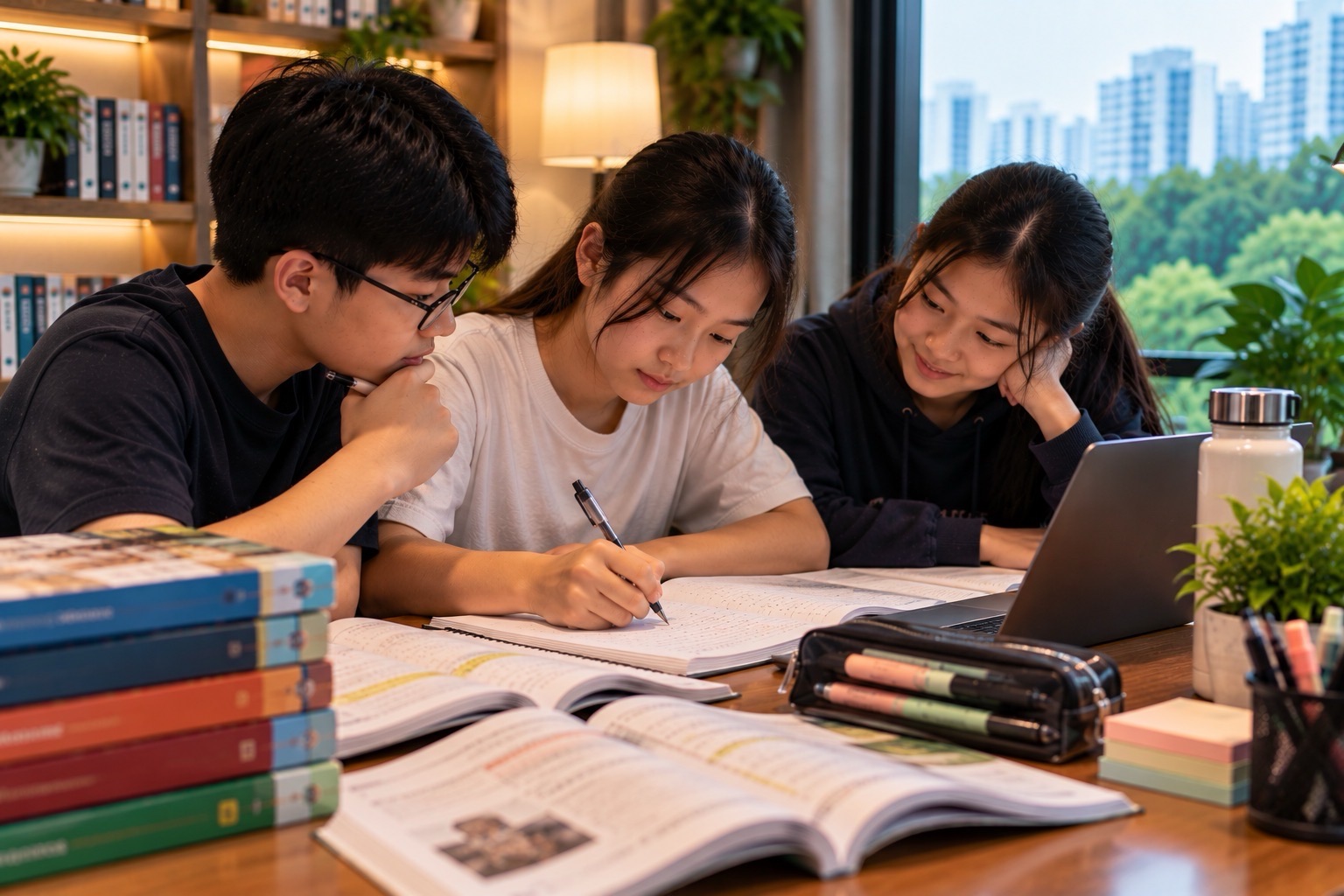
Career readiness for students in Punggol should begin long before a teenager has to choose a course, submit an application or attend an interview. Parents often worry about whether a child is “ready for the future”, but career readiness is not about predicting one perfect job at age thirteen. It is about building enough capability, self-knowledge and adaptability that the student can make increasingly sensible choices as opportunities become clearer.
That is the core aim of Punggol education through career readiness: help students understand themselves, build transferable skills, explore real pathways, communicate their value and keep learning as work changes. A future-ready student does not need to know the exact title of a future job. They need to know how to learn, contribute, adapt and make informed decisions when the next opportunity appears.
The Core Aim in One Sentence
Career readiness means developing the capabilities, judgment and self-knowledge needed to move from school into further study, work and lifelong learning with growing independence.
The strongest preparation therefore looks wider than grades. Academic foundations matter greatly, but so do communication, collaboration, problem solving, digital literacy, responsibility, research, adaptability and the ability to explain what one can actually do.
Did You Know? Career Readiness Is Not the Same as Career Certainty
Students sometimes feel pressured to have a complete career plan early.
But good career readiness can exist without perfect certainty. A student can know:
- what kinds of problems they enjoy;
- which subjects reveal genuine strengths;
- what environments suit them;
- which capabilities they are building;
- what pathways are currently open;
- what evidence would help them decide next.
That is already useful progress. Career development is often a sequence of informed experiments, not one irreversible decision.
The Seven Parts of Career Readiness
1. Academic foundations
English, Mathematics, Science and other school subjects matter because they create broad access to later learning.
The point is not that every career uses every chapter directly. The point is that school develops language, quantitative reasoning, evidence, discipline and knowledge that many later pathways depend on.
2. Transferable skills
Students need capabilities that remain useful across many roles:
- communication;
- problem solving;
- collaboration;
- research;
- digital fluency;
- time management;
- self-regulation;
- adaptability.
These skills travel even when the job title changes.
3. Self-knowledge
Career decisions improve when students understand what they are good at, what they enjoy, what they value and what kind of working environment helps them perform well.
Self-knowledge should be evidence-based rather than romantic. Interest matters, but so do sustained practice, aptitude and willingness to improve.
4. Exposure
Students make better choices when they have seen more of the real world.
Open houses, conversations, projects, CCAs, internships, job-shadowing, volunteering and practical tasks can reveal what a field actually feels like beyond its name.
5. Pathway literacy
Students should understand that different education routes are designed for different learners and destinations.
The skill is not memorising every pathway. It is knowing how to compare options by fit, prerequisites, learning style, progression and long-term flexibility.
6. Evidence of capability
A student should gradually accumulate real evidence:
- schoolwork;
- projects;
- presentations;
- competitions;
- CCA responsibilities;
- portfolios;
- certificates where relevant;
- work samples;
- reflections on completed tasks.
Career readiness is stronger when a student can show capability rather than merely claim interest.
7. Lifelong learning
No career remains perfectly static.
Students need the ability to update skills, learn new tools and adapt to changed requirements over time.
See The Core Aim of Punggol Education | Lifelong Learning.
Career Readiness Starts With Capability, Not Job Titles
A young child does not need to decide whether they will become an engineer, designer, teacher, researcher or entrepreneur.
They can start by building capabilities that make many futures possible:
- read well;
- write clearly;
- work with numbers;
- explain ideas;
- ask good questions;
- finish responsibilities;
- solve unfamiliar problems;
- learn independently.
Keeping options open is itself a form of readiness.
Career Readiness in Primary School
Primary-school career readiness should be light, exploratory and connected to real life.
Students can learn:
- what different adults actually do at work;
- how jobs solve problems for people;
- that every role involves skills and responsibilities;
- that interests can change;
- that school subjects connect to many kinds of work.
The goal is curiosity and broad exposure, not early specialisation.
Career Readiness During PSLE Years
PSLE can make families focus narrowly on the next school placement. That decision matters, but it is still only one stage.
A useful Primary 6 conversation asks not only, “Which school?” but also:
- What kind of learner is this child becoming?
- Which habits are becoming independent?
- Which subjects reveal strengths?
- Which environments help the student thrive?
- What interests are worth continuing outside exam preparation?
The long-term aim is a student who enters Secondary school with both foundations and a growing sense of agency.
Career Readiness in Secondary School
Secondary school is where career readiness becomes more concrete.
Students begin making choices that shape subject combinations, CCAs, post-secondary routes and future applications.
This is also the stage where evidence becomes more important. A student who says they are interested in computing, design, business or Science should gradually test that interest through real work.
Career Exploration Before Course Choice
A course name can sound attractive while hiding what the actual work involves.
Students should look for exposure before commitment:
- attend open houses;
- read course modules;
- talk to current students;
- observe professionals;
- try a project;
- complete a short course;
- build something related to the field.
The local article Career Exposure Before Course Choice develops this principle in more detail.
Career Readiness and Education and Career Guidance
Education and Career Guidance becomes useful when students treat it as an inquiry process rather than a one-time form-filling exercise.
The local guide Punggol Education System | Education and Career Guidance (ECG) connects school choices with longer-term education and career thinking.
Career Readiness and Communication Skills
Almost every pathway requires students to explain something: an idea, a solution, a request, a project, an argument or themselves.
Clear communication helps during presentations, interviews, teamwork and everyday work.
See The Core Aim of Punggol Education | Communication Skills.
Career Readiness and Collaboration
Most adult work is not performed in complete isolation.
Students need to learn how to contribute to a shared goal, communicate progress, handle disagreement and remain accountable for their part.
See The Core Aim of Punggol Education | Collaboration Skills.
Career Readiness and Problem Solving
Employers and institutions value people who can move from a messy situation to a workable solution.
That requires students to define problems, identify constraints, choose methods, test outcomes and adapt.
See The Core Aim of Punggol Education | Problem Solving.
Career Readiness and Research Skills
Students increasingly need to find reliable information without waiting for someone else to curate everything.
Research skills support course comparison, project work, workplace learning and informed decisions.
See The Core Aim of Punggol Education | Research Skills.
Career Readiness and Digital Literacy
Digital capability now sits inside many kinds of work.
Students should be able to use common digital tools, manage information, learn unfamiliar interfaces and behave responsibly online.
See The Core Aim of Punggol Education | Digital Literacy.
Career Readiness and AI Literacy
AI changes how many tasks are performed, but it does not remove the need for judgment.
Students need to know how to use AI to support research, drafting, analysis and learning while remaining responsible for accuracy, privacy and final decisions.
See The Core Aim of Punggol Education | AI Literacy.
Career Readiness and Financial Literacy
Career choices eventually connect with income, training cost, location, lifestyle and financial responsibility.
Students should understand that salary is one part of a larger decision.
See The Core Aim of Punggol Education | Financial Literacy.
The Career Readiness Mistake: Chasing Prestige Without Fit
A prestigious route can still be a poor fit if the student dislikes the learning style, lacks the prerequisites or has no interest in the actual work.
Career readiness asks better questions:
- What will I actually learn?
- What will I actually do?
- What strengths does this route reward?
- What doors does it open?
- What trade-offs does it require?
- Can I see myself sustaining the work?
The Other Mistake: Following Interest Without Evidence
Interest matters, but interest alone does not create readiness.
A student who says, “I love design” should gradually test that interest by designing. A student interested in coding should code. A student interested in Science should investigate and build.
Action turns interest into evidence.
Interests, Strengths and Values
Career decisions become stronger when students look at three dimensions together:
- Interests — what draws my attention?
- Strengths — what can I become good at?
- Values — what kind of contribution or life matters to me?
No single dimension should dominate everything.
The Skill Portfolio
Students can think of career readiness as building a portfolio of capabilities rather than collecting isolated achievements.
A useful portfolio may include:
- academic knowledge;
- communication;
- technical skills;
- research;
- teamwork;
- leadership;
- digital capability;
- creative work;
- community contribution.
Different combinations become valuable in different pathways.
Projects as Career Evidence
Projects are powerful because they make capability visible.
A student can show that they planned, researched, built, revised and completed something real.
Even a small project can answer useful questions:
- What part did I enjoy?
- What skill did I lack?
- How did I respond to feedback?
- Did I enjoy the process or only the final result?
CCA as Career Readiness
CCA can build career-relevant capability even when the activity has no obvious connection to a future job.
Students may develop:
- leadership;
- teamwork;
- practice discipline;
- event planning;
- public performance;
- conflict management;
- responsibility under pressure.
These are transferable capabilities.
Leadership and Career Readiness
Leadership is useful beyond formal leadership positions.
Students become more career-ready when they can take responsibility, coordinate others, communicate clearly and make decisions with consequences in mind.
See The Core Aim of Punggol Education | Leadership Skills.
Career Readiness and Responsibility
Adult work depends heavily on reliability.
Showing up prepared, meeting deadlines, communicating when something changes and owning mistakes are simple behaviours with enormous long-term value.
See The Core Aim of Punggol Education | Responsibility.
Career Readiness and Adaptability
Future work will continue changing.
Students therefore need to preserve direction while changing tools, strategies or roles.
See The Core Aim of Punggol Education | Adaptability.
Career Readiness and Confidence
Students need enough confidence to apply, ask questions, present work and enter unfamiliar environments.
That confidence should come from evidence of capability rather than empty reassurance.
See The Core Aim of Punggol Education | Confidence.
The Career Readiness Ladder
A practical progression is:
- Explore — learn what different fields involve.
- Try — complete a small related task.
- Practise — build relevant skill.
- Reflect — did the interest survive real effort?
- Deepen — take on a harder project.
- Show — build evidence of capability.
- Compare — evaluate pathways.
- Decide — choose the next stage, not necessarily the whole life.
Career Readiness and Subject Choices
Students should avoid treating subject combinations as labels of intelligence.
A better question is which combination matches strengths, prerequisites, workload and plausible pathways.
The local guide Punggol Education System | Secondary School Subject Combinations helps families frame those decisions more carefully.
Career Readiness and Post-Secondary Routes
Different routes can lead to strong outcomes when the fit is right.
Students should compare routes by learning style, course content, progression, entry requirements and the kinds of capability they want to build.
The goal is not prestige optimisation. It is pathway fit with room to grow.
Career Readiness and Portfolios
Portfolios are useful when they represent real capability.
A strong portfolio should show more than polished final products. It can include process:
- initial problem;
- research;
- drafts;
- feedback;
- iterations;
- final work;
- reflection.
This demonstrates how the student thinks and learns, not only what the finished product looks like.
Interview Readiness
Interview skill is not memorising perfect answers.
Students should be able to explain:
- why they are interested;
- what they have tried;
- what they learned;
- where they struggled;
- how they improved;
- what they hope to build next.
Specific examples are more credible than generic enthusiasm.
Career Readiness in the Age of AI
AI can change tasks quickly, which makes durable human capabilities more important.
Students should learn to use AI as part of a larger workflow while preserving:
- judgment;
- verification;
- communication;
- problem definition;
- responsibility;
- original contribution.
The career-ready student is not the one who avoids new tools. It is the one who can use them intelligently without surrendering the thinking.
The Punggol Context
Growing up near new institutions, industries and digital infrastructure can make future work feel more visible.
Students can use their surroundings as prompts to ask:
- What kinds of problems are being solved here?
- What skills do those problems require?
- What subjects connect to them?
- What could I try now to learn more?
The local article Growing Up Beside an AI District and the Luxury of Future Readiness explores this wider Punggol context.
How Parents Can Build Career Readiness
- Talk about what work actually involves, not only job titles.
- Expose children to different fields.
- Ask what they enjoyed about a real task.
- Separate prestige from fit.
- Encourage projects and practical experience.
- Discuss strengths with evidence.
- Let interests change.
- Focus on transferable skills as well as results.
Parents do not need to predict a child’s future. They need to help the child build enough capability and judgment to navigate it.
How Tutors Can Build Career Readiness
- Connect subject skills to real applications.
- Teach students to explain their reasoning.
- Use projects and unfamiliar problems.
- Build independent learning habits.
- Encourage research beyond model answers.
- Make progress visible.
- Ask students what capabilities they are building, not only what marks they want.
At eduKatePunggol, career readiness grows naturally when academic learning becomes a platform for independence, communication, judgment and lifelong learning.
What Progress Looks Like
Career-readiness progress is visible when students:
- can describe strengths with evidence;
- ask better questions about courses and careers;
- test interests through real work;
- communicate clearly;
- work reliably with others;
- use digital and AI tools responsibly;
- research pathways independently;
- build portfolios or work samples;
- adapt when plans change;
- see learning as preparation for contribution, not only examinations.
A Simple Career Readiness Routine
- Explore — what fields or problems interest me?
- Try — what small real task can I do?
- Learn — what skill does the task require?
- Practise — can I improve that skill?
- Show — what evidence of capability exists?
- Reflect — what did I enjoy or dislike?
- Compare — which pathways fit the evidence?
- Choose — what is the next sensible step?
Frequently Asked Questions
What is career readiness for students?
Career readiness is the combination of academic foundations, transferable skills, self-knowledge, exposure, pathway literacy and lifelong-learning ability that helps students move toward further study and work.
When should career preparation begin?
Career readiness can begin in Primary school through broad exposure and capability building. Specific pathway decisions become more important later in Secondary and post-secondary years.
Does a student need to know their future career early?
No. Students need enough self-knowledge and exposure to make the next good decision. Career direction can become clearer through experience over time.
Which skills matter most for future work?
Clear communication, problem solving, collaboration, digital literacy, research, adaptability, self-management and the ability to keep learning are broadly transferable across many fields.
How can parents help with career readiness?
Provide exposure, discuss real work, encourage projects, separate prestige from fit and help children build transferable capabilities rather than forcing an early fixed identity.
What is the strongest sign of career readiness?
The student can explore an unfamiliar pathway, understand what it demands, build relevant capability, show evidence of progress and make an informed next-step decision.
Useful Routes for Punggol Families
- eduKatePunggol home — local education, tuition, parent, student and pathway routes.
- The Core Aim of Punggol Education | Lifelong Learning.
- The Core Aim of Punggol Education | Financial Literacy.
- The Core Aim of Punggol Education | Communication Skills.
- The Core Aim of Punggol Education | Collaboration Skills.
- The Core Aim of Punggol Education | Adaptability.
- Punggol Education System | Education and Career Guidance (ECG).
- Career Exposure Before Course Choice.
- Punggol Atlas.
The Best Career Preparation Keeps More Doors Open
Students do not need a perfect forecast of the future. They need capabilities that remain useful when the forecast is wrong.
That is the core aim of Punggol education through career readiness: help students build knowledge, transferable skills, self-knowledge and adaptability so they can choose, contribute and keep growing across many possible futures.
Properly taught kids shine a bright light into the future.


