
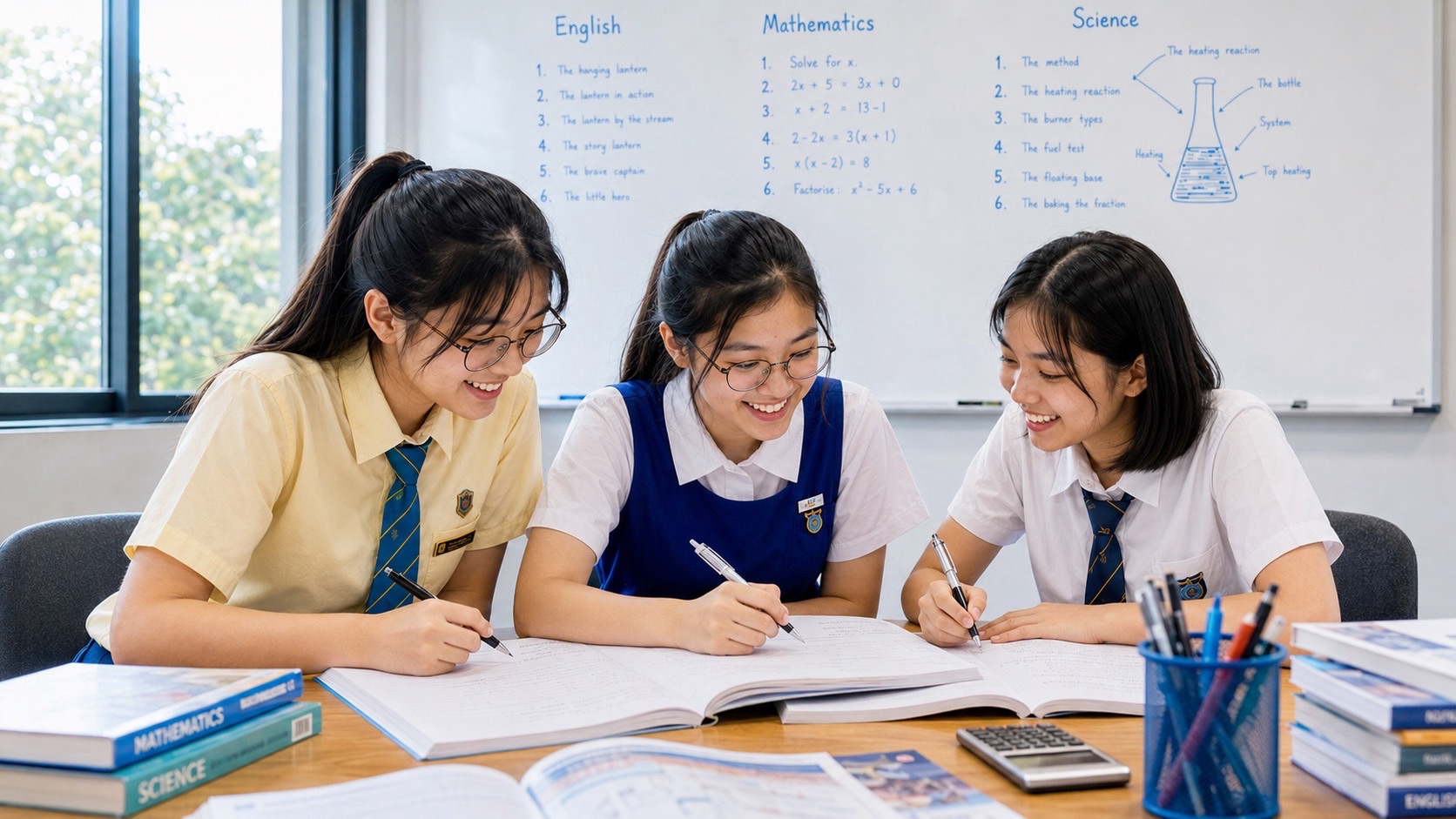
Leadership skills for students in Punggol are not reserved for prefects, CCA captains or the loudest person in a group. Leadership begins much earlier and much more quietly: noticing what needs to be done, taking responsibility, making a decision, helping other people move forward and accepting the consequences of the outcome. In school, leadership appears in group projects, CCAs, peer support, class duties, presentations and the small moments when a student chooses to act instead of waiting for someone else.
That is the core aim of Punggol education through leadership skills: help students develop enough judgment, responsibility, communication and courage to create useful direction for themselves and other people. Leadership is not control. It is responsible influence.
Explore related education guides and choose your next reading step.
The Core Aim in One Sentence
Student leadership means taking responsibility for moving a person, team or situation toward a worthwhile goal.
That definition matters because a student can hold a title without leading well, while another student can show leadership without any badge at all. Titles create opportunities. Behaviour creates leadership.
Did You Know? Leadership Starts With Self-Management
Before students can reliably lead other people, they need some ability to lead themselves.
- show up prepared;
- keep commitments;
- manage time;
- finish agreed work;
- control impulses when the situation is difficult;
- notice mistakes;
- recover and continue.
This is why leadership connects directly with time management, independent learning and resilience.
The Six Parts of Strong Student Leadership
1. Responsibility
Leadership begins when the student owns something: a task, a promise, a team role, a decision or a standard.
A responsible student does not wait until the problem becomes someone else’s emergency. They notice what they agreed to do and follow through.
2. Judgment
Leaders make choices with incomplete information. Students need to compare options, consider consequences and decide what matters most.
This is where critical thinking becomes practical. A leader cannot simply have opinions; they need reasons.
See The Core Aim of Punggol Education | Critical Thinking.
3. Communication
Leadership depends on making direction understandable.
Students need to explain the goal, clarify roles, listen to concerns, give updates and adapt when another person does not understand.
See The Core Aim of Punggol Education | Communication Skills.
4. Service
Strong leadership is not only about being followed. It is about creating value for other people.
A student leader helps the group function better, protects standards, includes quieter members and makes it easier for others to contribute.
5. Courage
Leadership often requires doing something uncomfortable: speaking up, admitting a mistake, making an unpopular but necessary decision or taking responsibility when the outcome is uncertain.
Courage does not mean absence of fear. It means acting on a worthwhile principle even when fear is present.
6. Reflection
After leading, the student asks: What worked? What did not? Who was affected? What should I change next time?
Without reflection, leadership can become repeated habit rather than growing judgment.
Leadership in Primary School
Primary-school leadership should stay concrete and age-appropriate.
- take responsibility for a classroom duty;
- help organise materials;
- explain a task to a classmate;
- make a fair decision in a small group;
- notice when someone is left out;
- keep a promise without repeated reminders.
These small acts teach the deep structure of leadership: responsibility, service and follow-through.
Leadership in Secondary School
Secondary school expands the leadership environment. Students may become class leaders, CCA leaders, peer supporters, project leads or informal organisers inside friendship groups.
The challenge becomes more complex because peers have stronger opinions, schedules are busier and decisions may affect larger groups.
The local article When a Child Becomes a Student Leader — Duties, Time, Confidence, Service and Staying Balanced explores that transition in practical terms.
Leadership and Collaboration
Leadership is not the opposite of collaboration. Good leadership improves collaboration.
A strong student leader helps a group clarify goals, coordinate roles and resolve disagreements without taking over every task.
See The Core Aim of Punggol Education | Collaboration Skills.
Leadership and Problem Solving
Leaders rarely receive perfectly defined problems. They need to frame the issue, identify constraints, compare options and decide on a next step.
A useful leadership question is: What is the most useful problem to solve first?
This connects directly with problem solving.
Leadership and Adaptability
Plans change. People change. Information changes.
Strong leaders do not confuse changing strategy with abandoning the goal. They preserve what matters and adjust what no longer works.
See The Core Aim of Punggol Education | Adaptability.
The Leadership Mistake: Confusing Authority With Leadership
A title can give a student authority. It does not automatically give them trust.
Students learn leadership when other people can rely on them, understand them and see that they are willing to carry responsibility rather than only distribute it.
A prefect who only enforces rules may hold authority. A classmate who organises a confused group, listens fairly and helps everyone finish may be demonstrating deeper leadership.
The Other Leadership Mistake: Doing Everything Yourself
Highly responsible students sometimes become the group’s permanent rescuer.
That may produce a good final project and a weak team.
Leadership should increase the capability of the group, not make everyone more dependent on the leader.
A strong leader asks, “How do I help this person own their part?”
Leadership and Accountability
Leadership becomes credible when responsibility is visible.
Students should be able to say:
- This was my decision.
- This was my responsibility.
- This is what went wrong.
- This is what I will repair.
- This is what I learned.
That language is far more powerful than protecting image at all costs.
Leadership and Service
The healthiest model of student leadership is service.
A leader asks what the group needs to function better, not simply how to gain attention or status.
The eduKatePunggol article Learning to Serve places service inside family, neighbour and community life rather than treating it as a performance.
Leadership and Purpose
Leadership becomes stronger when students know what they are trying to protect or build.
A leader without purpose may optimise for popularity. A leader with purpose can make harder decisions because the standard is larger than personal approval.
See Learning for Purpose.
Leadership in CCAs
CCAs are powerful leadership environments because students experience real responsibilities, repeated practice, hierarchy, team dynamics, performance pressure and recovery after failure.
Leadership here may mean:
- helping juniors;
- setting practice standards;
- organising equipment;
- communicating schedule changes;
- maintaining morale after a poor result;
- balancing ambition with team wellbeing.
The article What CCAs Teach That Classrooms Cannot develops these broader educational benefits.
Leadership in Group Projects
Group projects are small laboratories of leadership.
Students learn whether they can:
- turn a vague task into a clear goal;
- divide responsibility sensibly;
- invite ideas;
- set checkpoints;
- resolve conflict;
- protect quality;
- integrate separate pieces into one coherent result.
The strongest student leader is not the one whose name appears on every slide. It is the one who helps the group produce better work together.
Leadership in the Age of AI
AI can generate plans, drafts and ideas quickly. That makes leadership judgment more important.
Student leaders using AI need to decide:
- what should be delegated to the tool;
- what humans still need to discuss;
- who verifies the output;
- whether the group understands the final result;
- who owns the decision when AI advice is wrong.
Responsibility cannot be outsourced simply because generation can.
How Parents Can Build Leadership at Home
- Give children real responsibilities, not pretend responsibilities.
- Let them plan small family tasks.
- Ask them to explain decisions.
- Allow manageable consequences when they forget.
- Invite them to help younger siblings without becoming controlling.
- Praise reliability, fairness and service.
- Model owning mistakes openly.
Leadership grows when children experience themselves as people whose actions genuinely matter.
How Tutors Can Build Leadership Skills
Tutors can build leadership without formal titles.
- Let students explain a method to peers.
- Rotate who summarises the group’s reasoning.
- Ask one student to organise a short collaborative task.
- Require the group to agree on a standard before starting.
- Debrief how the group worked, not only whether answers were correct.
- Reward students who help others think rather than simply provide answers.
At eduKatePunggol, small-group tuition creates opportunities for students to practise influence, explanation and responsibility in a contained environment.
What Progress Looks Like
Leadership progress is visible when students:
- take responsibility without waiting to be chased;
- communicate expectations clearly;
- listen before deciding;
- include quieter members;
- make decisions with reasons;
- admit mistakes;
- help groups recover when plans change;
- protect standards without humiliating others;
- balance leadership with their own schoolwork and wellbeing;
- leave other people more capable, not more dependent.
A Simple Student Leadership Routine
- Purpose — what are we trying to achieve?
- People — who is affected?
- Reality — what constraints are present?
- Decision — what should happen next?
- Ownership — who is responsible for each action?
- Communication — does everyone understand?
- Review — what should we learn from the outcome?
Frequently Asked Questions
What are leadership skills for students?
Leadership skills include responsibility, communication, decision-making, teamwork, service, accountability, courage and the ability to help a group move toward a worthwhile goal.
Can shy students be good leaders?
Yes. Leadership does not require being loud or highly extroverted. Quiet students can lead through reliability, listening, judgment, organisation and trust.
How can students develop leadership skills?
Take on real responsibilities, practise communicating clearly, reflect on group decisions, learn to handle disagreement and gradually lead larger tasks.
Is student leadership only for prefects and CCA leaders?
No. Formal roles provide practice, but leadership can appear in classrooms, group work, friendships, family responsibilities and peer support.
How is leadership different from teamwork?
Teamwork focuses on working together. Leadership adds direction, responsibility and decision-making that helps the group coordinate effectively.
What is the strongest sign of student leadership?
The student takes responsibility for creating useful direction and helps other people contribute effectively.
Useful Routes for Punggol Families
- eduKatePunggol home — local education, tuition, parent, student and pathway routes.
- When a Child Becomes a Student Leader.
- The Core Aim of Punggol Education | Collaboration Skills.
- The Core Aim of Punggol Education | Communication Skills.
- The Core Aim of Punggol Education | Adaptability.
- Learning to Serve.
- Learning for Purpose.
- Punggol Atlas.
The Best Student Leader Makes Responsibility Contagious
Leadership is not measured by how many people depend on the leader. It is measured by whether the leader helps a group become clearer, more responsible and more capable.
That is the core aim of Punggol education through leadership skills: help students turn judgment into responsible action and use influence in ways that make other people and the wider community stronger.
Properly taught kids shine a bright light into the future.


