
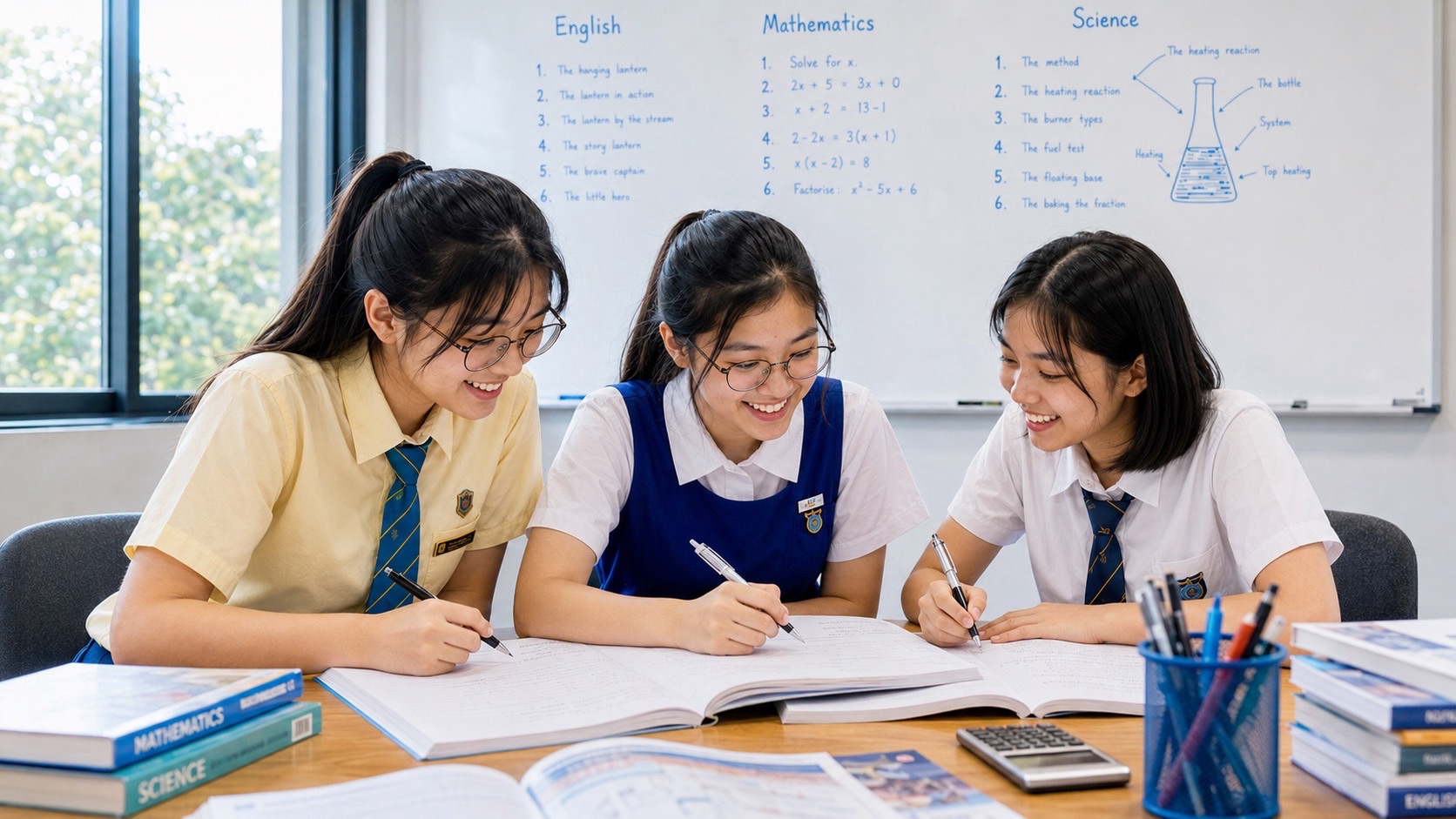
Education in Punggol should not force teenagers to choose a course using only course names and imagined careers. A student can like the idea of engineering, nursing, design, business, computing or hospitality without knowing what the daily work actually contains.
For Punggol families making post-secondary course and career decisions, career exposure is valuable because it replaces fantasy with evidence. Open houses, work attachments, conversations with practitioners, project experiences and real tasks can help the student see the difference between liking an industry from a distance and liking the work inside it.
The goal is not to make a sixteen-year-old choose a lifelong career. It is to reduce avoidable mismatch before the next educational commitment.
1. Course Choice Is Easier When Work Is Less Abstract
“I want to do healthcare” can mean many different roles. “I like technology” can describe anything from software to hardware, cybersecurity, data, design or technical operations.
Exposure helps the student replace category labels with more specific work.
2. Open Houses Show the Learning Environment
Open houses can reveal labs, studios, workshops, classrooms, student projects and the physical scale of a campus.
The useful question is not only “Did I like the campus?” but “Could I imagine doing the repeated work I saw here?”
3. Ask Students What the Hard Part Is
Current students can often describe workload, project friction, assessment style and the modules that surprised them.
One student’s view is not universal, but it can expose questions the family had not thought to ask.
4. Ask Practitioners About Tasks, Not Titles
Job titles can sound impressive while hiding routine work. Ask what a normal week contains. What is repeated? What is stressful? Which skills matter most? What does a beginner usually get wrong?
Concrete task descriptions are more useful than slogans about the industry.
5. Work Attachments Are Evidence of Fit
A short attachment cannot reproduce an entire career, but it can reveal workplace pace, communication, environment and whether the student enjoys the type of work enough to explore further.
ITE’s current EAE materials, for example, recognise relevant work attachments and related experiences as evidence of aptitude and interest.
6. Personal Projects Can Create Exposure Too
A student interested in coding can build something. A design student can create and revise a portfolio piece. A business-interested student can help run a small event budget or analyse a simple customer problem.
Doing the work often teaches more than reading about the work.
7. Unpleasant Exposure Is Still Useful
If a student discovers that the work is repetitive, physically demanding, socially intense or technically frustrating in ways they strongly dislike, that is not a wasted experience.
It may prevent a larger mismatch later.
8. Distinguish the Industry From One Workplace
A poor experience at one organisation does not prove the entire field is unsuitable. Workplace culture, role and supervisor matter.
The student should ask what was specific to that site and what was inherent to the work itself.
9. Career Conversations Need More Than Salary
Income matters, but families should also ask about training, working hours, progression, physical demands, licensing where relevant, job stability and the kinds of problems the role solves.
A career is a working system, not one number.
10. Education and Career Guidance Is About Better Fit
SkillsFuture’s Education and Career Guidance materials emphasise helping people understand their strengths, interests and aspirations so they can make better-informed education and career choices.
This is a better use of guidance than simply chasing whichever course appears most popular.
11. Parents Should Avoid Turning Exposure Into Recruitment
If the family arranges a conversation with an engineer, lawyer, nurse or designer, the goal should be understanding—not convincing the child to inherit that person’s career.
Exposure should widen judgement, not narrow it prematurely.
12. Keep a Small Career Evidence Log
After each exposure, record what looked interesting, what looked difficult, what surprised the student and which questions remain.
Several experiences can later be compared rather than remembered vaguely.
13. Course Selection Should Use the Evidence
If repeated exposure confirms that the student likes the actual tasks, the course choice becomes more grounded. If exposure repeatedly reveals mismatch, that evidence should be allowed to change the plan.
14. A Career-Exposure Checklist
- What work did the student actually observe or do?
- Which parts created energy?
- Which parts created resistance?
- What skills appeared repeatedly?
- What training was required?
- What did a practitioner say was hardest?
- What assumptions changed?
- Which course now deserves deeper investigation?
15. Education in Punggol Should Let Students Test the World Before Choosing More of It
No teenager can know an entire career before entering it. But families can do better than choosing from labels.
Real tasks, honest conversations and direct observation give the student something to reason from. Course choice becomes less about imagination and more about evidence.
Useful Sources to Recheck
- SkillsFuture Education and Career Guidance
- MOE CourseFinder
- The current open-house, course and career pages of the institutions the student is considering.


