
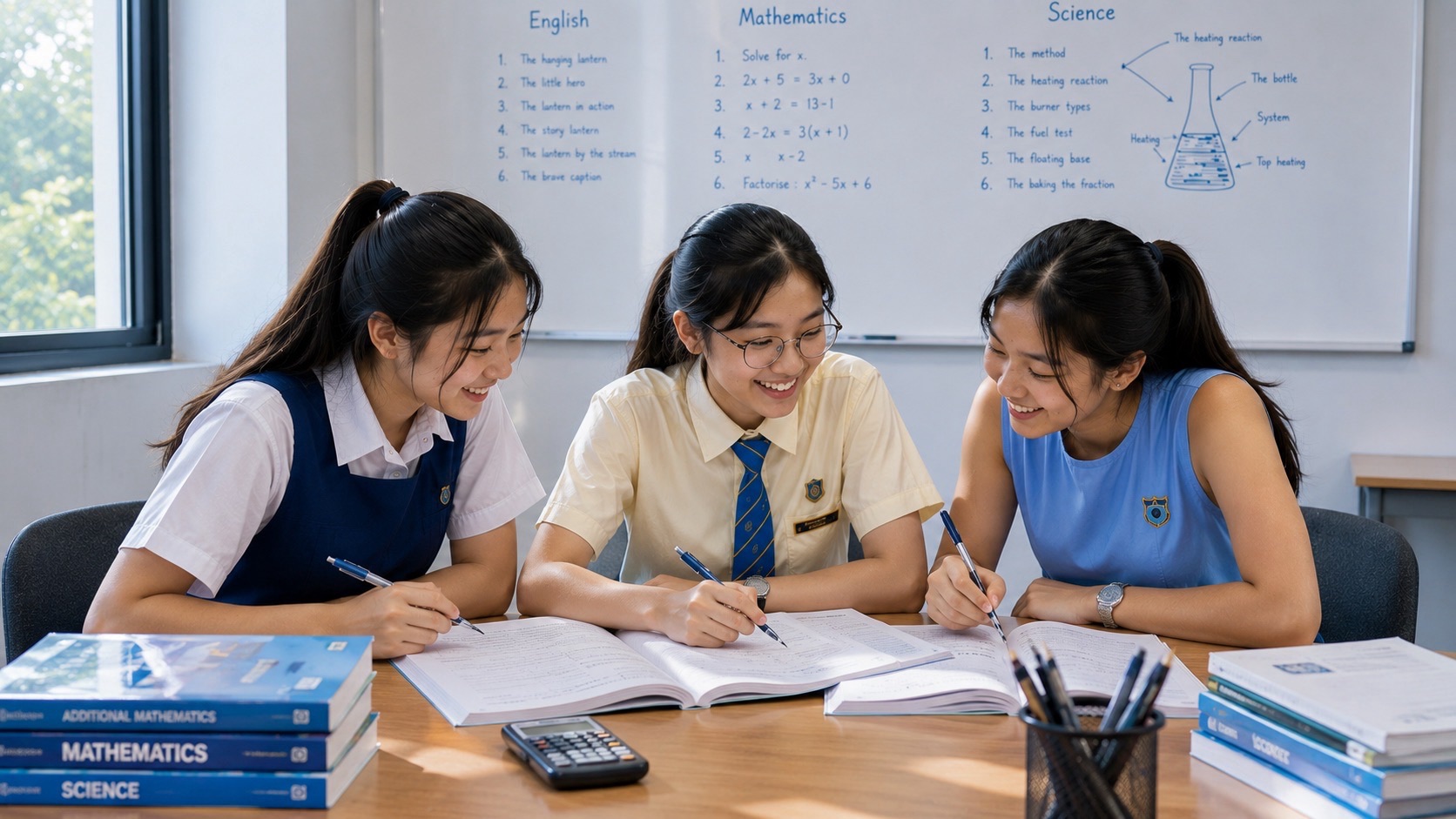
The most complicated part of a Punggol school day often begins when school ends.
Between dismissal and dinner, one child may go to student care, another to CCA, a secondary student may travel home independently, a parent may still be at work, a grandparent may be handling pickup, and a tuition lesson may need to fit somewhere without swallowing the rest of the afternoon.
For families searching student care in Punggol, CCA Singapore, homework help, Punggol tuition, small group tuition, study timetable for kids or Punggol Regional Library, the useful question is not simply where each service exists. It is how the whole afternoon behaves when a real child has to move through it.
This is the family-rhythm layer. For directories and operational details, use the canonical guides: Student Care Centres in Punggol, Punggol Regional Library Guide and eduKatePunggol Contents & Learning Routes.
School dismissal does not mean the child is finished for the day
Adults can look at the clock and think the school day is over. Children often experience something different. They have completed one institution and are about to enter a chain of others: lunch, transport, student care, CCA, enrichment, tuition, homework, dinner, family obligations and preparation for tomorrow.
This matters because energy is not reset at dismissal.
A child who concentrated all morning, sat through lessons, managed peers and completed school tasks does not become fresh at 1:30 PM merely because the timetable says “home”. The afternoon plan should begin with the child who actually comes out of the school gate, not the ideal child imagined by a calendar.
The first question after school is recovery
Some children need food first. Some need silence. Some need movement. Some need to tell the story of the day in great detail. Others need twenty minutes before they want to speak at all.
Families often make the afternoon harder by starting with interrogation: “What homework do you have? Did you finish your worksheet? Why did your teacher message? What is tomorrow’s test?”
Those questions may be necessary. Timing changes how well they work.
A short recovery period can improve everything that follows. It is not wasted time if it prevents two hours of low-quality resistance.
Student care is not just a place to wait for parents
For working families, student care can become the bridge between school hours and adult work hours. The important fit questions are practical: travel from school, supervision, homework routines, meal arrangements, rest, communication, pickup time and how the centre handles a child who has CCA or another recurring commitment.
A good arrangement reduces handoffs. A poor one creates another daily commute inside the child’s afternoon.
The family should therefore judge student care as part of the weekly system, not as an isolated service. The cheapest, nearest or most heavily advertised option is not automatically the one that makes the day workable.
Use the dedicated Punggol student-care guide for the questions to ask before enrolling.
CCA changes the shape of the week
CCA is not a footnote to school. On CCA days, the child may leave school later, eat at a different time, reach home with less daylight and carry a different level of physical or mental fatigue.
This is where a weekly timetable becomes more useful than a daily timetable.
- Monday may be the best homework afternoon.
- Tuesday may be CCA and therefore need a lighter evening.
- Wednesday may be suitable for tuition.
- Thursday may need recovery before a Friday assessment.
- Friday may carry less schoolwork but more family activity.
The exact pattern differs by child and school. The principle does not: do not design every weekday as though it has the same energy budget.
Punggol Regional Library can be a transition space
A library is often described by what it contains. For families, its value can also come from what it changes.
The move from school to home is sometimes too abrupt. A child reaches home, sees the bed, sofa, game console or phone and mentally declares the day finished. A neutral study or reading space can make the transition gentler.
Punggol Regional Library at One Punggol gives families another kind of afternoon environment: books, study areas, children’s spaces and a public setting where reading can happen without becoming a punishment imposed at home.
It should not become another compulsory productivity station. Used well, it can be a place for an hour of calm before the family returns to the evening.
For current facilities and programme information, use the Punggol Regional Library Guide.
Play is not the enemy of homework
Punggol gives families unusual access to movement: neighbourhood playgrounds, park connectors, the Waterway, open spaces and community facilities. The temptation is to treat play as a reward that begins only after every worksheet is finished.
That logic can fail when the child’s attention is already depleted.
Twenty or thirty minutes of movement may produce a better hour of work than an immediate hour of arguing at the table. The purpose is not to create a universal formula. It is to notice the child’s state before selecting the next task.
For local options, the site already has dedicated discovery routes such as Things to Do in Punggol With Kids and Best Playgrounds in Punggol. This article does not duplicate them. It explains why a little movement can belong inside a serious school week.
Homework has three different jobs
Families often treat homework as one category. It is more useful to separate three jobs.
- Completion: finish the assigned task.
- Learning: understand or practise what the task is meant to teach.
- Feedback: notice what remains difficult enough to bring back to the teacher or tutor.
A child can complete homework without learning much. Another can learn the idea but work too slowly. A third may be stuck because the underlying concept was never secure.
The parent’s job is not automatically to reteach the lesson. It is to identify what kind of difficulty is happening.
If homework battles are becoming the main family relationship, the problem may belong to a deeper learner-state route. eduKatePunggol should remain the local front door; deeper symptom-first guidance can then route outward through the wider eduKate ecosystem rather than forcing every problem into a local tuition answer.
Where tuition can fit without colonising the afternoon
Tuition adds value when it solves a defined learning problem and fits the child’s actual week.
The high-intent search terms are familiar: tuition centre near me, Punggol English tuition, Punggol Maths tuition, Science tuition Punggol, small group tuition, group of 3 tuition. But the useful parent question comes before the keyword: what job is this lesson meant to do?
A 3-student tutorial can provide close observation and frequent feedback. That is valuable when the child needs targeted correction, concept repair, better writing or more demanding practice. It is not valuable merely because a free afternoon slot exists.
At eduKatePunggol, small-group tuition sits inside the wider family-learning map rather than replacing it. Start at Contents & Learning Routes to choose the correct subject or year-level route.
The strongest timetable has empty space in it
A timetable that uses every hour looks efficient on paper and often fails in life.
Children need time for delayed buses, forgotten materials, slower meals, conversations, showers, illness, unexpected schoolwork and simple idleness. Adults need the same margin.
When every afternoon is fully booked, the smallest disruption steals from dinner or sleep. That is why buffer is not laziness. It is resilience.
The test of a family timetable is not whether it can survive the best week. It is whether it can survive an ordinary difficult Wednesday.
A practical after-school sequence
There is no single correct order, but many Punggol families can test a sequence like this and then adapt it:
- arrive or transition from school;
- eat and hydrate;
- take a short recovery period;
- handle the highest-priority school task while attention is still usable;
- move, play or travel to CCA or tuition where scheduled;
- complete lighter work later;
- stop before the evening becomes an endless extension of school.
The sequence is deliberately ordinary. Sustainable family systems usually are.
What Punggol reveals about childhood after school
A local website becomes useful when it notices the spaces between official systems.
Schools publish timetables. Student-care centres publish programmes. Libraries publish opening information. Tuition centres publish class schedules. Parks exist on maps.
Children experience all of those things as one continuous afternoon.
The family’s real work is to join them without turning every weekday into a relay race.
Frequently asked questions
Should homework happen immediately after school?
Not always. Some children work well immediately; others need food, movement or a short quiet break first. Judge the quality of the next hour, not the speed with which the child sits down.
How do working parents manage the gap before dinner?
Common arrangements include student care, family caregivers, school buses, independent travel for older children and carefully selected activities. The strongest solution is the one with the fewest fragile handoffs.
Is tuition after CCA a bad idea?
It depends on the child, travel time, CCA intensity and the lesson. If the student is regularly too tired to think, the timetable is defeating the teaching.
Where can students study in Punggol?
Start with Best Study Spots in Punggol and the Punggol Regional Library Guide.
How many activities are too many?
There is no universal number. Watch what disappears first: sleep, unstructured play, family meals, homework quality, reading or the child’s willingness to participate. A timetable is too full when important foundations are routinely sacrificed to keep it running.
Continue through Punggol
- Student Care Centres in Punggol
- Punggol Regional Library Guide
- Best Study Spots in Punggol
- Punggol Tuition Timetable 2027
- Contents & Learning Routes
- The Complete Punggol Guide
Explore the Punggol education and town-life library for related guides.
Punggol After-School Transition | School Gate → Food → Travel → Homework → Tuition
The hours between school dismissal and dinner are where many Punggol family systems either become calm or begin to fragment. The child is no longer inside the school timetable, but the evening has not yet started. Hunger rises, bags are heavy, weather can change, CCA can run late, public transport can be crowded, student care may be part of the route, tuition may begin before the child has properly reset, and homework can end up squeezed into whatever time remains.
This article already owns the between-school-and-dinner window. It should therefore be the canonical local owner for the transition itself—not another food guide, not another homework guide, not another calendar guide, and not another tuition article. The supporting owners remain separate: School-Day Food Strategy owns meal timing and food choices; Homework Geography owns where different kinds of work fit; Family Calendar owns the week; and One Child, Several Adults owns adult handovers. This page owns the seam between them.
The transition has five jobs
- Exit school cleanly. The child needs the correct bag, instrument, device, worksheet, message and pickup plan.
- Restore enough energy. Hunger, heat, thirst and emotional overload must be reduced before demanding work begins.
- Move to the next place. The route may be home, student care, library, tuition, a CCA venue, a grandparent’s home or another handover point.
- Choose the right first task. Not every child should begin with the hardest homework the moment they sit down.
- Protect the evening. The transition should leave enough time for dinner, family contact, preparation for tomorrow and sleep.
A weak after-school system treats those five jobs as unrelated. A strong one designs them as a chain. The end of one step should make the next step easier.
Start at the school gate, not at the homework desk
Parents often try to repair the after-school period at 5pm by changing the homework plan. But many evening problems started much earlier. A missing worksheet, an unclear pickup, a child who skipped lunch, a forgotten CCA item, a dead phone battery or a bus/LRT route that was never rehearsed can consume the attention that homework later needs.
Build one dismissal check that matches the child’s age. A younger Primary pupil may need a short visual list: bag, bottle, homework file, lunch box, pickup adult. An older student can own a more abstract check: messages, changed schedule, required materials, next destination, transport status. The list should become shorter as independence improves.
The goal is not surveillance. It is clean transfer of responsibility. A parent should not need to ask twelve questions every day if the child can learn to perform four reliable checks.
The first 20 minutes after dismissal are not wasted time
Children often need a short transition before productive work. That transition might include walking, a drink, a small meal, sitting quietly, talking about the day or simply moving from school mode into the next environment. Treating every minute that is not homework as “lost time” can create a false economy: the child reaches the desk earlier but spends longer staring at the page.
The transition does not need to become an hour of uncontrolled phone use. A useful reset is bounded. It has a start, a purpose and an end. For example: leave school, drink water, eat a simple snack, travel home, change clothes, begin the first planned task. The sequence is predictable enough that the child does not have to renegotiate the entire afternoon.
For children who find transitions difficult, name the next step before the current one ends: “After the bus, snack; after snack, twenty minutes of homework.” Clear sequencing can be easier to follow than repeated reminders.
Food belongs inside the transition, not outside it
Hunger changes the quality of the afternoon. A child who is genuinely hungry may look unmotivated, irritable or slow when the immediate problem is simply that the school day used more energy than expected. The Punggol School-Day Food Strategy owns the detailed meal system; this transition page only needs one rule: know when the child will next eat before assigning the next demanding task.
If dinner is early, a small snack may be enough. If CCA ends late and tuition follows, the child may need a more substantial meal before tuition rather than relying on a sweet drink. If student care already provides food, the parent needs to know roughly when and what kind of meal is available before packing unnecessary duplicates.
Older students can learn to plan this themselves. Ask them to notice the relationship between lunch timing, CCA, travel and concentration. The objective is not a perfect diet plan; it is enough awareness to avoid repeatedly arriving at tuition or homework exhausted and hungry.
Travel is part of the academic timetable
Punggol students move through MRT, LRT, buses, walking routes and family pickups. That movement is not empty space. It consumes time and attention. A timetable that says “School ends 2.00pm, tuition 3.00pm” is incomplete if the journey, meal and handover together need seventy minutes.
Use the Punggol 30-Minute Family Radius to understand the cost of every transfer, and the student route-planning guide for route design. For current rail conditions, LTA now provides real-time operating status across MRT and LRT lines through its train-status tools; temporary service adjustments and disruptions should be treated as changing operator facts rather than assumed from memory.
Teach the child one backup route where age-appropriate. That does not mean sending a young child to improvise alone. It means that older students should know what to do if the usual LRT connection is disrupted, if a bus is heavily delayed, or if a pickup adult cannot arrive. The backup should already be agreed, not invented under stress.
The handover point needs one owner
Many Punggol families use more than one adult across a week: parents, grandparents, student-care staff, domestic helpers, tutors, coaches or relatives. Problems occur when everybody assumes somebody else owns the next step. The transition needs a named owner at each handover.
For example: school gate to student care belongs to the student-care pickup arrangement; student care to tuition belongs to the parent or designated adult; tuition to home may belong to the student if they travel independently. The details vary, but the principle is stable: every movement should have one clear responsible person or agreed independent-student rule.
Keep the information small. The handover does not need the child’s entire academic history. It needs what is necessary for the transition: destination, time, who is collecting, what changed today, and any essential item that must move with the child. The Punggol handover guide owns the wider information-continuity system.
Student care should solve a real family problem
Student care is not automatically good or bad. Its value depends on the job the family needs it to do. For one household it provides safe supervision between dismissal and a parent finishing work. For another it creates a stable homework environment. For another it may add an extra transition that the child finds tiring.
Ask what happens during the actual hours: meal, rest, homework, activities, pickup, communication and what the child brings home. Then compare that with the family’s evening. If student care already covers a useful homework block, parents do not need to recreate the same block at home unless there is unfinished work or another purpose.
Use the existing Punggol Student Care guide for current provider questions. This page only asks whether the care arrangement improves the transition.
CCA days need a different afternoon, not a compressed normal day
One of the most common planning mistakes is to treat a CCA day as an ordinary day with CCA inserted into it. The result is that dinner, homework, tuition and sleep are all expected to happen in a smaller space. Something eventually breaks.
Instead, design a CCA version of the afternoon. Move suitable homework to another day or earlier slot. Pack the correct food. Confirm equipment before school. Decide whether tuition should happen at all that evening. If tuition remains, reduce the expectation for work before or after it. The week should absorb the CCA load rather than forcing the child to absorb it alone.
The Family Calendar System owns the weekly load. This article owns the changed-condition transition on the actual CCA day.
Do not send every after-school hour to tuition
Tuition can be useful, but the timetable should still contain recovery, independent work and ordinary family life. A child who moves from school to student care to tuition to homework every weekday may appear “well supported” while actually having very little space to practise independence.
Ask what tuition is doing that cannot be done elsewhere. Is it repairing a specific weakness? Providing structured teaching? Giving feedback on writing? Preparing for an examination? If the purpose is clear, tuition can occupy a defined slot. If the purpose is simply “more work”, the transition system becomes overloaded.
Use the local tuition and subject owners for teaching decisions. This page does not prescribe a number of tuition hours. Its job is to make sure any tuition slot is physically and cognitively feasible inside the child’s real afternoon.
Homework should begin with the task that fits the current state
The hardest task is not always the right first task. A child who has just travelled home after CCA may need a short mechanical task before writing an essay. Another child may have enough energy for mathematics immediately and prefer reading later. The Homework Geography article owns the detailed task-to-place decision. The transition rule is to choose the first task deliberately rather than by whichever worksheet happens to sit on top of the bag.
A useful first task has a clear finish line. “Do homework” is vague. “Complete questions 1–5, then check what remains” is usable. Finishing one bounded task gives the child evidence that the evening is moving.
If the child repeatedly cannot start, inspect the transition before blaming motivation. Hunger, noise, travel, device setup, missing materials or uncertainty about the assignment may be the actual blocker.
Library study is a route decision, not a virtue
Punggol Regional Library and other study spaces can be useful, but going to a library is not automatically better than going home. The extra journey must be justified by the task. If home is noisy and the student needs forty minutes of concentrated reading, the library may be excellent. If the student only needs to print one worksheet and then travel to tuition, a shorter route may be better.
Check current opening hours and access conditions with the provider before planning a fixed routine around a public space. A family should not build a daily system on an old opening-time screenshot.
Primary 1 to Primary 3: adults should own the route while children learn the sequence
Younger children benefit from predictable order. The adult can own transport, pickup and major timing while the child learns one responsibility at a time: carry the correct bag, check the water bottle, put the lunch box in the sink, begin the first small task. Independence is built by transferring ownership gradually.
A simple sequence can be visible at home: shoes away, wash, snack, bag open, school messages checked, short rest, first task. The exact steps differ by household. The important part is that the child can recognise what comes next without an adult narrating every minute.
Primary 4 to Primary 6: protect the evening from PSLE over-compression
Upper-primary children often receive more homework and may also carry tuition, enrichment or CCA. The temptation is to extend the day indefinitely because every subject feels important. That creates fragile evenings: one late bus or forgotten worksheet pushes bedtime later.
Use a stop rule. Decide what work must be completed tonight and what can be moved, clarified or returned to tomorrow. Protect sleep. A tired child doing low-quality work at 11pm is not automatically gaining more than a rested child who stops earlier and resumes with attention.
PSLE preparation is a multi-month system, not one heroic evening. The after-school transition should make regular work possible without turning each weekday into an emergency.
Secondary students should own more of the transition
Secondary students can increasingly own route choice, food planning, task order and communication. They should know where they are going after school, whether CCA changes the plan, what time tuition starts and what must be completed before bed. Parents can still provide boundaries without operating the entire afternoon.
A useful test is whether the student can explain the plan in one minute. If they cannot, the system may be too complicated or too dependent on adult reminders.
Independent travel should be matched to the student’s maturity and the family’s agreed safety boundaries. The article does not create a universal age at which a child “should” travel alone.
Rain changes the transition before it changes the homework
Wet weather can extend walking time, slow buses, create crowded sheltered links and make school bags harder to manage. The family should decide the rainy-day route before a storm arrives. NEA’s myENV platform provides updated weather information and alerts for heavy rain and lightning, while LTA’s current train-status tools provide live MRT/LRT operating information. Those official sources own the changing conditions.
The transition system owns the response: leave more buffer, use a sheltered route where available, protect books and devices, change the handover point if needed, and simplify the after-school plan when travel has already consumed the child’s energy.
Do not promise that a route is “safe in rain” merely because it is sheltered. Lightning, flooding, slippery surfaces and transport disruptions are different conditions. Use current official guidance and an adult decision for significant weather.
The after-school bag should support the route
A child carrying school books, CCA gear, laptop, water bottle and tuition materials can be physically overloaded even before homework begins. Review what actually needs to move every day. Duplicate low-cost items where sensible: a charger at home, stationery at tuition, toiletries in the CCA bag. Remove papers that do not need to travel.
Use one pouch for the items that repeatedly cause breakdowns: travel card, spare mask if the family uses one, small umbrella, basic stationery, tissue, and any item the child is allowed to carry under school rules. The exact contents should fit the child; the principle is to reduce searching.
Phone use should support the handover, not swallow the transition
Older students may need a phone for route communication, pickup changes or transport information. That does not mean the phone must fill every waiting minute. Decide what the device is for during the transition. A short message—“CCA ended, taking LRT home”—can be useful. Forty minutes of scrolling before homework may not be.
Follow the school’s current device rules. The family should not teach a student to ignore school policy because a parent wants constant contact. Where communication is restricted during school hours, agree on the next permitted check-in point.
Build a 15-minute recovery block that does not expand forever
Some students need a deliberate pause after travel. The pause works best when it has a clear activity and duration: shower, snack, lie down briefly, talk, walk the dog, or sit quietly. The danger is not recovery. The danger is an undefined break that keeps extending because no restart cue exists.
Use a visible restart: 4.15pm begin maths, after shower open the homework file, after snack set a twenty-minute timer, or when the parent starts cooking begin independent reading. The cue connects recovery to the next action without repeated nagging.
A practical Punggol after-school transition card
| Stage | Question | Evidence the stage is working |
|---|---|---|
| School gate | Do I have what I need and know where I am going? | Fewer forgotten items and fewer pickup clarifications. |
| Food / recovery | Am I hungry, thirsty, overheated or mentally overloaded? | The child can begin the next task without a long emotional reset. |
| Travel | What route and backup are we using today? | Arrival is realistic and changes can be communicated. |
| First task | What work fits my current state and location? | A bounded task begins without extended searching. |
| Tuition / activity | What is this slot meant to achieve? | The child knows why they are going and what to bring. |
| Return home | What remains before dinner, tomorrow-prep and sleep? | The evening closes without emergency packing. |
Worked example: Primary 5, no CCA
A Primary 5 pupil finishes school and reaches the agreed pickup point. The child checks the homework file and water bottle before leaving. On the route home, the family knows that lunch was early, so the child eats a planned snack. At home, there is a fifteen-minute reset, then one bounded homework task. The child begins tuition later with the necessary materials already packed. After tuition, only light review and tomorrow-prep remain.
The important part is not the exact clock time. It is that each step prepares the next one. There is no second search for worksheets, no surprise that the child has not eaten, and no expectation that the child complete a full homework load after returning late.
Worked example: Secondary student with late CCA
A Secondary student has CCA and reaches the transport node later than usual. The family’s CCA-day rule is already different from the normal weekday. The student sends one check-in, eats before travelling if needed, and does not attend a routine tuition session that would push the evening past the household’s sleep boundary. The most important homework is selected; lower-priority work is moved or clarified where appropriate.
This is not “giving up because CCA is tiring”. It is changed-condition planning. The student learns that when one fixed load increases, another flexible load may need adjustment. That is a more mature skill than trying to complete every plan regardless of reality.
Worked example: two children, two dismissal times
One child finishes early and goes to student care. The older sibling has CCA. A parent cannot be in two places at once, so the family assigns separate handover owners and uses one shared calendar. The younger child completes a defined homework block at student care; the older child eats after CCA and completes only the highest-priority task before dinner. The parent reviews both children’s school messages later instead of interrupting every transition with calls.
The system works because the family does not force both children into one timetable. Shared logistics do not require identical afternoons.
How to tell whether the after-school system is improving
Use observable evidence rather than mood alone. Track a small set of signals for one week: forgotten items, late arrivals, missed meals, repeated pickup confusion, homework start delay, bedtime pushed later, and how often an adult had to rescue a preventable problem. Do not turn the child into a dashboard. Three or four recurring signals are enough.
Then change one component. If the bag is the problem, fix the packing system. If hunger is the problem, fix food timing. If travel is the problem, fix the route or buffer. If every evening is simply too full, fix the calendar. Avoid solving the wrong layer.
Frequently asked questions
Should homework start immediately after school?
Not automatically. The right start depends on hunger, travel, the task and the child’s state. A short bounded transition can improve the quality of the work that follows.
Is student care better than going home?
It depends on the family job. Compare supervision, homework environment, food, travel, pickup and the child’s experience rather than treating the label as the answer.
Should a child attend tuition after CCA?
Only if the slot remains useful and feasible. Consider travel, food, the child’s condition, the teaching purpose and the resulting sleep time. A CCA day may need a different plan.
What if the after-school routine changes every day?
Keep the stages stable even if the locations change: check out, recover/eat, travel, choose first task, complete the planned activity, close the evening. The sequence can remain familiar while Monday and Thursday look different.
What should parents stop doing first?
Stop solving every transition through repeated verbal reminders. Build visible cues, agreed handovers and predictable routes so the child can own more of the system over time.
Next routes: Homework Geography · Family Calendar System · School-Day Food Strategy · One Child, Several Adults · Complete Punggol Guide.
Punggol After-School Transition | School Gate → Food → Travel → Homework → Tuition
The hours between school dismissal and dinner are not empty time. They are a chain of transitions. A child leaves the structure of school, carries a bag and sometimes CCA equipment, becomes hungry, travels through a busy town, may enter student care or tuition, may need to complete homework, may want to play, and eventually has to arrive home with enough energy left for dinner, showering, family conversation and sleep. When families treat all of that as one vague block called “after school”, the afternoon becomes harder than it needs to be.
A useful Punggol system begins with a simpler question: what must happen between the school gate and the next stable place? The stable place might be home, student care, a library, a grandparent’s home, a tuition centre or a CCA venue. Once the first transition works, the next one becomes easier to design.
This guide does not prescribe one perfect timetable. Punggol families have different school locations, work shifts, sibling commitments, LRT stations, bus routes and caregiving arrangements. Instead, it gives a framework for building an afternoon that is reliable enough to repeat and flexible enough to survive rain, CCA changes, late dismissal and tired days.
1. Treat dismissal as a handover, not a release into unplanned time
The first ten to thirty minutes after school often determine the rest of the afternoon. A child who is hungry, carrying too much and unsure where to go next is already spending attention on logistics. A child who knows the first destination, the travel route and the first food or rest step can shift out of school mode without needing repeated instructions.
For younger children, the adult should make the handover explicit. Who collects? Where do they meet? What happens if the collector is late? Which adult is authorised to receive the child? What should the child do if the usual plan changes? Student-care providers and schools have their own current procedures, so families should follow those rather than inventing informal arrangements at the gate.
For older students travelling independently, the handover is from school structure to personal responsibility. The student should know the first destination and the latest sensible arrival time. They do not need a parent to manage every minute, but they do need a clear route and a way to communicate if the plan changes materially.
2. Recovery comes before productivity
School dismissal is not a switch that turns a child into a homework machine. Before asking for concentration, check the basics: water, food, toilet, heat, wet clothes, carrying load and emotional decompression. A child who has been listening, writing, moving between lessons and managing peers for several hours may need a short transition before another demanding task.
Recovery does not need to become an hour of unbounded screen time. It can be simple: drink water, eat something appropriate, sit quietly for ten minutes, walk part of the way home, talk to a caregiver, or do a light activity before the next commitment. The objective is to lower friction, not to create another entertainment block that is difficult to stop.
The family should notice what actually helps. Some children settle after food. Others need movement. Some prefer to talk immediately; others want quiet first. A repeated observation is more useful than a generic rule about what all children “should” do after school.
3. Food is part of the transition system
After-school food has a job: restore enough energy for the next part of the day without accidentally becoming a second full dinner. The right amount depends on the child, the time, the next activity and when the family normally eats. A student heading directly to CCA or tuition may need a more substantial snack than a child going home for an early dinner.
The Punggol School-Day Food Strategy owns the wider meal-planning question. The transition rule here is narrower: decide the food before hunger becomes an emergency. Keep one predictable option in the school bag, student-care routine or home plan where appropriate, and know the food node on the route if the child is travelling independently.
Do not turn food into a constant academic reward. “Finish homework and then you may eat” is a poor transition system when the child is genuinely hungry. Food should support the afternoon. Academic accountability can be handled separately.
4. Travel belongs inside the timetable
A calendar entry that says “tuition 4.30pm” hides the most important question: how does the child get from school to tuition? The route may include walking, waiting for a bus, transferring to the LRT or MRT, crossing a mall, meeting an adult, or collecting a sibling. Travel consumes time and attention and must be scheduled as a real block.
Use current transport information from the actual operator. SBS Transit owns current North East Line and Punggol LRT operating information; route planners and live transport tools should own current journey details. The article should not promise that a connection will always take a fixed number of minutes. What the family can control is the margin around the connection.
Build the route from door to door rather than station to station. “Ten minutes on the LRT” may still mean a twenty-five-minute transition after walking to the station, waiting, transferring and walking at the destination. For a younger student, add the time needed to navigate safely rather than using an adult’s fastest possible journey as the standard.
5. The after-school route should have one fallback
A reliable family does not need five backup plans. It needs one usable fallback for the main failure point. If the usual bus is heavily delayed, what is the next acceptable route? If rain makes the exposed walking segment impractical, what changes? If the collecting adult is late, where does the child wait under the school’s or provider’s rules? If the phone battery dies, which contact or meeting point is already known?
The fallback should be agreed before the child needs it. In the moment, a tired student is a poor person to design a new transport system. Older students can gradually own more of this planning, but independence is stronger when it grows from rehearsed alternatives rather than emergency improvisation.
For live rain, lightning and local weather information, use current official sources such as myENV. The family’s task is not to predict weather perfectly. It is to know which part of the route changes when conditions become unsuitable.
6. Choose the homework place by the task
Not all homework needs the same environment. A short worksheet can be completed in a waiting gap. Reading may suit a quiet corner. A composition draft may need a longer uninterrupted block. Mathematics corrections may need the student’s notes and previous work. A project may require a device, shared file access and discussion.
The Punggol Homework Geography article compares home, library, student care, waiting gaps and tuition. The transition system should use that principle: match the task to the place instead of forcing every task into the first available chair.
This also prevents adults from treating every free minute as a homework slot. A fifteen-minute wait before CCA can be useful for checking tomorrow’s spelling list or organising a bag. It may be a poor time for a difficult algebra problem that requires sustained attention. Time exists, but the task-place fit may still be wrong.
7. Separate homework into three jobs
Families can reduce afternoon confusion by separating homework into three categories. The first is completion: work that must be submitted. The second is retrieval and practice: work that strengthens memory or fluency. The third is repair: corrections, misunderstood concepts and tasks that require help.
Completion can sometimes fit into an ordinary after-school block. Retrieval can be short and repeated. Repair usually needs a better environment and more cognitive energy. If a child repeatedly leaves all repair work until late at night, the family should not simply demand faster completion. It should ask whether the repair task has a suitable place earlier in the week.
This distinction is also useful when tuition is involved. Tuition should not become the dumping ground for every unfinished worksheet. A tutor can work on misconceptions and strategy, while the student still owns age-appropriate completion and preparation. The exact division depends on the subject and learner, but the handoff should be visible.
8. Student care has a defined job
Student care can provide supervision, meals, routines and homework time, depending on the provider. Families should use the actual provider’s programme and rules rather than assuming every centre works the same way. The key transition question is what state the child should be in when collected: fed, homework partly completed, rested, or ready for the next activity?
That answer should shape the evening. If student care already provides structured homework time, the parent does not need to recreate the entire school day at home. Instead, check what remains and where genuine difficulties appeared. If the child used the session mainly for supervision and play, then homework may need another planned block.
A first-week student-care transition can be tiring because the child is learning new adults, routines and expectations. The family should not judge the long-term fit from one difficult afternoon without first understanding what happened.
9. CCA days are different days
A CCA day should not be forced into the same timetable as a non-CCA day. The student may finish later, carry equipment, need more food, travel at a different time and arrive home with less energy. The correct response is not to squeeze the normal homework block into a smaller space. It is to change the day.
Decide in advance which work can move to another day and which deadlines cannot. A short required task may stay. A long optional revision block may move. Sleep should not automatically become the flexible item every time CCA runs late.
The Punggol CCA Equipment System owns the physical gear and recovery question. The after-school system should simply recognise that wet sports clothes, instruments, art kits or other equipment add another handoff before the evening is complete.
10. Tuition should sit inside the route, not dominate it
Tuition can be useful, but placing it badly can make the whole afternoon fragile. A class that begins too soon after a distant school dismissal may create rushing, missed food and repeated late arrivals. A class that ends too late may push dinner and sleep backwards. The family should evaluate the entire route rather than only the academic slot.
If tuition is close to the child’s existing route, the transition can be simple: school → food → travel → class → home. If it requires a major detour, the benefit should justify the transport and recovery cost. That is especially important for younger students who cannot yet manage the route independently.
Do not use tuition to fill every open afternoon. Children need unscheduled recovery, play and family time. A calendar that looks efficient can still be unsustainable if it removes every buffer that absorbs normal life.
11. Use 30-, 60- and 90-minute gaps differently
A thirty-minute gap is usually a transition resource. It can hold a snack, a short walk, bag organisation, a small retrieval task or travel to the next place. Trying to make it carry deep homework often creates frustration because setup and pack-up consume much of the time.
A sixty-minute gap can support one real task if the location is suitable. The student might complete a focused homework block, read, revise a set of vocabulary, or use a library session. The family should protect the beginning and end of the hour from unnecessary movement.
A ninety-minute gap can support deeper work, but only if the child is not spending half of it travelling or waiting. The longer the nominal gap, the more important it becomes to count the actual door-to-door transitions. A “two-hour break” with two transport legs may contain less usable concentration time than a quiet hour at home.
12. The library is a study option, not automatic better studying
Punggol Regional Library can be useful when a student needs a structured public study environment and the trip fits the route. But a library is not automatically superior to home. The student may spend time travelling, searching for a seat, waiting for a sibling or carrying extra materials. Current access and hours should be checked with the library owner before relying on a specific visit.
Use the library when the task benefits from the environment. Use home when the task needs materials already there, a meal, a shower or a shorter transition. Use student care when supervision and routine are the main need. Use tuition when specialist teaching is the need. Different places have different jobs.
13. Phone communication should be small and useful
Older students who travel independently need a communication rule that is clear without becoming surveillance. A simple system can be enough: tell the family when the route changes materially, when a pickup is missed, or when arrival will be significantly later than agreed. Constant location reporting may create noise without improving responsibility.
The student should know the important contacts, keep the phone sufficiently charged for the journey, and understand school rules about phone use. A backup matters too: what happens if the phone has no battery or signal? Independence is stronger when one failed device does not collapse the whole afternoon.
14. Working parents need an operational handover
A working parent may not be able to answer every after-school message immediately. The family therefore needs a clear ownership chain. Who is responsible from dismissal to student care? Who takes over after CCA? Who handles a tuition collection? Who can make a decision if the parent is in a meeting?
The Punggol Family Calendar System should hold those fixed responsibilities. The child should see an age-appropriate version. A younger child may only need to know “Auntie collects today.” A Secondary student can manage a more detailed sequence.
A handover should communicate only what the next adult needs: destination, time, essential item, permission and material change. Long message chains increase the chance that important information is buried.
15. Grandparents should not be invisible logistics staff
Grandparents often support school pickup, meals and handovers. Their time and mobility should be treated as real constraints. A plan that assumes a grandparent can repeatedly cross town, carry sports gear and wait through unpredictable delays may be unsustainable even if nobody complains at first.
Agree what the grandparent is responsible for and what they are not. Give clear pickup information. Avoid making them responsible for interpreting last-minute changes from several group chats. If the child is old enough, the child can carry more of the communication.
16. Sibling afternoons need shared-resource planning
Two children can create conflicting pickup times, meal needs, tuition schedules and device use. The family should not solve each child independently and then discover that one adult is expected in two places at once.
Start with the harder route. If one sibling has CCA far from home, build that transport first. Then place the more flexible sibling around it. Share errands where sensible, but do not make one child wait excessively just because the family wants one car journey.
When siblings use the same study space or device, the after-school transition should include the handoff. Who uses the device first? Who needs quiet earlier? Which homework can be done offline? Small resource decisions prevent unnecessary evening conflict.
17. Rain changes the transition; it does not need to destroy it
Wet weather changes walking speed, shelter choices, bus demand, bag handling and the condition in which a child arrives. The family should have a rainy version of the route, not just a normal route plus an umbrella.
Use current weather information before the child leaves the stable place. Protect books and electronics appropriately. Decide what happens to wet shoes, socks, PE kit or CCA gear when the child reaches home or tuition. A child who arrives soaked may need ten minutes to reset before useful work begins.
Do not promise that a particular route is always safe or sheltered. Construction, closures and local conditions can change. Use current operator and authority information, and teach the child to choose the agreed alternative when the preferred route is not usable.
18. Primary-school independence should grow one component at a time
Young children do not need to manage the whole afternoon independently. Give them one component. They can remember the snack pouch, check the homework folder, carry the transit card, tell the collector about a teacher notice, or pack the tuition file. When one component becomes reliable, add another.
This is better than announcing suddenly that a Primary 4 child “should be independent now”. Independence is not a personality trait. It is a collection of routines that have been taught, rehearsed and gradually transferred.
19. Secondary students should own the route and the workload
By Secondary school, many students can take substantial ownership of their after-school system. They can identify which homework is due, estimate travel time, decide whether a library stop is useful, communicate a changed route and pack for CCA or tuition.
Parents can still set boundaries around safety, sleep, spending and major commitments. The shift is from issuing every instruction to reviewing the system. Ask: What is due tomorrow? What can move? What time do you need to leave? What is your backup if the train or bus route changes? The student supplies the plan.
20. A difficult afternoon should trigger recovery, not punishment
Sometimes the system fails. The child misses a bus, forgets a worksheet, loses time talking to friends, arrives late or is too tired to complete the planned work. The family should still hold the child accountable where appropriate, but the first question is operational: what must happen now?
Prioritise the immediate essentials. Eat. Get home. Complete the genuinely urgent task. Prepare for tomorrow. Sleep. The next day, review why the failure happened. A calm review produces better evidence than an angry reconstruction at 10.30pm.
21. Three illustrative Punggol after-school sequences
Sequence A: ordinary non-CCA day
A Primary student is collected after school, eats a planned snack, travels home, rests briefly, completes one school task, has play time and then joins the family for dinner. A short tuition or revision block, if needed, sits later only if it does not displace sleep. The important feature is not the exact clock time. It is the clear transition from school to food to home to focused work.
Sequence B: CCA plus tuition
A Secondary student has CCA, eats before leaving school or on the established route, travels to tuition with a realistic margin, attends class and returns home. Only urgent homework remains for the evening; longer revision moves to another planned block. The student dries or resets CCA gear and prepares the next school day before sleep.
Sequence C: working parent and student care
A younger child moves from school to student care, eats and completes the provider’s planned routine. The working parent collects after work. At home, the parent checks only what remains rather than repeating the whole homework session. Dinner, family time and the school-bag reset complete the day.
These are illustrations, not schedules for every child. Their purpose is to show that each transition has an owner and that the day changes when CCA, student care or tuition changes.
22. Run a seven-day after-school audit
For one week, record only five things: dismissal time, first stable destination, travel duration, first food/rest point and the first meaningful study block. Add one note if something went wrong. Do not collect every minute.
At the end of the week, look for friction. Is the child repeatedly hungry before tuition? Is travel consuming the homework block? Is one CCA day overloaded? Is the library trip helpful or simply another transfer? Is the child arriving home too late to reset calmly? The audit turns a vague complaint into a visible system.
Change one or two components. Move the snack. Shift one tuition slot. Use a nearer homework location. Reduce an optional task on CCA day. Add a weather fallback. Then observe again. The objective is not a perfectly optimised child. It is a workable afternoon.
23. The five-question after-school check
- Where does the child go first? Home, student care, CCA, library, grandparent or tuition?
- When and where does recovery happen? Water, food, toilet, rest and weather reset?
- Which task belongs in this place? Completion, retrieval, repair or no study yet?
- What changes if the route or dismissal changes? One fallback is enough if everyone knows it.
- What must still be protected tonight? Dinner, tomorrow’s materials and sleep are part of the system.
Frequently asked questions
Should homework start immediately after school?
Not automatically. Check the child’s physical state, travel and the type of task. A short familiar task may fit immediately. Deep work may be better after food, movement or a stable arrival.
Is tuition straight after school always too much?
No. It can work when the route, food and class timing are realistic. It becomes fragile when the child must rush, miss food or repeatedly arrive tired and late. Evaluate the complete transition rather than the class in isolation.
Should a student use every waiting gap for study?
No. Some gaps are best used for recovery, travel, food or organisation. Match the task to the time and place instead of treating all unused minutes as academic capacity.
How much should a Secondary student manage alone?
Enough to own the route, deadlines and ordinary changes appropriate to the student’s maturity. Parents can keep safety and major scheduling boundaries while expecting the student to propose the daily plan.
What if the child is consistently exhausted before dinner?
Review the complete week: sleep, travel, CCA, school demands, tuition, food and recovery. Persistent exhaustion is not solved simply by demanding faster homework. If there are health concerns, discuss them with an appropriate healthcare professional rather than diagnosing from a schedule.
Continue the Punggol family-operation system
Use the Punggol Homework Geography to decide where different work fits, the Punggol Family Calendar System to coordinate fixed commitments, the School-Morning Departure System for the other end of the school day, and the Exam-Morning System when reliability matters even more.
The after-school principle is simple: school gate → recovery → route → right task → next handoff → home reset. When each transition has a job and an owner, the afternoon stops feeling like a series of emergencies and becomes a routine a child can gradually learn to manage.
Punggol After-School Transition | School Gate → Food → Travel → Homework → Tuition
The hours between school dismissal and dinner are not one empty block called “after school”. They are a chain of transitions. A child leaves the school gate, changes physical environment, becomes hungry, travels, hands over to another adult or becomes independent, changes clothes, opens a bag, decides what must be done, perhaps attends CCA or tuition, and eventually returns to the family evening. If one link is fragile, the whole afternoon can feel chaotic even when every individual activity looks reasonable on a timetable.
This guide owns that transition chain. It does not replace the separate Punggol Homework Geography owner, the Family Calendar System, the School-Day Food Strategy or the tuition system. Those pages own their specialist jobs. This page owns the handoff from one stage of the afternoon to the next.
The practical question is simple: what must happen between the school gate and productive evening work so that the child does not spend the entire afternoon recovering from the afternoon?
The transition begins before dismissal
A stable after-school system starts while the child is still in school. The child should know the first destination before the final bell: home, student care, CCA, library, grandparent, tuition, waiting point or another agreed place. The adult should know who is responsible for the next handoff. If the plan changes, the child needs one trusted communication route and one clear instruction.
This matters because ambiguity is tiring. A child who leaves school unsure whether to wait, walk, call, board the bus or find a sibling is using attention before homework has even begun. The goal is not to remove every uncertainty from childhood. The goal is to avoid creating uncertainty where a simple family rule would solve it.
For younger children, the route can be explicit and repetitive. For older children, responsibility can transfer gradually: check the family calendar, follow the normal route, message only when a defined exception occurs. Independence is not the absence of a system. It is the ability to operate the system with less adult rescue.
Stage 1: leave the school gate cleanly
The first transition is physical. The child must move from the school environment into the next part of the day. That sounds obvious, but many afternoons begin badly because dismissal becomes a messy search for people, bags, transport or instructions.
- Primary-school child: know the pickup person or student-care route before dismissal.
- Upper-primary child: begin owning one part of the route, such as checking the agreed pickup point or boarding the usual bus.
- Secondary student: know the normal route, one backup route and when a change must be communicated.
The family should define what counts as a genuine exception. “The bus is five minutes late” may not require a phone call. “The usual route is unavailable” probably does. “I want to go somewhere else with a friend” is a different category again because it changes the agreed plan rather than responding to a disruption.
The clearer these categories are, the less likely the family is to produce a stream of anxious messages that make the child dependent on remote adult supervision for ordinary movement.
Stage 2: food is part of the transition, not an interruption
Many after-school problems are partly hunger problems. A child who has eaten lightly, had PE, completed CCA or simply spent a long day concentrating may arrive at the next task with low patience and poor attention. The solution is not automatically a full meal. It is a planned food decision that matches the timing of dinner and the demands of the next activity.
Use the Punggol School-Day Food Strategy for the complete food system. Here, the key rule is narrower: decide the after-school food lane before the child is standing hungry in front of a row of shops.
| Next stage | Useful food approach |
|---|---|
| Home and dinner soon | Small snack or drink if needed; avoid turning the snack into a second dinner. |
| CCA continues for several hours | Plan a more substantial snack or meal around the activity schedule. |
| Tuition soon after school | Choose something familiar and easy to eat before travel or class. |
| Library / study period | Eat before entering the study phase so hunger does not become the first distraction. |
| Student care | Understand what the programme provides and what still belongs to the family. |
Do not use food as a repeated bargaining device for homework. “Finish this worksheet and I will buy you a treat” can solve one afternoon while teaching the child to see ordinary work as something that always requires an external reward. Food can be pleasant and supportive without becoming the price of cooperation.
Stage 3: travel time is not empty time
Punggol families often think in destinations—school, home, tuition, library—but the transitions between them consume real capacity. Walking to the LRT, waiting for a bus, changing lines, collecting a sibling and walking the final stretch can turn a “30-minute gap” into ten usable minutes.
The Punggol 30-Minute Family Radius owns the deeper transport-cost logic. The after-school rule is simple: schedule from door to door, not from event time to event time.
If school ends at 1.30pm and tuition begins at 3pm, the family does not automatically have ninety minutes. Subtract dismissal, food, walking, waiting, transfers, toilet time, settling and a small buffer. What remains is the true gap. That gap may be enough for a short rest or one small task. It may not be enough for a full homework block.
This distinction prevents a common family argument. Adults see ninety minutes on paper and ask why “nothing was done”. The child experienced the ninety minutes as a chain of movement and small decisions. The useful response is not to assume laziness. It is to measure the actual transition once and redesign from evidence.
Stage 4: create a landing routine before homework
When the child reaches home, student care, a grandparent’s flat or another study location, the brain does not instantly switch from travel mode to focused work. A short landing routine helps. It should be brief enough that it does not become procrastination.
- put the school bag in one place;
- change clothes if needed;
- wash hands and use the toilet;
- drink water;
- check the day’s school notices or urgent messages;
- identify the first work task;
- begin.
The landing routine is not a reward period. It is a transition protocol. A child who turns on a game “for five minutes” may create a much harder second transition because stopping a stimulating activity requires another round of self-control. If a screen break reliably becomes forty minutes, it is not functioning as a break.
Different children need different landing lengths. The family should use evidence. If ten quiet minutes reliably produces a better homework start, that may be useful. If thirty minutes becomes drifting and negotiation, shorten it. The objective is not one universal rule; it is a repeatable handoff into productive work.
Stage 5: define the first homework job precisely
“Do homework” is too large an instruction after a complex day. The child should know the first visible action. Open the Mathematics worksheet. Complete the first three questions. Read the English passage. Copy the Science corrections. Pack the material needed for tuition. A clear first action reduces the mental cost of starting.
The Homework Geography guide explains which location fits which task. This article adds one transition rule: choose the first task before the child reaches the study location whenever possible. A short note in the family calendar or a simple after-school card can prevent the first ten minutes from being spent asking, “What should I do?”
On heavy days, choose a minimum viable task. That might be completing the most urgent school work, preparing for tomorrow and recording what remains. A feasible small plan is better than an ambitious plan that collapses and produces guilt.
Stage 6: tuition must connect to the afternoon rather than sit on top of it
Tuition is not automatically useful simply because there is a free slot. It must fit the child’s capacity, travel and school workload. A class placed after a long CCA, two transfers and an unfinished meal may be a poor slot even if the tutor is excellent.
Before tuition, the family should know what the student is bringing: the correct books, completed or attempted work, questions, school feedback and enough energy to participate. The class should not begin with twenty minutes of reconstructing what the child forgot to pack.
After tuition, the transition continues. The child needs a route home, dinner or a light meal, perhaps a short review, then sleep preparation. Do not treat the end of tuition as the end of the day. Use the Punggol Evening Return Home owner for the later evening system.
Student care is a real operating environment, not a waiting room
For many working families, student care is the main bridge between school and home. It can provide meals, routines, homework periods, supervision and social time according to the provider’s actual programme. The family should understand what the centre owns and what it does not.
If homework is partly completed there, parents should ask what “completed” means. Was the work independently finished? Was help provided? Were corrections checked? Is there unfinished work in the bag? The answer affects what the home evening needs to do.
Do not make the child carry conflicting instructions between adults. If the student-care centre has one homework process and the family wants another, the adults should clarify the difference directly where appropriate. The child should not become the messenger responsible for reconciling two systems.
CCA days need a different afternoon template
A CCA day is not an ordinary school day with one extra box added to the timetable. CCA changes hunger, energy, transport, equipment and available homework time. The family should have a CCA-day template rather than expecting the child to reproduce the normal after-school sequence at a later hour.
- know the finish-time range and pickup/return route;
- plan food around the activity;
- reduce the homework target to what is feasible;
- protect shower and sleep time;
- prepare equipment before the morning of the CCA day;
- move optional work to another day where possible.
The family can use the Family Calendar System to make these changed-condition days visible. A calendar is useful when it predicts pressure before the child is exhausted, not when it merely records that the family was busy afterwards.
A Primary 1 after-school system should be very simple
For a Primary 1 child, the first goal is predictable sequence. The child does not need to manage five apps and three adults. They need to know: who meets me, where I go, when I eat, where my bag goes, what I do first, and how the evening ends.
Adults should avoid transferring independence too quickly because the child appears confident for several good days. Build reliability first. Once the sequence is stable, hand over one component: carry the own water bottle, check the homework folder, remember the student-care item, or tell the adult what tomorrow requires.
The measure of progress is not how little help the adult provides. It is whether the child can perform the next appropriate part of the system safely and consistently.
Upper-primary afternoons should begin transferring ownership
By upper primary, the child can begin managing a clearer personal layer: check the timetable, identify urgent homework, pack for tuition, communicate a route change, carry an appropriate snack and estimate whether a task fits the available gap.
This is also the stage when school demands can grow quickly. The response should not be to fill every gap with academic work. Children still need meals, movement, conversation and sleep. A strong after-school system protects those basics because they support learning rather than compete with it.
If PSLE preparation is increasing, choose where the extra work belongs. It may be a defined study block on selected days rather than a vague expectation that every available minute becomes revision. The more demanding the academic goal, the more important it is to distinguish planned practice from permanent pressure.
Secondary students need a system that survives without constant messaging
Secondary students may have later dismissal, more varied CCAs, group work, independent travel and heavier subject loads. Their system should become more self-managed. A parent should not need to ask every afternoon, “Where are you now?” if the normal plan is already known and the student understands when an exception must be communicated.
Give the student a small operating standard: know the day’s route, keep the phone sufficiently charged if the family relies on it, carry transport access, know the first homework priority, and communicate material changes. That is enough. Surveillance is not the same as organisation.
When a Secondary student repeatedly misses work after late days, investigate the system before labelling the student careless. Perhaps the transition from CCA to dinner is too long. Perhaps the homework block begins too late. Perhaps the tuition slot is poorly placed. Perhaps the bag system is failing. A specific failure can be repaired.
Use waiting gaps deliberately
Punggol family life contains waiting gaps: between school and tuition, while a sibling finishes class, before a parent arrives, after an appointment, or before CCA. These gaps can be useful, but only if the task matches the setting.
| Gap | Good uses | Poor uses |
|---|---|---|
| 10–15 minutes | Check notices, organise bag, read a short text, list questions | Starting a complex assignment that cannot be finished |
| 20–30 minutes | Small worksheet, reading, correction work, planning | Heavy new learning in a noisy transition area |
| 45–60 minutes | Focused homework if the location supports it | Assuming the whole hour is usable without counting food/travel |
The skill is not squeezing productivity from every minute. It is recognising when a gap can carry a real task and when the child should simply eat, travel or rest.
The library is a study location, not a universal answer
Punggol Regional Library can be a useful study environment, but it should be chosen because the task fits the location, not because “the library is good for studying”. A child who needs to spread out art materials, join an online group call or receive constant tutor feedback may need another environment.
Conversely, a student who struggles to begin at home may benefit from a quieter public study environment. The Punggol Study Spots guide and the library owner handle the current access details. This transition guide owns the question: does going there improve the afternoon after travel is counted?
Do not let the phone become the transition manager
Phones are useful for route changes, transport, family contact and emergency communication. They can also absorb the exact transition window needed to begin the next task. A child who reaches home and immediately enters short-form video or gaming may find the switch into homework much harder than the family expected.
Create a device rule tied to the sequence, not to moral panic. For example: arrival, food, shower, first homework block, then agreed screen use. Or, if the child uses the device for homework, separate study apps from entertainment by using focus modes or a physical study location where non-school use is less tempting.
The rule should become simpler as the child develops self-control. The goal is not permanent adult enforcement. It is the student learning to protect the transition into work.
A rainy day changes the chain
Rain changes walking speed, pickup points, bus queues, bag handling and the time needed to change out of wet clothing. That means the rainy-day version of the afternoon should be recognised as a different operating condition. Do not preserve the same homework expectation while adding twenty or thirty minutes of weather friction and then blame the child for finishing later.
The dedicated rainy-day routine should own the full wet-weather method. Here the rule is: when weather materially changes the route, update the first homework expectation and the handoff time. The family should solve the changed route first, then decide what still fits.
The after-school system should include a failure mode
Good systems include what to do when something goes wrong. A child misses a bus. A parent is late. Tuition changes time. CCA runs over. A sibling needs urgent pickup. The child forgets a worksheet. Rain blocks the normal walking route. None of these should require the family to invent a completely new plan while stressed.
- Route failure: use the agreed backup route or safe waiting point.
- Adult delay: child follows the known handover rule.
- Missing material: record what is missing; do not spend the whole afternoon searching.
- Late arrival: reduce the work target before cutting sleep.
- Unexpected hunger: use the backup food option rather than drifting through shops.
A child who knows the fallback becomes calmer because a small disruption no longer means the entire afternoon is unknown.
Parents should manage the system, not every minute
The parent’s job is to create the conditions for a workable afternoon, not to supervise every movement. Check the route, food, responsibilities, first task and major constraints. Then let the child carry the parts they are ready to own.
If the system fails repeatedly, review one component at a time. Was the pickup unclear? Was food too late? Was the route unrealistic? Did homework begin in the wrong place? Was tuition scheduled after capacity had already run out? Avoid turning a specific operational problem into a broad statement about the child’s character.
This is also why the family should not add tracking, dashboards or constant reporting when a simple sequence works. The mature system produces fewer messages because everybody already knows what happens next.
A one-week transition audit
For one school week, record only the transition facts that matter. Do not build a giant productivity log. Note:
- actual school dismissal;
- first destination;
- food time;
- door-to-door travel time;
- time the first useful work began;
- whether tuition or CCA changed the sequence;
- time the child reached home for the evening;
- one point where the system became rushed.
At the end of the week, look for the repeated bottleneck. Perhaps the child is not slow at homework; perhaps the family consistently underestimates the school-to-home journey. Perhaps tuition is not too difficult; perhaps there is no food plan before it. Perhaps the library works well on Tuesday but creates unnecessary travel on Thursday. Evidence helps the family redesign the actual weak link.
Worked example: a Primary 5 weekday without CCA
Imagine school ends at 1.30pm. The child reaches the agreed pickup or transport point, eats a small planned snack and arrives home around 2.20pm. Ten minutes are used for changing, washing and checking the school folder. The first homework block begins at 2.35pm. At 3.20pm there is a short break. At 3.35pm the child continues with a second task or prepares for tuition. Tuition begins later in the afternoon, and dinner follows on return.
The important feature is not the exact times. It is that each transition has a purpose. Food occurs before concentration collapses. The landing routine is short. The first task is known. Tuition preparation is not left until the final minute. The evening is not expected to absorb every unfinished job.
Worked example: a Secondary 2 CCA day
Now imagine a Secondary 2 student whose CCA ends at 5.30pm. The family does not pretend this is a normal homework day. The student has an agreed food plan, travels home, showers and eats dinner. One urgent school task is completed, the bag is prepared and the student sleeps at a reasonable time. Larger revision moves to another day.
If the student also has tuition on that day, the family should ask whether the combination genuinely works. Perhaps the class is essential and another commitment can move. Perhaps tuition should be on a lighter day. Perhaps the child can attend but needs a much smaller homework expectation. The answer should come from the actual week, not from the idea that more activity always produces more progress.
Worked example: one parent delayed at work
A child expected to meet a parent at 4.30pm learns at 4.10pm that the parent is delayed. The system already has a fallback: remain at the agreed supervised location or move to the agreed backup adult, send one confirmation message, and continue with the small task that fits there. The child is not asked to invent a new route while the parent is in a meeting.
The One Child, Several Adults article owns the deeper handover system. This transition page simply ensures the afternoon does not break when the responsible adult changes.
A simple Punggol after-school transition card
- Where do I go first?
- Who owns the next handoff?
- When and where do I eat?
- What is the real travel time?
- What is my first work task?
- Is today a normal day, CCA day, tuition day or changed-condition day?
- What is the backup if the route or adult changes?
- What can move if the afternoon runs late?
If a child can answer these questions, the afternoon is usually much easier to operate. The family does not need a complex management system. It needs a clear sequence with enough flexibility to survive real life.
Frequently asked questions
Should homework begin immediately after school?
Not automatically. Count hunger, travel, changing, toileting and the child’s actual state. A brief landing routine can help, but it should lead into work rather than become an open-ended break.
Is student care enough to manage homework?
It depends on the provider’s actual programme and the child’s needs. Understand what work is completed there, what level of help is given and what remains for home. Do not assume all student-care programmes operate the same way.
Should tuition happen immediately after school?
Only if food, travel and the child’s capacity make the slot workable. The apparent free time between school dismissal and tuition is often much smaller after real transitions are counted.
What if the child always wants screen time first?
Decide whether screen use helps the transition or makes the next transition harder. If stopping is consistently difficult, move entertainment to after the first work block or use a more bounded routine.
How do we know the afternoon is overloaded?
Look for repeated evidence: meals constantly delayed, homework beginning very late, sleep shortened, forgotten materials increasing, daily arguments at the same handoff, or the child needing adult rescue for a routine that should be manageable. One difficult day is not enough; a repeated pattern is useful evidence.
Continue the Punggol family-operation system
Use Punggol Homework Geography for choosing the right place to work, the Family Calendar System for the whole week, School-Day Food Strategy for meals, One Child, Several Adults for handovers, and Evening Return Home for the later part of the day. Return to the Complete Punggol Guide for the wider town.
The quiet standard: a strong after-school system makes the child’s next action obvious without making the child’s whole afternoon feel controlled. The sequence should become easier to run as independence grows.


