
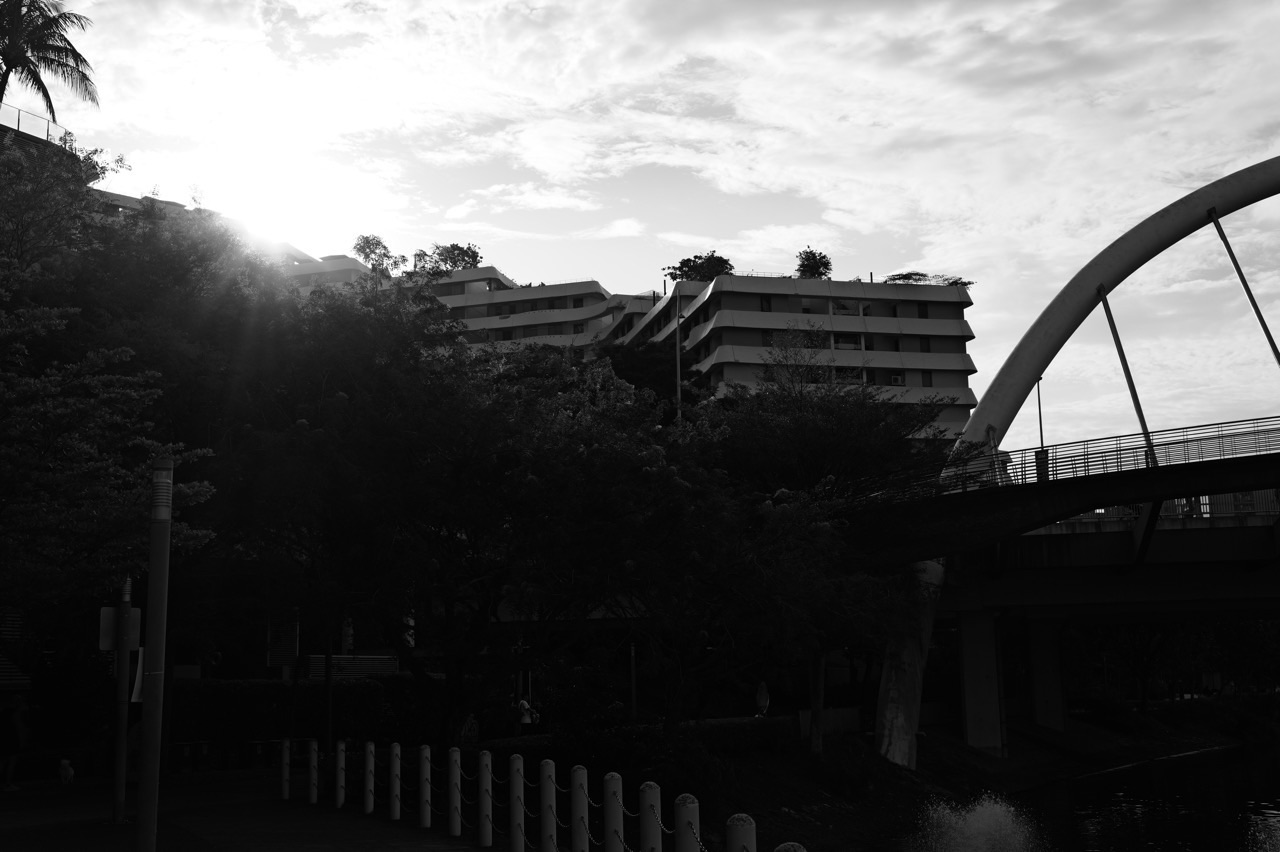
Education in Punggol becomes larger when a family stops treating learning as something that happens only at school or tuition. One of the most useful public learning assets in the town is Punggol Regional Library at One Punggol: a place where reading, research, digital exploration, making and quiet independent work can become part of ordinary family life rather than a special school assignment.
Parents searching for Punggol library, Punggol education, family learning or places to study in Punggol are often solving several problems at once. They may want a child to read more, find reliable information for a project, work somewhere quieter than home, explore a new interest, or learn to choose books without an adult prescribing every title. The educational value lies not in visiting the library once, but in learning how to use it repeatedly.
This article treats the library as the family’s second learning room: not a replacement for school, home or tuition, but a public space that helps children move from assigned work toward self-directed learning. For the wider local system, use the eduKatePunggol Atlas and What about Punggol?.
Why a library matters in a highly structured education system
School is designed around curriculum, progression and assessment. Tuition is usually designed around a defined academic need. Home is where family routines, homework and rest meet. A good public library has a different educational function: it allows the learner to enter knowledge from the side.
A child can begin with a dinosaur book and end up reading about extinction, geology, climate and deep time. A teenager can look for material on artificial intelligence and discover ethics, statistics, energy use and employment. A Primary student researching water can move from a school chapter to maps, ecosystems, engineering and public policy. The library creates intellectual adjacency: one question sits beside another.
This matters because strong learners do not only know more answers. They build more connections. A broad store of background knowledge improves comprehension, vocabulary, explanation and the ability to understand unfamiliar material. The library is one of the few places where that store can grow without every reading choice being attached to a mark.
Punggol Regional Library should be used as infrastructure, not an outing
The most useful shift is psychological. Do not think of the library as an occasional destination for “library day”. Think of it as part of the town’s educational infrastructure, in the same way a family thinks of a supermarket, transport interchange or healthcare facility. If a child knows that the library is a normal place to solve a question, find a book, work quietly or explore a subject, the threshold for independent learning becomes lower.
At One Punggol, Punggol Regional Library is part of a wider integrated community hub. The National Library Board also operates MakeIT at Libraries at Punggol Regional Library, extending the idea of a library beyond reading into making and digital creation. For a child, this is a useful lesson in itself: knowledge is something to read, test, build, communicate and revise.
The family should have more than one reason to visit
| Family need | Library use | Capability being built |
|---|---|---|
| Child says reading is boring | Browse across formats and subjects instead of assigning one “good book” | Interest formation and reading volume |
| School project begins | Find multiple sources and compare what each explains | Research judgment |
| Homework at home is distracted | Use a quiet work interval with a clear task | Attention and task initiation |
| Child has a new curiosity | Follow the question into books, databases or making | Self-directed learning |
| Teenager relies on one search result | Compare source types and publication contexts | Information literacy |
| Family wants a low-cost learning routine | Make borrowing and returning part of the normal week | Consistency and autonomy |
For Primary 1–2: the first goal is comfort around books and information
For younger children, the library should first feel navigable and safe. The parent is building an association: books are available, questions are welcome, choosing is allowed, and reading is something the family does without an examination paper attached.
Let the child choose some books that appear too easy, some that are highly visual and some that are simply interesting. Reading volume matters. Re-reading matters. Being able to finish a book matters. If every library selection is optimized for difficulty, the family can accidentally turn voluntary reading into another performance test.
At this stage, a parent can add one small habit: after reading, ask the child to show one interesting thing rather than give a formal summary. “Show me the funniest page,” “Which animal surprised you?” or “What would you want to know next?” keeps meaning at the centre.
For Primary 3–4: begin teaching how to follow a question
Primary 3 and Primary 4 are useful years for moving beyond “find a book” toward “find an answer”. A question such as why bridges have different shapes can lead to books on structures, forces, materials and famous bridges. A question about mangroves can lead to habitats, roots, coastal protection and food webs.
The parent’s role is not to answer first. Help the child turn a vague curiosity into two or three searchable words, then look across more than one source. The educational gain is not only the information found. The child is learning that questions can be decomposed, sources can disagree in emphasis, and understanding is assembled rather than downloaded whole.
That habit supports school work across English, Mathematics and Science without turning the library into a tuition centre.
For Primary 5–6: use the library to build background knowledge before PSLE narrows attention
Upper-primary years naturally bring more examination pressure. That makes broad reading more important, not less. Comprehension passages assume knowledge of the world. Composition improves when a child has observed more places, situations, motives and consequences. Science explanations become easier when classroom ideas connect with wider examples.
A practical upper-primary routine is to keep one reading lane outside the syllabus. The child might follow space, design, animals, history, transport, architecture, psychology, sport, food science or technology for several weeks. Depth creates vocabulary and conceptual networks that disconnected “general knowledge” snippets do not.
The Primary Pathway explains the wider progression toward PSLE. The library’s role is to prevent preparation from shrinking education into only what is immediately examinable.
For Secondary students: the library can become a rehearsal space for independent study
Secondary education asks the learner to manage more subjects, teachers, deadlines and sources. A library visit can therefore become less parent-led. The student should arrive with a defined purpose: finish a reading, compare sources, plan an essay, solve a problem set, research a question, or review notes without the normal distractions of home.
The important skill is task definition. “Study Science” is weak because it does not tell the learner what completion means. “Review the electricity chapter, retrieve the key relationships without notes, then correct the three questions I missed” is operational. A public study space cannot create focus for the learner, but it can make the cost of distraction more visible.
See the Secondary Pathway for the larger transition. The library can support that transition by giving the student a place to practise working without constant adult supervision.
Do not confuse quiet with learning
A child can sit silently in a library for two hours and learn very little. A teenager can highlight pages, copy notes or keep a textbook open while attention drifts. The educational question remains the same as at home: what changed because this session happened?
Use outputs that reveal thinking. Can the learner explain the idea without the source open? Can they write a short answer from memory? Can they compare two explanations? Can they formulate the next question? Can they return to a problem after a break and still solve it? These checks distinguish exposure from learning.
MakeIT adds a second meaning to literacy
Modern literacy includes more than reading print. Children increasingly need to understand how ideas move between text, data, images, physical objects and digital tools. The National Library Board’s MakeIT spaces give families a public route into making, prototyping and creative technology without requiring every household to own every tool.
The deeper educational opportunity is not the machine. It is the design cycle. A learner forms an intention, chooses a tool, encounters constraints, makes something, sees what failed, modifies the plan and tries again. That loop—idea, attempt, feedback, repair—is also the core of strong academic learning.
Parents do not need to convert every making session into a STEM lesson. It is enough to ask afterwards: What were you trying to make? What went wrong? What did you change? What would you do differently next time? The child is learning to treat failure as information rather than verdict.
Teach children to judge sources, not merely find them
The internet has made finding information easy and judging it more important. A student researching a school project can now receive a confident answer in seconds. That convenience makes source judgment an educational necessity.
A simple family framework works across ages. Ask: Who produced this? Why was it produced? When was it updated? What evidence does it show? Can another credible source confirm the important claim? For current Singapore education matters, families should prefer official sources for dates, rules and policy, then use explanatory sources to understand implications.
This distinction is especially important for time-sensitive topics such as admissions, examination arrangements and school programmes. The library habit should not be “find something that says the answer”. It should be “find the strongest available source for the kind of answer I need”.
A library visit can be short and still matter
Families often imagine that a worthwhile visit requires a long uninterrupted afternoon. That makes the habit fragile. A twenty- or thirty-minute stop to return books, choose two new items and answer one question can be more educationally powerful over a year than a rare three-hour visit.
Frequency reduces friction. Children learn where things are, how borrowing works, how to search, how to ask staff for help, and how to make choices. Familiarity gradually transfers control from the parent to the learner.
The family borrowing rule: one safe choice, one stretch choice, one curiosity choice
A simple borrowing pattern can prevent two common problems: choosing only what is already familiar, or choosing only what an adult considers improving. Let the child take one safe choice they are confident they will enjoy, one stretch choice that is slightly harder or unfamiliar, and one curiosity choice that follows a question or obsession of the moment.
There is no need to enforce this mechanically. Its value is in balancing pleasure, challenge and discovery. Over time, parents can observe which subjects produce sustained attention without being assigned. That information matters because genuine interest is one of the strongest engines for voluntary practice.
Homework at the library: use it selectively
The library can be useful when home contains unavoidable distraction or when a student needs a clear transition into focused work. But moving homework to a library does not solve a weak task system. The learner still needs a defined task, necessary materials, a reasonable stopping point and a way to check the work.
A good session begins before arrival: “I will complete questions 1–12, mark the ones I cannot do, and spend ten minutes correcting errors.” A weak session begins with “I will see what I can study.” Specific work reduces decision fatigue and makes it easier to stop when the purpose has been achieved.
How this fits with tuition
Tuition and the library solve different problems. Tuition is useful when a learner needs diagnosis, explanation, guided practice, feedback or examination calibration. The library is useful when the learner needs access to information, reading volume, independent work, exploration and a public place to pursue questions.
A healthy education system does not ask one service to do everything. If a child needs a teacher, use teaching. If the child needs to practise independently, create independence. If the child needs broader knowledge, widen reading. If the child needs rest, protect rest. The family’s skill is choosing the correct tool for the actual problem.
A four-visit starter sequence for Punggol families
- Visit one: orientation. Explore without a heavy task. Let the child learn the space and borrow something enjoyable.
- Visit two: one question. Arrive with a simple question and find two different sources that help answer it.
- Visit three: one independent task. The child completes a short piece of schoolwork or reading while the parent steps back.
- Visit four: one self-chosen project. Follow an interest, make something, research further, or plan what to learn next.
The sequence is deliberately modest. The goal is not to create another programme. It is to teach the child how to use a public educational resource without requiring the parent to design every learning experience.
Frequently asked questions
Is Punggol Regional Library useful if my child already reads at home?
Yes. The additional value is range, discovery, research practice and increasing independence. A home collection is valuable, but a library exposes the learner to far more adjacent subjects and formats.
Should I choose all my child’s books?
No. Parents can guide, but ownership matters. A child who learns to choose, abandon, compare and return to books is learning how to manage attention and interest, not merely how to comply with a reading list.
Can the library replace tuition?
Not when the problem requires skilled diagnosis or teaching. It can, however, reduce unnecessary dependence by giving students a place to read, research and practise independently after teaching has occurred.
How often should a family visit?
Choose a frequency the household can sustain. Regular short visits are more useful than an ambitious routine that disappears after two weeks. The educational effect comes from familiarity and repeated use.
What should a teenager do there besides homework?
Read outside the syllabus, compare sources for a question, explore a possible field of study, plan an essay, build a project, or use a focused interval to practise a difficult subject independently. Secondary education should gradually widen beyond teacher-assigned tasks.
The quiet advantage of a second learning room
A library does not promise marks. That is part of its value. It gives families a place where the child can learn without every minute being organised around assessment. The habits formed there—choosing, reading, searching, judging, making, concentrating and returning—are slower to measure but durable.
For Punggol families, the opportunity is unusually practical because the library sits inside the town’s everyday civic life. The goal is not to visit more places. It is to teach children that when they do not know something, there are public systems they can enter, questions they can refine, sources they can examine and work they can continue on their own. That is education becoming independence.
Use the library in four different learning modes
A second learning room is most useful when the family knows what kind of learning the child is trying to do. The library can support reading, research, quiet independent work and exploration, but those modes need different behaviour and materials.
- Reading mode: choose, read and follow curiosity without turning every book into an assignment.
- Research mode: begin with a question, compare sources and record useful evidence.
- Deep-work mode: bring a defined task, reduce distractions and use the quiet environment deliberately.
- Exploration mode: browse beyond the syllabus and let unfamiliar topics widen the child’s world model.
The child should know which mode they are entering before the visit becomes a vague instruction to “go study at the library”.
Build independence through the borrow–use–return loop
Library independence is more than being allowed to visit alone. The student should be able to choose material sensibly, care for it, use it for the intended learning job, return it on time and close the household loop afterward.
The Punggol Library Book System provides the practical object flow. This page owns the larger educational question: what capability should the library make possible?
Use the library to reduce dependence on adult prompting
A strong learner can eventually enter the library with a question, locate a useful source, decide whether it is relevant, extract what matters and return home with a clearer model. That sequence is a form of independent learning that no worksheet can fully simulate.
Parents can support the early stages by helping the child frame the question. Over time, the learner should need less adult direction.
Teach source quality gently and early
Younger children can begin by noticing who produced a book or information source and whether it matches the question. Older students can compare publication date, author, institution, evidence, references and whether the source is primary, secondary or interpretive.
The library becomes more powerful when the child learns that information is not all equal simply because it is printed or searchable.
Do not let the library become a second tuition centre
If every visit is filled with extra worksheets, timed practice and parent supervision, the family may lose one of the library’s greatest educational functions: independent curiosity and self-directed focus.
Formal tuition has a diagnostic and instructional role. The library should remain a place where the child can practise, research, read and extend learning without every minute being teacher-led.
Use one research question per visit
When the family wants a more structured visit, keep the research job narrow. One question is enough: how did Punggol change, how does a transport system work, what is a floating wetland, why do some materials conduct electricity, or how does a historical event connect to Singapore?
The child can find one or two useful sources, record the answer and note what remains uncertain. This builds research discipline without creating a large project every weekend.
Use the library as a transfer environment
A skill learned in tuition or school should eventually survive in a quieter independent environment. Can the child plan an essay without a tutor present? Can they retrieve a Mathematics method? Can they read a difficult paragraph, mark uncertainty and continue? Can they organise a project using only the assignment brief?
The library is useful because it removes some home distractions while also removing the tutor’s immediate support.
Build a family-library handover that gets lighter with age
For younger children, parents may choose books, manage returns and sit nearby. Upper-primary students can increasingly choose, borrow, return and complete one independent task. Secondary students should be able to plan the visit, manage materials and leave with a clear output.
The handover is successful when the library remains useful even as parent involvement decreases.
Use one exit question
Before leaving, ask: “What is clearer now than when you arrived?” The answer might be a finished chapter, a solved problem, a source discovered, a project outline or simply a better question.
That small reflection turns the visit into evidence of learning without demanding a worksheet or formal assessment.
For the broader local network, continue through Educational Field of Punggol or return to the eduKatePunggol Atlas.
Explore the Punggol education and town-life library for related guides.


