
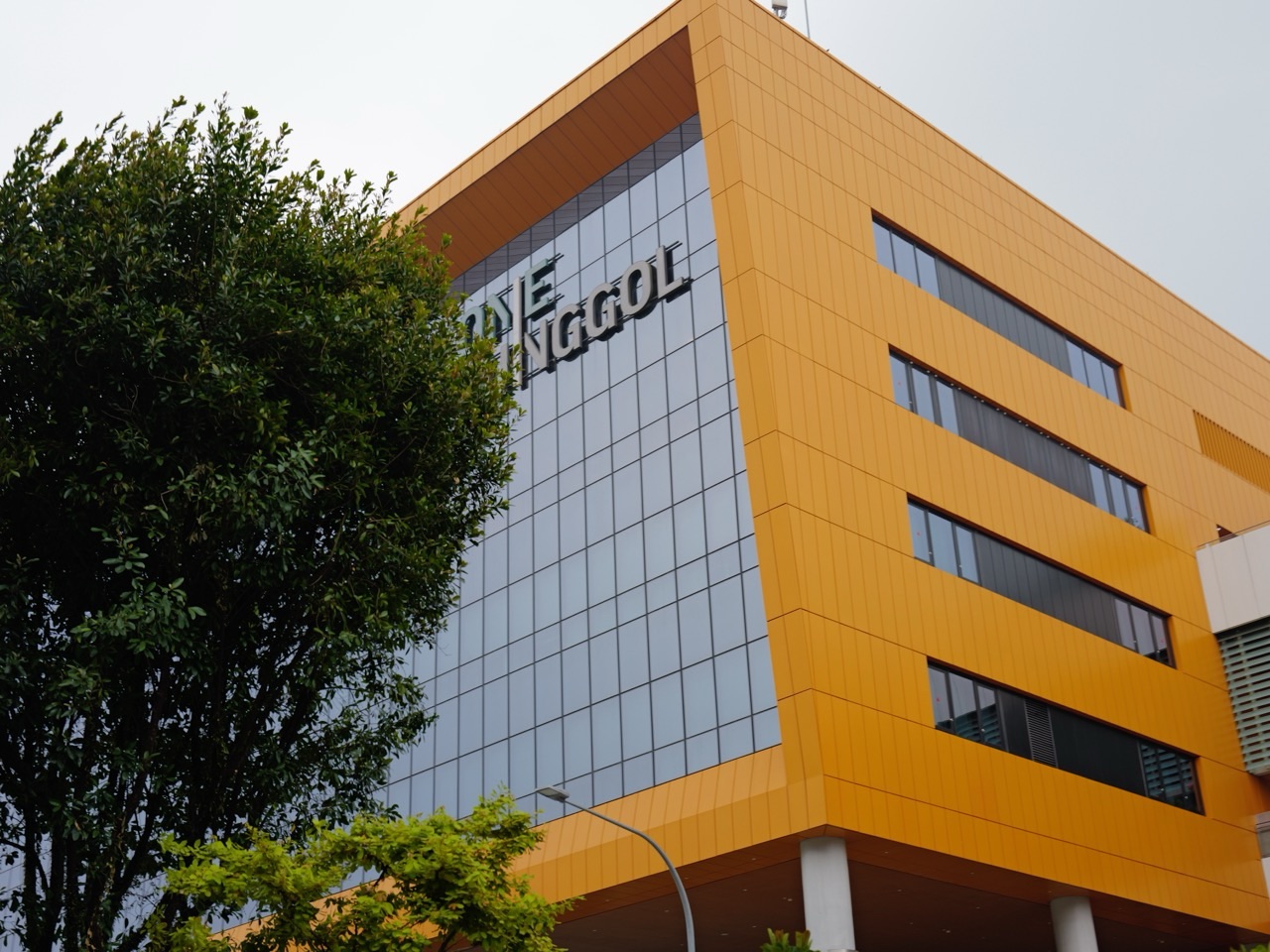
Where can you study in Punggol? For sustained, quiet revision, start with the Level 3 Study Zone at Punggol Regional Library, One Punggol, 1 Punggol Drive. NLB lists the Study Zone as open 9am–10pm daily, including public holidays, with bookable seats and separate access via One Punggol Lift Lobby B outside ordinary library hours. The wider library has its own co-working area, Teenspace, nonfiction collections, multimedia stations and MakeIT for different kinds of learning. For a shorter coffee-and-notes session, compare Oasis Terraces, Waterway Point or Punggol Coast Mall, but cafés do not guarantee desks, Wi-Fi, sockets or permission to study for hours.
This guide covers fourteen named study and learning settings, grouped by purpose and neighbourhood. Several are facilities inside one regional library, not fourteen separate buildings. The useful answer is to show the real choices without ranking or pretending that a coffee counter is equivalent to a dedicated library desk. Each option explains its best use, limitations, transport and the correct source for changing arrangements.
Updated for October 2026: The main Punggol Library normally operates 10am–9pm and has different public-holiday arrangements from its Level 3 Study Zone. NLB’s Comics & Games Library at Punggol Coast Mall is intended for reading and games, not silent examination revision. Its node at SAFRA Punggol was advertised for a period ending 31 October 2026, so its continued availability must not be assumed after that. An older NLB node at The Cove, Waterway Point, was advertised only until September 2026. School and SIT campus facilities have their own eligibility rules and must not be described as unrestricted public study rooms.
Find the right Punggol study setting in seconds
Choose the work before choosing the building. A student memorising Biology definitions needs an environment very different from a team recording a project discussion. A teenager reading graphic novels can learn a great deal in an enjoyable social space without requiring absolute silence. An adult making a phone call or using an online meeting needs a place where conversation is permitted. These choices are organised as a practical directory, not a popularity contest.
| Study or learning setting | Where | Suitable task | Important boundary |
|---|---|---|---|
| Punggol Regional Library — Level 3 Study Zone | One Punggol | Focused revision and extended independent study | Free public-library study seat; check booking rules |
| Punggol Regional Library — Co-working Zone | One Punggol | Adult learning, planning and permitted collaborative work | Check current seating and any reservation conditions |
| Punggol Regional Library — Teenspace | One Punggol | Reading, exploring interests and age-appropriate projects | Free library environment; programmes may have conditions |
| Punggol Regional Library — Nonfiction and Reading Collections | One Punggol | Research, purposeful reading, source comparison | Free browsing; borrowing eligibility and limits apply |
| Punggol Regional Library — Multimedia and Printing Stations | One Punggol | Digital research, print-release needs and accessing NLB resources | Check session limits, printing fees and access |
| Punggol Regional Library — MakeIT Learning Sessions | One Punggol | Design thinking, prototypes and applied projects | Equipment sessions may require eligibility, registration and booking |
| Comics & Games Library — Punggol Coast Mall | Punggol Coast | Graphic-novel reading, visual literacy and group games | Free public library access; entry credentials apply |
| Rise & Grind Coffee — Oasis Terraces | Oasis Terraces | Brief laptop checks, reading over coffee and permitted light work | Food and drinks purchased; long-stay use not guaranteed |
| Anna’s Sourdough — Oasis Terraces | Oasis Terraces | Reading and small planning conversations during a meal | Paid; booking and seating terms belong to restaurant |
| Starbucks — Waterway Point | Punggol Town Centre | Brief coffee-and-notes sessions near the MRT | Purchase required; laptop and table rules not guaranteed |
| Cedele — Waterway Point | Punggol Town Centre | Reading during a snack or brief planning meeting | Paid food and beverages; seating uncertain |
| Café&Meal MUJI — Punggol Coast Mall | Punggol Coast | A short planning session over food on the Coast side | Paid meals; café seating policies apply |
| Starbucks — Punggol Coast Mall | Punggol Coast | A brief reading or meeting stop for Digital District visitors | Paid; no guaranteed seats or sockets |
| SAFRA Punggol — NLB Reading Nodes (time-limited) | SAFRA Punggol | Casual reading while visiting SAFRA; check date before going | Check access and SAFRA membership conditions for Level 4 |
Need the fastest answer? Use the seat-booking guide for a silent desk, the Punggol Regional Library guide for library zones, or the Punggol cafés guide when the plan includes paid dining. For a group reading-and-games outing at Punggol Coast, follow the Comics & Games Library guide. No one needs to navigate fourteen settings to complete one assignment; choose the actual task and the nearest legitimate space.
The study settings and when they actually work
Study spaces inside Punggol Regional Library
Punggol Regional Library — Level 3 Study Zone
Where: 1 Punggol Drive, Punggol Regional Library Level 3. Type: Dedicated bookable study seats. Cost or access: Free public-library study seat; check booking rules. Best use: Focused revision and extended independent study.

Choose this for genuine desk-based study. Punggol Regional Library’s Level 3 Study Zone is the clearest local answer for a student who needs to sit down and finish demanding work. NLB’s Punggol materials describe more than 80 reservable seats, multimedia stations and a print-release point. Unlike a café, a study zone exists precisely so people can read, solve problems and write without needing to purchase another drink. It is the first option for two-hour Mathematics practice, Secondary examination revision, a carefully organised essay or an adult learner’s scheduled reading. The intended use supports concentration, but a quiet environment is still shared and must be respected.
Do not confuse the opening hours. The Level 3 Study Zone is listed as open 9am–10pm, even on public holidays under NLB’s published arrangement. The main public-library collection ordinarily operates 10am–9pm, with different public-holiday rules and other service exceptions. Outside the main library’s hours, NLB directs Study Zone visitors to Level 3 via One Punggol Lift Lobby B. A person arriving at a closed ground-floor entrance should not assume the Study Zone has also closed. Save the access directions and check any newer special notice before travelling.
A seat booking is part of the plan. NLB’s social-story guidance explicitly tells visitors to reserve a Study Zone seat through its seat-booking system before arriving. It is not a guaranteed walk-in service, and a successful booking may have arrival, duration or cancellation conditions that evolve. Keep the confirmation, know when the session starts and allow enough time to locate the entrance. For parents of teenagers travelling alone, agree on one pickup point and avoid making the child wait outside without a clear arrangement. Check the local seat-booking walkthrough for the detailed process rather than using a historical screenshot.
Bring the correct materials. A student planning algebra should have the textbook, working paper, pen and a small set of questions that require actual reasoning. Someone editing an essay needs the assignment brief and a method for checking the argument, not simply a laptop and headphones. Charge devices before leaving and follow the library’s food, drink and power-use rules. If the student cannot explain what they will finish during the booking, the problem is probably not the seat. Prepare the task first; let the quiet desk support it.
What if the Study Zone is full? First check whether another session is bookable or whether the task can be shortened and done at home. Do not assume the adjacent co-working zone has interchangeable availability or noise rules. If the student is already at One Punggol, a reading task may fit a general library area, but silent written revision should not spill into a corridor or stair landing. A fallback is only useful if it genuinely supports the work; a crowded café should not be presented as automatically equivalent to a booked study seat.
Check before visiting: official venue or operator information. More local detail: the related eduKatePunggol guide.
Punggol Regional Library — Co-working Zone
Where: 1 Punggol Drive, Punggol Regional Library Level 4. Type: Library co-working environment. Cost or access: Check current seating and any reservation conditions. Best use: Adult learning, planning and permitted collaborative work.
Choose this when the task is not entirely silent. The Level 4 Co-working Zone is a different feature from the Level 3 Study Zone. NLB’s library materials identify it as a resource for adults and working learners, offering a flexible working environment within the regional library. It may be suitable for research planning, professional reading or individual work with occasional conversation when the zone’s current etiquette permits. However, the existence of a co-working area does not mean every table is reserved for your group or that online meetings, video calls and discussions are unrestricted.
Ask whether you need a seat or a room. A student preparing a presentation may want to work independently on slides and quietly check ideas with a partner. A team rehearsing a noisy debate needs a different setting entirely. Review what conversations, meetings, devices and reservations the zone currently supports, and choose a place matched to that rule. If an activity requires private information to be discussed, a shared library table may be inappropriate even when it is comfortable. Confidentiality and consideration for other users matter.
Keep the time promise. Shared desks are useful public resources, and they are not the same as renting a serviced office for the whole day. If a reservation or occupancy limit applies, respect it. Work in focused blocks, clear space when finished and avoid spreading bags or documents across seats others need. An adult studying part-time may find this setting convenient after work, especially because One Punggol has food and transport nearby. Still, check the day’s closing or special programme notices before choosing it for a late-night deadline.
Use the space as a problem-solving environment. A good co-working visit can begin with a clear question: which three research sources disagree, what evidence would settle the issue, or what is the next milestone in a project? Organise notes so another session can begin without retracing everything. A quiet library setting can improve attention, but good work still requires a plan, boundaries and permission to use the space as intended.
Check before visiting: official venue or operator information. More local detail: the related eduKatePunggol guide.
Punggol Regional Library — Teenspace
Where: 1 Punggol Drive, Punggol Regional Library Level 3. Type: Youth-oriented reading and learning space. Cost or access: Free library environment; programmes may have conditions. Best use: Reading, exploring interests and age-appropriate projects.
Choose this when learning starts with curiosity. NLB designed Teenspace for visitors aged 13 to 17, with materials and youth-focused experiences across literature, culture, sustainability and other interests. That makes it an encouraging choice for a student who wants to discover a new book, explore an idea related to school or find inspiration for a personal project. A teenager who has always thought a public library is for younger children may appreciate a place where the collections speak more directly to adolescent interests.
It is not the same as a silent desk. The presence of the word “teen” in the space name does not guarantee a reserved seat, a quiet cubicle or a workstation where nobody will speak. If a Secondary student is preparing for an examination that requires uninterrupted written practice, the Level 3 Study Zone remains the more suitable destination after the relevant reservation. Teenspace works especially well as a pre-study or post-study stop: browse materials, identify an interesting title, then begin focused work in the properly designated area.
Try a reading-to-writing exercise. A teenager could find an article or nonfiction book on a topic they enjoy, read a small section, write the central claim in one sentence and then identify what evidence the author used. Another could compare two versions of a story and explain why the narrator’s perspective changes the effect. Those are valuable English and Humanities skills, but they feel more self-directed because the student owns the choice of material.
Support independence without handing over every responsibility overnight. For a first independent visit, agree on how to enter, where to keep belongings, whether the student has enough money for a meal and how to contact a parent if plans change. The library is a public place, not a substitute for an assigned caregiver or a school attendance system. Allow freedom within the student’s readiness and follow the venue’s age guidance and behaviour policies.
Check before visiting: official venue or operator information. More local detail: the related eduKatePunggol guide.
Punggol Regional Library — Nonfiction and Reading Collections
Where: 1 Punggol Drive, library reading and nonfiction areas including Level 4. Type: Library collection and suitable reading areas. Cost or access: Free browsing; borrowing eligibility and limits apply. Best use: Research, purposeful reading, source comparison.
Choose this for the research before the revision. A person who wants to understand a difficult concept may need good books and sources more than a longer session at a desk. Punggol Regional Library’s adult and teenage nonfiction areas, along with World and Us Zone, Singapore literature resources and digital collections, can help readers investigate a topic from more than one angle. NLB’s library fact sheet describes specialist areas including Singaporium and the Lens of Literature. They enrich the learning environment without becoming a promise of dedicated all-day study seating.
Build a useful mini-reading project. Suppose a Secondary student is studying the water cycle, sustainability or Singapore’s urban planning. They could compare a science textbook with a general-audience environmental book and an NLB reference item. The aim is to separate explanation, evidence and interpretation, not to copy entire paragraphs. A source’s authority depends on its author, date, evidence and relevance. The library is valuable because the student can step beyond an examination worksheet and understand the wider subject.
Borrowing and reading are different activities. Ordinary browsing may be allowed without completing the same steps as physical borrowing. Borrowing requires eligible membership and available loan quotas, while digital material has its own rules. Check whether a reference item may leave the building, and do not carry unborrowed library books into a café without permission. When the child is finished, return materials properly so another visitor can find them. The real objective is to leave with better understanding, not merely a taller stack of books.
Respect the shape of the space. A general reading area may become busy with families, exhibitions, tours or visitors looking through shelves. It is not a substitute for a timed Study Zone reservation during examination season. If someone needs a guaranteed quiet desk, they should plan that separately. A browsing session can still be highly productive: arrive with three questions, search the catalogue, evaluate a manageable number of sources and record the next reading step.
Check before visiting: official venue or operator information. More local detail: the related eduKatePunggol guide.
Punggol Regional Library — Multimedia and Printing Stations
Where: 1 Punggol Drive, NLB multimedia stations on Levels 3 and 4. Type: Library research and document-service stations. Cost or access: Check session limits, printing fees and access. Best use: Digital research, print-release needs and accessing NLB resources.
Choose this when the task needs a service, not just a seat. NLB’s Punggol social-story document identifies multimedia stations on Levels 3 and 4 and print-release points nearby. It describes using NLB’s electronic resources, reading eNewspapers and eMagazines, browsing the internet and releasing prepared documents for printing. That is a specific function. It is not proof that every computer is available for unlimited personal gaming, video calls or ordinary office work for hours.
Prepare digital documents before travelling. A student who needs a worksheet or reference page should check the accepted file format, print submission process, access conditions and charges. Print only what is useful; a thoughtfully chosen set of pages is generally more effective than a thick pile of material nobody can review properly. If the student needs to read a journal article online, bring a citation method: note the title, author, publication date and page or URL so the source can be evaluated again later.
Understand the difference between digital access and open Wi-Fi. A library multimedia station is a managed NLB resource, while wireless internet availability and personal-device use follow separate rules. Do not assume it provides unrestricted access to every platform or subscription service. Likewise, finding one socket in a picture does not create an entitlement to use it. Students who depend on a particular application or authenticated account should check compatibility before scheduling an urgent digital assignment there.
Be considerate with private material. Do not leave personal passwords, bank information or school accounts signed in on shared computers. Remove personal documents as required and collect printed pages promptly. Research services are valuable partly because many people share them; respecting security and session limits keeps them useful. This can be a successful quick visit even if it does not count as a long study session.
Check before visiting: official venue or operator information. More local detail: the related eduKatePunggol guide.
Punggol Regional Library — MakeIT Learning Sessions
Where: 1 Punggol Drive, Punggol Regional Library Level 4. Type: Booked making and digital-fabrication learning. Cost or access: Equipment sessions may require eligibility, registration and booking. Best use: Design thinking, prototypes and applied projects.
Choose this if “studying” means making something that can be tested. MakeIT at Punggol Regional Library is not simply another quiet study room. NLB lists equipment such as 3D printers, 3D pens and sewing machines for supported self-service sessions, with particular booking and verification steps. The wider MakeIT programme publishes Wednesday–Sunday operating hours from 12pm to 8.30pm, with closures on Mondays, Tuesdays and public holidays. Equipment availability depends on the relevant session rather than a student turning up and taking a machine.
A good project begins on paper. For example, a student creating a small pencil holder can first sketch the dimensions, estimate how many pens it must hold, and ask whether the material and shape are suitable. The real educational gain lies in the design decision, the test and the revision after an imperfect outcome—not the novelty of a 3D printer. Parents can help children separate what they want to build from what the equipment can actually do safely and within the booked time.
Respect age guidance and equipment safety. Some sessions and machines have prerequisites, minimum ages, supervision, training requirements or identity verification. NLB’s booking page notes Singpass verification for relevant MakeIT self-service appointments. Always use the latest official booking conditions and follow staff or equipment instructions. The equipment is not a substitute for qualified supervision or a school practical lesson where hazardous materials or specialist methods are involved.
When does this belong in a study plan? It is a valuable addition when schoolwork requires applied design, prototyping, coding or making, but it should be booked as its own activity. A student preparing a Mathematics examination may be better off at a quiet desk. A student working on a Design and Technology concept may gain more from a carefully planned hands-on session. Let the question decide the place.
Check before visiting: official venue or operator information. More local detail: the related eduKatePunggol guide.
Learning and café choices on the Punggol Coast side
Comics & Games Library — Punggol Coast Mall
Where: 88 Punggol Way, #01-140, Punggol Coast Mall Tower 7. Type: Self-service reading and tabletop games. Cost or access: Free public library access; entry credentials apply. Best use: Graphic-novel reading, visual literacy and group games.

Choose this for reading and social learning, not silence. NLB’s Comics & Games Library is at 88 Punggol Way, #01-140, in Punggol Coast Mall Tower 7 near Punggol Coast MRT. It is a self-service pop-up library created with JTC and games company Origame. NLB describes more than 7,000 comics, game-themed books, graphic novels and board games, plus tables for playing and relaxing. That offers a different kind of learning opportunity from a desk designed for serious examination practice. A student can become interested in stories, artwork, strategy and game rules without pretending the venue is a silent academic library.
Pay attention to entry conditions. NLB advertises 10am–10pm daily opening, including public holidays, but visitors may need an accepted library-compliant identification card, NLB eCard or QR day pass generated under its current arrangements. Borrowing and on-site use are not necessarily the same, and the self-service access model means you should not assume the presence of a staff counter to solve every issue immediately. Review the local entry and visitor guide and the current NLB node listing before bringing a group.
Good projects here have clear boundaries. A Primary student could choose a graphic novel and explain how panels show time passing. A Secondary student could examine how dialogue and framing reveal character. Friends can choose a board game, read the rules accurately and practise thinking ahead while respecting turns. These are educational experiences, but they do not magically complete the Mathematics, Science or English homework waiting at home. If someone needs to sit in silence solving past-year questions, reserve a proper study area instead.
Do not treat game tables as unrestricted group-project rooms. A table set up for board games may have a specific intended purpose and a different noise level. Large project groups, loud debates or video calls could disturb other visitors. If the group needs a formal project meeting, check a legitimately bookable room or collaborative venue rather than commandeering a games surface. The lesson is to match the environment to the task, not to stretch the definition of a public library until every activity becomes acceptable everywhere.
Check before visiting: official venue or operator information. More local detail: the related eduKatePunggol guide.
Cafés for short work around Oasis LRT
Rise & Grind Coffee — Oasis Terraces
Where: 681 Punggol Drive, #01-06, Oasis Terraces. Type: Paid café and full brunch. Cost or access: Food and drinks purchased; long-stay use not guaranteed. Best use: Brief laptop checks, reading over coffee and permitted light work.
Choose this for a café break that may include a little work. Rise & Grind is a real operating café at Oasis Terraces, #01-06, by Oasis LRT. Its official site publishes a café and dining menu and separate weekday and weekend opening hours. It can be a pleasant setting for reviewing notes, editing an essay or reading while having a proper meal. A café has customers coming for food first, so it should never be advertised as an unrestricted public desk or a free place to spend four hours with a laptop. Seating and device policies are the operator’s decision.
Distinguish a short review from a long revision session. Checking a completed essay for clarity while enjoying a drink might fit a table during a calm period. Spreading open textbooks over a large table through lunch service is a different matter. If the café is busy, the courteous approach is to finish or move to a venue designed for study. Ask before using a power socket or taking a call, and do not present Wi-Fi as guaranteed just because a directory tags the venue as suitable for laptops.
Use the Oasis location to save travel time. A student already around Oasis LRT may prefer to finish a small revision task near home rather than spend more time on transport than on learning. An accompanying parent can enjoy brunch while a teen reads a book, subject to appropriate supervision and agreed expectations. But an appointment at nearby health services may have its own timing or preparation requirements. Keep clinical instructions separate from café plans and do not use an errand as a reason to overload a child after school.
Confirm current hours and menu. Rise & Grind’s official contact page lists 681 Punggol Drive and its business schedule. Prices, available tables, food preparation and booking arrangements can change. When a group wants an actual project discussion, contact the operator first or choose a venue that explicitly permits meetings. A study guide should never claim “unlimited Wi-Fi and sockets” without the café’s own confirmation.
Check before visiting: official venue or operator information. More local detail: the related eduKatePunggol guide.
Anna’s Sourdough — Oasis Terraces
Where: 681 Punggol Drive, #01-04, Oasis Terraces. Type: Bakery café and sit-down meals. Cost or access: Paid; booking and seating terms belong to restaurant. Best use: Reading and small planning conversations during a meal.
Choose this if food and conversation are the main occasion. Anna’s Sourdough at Oasis Terraces focuses on bakery and café meals, with the operator describing sourdough breads, pastries and a wider dining menu. That makes it useful for a parent and teenager who want a relaxed conversation about schoolwork or for an adult reviewing a few written notes over coffee. It is not reasonable to treat its existence as proof of a quiet, designated student workroom. A restaurant table is there for dining and guests must follow the business’s current seating and laptop practices.
A thoughtful planning conversation can be productive. For example, a Primary 6 pupil could bring a short notebook listing strengths in English, Mathematics and Science, then discuss with a parent which one habit needs attention this week. No large pile of textbooks is necessary. The point is to turn vague worry into a small actionable plan. Later, actual independent practice may work better at home or a booked library desk. This division makes a café visit comfortable for everyone.
Check dietary, age and booking needs directly. If a family requires a particular certified diet or allergen avoidance, verify the current establishment and individual dishes using the relevant official source rather than relying on a reviewer’s old menu. The café’s operator site is useful for location and reservation information. Choosing a suitable meal helps an outing, but the study benefit still depends on a clear conversation and follow-through afterwards.
Where it fits in Punggol: Oasis Terraces is a neighbourhood centre, not a destination that every learner should cross town to reach. It may work well for families living nearby who already have errands at the same centre. Families on the Northshore side may save time by choosing a nearer option or the dedicated Punggol Library instead. Convenience is a real advantage only when the whole journey remains manageable.
Check before visiting: official venue or operator information. More local detail: the related eduKatePunggol guide.
Short café study breaks near Punggol MRT
Starbucks — Waterway Point
Where: 83 Punggol Central, Waterway Point West Wing, #01-67. Type: Paid coffeehouse. Cost or access: Purchase required; laptop and table rules not guaranteed. Best use: Brief coffee-and-notes sessions near the MRT.

Choose this if the main advantage is where everybody meets. Waterway Point’s own August 2026 promotion identifies a Starbucks outlet at #01-67 in the West Wing, close to Punggol MRT. It is a practical coffeehouse to investigate for a short conversation, a little reading or a brief check of notes between journeys. The promotion establishes a recent branch location, not a permanent guarantee that the same promotional offer remains active. The café also has another Punggol Coast branch, so always give the exact mall and unit.
The environment may be busy. Waterway Point serves shoppers, families, commuters and friends meeting for meals. Coffeehouse noise is not controlled to a silent-study standard. A student trying to derive an unfamiliar algebra method from first principles may need a more predictable setting. On the other hand, someone reading a short article before a train or checking the final structure of an essay may find the café sufficient, provided its current usage rules allow it and seating is available.
Be courteous with space and purchases. One person’s laptop, bag and multiple notebooks should not occupy a large table needed by a dining group. Ask before using sockets, charging equipment or taking lengthy online calls. The existence of free wireless internet at some public spaces in Singapore does not establish that this café offers a particular service to every visitor. Check the operator’s current conditions if connectivity is essential to your task.
Make the next step easy. If the student finishes a small study goal, Waterway Point’s link to Punggol MRT and nearby food allows a simple return. For a longer, more serious work block, book the Level 3 Study Zone at One Punggol and use the café only before or after. Both places have value; they solve different parts of the same afternoon.
Check before visiting: official venue or operator information. More local detail: the related eduKatePunggol guide.
Cedele — Waterway Point
Where: 83 Punggol Central, Waterway Point West Wing, #01-17. Type: Bakery café. Cost or access: Paid food and beverages; seating uncertain. Best use: Reading during a snack or brief planning meeting.
Choose this when reading accompanies a meal. Cedele’s operator identifies a Bakery Café at Waterway Point, #01-17 in the West Wing. Its bakery-focused offering makes it different from a cafe used chiefly for drink pickup or a full restaurant. A person may enjoy reading a few pages, revising a plan or holding a short conversation while having lunch or tea. None of this establishes that the store provides a laptop policy, power sockets or quiet seating for an entire day.
Light tasks are better suited than lengthy examinations. Checking three paragraph transitions in an English essay or writing a list of topics to revise tomorrow may fit a short visit. Attempting a timed three-hour paper is unlikely to suit the distraction of orders, arrivals and clearing tables. The question is not whether learning can happen with a coffee; it is whether this specific task benefits from the café environment.
For parents and children: a bakery-café stop can be a comfortable chance to talk about school without turning every meal into a lesson. Parents can ask what the child enjoyed learning today, what was confusing and what help would make tomorrow easier. A ten-minute discussion can give direction without demanding a stack of worksheets at the table. Formal practice can happen later where the student has working space and fewer interruptions.
Check the operator page for the outlet. Cake availability, last orders, table capacity and dietary information change. A family travelling to collect a specific order should confirm that before leaving. A study-spot guide should not imply that a bakery serving food has guaranteed silent spaces. The value here is a convenient stop near transport, not a dedicated public workstation.
Check before visiting: official venue or operator information. More local detail: the related eduKatePunggol guide.
Learning and café choices on the Punggol Coast side
Café&Meal MUJI — Punggol Coast Mall
Where: 84 Punggol Way, #01-53, Punggol Coast Mall. Type: Sit-down Japanese-style café. Cost or access: Paid meals; café seating policies apply. Best use: A short planning session over food on the Coast side.
Choose this for a meal and a small learning task. JTC’s Punggol Coast Mall directory lists Café&Meal MUJI at 84 Punggol Way, #01-53. It is a meal-focused venue in Punggol Digital District rather than a purpose-built study room. It may be useful when a student or working adult already has a reason to be in Punggol Coast and wants to review a few notes, discuss a project or make a plan before an appointment. The venue’s food-service role and current rules should be respected first.
Keep the work proportional. A simple outline of an assignment or a fifteen-minute review can be realistic during a meal. Group rehearsals, lengthy video calls or revision requiring total silence may disturb diners and may not be permitted by the operator. Ask before depending on a long stay or power access. The mall directory lists a unit and operating information, but it does not promise all tables are suitable for laptops.
Location detail matters at Punggol Coast. The mall spans different Punggol Way buildings. A classmate arriving at 88 Punggol Way and a parent waiting at 84 Punggol Way may both think they are “at the mall” while standing at different entrances. Give the correct unit, allow time to find it and decide where to meet if the restaurant is full. Do not allow a miscommunication over location to consume the study time.
Prefer a stable desk for deep work. Punggol Coast is developing a university and business ecosystem, but the proximity of SIT and office buildings does not mean their libraries, classrooms and workspaces are public study venues. For serious independent work, NLB’s bookable Study Zone at One Punggol is the more clearly supported public option. The café remains helpful for food and discussion when the operator permits.
Check before visiting: official venue or operator information. More local detail: the related eduKatePunggol guide.
Starbucks — Punggol Coast Mall
Where: 88 Punggol Way, #01-122, Punggol Coast Mall. Type: Paid coffeehouse near Punggol Coast MRT. Cost or access: Paid; no guaranteed seats or sockets. Best use: A brief reading or meeting stop for Digital District visitors.
Choose this for the Coast-side journey, not a supposed ranking. The official Punggol Digital District directory lists Starbucks at 88 Punggol Way, #01-122. It is distinct from the brand’s Waterway Point outlet. Someone who works or studies near Punggol Coast MRT may find a coffee break here more practical than travelling back to central Punggol. A student can read a short passage or discuss project responsibilities if seating and house rules allow, but the space is still a commercial café rather than an academic facility.
Time and noise are variable. A café can feel quiet early and crowded later, and a particular table may be unavailable when you arrive. Never make a high-stakes revision plan depend on occupying a preferred corner for hours without permission. When the student needs to write a long answer or attempt unfamiliar questions, more predictable space is worth choosing. If the task is quick—check a bibliography, send a properly reviewed assignment, or discuss three presentation decisions—a short café visit may be adequate.
Take care with digital tasks. Use a secure connection where appropriate, keep devices charged and do not assume a public power socket can be used. Headphones do not make a noisy video call appropriate in every setting. If the learner needs to complete an online test requiring privacy, uninterrupted access and stable connectivity, choose an approved location that meets the test’s rules; a coffeehouse may be unsuitable.
Make the district part of the experience. The nearby NLB Comics & Games Library can support reading and social learning, while the hawker centre and mall offer food. They do not form a network of guaranteed bookable study stations. A clear plan might be coffee and a short reading task, followed by a proper study session elsewhere. Naming the right venue avoids confusing “nice place to visit” with “appropriate place to work”.
Check before visiting: official venue or operator information. More local detail: the related eduKatePunggol guide.
Time-limited reading at SAFRA Punggol
SAFRA Punggol — NLB Reading Nodes (time-limited)
Where: 9 Sentul Crescent, Level 3 Atrium and Level 4 Members’ Chillax Lounge. Type: Temporary NLB reading nodes, not silent study rooms. Cost or access: Check access and SAFRA membership conditions for Level 4. Best use: Casual reading while visiting SAFRA; check date before going.
Choose this only after confirming it is still operating. NLB’s Nodes listing includes temporary reading locations at SAFRA Punggol: Level 3 Atrium near the entrance and the Level 4 Members’ Chillax Lounge. The advertised run was 1 November 2025 to 31 October 2026, with different operating times for each level. That means this is a useful October 2026 information point but should not be advertised as a permanent facility into November without an extension notice.
A reading node is not an all-day revision seat. The concept is to put curated books or reading opportunities in places people already visit. It may be pleasant for a short browse before a programme or while waiting for another family member. That does not create a guarantee of tables, quiet, electrical sockets, unlimited work time or a bookable examination desk. The Level 4 lounge has membership-related access considerations. Visitors who do not have access should not be told it is automatically an open public workspace.
Plan around the actual reason for visiting SAFRA. A teenager attending a class or a family member using another facility may have enough time for a few pages of reading. A parent can use the node to encourage a reading habit without calling it tuition or study supervision. If the learner needs two hours of uninterrupted practice, reserve the Punggol Regional Library Study Zone instead. A convenient small resource does not have to pretend to be a complete study solution to be useful.
Check the NLB page after October. If the programme ends, other reading opportunities may remain around Punggol, including One Punggol and the Comics & Games Library. Likewise, The Cove at Waterway Point had a separately advertised NLB Node run ending 30 September 2026 and should not be carried into a live October article as a confirmed service. The date is part of the truth.
Check before visiting: official venue or operator information. More local detail: the related eduKatePunggol guide.
The home study desk is the fallback many students underestimate
A guide to places outside home should not pretend that public study is always better. For a student with a usable desk, a stable chair, materials and a reasonable home routine, the most efficient study setting may be home. There is no fare, food purchase, seat queue or time lost hunting for a socket. This is particularly important for shorter learning tasks: a twenty-minute recall exercise can take longer to travel to than to complete. A new environment may provide motivation, but the change itself is not evidence of improved understanding. Choose public study when it solves a real problem, such as repeated interruptions or needing library resources.
A useful home arrangement does not have to look like an expensive study influencer’s setup. It needs enough lighting to read comfortably, space to lay out a page, a chair that supports ordinary posture and a rule for where the phone goes. Ask whether the learner can work for a realistic period without being interrupted by chores, television or repeated questions. If that is not possible, a reserved library seat may add real value. If home is already calm, spending money at a café can be unnecessary and may even make the task harder.
Shared housing creates real compromises. A younger sibling may need space to play, another family member may work shifts, and the dining table may also be used for meals. Rather than demanding absolute silence all day, agree on predictable study blocks and a small signal that the learner needs concentration. Time-limited quiet can be more sustainable than expecting the entire household to accommodate examination revision indefinitely. The student must also learn to pause, move and return to work without losing the plan.
For parents, the right question is whether study becomes more independent over time. A child who can explain what they intend to do, begin without repeated prompting, recognise an error and report what remains unfinished is gaining a useful skill. If a student can only study when someone else constantly supervises, changing to a library may not repair the underlying study habit. Support the habit as well as the place.
Study task diagnosis: decide what the learner actually needs
Before leaving home, ask the student to state the outcome in a sentence. “I am going to study Maths” is a broad intention. “I will solve eight simultaneous-equation questions without the worked solutions, mark the answers and identify which step causes mistakes” is a plan. The second statement immediately tells you what materials to carry, how much working space is needed and whether a silent desk will help. The same rule applies to reading, Science, language revision, design projects and university work.
Separate understanding, practice, retrieval and correction. Understanding means being able to explain the idea and connect it to a familiar example. Practice means applying the idea to questions, sometimes with assistance. Retrieval means attempting to recall or use the knowledge without looking at the notes. Correction means finding why an answer failed, then working through a new example to see whether the error has been repaired. A student who repeatedly rereads beautiful notes can feel busy without strengthening the independent reasoning the assessment requires.
Where does the environment help? A quiet Study Zone is useful when the next step demands working memory and uninterrupted effort. A library collection is useful when the learner needs a better explanation or trustworthy source. A co-working area may help organise a permitted collaborative project. MakeIT supports applied design and fabrication after booking. A café may support a brief conversation or planning session, but cannot be relied on for silent practice. The place should remove a specific obstacle, not become the centre of the activity.
If the learner repeatedly struggles to start even in a quiet room, the problem may be conceptual. For example, algebra can appear impossible when negative numbers or fraction operations are unstable. It may be more effective to revisit a short foundational lesson with feedback than to spend four hours repeating questions without understanding. Likewise, a weak essay may need a clear argument and supporting evidence, not more time at a desk. The best study setting should support the right intervention rather than conceal the actual learning difficulty.
English study: reading, argument and editing without busywork
A strong English study session has more structure than carrying a novel around Punggol. For a reading-comprehension task, choose a passage, read it carefully and explain the main claim in ordinary language. Identify which sentences supply evidence and which rely on interpretation. Only after understanding the passage should the student attempt questions without peeking at a marking scheme. Reading a long article without checking comprehension may improve familiarity, but it does not automatically teach the answer skills required by a school assessment.
Essay writing benefits from two different phases. Planning can be social: a student might discuss possible arguments at home or, where conversation is allowed, in a collaborative space. Drafting is often better in silence because the writer must organise paragraphs, choose examples and maintain a logical thread. Revision asks for another kind of attention. Check whether each paragraph advances the thesis, whether an example proves what the sentence claims, and whether transitions are genuinely necessary. A café may be fine for a short outline, but a bookable library desk is better for sustained drafting.
Vocabulary is most useful when connected to decisions in real sentences. A student can select words from reading materials, note their meaning, register and collocations, then write two original sentences that use them precisely. Learning ten words without the ability to place them in an argument can waste an entire afternoon. For oral communication, the student should practise expressing a reason and example clearly; loud rehearsal in a silent library is inappropriate. Choose a permitted conversational space or practise at home.
An example study plan begins with fifteen minutes reading an unfamiliar article, continues with twenty minutes of evidence annotation, then thirty minutes drafting a short response and ends with fifteen minutes checking the logic. The quality measure is whether the student can explain what improved and transfer the skill to another text, not whether the café or library looked attractive in a photograph.
Mathematics study: where silence supports first-principles thinking
Mathematics requires more than copying correct worked examples. A student may understand an illustration when the steps are visible but fail to recognise the same idea inside a new question. This is why a focused study environment can matter. The learner should read the problem, identify the unknown, choose a method, explain why the method is valid and then work independently. Interruptions can break a multi-step chain of reasoning. A booked Study Zone seat supports that effort, but does not replace understanding.
Consider an algebra question such as (3(x-2)=15). A pupil who remembers only a slogan like “move the number to the other side” may reach the answer for the wrong reason. The correct reasoning is to preserve equality: divide both sides by 3 to obtain (x-2=5), then add 2 to both sides to obtain (x=7). Substitution checks the result because (3(7-2)=15). A quiet desk helps the student articulate each step without distraction. The important gain is knowing why the operation works.
When a question goes wrong, keep the original attempt visible. Was the mistake in reading the problem, choosing the method, transforming an equation, using arithmetic or interpreting the final answer? These failures need different corrections. A student who makes repeated sign errors may benefit from a short directed-number review. Another who cannot begin a word problem may need to translate the language into a mathematical relationship. Working on the real break point is more useful than completing another page of near-identical worksheets.
For timed practice, choose a small enough set to finish, check and review. A learner who answers twelve questions but examines none of the mistakes may make less progress than one who solves six correctly and repairs one recurring misconception. When the practice is finished, attempt one unfamiliar transfer question without referring to the original method. Success is not merely a completed worksheet. It is the ability to use the understanding again independently.
Science study: explanations, models and accurate evidence
Science becomes difficult when students memorise words without understanding the mechanism. A student can recite “evaporation” and still be unable to explain why a wet object dries more slowly on a humid day. A useful session moves from observation to explanation: what happened, what changed, which variables might matter and what evidence would distinguish possible causes? Quiet study is valuable for reading and written responses, but a good explanation sometimes benefits from a brief conversation with a teacher or peer.
Punggol’s built environment provides everyday examples. A landscaped waterway allows students to discuss runoff, soil, plants and biodiversity. The nearby Lorong Halus Wetland shows how water management and ecological design can interact. These are good prompts for thinking, not an invitation to enter the water, collect samples, handle wildlife or use a public park as an unsupervised laboratory. A safe learning walk can generate questions that the learner later explores through school resources or trustworthy reference books.
During a library session, ask the student to create one explanation using the form “claim, reason, evidence”. If the claim is that plants can help manage runoff, the reason might involve slowing water flow or filtering certain materials, and the evidence should come from a credible source or measured investigation. It is not enough to state that something is “eco-friendly” because a sign says so. Distinguishing claim from evidence prepares students for more demanding Science questions and real-world decision-making.
When revising experimental method, practise identifying variables, controls, measurement errors and justified conclusions. A study space with a quiet desk helps the learner organise this reasoning. MakeIT can support a booked design project where appropriate, but not every Science revision task needs expensive equipment. The right question is what concept or process remains uncertain and what safe learning activity will expose or correct that uncertainty.
Humanities, research and project work
Humanities revision often requires careful comparison of sources. A student may be asked to identify a perspective, determine whether a statement is supported and explain why a source was produced. The library’s nonfiction and Singapore-history collections are well suited to building background knowledge. But a reliable study plan goes further: record the source, date, intended audience and claim, then compare it with another relevant source. An attractive layout or confident tone is not proof of accuracy.
The Punggol Stories exhibition and the Punggol Heritage Trail provide concrete local prompts for history and geography. A student can ask how settlements, transport and land use changed as Punggol developed. They can visit an authorised public space, then use library materials to find older accounts and assess what changed. The aim is not to treat the exhibition as a single unquestionable source. It is to connect curated local information with a broader inquiry and learn how to evaluate evidence.
Project teams need a different environment. Drafting a presentation together, assigning research responsibilities or discussing conflicting ideas can be noisy. Do not occupy a silent Study Zone with continual whispered conversation. Use a library space where collaboration is permitted or arrange a legitimately available meeting venue. Teamwork also benefits from clarity: before meeting, each person should know what to bring; during the session, record decisions and owners; afterwards, check whether the agreed work actually happened.
A good project session ends with an artifact: an annotated source list, a revised outline, a prototype specification or a short set of tested conclusions. “We met for three hours” is not evidence of progress. A team that can explain what changed, what evidence remains missing and the next step is using its meeting time productively. A quiet location is only part of the answer.
Digital work, video lessons and device readiness
A student who plans to watch online lessons should confirm three separate things: the device is ready, the platform is accessible and the environment allows the activity. A public library’s multimedia station is not identical to using a personal laptop. A café with customers is not automatically an appropriate place to play an educational video at speaker volume. Bring headphones if permitted, but remember that headphones do not make a live voice call or spoken presentation silent to others.
Connectivity should be verified, not assumed. Wireless@SG coverage, a particular café’s Wi-Fi, public networks and mobile data are different services with different conditions. The phone showing a Wi-Fi symbol does not prove stable upload speed, privacy or access to a school-managed system. When an assignment has a hard deadline, have a backup plan. If connectivity is genuinely essential, test it well before the final submission window instead of gambling on a public hotspot at the last minute.
Power availability is another common failure. Charge devices before leaving, save work and bring an appropriate battery or charger where permitted. Do not run cables across walkways or unplug other people’s equipment. If you must use a library or café socket, follow the venue’s rules; public access does not automatically make all wall outlets available. Keep an offline version of essential material when appropriate so a network interruption does not destroy a whole session.
On a shared computer, protect accounts and personal information. Do not save passwords in a public browser or leave personal files in a shared download folder. Sign out and collect printed pages. Students should avoid displaying private school information to strangers, and parents should check what online services their child may use independently. A digitally capable study session is one that can finish safely, not simply one with a bright screen and a convenient chair.
A realistic two-hour after-school study block
An after-school session has to fit around transport, food, homework, rest and the child’s age. Consider a Secondary 2 student who reaches Punggol MRT in the afternoon and has a bookable library seat later. The student could first eat a proper snack and drink water, then enter the Level 3 Study Zone on time. The first block might focus on solving a short set of algebra questions independently. A brief break follows, then a second block corrects errors and prepares one question to ask the teacher tomorrow.
The details are more important than the appearance of a timetable. If school finishes late or a CCA leaves the student exhausted, reduce the ambition. Do not insist on an extra two hours simply because the seat is booked. A shorter session with real concentration may be better than trying to learn while hungry and tired. The student should be able to describe the result at the end: which skill improved, what still causes trouble and what needs to happen next.
Parents can support this routine with clear travel expectations rather than constant messages that interrupt work. Agree on arrival and departure communication, the route home and a fallback if the reservation is cancelled. A student who does not yet travel independently may need an adult accompanying them. The point of a local study plan is to build a sustainable habit, not to create a new source of friction each weekday.
If the seat is unavailable, the family can shift the planned work home. The knowledge task remains the same; only the venue changes. That distinction makes a learning routine robust enough to survive examination crowds and a normal busy household week.
A three-hour weekend revision plan that includes correction
A three-hour study session should not mean staring at notes for three hours. Begin with a precise goal, such as an English essay and targeted revision of one Science topic. Work on the most demanding task first, while attention is better. Allow a short break before switching to a different kind of thinking. Leave time at the end to mark work, record recurring errors and decide what to ask in school. The aim is learning that carries into next week, not proving that the student sat in a library for an impressive duration.
For Mathematics, a useful sequence might be concept review, independent practice, correction, then a transfer problem. For English, it might be reading a stimulus, outlining an argument, drafting, then editing for clarity and evidence. In Science, the student might make a concept map, attempt unfamiliar questions and check whether the explanation includes the correct mechanism. These are different learning jobs and should not all be compressed into one generic “revision” step.
The place should support the structure. A booked NLB seat fits written work; a library collection can help answer a specific research question; food should happen in a permitted dining area, not at a desk where it violates library rules. If the student needs a spoken discussion, schedule it outside a silent zone. A sensible break is a return to the work, not a digital distraction that consumes the remaining afternoon.
Finish by saving one useful artifact: a corrected question, an improved essay paragraph, a shortlist of unresolved concepts or a reliable source list. The student should be able to pick up where they stopped. Doing so reduces the re-entry cost of the next study session and makes the week feel less like starting from zero.
Exam-season capacity, bookings and a backup plan
Examination season changes the availability of study spaces, especially after school and on weekends. A student may be motivated to visit Punggol Regional Library only to discover that the suitable seats are already reserved. The solution is to use the live NLB seat-booking system before travelling and to read the current arrival and duration rules. A historical screenshot is not a reliable promise of today’s space. Neither a published seat count nor the library’s open doors can guarantee an unoccupied desk.
A good booking plan includes more than one time. The preferred session should match the learner’s highest-attention period. A fallback might be an earlier or shorter session, or home study for a task that does not need the library collection. The worst response is to turn a cancelled reservation into an unplanned trip around several cafés, each with no guaranteed suitable seat. That can consume the very attention the learner hoped to use.
If the student has a genuine accessibility requirement, enquire about the relevant provision before arriving. Library facilities and reserved seats are not interchangeable, and special assistance may follow different arrangements. Do not treat the accessible features shown in photographs as a guarantee that every computer station, path or quiet pod is available without booking.
The booking lesson transfers beyond the library: for maker equipment, book the correct MakeIT session; for a café group meeting, ask the operator if a table may be used that way; for a student care programme, confirm actual eligibility and registration. Good local planning means checking the rule that governs the real activity, not assuming all publicly advertised spaces work in the same way.
Choosing by age: Primary, Secondary, JC and tertiary study
Primary school: younger pupils usually need a shorter task, appropriate supervision and a stable routine more than a four-hour independent library session. A family visit can include borrowing books, reading together and practising one piece of schoolwork if the space allows it. An adult should help the child understand the task and find the suitable library zone. The amount of unsupervised time depends on readiness; the public library is not a replacement for childcare.
Secondary 1 and 2: the challenge is often managing a new timetable and learning how to start tasks without constant reminders. Shorter, regular study blocks can help. Use the Study Zone for quiet Mathematics or written English practice, and Teenspace for reading or exploring interests. Ask the student to explain the task before entering and to check the final work before leaving. The first success is not studying longer; it is studying more independently and correcting an actual mistake.
Secondary 3 and 4: subjects become more demanding, and a student’s revision must account for their real G1, G2 or G3 subject levels and upper-secondary combination. A library table is useful for timed attempts, interleaved practice and error analysis. It cannot compensate for weak foundations or an unrealistic schedule. Parents should check whether the student is sleeping adequately, whether CCA commitments are manageable and whether the revision method is producing independent understanding.
JC, polytechnic and university: assignments may include research, group projects, labs, digital deliverables and formal presentations. NLB’s nonfiction collections, collaborative areas and booked maker equipment can support some elements of this work, but specialist labs and university libraries follow their own access rules. A SIT Punggol student should consult SIT’s own campus services for eligibility and facilities; being a visitor in Punggol Digital District is not automatic access to university premises. A tertiary learner should choose public spaces only when they meet the actual project’s confidentiality, device and collaboration requirements.
Adult learners: work shifts and caring responsibilities often make study time harder to protect than the academic material itself. An NLB seat or appropriate co-working zone may help carve out a defined period, while a quiet home desk can be easier on days with limited travel time. Choose a consistent small goal, such as reading an article, completing a module, or checking one business-research question against credible resources. Repeated short sessions often fit adult life better than a heroic but unsustainable weekly marathon.
Study journeys around Punggol without wasting an hour
Town centre: Punggol MRT and LRT connect to Waterway Point and the wider One Punggol area. This is the simplest anchor for a learner planning a Level 3 Study Zone session, particularly if a meal or another errand is part of the journey. Sam Kee LRT offers another approach to One Punggol. Look up the correct lobby for the Study Zone and allow a little buffer: reaching the MRT does not mean you are already standing at the booked desk.
Oasis and East Loop: Oasis Terraces sits near Oasis LRT on the East Loop. Its café options are better understood as short meal-and-notes stops for local residents than as the automatic choice for every student in town. A family on this side of Punggol can compare the value of a nearby café break with the more predictable but longer journey to the regional library. If the real task is ninety minutes of quiet written work, going to the library may be worthwhile; if it is just checking the week’s schedule, home can be more efficient.
Northshore and Punggol Coast: Punggol Coast MRT serves a different station area from Punggol MRT. Punggol Coast Mall has named cafés and the Comics & Games Library, but not the same publicly documented quiet Study Zone as One Punggol. The shorter journey may be attractive for someone living at Northshore, yet the learner still needs to choose a place that fits the task. If a current Café&Meal MUJI table is intended for diners, that rule does not change because the student lives nearby.
The whole journey: a good study plan considers the return with books, tiredness after school, dinner, rain, public transport and who needs to collect a child. A seat that saves one hour of concentration but adds two hours of travel may not be efficient. For students travelling independently, agree on a pickup or home-arrival expectation and a contact plan if the route changes. The Punggol without-a-car guide helps with the broader transport picture, but exact live services are the transport provider’s responsibility.
Budget and fairness: free study versus paid café time
A free public study seat and a paid café table are not financially equivalent. A library Study Zone visitor may need an NLB reservation, transport and perhaps a meal, but does not purchase a drink to justify occupying the desk. A café patron is using a commercial business whose income depends on dining. It is misleading to call a café a “free study place” simply because no cover charge appears at the door.
Think about the whole cost of a study session. There may be MRT or LRT fares, printing, food, a drink, mobile data or equipment hire. If a family is trying to manage school expenses, a home session or a library reservation may be the lower-cost route. A student who spends regularly on café food to revise can end up with a significant monthly bill. That purchase is not inherently wrong, but the learning benefit should be real rather than assumed.
The fairest choice also respects others. Library seats are shared public resources and bookings must be honoured or released under the system’s rules. Café tables belong to a business and other customers need seats. A group that needs repeated discussions should not take over the library’s silent area; a student who wants quiet should not demand that every café patron stop talking. Good manners make both kinds of place more useful to everyone.
A budget-friendly plan can mix environments: do deep work at home or in a booked library zone, take a meal break separately, and use a café occasionally for a treat or brief discussion. When the student learns that the setting is a tool rather than a reward or status symbol, it becomes easier to choose wisely.
What to pack and what to leave at home
The best study bag contains only the tools needed for the actual task: relevant textbook pages, working paper, stationery, a charged device if required, booking confirmation and a water bottle to use where permitted. Carrying every schoolbook can create unnecessary weight and a false sense of productivity. The student should be able to answer the question, “What will I do with each item in this bag?” If the answer is “just in case” for almost everything, the session may need clearer boundaries.
A calculator or geometry set may be essential for one Mathematics topic and irrelevant to another. A Science student may want a concise diagram or experiment note; an English student needs the assignment question, draft and reference material. Tertiary learners may need offline copies of readings or their own authenticated device. Pack for the planned output rather than for the appearance of seriousness. Leave specialist equipment at home unless the venue and task specifically allow it.
For an independent teen, practical safety matters too. The student should know the route, time to return, a parent contact, what to do if the seat booking is unavailable and how to protect personal belongings. Do not leave bags unattended to reserve chairs while disappearing for a long meal. A library or café is a shared environment; the child must be able to use it respectfully and safely.
Check library and café food rules carefully. NLB permits eating and drinking only in designated places, including café areas where applicable. A reusable bottle may be sensible but should not be an excuse to ignore signage. Clearing the space properly and leaving on time are part of study independence, even if no school grade is attached to those habits.
Common study-spot mistakes and how to repair them
Choosing a beautiful background over the task: the learner spends half an hour finding a café table, taking photographs and settling in, then notices the environment is too noisy for the intended problem-solving. Repair it by deciding which task needs genuine concentration and booking a suitable desk beforehand. Enjoy the café separately when the goal is conversation or a light review.
Confusing the library’s operating hours: a student sees 9am–10pm online and assumes every NLB service opens during those hours. In reality, the Level 3 Study Zone has separate early and late access while the main library has different opening and public-holiday arrangements. Repair this by recording exactly which facility the person needs and which entrance serves it at that hour.
Assuming public facilities include power and internet: a person arrives with an uncharged device, discovers the available socket cannot be used and cannot finish an online assignment. Repair it with a charged device, offline readings, an appropriate backup connection and advance confirmation of allowed amenities. A venue’s photograph is not a substitute for its rules.
Taking a group project into a silent zone: everyone whispers, but the discussion continues long enough to disturb nearby visitors. Repair it by using a space where conversation is allowed or arranging a proper meeting location. A successful project needs clearly assigned roles and written decisions as much as it needs a table.
Travelling for an expired pop-up: a visitor relies on a former NLB Node advertised in a 2025 or early-2026 social post. The programme may have ended. Repair it by reading the start and end dates on the current NLB Nodes page. The Punggol Coast Comics & Games Library and the SAFRA nodes have different formats and timelines. Do not infer one remains available because another has continued.
Confusing public campus space with a university facility: a visitor assumes that because SIT is in Punggol Digital District, the university library or a private teaching room is a freely available public desk. Repair this by consulting SIT’s own access and visitor policy. This guide does not recommend restricted school or university premises as walk-in public study venues.
Measuring effort by hours alone: a student sits for four hours but cannot explain the concept, recall the method or transfer it to another problem. Repair this by making the output measurable: what question was solved, which mistake was understood and what could the student do independently at the end that they could not do at the start? The right metric is learning, not chair time.
Ignoring fatigue: a teenager travels straight from a demanding CCA to a long evening revision plan without food or rest. The environment may be quiet, but concentration is already exhausted. Repair the plan by shortening the study block, protecting sleep and prioritising the one task that most needs attention. A sensible routine survives ordinary school days, not just holiday afternoons.
Worked family examples: turn a location into a useful learning result
Primary 4 reading: A parent and child visit Punggol Regional Library to choose two books about ecosystems. They browse an appropriate collection and read a short section together. The child describes what a mangrove root does and asks why a plant might grow there. The family makes a note to compare that explanation with a Science textbook at home. This visit does not require taking a Study Zone seat for hours, and it does not require a café purchase. The outcome is an interest and a question the child can continue exploring.
Secondary 1 algebra: A learner who has begun using letters in Mathematics books a quiet library seat. They attempt a short set of equations and notice repeated mistakes when distributing a negative sign across brackets. Rather than rereading every chapter, they isolate that operation, write the correct rule, practise new examples and check each by substitution. The session ends with one unanswered question to take to class. The quiet seat is valuable because it helps sustain the chain of reasoning, not because the building itself teaches algebra.
Secondary 3 English argument: Two friends briefly discuss possible claims for a composition at an appropriate place where conversation is permitted. They then work separately to draft paragraphs and return with evidence-based feedback. One finds that her strongest example does not actually prove the thesis; she rewrites the paragraph rather than decorating it with more impressive vocabulary. The collaborative phase and silent drafting phase occur in different environments because they have different purposes.
JC Science: A student revises an experiment involving two variables. In a quiet setting, they list the independent, dependent and controlled variables, explain why the control is necessary, then examine how measurement uncertainty affects the conclusion. The student checks a credible reference rather than copying a model answer. If the concept remains unclear, they identify a precise question for the teacher. A café might be pleasant for a short review, but the timed work belongs somewhere less distracting.
Polytechnic design project: A group needs to test a physical prototype. They first divide the research and design responsibilities, prepare a simple model and then book a legitimate MakeIT session if the equipment and eligibility conditions fit. They do not arrive at a library desk and expect a 3D printer to be provided on demand. After the activity, they record the dimensions that worked, the problem encountered and a proposed iteration. The project produces evidence, not merely a group photograph.
University literature review: A student needs to identify the state of research on an applied problem. They use NLB nonfiction and electronic resources where access permits, record authors, dates and methods, and distinguish reliable findings from speculative opinion. If the assignment requires restricted university databases or a private study room, the student follows their own institution’s entitlement rules. Being near SIT does not automatically grant those entitlements to members of the public.
Working adult with limited time: An adult learner living near Oasis has only an hour between commitments. They choose home for an uninterrupted reading block, then stop at a café for a meal and a short planning conversation with a colleague. The decision avoids travelling farther to a library that was not essential to the task. On another day, they reserve an NLB seat for more difficult concentrated work. Consistency grows from matching places to changing needs, not relying on one favourite café for everything.
Family with two different ages: A parent is accompanying a Secondary student who needs to revise, while a younger sibling wants picture books. The family can use the wider One Punggol library environment, but the children have different needs and the younger one still requires age-appropriate supervision. They must not assume one adult can leave a young child unattended in a play area while escorting an older student to a different floor. Agree on supervision and meeting points before dividing activities.
Exam week when booking fails: A teenager planned two hours in the Study Zone but learns no suitable seat remains. Instead of roaming among crowded cafés, they choose a shorter at-home session with a clear task and reschedule the quiet library session for a later available window. The task is still completed: six Mathematics questions marked and one error repaired. The learner has gained a more resilient planning habit than if the whole afternoon had collapsed because one particular table was unavailable.
Frequently asked questions about study spots in Punggol
Where can I study for free in Punggol?
Punggol Regional Library is the first place to consider, particularly the bookable Level 3 Study Zone. General library collections and reading spaces have different rules from dedicated study seating. Home is a useful free alternative when the environment is suitable. Cafés may require a purchase and should not be described as free study rooms.
What time does the Punggol Regional Library Study Zone open?
NLB’s Punggol materials list the Level 3 Study Zone as open from 9am to 10pm daily, including public holidays under its separate arrangements. Outside the main library’s opening hours, the entrance is via One Punggol Level 3, Lift Lobby B. Check any updated holiday or maintenance notice.
Is Punggol Library open at 9am?
The library publishes a separate early-access arrangement, while its ordinary full service timetable is generally 10am to 9pm. Do not confuse early access or the separately run Study Zone with the full availability of collections and staff counters. Check the current NLB venue page for the exact service you need.
Do I have to book a study seat?
NLB’s Punggol social-story guidance says Study Zone seats should be booked using NLB’s seat-booking system before a visit. Read the live reservation, arrival and session terms and keep your confirmation. Do not assume that an open building guarantees a free seat.
How many seats are in the Punggol Study Zone?
NLB launch materials describe more than 80 reservable seats in the Level 3 Study Zone. This is a published facility description, not a real-time availability count. The number of seats you can actually reserve for a particular time must be checked through the current booking process.
Where can Secondary students go to study?
A Secondary student doing serious written revision can begin with the Level 3 Study Zone. Teenspace can be useful for reading and self-directed exploration but is not the same as a quiet reserved desk. A suitable home study area is also a good choice. The student should follow current age and booking rules, and parents should plan safe travel.
What if I need a quiet place for a group project?
If the group needs to speak, a silent study area is not appropriate. Check whether NLB’s co-working or other spaces allow the intended kind of collaboration, or arrange a venue that explicitly permits discussion. A commercial café may have table limits and is not automatically a bookable meeting room.
Can I study at Waterway Point?
There are cafés in Waterway Point where a customer might be able to read or check notes briefly, subject to the outlet’s policy and available seating. Waterway Point itself is a shopping mall, not a designated quiet study hall. Do not assume complimentary power, unlimited work time or silence.
Are there study spots at Punggol Coast Mall?
Punggol Coast Mall has named cafés and the NLB Comics & Games Library. The cafés are businesses with their own rules; the library’s focus includes reading and board games. Neither is a guaranteed substitute for the Level 3 Study Zone at One Punggol. Choose according to the task.
Is the Comics & Games Library a quiet study library?
No such guarantee is published. NLB describes a collection of comics, graphic novels and board games with tables for play and casual reading. It is a good setting for social learning and reading, but not a dedicated silent examination desk. Entry also follows the library’s current identification or day-pass arrangements.
Can the public study at SIT Punggol?
University libraries, classrooms and specialist study facilities are controlled by the institution and may have student, alumni or authorised visitor access conditions. Being inside Punggol Digital District does not establish walk-in entitlement. Check SIT’s current library and visitor information rather than relying on a generic online study-spot list.
Does Rise & Grind allow laptops?
The café operates at Oasis Terraces, but its published contact page does not give every possible laptop, socket or long-stay condition. Ask the operator before planning a lengthy work session. Buying a coffee does not automatically grant use of a table for several hours during busy service.
Are NLB’s reading nodes at SAFRA Punggol permanent?
NLB advertised its SAFRA Punggol node placements from 1 November 2025 to 31 October 2026. They are reading opportunities, not guaranteed silent desks. Confirm whether the programme has been extended before making a trip after October, and check level-specific access and membership conditions.
Can I use library MakeIT equipment without booking?
No such assumption is safe. NLB runs MakeIT with equipment-specific booking and current verification requirements, including Singpass for relevant self-service appointments. The programme has its own timetable and eligibility rules. It is a learning resource for design or making, not an ordinary unreserved study table.
Where can I study near Oasis LRT?
Oasis Terraces has cafés including Rise & Grind and Anna’s Sourdough, which may suit a short reading or planning task when the operator’s current policy and seating allow. For dedicated quiet revision, consider the NLB Study Zone at One Punggol or a suitable home desk.
What is the cheapest study routine?
Use a comfortable desk at home or a bookable NLB study seat, choose a manageable task, and bring necessary materials. A café visit adds food or drink costs and does not guarantee better learning. Compare the entire journey and any printing, transport or equipment costs rather than just the advertised venue.
How do I study better for Mathematics in the library?
Bring a defined set of questions, solve them independently, check the reasoning and locate recurring errors. Practise a new question that tests whether the correction transfers. A quiet seat can support concentration, but a weak foundation may still need explanation from a teacher or suitable tutor.
How should I use the library before PSLE or SEC examinations?
Reserve the appropriate seat, decide the most important learning objective and allow time for checking rather than only completing questions. The appropriate curriculum and examination requirements belong to the child’s actual cohort, subject levels and school. Protect rest and sleep; long library hours are not a recommendation to study constantly.
Is it safe for my child to study alone at the library?
Independent visits depend on the child’s age, judgement and readiness. Agree on routes, check-in expectations, a meeting point, contact details and a clear plan if a booking or journey changes. The public library is not a childcare provider. Younger children require age-appropriate supervision.
Where should I study during a thunderstorm or haze?
Use a genuinely indoor, accessible setting. The library or suitable home workspace may be appropriate, subject to live opening and access conditions. Do not use an exposed park bench or open-air shelter as a substitute for indoor protection during lightning or unhealthy air quality.
Official sources and useful local guides
The primary evidence for the Level 3 Study Zone, library facilities and equipment comes from NLB’s Punggol Library visitor social story, NLB’s Punggol Library fact sheet, NLB Mobile, NLB MakeIT hours and guidance, and the official MakeIT equipment booking page. The exact seat availability and session rules are owned by NLB’s live booking process, not this article.
For Punggol Coast’s reading and café options, see NLB’s current Nodes and Comics & Games Library listing, Punggol Coast Mall’s store directory, Café&Meal MUJI’s mall listing and Starbucks Punggol Coast’s listing. For Oasis, the operator sources are Rise & Grind and Anna’s Sourdough. For town centre, Waterway Point’s visitor information, Cedele’s outlet page and the mall’s dated Starbucks unit listing are starting points for confirming an actual venue. Business rules, food prices and seating may change.
To continue without duplicating the specific job of this article, use How to Book a Study Seat at Punggol Library for detailed reservation instructions, Does Punggol Library Open at 9am? for early and holiday access, Punggol Regional Library Guide for all five levels, the Comics & Games Library visitor guide for the Coast pop-up, Top 10 Cafés in Punggol for a fuller café directory, and Top 10 Places to Eat in Punggol for meal choices. The wider site is The Complete Punggol Guide.
Reviewed 21 October 2026. This guide covers fourteen named study and learning settings rather than claiming fourteen separately bookable buildings. NLB public-library seating and learning zones, café trading rules, temporary reading nodes and university access have different conditions. Hours, reservations, pricing and programmes can change; check the actual provider before travelling. The settings are presented without ranking; the right choice depends on the learning task and visitor’s needs.


