
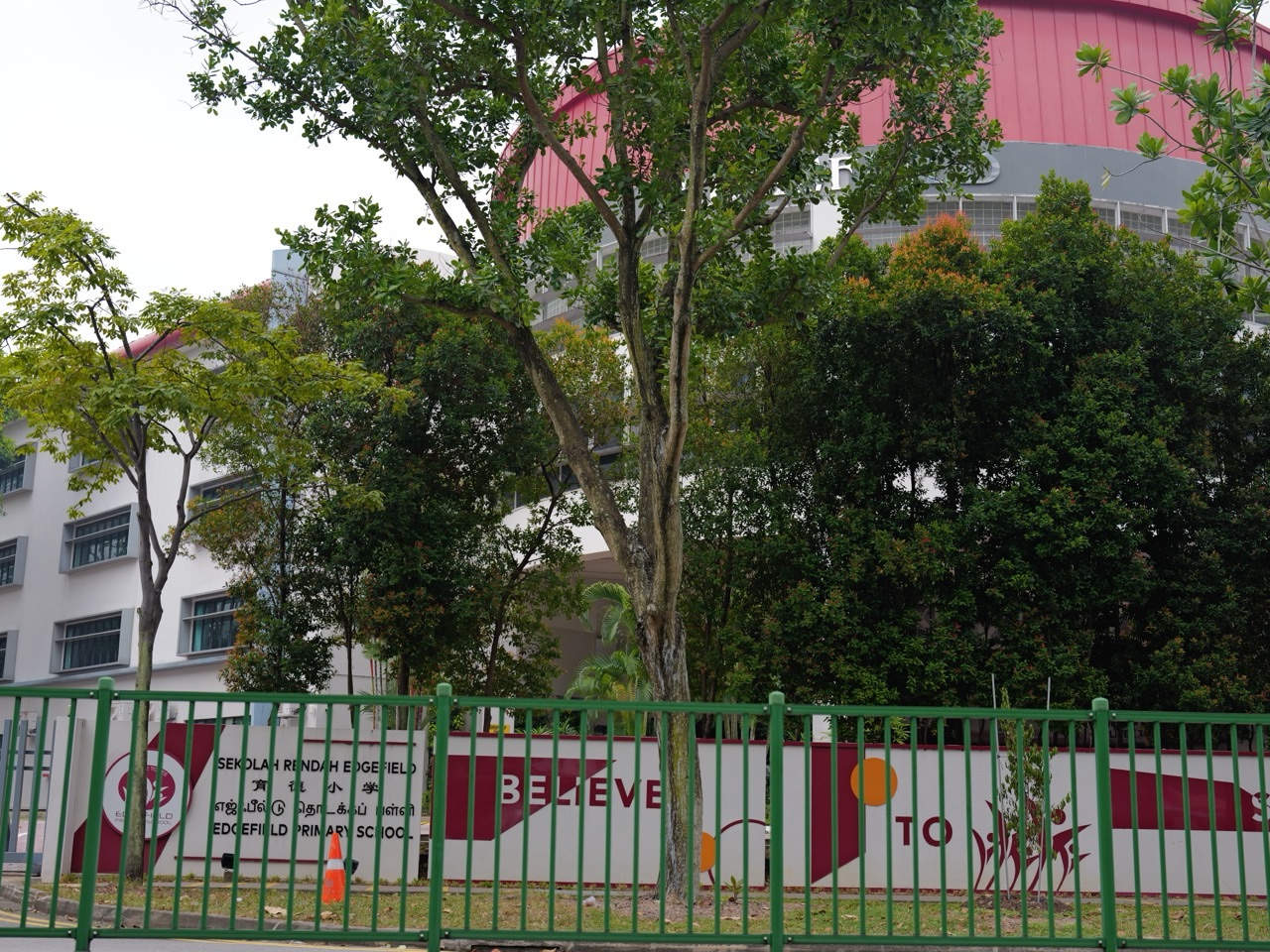
Looking for the best primary schools in Punggol? There are eleven primary schools in the town: Edgefield Primary School, Greendale Primary School, Horizon Primary School, Mee Toh School, Northshore Primary School, Oasis Primary School, Punggol Cove Primary School, Punggol Green Primary School, Punggol View Primary School, Valour Primary School and Waterway Primary School. This guide covers every one of them—with addresses, distinctive programmes, recent Primary 1 registration figures, practical family considerations and links to individual school guides.
A happy place to start: your family has a genuinely interesting range of options, from established neighbourhood schools to newer campuses, from music and communication to STEM, sustainability, design thinking and outdoor learning. The right school is the one that supports your child and works for your household. This is a comparison, not a league table; the schools appear alphabetically and have not been ranked for academic performance.
An important name mix-up: Punggol Primary School is actually at 61 Hougang Avenue 8, in Hougang. Despite its name, it is not one of Punggol town’s eleven primary schools.
Every Punggol primary school at a glance
The table gives you the practical starting information. The Phase 2C data comes from the 2026 Primary 1 registration exercise for admission in 2027. It is historical and should not be read as an admission forecast. A school with a ballot is not necessarily a better school, and a school without a ballot is not a weaker one.
| School | School address | Programme themes | 2026 Phase 2C applicants / places | Result |
|---|---|---|---|---|
| Edgefield Primary School | 41 Edgefield Plains, Singapore 828869 | Environmental science and sustainability; performing arts | 39 / 141 | No ballot |
| Greendale Primary School | 50 Edgedale Plains, Singapore 828848 | Design thinking and Learning by Design; outdoor education | 16 / 126 | No ballot |
| Horizon Primary School | 61 Edgedale Plains, Singapore 828819 | STEMpowered Innovations; student leadership | 88 / 46 | Balloted |
| Mee Toh School | 21 Edgedale Plains, Singapore 828867 | A3 Eco-Citizens; sports and outdoor education | 155 / 137 | Balloted |
| Northshore Primary School | 30 Northshore Drive, Singapore 828671 | Game design and making; coastal outdoor education | 123 / 93 | Balloted |
| Oasis Primary School | 71 Edgefield Plains, Singapore 828716 | Nurturing Language Artisans; Lead with a Heart | 35 / 108 | No ballot |
| Punggol Cove Primary School | 52 Sumang Walk, Singapore 828674 | Confident communicators and collaborators; music | 24 / 177 | No ballot |
| Punggol Green Primary School | 98 Punggol Walk, Singapore 828772 | IGNITE sustainability STEM; APPLE student leadership | 96 / 57 | Balloted |
| Punggol View Primary School | 9 Punggol Place, Singapore 828845 | Effective and Empathetic Communicators; outdoor experiential learning | 60 / 99 | No ballot |
| Valour Primary School | 49 Punggol Central, Singapore 828728 | Nature & Adventure; character education | 70 / 61 | Balloted |
| Waterway Primary School | 70 Punggol Drive, Singapore 828802 | Orators@Waterway; EVoCL leadership | 64 / 65 | No ballot |
For the numbers explained in more depth, see the eduKatePunggol guide to Primary 1 registration and balloting. For the official school directory and the programmes currently offered, use MOE SchoolFinder.
Meet the schools
No star ratings or invented examination-score tables here. What helps a parent far more is to understand what children can experience at each school, how the journey works and which questions to bring to an open house. Here is a thoughtful look at every school.
Edgefield Primary School
Address: 41 Edgefield Plains, Singapore 828869. 2026 Phase 2C: 39 / 141 applicants / places; no ballot.

Location and background. Edgefield Primary School is at 41 Edgefield Plains. It opened in 2002 and is widely identified as the first primary school established for the Punggol 21 estate. Families living around the mature Edgefield and Punggol Field neighbourhoods may find its location especially practical. Its history also gives it a different feel from the newer schools serving Punggol’s northern waterfront: it grew alongside the earliest wave of modern Punggol households.
What makes its curriculum experience distinctive? Edgefield’s Applied Learning Programme brings environmental science and sustainability into pupils’ learning. Rather than treating science as facts to memorise, the useful question is whether children have opportunities to observe their surroundings, frame environmental problems, test ideas and explain their findings. Its Learning for Life Programme, Artful Living, places emphasis on the performing arts. For children drawn to singing, drama, musical expression or creative teamwork, this pairing can be appealing.
How could it suit a child? An environmentally curious child may enjoy thinking about waste, energy, plants and conservation. A child who needs confidence speaking or performing may find arts activities a gentle way to practise contributing to a group. Equally, a child who is not initially artistic should not be excluded from consideration: school programmes are opportunities to discover interests, not admissions tests. Ask what everyone experiences as part of the normal school day and which activities require a separate CCA commitment.
What do recent admissions tell you? In the 2026 P1 registration exercise for the 2027 cohort, Edgefield recorded 39 Phase 2C applicants against 141 places, so no Phase 2C ballot was required. That is useful historical context, not a guarantee about a future cohort. Parents should still verify their correct home-school distance category and the vacancy figures in their own registration year.
A worthwhile family check. Walk to the entrance from your block at the time your child would actually travel. Look at crossings, shelter and the after-school pickup plan. If Edgefield is comfortably reachable and its environmental and arts activities resonate, the school deserves serious consideration independent of anyone’s popularity ranking.
Explore further: Read the full Edgefield Primary School parent guide on eduKatePunggol. Confirm current subjects, programmes and school-contact details through MOE SchoolFinder and the school’s official website.
Greendale Primary School
Address: 50 Edgedale Plains, Singapore 828848. 2026 Phase 2C: 16 / 126 applicants / places; no ballot.

Location and background. Greendale Primary School is at 50 Edgedale Plains, in the established eastern part of Punggol. The school began in 2008, and MOE Kindergarten @ Greendale is associated with the school campus. Its position in the Edgedale cluster makes it worth comparing with nearby Horizon and Mee Toh, but these schools should be compared on the child’s daily route and learning experience rather than simply on the fact that they share a neighbourhood.
What stands out? Its Applied Learning Programme, Learning by Design, uses design thinking. Children can learn to notice a problem, understand whom it affects, generate an idea, make something, receive feedback and improve it. That process builds more than craft skills: it combines listening, creativity and evidence-based revision. In a well-designed task, even the first imperfect prototype is productive because the child can explain why the next version will work better.
Learning beyond the classroom. Greendale’s Learning for Life Programme emphasises outdoor education. Parents who value experiential learning can ask how activities develop cooperation, safe decision-making, independence and resilience across the primary years. It is also worth asking how the school supports pupils who are hesitant outdoors or new to group challenges; a welcoming progression matters more than presenting every activity as a test of boldness.
Registration context. The 2026 Phase 2C figures were 16 applicants for 126 available places, with no ballot. This does not mean the school is academically weaker than a heavily oversubscribed alternative. It means the demand and supply in that phase gave applicants more room in that particular year. Places, catchment patterns and parent preferences can all change.
A worthwhile family check. Ask your child what they enjoy making or discovering. Then compare the school’s public programme descriptions with its open-house examples. If the route is simple and the child’s curiosity comes alive in design projects or outdoor experiences, Greendale may be a very comfortable fit.
Explore further: Read the full Greendale Primary School parent guide on eduKatePunggol. Confirm current subjects, programmes and school-contact details through MOE SchoolFinder and the school’s official website.
Horizon Primary School
Address: 61 Edgedale Plains, Singapore 828819. 2026 Phase 2C: 88 / 46 applicants / places; balloted.

Location and background. Horizon Primary School began classes in 2010 and is located at 61 Edgedale Plains. It also has an MOE Kindergarten associated with its campus. The school’s public identity gives student leadership a prominent place. For families comparing schools around Edgedale Plains, it is especially important to consider whether this leadership approach matches the experience they want for their child, rather than choosing solely because the school attracts applications.
What makes the learning experience distinctive? Its Applied Learning Programme, STEMpowered Innovations, provides opportunities to explore science, technology, engineering and mathematical thinking through practical activity. Good STEM learning is not just building something that looks impressive. It asks children to identify a problem, predict what might happen, test a solution and explain the evidence. Parents can look for examples of projects completed by younger as well as older pupils.
Leadership for every child. Horizon’s Learning for Life Programme is organised around community service and student leadership. The idea that leadership is teachable can benefit many personalities. A confident pupil might learn to listen and share responsibility; a quiet pupil might learn to express a view and contribute reliably. Ask the school what participation looks like for children who are shy or have not previously volunteered to lead.
Registration context. Horizon recorded 88 applicants for 46 Phase 2C places in 2026 and required balloting. This is evidence of intense demand in that phase, not a published ranking of teaching quality. A family considering Horizon should inspect the official home-school distance category carefully and identify other schools they would sincerely welcome before registration begins.
A worthwhile family check. Compare the daily route with nearby schools and explore the actual student activities rather than just programme titles. Your child’s long-term confidence depends on feeling supported, making friends and having repeated chances to improve, whichever gate they enter.
Explore further: Read the full Horizon Primary School parent guide on eduKatePunggol. Confirm current subjects, programmes and school-contact details through MOE SchoolFinder and the school’s official website.
Mee Toh School
Address: 21 Edgedale Plains, Singapore 828867. 2026 Phase 2C: 155 / 137 applicants / places; balloted.

Location and heritage. Mee Toh School is at 21 Edgedale Plains. Founded in 1954, it began well before the development of today’s Punggol town and relocated to its present neighbourhood in the mid-2000s. It is a government-aided, co-educational primary school with Buddhist heritage. Families should understand that school history and ethos are meaningful features here, and they should explore the school’s approach to values and daily community life.
Programmes and everyday learning. The school’s Applied Learning Programme includes an interdisciplinary environmental citizenship approach, A3 Eco-Citizens. Its Learning for Life Programme, SENCE @ MTS, falls within sports and outdoor education. Parents can ask how these experiences are introduced gradually from the lower-primary years and how students connect stewardship, teamwork and physical activity with the wider curriculum.
What about the secondary-school affiliation? Mee Toh is affiliated with Manjusri Secondary School. That is relevant when a family considers the longer education journey, but an affiliation is not an unconditional promise of admission. Any applicable affiliation priority depends on the Secondary 1 posting rules and qualifying requirements in the student’s later year. Parents should use MOE’s up-to-date secondary posting guidance when that decision eventually arrives.
Registration context. In 2026, Mee Toh received 155 Phase 2C applications for 137 places and required a ballot. It attracted the highest raw Phase 2C applicant count among the eleven Punggol schools in this data set. Demand may reflect several overlapping factors, including heritage, location, school connections and family preferences. It is not a direct measure of each child’s potential educational outcome.
A worthwhile family check. Think about whether the school’s ethos and programmes genuinely match your household values, and whether the daily journey is sustainable. Visiting and asking about pastoral care, literacy support, classroom routines and outdoor activities will tell you more than repeating a popularity figure.
Explore further: Read the full Mee Toh School parent guide on eduKatePunggol. Confirm current subjects, programmes and school-contact details through MOE SchoolFinder and the school’s official website.
Northshore Primary School
Address: 30 Northshore Drive, Singapore 828671. 2026 Phase 2C: 123 / 93 applicants / places; balloted.

Location and background. Northshore Primary School opened to its first Primary 1 cohort in January 2021. At 30 Northshore Drive, it serves families in the northern Punggol neighbourhoods and near Punggol Coast. As one of the area’s newest schools, it provides a very different geographical option from the older Edgedale campuses. Families should compare the morning journey using their actual block, route and transport plan.
Game design as STEM learning. Northshore’s Applied Learning Programme, imaginEErs, is based on STEM game design and making. A game-design task can require children to translate rules into clear instructions, test whether a system behaves as intended and revise an idea after feedback. Those habits support logical thinking, mathematics, communication and creative collaboration. Parents should ask about the balance between unplugged design, hands-on materials and digital tools across the primary levels.
Learning outdoors. The Learning for Life Programme, OCE@N, combines outdoor education and environmental care. Northshore’s coastal location makes local surroundings a natural context for conversations about ecosystems, care for shared spaces and responsible behaviour outside the classroom. Do ask what pupils do at each age and how the school plans for weather, safety, accessibility and different levels of confidence.
Registration context. Northshore recorded 123 applicants against 93 Phase 2C places in 2026 and required balloting. A newer campus does not automatically mean more places will remain available, especially when nearby housing is developing. This year’s demand should guide questions, not become a forecast for future intakes.
A worthwhile family check. If your family is near Northshore Plaza or the Punggol Coast side of the estate, test the actual school run. A shorter, more predictable route may give your child extra time for sleep, breakfast, reading and play—and that everyday advantage deserves attention alongside school programmes.
Explore further: Read the full Northshore Primary School parent guide on eduKatePunggol. Confirm current subjects, programmes and school-contact details through MOE SchoolFinder and the school’s official website.
Oasis Primary School
Address: 71 Edgefield Plains, Singapore 828716. 2026 Phase 2C: 35 / 108 applicants / places; no ballot.

Location and background. Oasis Primary School is at 71 Edgefield Plains, near Oasis LRT and the neighbourhood amenities around Oasis Terraces. It began in 2016 and is among the campuses that bring together primary education and earlier-childhood or after-school services. Parents with working schedules may find this particularly relevant, but should confirm each service’s current eligibility, availability and operating arrangements directly with the provider.
Language arts. The school’s Applied Learning Programme, Nurturing Language Artisans, gives language a central role in discovery and expression. Literacy is not only reading aloud fluently: children learn to listen for meaning, interpret stories, express their own ideas, make connections and revise what they say or write. Ask for examples of schoolwork and opportunities in the lower-primary years, especially if your child loves books, stories, dialogue or performing with words.
Leadership with care. The Learning for Life Programme, Lead with a Heart, Changemakers for the Future, focuses on service and student leadership. Its emphasis invites a useful parent question: how are empathy and initiative taught through ordinary activities, not only special events? A child who enjoys helping others might find this particularly motivating, while a hesitant child may benefit from manageable opportunities to work in pairs and groups.
Registration context. Oasis had 35 Phase 2C applicants for 108 places in 2026, with no ballot. Because the school also has family-facing services, a household should separately check school-admission eligibility, MOE Kindergarten procedures, Kindergarten Care and school-based student-care enrolment. A place in one service should not be assumed to guarantee a place in another unless the applicable rules say so.
A worthwhile family check. Trace the route from your home to the actual school gate, then imagine a normal afternoon: who collects the child, what happens before dinner, and how much downtime is left? A school that simplifies those transitions may support more settled learning at home.
Explore further: Read the full Oasis Primary School parent guide on eduKatePunggol. Confirm current subjects, programmes and school-contact details through MOE SchoolFinder and the school’s official website.
Punggol Cove Primary School
Address: 52 Sumang Walk, Singapore 828674. 2026 Phase 2C: 24 / 177 applicants / places; no ballot.

Location and background. Punggol Cove Primary School opened in 2016 and is situated at 52 Sumang Walk. Families in western Punggol can compare it with other schools near Punggol Walk and the town centre, while paying attention to the real route from home. MOE Kindergarten @ Punggol Cove is associated with the school campus. The school is an example of why a less heavily subscribed school may still offer a wide range of experiences.
Communication as a school skill. Its language-based Applied Learning Programme, C³—Confident Communicators and Collaborators—focuses on developing communication and collaboration. Those abilities matter in every subject. A child who explains an answer in Mathematics, discusses a Science observation or gives helpful feedback to a classmate is using the same habits of listening, reasoning and respectful expression.
Making music part of growing up. The Learning for Life Programme, Grow Every Music Student (GEMS@PC), brings music into the school’s distinctive learning experience. Parents can ask how all pupils take part, what kinds of performance or listening experiences are available and how children can progress if their interest develops. The value is not limited to becoming a musician; music can help children practise concentration, coordination, confidence and shared responsibility.
Registration context. In 2026, Punggol Cove recorded 24 applicants for 177 Phase 2C places, and no ballot was required. In this eleven-school comparison it had the largest difference between Phase 2C places and applicants. That is a historical accessibility signal rather than a prediction and certainly not a score for academic quality.
A worthwhile family check. If your child loves stories, singing or collaborative activities, ask the school to show how C³ and GEMS appear across age groups. Also ask about the day-to-day reading programme and the transition to Primary 1; these matter as much as the headline enrichment activities.
Explore further: Read the full Punggol Cove Primary School parent guide on eduKatePunggol. Confirm current subjects, programmes and school-contact details through MOE SchoolFinder and the school’s official website.
Punggol Green Primary School
Address: 98 Punggol Walk, Singapore 828772. 2026 Phase 2C: 96 / 57 applicants / places; balloted.
Location and background. Punggol Green Primary School is at 98 Punggol Walk and began serving the Punggol West community in 2013. It sits in a busy residential area where families may be able to build a school run around walking and the nearby LRT network. MOE Kindergarten @ Punggol Green is associated with the campus. Because the surrounding neighbourhood has grown, its recent registration demand deserves careful attention.
Science with purpose. Punggol Green’s Applied Learning Programme, IGNITE, focuses on STEM and sustainability. Its full theme is action for a sustainable future through science. That creates room for children to ask worthwhile questions—how to reduce waste, conserve resources or design a practical solution—and then to test their reasoning. Parents who value environmental responsibility may appreciate the theme, but should still look at actual projects and student participation.
Leadership with a community focus. The Learning for Life Programme, APPLE, develops community service and student leadership. Ideally, leadership growth should include more than public speaking or being appointed a prefect. It can mean keeping a promise, helping another pupil, organising a group task or taking responsibility after a mistake. Ask how the school supports children with different personalities and interests.
Registration context. In the 2026 exercise, Punggol Green had 96 Phase 2C applicants for 57 places and required balloting. This makes it one of the more oversubscribed schools in that particular phase. The family task is to check official home-school distance eligibility and understand how the priority categories apply. A school being popular locally does not mean it is the right fit for every family.
A worthwhile family check. Visit the area at school-drop-off time if you can, especially if you expect to commute onward after leaving your child. If its programmes match the child’s interests and the route works, include it thoughtfully in your plans while staying open to other Punggol schools.
Explore further: Read the full Punggol Green Primary School parent guide on eduKatePunggol. Confirm current subjects, programmes and school-contact details through MOE SchoolFinder and the school’s official website.
Punggol View Primary School
Address: 9 Punggol Place, Singapore 828845. 2026 Phase 2C: 60 / 99 applicants / places; no ballot.

Location and background. Punggol View Primary School is at 9 Punggol Place, close to Punggol MRT and the town centre. It began in 2013. The central location can be particularly useful when adults travel through Punggol interchange for work or coordinate care with relatives nearby. Still, being near an MRT station does not automatically mean the journey is easiest from every HDB block—test the actual route.
Communicating with empathy. Its Applied Learning Programme, Effective and Empathetic Communicators (E²C), links strong communication with consideration for other people. Listening carefully, speaking with a purpose, choosing evidence and understanding different perspectives are useful habits across English, Mathematics, Science and Character and Citizenship Education. Parents can ask how the programme moves from foundational oral language in the lower years to more complex tasks later.
Outdoor experiences. Its Learning for Life Programme emphasises outdoor experiential learning. In well-supported outdoor tasks, children learn to cooperate, make sensible decisions, try unfamiliar things and reflect on what worked. The school also publishes a broad CCA offering. Whether your child enjoys games, creative work or physical challenges, ask how the school introduces options before families make longer commitments.
Registration context. Punggol View recorded 60 Phase 2C applicants for 99 available places in 2026, so no ballot was required in that phase. Parents should not interpret this as a fixed pattern. A school can be convenient for a large set of commuters while its registration numbers still vary by cohort and phase.
A worthwhile family check. Walk from your block to the gate, then onward to the MRT or pickup point. If the school offers your child good learning opportunities and reduces the daily load for everyone, that practical advantage is worth placing high in your own—not anybody else’s—decision.
Explore further: Read the full Punggol View Primary School parent guide on eduKatePunggol. Confirm current subjects, programmes and school-contact details through MOE SchoolFinder and the school’s official website.
Valour Primary School
Address: 49 Punggol Central, Singapore 828728. 2026 Phase 2C: 70 / 61 applicants / places; balloted.
Location and background. Valour Primary School opened in 2020 at 49 Punggol Central. It is a relatively young campus with MOE Kindergarten @ Valour associated with it. The school has made its character-development focus public and easy for families to recognise. If you want a school that speaks explicitly about how children meet challenges, contribute to a group and care for others, Valour’s programme descriptions are worth exploring.
Nature and Adventure. Its six-year Nature & Adventure @ Valour programme, often shortened to NAV, is the school’s Learning for Life Programme. Outdoor activities offer structured opportunities for children to plan, cooperate, persevere and learn from unexpected conditions. These qualities are not measured simply by who climbs highest or moves fastest. A good parent question is how the school provides suitable roles for children who approach outdoor challenges with different levels of confidence.
Character hallmarks. Valour highlights kindness, empathy, grit, courage and adaptability in its character education. That is an encouraging set of aspirations, but the everyday expression matters most. Ask what teachers do when a pupil makes a mistake, how peers learn to include one another, and how the school balances encouragement with appropriate boundaries. The answers reveal more about the experience than the words on a poster.
Registration context. Valour received 70 applications for 61 Phase 2C places in 2026 and required balloting. The gap is smaller than at some other balloting schools in the town, but a child’s actual outcome depends on the priority categories and the relevant pool, not simply on dividing applicants by places. Parents should check the official rules rather than calculating a personal probability from this headline ratio.
A worthwhile family check. Think about how your child responds to outdoor learning, group activities and the first year of a new routine. Ask about the balance of support and stretch in Primary 1, and make sure the school-day journey fits your household.
Explore further: Read the full Valour Primary School parent guide on eduKatePunggol. Confirm current subjects, programmes and school-contact details through MOE SchoolFinder and the school’s official website.
Waterway Primary School
Address: 70 Punggol Drive, Singapore 828802. 2026 Phase 2C: 64 / 65 applicants / places; no ballot.
Location and background. Waterway Primary School is at 70 Punggol Drive, close to the Kadaloor part of Punggol’s east LRT loop. Families living near Kadaloor and the eastern waterway neighbourhoods may find it naturally convenient. The school began operating in 2016, and the associated MOE Kindergarten and school-based student care arrangements are useful questions to ask if your family needs a coordinated day.
Learning to speak and listen. Its Applied Learning Programme, Orators@Waterway, develops communication through activities such as storytelling, discussion, speaking and other language-rich tasks. The aim is not merely to make a child louder or more confident on a stage. Children learn to organise a thought, notice the audience, listen carefully and respond with evidence or empathy. Those habits make a real difference when students explain a word problem or a scientific observation.
Growing into leadership. The Learning for Life Programme, Empowering Voices, Cultivating Leaders (EVoCL), builds leadership through the primary years. A gradual approach allows a young child first to manage personal responsibilities, then to work with peers, help a team and eventually contribute more widely. Parents should ask how participation is structured for both outspoken and quieter pupils.
Registration context. Waterway recorded 64 Phase 2C applications for 65 places in 2026. There was no Phase 2C ballot, with a one-place margin. That is an interesting historical result, but it is not enough evidence to predict the next exercise. A small change in applicants or vacancies could alter the picture; the official figures for your own year are the ones that count.
A worthwhile family check. Take the school route during a weekday and imagine the full day, not only arrival. Then ask about lower-primary language support, CCA exploration and after-school arrangements. Waterway’s communication focus may be particularly attractive if your child enjoys talking through ideas or would benefit from structured opportunities to do so.
Explore further: Read the full Waterway Primary School parent guide on eduKatePunggol. Confirm current subjects, programmes and school-contact details through MOE SchoolFinder and the school’s official website.
How to choose a Punggol primary school that fits your child
One of the most helpful ways to think about school choice is to plan an ordinary Tuesday. Picture your child waking up, getting dressed, travelling to school, learning, having lunch, finishing CCAs or care, returning home and winding down. A school choice is also a decision about sleep, family time, friendships and the amount of energy your child has left to be curious after classes. The following questions make a good comparison fairer and much more personal.
Begin with the actual journey, not a map thumbnail
Open MOE SchoolFinder and look at nearby schools, then test the routes in person. A school may look close in a straight line but require a road crossing, a long sheltered walkway or an awkward change between LRT and bus. Walk during the expected arrival period. Then try the journey backwards at dismissal time. Consider the journey on a rainy day when an adult is carrying work bags and a child is tired. The fastest route in perfect weather may not be the one your family wants six years in a row.
The daily route is also part of learning. Less time in transit can mean more sleep, more time for a calm breakfast, more chances to read at home and more energy for a CCA. None of these guarantees academic success, but together they make a healthier routine possible. For local transport planning, see Getting to Punggol Schools: school buses, LRT and walking routes.
Treat school programmes as opportunities, not labels
Applied Learning Programmes and Learning for Life Programmes give each campus its own texture. A school focused on sustainability does not teach the national Mathematics syllabus instead of English; a music-focused school does not make children choose arts over Science. The national curriculum remains the central academic foundation, while the distinctive programmes create additional contexts for thinking, character and skills. Ask whether pupils experience the programme in ordinary class time and how that experience changes from Primary 1 to Primary 6.
If your child loves making things, a design-thinking or game-design programme may catch their imagination. If they enjoy telling stories, communication and music are worth exploring. If they are happiest exploring nature, look closely at outdoor programmes. A child is also free to discover an entirely new interest at school. No family needs to pick a lifelong specialisation for a six-year-old.
Look carefully at student support and belonging
A child’s sense of belonging can be more important than the headline programme. Ask how the school helps new Primary 1 pupils settle, supports children who struggle with separation or confidence, communicates with parents, responds to conflicts and notices early literacy or numeracy difficulties. Every child has a different starting point. The practical aim is a school where teachers can notice, respond and help a pupil participate, not an environment where a child has to arrive already confident.
If your child has additional learning or developmental needs, look at the official school’s support information and arrange a conversation early. Programme names alone cannot tell you what individual support is available, what is appropriate for your child or how the school handles transitions. MOE SchoolFinder includes information on school facilities and special educational needs support; confirm the details directly with the school before making decisions.
Check MOE Kindergarten, student care and family handovers
Several Punggol primary schools have an MOE Kindergarten associated with their campus, and some have school-based student-care arrangements. These can be a wonderful convenience when they fit the household’s hours, but do not assume that enrolling in a kindergarten, Kindergarten Care or student-care programme automatically means a child receives a Primary 1 place or guaranteed care placement. Registration routes and capacities have their own rules. Ask about eligibility, fees, availability, care hours, meals, dismissal procedures and what happens if a child attends an afternoon CCA.
Working parents may need a school arrangement that survives the unexpected: a late meeting, a rainy afternoon, a child who has forgotten something or a grandparent who can only make the pickup at certain times. Write down who does each handover. That small exercise can be more revealing than an impressive brochure.
Listen to your child without making them carry the decision
Children often notice things adults miss: where they feel welcome, the work they find fun, the kind of group activities that excite them and whether the walk feels tiring. Let your child ask questions at open houses, look at the school’s public work and describe what they liked. Then carry the responsibility for admission eligibility and household logistics as adults. It is a family decision, not a test the child has to pass before Primary 1.
Understanding the 2026 P1 balloting numbers
The figures in the comparison are from the 2026 registration exercise for children entering Primary 1 in 2027. They record applications and remaining Phase 2C places at that stage. Five Punggol schools had more Phase 2C applicants than available places: Horizon, Mee Toh, Northshore, Punggol Green and Valour. Edgefield, Greendale, Oasis, Punggol Cove, Punggol View and Waterway did not need a Phase 2C ballot in that exercise.
The subtle but important point is that applicants divided by vacancies is not an individual child’s ballot probability. Balloting is subject to the applicable phase, citizenship and home-school distance priority groups. Some applicants may fall into a group that is fully admitted, while a different group is balloted or cannot be offered a place. The headline schoolwide ratio cannot explain those differences.
Home-school distance categories are commonly described as within 1 km, between 1 km and 2 km, and beyond 2 km. That admission distance is an official determination; a parent should not use a walking route or a rough Google Maps estimate as proof of eligibility. Verify the address, phase and category through the official MOE Primary 1 registration portal. Citizenship and other phase-specific rules also matter.
A school that did not ballot in 2026 may ballot in a later year. Likewise, a school that balloted may have a different demand pattern next time. MOE has announced adjustments to primary-school intakes in response to changing cohort sizes and housing developments. The useful habit is to review historical data, build a shortlist you would genuinely be happy with, and then watch the authoritative vacancy figures during your child’s own exercise.
For step-by-step Punggol context and links to the authoritative sources, continue to the Punggol balloting guide. The newest MOE registration portal governs dates, applications and results—not an article updated before the next exercise.
What really matters after a child secures a P1 place
Parents understandably spend a great deal of energy getting the school choice right. Once the place is secured, the question changes: how will this particular child grow steadily from Primary 1 through Primary 6? Good school choice does not end at the gate. It continues through reading habits, friendships, communication with teachers and a home routine that leaves children curious instead of exhausted.
Lower primary: confidence, language and number sense
In Primary 1 and Primary 2, the foundations deserve a calm approach. Read together, talk about stories, let your child explain what a sentence means and practise counting or comparing quantities with objects before rushing to written methods. When a child makes an error in Mathematics, ask what they thought the question was asking. In English, explore meaning, vocabulary, speaking and writing, not merely scores from worksheets. Short, steady habits often make more sense than turning the first school years into an examination rehearsal.
Middle primary: reasoning, explanation and Science
From Primary 3, Science becomes a formal subject and written explanations grow more important. Children begin to learn that knowing a fact and explaining how it applies are not the same thing. A useful family habit is to invite the child to make a claim, point to evidence and explain why it supports the answer. Mathematics also becomes more demanding as problems require children to represent relationships rather than follow only a familiar calculation. The goal is to build understanding before speed.
Upper primary: managing complexity without losing the child
Primary 5 and Primary 6 bring more complex problems, greater workload and PSLE preparation. The healthy response is to notice the earliest weak link. Does the child misunderstand the concept? Lose accuracy during a known procedure? Struggle to transfer learning to unfamiliar questions? Or understand the work until time pressure and fatigue arrive? Different problems need different teaching responses. Correct the source of the difficulty rather than adding endless extra worksheets.
If your family wants a fuller picture of the learning journey, start with A Primary School Childhood in Punggol. For syllabus and progression questions, the Punggol primary education and PSLE guide provides the wider context. Parents considering additional support can explore eduKate’s Punggol learning and tuition hub after identifying the specific skill that needs help; school choice and tuition choice are separate decisions.
Frequently asked questions about Punggol primary schools
How many primary schools are in Punggol?
There are eleven primary schools in Punggol town: Edgefield, Greendale, Horizon, Mee Toh, Northshore, Oasis, Punggol Cove, Punggol Green, Punggol View, Valour and Waterway. The list in this guide is complete for the town and is alphabetical rather than ranked.
Is Punggol Primary School part of this list?
No. Punggol Primary School is in Hougang at 61 Hougang Avenue 8. The school name can understandably confuse families moving into Punggol, so check addresses rather than assuming a school is in the town because of its name.
Which primary school is the best in Punggol?
There is no single evidence-based answer for every child. The strongest shortlist balances the child’s needs, the school’s programmes and support, admission eligibility, the daily journey and family care arrangements. Balloting demand is not an academic performance ranking.
Which Punggol schools required a Phase 2C ballot in 2026?
Horizon Primary, Mee Toh School, Northshore Primary, Punggol Green Primary and Valour Primary required balloting in Phase 2C of the 2026 registration exercise for the 2027 intake. Check MOE for the exact outcomes by priority category.
Does a school with no ballot mean admission is guaranteed next year?
No. Historical numbers show what happened in that specific phase and exercise. Future vacancies, enrolment demand, citizenship and distance priority may differ. Use historic results for context and the live MOE process for your own application.
Are all eleven schools co-educational?
Yes. All eleven primary schools covered here are co-educational. Mee Toh is government-aided, while the other ten are government schools. Parents may wish to compare each school’s heritage, programme focus and admissions criteria.
Does attending an MOE Kindergarten guarantee Primary 1 admission?
Do not assume so. Some registration phases have specific eligibility criteria, and MOE Kindergarten-related priority is governed by the current official registration framework. Check the rules for the particular school and year rather than treating kindergarten attendance as an automatic promise.
Should I choose a school because it has more CCAs?
A longer CCA list is not automatically better for your child. Look for age-appropriate access, the activities your child wants to try, scheduling, school expectations and the opportunity to change direction as interests develop. The programme’s actual quality of experience matters more than a raw count.
How should I compare two schools that are both nearby?
Start with the actual door-to-door school journey and your family’s pickup plan. Next, compare the schools’ ALP and LLP experiences, student support, school culture and the child’s reactions. Use the official MOE admission distance category rather than relying on a walking-route distance.
What should parents ask during a primary-school open house?
Ask how Primary 1 children settle in, what a normal day looks like, how reading and numeracy difficulties are noticed, whether the ALP and LLP include all pupils, how CCAs are introduced, and how after-school care and parent communication work. The answers should help you picture your child in the school.
Do Punggol schools teach different national syllabuses?
The mainstream MOE primary schools follow the national curriculum, although available subjects, support and school-specific programmes may differ. Families should look at actual subjects and current details in MOE SchoolFinder and on the individual school websites.
Can I use the same article for the 2027 P1 registration exercise?
Use the school profiles as a starting point, but refresh admissions details. The 2026 data in this article refers to the 2027 intake; the 2027 registration exercise would concern the following intake. MOE controls the dates, rules and official vacancies for each new year.
Official sources and further reading
For the current school list and programme information, consult MOE SchoolFinder. For eligibility, phases and home-school distance guidance, consult the MOE Primary 1 Registration Portal. For the 2026 historical Phase 2C data used here, compare the 2026 P1 vacancies and balloting data compilation against MOE’s applicable exercise records. School programme details can change, so use each school website for the latest arrangements.
You can also read the individual school guides linked in every profile above, or return to the complete Punggol guide for family life in the estate. This overview deliberately does not replace official school admissions advice and does not present popularity as educational quality.
Reviewed 19 October 2026. Historical P1 statistics in this article refer specifically to the 2026 registration exercise for children entering Primary 1 in 2027. School programmes, vacancies and support services should be checked again before applying.


