
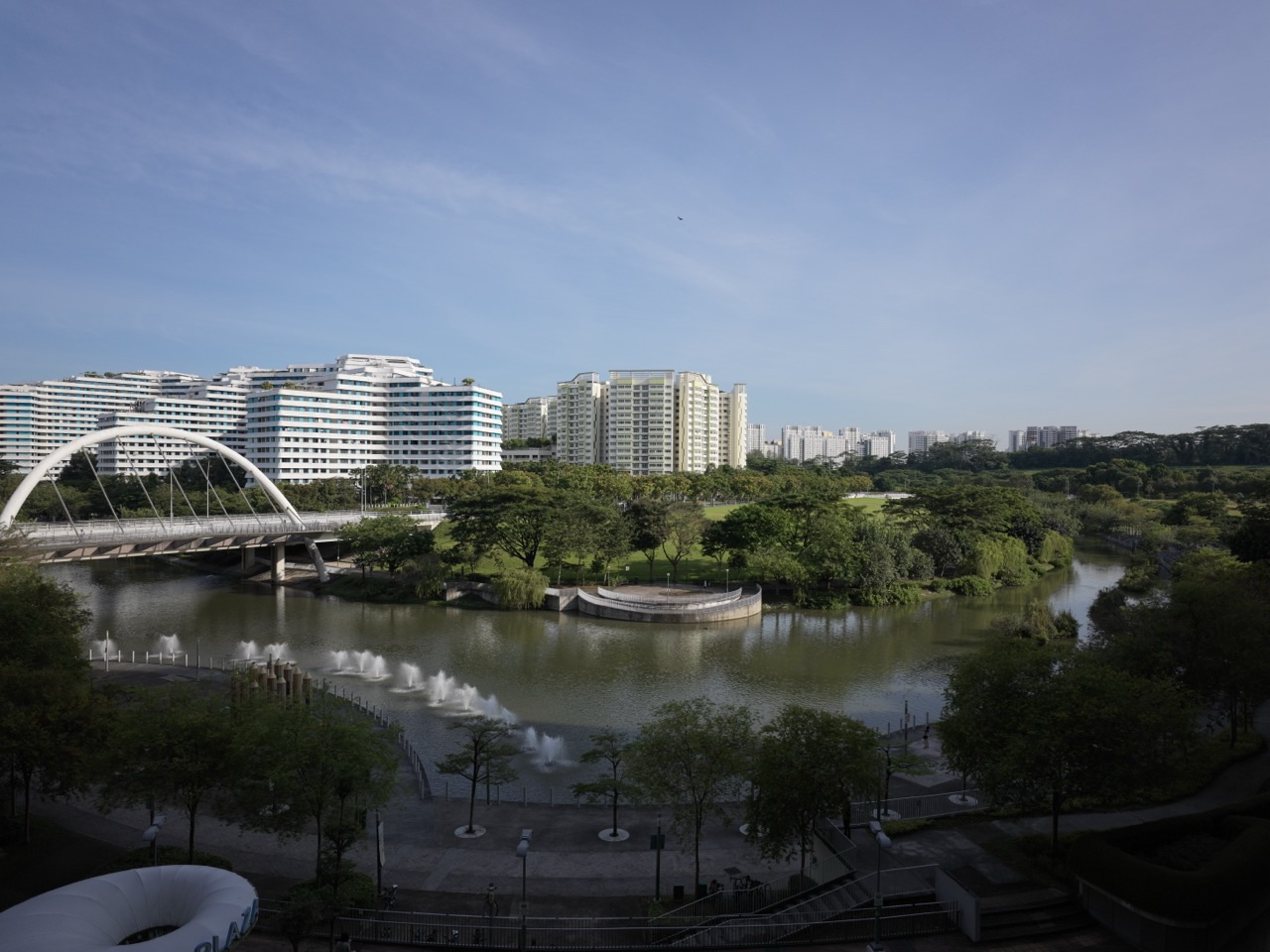
The short answer: Waterway Primary School is a co-educational government primary school at 70 Punggol Drive, Singapore 828802, near Kadaloor LRT. Its Applied Learning Programme, Orators@Waterway, develops listening, thinking and speaking through activities such as drama, storytelling, topical sharing, news writing, literature appreciation, persuasive speaking, debating and interview skills. Its six-year Learning for Life Programme, Empowering Voices, Cultivating Leaders (EVoCL), develops leadership progressively from self-leadership to peer, team and wider leadership. In the 2026 P1 Phase 2C exercise, Waterway had 64 applicants for 65 places—no ballot, but by only one place.
Waterway is one of the schools where parents should pay close attention to yearly registration demand. A one-place margin is not a forecast. The next exercise can change because vacancies, birth cohorts, distance bands and applicant choices change. Use the 2026 figure as evidence of recent demand, then check the live MOE registration numbers when your child’s year arrives.
Waterway Primary School: Quick Facts
| Address | 70 Punggol Drive, Singapore 828802 |
| Nearest LRT | Kadaloor (PE5) |
| School type | Government, co-educational primary school |
| ALP | Orators@Waterway |
| LLP | Empowering Voices, Cultivating Leaders (EVoCL) |
| CCA model | Modular CCA and Interest CCA |
| MOE Kindergarten | MOE Kindergarten @ Waterway on campus |
| Student care | School-based student care listed by the school |
| 2026 P1 Phase 2C | 64 applicants / 65 places — no ballot |
| Phone | 6636 6880 |
School contact, programme and service information was checked against Waterway Primary School’s official website on 26 September 2026. Registration demand should be refreshed every year.
ALP: Orators@Waterway
Waterway’s Applied Learning Programme is unusually easy for parents to understand because the job is visible: help students become stronger communicators.
The school describes Orators@Waterway as a programme for nurturing gracious persons, engaging communicators and confident leaders. The programme develops listening, thinking and speaking, with learning experiences including drama, storytelling, topical sharing, news writing, literature appreciation, persuasive speaking, debating and interview skills.
That matters beyond English marks. A child who can explain an idea clearly, listen to another position, organise a response and adapt language to audience is building a capability used in Science explanations, group work, presentations, leadership and eventually interviews.
For parents comparing Punggol schools, this is a useful distinction. If your child enjoys discussion, storytelling, presentation or performance, Orators@Waterway gives those interests a structured school context. If the child is shy, the same programme may provide repeated low-stakes opportunities to practise communication over six years.
LLP: Empowering Voices, Cultivating Leaders
Waterway’s Learning for Life Programme is Empowering Voices, Cultivating Leaders (EVoCL). The school describes it as a six-year leadership journey built around the relationship between thought, language and leadership.
The progression begins with self-leadership in Primary 1, develops peer leadership in the lower and middle primary years, and moves toward team and broader leadership later. That spiral structure is sensible: younger children first learn to manage themselves before leadership becomes a title or position.
Parents should not read “leadership programme” as a promise that every child will become a prefect or captain. The more durable value is ordinary leadership behaviour: speaking responsibly, organising oneself, listening, making decisions and contributing to a group.
CCA at Waterway: Exploration Before Commitment
Waterway describes two broad CCA structures: Modular CCA and Interest CCA. The school’s current CCA material says students from Primary 3 are strongly encouraged to participate and that Primary 3 Semester 1 includes a CCA Discovery process before choices are made.
This model gives younger students some room to experience activities before a longer commitment. The school also emphasises attendance, continuity and staying with an allocated CCA unless there is a valid reason to change.
For a family, the practical question is not only “Which CCAs exist?” but “How does the school help a child discover interests and then develop depth?” Waterway’s current CCA language makes that progression explicit.
MOE Kindergarten and Student Care on the Same Campus
Waterway hosts MOE Kindergarten @ Waterway. The school’s current information notes that children in MK@Waterway may be eligible for priority admission under the relevant P1 registration phase, subject to prevailing rules and available places.
The school also lists a school-based student care service. For working families, having kindergarten, primary school and student-care infrastructure around one campus can simplify logistics—but eligibility, availability and fees should always be checked directly with the relevant operator and MOE.
The Daily Journey
Waterway Primary is at 70 Punggol Drive. The school lists Kadaloor LRT as the nearest LRT station and bus services 50 and 381. For families around Punggol Drive, Kadaloor, Oasis and nearby eastern Punggol neighbourhoods, that can create a straightforward daily route.
The school’s own visitor information also publishes school-bus provider details. That matters because “distance from home” and “difficulty of the school journey” are not the same thing. Walk the route, test the morning commute and understand the pickup arrangement before treating kilometres alone as the deciding factor.
How Competitive Was Waterway in 2026?
Waterway had 64 Phase 2C applicants for 65 places in 2026. That meant no ballot, but it was the narrowest non-balloting margin among the 11 Punggol primary schools in our current comparison.
This is exactly the kind of figure that should be used carefully. One applicant more would have changed the outcome. Parents planning for 2027 or later should therefore avoid treating “did not ballot last year” as “safe”.
Use All 11 Primary Schools in Punggol and Primary 1 Registration in Punggol for the broader context.
Is Waterway Primary a Good Fit for Your Child?
- Does the Punggol Drive / Kadaloor location create an easy daily journey?
- Would a communication-heavy ALP suit your child?
- Does progressive leadership development appeal to your family?
- Would the CCA discovery model help your child explore interests before committing?
- Do the MOE Kindergarten or student-care arrangements matter to your family logistics?
- How competitive is your registration phase and distance band in the actual year?
These questions are more useful than a generic ranking. Every MOE primary school covers the national syllabus; fit comes from the child, family journey, school culture and programmes around it.
What Tuition Should and Should Not Do
A Waterway Primary student does not need a special “Waterway tuition syllabus”. If tuition becomes necessary, use actual marked work to identify the problem: reading, composition, Mathematics representation, Science explanation, study rhythm or examination control.
- Primary English Tuition in Punggol
- Primary Mathematics Tuition in Punggol
- Primary Science Tuition in Punggol
Frequently Asked Questions
Where is Waterway Primary School?
70 Punggol Drive, Singapore 828802. The school lists Kadaloor LRT (PE5) as the nearest LRT station.
What is Orators@Waterway?
It is the school’s Applied Learning Programme, developing communication through listening, speaking, storytelling, drama, debating, persuasive speaking and related activities.
What is Waterway’s LLP?
Empowering Voices, Cultivating Leaders (EVoCL), a six-year leadership-development programme.
Did Waterway Primary ballot in 2026 Phase 2C?
No. It had 64 applicants for 65 places, a one-place margin.
Does Waterway have an MOE Kindergarten?
Yes, MOE Kindergarten @ Waterway is located on the campus.
Sources Checked
- Waterway Primary School — General Information
- Orators@Waterway
- Waterway Primary — Learning for Life Programme
- Waterway Primary — CCA
- eduKatePunggol — All 11 Primary Schools in Punggol
Checked 26 September 2026. Programmes, vendors, CCAs and admission demand can change; verify current details with the school and MOE.
Return to the town map: The Complete Punggol Guide connects this page to schools, transport, housing, family services, food, parks and the wider Punggol knowledge estate.
Waterway Primary School: Family Learning Guide — School, Home, Travel and Independent Learning
The profile above remains the canonical factual owner for Waterway Primary School. This Future Build section adds the missing family implementation layer. The purpose is not to repeat programme descriptions. It is to connect Waterway East and the Kadaloor/Riviera side of Punggol, oracy, leadership and CCA discovery, the child’s actual work and the household’s real week into a learning system that can be inspected and improved.
For families around Kadaloor, Riviera and Waterway East, locality matters because travel, handovers, waiting, meals and the school-day rhythm change what is feasible. It does not determine the learner’s diagnosis. The child’s own evidence still decides whether the next action belongs to home routine, school, English, Mathematics, Science, tuition or no additional intervention at all.
Build the Week Before Adding Support
For a Waterway Primary School family, the practical action is to map dismissal, CCA, student care, travel, meals, homework, reading, family work shifts and sleep. A child can appear academically weak when the week is simply overloaded. The first repair is often removing collisions, not adding another class.
The family should make the smallest useful change first. Avoid building a large intervention around one difficult day. Use the child’s actual output, repeat the observation on fresh work and distinguish what the learner can do alone from what appears only under adult or tutor support.
The evidence to seek is a week that can run repeatedly without borrowing from sleep. When that evidence strengthens, support can retreat. When it does not, the family has a reason to inspect the diagnosis, the method, the timetable or the owner rather than simply adding more practice.
Treat the School Name as Context
For a Waterway Primary School family, the practical action is to use the school’s environment to understand routines but diagnose the child from actual work. Two pupils from the same school can have opposite learning needs. Marked work and fresh attempts carry more diagnostic value than a school label.
The family should make the smallest useful change first. Avoid building a large intervention around one difficult day. Use the child’s actual output, repeat the observation on fresh work and distinguish what the learner can do alone from what appears only under adult or tutor support.
The evidence to seek is a bounded learning job rather than a generic weak-subject story. When that evidence strengthens, support can retreat. When it does not, the family has a reason to inspect the diagnosis, the method, the timetable or the owner rather than simply adding more practice.
Run a Clean Home–School Handover
For a Waterway Primary School family, the practical action is to make open work, completed work, submissions and tomorrow’s materials visible. Primary-school friction often appears at boundaries. A worksheet can be finished but not submitted; a project can be known but its materials can remain elsewhere.
The family should make the smallest useful change first. Avoid building a large intervention around one difficult day. Use the child’s actual output, repeat the observation on fresh work and distinguish what the learner can do alone from what appears only under adult or tutor support.
The evidence to seek is fewer repeated questions and fewer tasks lost between places. When that evidence strengthens, support can retreat. When it does not, the family has a reason to inspect the diagnosis, the method, the timetable or the owner rather than simply adding more practice.
Make the Bag a Learning Tool
For a Waterway Primary School family, the practical action is to give papers, books, devices, transit items and unusual tomorrow-items predictable homes. Organisation is infrastructure. A learner cannot show a tutor a paper left at home or complete work from a book left at school.
The family should make the smallest useful change first. Avoid building a large intervention around one difficult day. Use the child’s actual output, repeat the observation on fresh work and distinguish what the learner can do alone from what appears only under adult or tutor support.
The evidence to seek is more correct packing done by the child without adult rescue. When that evidence strengthens, support can retreat. When it does not, the family has a reason to inspect the diagnosis, the method, the timetable or the owner rather than simply adding more practice.
Protect Reading
For a Waterway Primary School family, the practical action is to keep reading larger than English homework. Reading builds vocabulary, background knowledge, sentence familiarity, inference and attention. Turning every page into a worksheet can reduce the very reading volume families want.
The family should make the smallest useful change first. Avoid building a large intervention around one difficult day. Use the child’s actual output, repeat the observation on fresh work and distinguish what the learner can do alone from what appears only under adult or tutor support.
The evidence to seek is sustained reading and richer language appearing in fresh school work. When that evidence strengthens, support can retreat. When it does not, the family has a reason to inspect the diagnosis, the method, the timetable or the owner rather than simply adding more practice.
Diagnose Mathematics by Error Type
For a Waterway Primary School family, the practical action is to find the earliest wrong step in a solution. Concept, procedure, interpretation, representation, retrieval and checking failures need different repairs. More questions do not solve every kind of error.
The family should make the smallest useful change first. Avoid building a large intervention around one difficult day. Use the child’s actual output, repeat the observation on fresh work and distinguish what the learner can do alone from what appears only under adult or tutor support.
The evidence to seek is a fresh problem completed with less prompting. When that evidence strengthens, support can retreat. When it does not, the family has a reason to inspect the diagnosis, the method, the timetable or the owner rather than simply adding more practice.
Make Science Evidence-Based
For a Waterway Primary School family, the practical action is to separate observation, evidence and explanation. A memorised model answer can look strong until the context changes. Ask what evidence in the question supports the claim and what mechanism connects them.
The family should make the smallest useful change first. Avoid building a large intervention around one difficult day. Use the child’s actual output, repeat the observation on fresh work and distinguish what the learner can do alone from what appears only under adult or tutor support.
The evidence to seek is an unfamiliar Science context explained without copying. When that evidence strengthens, support can retreat. When it does not, the family has a reason to inspect the diagnosis, the method, the timetable or the owner rather than simply adding more practice.
Use Homework to See Independence
For a Waterway Primary School family, the practical action is to let the learner attempt before adult intervention. A perfect worksheet built through constant parent prompting hides the learner’s actual state. The smallest prompt that restarts thinking gives better evidence.
The family should make the smallest useful change first. Avoid building a large intervention around one difficult day. Use the child’s actual output, repeat the observation on fresh work and distinguish what the learner can do alone from what appears only under adult or tutor support.
The evidence to seek is a larger portion of the task completed without someone sitting beside the child. When that evidence strengthens, support can retreat. When it does not, the family has a reason to inspect the diagnosis, the method, the timetable or the owner rather than simply adding more practice.
Keep CCA Inside Education
For a Waterway Primary School family, the practical action is to coordinate academic load around demanding school activities rather than treating every non-academic hour as lost study time. Leadership, performance, sport, outdoor activity and group responsibility can build capabilities that worksheets do not. The constraint is total weekly load.
The family should make the smallest useful change first. Avoid building a large intervention around one difficult day. Use the child’s actual output, repeat the observation on fresh work and distinguish what the learner can do alone from what appears only under adult or tutor support.
The evidence to seek is a sustainable portfolio rather than maximum intensity everywhere. When that evidence strengthens, support can retreat. When it does not, the family has a reason to inspect the diagnosis, the method, the timetable or the owner rather than simply adding more practice.
Count Door-to-Door Travel
For a Waterway Primary School family, the practical action is to measure the real time cost of tuition, enrichment and family transfers. A ninety-minute lesson can occupy much more of the evening after walking, LRT, bus, waiting and pickup are included.
The family should make the smallest useful change first. Avoid building a large intervention around one difficult day. Use the child’s actual output, repeat the observation on fresh work and distinguish what the learner can do alone from what appears only under adult or tutor support.
The evidence to seek is support whose benefit justifies its actual family time cost. When that evidence strengthens, support can retreat. When it does not, the family has a reason to inspect the diagnosis, the method, the timetable or the owner rather than simply adding more practice.
Design the First Twenty Minutes Home
For a Waterway Primary School family, the practical action is to use a transition instead of immediate academic interrogation. Food, movement and a short decompression can improve the quality of the next work block without removing standards.
The family should make the smallest useful change first. Avoid building a large intervention around one difficult day. Use the child’s actual output, repeat the observation on fresh work and distinguish what the learner can do alone from what appears only under adult or tutor support.
The evidence to seek is a calmer start to homework with the next obligation still clear. When that evidence strengthens, support can retreat. When it does not, the family has a reason to inspect the diagnosis, the method, the timetable or the owner rather than simply adding more practice.
Bring Marked Work to Consultation
For a Waterway Primary School family, the practical action is to use actual school evidence as the tutor handover. A recent paper shows what the school asked, what the child attempted and where marks were lost. A tutor can then test whether the error repeats.
The family should make the smallest useful change first. Avoid building a large intervention around one difficult day. Use the child’s actual output, repeat the observation on fresh work and distinguish what the learner can do alone from what appears only under adult or tutor support.
The evidence to seek is a testable hypothesis rather than a generic tuition package. When that evidence strengthens, support can retreat. When it does not, the family has a reason to inspect the diagnosis, the method, the timetable or the owner rather than simply adding more practice.
Record Only Useful Tuition Evidence
For a Waterway Primary School family, the practical action is to compress feedback into task, difficulty, support, independent output and next check. Parents need enough information to make the next decision, not a surveillance transcript of the lesson.
The family should make the smallest useful change first. Avoid building a large intervention around one difficult day. Use the child’s actual output, repeat the observation on fresh work and distinguish what the learner can do alone from what appears only under adult or tutor support.
The evidence to seek is support that becomes lighter as capability becomes more reliable. When that evidence strengthens, support can retreat. When it does not, the family has a reason to inspect the diagnosis, the method, the timetable or the owner rather than simply adding more practice.
Primary 1–2 Operating Foundations
For a Waterway Primary School family, the practical action is to prioritise routines, reading, number sense, basic fluency, listening, packing and help-seeking. The early Primary years are an institutional transition as well as an academic one. Slow adjustment is not automatically a tuition problem.
The family should make the smallest useful change first. Avoid building a large intervention around one difficult day. Use the child’s actual output, repeat the observation on fresh work and distinguish what the learner can do alone from what appears only under adult or tutor support.
The evidence to seek is stable routines and foundational skills that reduce later load. When that evidence strengthens, support can retreat. When it does not, the family has a reason to inspect the diagnosis, the method, the timetable or the owner rather than simply adding more practice.
Primary 3–4 Complexity Shift
For a Waterway Primary School family, the practical action is to watch for inference, multi-step Mathematics, richer Science explanation and greater organisation. A child who handled direct tasks can struggle when several operations or language demands combine. The family should locate the bottleneck before increasing volume.
The family should make the smallest useful change first. Avoid building a large intervention around one difficult day. Use the child’s actual output, repeat the observation on fresh work and distinguish what the learner can do alone from what appears only under adult or tutor support.
The evidence to seek is a repair aimed at the actual dependency. When that evidence strengthens, support can retreat. When it does not, the family has a reason to inspect the diagnosis, the method, the timetable or the owner rather than simply adding more practice.
Primary 5 Capacity Building
For a Waterway Primary School family, the practical action is to prepare for higher demand without turning the whole year into PSLE rehearsal. Foundation repair, reading, sleep and independent study still matter. Timed papers cannot replace missing concepts.
The family should make the smallest useful change first. Avoid building a large intervention around one difficult day. Use the child’s actual output, repeat the observation on fresh work and distinguish what the learner can do alone from what appears only under adult or tutor support.
The evidence to seek is entry into Primary 6 with stronger foundations and ownership. When that evidence strengthens, support can retreat. When it does not, the family has a reason to inspect the diagnosis, the method, the timetable or the owner rather than simply adding more practice.
Primary 6 Assembly
For a Waterway Primary School family, the practical action is to combine knowledge, retrieval, pacing, checking and recovery. Near PSLE, endless new materials can create noise. Repeated error families and fresh-paper performance provide stronger signals.
The family should make the smallest useful change first. Avoid building a large intervention around one difficult day. Use the child’s actual output, repeat the observation on fresh work and distinguish what the learner can do alone from what appears only under adult or tutor support.
The evidence to seek is reliable execution under changed and timed conditions. When that evidence strengthens, support can retreat. When it does not, the family has a reason to inspect the diagnosis, the method, the timetable or the owner rather than simply adding more practice.
Stretch a Strong Learner Carefully
For a Waterway Primary School family, the practical action is to increase depth, transfer, explanation, reading and responsibility before increasing raw volume. A strong child does not automatically need an accelerated second syllabus. Spare time is not unused academic capacity.
The family should make the smallest useful change first. Avoid building a large intervention around one difficult day. Use the child’s actual output, repeat the observation on fresh work and distinguish what the learner can do alone from what appears only under adult or tutor support.
The evidence to seek is new capability without unnecessary overload. When that evidence strengthens, support can retreat. When it does not, the family has a reason to inspect the diagnosis, the method, the timetable or the owner rather than simply adding more practice.
Recover a Struggling Learner Sequentially
For a Waterway Primary School family, the practical action is to repair the earliest prerequisite that explains several later failures. Trying to fix English, Mathematics, Science, organisation and motivation simultaneously can leave the child feeling permanently behind.
The family should make the smallest useful change first. Avoid building a large intervention around one difficult day. Use the child’s actual output, repeat the observation on fresh work and distinguish what the learner can do alone from what appears only under adult or tutor support.
The evidence to seek is one repaired foundation that remains stable on later work. When that evidence strengthens, support can retreat. When it does not, the family has a reason to inspect the diagnosis, the method, the timetable or the owner rather than simply adding more practice.
Coordinate Parent, Teacher and Tutor Roles
For a Waterway Primary School family, the practical action is to route each issue to the adult who can actually act on it. School requirements belong to the school, home routines to the family, and specialist teaching to the appropriate tutor. Overlap creates conflicting instructions.
The family should make the smallest useful change first. Avoid building a large intervention around one difficult day. Use the child’s actual output, repeat the observation on fresh work and distinguish what the learner can do alone from what appears only under adult or tutor support.
The evidence to seek is clean handoffs with less duplicated work. When that evidence strengthens, support can retreat. When it does not, the family has a reason to inspect the diagnosis, the method, the timetable or the owner rather than simply adding more practice.
Use Student Care and Grandparents as Clear Handoffs
For a Waterway Primary School family, the practical action is to state what is complete, what remains, what travels and who owns the next action. Several caring adults can create a strong system when the boundaries are clear. The child should not be the only message bus.
The family should make the smallest useful change first. Avoid building a large intervention around one difficult day. Use the child’s actual output, repeat the observation on fresh work and distinguish what the learner can do alone from what appears only under adult or tutor support.
The evidence to seek is continuity across the afternoon without excessive reporting. When that evidence strengthens, support can retreat. When it does not, the family has a reason to inspect the diagnosis, the method, the timetable or the owner rather than simply adding more practice.
Build Digital School Readiness
For a Waterway Primary School family, the practical action is to prepare charging, files, printing, logins and submission before deadline pressure. Digital failures are often operational rather than academic. A completed file that cannot be found or submitted is still an open task.
The family should make the smallest useful change first. Avoid building a large intervention around one difficult day. Use the child’s actual output, repeat the observation on fresh work and distinguish what the learner can do alone from what appears only under adult or tutor support.
The evidence to seek is fewer avoidable failures unrelated to subject knowledge. When that evidence strengthens, support can retreat. When it does not, the family has a reason to inspect the diagnosis, the method, the timetable or the owner rather than simply adding more practice.
Plan Group Projects as Logistics
For a Waterway Primary School family, the practical action is to define role, materials, file owner, meeting point, merge step and deadline. Group work fails when shared dependencies remain invisible until the final evening. The learner should know both the personal task and the group interface.
The family should make the smallest useful change first. Avoid building a large intervention around one difficult day. Use the child’s actual output, repeat the observation on fresh work and distinguish what the learner can do alone from what appears only under adult or tutor support.
The evidence to seek is a project that can be assembled and submitted without emergency rescue. When that evidence strengthens, support can retreat. When it does not, the family has a reason to inspect the diagnosis, the method, the timetable or the owner rather than simply adding more practice.
Protect Examination Morning
For a Waterway Primary School family, the practical action is to prepare sleep, breakfast, permitted materials, route and travel margin before the morning. The family should not spend the final hour rebuilding logistics that could have been closed the previous evening.
The family should make the smallest useful change first. Avoid building a large intervention around one difficult day. Use the child’s actual output, repeat the observation on fresh work and distinguish what the learner can do alone from what appears only under adult or tutor support.
The evidence to seek is arrival with attention available for the paper rather than the commute. When that evidence strengthens, support can retreat. When it does not, the family has a reason to inspect the diagnosis, the method, the timetable or the owner rather than simply adding more practice.
Read Results as System Evidence
For a Waterway Primary School family, the practical action is to compare a result with prior error patterns and support levels. A score is an output, not a complete diagnosis. The useful question is what mechanism produced the lost or gained marks.
The family should make the smallest useful change first. Avoid building a large intervention around one difficult day. Use the child’s actual output, repeat the observation on fresh work and distinguish what the learner can do alone from what appears only under adult or tutor support.
The evidence to seek is a next action grounded in the paper rather than emotion. When that evidence strengthens, support can retreat. When it does not, the family has a reason to inspect the diagnosis, the method, the timetable or the owner rather than simply adding more practice.
Keep Tuition When the Job Is Live
For a Waterway Primary School family, the practical action is to continue when the original problem remains and independence is improving. A working system does not need redesign simply because the term ended. The next target can become narrower.
The family should make the smallest useful change first. Avoid building a large intervention around one difficult day. Use the child’s actual output, repeat the observation on fresh work and distinguish what the learner can do alone from what appears only under adult or tutor support.
The evidence to seek is continued progress with decreasing dependence. When that evidence strengthens, support can retreat. When it does not, the family has a reason to inspect the diagnosis, the method, the timetable or the owner rather than simply adding more practice.
Change Tuition When Evidence Stalls
For a Waterway Primary School family, the practical action is to change method, pace, grouping, frequency or tutor when a persistent mismatch is visible. Changing everything at once destroys the signal. Alter the condition most likely to carry the failure and test again.
The family should make the smallest useful change first. Avoid building a large intervention around one difficult day. Use the child’s actual output, repeat the observation on fresh work and distinguish what the learner can do alone from what appears only under adult or tutor support.
The evidence to seek is a clearer causal answer about what helps. When that evidence strengthens, support can retreat. When it does not, the family has a reason to inspect the diagnosis, the method, the timetable or the owner rather than simply adding more practice.
Reduce Tuition When Capability Transfers
For a Waterway Primary School family, the practical action is to remove one layer of prompting, monitoring or frequency and observe whether performance holds. Reduction is a test of successful transfer, not a withdrawal of care.
The family should make the smallest useful change first. Avoid building a large intervention around one difficult day. Use the child’s actual output, repeat the observation on fresh work and distinguish what the learner can do alone from what appears only under adult or tutor support.
The evidence to seek is the learner carrying more of the system without collapse. When that evidence strengthens, support can retreat. When it does not, the family has a reason to inspect the diagnosis, the method, the timetable or the owner rather than simply adding more practice.
Stop Tuition When the Original Job Is Done
For a Waterway Primary School family, the practical action is to treat exit as a possible successful endpoint. Support should not continue by inertia after the learner can manage fresh work, school demands and recovery independently.
The family should make the smallest useful change first. Avoid building a large intervention around one difficult day. Use the child’s actual output, repeat the observation on fresh work and distinguish what the learner can do alone from what appears only under adult or tutor support.
The evidence to seek is a clean exit with known signs for when future help might again be useful. When that evidence strengthens, support can retreat. When it does not, the family has a reason to inspect the diagnosis, the method, the timetable or the owner rather than simply adding more practice.
Run an End-of-Term Review
For a Waterway Primary School family, the practical action is to use a few representative samples to decide keep, change, reduce, pause or stop. The family does not need every worksheet. It needs evidence that distinguishes current capability from old difficulty.
The family should make the smallest useful change first. Avoid building a large intervention around one difficult day. Use the child’s actual output, repeat the observation on fresh work and distinguish what the learner can do alone from what appears only under adult or tutor support.
The evidence to seek is one explicit next support state and a way to test it. When that evidence strengthens, support can retreat. When it does not, the family has a reason to inspect the diagnosis, the method, the timetable or the owner rather than simply adding more practice.
Use the Editorial Review Test
For a Waterway Primary School family, the practical action is to remove reporting, materials and routines that do not change the decision. A family system should become quieter as it improves. More administration is not automatically more care.
The family should make the smallest useful change first. Avoid building a large intervention around one difficult day. Use the child’s actual output, repeat the observation on fresh work and distinguish what the learner can do alone from what appears only under adult or tutor support.
The evidence to seek is less noise and stronger signal. When that evidence strengthens, support can retreat. When it does not, the family has a reason to inspect the diagnosis, the method, the timetable or the owner rather than simply adding more practice.
Use the Evidence Review Test
For a Waterway Primary School family, the practical action is to look for the clue that discriminates between explanations. Change one condition, use a fresh task and observe what changes. This is stronger than guessing that the child is careless, lazy or unmotivated.
The family should make the smallest useful change first. Avoid building a large intervention around one difficult day. Use the child’s actual output, repeat the observation on fresh work and distinguish what the learner can do alone from what appears only under adult or tutor support.
The evidence to seek is a diagnosis that can survive a test. When that evidence strengthens, support can retreat. When it does not, the family has a reason to inspect the diagnosis, the method, the timetable or the owner rather than simply adding more practice.
Use the Cross-Disciplinary Review Test
For a Waterway Primary School family, the practical action is to send deep subject or specialist questions to the correct owner and return with evidence. A local school guide should route rather than pretend to own all English, Mathematics, Science, policy and wellbeing questions.
The family should make the smallest useful change first. Avoid building a large intervention around one difficult day. Use the child’s actual output, repeat the observation on fresh work and distinguish what the learner can do alone from what appears only under adult or tutor support.
The evidence to seek is clean owner boundaries and a useful return to the family week. When that evidence strengthens, support can retreat. When it does not, the family has a reason to inspect the diagnosis, the method, the timetable or the owner rather than simply adding more practice.
Build the Independence Exit
For a Waterway Primary School family, the practical action is to transfer packing, planning, starting, checking, help-seeking and recovery to the learner over time. The best support system contains its own retirement path. Adults remain available, but they do not need to operate every component forever.
The family should make the smallest useful change first. Avoid building a large intervention around one difficult day. Use the child’s actual output, repeat the observation on fresh work and distinguish what the learner can do alone from what appears only under adult or tutor support.
The evidence to seek is a child who can carry more responsibility with less external control. When that evidence strengthens, support can retreat. When it does not, the family has a reason to inspect the diagnosis, the method, the timetable or the owner rather than simply adding more practice.
Compare Schools Without Turning the Guide Into a Ranking
Waterway Primary School can be compared with Punggol View Primary, Greendale Primary and the wider Punggol primary-school set through current official information, the actual journey, programme fit, child fit and the family’s weekly constraints. Different families can reasonably prefer different routes. A school comparison should clarify trade-offs rather than manufacture a universal winner.
Use All 11 Primary Schools in Punggol for the wider school map, Getting to Punggol Schools for transport implementation, and the Complete Punggol Guide for the wider town context.
Waterway Primary School: The Final Family Principle
Keep the school facts current. Keep the learner diagnosis individual. Keep the week workable. Keep evidence small enough to use. Then transfer one responsibility at a time back to the child.
The school provides context. The learner’s work provides the clue. The family builds the route. Independence is the return.


