
Does haze affect shipping and boating near Punggol? Yes, poor visibility can create marine navigation risk. Singapore’s MPA issued Port Marine Notice 138 on 14 October 2026 after the West region recorded 24-hour PSI 203, warning that smoke could reduce visibility in port waters and the Singapore Strait. Vessel masters must navigate cautiously and the Port Master may restrict harbour or pleasure-craft movements. This did not mean every Punggol boat, kayak or international ferry was automatically cancelled.
Punggol Point Park overlooks the Straits of Johor, not the southern Singapore Strait, and local PUB reservoir kayaking operates under a separate water-recreation framework. This guide explains maritime safety, current notices, shipping work, photography and family boat bookings without confusing the places, types of craft or measurements.

Go directly to your question: The quick answer: Punggol’s waterfront is not exempt from regional haze · The three maritime collision-prevention rules named by MPA · Punggol Reservoir kayaking is a different legal category · The relationship between 24-hour PSI and one-hour PM2.5 · The difference between ‘port waters’ and neighbourhood canal water · Why Punggol photographers should avoid guessing ship movements
The quick answer: Punggol’s waterfront is not exempt from regional haze
Can the 2026 haze make boating less safe around Singapore? Yes. On 14 October 2026 the Maritime and Port Authority of Singapore (MPA) issued Port Marine Notice No. 138 of 2026, warning shipping, harbour craft and pleasure craft communities that haze could significantly reduce visibility in the Singapore Strait and port waters. Masters were advised to keep a proper lookout and navigate with caution. The notice also says the Port Master may restrict harbour and pleasure craft movements in port waters if visibility is reduced. That is a conditional authority, not an announcement that every boat or ferry was automatically cancelled.
For Punggol families, start with three distinctions. A walk at Punggol Point Park is a land-based outing; a yacht or harbour craft is a regulated vessel; and kayaking on Punggol Reservoir follows PUB’s separate authorised activity arrangements. Singapore’s international port waters and Punggol’s canal are not the same operating area. When planning an actual trip, consult the responsible operator, current NEA and MOH guidance, and local weather instead of treating a photograph of a boat as proof of a live service.
What the MPA advisory really recorded on 14 October
The two-page signed MPA notice identifies a 24-hour PSI of 203 in Singapore’s West region on 14 October 2026, in the Very Unhealthy range. The place matters: that number was not described as a North-region Punggol reading. The advisory was addressed to the shipping, harbour craft and pleasure craft communities, together with operators, shipowners, agents and terminal service providers. It asked the maritime community to monitor official NEA sources and implement MOM workplace precautions.
The notice did not publish an exact visibility distance at Punggol Point and did not say all craft were ordered to stay in port. Its strongest navigational point was that smoke might reduce sight in Singapore Strait and port waters, so shipmasters must follow collision-prevention obligations. An honest neighbourhood explainer preserves the date, reporting region and conditional language. Turning that notice into a claim that ‘Punggol ferries stopped at 203 PSI’ would be unsupported.
Punggol Point faces the Johor Strait, not the Singapore Strait
NParks identifies Punggol Point Park as a coastal park at the end of Punggol Road with views of the Straits of Johor, Pulau Ubin and parts of Coney Island. That local geography matters to photographers and visitors. The Singapore Strait is the major international shipping passage along the south and south-east of Singapore; it should not be described as the water immediately beneath every Punggol Point photograph. Shipping and pleasure boating near Singapore can involve multiple marine areas, with different navigational and access rules.
A Punggol resident looking across the northern waterfront may see marine activity, but cannot infer a vessel’s authorised route or port classification from the view. Some water scenes show nearby leisure craft, while big international shipping lanes sit elsewhere. The MPA 2026 advisory concerns Singapore port waters and the Singapore Strait, and any claim that an individual craft close to Punggol is under a particular order requires the actual current operating rules. Local geography improves the story without making unsupported safety claims.
Why smoke visibility differs from PM2.5
Fine particles can scatter or absorb light and make distant landmarks harder to distinguish. Humidity, mist, cloud, rain and the angle of sunlight can also alter visibility. NEA warns that the apparent clarity of a skyline is not a sufficiently accurate measure of particulate concentration. A mariner and a parent therefore need different observations: nautical visibility for safe navigation and certified public air-quality information for exposure and activity decisions.
On a boat, being able to identify other craft, buoys, navigation lights and shoreside hazards matters directly. A 24-hour PSI index is not a measurement of how many metres ahead the master can see at a particular instant. Nor does a visually clear patch of water guarantee normal air quality for crew members who spend many hours outside. Good maritime planning treats navigation safety and health exposure as separate requirements.
The three maritime collision-prevention rules named by MPA
MPA’s October notice explicitly references International Regulations for Preventing Collisions at Sea (COLREGs) Rule 19 for conduct in restricted visibility, Rule 20 for the application of navigation lights and shapes, and Rule 35 for sound signals under restricted visibility. The significance is that a vessel cannot ignore normal collision-avoidance responsibilities because the haze was generated far away. The applicable requirements depend on vessel type, circumstances and official maritime instructions.
A family should not try to pilot a boat from an internet summary of these rules. Professional masters and operators need appropriate maritime qualifications, lookout arrangements, navigational equipment and current notices. The public takeaway is that reduced visibility prompts conservative navigation and may affect a pleasure trip. A shoreline visitor can learn why ships use lights, lookouts and signals without mistaking the page for a seamanship licence or training manual.
Why MPA can restrict harbour and pleasure craft
The signed October notice states that the Port Master may restrict the movement of harbour craft and pleasure craft in port waters if conditions of reduced visibility require it for navigational and life safety. ‘May restrict’ is a power to act after assessing conditions, not an automatic universal ban attached to a PSI number. A private tour operator should monitor whether any relevant Port Master restriction, weather constraint or business cancellation applies to its actual service.
The difference between a regulatory notice and a booking message is essential. A government caution may cause an operator to revise plans, but it does not guarantee a refund or prove any specific boat has been cancelled. Customers should check the operator’s dated communication and their ticket terms. If a restriction is issued, it should be respected; a passenger cannot override it because a prepaid dinner cruise or family tour would otherwise be disappointing.
Port marine operations are more than a ferry timetable
MPA’s Vessel Traffic Information System manages traffic information in the Singapore Strait and port waters. Under STRAITREP, specified categories of vessels must report, including ships of at least 300 gross tonnes, ships 50 metres or longer, and certain passenger or hazardous-cargo vessels. The purpose is safer, more orderly marine traffic, not providing a personalised air-health clearance to every individual on deck.
A casual visitor may see navigational tracking websites and think a missing or delayed icon indicates a haze casualty. Vessel tracking can have coverage gaps, delayed reporting, permissions or other operational reasons, so do not infer an emergency from an app alone. Operators and port authorities work with professional channels. The public should use official notices and service-specific information rather than trying to reconstruct the safety status of a particular harbour craft from a consumer map.
Punggol Marina and leisure boating: ask the actual operator
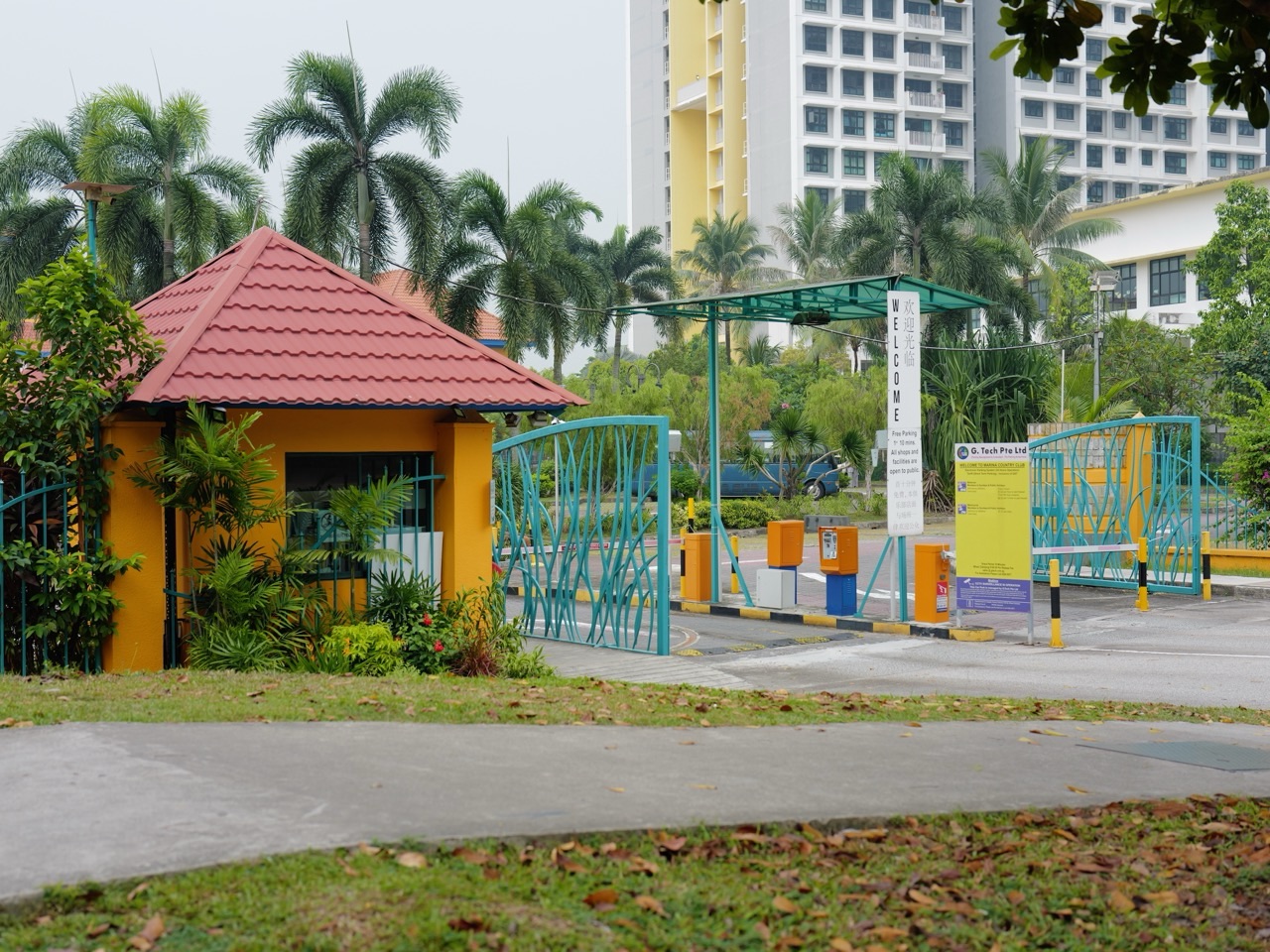
Marina Country Club and operators around Punggol’s Northshore waterfront provide leisure boating-related context, but availability, access, and authorisation depend on the particular operator and voyage. A marina’s location does not confer a right to launch a private boat into any adjacent area. Families arranging a marine leisure experience should confirm the real meeting point, applicable approvals, intended route, maritime safety briefing, required lifejackets and current weather.
During regional smoke, ask when the operator last evaluated visibility and whether any MPA direction affects the route. A late decision to postpone can be a responsible safety step rather than poor service. Avoid pressuring the skipper to depart because you cannot see any larger ships from the pier. The maritime professional assesses the navigational environment, and participants retain the responsibility to communicate their health and accessibility needs.
Punggol Reservoir kayaking is a different legal category
Punggol Reservoir is under PUB’s water-recreation framework, and authorised kayaking, canoeing and dragon boating programmes use specified providers such as SAFRA or relevant PA-organised activities. It is inaccurate to interpret an MPA Singapore Strait navigational warning as automatic permission or closure for every PUB reservoir programme. Those paddling operators have their own weather, waterbody and participant safety arrangements.
The underlying exposure concern still matters. Kayaking and dragon boating can be strenuous outdoor activities, so MOH’s one-hour PM2.5 guidance helps individuals and organisers decide whether the effort is appropriate. Lightning, reservoir access rules and rescue readiness remain distinct considerations. Our Punggol Haze Water Sports Guide explains the public-programme routes; this maritime article focuses on port-navigation rules and the visibility problem affecting powered or commercial craft.
Are Batam and Bintan ferries automatically cancelled by haze?
No universal cancellation follows merely from a high Singapore PSI. International ferry departures use the scheduled operator and terminal, commonly HarbourFront or Tanah Merah for specified routes, not Punggol Point Park. Delays or cancellations can result from weather, operational issues, regulatory directions and other reasons. A passenger should inspect the specific service’s official status and any statement of cause, rather than assume every disruption was triggered by regional smoke.
A family travelling from Punggol to the terminal also has ordinary passport, immigration and transfer responsibilities. Booking confirmation is not a forecast of marine visibility. Keep enough time for getting to the correct terminal and retain the operator’s cancellation or rescheduling terms. The Punggol Johor, Batam and Bintan Weekend Guide addresses cross-border health readings and travel paperwork separately.
Why the water can feel pleasant while visibility remains poor
A coastal breeze may make an exposed boardwalk or a boat deck feel cooler, but the same air movement can transport smoke. Feeling refreshed does not establish good air quality. Haze can persist over open water because the airborne particles do not stop at the shoreline. A skipper must judge actual navigational visibility rather than assume a clear sea breeze means the next buoy or vessel can be recognised early.
Punggol Point’s sea views are enjoyable on suitable days, but a family should not encourage a long exposed outing just to photograph a smoky sunset. Check current public PM2.5 for health and actual weather for the trip; a beautiful orange horizon is neither a nautical visibility measurement nor a fine-particle concentration. An illustrative photo from a previous month must be labelled as such rather than passed off as today’s haze event.
Ship crews work outside for longer than many visitors
Mariners, deck crews, pilots, service staff and harbour craft operators may spend prolonged periods exposed to external air. MPA’s October notice specifically directs maritime employers to MOM’s workplace haze precautions. MOM’s framework calls for risk assessment, reducing prolonged or strenuous outdoor tasks as the 24-hour PSI worsens, and providing appropriate respiratory protection where unavoidable duties and assessed risks require it. Health and navigational duties cannot be separated entirely: fatigued or unwell crew can face other safety risks.
Crew conditions differ from a passenger’s short transfer. A healthy commuter may not need an N95 for a brief journey, while an employee repeatedly handling ropes and heavy equipment on an exposed deck may need a different employer-supported control plan. A skipper should not make a blanket rule that every employee must keep working at full intensity simply because they were issued masks. Scheduling, job rotation, suitable rest, hydration and individual medical considerations remain important.
The relationship between 24-hour PSI and one-hour PM2.5
The MPA notice is expressly an alert associated with the 24-hour PSI above 200, a national composite index. MOH separately guides the general public using a one-hour PM2.5 concentration for activities happening now. These numbers are not interchangeable, even if their displayed values happen to be similar. An MPA professional notice must be interpreted in its own maritime context, alongside direct assessments of visibility and any current Port Master instructions.
For a family at Punggol Point, the next-day PSI forecast helps plan a leisure outing while the immediate one-hour PM2.5 helps decide whether optional prolonged outdoor time is appropriate now. Neither becomes a precise measurement of nautical visibility. Do not create a new rule such as ‘every boat closes at PM2.5 200’ based only on the 2026 MPA headline. Read what pollutant, time period, authority and operation the notice actually refers to.
A marine trip has both navigation and medical questions
A passenger with a chronic heart or lung condition may need more cautious exposure management than an otherwise healthy adult. MOH’s current haze advisory asks vulnerable people to avoid strenuous outdoor activity even at bands that allow more routine behaviour for healthy individuals. A boat’s enclosed cabin may reduce some outdoor exposure depending on its actual ventilation design, but a window and an air-conditioning vent are not proof that the cabin has a certified particle-filtration system.
Before booking, ask whether there is an appropriate indoor seating option, a sensible duration and a way to return if someone feels unwell. A passenger with significant breathing difficulty or chest discomfort needs medical assessment rather than a special sunset cruise. Do not regard a mask as permission to continue a long exposed voyage when health guidance discourages it. An operator can advise on its vessel, but the individual’s treating clinician governs medical restrictions.
Why a boat’s navigation lights are not proof of safe conditions
A boat may display correct navigation lights and maintain radio communication yet still need to slow, change plans or suspend movement due to reduced visibility. Those systems contribute to safe navigation but do not eliminate environmental uncertainty. COLREGs responsibilities extend beyond switching on lights, and professional judgement matters. A passenger who sees illuminated boats leaving a marina should not infer that the same departure is suitable for every vessel or route.
A family also should not mistake a restricted visibility signal for an instruction about land-based outdoor exercise. The maritime safety system is designed around navigational interactions between craft. MOH’s personal activity guide, by contrast, addresses health exposure for people at large. Both can apply on the same day without one replacing the other.
Rain, lightning and poor visibility can coincide
Singapore maritime operators also need to consider thunderstorms, wind, sea state and lightning. A shower may reduce atmospheric particles in some circumstances while making navigation more difficult for other reasons. The responsible operator’s marine weather judgement cannot be inferred from an improving PM2.5 colour band. A rainy northern waterfront may have safe land-based access in one place and unsuitable boating conditions in another.
Families should check MSS’s local forecast and actual operator notices, as well as NEA and MOH. Do not ask boat staff to continue because an app shows a 20-minute weather gap; the professional team must consider water conditions, route and legal safety constraints. If lightning is nearby, outdoor water sports should not proceed simply because the haze looks clearer. A well-managed cancellation identifies the real reason without inventing a citywide emergency.
The difference between ‘port waters’ and neighbourhood canal water
The phrase Singapore port waters describes a maritime regulatory area, not every puddle, canal, playground fountain or reservoir. Punggol Waterway Park’s canal and PUB’s reservoir recreation have their own operating frameworks; they are not automatically governed by the movement restrictions of a deep-sea vessel in the Singapore Strait. A photography assignment should distinguish a commercial ship, a leisure boat, a kayak and a waterside pedestrian.
This distinction is important for children’s Geography and citizenship learning. An MPA shipping notice concerns maritime safety, a PUB water-recreation listing concerns permitted reservoir uses, an NParks park page concerns land access, and NEA supplies public air-quality information. A student who identifies the actual responsible organisation has made more progress than one who copies a dramatic headline saying all Punggol water is closed.
A local map lesson for Punggol students
Ask pupils to locate Punggol Point Park, Punggol Waterway, Punggol Reservoir, Pulau Ubin and the Singapore Strait on a properly sourced map. The northern waterfront and the international southern shipping route are different geographic features. Next present the 14 October MPA notice and ask what its exact West-region 24-hour PSI value establishes. The correct answer is that MPA issued a national maritime caution based on an observed West-region reading; it did not publish the identical value for Punggol’s North region.
Older students can compare port activities, ferry schedules and recreational paddling to discuss how a single environmental hazard has distinct effects on people and services. Younger pupils can practise reading the title, date and intended audience of a public notice. Keep the hypothetical route exercises clearly labelled and never use a commercial ship-tracking map to direct real navigation or public safety action.
A worked example: a family yacht outing from the northeast
Imagine a family has booked a pleasure-craft outing from a marina associated with Punggol’s northern coastline. The day before departure, they see the MPA haze alert and contact the operator. The skipper reviews current marine visibility, relevant notices, weather and operating conditions, while the passengers check their health needs and actual boarding instructions. If the operator postpones, the family follows the booking terms and enjoys a suitable indoor alternative.
The example does not assert that any real operator cancelled a yacht on 20 October. It illustrates why a published MPA alert, real-time navigation conditions, the Port Master’s actual directions and the passengers’ health are separate parts of the decision. A family cannot overrule the skipper based on a blue patch of sky, and the skipper cannot use a passenger’s comfortable appearance as a complete occupational health assessment for crew.
Worked example: a ferry delay rumour
A message circulates in a Punggol parent group saying all ferries to Batam have stopped because the PSI is 203. A careful parent finds the MPA notice and discovers that 203 was the observed West-region 24-hour PSI on 14 October, while the notice warned of possible visibility issues and potential movement restrictions; it did not announce the status of every Batam departure. The parent checks the actual ferry operator and terminal schedule before sharing any claim.
The correction is short and useful: ‘MPA issued a haze navigation advisory; ferry status must be checked with the operator for the exact sailing.’ This preserves safety without inventing cancellations. A later operator statement may confirm a delay or cancellation for a particular service, in which case share that dated source and booking details rather than retrospectively applying a blanket assumption to all routes.
Why Punggol photographers should avoid guessing ship movements
A photograph of ships or lights through haze may encourage speculation about missed buoys, collisions or emergency traffic. Without verified records, a still image cannot establish that the vessel was travelling at an unsafe speed, was illegally positioned or was delayed by the haze. Camera zoom can compress distances and exposure changes apparent brightness. A dramatic post could unfairly accuse a marine professional or mislead families about transport options.
Take photographs only from lawful and safe public positions, protect people’s privacy and label the image’s actual date and place. Do not enter restricted port land or operate a drone without required aviation and local approvals. The Punggol drone rules guide explains how maritime views interact with CAAS airspace requirements. A trustworthy photo essay combines creative observation with independent official data and honest uncertainty.
Ten-minute checklist before a marine booking
Identify the actual operator, departure point, destination and route. Confirm what type of craft it is and which maritime or reservoir authority applies. Review the latest MPA or relevant safety notice, actual marine weather, operator booking status and any age or medical requirements. Check NEA’s latest PM2.5 and MOH advice for people’s outdoor exposure. Read rescheduling or refund terms while there is still time to change plans, and decide who receives the final update.
This checklist prevents several avoidable mistakes: travelling to Punggol Point expecting an international ferry, confusing a PUB kayak listing with an authorised private powerboat, claiming a West-region 203 reading was measured at Punggol Point, or assuming a high 24-hour PSI always cancels every vessel automatically. Practical clarity is more useful than speculation. The sea will still be there if an optional trip needs another date.
Marine and Punggol waterfront decisions at a glance
| Activity or place | Key authority or source | Haze-day decision |
|---|---|---|
| Ships in Singapore Strait / port waters | MPA Port Marine Notice 138 of 2026 | Lookout, cautious navigation, current Port Master directives |
| Harbour and pleasure craft | MPA and actual operator | Check possible restricted movements and operator notice |
| Punggol Reservoir kayaking | PUB and designated operator | Operator, water safety and MOH activity advice |
| Punggol Point Park | NParks | Public waterfront access and individual exposure check |
| Batam/Bintan ferry | Ferry operator and terminal | Exact sailing status, departure port and actual booking terms |
| Ship/port crew outdoor duties | Employer and MOM | Worker health, task risk controls and suitable protection |
Frequently asked questions: maritime haze and Punggol
Did MPA issue a real 2026 haze notice for ships?
Yes. Port Marine Notice 138 of 2026, dated 14 October, warned the shipping, harbour craft and pleasure craft communities of possible reduced visibility in Singapore Strait and port waters. It cited a West-region 24-hour PSI of 203, not a Punggol-specific measurement.
Are all boats automatically banned at PSI above 200?
No. The signed notice states that the Port Master may restrict harbour and pleasure craft in port waters if reduced visibility creates navigation concerns. It does not automatically cancel every boat, ferry or reservoir activity. Check actual instructions and operator service status.
Is Punggol Point on the Singapore Strait?
NParks describes Punggol Point Park as facing the Straits of Johor, with views of Pulau Ubin and Coney Island. The major Singapore Strait international shipping lane is a distinct southern route. Do not describe a northern waterfront view as the Singapore Strait without geographical verification.
Which sea rules did MPA mention?
The notice explicitly cited COLREGs Rules 19, 20 and 35, concerning conduct in restricted visibility, navigation lights and sound signals. These are professional navigation duties, not a substitute for training or real-time operator advice.
Can I take an international ferry directly from Punggol Point?
Do not assume so. The scheduled Batam and Bintan ferry services use actual operators and terminals such as HarbourFront or Tanah Merah. Confirm the ticket’s stated terminal and current operator schedule rather than treating a Punggol marina as a public international ferry terminal.
Does one-hour PM2.5 show marine visibility in metres?
No. One-hour PM2.5 describes mass concentration of fine particles, while navigational visibility is a separate observation influenced also by humidity, lighting and rain. Marine crews need actual navigational safety assessments and port directions.
Are kayaking rules the same as shipping rules?
No. PUB-authorised kayaking and canoeing at Punggol Reservoir have their own waterbody operator and safety processes; MPA’s port waters notice addresses maritime craft and navigation in its defined jurisdiction. Outdoor effort and haze health advice still matter to paddlers.
Why can coastal air feel cool but still be hazy?
Wind may cool the skin while also transporting smoke. A pleasant breeze is not a certified low-PM2.5 pocket. Use official air readings for health and the marine operator’s current safety judgement for navigation.
What if my cruise or boat tour is postponed?
Keep the dated operator notice, identify the precise service and ask about its booking terms. A general MPA advisory does not guarantee identical cancellation or refund rules for every operator. Follow actual Port Master restrictions when applicable.
Does MPA’s notice tell me whether it is safe to run at Punggol Waterway?
No. MPA’s notice concerns maritime navigation and seafarer work. An ordinary person’s outdoor exercise decisions should use current NEA one-hour PM2.5 and MOH’s activity advice, taking account of health, duration and exertion.
Related Punggol maritime, haze and coastal guides
- Punggol kayaking, canoeing and dragon boating during haze
- Johor, Batam and Bintan ferry travel and air quality
- Changi and Seletar air travel visibility
- Waterway photography, sunsets and visibility
- Punggol CAAS drone permissions and coastal images
- Current PM2.5 versus next-day PSI forecast
- Why regional smoke reaches Punggol
- Children, seniors and respiratory health
- Punggol Haze Complete Guide 2026
- eduKateSG Punggol discovery hub
Verified maritime and air-quality sources
- MPA: Port Marine Notice No. 138 of 2026 (14 October)
- MPA: Signed official two-page marine haze notice
- MPA: 2026 Harbour and Pleasure Craft Safety Circular
- MPA: Vessel Traffic Information System and STRAITREP
- NParks: Punggol Point Park and Straits of Johor views
- PUB: Reservoir and Waterway Authorised Activities
- NEA: Singapore’s official air-quality measurements
- MOH: Haze health and 1-hour PM2.5 guidance
- MOM: Outdoor employee haze risk controls
Reviewed 20 October 2026. The official MPA notice cited a West-region 24-hour PSI of 203 on 14 October; this article does not infer the same value for Punggol. It does not report a specific craft cancellation, authorise private boating or provide navigation instructions for an actual vessel. Fictional examples are labelled as such.


