
Can you start skipping rope in a Punggol HDB flat? You can learn the basic skill with inexpensive equipment, but repeated jumping inside a high-rise home can disturb neighbours and may be unsuitable for a small or cluttered room. Start by choosing a safe, permitted space with enough clearance, consider whether impact exercise is appropriate for your body, and practise at a comfortable level. Do not assume the common corridor, fire staircase, void deck or park connector is automatically a personal skipping area. A neighbour-friendly alternative such as quiet stepping or walking may be a better choice on many days.
This Skipping Rope Fitness in Punggol 2026 guide is for parents, students and adults exploring an inexpensive cardio activity without a gym membership. It covers rope selection, room height and furniture, beginner coordination, high-impact versus low-impact options, SCDF escape routes, HDB noise etiquette, school activity guidelines, a worked interval calculation, a flexible four-stage learning approach, haze/rain decisions and when to stop. It has a narrower intent than Rainy-Day Exercise in Punggol: that page compares indoor options, while this one explains the specific rope-skipping decision.
Punggol skipping rope: the quick information table
| Question | Practical first answer | Safety or neighbour consideration |
|---|---|---|
| Is skipping rope cardio? | Yes; HealthHub lists it among vigorous or higher-impact activities depending on effort. | Start gradually; not suitable for everyone. |
| Can schoolchildren try? | HealthHub includes skipping in suitable active-play ideas. | Age, coordination, supervision and environment matter. |
| Is it low impact? | No. HealthHub describes rope skipping as high-impact cardio. | Choose alternatives where joint or other concerns exist. |
| Does a rope need to be expensive? | No. Safe fit and appropriate clearance matter more than price. | Avoid heavy or fast equipment before skill is established. |
| Can I skip in a bedroom? | Only if there is safe clearance and it does not create unacceptable disturbance. | Ceiling fans, furniture and floor noise can make it unsuitable. |
| May I skip in a common corridor? | Do not use escape routes as exercise space. | SCDF requires routes and firefighting access remain unobstructed. |
| What about a fire staircase? | It is an emergency-access area with its own safety rules. | Do not use landings to create an exercise station. |
| Is a void deck always available? | No. Town council use rules and other residents’ needs still apply. | Check permitted activity and avoid obstruction or noise. |
| Is Waterway Park a good option? | A suitable open permitted area may be considered when safe. | Do not skip on narrow shared cycling or pedestrian paths. |
| Can I count rest as rope-skipping time? | No. Active work and elapsed time are different. | Be accurate without becoming compulsive about numbers. |
| Should I skip during haze? | Follow NEA air-quality guidance; select appropriate alternatives. | Indoor air quality also matters. |
1. Why skipping rope appeals to Punggol families
A skipping rope is relatively inexpensive, easy to store and familiar from school PE and childhood games. It provides a way to challenge rhythm and coordination without joining a large sports team. An adult may enjoy learning a simple repeatable movement, while a child likes the playful task of clearing the rope smoothly. The equipment’s simplicity is part of its appeal, but it does not remove the need for an appropriate physical environment.
HealthHub’s home endurance guide calls skipping a cheap, high-impact cardio workout. Its exercise-intensity guide lists rope skipping as an example that can be vigorous depending on the person and effort. This is important: a small portable rope is not automatically a gentle activity, and an unfit beginner may find it demanding very quickly.
The neighbourhood matters because Punggol is largely a town of high-rise homes with shared spaces. A Punggol family has neighbours above, below and beside them. A movement that feels light to the person jumping may create repeated audible impacts through the floor. Another family’s baby, student or shift worker may be trying to sleep. A healthy lifestyle should not depend on making someone else’s home less comfortable.
The goal is to choose when and where rope skipping makes sense. If the space is unsuitable, you can still have a good movement session without a rope. Comfortable outdoor walking, appropriate fitness-corner exercises and quiet home routines are valid alternatives, not failures.
2. High-impact does not mean bad, but it is not suitable for everyone
Impact activity involves landing forces and repeated loading through the feet, ankles, knees and other structures. Some healthy people enjoy this and gradually develop conditioning, while others experience discomfort or have conditions requiring a different approach. A person with a recent lower-limb injury, repeated falls, significant joint pain, pregnancy- or postpartum-related concerns, pelvic-floor symptoms or another medical restriction should obtain individual advice rather than assume skipping is appropriate.
Skipping also raises exertion quickly for some participants. Someone returning after long inactivity may become breathless after a few attempts. This is not a reason to be ashamed or to force a high-intensity challenge. Start from a level that can be tolerated, choose adequate rest and stop for concerning pain, dizziness, chest discomfort or marked breathing difficulty.
HealthHub’s exercise guidance distinguishes intensity and recommends discussing appropriate activity with a healthcare professional when a relevant condition is present. A reputable trainer can help with safe coordination, but a fitness video cannot examine the individual or diagnose symptoms. The simplest low-cost choice may be a gentle walk until the person is ready for impact activity.
For older adults, exercise should address aerobic movement, strength, balance and flexibility according to individual needs. Jumping rope is not a universal senior fitness activity. The Active Ageing in Punggol guide explores suitable alternatives without making age alone an absolute restriction.
3. Choosing a rope: fit and control before speed
Ropes vary in weight, handles, materials and intended use. For an absolute beginner, the sensible aim is a comfortable rope that can be controlled in a safe space without striking anyone or repeatedly catching on the floor. A heavy speed-training cable or weighted rope may create more difficulty or risk than the person needs. There is no reason to buy an expensive branded accessory before learning whether the activity suits you.
The length must suit the learner’s height and the chosen movement. A rope that is excessively short may require awkward jumps, while one that is too long can catch or flick nearby objects. A suitable instructor, seller or safe beginner reference can help choose a length. This article deliberately avoids prescribing one exact length formula as correct for every rope and participant because handle design and intended use vary.
Inspect the cord and handles for damage. A frayed rope, sharp cable or loose connection should not be used. Keep a safe distance from other people, pets and fragile belongings. A child who is excited may swing a rope sideways at head height before anyone starts skipping; supervising adults should explain space awareness from the beginning.
Storage is easy, but do not leave a skipping rope trailing across a walkway where someone could trip. Keep it in a designated place after play. A safe hobby includes putting equipment away considerately rather than treating a small object as harmless.
4. The HDB floor is not an invisible gym mat
An HDB living room may have enough floor area for standing exercises but not for repeated jumping. Furniture, ceiling fans, light fittings, doors and other people create physical boundaries. The noise from impact can transmit through the slab. Even if an exercise mat softens some sound, it does not prove that jumping will be quiet enough for neighbours or safe for a particular floor and space.
A person who insists that a “silent skipping” technique produces no noise is making a claim that depends on the actual building, flooring, exercise effort and time of day. There is no universal guarantee. If a downstairs neighbour reports disturbance, consider the concern seriously and choose a more suitable place or lower-impact alternative. A regular habit that creates repeated conflict is less sustainable than a considerate activity.
Punggol flats also serve different households. A parent working from home may have video calls, a teenager may study for exams and an older resident may need clear routes through the living room. Rearranging furniture to skip should not leave cables, bags or exercise equipment in the way. Choose an activity that respects the room’s actual functions rather than pretending every flat has dedicated gym space.
The existing Healthy HDB Home in Punggol guide covers clutter, household airflow and safe movement. Its lesson applies here: remove a hazard before adding another task. If you cannot establish adequate space, do not attempt rope skipping in that room.
5. SCDF escape routes: why corridors and stair landings are poor exercise areas
The Singapore Civil Defence Force’s residential estate fire-safety guidance explains that common corridors and staircases are important evacuation routes. The agency requires access to firefighting equipment to remain unobstructed and strictly prohibits storage at staircase landings. Its guidelines set clear space requirements for the limited household items that may be permitted in common corridors.
This does not mean a resident may treat the remaining passage width as a private fitness station. Swinging ropes can strike people approaching unexpectedly or block someone with a stroller or wheelchair. A person jumping in a stair landing could interrupt emergency use or cause a collision at a door. Do not set up skipping stations in escape routes or near firefighting equipment. Use a suitable private or authorised activity space instead.
Void decks and common open areas also have management and community rules. A space that looks empty in the afternoon may still be used for access, resident gatherings or estate services. Check the relevant town council or operator’s permitted use before organising repeated exercise, especially as a group. Do not assume nobody else uses the area merely because it is quiet at that moment.
The fire-safety principle connects to the earlier Stair-Climbing Fitness in Punggol HDB guide. A staircase is primarily functional infrastructure. Exercise routines should not compromise emergency escape, building operations or other people’s safe passage.
6. Outdoor spaces in Punggol: open area is not automatic permission
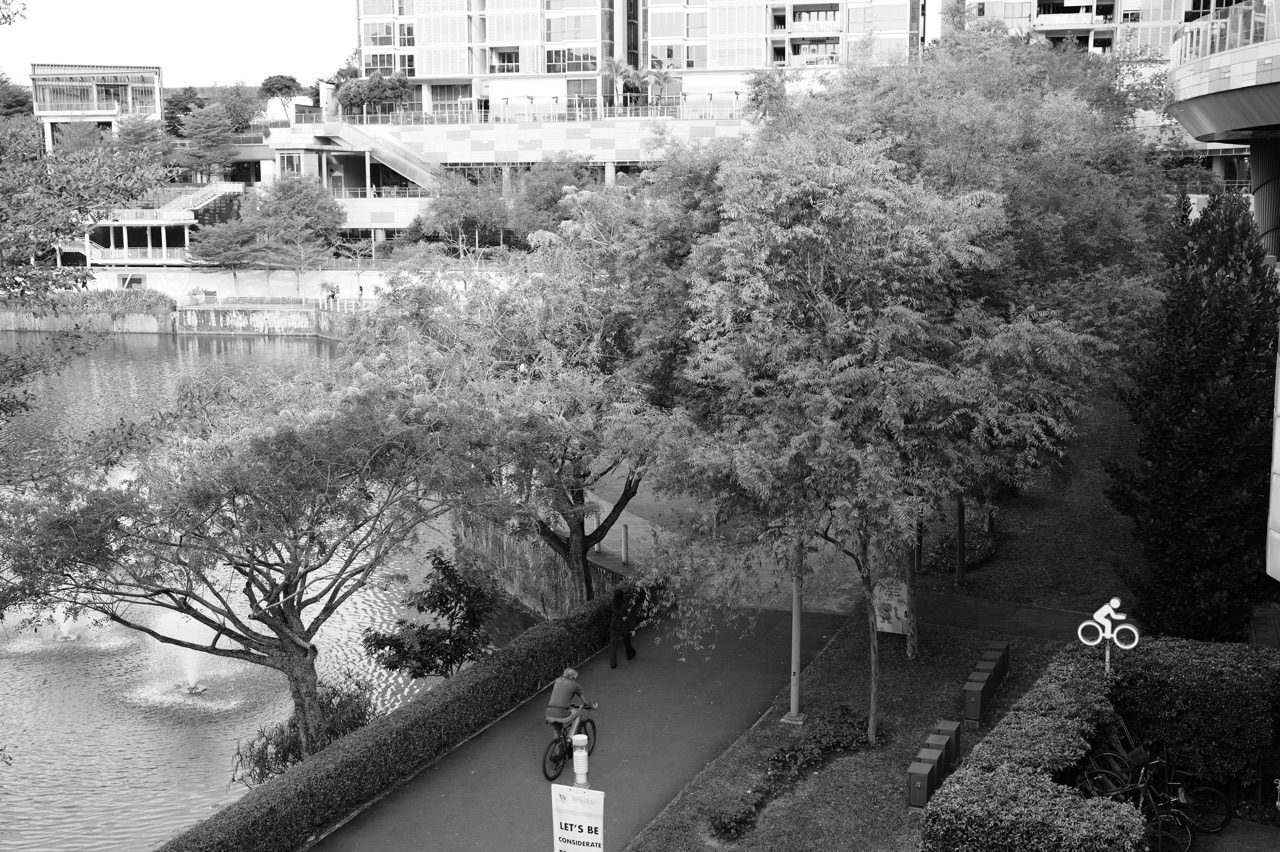
Punggol Waterway Park and nearby public spaces may offer more room than a flat, but they are shared by walkers, cyclists, parents with prams, children and people with mobility aids. A skipping rope can extend well beyond the user’s feet. Using one on a narrow park connector or near a busy bridge could strike another person or cause a cyclist to swerve.
NParks’ parks etiquette guidance requires visitors to share public spaces responsibly and respect people, wildlife and safety rules. Choose only a suitable permitted open area with clearance, if available, and stop if the activity interferes with others. Do not install equipment, reserve a public zone or organise a paid class without appropriate permission.
A route beside water also introduces distractions. An adult watching a child skip should remain aware of railings, pathways and the child’s movement towards the water. The activity should not involve jump challenges at the edge of the promenade or on a steep ramp. If the area feels crowded or uneven, turn to another activity rather than insisting on the original plan.
Someone interested primarily in cardiovascular exercise might choose a short safe Waterway walk instead. It requires no swinging equipment and can be adapted to changing family needs. The Walking for Everyday Errands in Punggol guide shows how movement can be part of ordinary journeys.
7. How to learn skipping without a timed competition
For a beginner, coordination is often the first challenge. The person learns to recognise when the rope approaches their feet and to respond with a small comfortable movement. A qualified coach or an experienced responsible adult can offer guidance while checking safe space and ability. It is not necessary to demand a hundred consecutive jumps or copy double-under routines performed by trained athletes.
Some children enjoy counting successful jumps, but others may become frustrated when the rope catches repeatedly. Start with encouragement and rest. A child who is learning timing can benefit from simple age-appropriate rhythm and movement games without needing a target score. If jumping is unsuitable, slower stepping or another play activity can still provide enjoyment.
The learning process should have room for variation. An adult who jogs regularly may find coordination difficult even if fitness is good. A child may have excellent rhythm but tire quickly. These are different skills: cardiovascular endurance, rope handling, motor coordination and impact tolerance do not develop at identical rates. Assess them separately instead of calling someone unfit because the rope tangles.
Do not instruct children to copy advanced crossovers, double-unders or high-speed cable tricks as an immediate next step. Those can increase coordination and impact demands. Any progression should be chosen according to actual control, personal wellbeing and appropriate coaching. Rest and positive feedback are part of learning.
8. Rope skipping versus rope-free movement
| Activity | What it can offer | Why a Punggol household might choose it |
|---|---|---|
| Basic rope skipping | Rhythm, coordination and aerobic effort with impact. | Only in an adequate permitted space and for suitable participants. |
| Rope-free simulated turns | A coordination task without a swinging cord. | Removes cord-collision risk; jumping impact may remain. |
| Marching or stepping | Gentler movement with less repetitive jumping. | Better for small flats or neighbour-sensitive times. |
| Comfortable local walking | Ordinary aerobic movement depending on pace. | Convenient short route outside the flat. |
| Suitable chair exercise | Movement that can be adapted for certain mobility needs. | When jumping or balance is unsuitable. |
| Beginner strength work | Controlled muscular training without a swinging rope. | Complements cardio but has different goals. |
| Quiet mobility routine | Comfortable range-of-motion practice. | Appropriate during a rest or lower-energy day. |
These options serve different purposes; they are not a claim that marching and skipping create identical physiological effects. A person aiming for a vigorous aerobic workout may prefer rope skipping in a suitable environment. Someone with a knee issue or a sleeping downstairs neighbour may prefer comfortable walking or quiet movement. The best option is the one that can be repeated without harm or conflict.
SportSG’s home-based workout library includes accessible short movement ideas across skill levels. HealthHub’s physical activity barriers guide lists jumping rope among equipment-light movement options while also presenting other choices. Do not interpret either as a demand to skip when the setting is unsuitable.
9. How vigorous is rope skipping, really?
HealthHub lists skipping with a rope among examples of vigorous-intensity physical activity, though intensity depends on effort and fitness. Some beginners may find even a short period strenuous. The general talk test and perception of exertion can help a healthy adult recognise when the work is becoming challenging, but no text can tell an individual to continue despite dizziness or chest discomfort.
Rope skipping may be associated with bone-loading activity in youth movement guidance, while adults may use it for aerobic fitness. Still, the same physical activity can have different training roles at different stages of life. A child using a rope during play is not following an adult interval training programme. A sedentary adult returning after a long break should not copy a teenager’s high-speed routine.
The Health Promotion Board’s youth physical-activity guidelines identify hopping, jumping and rope skipping as possible activities for muscle and bone strengthening within the overall age-appropriate framework. These recommendations concern varied movement across the week and do not require parents to prescribe an uninterrupted daily rope-skipping session.
There is no advantage in converting family movement into an obsessive count of calories or jump totals. A healthy relationship with exercise also respects rest, food, sleep and enjoyment. If a child is already exhausted after an active CCA and a late homework night, adding a compulsory skipping challenge may be counterproductive.
10. Worked original time calculation: active seconds versus elapsed minutes
Imagine a healthy adult working with a qualified instructor who wants to understand how interval time is recorded. For illustration only, suppose a session has six cycles, each containing twenty seconds of activity followed by forty seconds of rest. Each cycle lasts sixty seconds. The entire block lasts 6 × 60 = 360 seconds, or six minutes. But only 6 × 20 = 120 seconds, or two minutes, are active jumping time; four minutes are rest or transition.
This does not mean every adult should attempt six cycles or that a child should copy it. The example is arithmetic, not an exercise prescription. It shows why the elapsed session duration and time spent actually performing an activity are different. A six-minute watch recording with long pauses should not automatically be described as six minutes of vigorous rope skipping.
It also demonstrates a broader content quality principle: precise language prevents exaggerated benefits. A user can say “I practised rope skipping in a six-minute block with breaks” rather than claiming six uninterrupted minutes of high-intensity exercise. Similarly, a schoolchild who managed ten comfortable turns after several attempts has made progress in coordination even if a fitness app shows a small activity count.
For another simple Mathematics example, suppose a learner correctly clears the rope on six of eight calm attempts. That is 6 ÷ 8 = 0.75, or 75% of the counted attempts. But the percentage only describes this small practice, not the child’s athletic potential or health. The useful next step may be understanding why two turns caught the rope, not setting an impossible 100% target.
11. A family with two children needs a different plan from an adult athlete
A primary-school child may see skipping as a game, while a secondary-school student may use it during sport training or PE. Their physical capacity, coordination and interest differ. The family should provide appropriate supervision and enough room, keep equipment suitable and avoid head-to-head comparison that turns leisure into pressure. A younger child who cannot coordinate a rope may enjoy hopping or active play without a rope.
HealthHub’s six-year-old movement ideas includes skipping and jumping as ways to help children move, but general activity examples still require age-appropriate safe environments. For younger children, unsupervised swinging cords can hit other children or catch on furniture. The supervising adult should be able to stop the game promptly when it becomes unsafe.
Punggol households often coordinate school collection, CCA, tuition and meals. A rope activity is a small optional addition, not a requirement to fill every free minute. Some days a family park walk is more enjoyable, and some days rest is sensible. The Punggol Primary School Active Play guide covers a whole-week approach.
Adults should also model considerate behaviour. If a parent insists on high-impact jumping above a sleeping neighbour, the activity teaches the wrong lesson about public responsibility. Children can learn that being active and being a good neighbour go together.
12. Outdoor heat, haze and thunderstorms in Punggol
Punggol’s parks are attractive for movement, but Singapore’s heat and humidity can make vigorous exercise uncomfortable. MSS publishes Wet-Bulb Globe Temperature guidance for prolonged outdoor activity at weather.gov.sg/heat-stress. Do not assume that a breezy Waterway stretch is automatically a safe place for intense skipping. Personal fitness, hydration and the actual conditions matter.
During haze, follow official air-quality advice rather than judging whether smoke is visible. Rope skipping can involve vigorous exertion, so air-quality conditions may affect the decision to continue outdoors. An indoor flat is not automatically clean if haze particles are entering, and high-impact jumping indoors may create neighbour noise. Choose a suitable lower-exertion activity or rest where appropriate.
Thunderstorms and lightning create a separate risk. Use MSS Lightning Information and stop outdoor activity during unsafe weather. A sheltered park bench or tree does not necessarily protect against lightning. It is perfectly reasonable to postpone rope practice and do a quiet indoor stretching or reading activity instead.
When a participant is ill, unusually tired or experiences alarming symptoms, the correct response is not to make up missed turns later at double intensity. Recovery and appropriate care matter. A recreational goal can wait until conditions improve.
13. What to notice during a first rope-skipping session
| Observation | Useful beginner question | When to change course |
|---|---|---|
| Space | Can the rope turn without hitting objects or people? | If clearance is inadequate, choose another activity. |
| Ground | Is the surface stable and appropriate? | If wet, uneven or slippery, do not proceed. |
| Noise | Will repeated landing disturb residents? | Use a different suitable setting or lower-impact option. |
| Rope fit | Can the learner control the cord comfortably? | Adjust equipment with suitable advice. |
| Breathing | Is exertion manageable for this person? | Pause for unusual breathlessness or symptoms. |
| Feet and joints | Is there concerning pain or discomfort? | Stop and seek appropriate help. |
| Coordination | Is the person building predictable timing? | Reduce complexity instead of increasing speed. |
| Interest | Does the learner enjoy the practice? | No need to force a disliked hobby. |
| Rest | Can the person recover comfortably? | Avoid excessive repetition or high-pressure targets. |
The table functions as a decision aid, not a home coaching certification. It avoids a rigid step-by-step high-impact prescription because suitability varies and some readers may have conditions not described here. A qualified trainer or healthcare professional can advise on movement technique, progression or alternatives where relevant.
14. A flexible four-stage beginner learning pathway
| Stage | Learning focus | Possible suitable action | Positive outcome |
|---|---|---|---|
| 1 — Fit | Decide whether impact activity is appropriate. | Choose a permitted safe space and comfortable equipment. | No room, neighbour or health hazard. |
| 2 — Rhythm | Learn a simple controllable movement. | Practise calm coordination with rest and supervision if needed. | Some consistent comfortable attempts. |
| 3 — Repeat | Build familiarity without rushing. | Repeat small appropriate practices, reviewing response. | Enjoyment and controlled technique. |
| 4 — Choose | Keep the hobby or select alternatives. | Review noise, recovery, school/work needs and interest. | A sustainable activity decision. |
These stages are not an obligation to spend four weeks learning or an assurance of continuous skipping by a deadline. Some people are already coordinated and can progress appropriately; others may need instruction, rest or a different activity. The successful result is knowing whether rope skipping fits the household and body, not protecting a target count at all costs.
15. A worked Punggol flat situation: the upstairs exercise problem
Imagine an adult living on an upper floor of an HDB block who wants to save money on gym access. They plan an energetic evening rope workout in the living room, but repeated impacts carry to the downstairs unit. A neighbour politely mentions the disturbance. The adult may initially think the thin rope is harmless, yet the sound arises mainly from landings and the floor system rather than the rope itself.
A considerate response is to stop the noisy session, check whether an appropriate permitted outdoor or private location exists and consider lower-impact alternatives. A mat may reduce certain vibrations but cannot guarantee silence. If it is late or outdoor conditions are unsafe, a comfortable mobility or stepping routine may be better. The family’s fitness goal remains worthwhile without turning it into a neighbour dispute.
That is an important Punggol lifestyle lesson: useful health behaviour should be feasible in a high-density community. A person who adapts to other residents is not giving up on fitness. They are choosing a form of activity that can be maintained respectfully.
16. A worked student situation: skipping after tuition and CCA
A Secondary 1 student enjoys skipping and has an active sports CCA twice a week. A parent proposes an extra daily rope challenge to improve fitness. But the student has late tuition, substantial homework and insufficient sleep on some evenings. Rather than imposing another high-impact task, the family reviews overall activity, meals and recovery. Skipping may fit occasionally on a suitable rest day, but is not required every night.
Singapore’s youth physical-activity guidance recommends an average of sixty minutes of moderate-to-vigorous aerobic activity per day across the week for ages seven to seventeen, with age-appropriate variety and sleep. This is a weekly public-health reference, not a demand to tack an hour of rope skipping onto an already active day. The Healthy Teenage Life in Punggol guide explains why total load matters.
The student’s interest is still respected. If they like learning a rope rhythm, they can practise appropriately when rested and conditions allow. A parent can help by locating a suitable space and not comparing their jump count with classmates. The goal is a long-term enjoyable movement habit, not another ranked examination.
17. A worked older-adult situation: choosing a gentler alternative
An older Punggol resident who has recently felt unsteady wants a quick fitness routine and sees rope skipping promoted online. Because repeated jumping and falls may be concerning, the sensible first action is to discuss appropriate exercise with a clinician or qualified professional. The person might choose a comfortable neighbourhood walk, supervised balance work or an adapted activity instead. Being active does not require copying a younger athlete.
The Active Ageing and Walking Football near Punggol articles show different ways of maintaining social connection and movement. Those options also need individual suitability assessment, but the point is to widen choices rather than insist one high-impact exercise suits everyone.
18. Skipping rope and a balanced weekly physical-activity pattern
A rope is one tool for movement. Some adults enjoy it as an occasional higher-intensity option; others find walking, cycling or water aerobics more accessible. Muscular strength, flexibility, balance and rest have different roles in the overall week. Rope skipping alone should not be presented as a complete programme for every person, especially when the participant is injured, recovering or physically inactive.
A family can use small enjoyable movement opportunities without turning them into a collection of paid courses. Safe play, walking to local errands, appropriate sport and quiet movement breaks can contribute to a healthier routine. The Low-Cost Fitness in Punggol article helps compare equipment-light habits with paid classes, while Strength Training for Beginners addresses muscular exercise separately.
Do not make rope skipping a weight-control punishment for a child or adult. Avoid body-shaming and restrictive dieting as motivations. A supportive activity is about enjoyment, coordination and sustainable health rather than changing appearance by a fixed date. For someone struggling with unhealthy compulsive exercise or distress around body image, appropriate professional support is more useful than another numerical challenge.
19. Common skipping-rope mistakes in Punggol
- Jumping above neighbours for long periods. Consider impact transmission and choose another setting.
- Using fire escape staircases or common corridors as a personal gym. Keep evacuation routes clear.
- Choosing a narrow Waterway park connector. Do not interfere with cyclists or pedestrians.
- Buying a heavy speed rope before learning basics. Begin with suitable controllable equipment.
- Skipping under a ceiling fan. Check overhead and sideways clearance.
- Ignoring recent joint or pelvic-floor symptoms. Seek appropriate advice.
- Copying a child’s or athlete’s intense routine. Individual capacity and recovery differ.
- Counting rest time as active skipping. Describe effort accurately.
- Demanding daily jump targets during school exam weeks. Respect overall activity and sleep.
- Skipping outside through lightning or unsafe haze. Follow official environmental guidance.
- Leaving ropes across walkways. Store small equipment safely.
- Using exercise as body-image punishment. Keep movement positive and voluntary.
20. The complete Punggol home-and-neighbour checklist
- Ask whether rope skipping is appropriate for your current health and conditioning.
- Choose an adequate private or authorised exercise area.
- Check ceiling fan, lights, doors and sideways clearance.
- Check surface stability, dryness and suitable footwear.
- Respect impact noise and household rest times.
- Do not obstruct HDB corridors, stairs or fire equipment.
- Do not use shared public paths as a skipping station.
- Select a rope with suitable length, weight and condition.
- Keep other people and pets out of the cord’s swinging area.
- Begin at a comfortable pace and take appropriate breaks.
- Stop for concerning pain, dizziness, breathlessness or other symptoms.
- Protect children’s choice and age-appropriate supervision.
- Record improvement without compulsive numerical targets.
- During haze, heat or storms, consider suitable alternatives.
- Keep equipment stored safely after use.
- Review whether the habit genuinely fits your household.
21. Frequently asked questions
Can I skip rope in a Punggol HDB flat?
Only if there is safe clearance, suitable personal ability and no unacceptable disturbance. Repeated impact may make another location preferable.
Is rope skipping high-impact exercise?
HealthHub identifies skipping as a high-impact cardio option.
Is skipping rope vigorous activity?
It can be, depending on individual effort and fitness; HealthHub lists it among vigorous examples.
Can primary-school children skip?
Yes with age-appropriate skill, safe space and supervision; it can be a fun active-play option.
Do I need an expensive rope?
No. Fit, safe material and control matter more than brand.
Can I skip beneath a ceiling fan?
Do not. Overhead clearance and nearby objects must be considered.
Can I skip at an HDB staircase landing?
Do not use emergency stair landings as exercise stations; SCDF requires unobstructed escape access.
Can I use the common corridor for skipping?
A swinging rope and repeated jumps can block or endanger people using the escape route; choose another appropriate space.
Is every void deck a free fitness area?
No. Check the relevant town council and use rules, and do not obstruct residents.
Can I skip at Punggol Waterway Park?
Only in a genuinely permitted suitable open area, without interfering with other path users or wildlife.
What is the easiest skill for a beginner?
Developing comfortable coordination at an appropriate level under safe conditions before attempting speed or complex tricks.
Does a mat make skipping silent?
Not necessarily. Impact sound varies with the building, surface and effort.
How can I exercise quietly in an HDB flat?
Consider appropriate low-impact movement such as stepping, mobility or suitable strength exercises rather than repeated jumping.
What if I have knee or ankle pain?
Stop high-impact activity and seek appropriate assessment for ongoing or concerning pain.
Can seniors skip rope?
Individual ability varies; some may be able to, but high-impact activity is not suitable for everyone and a gentler option may be better.
What if I am postpartum?
Personal recovery and pelvic-floor or other symptoms matter; seek appropriate professional guidance before impact exercise.
Do rest periods count as jumping time?
No. Elapsed session time includes rests; record active time separately if using it as a measure.
Can I use skipping as an exam-revision break?
Only when appropriate; short gentle movement breaks may be more suitable if space, noise or fatigue is a concern.
Should my child complete hundreds of jumps daily?
No universal target applies. Focus on enjoyable age-appropriate activity and adequate recovery.
Is rope skipping enough for all weekly exercise?
Not automatically. Suitable aerobic, muscular and other movement and rest needs differ.
What if haze prevents outdoor rope practice?
Follow official air-quality guidance and use suitable safe indoor or lower-intensity alternatives.
Connected Punggol family exercise and neighbourhood guides
- Life in Punggol — Master Lifestyle Hub
- Rainy-Day Exercise in Punggol
- Healthy HDB Home in Punggol
- HDB Stair-Climbing Fitness in Punggol
- Active Play for Punggol Primary Students
- Healthy Teenage Life in Punggol
- Low-Cost Fitness in Punggol
- Active Ageing in Punggol
- Bowling for Beginners at Sonic Bowl Punggol
- Aqua Aerobics near Punggol
- Children’s Gymnastics at SAFRA Punggol
- eduKateSG — Student Sleep and Exam Recovery
- eduKateSG — Waterfront Student Life
Official sources and editorial review
- HealthHub — Skipping as High-Impact Cardio
- HealthHub — Physical Activity Intensity
- HealthHub — Skipping and Children’s Active Play
- HealthHub — Equipment-Light Movement and Activity Choices
- HPB — Singapore Physical Activity Guidelines for Adults and Youth
- SportSG — Home-Based Workouts and Family Movement
- SCDF — Residential Estate Escape Route and Stairway Safety
- NParks — Public Park Etiquette
- MSS — Heat Stress
- MSS — Lightning Information
- Singapore Official Haze Guidance
Reviewed 18 October 2026. This is general activity education and shared-space safety guidance, not a personalised skipping plan, clinical clearance or permission to exercise in HDB common areas. Impact exercise may be unsuitable for some people; home noise and public-space rules vary. The timing and arithmetic examples are illustrations, not required fitness prescriptions.


