
Choose a reading route
- Admissions and course types
- GPA and assessment calculations
- Internships and projects
- University, fees and Punggol routines
- Questions and official sources
Quick answer. Singapore’s five polytechnics offer applied diploma education built around subject modules, credit units, practical projects, graded assessments and, for many programmes, industry experience. The five are Singapore Polytechnic (SP), Ngee Ann Polytechnic (NP), Temasek Polytechnic (TP), Nanyang Polytechnic (NYP) and Republic Polytechnic (RP). Most conventional full-time diplomas take around three years, but applicants must check the actual programme, entry route and duration rather than assume every award is identical.
A polytechnic student’s Grade Point Average (GPA) is generally based on grade points weighted by module credit units, not an ordinary average of letter grades. Singapore Polytechnic’s published grading regulations give the precise formula: GPA = sum of (module credit units × grade points) divided by total relevant credit units. Semester GPA and cumulative GPA answer different questions. Course requirements, assessment methods and specific policies differ by polytechnic, and some regulations change across academic years.
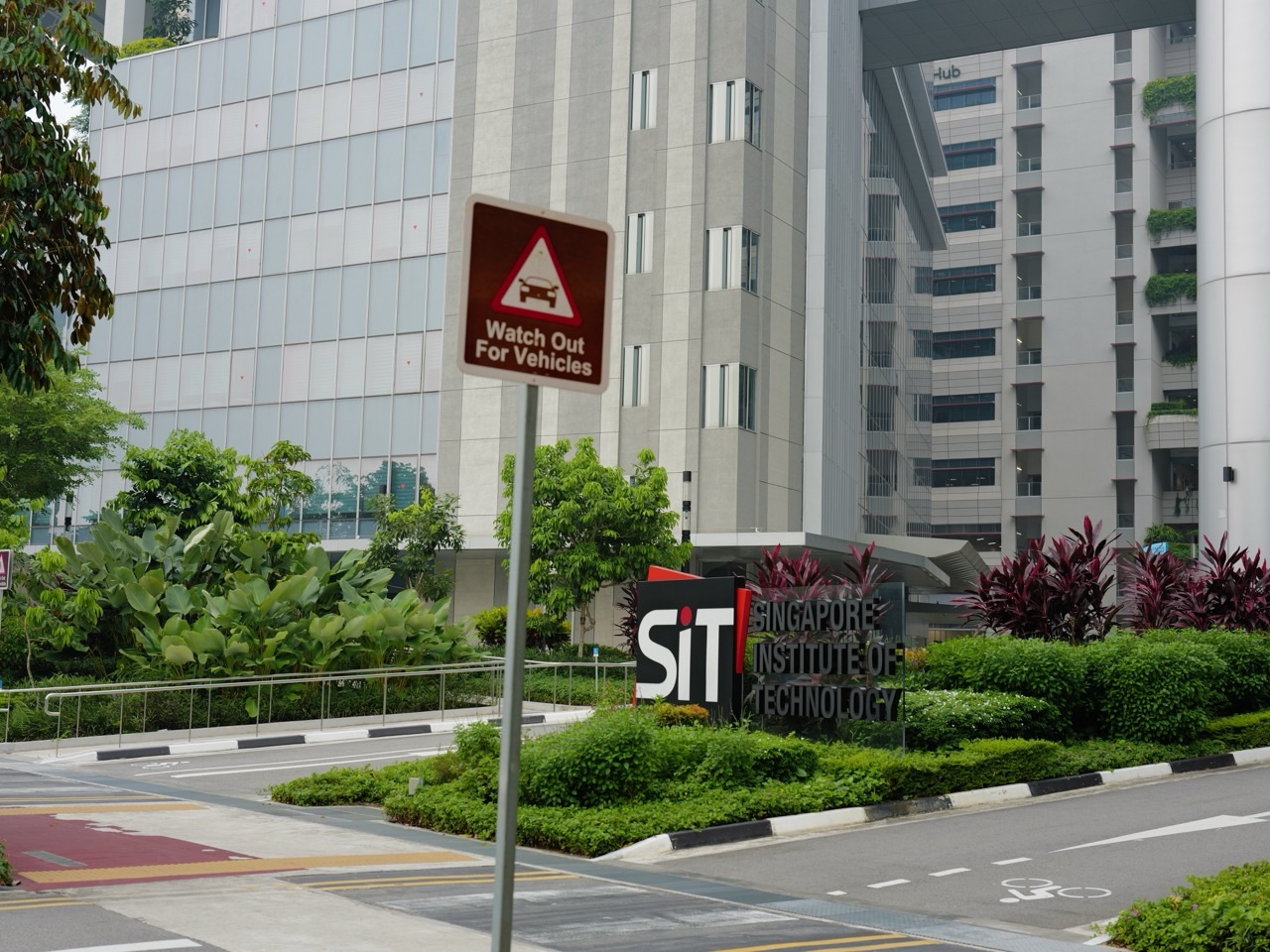
Punggol families should know that SIT’s university campus in Punggol Digital District is not a polytechnic. The nearest transport route to a polytechnic must be evaluated based on where the actual diploma is taught. A qualification from a polytechnic may support employment or university applications, but it does not automatically guarantee a place at SIT, NUS, NTU, SMU or another institution.
This detailed article explains admission routes, modules, course fit, semester and cumulative GPA, examination and practical assessment, internships, course projects, employer feedback, tuition assistance, diploma-to-university decisions and a realistic Punggol household plan. It includes original worked calculations and a 4-week decision method. Information was checked against MOE, SP and RP materials available in October 2026; the student’s institution always sets the current policy.
1. How the polytechnic route fits into Singapore education
Polytechnics offer structured diploma programmes that combine academic knowledge with applied skills. A learner entering engineering, business, design, health, computing or another field will study both the theory and its use in projects, exercises and practical contexts. A diploma is a recognised educational qualification, not simply a private training completion badge.
Singapore’s five polytechnics may have overlapping broad subject areas but offer different course structures and learning experiences. A family should compare the named diploma rather than treating all “IT” or “business” courses as identical.
Polytechnic study can prepare a learner for employment and further study. However, each next step has its own admissions rules. The educational value is in genuine subject mastery, workplace readiness and credible qualification rather than the belief that a diploma guarantees a particular salary or university.
2. Who should consider a diploma pathway?
A diploma can suit students who want subject specialisation, applied learning and the option of entering work after a recognised course. A learner who enjoys solving real problems through design, experiments, programming or professional communication may find this route engaging, but the exact degree of mathematical or theoretical study varies widely.
The decision should not be made solely from a single secondary test result or friends’ choices. Read the module outlines and ask whether the student likes the actual tasks. A product-design diploma and a logistics diploma can each involve projects, yet the thinking and workplace responsibilities differ.
A thoughtful family compares curriculum, prerequisites, programme length, location, costs and available future options. That approach respects student aptitude without pretending the course title is a guarantee of employment.
3. How JAE, EAE, PFP and other entry routes differ
Polytechnic admissions include routes such as the Joint Admissions Exercise (JAE), Polytechnic Early Admissions Exercise (Poly EAE), the Polytechnic Foundation Programme (PFP), and other qualifying pathways for ITE graduates or applicants with different credentials. Each has its own eligible applicant population, application schedule and conditions.
For example, an EAE offer may consider demonstrated aptitude but remain conditional on final results. A PFP applicant follows foundation programme eligibility, not the ordinary full-time Year 1 JAE criteria. An ITE graduate may need recognised course mapping and a suitable GPA.
Do not treat one brochure’s dates as the whole national admissions calendar. Especially for SEC 2027 and PSE 2028 cohorts, use the current official MOE and polytechnic notices. Save the exact qualification, exercise and course code before submitting an application.
4. The 2027 SEC and 2028 PSE change
Singapore’s first Secondary Education Certificate (SEC) examination is scheduled for 2027, with the new Post-Secondary Admissions Exercise (PSE) from 2028. Those reforms affect how future secondary graduates present subject results and apply to later courses.
A 2026 GCE O-Level JAE guide can be correct for its cohort while becoming inadequate for a 2028 SEC applicant. The family should not mechanically apply old subject aggregate names, deadlines or minimum entry requirements to the new exercise without checking current MOE instructions.
The underlying polytechnic system still involves course admissions and recognised diploma study, but administration evolves. A good guide clearly dates current facts and distinguishes them from projections. Parents should always put the intended intake year beside an application checklist.
5. Why programme selection must begin with modules
Two diplomas may share an industry label while teaching different specialist tools and problems. An infocomm course may emphasise cybersecurity, software development or infrastructure, each with distinct prerequisites and project demands. Business diplomas similarly vary in analytics, accounting, operations and customer-facing work.
Ask the student to open the actual module list. Which subjects recur across the semesters? What mathematics, programming, laboratory or writing tasks will they face? Is there a capstone, internship or industry-linked project?
An appealing course name is only a starting point. A learner who discovers their interest lies in the tasks rather than the label is much more likely to engage successfully over several years of study.
6. Credit units represent academic weight
Diploma modules can carry different credit units. These record their academic load under the polytechnic’s curriculum structure and can affect the GPA calculation. A large core module should not automatically be treated as equivalent to a smaller elective simply because each receives one final letter grade.
Singapore Polytechnic’s academic regulations explicitly multiply the module’s credit units by the corresponding grade points. A student earning an A in a low-credit elective cannot assume it cancels an F in a much larger core module by simple grade counting.
The exact module credit units appear in the official syllabus or results slip. Students should use those values, not estimates from a peer group spreadsheet. Credits are part of the formal academic record.
7. What grade points mean in the SP example
Singapore Polytechnic publishes a four-point system under its current grading guidance. Its table includes A and Distinction at 4.0 grade points, B+ at 3.5, B at 3.0, C+ at 2.5, C at 2.0 and other grades with corresponding points.
The institution’s exact rules also explain what happens with certain pass, failure, absence or exemption codes. Students should not invent a point value when a module is excluded or not graded. The authoritative source is the current SP student handbook, or the equivalent handbook from their own institution.
This article uses SP’s table as a concrete worked example, not as proof every polytechnic has every identical grade boundary or treatment for every programme.
8. Worked semester GPA with unequal module credits
Imagine a hypothetical semester with three graded modules. Module A carries 4 credit units and earns grade point 4.0; Module B carries 3 units at 3.0; Module C carries 2 units at 2.0. The total weighted points are (4×4) + (3×3) + (2×2) = 16 + 9 + 4 = 29.
The total credit units are 4 + 3 + 2 = 9. The illustrative semester GPA is 29 ÷ 9 ≈ 3.22. A plain average of 4.0, 3.0 and 2.0 would be 3.0, but that ignores the different academic weights.
This example shows why a student should consult the official credit-unit table. A correct GPA calculation is a weighted measure of assessed modules, not a vote in which each course title counts once.
9. What happens to that calculation if a module is failed?
Consider the same hypothetical nine credit units and weighted total of 29. Add a new one-credit graded module that receives an F with zero grade points, under a system that includes such a failed module in the GPA denominator. The revised result is 29 ÷ 10 = 2.90.
The calculation demonstrates that an unsuccessful assessed module may affect a weighted average beyond the student’s perception of “only one small subject”. It does not prescribe the actual module-remediation rule at any polytechnic. Academic progression, repeating a module and other arrangements belong to the institution.
A student should raise difficulties early, identify the specific concepts involved and seek lecturer guidance rather than wait for a final result that is harder to repair.
10. Semester GPA and cumulative GPA answer different questions
A semester GPA summarises a defined period of modules. A cumulative GPA aggregates relevant module results across the programme to date. A single strong or weak semester affects the cumulative result but does not automatically become that same number.
For example, a student who previously earned 60 weighted points over 20 credit units has cumulative GPA 3.00. If the next semester contributes 30 points across 10 more units, cumulative GPA becomes (60 + 30) ÷ (20 + 10) = 3.00. If the next semester contributed only 20 points, it would be 80 ÷ 30 ≈ 2.67.
Use the institution’s official transcript for actual values. A cumulative result must not be calculated by averaging two semester GPAs if the semesters contain unequal credit totals.
11. Why a cGPA is useful but incomplete
A cumulative GPA provides a structured summary of assessed academic work. It can matter for university applications and certain academic opportunities, but it cannot show every skill the learner has developed, such as teamwork, safe laboratory practice or writing clarity.
A student with strong project capability but a weak module grade should investigate the academic issue rather than dismiss all assessment as irrelevant. Conversely, a high GPA is not a guarantee of admission to a particular university course, internship or employer.
Maintain two records: official graded performance and authentic evidence of applied work. Each supports different decisions, and neither should be misrepresented as the other.
12. Assessment is not always a written exam
Polytechnic modules can assess projects, laboratories, presentations, individual assignments, practical competency, tests, demonstrations and other work aligned with learning outcomes. An institution’s handbook and module brief state what carries weight.
A student preparing for an oral presentation needs to practise communication, evidence and audience. Someone completing a data-analysis project needs to explain sources, methods and limitations. The same hour of generic exam paper drilling may not help either assessment appropriately.
The relevant habit is to read the rubric before starting. Identify the required deliverable, what can be collaborated on, what must be independent and how the assessor will decide whether the outcome has been met.
13. Academic integrity matters for group projects
A group can produce a polished final product even when one member understands little of the process. A student should be able to explain their own contribution and the decisions behind it, not simply submit a shared file bearing several names.
Keep accurate version histories, original sources, agreed roles and a record of changes. If generative AI is used, follow the programme’s policy on permitted assistance and disclosure. A fluent machine-generated explanation cannot substitute for the learner’s own reasoning.
When collaboration becomes uneven, address it through the lecturer’s proper procedure. Academic integrity protects fairness and the educational value of group work; it is not merely an administrative restriction.
14. Internships are part of education, not only recruitment
Many polytechnic programmes involve industry attachments or internships. Their purpose can include applying classroom knowledge, developing workplace skills and receiving meaningful feedback from supervisors. The specific module, duration and grading rules vary by institution and course.
Republic Polytechnic’s official industry guidelines say employers should provide relevant training and periodic feedback, while a Polytechnic Liaison Officer supports learners. RP states that from Academic Year 2024 the internship module grade counts toward cumulative GPA. This is a confirmed RP policy, not proof that every polytechnic changed on the same date.
Students should ask about learning outcomes, assessment, expected conduct, confidentiality and how concerns are reported. A workplace attachment is not an automatic permanent employment offer.
15. Worked internship-report example
Suppose an intern observes that a packaging process takes longer on certain shifts. A poor report says, “The workers are slower in the afternoon.” That is a causal claim unsupported by the observation alone. The delay could involve material supply, staffing, equipment or differences in order types.
A stronger report records the date, sample, measured timings and relevant contextual variables, then states that further comparison is needed. If two shifts processed different products, raw processing-time comparisons are not automatically fair.
For transfer, ask the learner to design a consistent measurement plan for two comparable production lines. This develops honest technical reporting and critical data literacy rather than treating a spreadsheet as proof of whichever conclusion sounds most confident.
16. Final-year projects should test independent reasoning
A diploma capstone or final-year project may ask learners to integrate multiple modules, define a problem, justify a method and present evidence. A convincing demonstration must be supported by understanding of assumptions and limitations.
For example, a prototype app may display correct results for a small test dataset while failing with missing or unusual entries. A responsible student records the test conditions and explains what further work is needed rather than claiming universal accuracy.
Parents and tutors can support planning and feedback but should not build the graded project for the learner. The assessment is meant to reveal the student’s competence and ability to communicate it.
17. Why campus and diploma location must be checked
Singapore Polytechnic, Ngee Ann Polytechnic, Temasek Polytechnic, Nanyang Polytechnic and Republic Polytechnic are separate institutions. A family should not assume a student can attend any campus interchangeably for the same named diploma.
Some broad fields are offered by several polytechnics, but module structure, academic timetable, facilities and industry connections can differ. The official programme page gives the actual awarding institution and location.
For a Punggol family, the route to each campus may involve a different combination of MRT, LRT, bus and walking. A longer journey can be reasonable for a strongly preferred programme, but commuting should be evaluated before the family accepts an offer.
18. Punggol is home to SIT, not a sixth polytechnic
The Singapore Institute of Technology’s Punggol campus is an autonomous university within Punggol Digital District. It does not become a polytechnic merely because it emphasises applied learning and industry partnership.
Polytechnic students can explore university progression after meeting the relevant degree programme’s admissions criteria. But living beside SIT or completing any diploma does not automatically secure an SIT degree place.
Use the campus as an example of educational progression while distinguishing the institutions: five polytechnics award their own diplomas, and autonomous universities decide admission into their degree programmes under separate processes.
19. The significance of academic-year credit changes
Credit units determine the weight of modules in the GPA calculation, and an institution may update its curriculum or grading rules. Singapore Polytechnic’s official grading page describes changes effective from academic year 2024/2025, including a provision allowing up to two elective modules to be excluded from final cumulative GPA computation where that improves the result.
That is an SP-specific published policy, not an instruction to every learner at every polytechnic to ignore two modules. It also does not imply that excluded electives disappear from the academic transcript.
Read the institution’s current regulations and the student’s programme cohort carefully. An older GPA calculator may not reflect newer policies, exemptions or module categories.
20. Why failing one module has multiple consequences
A failed module can lower a GPA, but the broader effect depends on the institution’s academic progression and module requirements. A compulsory prerequisite may need to be completed before later modules can be taken. A failed elective could have different consequences.
A student should identify what skill or rule was misunderstood rather than concluding that all future study is impossible. Ask lecturers which recovery procedures apply, what deadline matters and which evidence would show that the missing concept is now understood.
Parents can help by organising information, but should not substitute an unofficial retake promise for formal regulations. Honest and timely academic advice is much more valuable than rumours after a difficult result.
21. Internship grading: the Republic Polytechnic example
RP’s industry guidelines state that company supervisors evaluate abilities, skills, attitude, teamwork and attendance. They also describe a liaison officer who gathers feedback and helps support the student. RP states that internship grading counts toward cGPA from AY2024.
This illustrates why workplace behaviour and genuine learning can affect an academic result in an applied diploma. A student should treat safety, punctuality, accurate records and appropriate communication as part of the educational responsibility.
Do not transfer RP’s exact internship rules automatically to SP, NP, TP or NYP. The programme and institution must confirm the current evaluation method and how supervisor feedback is weighted.
22. What internships teach beyond a technical tool
An intern might understand software or machinery but struggle to ask questions when instructions are ambiguous. Workplace learning can help them practise professional judgement, meeting deadlines and communicating limitations accurately.
A meaningful training plan should provide feedback and opportunities to apply classroom knowledge. The student should know who supervises them, which tasks they may perform safely and how to escalate an issue without risking others.
The family can discuss lessons learned without demanding confidential employer information. A useful question is “What problem did you understand better after feedback?” rather than only “Did the supervisor like you?”
23. Professional portfolios and academic integrity
An authentic portfolio shows what the student actually made, analysed or learned. It can include source attribution, permitted photographs, design decisions and reflection on mistakes. The learner should be able to explain the reasoning without reading a polished script.
A portfolio does not automatically replace academic prerequisites for a university course. Nor does its existence guarantee an internship. It is complementary evidence of skills and interest.
Group projects require transparency about individual contributions. Do not include proprietary workplace material or personal data without proper permission. Professional standards start before graduation.
24. A diploma GPA and university entry are not identical
A student may have a strong cumulative diploma GPA and still need to meet course-specific university requirements, aptitude assessments, portfolio expectations or prerequisite subjects. Different degrees can assess applicant suitability differently.
MOE describes university study as one possible path after a polytechnic diploma, alongside employment and other further education. It does not promise a place in every university or degree simply because a diploma was earned.
Parents should consult the intended university’s current official admissions page. A historic indicative grade profile can provide context but cannot be treated as a confirmed future cut-off or guarantee.
25. Polytechnic EAE and aptitude-based selection
Polytechnic EAE can provide an admission route based on demonstrated interest and aptitude for eligible students. It may consider portfolios, interviews or course-specific evidence alongside final academic conditions.
A student who loves a field should be able to describe its daily work and explain relevant projects. A copied generic interview script cannot prove that the learner understands why a course suits them.
An early conditional offer is not necessarily a final confirmed place. Check the academic criteria and any restrictions on subsequent admission exercises before accepting or withdrawing. The actual year and applicant group determine the rule.
26. PFP is not ordinary Diploma Year 1
The Polytechnic Foundation Programme serves qualifying students through a foundation-year route before progression into a related diploma, subject to the programme’s conditions. It is not simply a guarantee that any student may add an extra year to a chosen diploma.
A learner should examine the subject and course eligibility, the progression requirements within the foundation year and the intended diploma destination. The family may also need to consider fee support specific to the foundation stage.
Check current MOE and polytechnic guidance, especially as SEC and PSE reforms affect later cohorts. A scheme’s familiar acronym does not make its old entry requirements permanent.
27. ITE graduates use relevant mapped progression routes
An ITE graduate may qualify for diploma admission based on a relevant qualification, GPA and course mapping. Republic Polytechnic’s current applicant guide explains such conditions and any permitted CCA bonus for the relevant scheme.
A student should not assume that all Higher Nitec courses allow entry to all diplomas. A course may require particular technical foundations, and actual places are limited.
Verify the official mapping before choosing a programme if a later diploma is a primary goal. Where a course is not mapped, investigate other legitimate alternatives rather than relying on the similarity of two programme names.
28. Diploma course fees and bursary applications
Diploma fees, government tuition grants and bursaries are different financial matters. Students should identify the published tuition fees, citizenship conditions, scheme eligibility and net cost for their actual institution and academic year.
MOE’s AY2026 bursary table lists income-tier support for eligible full-time diploma students, including a Higher Education Community Bursary tier of $3,050 annually for the lowest specified income category. It is not a universal payment to all students or every year.
The receiving polytechnic’s financial-aid office can explain how to apply, which documents are needed and when support is credited. A family should not promise an award before eligibility has been assessed.
29. Budgeting beyond tuition fees
A diploma learner may need transport, meals, software, equipment, printing or project expenses. A student attending a campus far from Punggol can face a different daily cost from one living near the institution.
Make a realistic budget with recurring expenses separated from one-off charges. A large first-semester purchase can cause a temporary cash-flow problem even if tuition assistance is eventually awarded.
The family should ask which learning materials are compulsory and whether devices, scholarships or bursaries can assist. Buying the most expensive laptop without checking the course specifications is not proof of academic preparation.
30. Example: planning a monthly commute budget
Suppose a hypothetical Punggol learner spends $3.20 on school-day transport for twenty days. The monthly transport total is 3.20 × 20 = $64. If a different route costs $4.50 per day, the corresponding total is $90, a difference of $26.
These are illustrative amounts, not current public-transport fares or the cost to a named polytechnic. Student concessions and real travel patterns must be checked separately.
The decision must also account for time, reliability and safety. A cheaper route involving exhausting transfers may be unsuitable, while an expensive route that saves only a few minutes may not justify its extra cost. Use actual journey tests.
31. Evaluating a module with a rubric
A rubric specifies what an assessment rewards. One project may place weight on technical correctness, another on analysis, report quality or individual reflection. A student who completes the visible deliverable without reading the rubric can miss important criteria.
Before beginning, rewrite the requirements as a checklist: purpose, evidence, method, output, submission deadline and permitted collaboration. For a data task, confirm whether the goal is calculation, interpretation or both.
Ask for feedback on the weakest criterion, then practise with a new scenario. Copying the lecturer’s model answer may produce an attractive report but not demonstrate independent mastery.
32. Why a polished final product can hide a weak concept
A group may deliver a working app because one teammate solved the most difficult code. Another member might struggle to explain the data structure or failure cases. Individual questioning can reveal the difference.
A good learning plan makes each student responsible for understanding a defined part and documenting genuine contributions. Peer collaboration is valuable when it involves explanation and shared reasoning, not merely division of labour into one thinker and several spectators.
Parents should encourage learners to ask questions early rather than wait until the final presentation. The goal is genuine capability that survives when the learner faces the next problem alone.
33. Ethical use of AI and external help
Polytechnic learners may use digital tools, tutorials and AI systems according to their institution’s academic integrity policy. A tool can help clarify a concept but can also generate plausible incorrect code, invented citations or answers the student does not understand.
For every important output, ask what source supports it, whether the calculation is correct and whether the learner can independently explain the result. Declare assistance where required. Do not paste confidential employer data into unauthorised services.
The aim is to build professional judgement alongside technical skill. A student who catches an AI-generated error through testing has learned more than one who submits a polished but unverified result.
34. A four-week transition plan for a new diploma student
Week 1: confirm the enrolment, course modules, academic calendar, official learning platforms and financial-aid procedures. Test the commute from Punggol on a realistic weekday.
Week 2: review the module credit units, rubrics and the GPA system published by the actual institution. Set up a calendar for assignments and project milestones.
Week 3: diagnose one foundation needed for the course, such as numerical units, spreadsheet reasoning, report writing or technical vocabulary. Practise and verify transfer to a new task.
Week 4: review workload, sleep, budget, academic support and CCA or personal interests. Adjust the plan before minor administrative or learning difficulties become persistent.
35. What good course progression looks like
Students should be able to explain what they learned in one semester and how it prepares them for later modules. A high GPA can be meaningful, but a transcript alone does not explain practical experience, motivation or professional communication.
Keep examples of authentic work, record feedback and build the capacity to apply concepts in unfamiliar settings. The ability to diagnose an error and revise a method is useful in further study and industry work.
Parents can support clear planning without demanding a guaranteed university outcome. Qualification progression is strongest when it combines academic eligibility, real interest and credible evidence of skills.
36. Common mistakes to avoid
Do not average letter-grade numbers without applying module credit units. Do not assume SP’s optional elective-exclusion policy applies to every polytechnic. Do not assume RP’s internship-grading change took effect identically at all five institutions.
Do not confuse SIT with a polytechnic, or treat a diploma GPA as an automatic university offer. Do not plan a course based solely on last year’s provisional admission figures or an optimistic employment advertisement.
The right sequence is to verify the current course, understand the grading rules, diagnose specific learning needs, manage the real timetable and prepare authentic progression evidence. That is useful information rather than a prestige slogan.
37. A stronger way to evaluate a diploma offer
Ask the student to compare the modules they would actually study during the first year, not simply the programme’s headline career promise. A course that emphasises programming and statistics may be a poor match for someone who mainly enjoys visual design; similarly, an engineering course may demand more precise mathematical modelling than a student expects.
Next check the exact campus, timetable, expected equipment, funding and admission conditions. A good offer can still be unsuitable if the practical circumstances are ignored. It is easier to test the commute and confirm fees before matriculation than after a whole family schedule has been rearranged.
Finally discuss realistic destinations. A diploma can support work and possible further study, but none of those next steps should be promised as automatic.
38. How to check a student’s actual improvement
A student who repeats a corrected module question may simply remember the answer. Ask them to explain why the first method failed and attempt another case with changed values or circumstances. For a spreadsheet task, alter one input and predict how the output should change before running the formula.
Keep a short error log that separates concept misunderstandings, wrong units, programming logic, unclear writing and careless transcription. Each suggests a different remedy. A lecturer can help select the highest-impact next skill rather than requiring another large collection of unfocused practice.
Progress should be evident through independent work, clearer explanation and fewer prompts. A better grade is encouraging, but genuine understanding must survive outside the original assignment.
39. Comparing a diploma with a JC route fairly
A JC typically offers an A-Level pre-university course with strong emphasis on academic subjects, while polytechnic study specialises through diploma modules, projects and applied assessments. A student’s choice should consider their learning strengths, career interests, actual offers and ability to sustain the course.
It is a mistake to describe JC as automatically more prestigious or polytechnic as a guaranteed shortcut to work. Each pathway includes demanding academic and developmental tasks, and the next-stage admissions rules differ.
A family can compare content, assessment mode, fees, commute, institutional support and future options. Rather than debating which category sounds superior, ask what kind of work the learner will genuinely do each week and what knowledge the route is intended to develop.
40. The connection to industry does not remove academic rigour
Practical learning is sometimes caricatured as less demanding because it produces visible projects. A functioning device, persuasive business plan or well-designed data dashboard can in fact require sophisticated modelling, precise measurement, subject knowledge and ethical judgement.
A good assessor may question the assumptions behind a successful demonstration. How were the data collected? Which cases were tested? Would the solution remain valid if a variable changed? What evidence supports the student’s claimed impact?
Students should welcome those questions as opportunities to build robust professional competence. Copying a demonstration can make a result look successful; understanding limitations and adapting independently show the deeper education that makes a diploma valuable.
41. Final checklist before committing to a polytechnic
Before accepting an offer, verify the exact diploma name and institution, official course structure, entry conditions, campus location and current academic-year fees. Check financial assistance eligibility, any required equipment and the safe daily route from Punggol.
Then discuss how the learner will manage graded modules, cumulative GPA, team projects and potential internship responsibilities. Identify a legitimate support contact for academic, technical and wellbeing questions. A well-organised beginning can prevent small misunderstandings becoming larger problems.
The best decision is supported by evidence rather than a predicted salary or one friend’s success story. Polytechnic education can open valuable opportunities when the student understands the curriculum, develops real competence and makes informed choices at each stage.
Frequently asked questions
How many public polytechnics are there in Singapore?
Five: Singapore, Ngee Ann, Temasek, Nanyang and Republic Polytechnic. Each is a separate institution with its own course structure and campus.
Is SIT Punggol a polytechnic?
No. It is an autonomous university with separate degree admissions and assessment arrangements.
How long is a typical full-time diploma?
Many conventional full-time diploma programmes run about three years, but always check the actual course and intake.
What is a module credit unit?
A measure of module weight under the institution’s curriculum that can affect GPA computation.
How do I calculate GPA?
At SP the published formula is the sum of module credit units multiplied by grade points, divided by the sum of included credit units.
Does every module count equally?
Not necessarily. Different credit units can make one module count more in GPA than another.
What is the difference between sGPA and cGPA?
Semester GPA covers the relevant semester; cumulative GPA reflects included results across semesters to date.
Do all polytechnics use exactly SP’s grade rules?
Do not assume so. Check the handbook at the student’s own institution and intake year.
Can an F affect cumulative GPA?
Under relevant graded-module rules, yes. The actual implications for retaking and progression belong to the institution.
Does SP exclude two elective modules automatically?
SP’s published 2024/25-onward policy may exclude up to two electives at final computation if doing so improves the final cGPA; the specific rule is not universal.
Does RP internship count toward cGPA?
RP states that internship grading has counted toward cGPA from AY2024. Confirm individual programme requirements.
Is a diploma internship the same as a permanent job?
No. It is a training and assessment arrangement; employment offers depend on separate employer decisions.
Is GPA the only consideration for university entry?
No. Course-specific prerequisites, aptitude requirements, selection and availability may also apply.
Can an ITE graduate enter polytechnic?
Some qualifying graduates can apply through relevant mapped routes with grade and other entry conditions.
What is Polytechnic EAE?
An aptitude-based early application route for eligible learners, with required final academic criteria.
What is PFP?
A foundation pathway for qualifying applicants before the corresponding diploma stage, subject to progression requirements.
Will SEC 2027 change diploma applications?
Later cohorts are affected by the new SEC and PSE frameworks. Check current MOE and institution notices.
Does a project portfolio replace academic requirements?
Not automatically. Authentic work may help relevant selections but cannot override mandatory eligibility rules.
How much is the 2026 lowest-tier full-time diploma bursary?
The MOE AY2026 table lists $3,050 per academic year for eligible full-time diploma students in the lowest specified income tier.
Will a bursary cover every living cost?
No blanket guarantee exists. Compare actual tuition, transport, meals, equipment and other required costs.
Should a learner study next year’s modules early?
Only if fundamentals are secure and the challenge is appropriate. Depth and accurate independent reasoning matter more than racing through content.
How can a student learn from a low module result?
Review the rubric and actual error pattern, seek lecturer guidance and practise the missing idea in a new context.
How should parents handle a challenging commute?
Test travel on real weekdays, include time and safety, and build a sustainable sleep and work routine.
Are AI-written assignment answers always permitted?
No. The institution’s academic integrity policy governs use and disclosure. Learners remain responsible for verifying and understanding submitted work.
Do all five polytechnics have identical internship systems?
No. Compare the individual course and institution’s published internship rules.
What should a Punggol family check before accepting an offer?
Course content, qualification, campus, commute, fees, financial aid, academic rules and realistic further-study options.
Official sources and related guides
- Singapore Polytechnic: official GPA grading and calculation
- Republic Polytechnic: internship employer assessment guidelines
- MOE: post-secondary education options
- MOE: AY2026 government bursary framework
- Republic Polytechnic: ITE students applying for diplomas
- Temasek Polytechnic: 2026 fees and bursary information
- Punggol polytechnic EAE parent guide
- Punggol ITE Higher Nitec and progression
- Punggol post-secondary ITE, Poly, JC, SIT overview
- Immutable eduKate Clementi tutor reference
Editorial check, 18 October 2026: University and polytechnic policies, GPA rules and bursaries are institution- and cohort-specific. The worked numbers are hypothetical. This independent guide is not an admissions or grading decision.


