
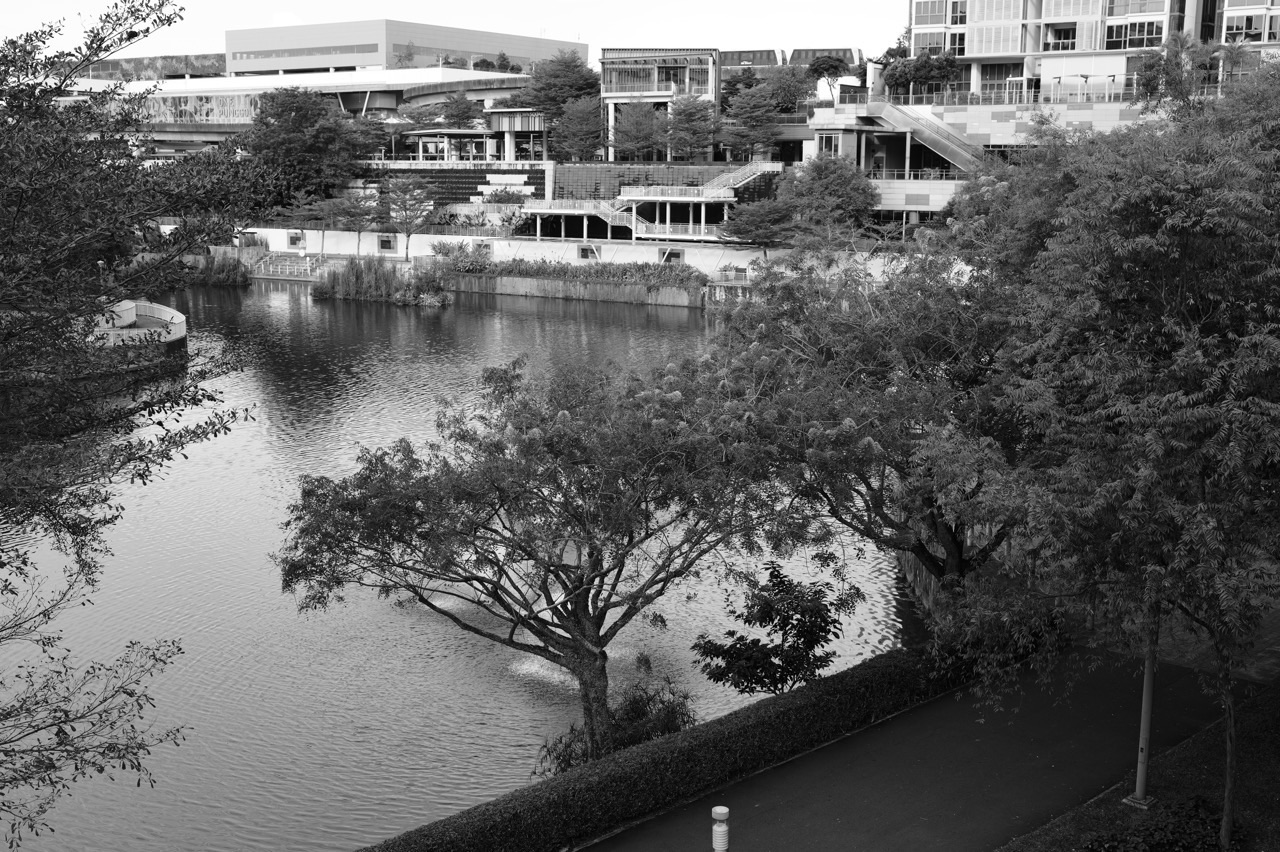
Taking two children around Punggol on your own? Start with one close, familiar destination—One Punggol for a library-and-food visit, an age-appropriate neighbourhood playground within an easy return from home, or a short supervised section of Punggol Waterway Park on a day when weather and air quality are suitable. Identify toilets, a rest point and the route home before you begin. Keep the first activity to roughly 30–60 minutes rather than planning several attractions. When one adult is responsible for two children, the best outing is the one where everybody can stop safely and comfortably.
Things to do in Punggol with two children and one adult require different decisions from a group holiday. One child may need a nap or feeding break while the other wants to run. A stroller can make an LRT transfer slower. A queue, spilled drink or unexpected toilet visit is harder to manage without another adult. This guide focuses on those real constraints: simple public-space choices, two-child supervision, small budgets, food, strollers, toilets, safety boundaries and the quickest way to finish. It is for any caregiver supervising two children, not a judgement about whether somebody is a single parent.
Updated 18 October 2026. NEA’s 17 October advisory forecasts PSI 150–220, unhealthy to very unhealthy, for 18 October. Children are advised to minimise outdoor activity for next-day planning and the latest one-hour PM2.5 guidance matters for immediate decisions. When outdoor conditions are unsuitable, use a home-based game or a suitable indoor activity that can be reached safely; there is no need to complete a park outing. Library programmes, play facilities and special rooms have separate access rules, and the existence of a space does not guarantee a booking or a seat.
Quick choice: Punggol outings for one adult and two children
| Your situation | Choose first | Why it works | Check before leaving |
|---|---|---|---|
| Toddler plus Primary-age sibling | Ordinary open library browse or very short familiar park stop | One base, short exit | Age rules, nap, toilet, stroller |
| Two preschoolers | Known suitable playground in an easy-to-leave neighbourhood | Familiar equipment and supervision | Surface, suitability, crowd, weather |
| Two Primary children | One book-and-game or supervised nature observation | Shared purpose without a full tour | Boundaries and activity level |
| Stroller plus child walking | Accessible One Punggol/central cluster | Indoor option and straightforward return | Lift, step-free route, toilet |
| Children have different interests | One shared anchor plus two tiny choices | Both can participate without splitting | Stay within adult’s supervision |
| Less than 45 minutes | Snack, reading or one familiar public activity | Low transport overhead | Pickup/return time |
| Unhealthy haze, heavy rain or lightning | Home-based activity or suitable indoor alternative | Does not force exposed travel | Current official guidance |
The important rule: two children do not move as one group
Pick one anchor and one exit before asking what looks fun
Families often plan from photographs of playgrounds, bridges and attractions. A solo caregiver has to plan from movement: where will the children get off the train, where can the adult stop with a stroller, what happens if somebody needs a toilet, and how quickly can everybody return home? Once the route is manageable, choose the fun activity. Otherwise an apparently easy trip can become an exhausting sequence of waits and transfers.
A practical first plan is one known area, one destination and one optional extra. At central Punggol, a library browse and food may work. At a familiar block playground, fifteen minutes of play and a snack may be enough. A short Waterway view is optional in appropriate conditions. The second activity should be removable without disappointment.
Supervision cannot be split like a timetable
One child may race toward playground equipment while the other asks for help with a bottle or stroller. The adult cannot safely supervise children in two distant zones simultaneously. Choose a space where both children can be kept within an appropriate supervised area, and agree simple boundaries before play begins. The correct arrangement depends on ages, development and the actual environment.
Near water, roads, escalators, lifts and crowded commercial spaces, vigilance matters. If one child must use the toilet, end or pause the other activity safely rather than leaving a sibling alone. Do not assume a public venue employee or an older child becomes a substitute caregiver just because the adult needs a minute.
Different ages need different promises
A toddler may be delighted by one small piece of equipment while an older Primary child wants a bigger challenge. Trying to make one attraction equally exciting to both can lead to conflict. Instead offer two modest choices in the same area: a picture book selected by the younger child and a short comic chosen by the older, or a nature observation where each picks a different safe feature.
Do not promise that both will get the exact activity they want every time. Explain what is shared and what is optional. For a large age gap, a home creative activity may fit better than a physical place designed for one age band.
Transport overhead is part of the fun budget
Punggol MRT, Punggol Coast MRT and the East/West LRT loops serve different parts of town. A parent managing two children and a stroller may need more time at station lifts, traffic lights or crowded exits. Travelling across the entire district for a fifteen-minute destination is rarely worth it when a closer option is available.
Use current public transport information and a complete pedestrian route, not just a straight line from the station to a map marker. A long accessible corridor may be safer than a short staircase shortcut. The Punggol stroller/wheelchair route guide owns accessibility detail, while this article focuses on the supervising adult’s plan.
Toilets and rest points should be decisions, not surprises
Children’s toileting needs rarely follow an adult itinerary. If a venue’s accessible toilet, family toilet or nursing room matters, verify its present location and use conditions with the actual operator. A labelled shopping centre entrance does not tell you where the needed facility is or whether it is operating.
The site’s Punggol rest-stop and toilet planner gives the facility-focused route. For this outing, know one realistic stop and allow time to reach it. Never imply that staff-only facilities are freely available, and do not leave one child unattended while helping the other.
Meals work better when ordering stays simple
Two hungry children can make a long queue stressful. Before leaving, choose an appropriate food category and affordable budget, including dietary needs. A familiar meal at a known open place may be more successful than travelling for a famous new stall. Carry age-appropriate essentials if convenient, and avoid promising a shop’s current stock or price without checking.
If a child has allergies, verify ingredients and cross-contact with the actual vendor. Do not infer safety from a menu title. Check seating and use the correct tray-return system. The Punggol Food Guide covers venue discovery; this article does not claim real-time restaurant or table availability.
Weather can change the outing into an indoor project
Punggol’s Waterway and public paths can be exposed to intense sun, rain, lightning and haze. The 18 October haze forecast warrants particular caution for children. An outdoor plan can be postponed without the children missing their entire day: an indoor book, drawing activity or simple game may work as well.
Consult the latest official guidance and personal health needs. A commercially advertised ‘indoor playground’ may require tickets or have age limits; a normal library area does not necessarily permit active play. A home activity is not inferior merely because it has no entry fee.
A comfortable finish supports the next outing
A solo caregiver may feel pressure to make the trip worth everyone’s time, particularly after a difficult commute. The opposite is often true: stop while children still have some energy and while the return remains predictable. A child who wants another activity can look forward to a future visit. Nobody has to earn a long day to prove it was enjoyable.
State the finishing time before the activity, then give a small warning when it is time to leave. If a child becomes distressed or overtired, shorten the plan and return safely. A simple enjoyable hour builds confidence more effectively than an overambitious three-hour route.
A caregiver’s need to sit and eat matters too
Public guidance often focuses on entertaining children and forgets the adult’s needs. The person supervising must be able to stop, drink water, use a toilet and manage belongings. An outing that leaves the adult unable to pause is badly designed even if the children are delighted at first.
Choose an activity where a safe resting arrangement is realistically possible. This may mean keeping a playground visit brief or selecting a library-and-food anchor instead of a long cycling circuit. Parents and carers are participants in the family day, not merely its unpaid logistics team.
One family outing does not need to be a school lesson
Punggol provides interesting opportunities to notice bridges, plants, public art and transport. But parents do not need to turn every observation into Mathematics, Science or a vocabulary quiz. A short question—’Which bridge shape do you like?’—can invite conversation without making leisure another academic duty.
The eduKateSG Punggol family-learning guide offers optional learning connections. Children should still be free to play, rest, make a small drawing or enjoy a meal without producing work for assessment.
Three practical destinations for a one-adult, two-child day
One Punggol: an indoor-friendly first choice
One Punggol brings a public regional library, community services and food into the same integrated hub. A normal library browse can let a younger child select a picture book and an older sibling choose a suitable title. A meal can take place in a properly permitted food area. This is a good starting point when adults want variety without several cross-town journeys.
Special library spaces, activities and equipment have their own restrictions; the library is not a running playground or unbooked party room. Choose appropriate shelves and keep both children supervised. On the current haze-affected weekend, assess travel safety before deciding to leave home.
One familiar neighbourhood playground, not a playground tour
For two preschool or Primary-age children with broadly compatible play needs, a known playground close to home can be easier than a destination hunt. Parents can inspect the equipment, choose a public safe waiting area and return home when the children have had enough. A familiar setting also reduces the number of new rules the children must learn.
Make sure the surfaces are suitable and the children can remain within effective supervision. If they want equipment in different parts of the playground, simplify the plan; never rely on an older child to monitor a toddler near an unsafe area. The Punggol playdate guide has age-adapted activity ideas.
A short central Waterway public path on a suitable future day
Punggol Waterway Park is a public NParks park with several themed areas. Its central routes can support gentle observation of bridges, trees and water without completing the whole park. One child might sketch a bridge while another notices a plant, with the adult choosing a safe public stopping point where everybody remains appropriately supervised.
The Waterway is not a safe unsupervised play pool. Children must stay away from canal edges, and shared paths are used by cyclists and pedestrians. During lightning, heat or unhealthy haze, omit the outdoor visit. The Waterway Park guide owns route and landmark specifics.
Four itineraries that can end well
The thirty-minute book-and-snack version
Choose a nearby permitted reading area or a short home book activity. Give each child a choice of one picture, short book or appropriate comic, then share a snack in a permitted space. Plan the return before the children become hungry or impatient. If the journey from home would consume most of the half-hour, stay at home.
This is not a compromised outing. It is one shared experience and a calm finish. For public library visits, follow actual zone rules and consider that book availability may change.
The one-hour One Punggol plan
Arrive through the correct transport and public entrance. Spend a short period with age-appropriate ordinary library books, then choose a meal or snack at a food venue the household can use. If the group needs a toilet or rest, shorten browsing rather than adding another stop. Return through the known exit.
This works when children like books or simple public-space discovery. The adult remains responsible for both siblings, including any transitions between floors. Avoid assuming special NLB programmes or equipment can be used without booking.
The simple after-school outing
After pickup, check whether the children need food or rest before proposing an activity. If they still want a small change of scenery, use a known public safe location near the pickup route for a brief supervised walk or view. Finish in time for family commitments rather than treating the entire evening as open.
A tired child may not want to speak about school or do a creative task. The after-school Punggol routine guide covers short everyday windows. During haze or heavy rain, consider heading home directly.
The future-weather Waterway mini-expedition
When outdoor conditions are suitable, use a familiar public Waterway access, pick one bridge or planted feature from a lawful viewing point, and allow each child one observation. Have a clear turning point and exit. No child needs to run a route or ride a bike to make the visit worthwhile.
This is not a plan for today’s unhealthy-to-very-unhealthy forecast. Do not attempt the whole park or lead a stroller along an unverified surface. A short future visit is enough.
Eighteen activities that two children can do together with one adult
1. Two-book choice
Try: Each child chooses one age-suitable book; the adult keeps the visit to a manageable section. Boundary: Respect library rules and don’t require each to finish a full book. The activity is successful when it suits the children and supervising adult—not when a checklist is full.
2. One photo, two descriptions
Try: From an existing public photograph, each child describes a different visible detail. Boundary: Avoid identifying strangers or making up factual claims. The activity is successful when it suits the children and supervising adult—not when a checklist is full.
3. Bridge-shape sketch
Try: Draw a bridge using one main curve and a few supporting lines. Boundary: Use a safe indoor reference during haze. The activity is successful when it suits the children and supervising adult—not when a checklist is full.
4. Three-colour search
Try: Find three colours in a book, picture or safe public setting. Boundary: Children should not wander off to complete the search. The activity is successful when it suits the children and supervising adult—not when a checklist is full.
5. Simple directions card
Try: Each child helps describe one verified public route. Boundary: The adult checks the real navigation. The activity is successful when it suits the children and supervising adult—not when a checklist is full.
6. Choose a shared game
Try: Select a short game appropriate to both ages or give an age-adapted role. Boundary: Do not let competition turn into a safety problem. The activity is successful when it suits the children and supervising adult—not when a checklist is full.
7. Snack conversation
Try: Share a snack where permitted and talk about one enjoyable thing. Boundary: Check food allergies and hygiene. The activity is successful when it suits the children and supervising adult—not when a checklist is full.
8. One-minute nature note
Try: Read or observe one plant detail from a public safe viewpoint. Boundary: Do not pick leaves or disturb animals. The activity is successful when it suits the children and supervising adult—not when a checklist is full.
9. Short journal picture
Try: Each child draws what Punggol looked like to them today. Boundary: No grading, mandatory spelling or perfection. The activity is successful when it suits the children and supervising adult—not when a checklist is full.
10. Menu price comparison
Try: Older child reads prices while younger child counts simple items if interested. Boundary: Do not pressure the household to spend. The activity is successful when it suits the children and supervising adult—not when a checklist is full.
11. Family map symbols
Try: Draw a book icon, food icon and homeward arrow together. Boundary: Do not share private home information publicly. The activity is successful when it suits the children and supervising adult—not when a checklist is full.
12. Simple paper fold
Try: Fold age-appropriate paper shapes at home. Boundary: Avoid small-object hazards for toddlers. The activity is successful when it suits the children and supervising adult—not when a checklist is full.
13. Library cover prediction
Try: Each child selects a cover that interests them and predicts the story. Boundary: Reading interest is the goal, not correctness. The activity is successful when it suits the children and supervising adult—not when a checklist is full.
14. Train-map observation
Try: Identify the correct Punggol and Punggol Coast station labels. Boundary: A schematic map isn’t a scaled pedestrian map. The activity is successful when it suits the children and supervising adult—not when a checklist is full.
15. One memory photograph
Try: Make a family photograph with permission in a safe place. Boundary: Do not block shared public paths. The activity is successful when it suits the children and supervising adult—not when a checklist is full.
16. First-to-finish isn’t the rule
Try: Agree on a cooperative activity with no race. Boundary: Slow play can be more inclusive. The activity is successful when it suits the children and supervising adult—not when a checklist is full.
17. A small thank-you
Try: Children thank a family member for a specific helpful act. Boundary: Do not force a public emotional performance. The activity is successful when it suits the children and supervising adult—not when a checklist is full.
18. Plan another day
Try: Choose one activity to repeat later when conditions suit. Boundary: No obligation to add a new paid attraction. The activity is successful when it suits the children and supervising adult—not when a checklist is full.
Two-child safety and comfort checklist
- One adult clearly responsible for both children; do not assume venue staff provide childcare.
- Exact destination, transport entrance, meeting/return arrangement and latest finish.
- Food needs, appropriate supplies and what happens if a child needs the toilet.
- Age-appropriate play or activity boundaries, especially near water and roads.
- A short easy exit and a permitted rest point.
- Current facility hours and booking/eligibility for any special service.
- NEA air-quality guidance, MSS rain/lightning conditions and individual health needs.
- A way to stop the outing without forcing either child to continue.
Frequently asked questions about taking two children out in Punggol
What is the simplest Punggol outing for one adult and two children?
One familiar public indoor activity, meal or short age-appropriate playground session with a clear route home. It does not need multiple destinations.
Is One Punggol a good place for children?
It contains Punggol Regional Library, a hawker centre and other community facilities. Age-specific areas and programmes have rules, so check what you intend to use.
Can I leave one child in a library section while helping the other?
Do not assume the library provides supervision. Make arrangements appropriate to the children’s ages and remain responsible for them.
Can a toddler and Primary student enjoy the same outing?
Yes with an activity adapted to both, such as reading, a short safe nature view or a simple home game. One may need an alternative within effective supervision.
Does a stroller make the LRT trip impossible?
Not necessarily, but the complete step-free path, lifts and transfers need checking. Avoid an unnecessary multi-transfer plan when a nearby venue suffices.
Where can I find toilets or nursing facilities?
Consult the specific venue operator and the site’s Punggol rest-stop and toilet guide for planning. Facility availability can change.
Can I do a Waterway Park walk alone with two kids?
Only when conditions, ages, supervision and a short safe public route make it appropriate. Water edges and shared paths require direct adult attention.
Can children play in Punggol Waterway’s canal?
No. Public waterway paths do not mean the canal is a play pool. Use age-appropriate authorised facilities instead.
What if the children argue about activities?
Offer a shared short anchor and two modest choices, then finish if the outing is no longer enjoyable. Avoid leaving children in separate public areas without proper supervision.
What if one child wants to go home early?
Use the agreed return plan. A brief enjoyable outing is better than forcing a tired child to continue.
Can both children use the same library programme?
Only if the specific programme accepts their ages and registration. Ordinary library opening does not guarantee special activity places.
What if the food stall has a long queue?
Choose a suitable nearby alternative, shorten the next activity or return home. The adult should not leave children unattended while queueing.
What if a child has a food allergy?
Verify ingredients and cross-contact directly with the provider, follow the child’s established medical plan and bring needed prescribed treatment as advised by their clinician.
Can we do this without spending money?
A home game, ordinary suitable library browse or future safe public park observation can be low-cost; transport and any purchased food are additional expenses.
Should the older child supervise the toddler?
Do not make an older sibling a substitute for the responsible adult. An older child can help with small tasks suited to maturity, without taking over safety duties.
What if the haze remains unhealthy?
Follow the newest NEA/MOH advice. For 18 October’s forecast, children should minimise outdoor activity, so an indoor or postponed plan is sensible.
What if lightning occurs?
Avoid exposed Waterway, park and cycling routes; use appropriate indoor shelter and MSS guidance. Do not treat an apparently covered path as thunderstorm protection.
Where can we find an indoor game?
Normal library browsing or suitable home games may suffice. Ticketed indoor play centres need their own age, availability and price checks.
Is SAFRA Splash an easy unbooked alternative?
It is a specialised attraction with ticket, age, attire and safety rules. Read the Splash first-visit guide and actual operator terms before promising access.
Can the parent take a break too?
Yes. Build an appropriate safe seating, food and return arrangement. The adult’s comfort is part of a workable day.
What about two children with very different ages?
Choose a neutral shared activity and avoid requiring both to use the same equipment. Different interests and maturity need a plan the adult can supervise simultaneously.
Can we learn from the outing?
Yes, by observing directions, plants or words, but there is no need to turn leisure into compulsory homework or claim a guaranteed academic result.
Where can I find more age-specific Punggol activities?
Use Things to Do With Kids and Punggol Playdate Planner for broader choices. This article is specifically for the one-adult supervision problem.
Useful links across the eduKate Punggol ecosystem
- Things to Do in Punggol With Kids — town-wide child activities.
- Punggol Playdate Planner — age and social play.
- Punggol Rest Stops and Toilets — facilities when they matter.
- One Punggol Hub — community and food amenities.
- Punggol Regional Library — access and areas.
- Punggol Waterway Park — actual routes and rules.
- Stroller and Wheelchair-Friendly Routes — path checks.
- Punggol Rainy-Day Guide — indoor fallbacks.
- Punggol Lifestyle Planner — duration and weather.
- Punggol Three-Generation Family Day — wider family outings.
- eduKateSG Punggol Family Learning — optional place-based education.
Official sources and update policy
Current public guidance: People’s Association One Punggol hub, One Punggol facility information, NParks Punggol Waterway Park, NParks park connector shared-path etiquette, NEA 17 October haze forecast, MSS weather information and MOH haze health advice. Updated 18 October 2026. The guide is not childcare supervision or medical advice and does not confirm live venue availability.


