
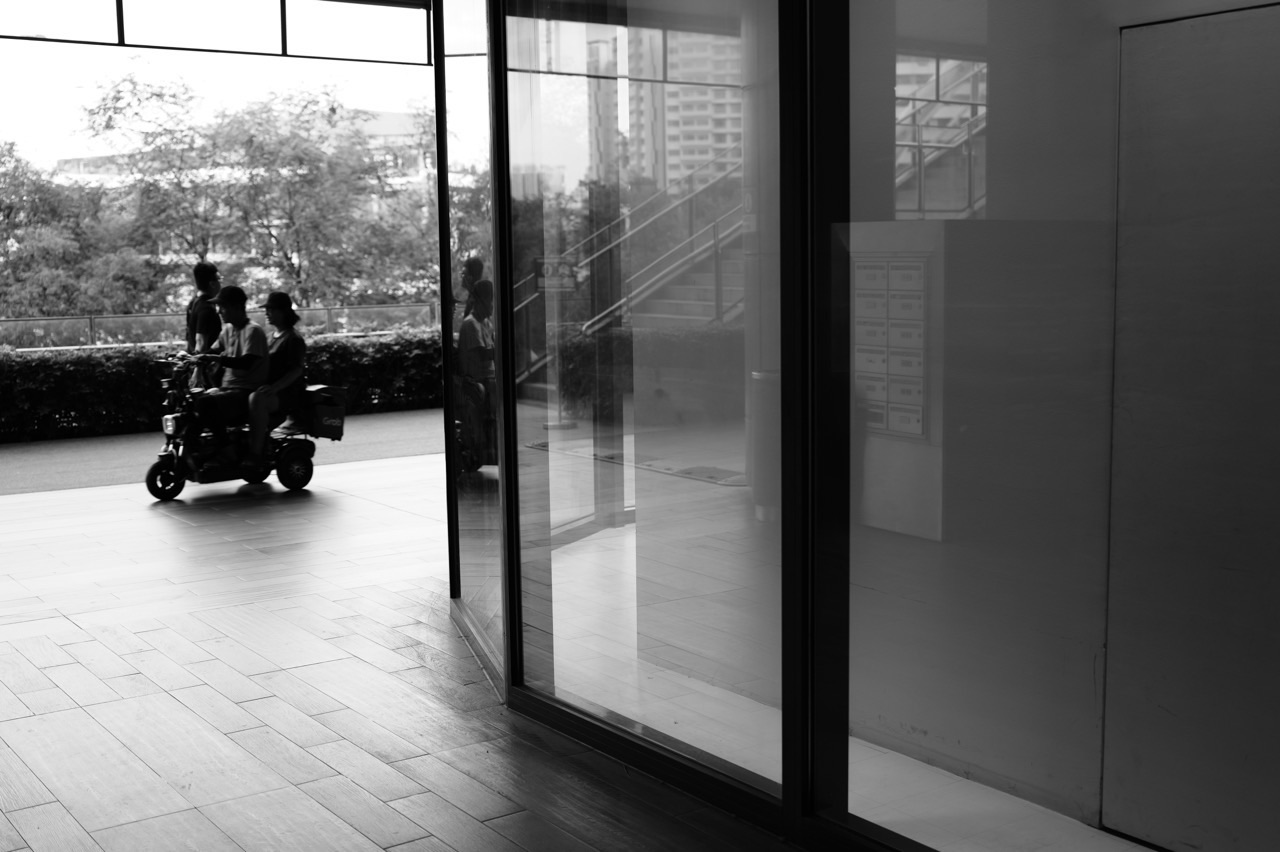
Are delivery riders in Punggol protected during haze? Qualifying ride-hail and delivery platform workers have protections under Singapore’s Platform Workers Act since 1 January 2025, including work injury compensation, CPF arrangements and representation. Platform safety is also addressed under WSH obligations and the Approved Code of Practice for Platform Services (ACOP). Riders are not automatically employees with identical statutory paid leave or work-from-home rights. For outdoor exposure, follow NEA/MOH, the applicable operator safety plan and medical advice.
This 2026 Punggol guide concentrates on what changes for platform riders: ACOP risk controls, job incentives, fatigue, heat and haze, incident reporting and legal work categories. It is distinct from our general outdoor employee safety guide and WFH/employee leave explainer.

Quick route: The short answer for a rider in Punggol · The 2026 incentive debate · Heat stress and haze together · The Punggol MRT and Waterway Point example · Platform work associations and representation · A short decision checklist for operators
The short answer for a rider in Punggol
Platform workers have protections but are not automatically employees
Delivery and ride-hail platform workers in Singapore are a distinct legal category under the Platform Workers Act, effective 1 January 2025. They are not automatically employees under the Employment Act, but many have specific statutory protections including work injury compensation, CPF contributions and collective representation. The platform operator also has workplace-safety obligations under the WSH framework and the Approved Code of Practice for Platform Services. A Punggol rider should not assume ‘I am self-employed, so there are no safety rules’ or ‘I can automatically use the same sick-leave and WFH rules as an office employee’. Both statements oversimplify the law.
For a haze-affected shift, check public air guidance and the platform’s actual safety process
For a courier cycling around Waterway Point, Punggol Central and Northshore, the practical questions are how long the person will be outdoors, how much they will exert themselves, whether the operator has suitable controls and whether the rider feels well. NEA’s current one-hour PM2.5 and MOH’s health advice help with personal exposure choices. Operators and platform workers must also follow their applicable safety rules. If symptoms become significant or riding conditions are unsafe, do not continue purely to secure an app incentive.
Who counts as a platform worker?
Management control matters
MOM’s official Platform Workers Act guide defines a platform worker as someone providing ride-hail or delivery services under a platform work agreement while subject to the platform operator’s management control. The agreement may be written, oral, express or implied. The platform operator’s assignment or payment rules and restrictions can help determine the relevant legal category. Merely using a smartphone or riding a bicycle for money does not automatically place every service provider in the category.
Employees and independent freelancers differ
Someone employed under a contract of service by a delivery company is an employee rather than a platform worker, even if they deliver packages through an app. A genuine self-employed contractor who is not under platform management control may fall outside the Platform Workers Act’s platform-worker category. IRAS also explains that platform-worker income has its own tax treatment even though the worker is legally distinct from both employees and other self-employed persons. Before making a rights claim, identify the actual work arrangement and operator.
Three protections began in January 2025
Work injury compensation
MOM says qualifying platform workers are entitled to work injury compensation at the same scope and level of coverage as employees under the Work Injury Compensation Act. The operator must arrange applicable insurance and a worker injured during relevant platform work should notify the operator so the incident can be assessed. A rider should preserve the actual job details, location, time and medical documentation following the official process. No webpage can decide whether a specific fall is compensable without the legal facts.
CPF and representation
Platform operators must deduct and submit the applicable CPF contributions; higher CPF rates phase in, with mandatory increases for eligible workers born on or after 1 January 1995 and opt-in rules for certain older workers. Qualifying workers also have representation rights through platform work associations. These protections do not mean every platform worker receives statutory paid annual leave or a fixed salary like an employee. They improve parts of financial security and bargaining rights while leaving work status distinctions intact. Read the official MOM framework instead of assuming a phone app’s terms override legislation.
Safety rules apply to the work arrangement
Platform work came under the WSH framework
MOM’s 3 March 2026 answer explains that workplace safety and health responsibilities were extended to platform work from January 2025. The Approved Code of Practice (ACOP) for Platform Services was developed with operators and worker representatives to give practical guidance about safe ride-hailing and delivery. Fatigue, heavy loads, traffic risks and the way jobs are assigned matter. A platform operator should not assume that because workers choose when to log in, no preventive measures are needed.
Why ‘deliver faster’ is not a safety policy
The ACOP covers the potential effect of organisational decisions and incentives on worker behaviour. A platform courier moving between One Punggol and Northshore may face an unfamiliar road, pedestrians and haze-limited visibility. Paying for speed must not create pressure to ignore crossings or exceed safe speeds. The relevant controls include risk assessment, safe work practices and a channel for safety concerns. A shopper waiting for dinner does not gain a right to demand unsafe driving because the delivery ETA appears on a screen.
The 2026 incentive debate
MOM’s actual finding must be reported accurately
In the 6 October 2026 parliamentary answer, MOM said it had not found evidence from its investigations that platform-worker accidents resulted from unsafe riding or driving caused by incentive structures. The absence of that particular finding is not proof that all incentive designs are harmless, nor grounds to allege that named platforms deliberately cause accidents. MOM also says the ACOP prohibits per-job time limits, penalties or bonuses for completing a job within a specified time.
Further guardrails are under development
MOM says platform operators and work associations agreed additional guardrails so incentive systems do not encourage excessive work without sufficient rest, with a Platform Worker Safety Workgroup formed in March 2026 and expected to finish its study by end-2026. These are concrete dated developments. A responsible article should not claim that its future recommendations have already been published or that a specific courier app has been officially found to violate them. For riders, it is still sensible to report unsafe pressures through relevant operator and association channels.
How the ACOP applies to streak bonuses
The policy includes more than a single-delivery timer
MOM’s 6 October 2026 ACOP answer confirms that operators’ risk assessments must take account of incentive structures including cumulative, streak-based, acceptance-rate and cancellation-rate schemes. Changes that materially alter work conditions should prompt review of the risk assessment. This is a more nuanced view than simply banning every payment reward. The question is whether the scheme encourages unsafe speed, fatigue or behaviour and whether practicable measures address the risk.
What workers can document
If a rider encounters a new target that seems to encourage risky road behaviour, preserve the actual scheme communication, timestamps and job details and raise the issue through appropriate operator or platform-work-association channels. Do not publish another worker’s account details or assert illegality solely because an incentive is difficult to earn. The authority evaluates the real system against its code and obligations. A safety concern can be raised factually without exaggeration.
Haze and the rider’s outdoor exposure
The task can be prolonged even when deliveries are short
A customer sees one ten-minute delivery from a Punggol food court to an HDB block. The rider may have already been outdoors for hours, waiting at open pickup points and cycling between neighbourhoods. Their overall exposure is not the length of the customer’s order screen. MOH says pollution health effects depend on concentration, intensity, duration and susceptibility. For a rider who is physically exerting themselves for much of a shift, this matters more than whether the individual delivery looks brief.
The open-air pickup area is not a filtered room
A sheltered loading bay or mall entrance may shield a rider from rain but still be open to ambient smoke. A worker could have a relatively clean indoor break and then spend many hours outside. Operators should assess the actual work tasks and conditions rather than describing every delivery as an indoor job simply because food was collected from a shopping mall. A rider can choose safer routes and appropriate rest, but meaningful control may require support from the platform’s operating process.
Employee MOM PSI tables versus platform work
Do not copy employment rules without checking category
MOM’s ordinary employer haze guidelines use 24-hour PSI: reduce prolonged or strenuous outdoor work in Unhealthy 101–200, avoid such work at Very Unhealthy 201–300 and minimise all outdoor work when Hazardous above 300. Those are useful indicators of how serious prolonged outdoor exposure can be. However, a platform worker has a distinct legal work status, and the Code of Practice and operator’s applicable duties must also be consulted. Do not state that every sentence of the employee table confers exactly the same leave or pay right to every platform worker.
Public health guidance remains useful
A rider checking an activity in the next hour can use NEA’s current one-hour PM2.5 and MOH’s personal advice. An operator planning staffing and safety for tomorrow may consider forecast conditions and appropriate workplace controls. Where an employee is working for a platform company under a contract of service, employee WSH and Employment Act obligations are relevant. The lesson is to identify the individual and legal duty before applying a threshold or payment rule.
Heat stress and haze together
The October 2026 platform-heat policy update
MOM’s 7 October 2026 parliamentary reply discusses enhanced heat-stress measures for outdoor employees that are scheduled to take effect from 1 December 2026. MOM expressly explains that some employee measures cannot be applied directly to platform riders because work is organised differently. The ACOP for Platform Services instead requires operators to advise riders about hydration, shaded or indoor breaks, stopping work and obtaining medical help when unwell, and other suitable measures.
Do not misstate a future effective date
On 18 October 2026 the enhanced employer measures scheduled for 1 December are not yet in force; it would be inaccurate to claim the future date has passed. Nonetheless, the existing ACOP and public health advice already support sensible precautions. Punggol’s humid heat can be a separate hazard from regional PM2.5. A cooling vest or a bottle of water may help with heat but cannot filter fine smoke particles. The rider needs to assess both risks rather than choose whichever dashboard looks more reassuring.
What a safe delivery shift might change
Time, exertion and rest are all relevant
Where smoke worsens, practicable measures could involve pausing optional tasks, adjusting the duration of outdoor work, improving access to rest, avoiding unnecessary heavy loads and reviewing routes that require repeated strenuous cycling. The exact policy depends on the platform, task and applicable law. A rider with asthma or another condition should follow their clinician’s advice, and an operator must not replace a genuine safety assessment with a one-line mask instruction.
Why a fixed ‘all deliveries stop at PSI 101’ rule is not justified here
MOM has not established one universal consumer-facing cancellation threshold for every Singapore delivery platform in the cited rules. It is therefore wrong to announce that every Grab-style or other service in Punggol must close immediately when a particular public band changes. Operators may issue their own decisions and risk controls. Customers should check actual service status and accept that a safe ETA might vary, without using rumours to assign blame to riders or individual companies.
N95 respirators and fit
Protection is not guaranteed by the logo
A properly selected and fitted particulate respirator can reduce inhaled particles under suitable conditions, but the nominal N95 filtration rating does not guarantee every face seal. A rider wearing a helmet, eyewear and a face covering must also ensure that visibility, fit and traffic safety are maintained. MOM’s occupational guidance and MOH’s public advice distinguish unavoidable lengthy exposure from ordinary short commuting. The operator and rider should not improvise an untested arrangement for hours of strenuous work.
Do not override more effective controls
Reducing unnecessary outdoor work can be more practical than asking every rider to complete a full shift in a tight-fitting respirator, especially during very poor air and heat. Respirators also do not protect against every hazardous gas or replace treatment of respiratory symptoms. The Punggol N95 fit-testing guide explains the distinction between a formal fit test and a user seal check; this article addresses the platform work setting and its responsibilities.
Road safety is essential when visibility falls
Drivers and riders must still follow traffic rules
Smoke, humidity, rain and glare may lower visual contrast along Punggol Central roads, HDB access lanes and routes near the MRT/LRT. Traffic Police advises motorcyclists to keep headlights on as appropriate, maintain safe following distances, check blind spots and ride defensively. A food courier on a bicycle, PAB, motorbike or car faces different physical risks, so routes and equipment must suit the actual vehicle.
An incentive cannot authorise speeding
The customer may see a promised arrival time, but no order deadline allows running a red light, riding dangerously on a footpath or making illegal stops. A rider should slow appropriately in low visibility and near children, avoid abrupt turns and obey current path and vehicle rules. Companies also have incentives to design safe systems under the ACOP. The Punggol driving and road visibility guide details headlights and school pickup safety separately.
The Punggol MRT and Waterway Point example
Busy nodes involve many other people
Near Punggol MRT, Waterway Point and One Punggol, riders may encounter taxis, buses, parked vehicles, pedestrian crossings, prams and commuters. A rider should not block an accessible walkway with a bicycle while checking an order or rush through a crowded linkway when the app’s ETA is ticking down. A safer route may be slightly longer, particularly when rain reduces grip or haze reduces contrast.
What patrons should do
Customers collecting food or receiving deliveries can avoid abrupt demands to change to a dangerous meeting point, keep pathways clear and provide accurate delivery directions. If the rider needs to pause because of weather or illness, reasonable communication is better than pressure. The existence of platform work safety rules is not an invitation to shame an individual rider whose delivery took longer during difficult conditions. A community supports safety by valuing people more than countdown timers.
Private-hire drivers belong in the discussion
Platform work includes ride-hail
MOM’s platform-worker definition covers both ride-hail and delivery services where the operator has the relevant management control. A Punggol private-hire driver spends much of the journey inside a vehicle, so their outdoor particle exposure may differ from that of a cyclist. However, traffic visibility, fatigue, passenger safety and work duration remain important. The legal category depends on the actual operator agreement, not on whether the worker owns a car.
Cabin air and road safety are independent
A car’s recirculation and correctly maintained cabin filter may reduce some outdoor particle entry, but they cannot guarantee the driver’s view or prevent an accident. A ride-hail driver should check mirrors, lighting and safe drop-off locations and avoid driving dangerously to complete a bonus target. Platform work protections do not replace road regulations or vehicle maintenance. The local car cabin and driving articles provide separate practical context.
What happens if a platform rider is injured?
Report through the actual operator
MOM’s Platform Workers Act guidance says qualifying platform workers are protected by a work injury compensation framework and should notify the platform operator of a work-related accident to initiate the relevant process. The worker should obtain necessary medical care promptly, preserve the job and incident details and follow the documentation instructions. The fact that haze is occurring does not automatically mean every road injury is caused by air pollution or automatically compensable.
What the case needs
The legal assessment depends on whether the person is within the Act’s platform worker category and whether the accident happened in circumstances covered by the scheme. Evidence such as the actual assigned task, time, location, medical records and operator correspondence can matter. A worker should not fabricate details, and an article should not promise a payout figure without the case facts. If there is uncertainty, seek help through MOM or an appropriate platform worker representative.
CPF and financial trade-offs during a poor-air week
Missing a shift is not automatically insured income
Platform workers’ CPF contributions support longer-term housing and retirement adequacy under the statutory rules, but they are not an automatic payment whenever haze reduces available work. Income may fluctuate with jobs, demand and the operator’s terms. A rider should not assume the platform must pay a full day’s guaranteed wages whenever the 24-hour PSI worsens, absent a specific legal or contractual basis.
Budget realistically rather than taking unsafe risks
A household can plan for irregular platform income without encouraging a rider to exceed safe hours or accept hazardous tasks simply to recover daily earnings. Useful actions include reviewing genuine operator policy, maintaining appropriate emergency savings where possible and checking official eligibility for any applicable support. It is equally wrong to declare that platform workers have no protections at all. The law provides specific rights, while guaranteed earnings and annual leave must be assessed under the person’s real category and agreement.
Platform work associations and representation
Workers are not necessarily acting alone
The Platform Workers Act provides a legal framework for platform work associations to represent relevant workers and negotiate with operators. Recognised associations can raise concerns about how work is assigned, compensation and safety arrangements. MOM’s 2026 statements describe collaboration among operators, NTUC and such associations in reviewing incentive schemes and risk controls.
Raise a specific issue with evidence
A rider concerned about a new schedule or unsafe pickup process can document the relevant facts and use the operator’s safety feedback route or an appropriate association, rather than making unsupported accusations about other riders or individual business owners. The aim is improved practices: fewer unsafe rushes, sensible breaks and transparent procedures. A public complaint should not expose another person’s phone number or work account unnecessarily. Constructive representation can improve safety without claiming every design issue has already been conclusively investigated.
Three different employment categories
Do not mix statutory leave rules
Consider three people making deliveries in Punggol: an employee of a logistics company on a contract of service; a qualifying platform worker under a managed ride-hail or delivery agreement; and a truly independent freelance courier without platform management control. They may perform visually similar tasks but have different legal arrangements for wages, leave, CPF, injury compensation and representation. Applying the Employment Act’s standard paid sick-leave rules to all three without checking category is inaccurate.
Rights must follow the actual status
The MOM definition distinguishes platform workers from employees, and IRAS explains the third category of self-employed work. Some protections under the WSH and Platform Workers framework apply to qualifying platform work, while employment terms and medical leave are a different matter. If a person is uncertain about their classification, consult the official information and the actual contract or agreement before assuming that a WFH request, salary deduction or annual leave rule applies.
A worked rider scenario: haze on an afternoon shift
Three sources inform one decision
Imagine a cyclist delivering meals from Waterway Point through Punggol Northshore. At midday the official one-hour PM2.5 worsens and the rider feels a scratchy throat. They assess the MOH advice, take an appropriate break and consult the platform’s current safety instructions. The operator’s risk assessment may call for modifying certain exposed assignments, and the rider avoids speeding between blocks. If symptoms become concerning, healthcare comes first.
What the scenario does not establish
The case does not claim that every rider was sent home, that a particular app reduced pay, or that all food delivery shut down at a fixed PSI. It shows why an individual worker’s exposure, the operator’s legal duties, public air guidance and actual health can require coordinated decisions. The rider should not treat a green watch recovery score as a substitute for air advice or medical evaluation. The story is fictional and presented to clarify responsibilities.
A worked private-hire scenario: passengers and poor visibility
An enclosed cabin is not a legal shortcut
A private-hire driver accepts a booking from Punggol MRT. Haze lowers contrast at an intersection while afternoon showers begin. The driver uses suitable lights, reduces speed, gives pedestrians space and chooses a lawful pickup point. The operator’s incentive scheme does not authorise a red-light violation or unsafe roadside stop. The driver also considers whether a rest break is needed after many hours on the road.
Passenger expectations and driver rights stay distinct
The passenger may prefer a faster route indoors, but cannot demand dangerous driving. The driver is responsible for safe vehicle control and relevant app procedures; the platform operator has its own WSH and ACOP obligations. If an injury occurs during qualifying platform work, the platform work injury framework may be relevant. The specific outcome would require case evidence. This example does not describe any real accident or policy breach.
A short decision checklist for operators
What does the job actually require?
Identify work type, duration, exertion, vehicle and route; compare public air and heat information; recognise risks to vulnerable workers; review whether the task assignment or incentive system creates unsafe pressure; and provide effective safety instructions and opportunities to raise concerns. The ACOP and platform-work WSH obligations apply to the actual operator and workers. A platform need not promise identical protection methods for cyclists and enclosed-car drivers, but should manage their differing risks.
Review again when conditions change
An operating plan appropriate at the start of the morning may require adjustment after an abrupt rise in smoke or the onset of heavy rain. Operators can give clear current notices and avoid algorithms that reward risky job completion. Workers should be able to communicate a genuine safety problem without relying on a viral screenshot to prove the whole city is unsafe. The safety plan is a process, not a one-off checklist signed in January and then forgotten for the rest of the year.
What a rider can check before accepting outdoor work
Five practical questions
Which category am I working under—employee, platform worker or independent freelancer? What does my actual operator say about haze and unsafe road conditions? Is the current route and expected shift consistent with my health and the public advisory? Is a safe break or suitable work adjustment available? How should I report an accident or a safety concern? These questions are more useful than a generalised claim that gig workers have no protections or that every app automatically pays for cancelled shifts.
Keep a calm, dated record
If plans change, save the operator notice and any relevant job details. Do not upload customer addresses or private medical documents into public chats. Use official MOM resources for statutory definitions and work injury protection, and seek healthcare for concerning symptoms. The broader Punggol outdoor-work guide covers employer measures generally; this article fills the specific gap about the Platform Workers Act, ACOP incentives and the distinct rights of managed riders.
Who is an employee, platform worker or freelancer?
| Worker situation | Possible legal status | Why it matters |
|---|---|---|
| Employed van driver under contract of service | Employee | Employment Act and employee WSH rules may apply |
| Managed app-based delivery rider | Platform worker if statutory criteria met | Platform Workers Act, ACOP, specific compensation and CPF |
| Independent courier outside platform management control | Self-employed person | Different contract and legal protections |
| Employee of a platform operator | Employee rather than platform worker | Actual contract of service governs status |
| Qualifying ride-hail platform driver | Platform worker | Act protections plus traffic and operator safety duties |
Frequently asked questions about haze and platform gig work
Are Punggol delivery riders employees under Singapore law?
Not necessarily. A qualifying rider under a platform work agreement and platform management control is a platform worker—a distinct category under the Platform Workers Act. An employee under a contract of service is legally different, and a truly independent self-employed courier may be different again. Check the actual working arrangement and MOM definitions.
Did the Platform Workers Act start in 2025?
Yes. The protections under the Act took effect on 1 January 2025, covering work injury compensation, CPF contribution arrangements and platform-worker representation rights for qualifying workers. It did not automatically convert all platform workers into Employment Act employees.
Do qualifying platform workers get work injury compensation?
MOM says qualifying platform workers are entitled to work injury compensation at the same scope and level as employees under the Work Injury Compensation Act. The actual claim depends on the work status, incident and evidence. Inform the operator, obtain needed medical care and follow official reporting instructions.
Are food platforms allowed to reward riders for unsafe speed?
MOM says the ACOP prohibits time limits, penalties or bonuses for finishing a particular job within a fixed period. The code also addresses cumulative, streak and acceptance-rate incentives through risk assessment. Do not claim a specific operator broke the law without evidence and investigation.
Have incentives been proven to cause platform accidents in 2026?
MOM’s 2026 parliamentary replies say its investigations had not found evidence that the investigated accidents were due to unsafe riding or driving arising from incentive structures, while further safety reviews and guardrails continued. The absence of that finding does not remove the need for preventive safety controls.
Do MOM’s employee outdoor-work PSI guidelines apply automatically to all gig riders?
A qualifying platform worker has a distinct legal status and is covered by the relevant WSH framework and ACOP. The employee PSI guidance illustrates the seriousness of prolonged outdoor exposure but should not be copied wholesale to assert identical leave or wage entitlements. Consult the platform operator’s duties and current MOM guidance.
Can a rider demand paid sick leave under the Employment Act?
Do not assume all platform workers have standard employee sick-leave entitlements. That depends on actual classification and applicable law. Platform workers have specific protections but are not automatically employees; seek authoritative advice if the contract or work status is uncertain.
Does a mask make long delivery shifts safe during haze?
No. A suitable respirator may reduce fine-particle inhalation when properly fitted, but it does not replace reducing exposure, safe rest, heat management or road safety. People with significant symptoms need healthcare. Occupational selection differs from ordinary brief commuter mask decisions.
What should customers do if delivery is delayed by haze?
Check actual service status, give accurate pickup instructions, avoid pressuring the rider to speed and consider the worker’s prolonged exposure. A customer should not invent a blanket platform closure or demand a risky stop at a busy crossing. Safety matters more than the countdown timer.
Where can a platform rider raise a safety concern?
Use the operator’s safety reporting process, MOM’s relevant channels or an appropriate platform work association. Preserve actual communications and job facts without disclosing customers’ private details. The ACOP and Platform Workers Act provide a framework for safe work and representation.
Continue through the Punggol haze work and safety cluster
- Punggol employee and outdoor worker haze protection
- Punggol WFH requests, wages and leave
- Punggol MRT, LRT and delivery commute
- N95 fit testing and outdoor worker masks
- Punggol road visibility, headlights and cyclists
- Food delivery and restaurant errands during haze
- PM2.5 plus heat stress WBGT
- Complete Punggol Haze Article Index
- eduKateSG haze, work and family lifestyle
MOM primary sources and 2026 legal limits
- MOM: Who is a Platform Worker?
- MOM: Platform Operators and their Responsibilities
- MOM: Platform Workers Act Protections
- MOM: Commencement of Platform Workers Act from 1 Jan 2025
- MOM: Platform Work Safety Evaluation (March 2026)
- MOM: Platform Incentive Safety Answer (6 October 2026)
- MOM: ACOP Review of Streak and Acceptance Incentives (6 October 2026)
- MOM: September 2026 Platform Incentives and Evidence
- MOM: Platform Riders and Heat Stress Protections (7 October 2026)
- MOM: Outdoor Employee Haze PSI Guidelines (6 October 2026)
- IRAS: Employment, Platform Worker and Self-Employed Categories
- NEA: Current Haze Readings
- MOH: Haze Health Guidance
Fact-checked 18 October 2026. Platform Worker Safety Workgroup recommendations expected later in 2026 are not asserted to have been issued. The enhanced employee heat rules scheduled for 1 December 2026 are not misrepresented as already active. This page offers public information, not a determination of an individual’s legal work status, a promised compensation payout or a claim that a named operator has violated regulations. Hypothetical cases are clearly identified.


