
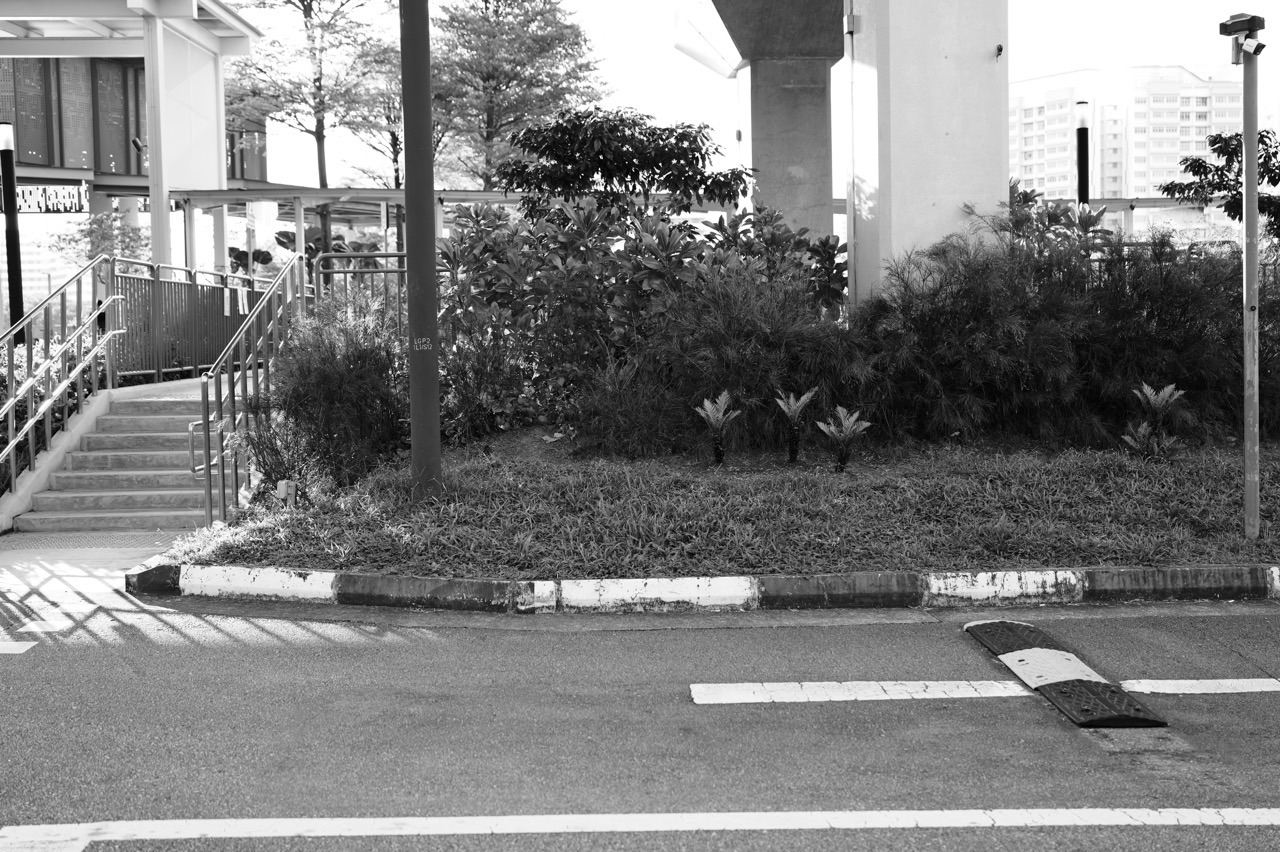
Driving in Punggol haze? The road-safety decision is immediate: reduce speed when visibility is poor, leave adequate room to stop, turn on suitable headlights, watch for children and cyclists, and avoid unnecessary lane changes. A low PM2.5 band is not proof that a particular road is easy to see, while a grey skyline is not a calibrated PSI measurement. The 2026 MOT rules also prohibit obscuring front-side visibility with removable window shades.
For school pickups, Punggol MRT transfers and deliveries around Waterway Point and One Punggol, check NEA and MOH for exposure, and Singapore’s Traffic Police and MOT for road safety. This article is about seeing and being seen, separate from our existing car-cabin filtration guide.

Quick navigation: Quick answer: drive only as far as you can safely see · A relevant October 2026 legal update: window sunshades · Haze and wet roads are not one hazard · Motorcycles in low visibility · Taxi, private-hire and delivery drivers · Worked case: a delivery driver in Punggol
Quick answer: drive only as far as you can safely see
Visibility requires its own road-safety judgement
How should you drive around Punggol when haze reduces visibility? Slow to a speed that leaves sufficient time to recognise and avoid hazards, maintain a generous safe following distance, use appropriate vehicle lighting, and avoid unnecessary sudden changes of lane. Singapore Traffic Police recommends defensive driving, patience, checking blind spots and watching especially for pedestrians and smaller road users. If the view is no longer good enough to proceed safely, get to an appropriate safe place and stop rather than pressing on to meet a pickup time.
Air pollution is an additional, separate check
A driver needs to distinguish road visibility from the concentration of fine particles in the air. NEA’s current one-hour PM2.5 informs immediate outdoor exposure decisions and MOH provides corresponding health advice. Those readings do not tell a driver exactly how far they can see through the windscreen at a particular junction. A street may have humid haze, glare, rain, mist or vehicle spray. Use actual road conditions to drive defensively, and the official environmental readings to manage overall exposure and activity choices.
Punggol Central has changing road situations
Local roads are not one long straight test track
Driving between Waterway Point, Punggol MRT, One Punggol and residential HDB blocks involves turning vehicles, traffic lights, bus stops, pedestrian crossings and vehicles entering service roads. A reduced-contrast background can make a waiting cyclist or a person approaching a zebra crossing harder to notice early. This is a reason to drive attentively, not evidence that Punggol has a greater accident rate during the current haze. Neither the local photograph nor a regional PSI number provides a street-by-street crash-risk measure.
Do not invent shortcuts from the grey skyline
A driver who wants to shorten the journey may decide to turn down an unfamiliar side road or service entrance. But a narrow access lane or loading area can be less suitable than a familiar signed route. Check the actual directions, obey signals and speed limits, and anticipate people moving between blocks and shops. Do not block bus lanes, cycle paths or the entrance to a car park simply to keep the family indoors for an extra minute. Safe route familiarity often matters more than avoiding one normal traffic light.
Headlights during poor daytime visibility
Your vehicle needs to be seen as well as see
The Ministry of Transport’s 21 April 2023 parliamentary reply explains that motorists should switch on their headlamps in dimly lit or otherwise low-visibility environments, including heavy rain. The principle applies sensibly when visibility is affected by haze: lighting makes the vehicle easier to recognise and can help the driver see the road. Daytime running lamps are not the same as assuming every light or rear lamp is illuminated; understand the actual vehicle’s controls and follow current road rules.
Choose the correct beam for the conditions
Bright high beams can dazzle oncoming drivers or drivers seen in mirrors, especially when there is scattering from atmospheric moisture. Use the normal suitable dipped or low-beam setting in built-up traffic and change lights appropriately under Traffic Police guidance. An individual car’s automatic light sensor may not recognise every low-contrast situation, so drivers should know how to operate lights manually. Do not blindly trust the dashboard’s ‘AUTO’ label to establish that other people can see you.
Fog lamps, high beams and glare
More brightness is not always clearer
A hazy Punggol evening may include reflected light from wet roads, shop signs and other vehicles. Switching on every lamp is not a scientific cure for reduced contrast, and using high beams toward oncoming traffic can create dangerous glare. Keep the windscreen and headlamps clean and use the settings appropriate to the road, weather and vehicle design. A fog lamp is not a substitute for slowing down or checking that a pedestrian crossing is clear.
When you are dazzled
Traffic Police’s educational materials emphasise reducing speed when lights from other vehicles impair vision and maintaining good observation. Avoid staring directly into the glare, braking unpredictably without reason or drifting across lane markings. If the view becomes inadequate, slow safely and find an appropriate legal stopping place. Never stop abruptly in an active lane merely to check the colour of the sky. Visibility decisions must preserve the safety of people following behind you too.
A relevant October 2026 legal update: window sunshades
Do not drive with front side windows obscured
In a 7 October 2026 Ministry of Transport reply, Singapore clarified that curtains or removable sunshades used on side windows while driving are not permitted when they obscure the driver’s view. Officers may issue warnings and direct motorists to remove them, and the stated maximum penalty for the offence is up to S$2,000 and/or six months’ imprisonment. This matters during haze because someone may try to block bright orange sunlight with a large removable shade while driving; loss of peripheral visibility creates a separate safety hazard.
Heat comfort does not remove the rule
Passengers may prefer sun protection, and drivers can use compliant built-in vehicle features or approved films under the applicable rules, but should not block the view of the road. A sunshade that is useful when the car is parked can be inappropriate while moving. Keep mirrors and side windows usable, and check the actual vehicle’s equipment rather than improvising coverings. A haze forecast does not create an exemption from traffic or vehicle visibility standards.
Legal windscreen film limits in 2026
Tinting can reduce heat, but visibility limits remain
The Ministry of Transport’s 7 April 2026 answer states that approved tinted films must allow at least 70% of visible light through the front windscreen and front side windows, and at least 25% through the rear windscreen and rear side windows. Films must be non-reflective and not interfere with relevant ERP/OBU signal transmission. The standards are designed to preserve visibility and enforcement needs while permitting appropriate heat-reduction technology.
Do not change your car’s glass because of a one-week haze episode
A darker film may feel attractive under an orange sunset, but the legal light-transmission requirements still apply. Avoid applying untested removable films or DIY coverings to front glass to reduce glare. Choose compliant professional products if changing film is genuinely necessary. An air-pollution advisory describes exposure risk; it does not authorise a motorist to weaken essential visibility or hide windows behind improvised curtains.
Why a grey skyline is not a PSI meter
Atmospheric optics and health indexes are different
A hazy skyline can result from fine particles, humidity, rain and the way sunlight scatters between buildings. NEA says visibility alone is not an accurate measure of air pollution. The reverse is also true: a visually clear road cannot certify low PM2.5. A motorist therefore makes two separate observations. The real distance at which a road hazard is visible governs safe driving; the official public air reading guides exposure precautions and optional outdoor activity.
Don’t estimate concentration from the number of visible HDB blocks
A common social post might say, ‘I can see only three blocks, so the PSI must be above 200.’ That is not a scientifically valid conversion. The height of buildings, weather, viewing angle and camera exposure affect appearance. Photographs can document a scene but not measure fine-particle mass. During a drive, avoid making a video of the skyline with your phone. The Punggol haze photography guide explains that distinction for photography without encouraging unsafe filming from moving cars.
What reduced contrast does to stopping decisions
Perception distance matters
The road space available for a driver to react depends on what they can perceive, how quickly they recognise a hazard, the speed of the vehicle and braking capability under the road conditions. A pedestrian or bicycle emerging from a low-contrast background may be spotted later than in clear sunshine. Increasing following distance and reducing speed gives more margin. Do not convert a hazy skyline into a single fixed safe speed that supposedly applies to every Punggol street.
Defensive driving is safer than a mathematical shortcut
For example, two cars travelling at the same speed may face very different stopping conditions if one is on wet pavement, one has worn tyres or one driver is distracted. The safe response is to remain below posted limits as conditions require, preserve room around the vehicle and avoid hard braking and sudden lane changes. Traffic Police cautions against tailgating because a driver must have time to respond to what the vehicle ahead does. The point is reliable judgment, not racing to complete a short errand.
Haze and wet roads are not one hazard
Rain makes traction a different question
Punggol may experience showers during a regional haze episode. Rain, standing water and road grime can lower tyre traction, while windscreen spray reduces visibility. Even if rain removes some airborne particles, this does not make the road safe for normal dry-weather speeds. Reduce speed appropriately, maintain distance, and do not drive into an unfamiliar flooded section. A hazardous road surface cannot be made safe by a Normal PM2.5 band.
Use the right official information
If a journey is affected by heavy rain or flooding, refer to current weather and PUB information and obey road closure signs. A storm near the Waterway may be local and transient; a national haze reading is broader. The Punggol haze, lightning and flood-alert guide helps separate the environmental checks. The road driver’s most immediate information remains actual visibility, signs, surrounding traffic and safe control of the vehicle.
Windscreen cleanliness and demisting
Visible streaks can make a marginal view worse
A dusty or greasy windscreen can scatter approaching headlights and street lighting, particularly at night or during rain. Maintain functional wipers, clean suitable glass surfaces and keep washer fluid according to the vehicle manufacturer’s instructions. A defogger or demister helps prevent condensation from obstructing the view. Do not use household solvents that may damage seals, tinted film or automotive surfaces.
Never try to wipe the windscreen while driving
If vision is poor because the glass is fogged or streaked, use vehicle controls safely or stop at an appropriate location before handling a cloth. Avoid reaching across the dashboard, opening doors onto traffic or asking a child to lean forward to clean the front glass. Basic vehicle maintenance is part of the safety plan, not a special premium ‘anti-haze coating’ that every Punggol household must purchase.
School-zone caution around Punggol
Children are not predictable traffic cones
A Punggol school pickup may involve younger pupils, parents with prams, buses and drivers entering a busy school-side road. Some students may be distracted by an unusual orange sky or changes to outdoor PE. Slow appropriately near crossings and watch for children who may emerge between parked vehicles. Respect school markings and any specific drop-off instructions. The school’s decision to continue classes is not a guarantee that roads and pedestrian routes will be empty.
Keep collection arrangements clear
Use the actual school’s Parents Gateway or authorised communication to confirm changes. If outdoor haze leads the school to modify activities, the pick-up point may still be unchanged; do not invent an alternative gate from a parent chat. Arrive at a realistic time and avoid waiting illegally in a bus stop or loading bay. If the air makes unnecessary outdoor waiting undesirable, coordinate with the responsible adult rather than rushing or creating a vehicle queue across a crossing.
Cyclists and PAB riders are especially important to see
Look before turning left or changing lanes
Traffic Police warns that cyclists, power-assisted bicycle riders and motorcyclists are more vulnerable because they are small and less visible than cars. At Punggol crossings and park-connector junctions, check mirrors, blind spots and the position of cyclists before turning. An apparently empty side road may have a rider approaching from an obscured angle. Use signals early and do not drift across a cycle path to shorten a detour.
Lights help but do not remove drivers’ duties
MOT’s February 2026 parliamentary answer describes front white and rear red lights required for cycling at night. A bicycle light can aid recognition, but drivers still need to be alert even when another user lacks ideal visibility equipment. Riders also must follow traffic and path rules, while vehicle drivers must give sufficient space and comply with relevant signs. A low sun and haze may make a rider harder to spot; that is an argument for more caution, not assigning blame automatically.
Motorcycles in low visibility
A scooter rider has fewer physical protections
Traffic Police motorcyclist guidance emphasises using headlights, maintaining a safe following distance, avoiding blind spots and practising defensive riding. In poor visibility, a motorcycle can be overlooked by a driver changing lanes. Motorcyclists should anticipate possible mistakes by others and wear required approved protective equipment. A car driver should check carefully instead of relying on a single glance into a small mirror.
Regional smoke and respiratory exposure
A motorcycle rider may be outdoors for the entire trip, unlike an enclosed car occupant. That does not mean a brief ride automatically requires an N95 or that protective equipment can override traffic safety. MOH’s guidance differentiates short commutes and prolonged strenuous outdoor exposure. For delivery riders on long shifts, workplace guidance and the actual employer’s risk assessment are more relevant. Drivers should respect the people doing essential outdoor work rather than infer protection from a helmet.
Punggol MRT and LRT junctions
Expect crossing and turning movements
Road access around the MRT-LRT interchange, Punggol bus interchange and One Punggol can include vehicles entering car parks, buses, taxis and commuters crossing. Some approaches are naturally busier at school start and dismissal periods. A driver should observe the actual signals and signs instead of memorising a route and accelerating through familiar turns. Do not assume that fewer people are walking outside because haze has appeared in the news.
Keeping drop-offs safe
If the parent needs to transfer to a train or student-care pickup, choose an authorised drop-off rather than making a hurried stop beside a junction. The driver must keep the passenger door away from moving cyclists where possible and check before anyone exits. The surrounding route may differ if works or operator restrictions are present, so use current signage. A short additional sheltered walk may be preferable to an illegal or unsafe manoeuvre intended to save a few seconds.
Car-cabin recirculation is a separate task
Air inside can differ from air outside
Switching to an appropriate recirculation setting and ensuring the vehicle’s cabin filter is maintained may reduce some entry of outdoor particles under suitable conditions. But a recirculation icon does not improve the driver’s ability to see an approaching cyclist, and a filter’s performance depends on its actual specification and maintenance. Some modes can affect windscreen fogging or freshness of air, so follow the vehicle handbook and keep the demister usable.
Don’t let a cleaner cabin encourage unsafe driving
A family may feel reassured by their car’s closed windows during haze, yet the driver still needs to respond to reduced road visibility. A passenger’s comfort should never come before safe observation. The Punggol haze car cabin guide handles air-conditioning, air recirculation and filter specifics. This article deliberately focuses on collision avoidance and journey planning rather than promising that any private vehicle offers complete protection from ambient fine particles.
When vulnerable passengers are in the car
Driving is often necessary for medical reasons
An older relative with COPD or a child with asthma may have a clinic appointment during a haze episode. A direct, calm transport journey can help reduce unnecessary outdoor exertion, but that benefit does not justify aggressive driving or rushing through crossings. Leave suitable time, confirm the clinic appointment and keep prescribed medication accessible according to the person’s existing care plan.
Breathing symptoms require healthcare, not more speed
If someone has severe breathlessness, chest pain or altered awareness, seek emergency assistance according to the medical urgency rather than simply driving faster. MOH’s public haze page describes susceptible groups and their more cautious outdoor guidance. A private car’s clean cabin appearance is not a medical diagnosis or oxygen supply. Plan the route for comfort and safety, and do not infer that an orange sunset explains every respiratory symptom.
Taxi, private-hire and delivery drivers
Long shifts create different exposure and fatigue issues
A taxi or private-hire driver can spend hours in a vehicle, repeatedly opening doors and waiting at pick-up points. A delivery rider may spend more time in direct outdoor air. The road safety obligations remain unchanged, but workers and their employers may need additional haze precautions depending on tasks, hours and health. Fatigue can also impair reaction time, especially when the driver has been negotiating glare or reduced visibility for much of a shift.
Customer expectations should remain reasonable
A passenger cannot instruct a driver to violate stopping restrictions, speed limits or traffic signals because they are worried about the air outside. An employer cannot simply command the worker to drive faster to compensate for poor road visibility. A safer arrangement may involve adjusted pickup timing and realistic communication about delays. Follow actual platform or operator instructions rather than inventing a citywide cancellation or surcharge based on PSI.
Road closures, flooded streets and navigation apps
Traffic software is not a safety clearance
A navigation app may suggest a shorter route, but a road can be temporarily restricted for works, a flood or an incident. Follow physical road signs and official traffic information. Do not drive into a flooded lane because the software continues to show a blue line, or use a closed service driveway as a shortcut. A shortened journey does not help if it leaves the family stranded at a blocked crossing.
Check information without touching the phone while driving
Set the destination before departure or have an appropriately seated passenger assist. A driver should not scroll a haze map or make a video of the skyline while the car is moving. A safe stop can be used if an update is genuinely needed. Current air-quality readings and actual route information are both useful, but neither substitutes for continuous attention to traffic conditions.
A 90-second pre-drive check
Lights, glass and route
Before leaving a Punggol car park, verify that the windscreen and mirrors are clear, lights and wipers work, tyres are in an appropriate state and the route is understood. Check the current haze and weather context, particularly if the journey involves a child, older person or long exposed wait. If the driver feels ill or dangerously tired, change the plan rather than assuming a strong coffee will restore safe attention.
Vehicle occupants have their own responsibilities
Passengers should wear required restraints and not distract the driver during difficult conditions. Children should use the relevant legally appropriate restraints for their size and age. Do not let a child lean across the windscreen to take a photo of the haze. Pack any medication and water appropriately, but avoid turning the trip into an anxious discussion of pollution numbers while the driver needs to concentrate. A calm car helps the driver focus.
Worked case: school pickup near Punggol Central
A driver approaches a pedestrian crossing
Imagine a parent driving to collect a Primary 4 pupil during a hazy afternoon. Visibility is reduced and rain begins to fall. The parent reduces speed, uses suitable lights, leaves extra distance behind the bus ahead and checks for a cyclist approaching a junction. They confirm the child’s authorised pickup point with the school, rather than making an illegal stop on an unfamiliar corner.
The environmental and road-safety decisions remain separate
The parent also consults MOH and NEA for the child’s outdoor exposure and keeps any clinically prescribed medication accessible. After safely collecting the child, they use an ordinary direct route home. They do not rely on a sunshade covering a front side window, and nobody records videos while driving. The case is fictional, demonstrating sensible decisions; it does not report a closure or a traffic incident at a named Punggol school.
Worked case: a delivery driver in Punggol
The morning involves repeated short stops
A delivery driver travels between Northshore, Punggol MRT and Waterway Point while haze lowers distant contrast. There are repeated entry and exit manoeuvres near shared paths. The worker keeps a safe distance, turns attentively, checks blind spots and chooses lawful loading positions, even though another delivery is waiting. The employer reviews occupational haze precautions for extended work; the worker keeps reporting times realistic.
Why a single PSI number does not dictate driving speed
One-hour PM2.5 concerns pollution concentration and a forecast PSI assists broader planning; neither provides an exact safe speed for a particular junction. The driver’s speed and following distance must fit actual road conditions and traffic rules. The company should not reward dangerous rushing. The situation is illustrative, not a statement about any actual Punggol delivery platform or current road closures.
Six myths about driving in Singapore haze
The visibility myths
Myth one: a low PM2.5 band means the road must be easy to see. Myth two: a grey skyline proves a particular PSI number. Myth three: headlights are only for after 7pm, never for reduced daytime visibility. Myth four: dark front-side sunshades are permitted when the sun looks orange. Myth five: an air-conditioned car is enough to make unsafe visibility irrelevant. Myth six: a route that is shorter on the app must be safer during a storm.
How to correct them
Treat air pollution, glare, rain, road traction, vehicle lighting and legal access as different questions. Official NEA and MOH information informs exposure; Traffic Police and MOT supply road rules; the driver’s actual view determines whether continued driving is safe. More confident driving does not mean faster driving, and an impressive photograph is not a substitute for observation.
The useful Punggol driver checklist
Before, during and after
Before: check relevant haze and weather advisories, choose a lawful route, inspect glass, lights and wipers, and plan enough time. During: maintain safe observation and speed, use suitable headlights, watch carefully for cyclists and pedestrians, signal early and avoid distracted filming or phone use. If conditions become genuinely unsafe, reach a safe stopping place rather than continuing into poor visibility.
Keep the next action simple
After the trip, discuss any issue calmly: did a window fog up, was a school pickup difficult, or was a road closed? Fix vehicle maintenance or route planning where needed and keep official sources for future decisions. No new product or app is required for most of these habits. Safe road behaviour remains essential whether the 2026 haze episode improves tomorrow or continues for another week.
Haze driving: the right response to different problems
| Observation | What it concerns | Practical response |
|---|---|---|
| Low contrast ahead | Visibility and reaction margin | Slow appropriately, extend distance, remain alert |
| Dark daytime haze or rain | Vehicle visibility to other users | Use suitable headlights and dipped beams |
| Glare through side windows | Direct road observation | Do not use prohibited obscuring sunshades while driving |
| Wet road and spray | Braking traction and windscreen clarity | Adjust speed, wipers, demister and route |
| Rising one-hour PM2.5 | Outdoor fine-particle exposure | Apply NEA/MOH health advice in parallel |
| Car cabin feels comfortable | Temperature and inside air | Do not confuse comfort with road visibility or certified filtration |
Frequently asked questions about driving during Punggol haze
Should I switch on headlights during daytime haze?
If visibility is reduced, MOT and Traffic Police driving guidance emphasises using suitable headlights so vehicles can see and be seen. Use low or dipped beams appropriately around other road users, and understand your car’s settings rather than assuming daytime running lights turn on every necessary lamp.
Is it safe to drive at the normal speed limit if PSI is only 80?
A PSI value alone cannot establish safe visibility, traction or traffic conditions. Speed limits are maxima under relevant rules, not promises that the posted maximum remains sensible in smoke, heavy rain or glare. Adjust speed and following distance to what you can safely see and manage.
Can I use dark removable shades on front side windows?
MOT’s 7 October 2026 clarification says curtains or sunshades obscuring a driver’s side-window view while driving are not allowed. Do not use a removable shade to block a sunset if it reduces road observation. Compliant tinted films have their own requirements.
What are the approved front window tint limits?
MOT’s April 2026 reply states at least 70% visible light transmission for the front windscreen and front side windows, and at least 25% for rear windscreen and rear side windows, plus requirements on reflectivity and signal interference. Follow current LTA standards.
Do hazard lights mean I can drive in extreme haze?
No. Hazard lights are not a licence to continue when you cannot see the road safely or to stop in an active lane. If visibility becomes inadequate, reduce speed safely and find an appropriate place to stop and assess the situation. Follow vehicle and road rules.
Does a closed car cabin protect everyone against PM2.5?
A maintained cabin filter and suitable recirculation may reduce some outdoor particle entry, but no vehicle cabin is guaranteed completely free of pollution. These controls also do not improve external visibility. Follow the vehicle manual, MOH guidance and individual healthcare plans.
Can haze force every Punggol school to change pickup location?
Not automatically. School and student care changes require actual notices from the responsible institutions. Check authorised channels and the designated collection procedure; do not create an illegal roadside pickup based on a rumour about school closure.
Are cyclists and PAB users less visible during haze?
Reduced contrast can make smaller road users harder to spot in some conditions, so drivers should check blind spots, slow as appropriate and give sufficient space. Traffic Police emphasises defensive driving around cyclists and motorcyclists. All users have relevant lighting and traffic duties.
What if it starts pouring while the sky is smoky?
Reduce speed and assess road traction and visibility, use appropriate lights and demisting, and follow actual flood warnings and signs. A shower does not eliminate every haze concern or lightning risk. Check the current NEA and MSS/PUB information for the relevant questions.
What should I do if I cannot see far enough to drive?
Do not continue beyond what you can safely observe. Slow safely, find an appropriate legal stopping location and obtain help as needed. Avoid abrupt stopping in active traffic, unsafe shoulder manoeuvres or distracted phone use. Traffic Police road-safety guidance and current road instructions take precedence.
Related Punggol roads, haze and family guides
- Punggol car cabin recirculation and filters
- MRT, LRT, school runs and outdoor commuting
- Punggol Parents Gateway and school pickup
- Punggol haze with thunderstorms and road flooding
- Children, seniors, asthma and haze health
- Skyline photographs and visibility myths
- Local construction dust versus regional smoke
- Official one-hour PM2.5 and next-day PSI forecast
- Complete Punggol Haze Article Index
- eduKateSG Punggol neighbourhood hub
Official Singapore road and air-safety references
- Traffic Police: Road Safety Tips for Drivers
- Traffic Police: Official driving education portal
- MOT: Daytime running lights and headlamp use in low visibility (2023)
- MOT: Driver-side sunshades during driving (7 October 2026)
- MOT: Visible-light transmission limits for tinted windows (April 2026)
- Traffic Police: Road Safety Tips for Motorcyclists
- MOT: Bicycle lights at night (3 February 2026)
- MOH: 2026 haze health advice
- NEA: Official haze readings
Fact-checked 18 October 2026. No claim is made about a specific current road closure, visibility distance, collision or approved drop-off at any named site. A regional air pollution reading cannot determine the speed at which an individual street is safe to drive. Worked scenarios are fictional.


