
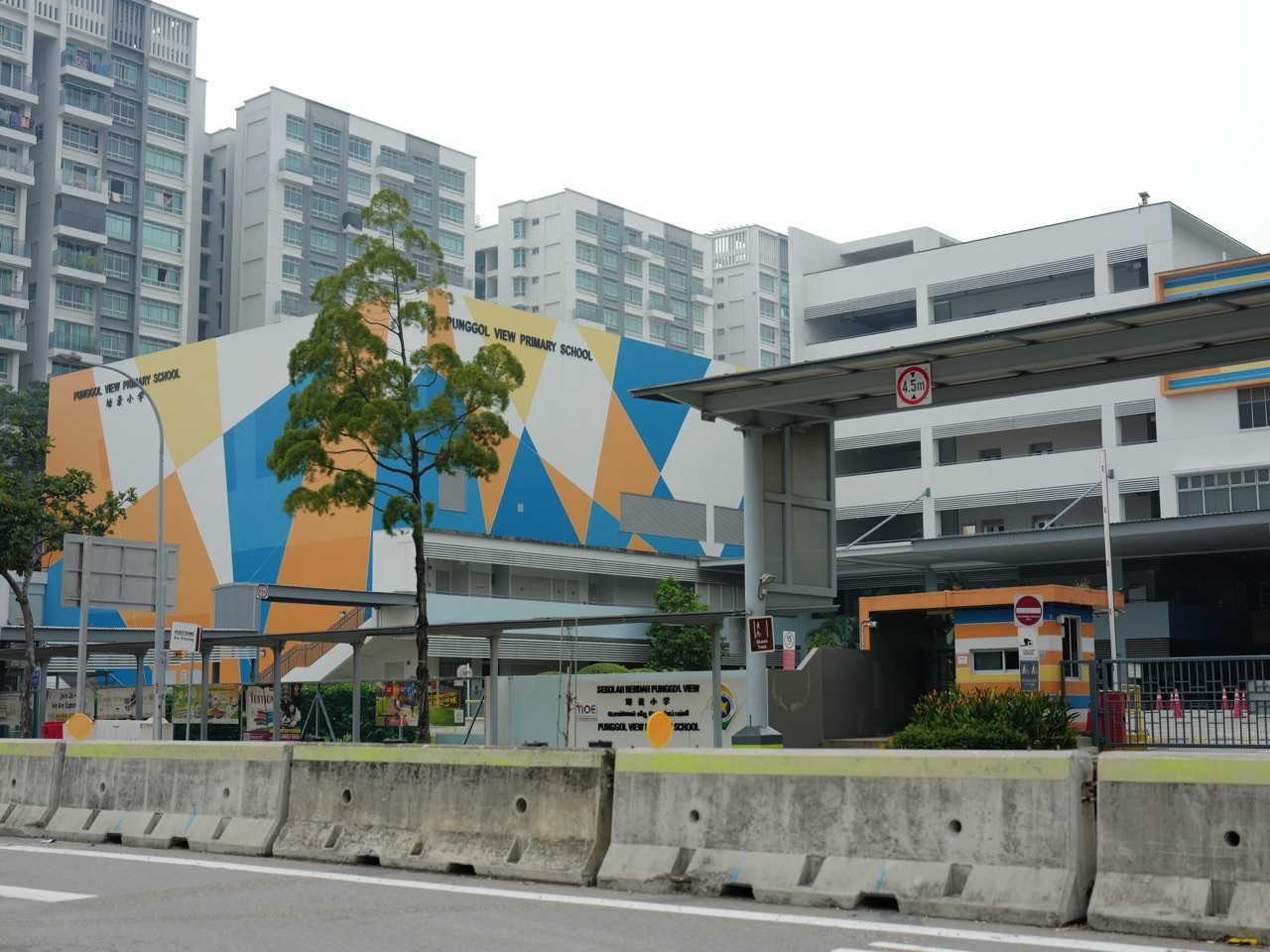
IB Mathematics AI and Punggol Haze: Answer First
What makes haze a worthwhile IB Mathematics: Applications and Interpretation (AI) investigation? It provides questions involving time series, percentages, descriptive statistics, regression, probability, functions, geometry and mathematical modelling. A thoughtful student can ask which model describes a particular verified dataset, which assumptions may be false and how reliable a prediction could be. They cannot turn a skyline photograph or an undated screenshot into a certified pollutant concentration.
The International Baccalaureate’s Diploma Programme Mathematics page confirms Mathematics: Applications and Interpretation is offered at SL and HL. The IB’s revised mathematics courses begin teaching in 2027 for first assessment in 2029, while the prior curriculum has its final assessment in November 2028. A candidate taking an examination in 2027 should therefore not assume that the new 2029 paper arrangements already apply.
This Punggol-focused article provides 25 original worked problems, differentiated SL/HL subject guidance, a carefully sourced internal-assessment (IA) approach and a four-week revision plan. All illustrative particle concentrations are fictional. For real outdoor health decisions use NEA’s current North-region air quality.
The 2027-to-2029 Curriculum Transition, Explained
The IB has published revised Mathematics: Applications and Interpretation (AI) and Mathematics: Analysis and Approaches (AA) briefs for first assessment in 2029. Schools begin teaching the revised courses in 2027, while examinations for earlier cohorts continue under the prior curriculum through November 2028.
This distinction matters because an online article headed “IB Maths 2027” might be discussing teaching that starts in 2027 or examinations that take place in 2027. Those students do not necessarily follow the same assessment brief.
Before preparing tuition, a family should record programme, examination session, SL/HL choice, current subject guide and school teaching plan. Do not mix Paper 1 instructions from two cohorts.
All subject-format statements that follow refer explicitly to the 2029 first-assessment IB AI subject brief, unless identified otherwise. A student preparing for a 2027 or 2028 paper should use the applicable older official guide.
AI: Five Areas of Mathematics and a Mathematical Exploration
The IB 2029 Applications and Interpretation subject brief organises the syllabus into Functions, Number and algebra, Geometry, Probability and statistics, and Calculus, plus the mathematical exploration.
AI foregrounds mathematical modelling and statistical interpretation with appropriate technology. Students study functions and their representations, numerical methods and exponentials, geometry and trigonometry, distributions and inference, and calculus as a tool for modelling change.
The revised brief marks matrices, vectors and graph theory at HL in relevant topics, along with HL-only differential equations and graph transformations. SL remains a substantial course: students still need clear mathematical reasoning and competent technology use.
Course choice should be informed by the school’s advice, the student’s interests and future study requirements rather than the mistaken assumption that AI contains no calculus.
2029 AI Assessment: Technology is Required in Both Main Papers
The revised 2029-first-assessment IB AI subject brief states that SL Paper 1 requires technology and contains compulsory short-response questions. SL Paper 2 also requires technology and uses extended-response questions. Each lasts 1 hour 30 minutes and contributes 40%, for 80% external assessment.
At HL, Paper 1 and Paper 2 last two hours each, each worth 30%. A one-hour Paper 3 with technology contributes 20%. The mathematical exploration IA contributes 20% at SL and HL.
This differs from revised IB AA Paper 1, which is non-technology. Students should therefore not practise an AI examination using AA paper restrictions or vice versa.
Technology being required does not eliminate the need to frame a problem, select a model, explain calculations or interpret the outcome. A calculator-generated trendline is not a substitute for judgement.
How IB AI Differs From AA in a Haze Context
IB AI emphasises real-world applications, statistical thinking, mathematical modelling and meaningful use of technology. IB AA places particular focus on analysis, rigorous algebraic work and function/calculus reasoning.
Both courses involve reasoning and inquiry. The difference is one of emphasis and some syllabus choices, not a hierarchy in which one student automatically has stronger mathematical ability than another.
For a haze dataset, an AI investigation might compare moving averages, regression residuals or time-of-day patterns. An AA investigation might focus on properties of a selected function and a tightly defined mathematical argument. Either could be rigorous when appropriately designed.
Both must recognise that the official North-region reading is a regional measure, not proof of the exact concentration at a specific Punggol HDB corridor.
The Core Challenge: Reliable Data Before Statistical Analysis
A mathematical model is only as meaningful as its question, data and assumptions. If a pupil downloads live air-quality values, they should preserve the original source, timestamp, reporting region, units and averaging period.
Singapore’s public one-hour PM2.5 concentration is expressed in µg/m³, whereas its 24-hour PSI is an index. These cannot be combined as though they are one numeric variable. A foreign AQI may have a different definition and scale again.
A news photograph can illustrate visibility but cannot deliver a certified concentration, while a satellite hotspot may indicate a fire without providing a legal finding or precise ground exposure.
IB AI statistics should illuminate uncertainty and selection effects. They should not be used to give a misleading appearance of certainty to unverified information.
Original AI Worked Question 1 · Simple Moving Average
Problem. Three fictional one-hour concentrations are 40, 50 and 70 µg/m³. Find their three-point mean.
Worked solution. (40+50+70)/3 = 160/3≈53.33 µg/m³.
Interpretation and limitation. This is an average of three invented values. It is not the official 24-hour PSI or a measurement at a particular Punggol block.
Technology and reasoning check. Before using a calculator or spreadsheet, define each variable, unit and assumption. Check whether the method describes a sample, estimates a parameter, evaluates a function or approximates an integral. A numerical output is only meaningful in the problem’s defined context.
Transfer practice. Change a parameter or input and explain whether the model’s conclusion still follows, rather than merely repeating the arithmetic.
Original AI Worked Question 2 · Time-Weighted Mean
Problem. A fictional concentration is 50 µg/m³ for two hours and 80 µg/m³ for three hours. Find its time-weighted mean.
Worked solution. (2×50+3×80)/(2+3)=340/5= 68 µg/m³.
Interpretation and limitation. The durations are unequal, so the ordinary unweighted mean of 50 and 80 would not answer this question.
Technology and reasoning check. Before using a calculator or spreadsheet, define each variable, unit and assumption. Check whether the method describes a sample, estimates a parameter, evaluates a function or approximates an integral. A numerical output is only meaningful in the problem’s defined context.
Transfer practice. Change a parameter or input and explain whether the model’s conclusion still follows, rather than merely repeating the arithmetic.
Original AI Worked Question 3 · Percentage Increase
Problem. A hypothetical measurement rises from 45 to 60 µg/m³. Find the percentage increase.
Worked solution. (60−45)/45×100%= 33⅓%.
Interpretation and limitation. The percentage base is the starting 45. A concentration increase does not imply an equal percentage increase in individual health risk.
Technology and reasoning check. Before using a calculator or spreadsheet, define each variable, unit and assumption. Check whether the method describes a sample, estimates a parameter, evaluates a function or approximates an integral. A numerical output is only meaningful in the problem’s defined context.
Transfer practice. Change a parameter or input and explain whether the model’s conclusion still follows, rather than merely repeating the arithmetic.
Original AI Worked Question 4 · Linear Regression Prediction
Problem. A fictional fitted line is ŷ=2x+5. Predict y at x=4.
Worked solution. ŷ=2(4)+5= 13.
Interpretation and limitation. Use the model only where appropriate to its source data. Interpolation is not proof of causality.
Technology and reasoning check. Before using a calculator or spreadsheet, define each variable, unit and assumption. Check whether the method describes a sample, estimates a parameter, evaluates a function or approximates an integral. A numerical output is only meaningful in the problem’s defined context.
Transfer practice. Change a parameter or input and explain whether the model’s conclusion still follows, rather than merely repeating the arithmetic.
Original AI Worked Question 5 · Regression Residual
Problem. A fictional observed y is 15 and the fitted model predicts 13. Find the residual defined as observed minus fitted.
Worked solution. Residual=15−13= +2.
Interpretation and limitation. Always state the sign convention. Residual analysis helps identify model error rather than only admiring an R² value.
Technology and reasoning check. Before using a calculator or spreadsheet, define each variable, unit and assumption. Check whether the method describes a sample, estimates a parameter, evaluates a function or approximates an integral. A numerical output is only meaningful in the problem’s defined context.
Transfer practice. Change a parameter or input and explain whether the model’s conclusion still follows, rather than merely repeating the arithmetic.
Original AI Worked Question 6 · Correlation Interpretation
Problem. A fictional scatter plot has Pearson r=0.85. What does that suggest?
Worked solution. There is a strong positive linear association in the dataset.
Interpretation and limitation. Correlation does not establish that x causes y, particularly if important weather or source variables were not measured.
Technology and reasoning check. Before using a calculator or spreadsheet, define each variable, unit and assumption. Check whether the method describes a sample, estimates a parameter, evaluates a function or approximates an integral. A numerical output is only meaningful in the problem’s defined context.
Transfer practice. Change a parameter or input and explain whether the model’s conclusion still follows, rather than merely repeating the arithmetic.
Original AI Worked Question 7 · Population Standard Deviation
Problem. A fictional population consists of values 2, 4 and 6. Find the population variance and SD.
Worked solution. Mean=4. Variance=[(−2)²+0²+2²]/3= 8/3. SD=√(8/3)≈ 1.633.
Interpretation and limitation. The denominator is 3 because the question defines the entire population, not a sample variance estimate.
Technology and reasoning check. Before using a calculator or spreadsheet, define each variable, unit and assumption. Check whether the method describes a sample, estimates a parameter, evaluates a function or approximates an integral. A numerical output is only meaningful in the problem’s defined context.
Transfer practice. Change a parameter or input and explain whether the model’s conclusion still follows, rather than merely repeating the arithmetic.
Original AI Worked Question 8 · Median and an Extreme Value
Problem. A fictitious dataset contains 20, 30, 40, 50 and 300. Find mean and median.
Worked solution. Sum=440, mean= 88. Sorted middle value, median= 40.
Interpretation and limitation. The extreme value raises the mean substantially; describe the distribution rather than assuming the mean represents a typical observation.
Technology and reasoning check. Before using a calculator or spreadsheet, define each variable, unit and assumption. Check whether the method describes a sample, estimates a parameter, evaluates a function or approximates an integral. A numerical output is only meaningful in the problem’s defined context.
Transfer practice. Change a parameter or input and explain whether the model’s conclusion still follows, rather than merely repeating the arithmetic.
Original AI Worked Question 9 · Exponential Reduction Model
Problem. A fictional function is C(n)=80(0.9)ⁿ. Find C(3).
Worked solution. C(3)=80×0.729= 58.32.
Interpretation and limitation. The repeated ten-percent reduction is imposed by the mathematical rule, not a real pattern for regional smoke.
Technology and reasoning check. Before using a calculator or spreadsheet, define each variable, unit and assumption. Check whether the method describes a sample, estimates a parameter, evaluates a function or approximates an integral. A numerical output is only meaningful in the problem’s defined context.
Transfer practice. Change a parameter or input and explain whether the model’s conclusion still follows, rather than merely repeating the arithmetic.
Original AI Worked Question 10 · Exponential Growth
Problem. A hypothetical count begins at 50 and increases by 10% for two periods. Find its modelled value.
Worked solution. 50(1.1)²=50×1.21= 60.5.
Interpretation and limitation. The result can be a noninteger modelled quantity; if objects must be counted, interpretation and rounding rules matter.
Technology and reasoning check. Before using a calculator or spreadsheet, define each variable, unit and assumption. Check whether the method describes a sample, estimates a parameter, evaluates a function or approximates an integral. A numerical output is only meaningful in the problem’s defined context.
Transfer practice. Change a parameter or input and explain whether the model’s conclusion still follows, rather than merely repeating the arithmetic.
Original AI Worked Question 11 · Arithmetic Sequence
Problem. A fictional sequence has first term 4 and common difference 2. Find the tenth term.
Worked solution. a₁₀=4+9(2)= 22.
Interpretation and limitation. This is a deterministic sequence, not necessarily a fit to observed environmental data.
Technology and reasoning check. Before using a calculator or spreadsheet, define each variable, unit and assumption. Check whether the method describes a sample, estimates a parameter, evaluates a function or approximates an integral. A numerical output is only meaningful in the problem’s defined context.
Transfer practice. Change a parameter or input and explain whether the model’s conclusion still follows, rather than merely repeating the arithmetic.
Original AI Worked Question 12 · Normal Standardisation
Problem. Under a hypothetical normal model with μ=50 and σ=10, find z for x=70.
Worked solution. z=(70−50)/10= 2.
Interpretation and limitation. Standardising transforms scale. The normality assumption must be appropriate to the variable being modelled.
Technology and reasoning check. Before using a calculator or spreadsheet, define each variable, unit and assumption. Check whether the method describes a sample, estimates a parameter, evaluates a function or approximates an integral. A numerical output is only meaningful in the problem’s defined context.
Transfer practice. Change a parameter or input and explain whether the model’s conclusion still follows, rather than merely repeating the arithmetic.
Original AI Worked Question 13 · At Least One Binomial Success
Problem. Let X~B(5,0.2), with independent identical trials. Find P(X≥1).
Worked solution. 1−P(X=0)=1−(0.8)⁵= 0.67232.
Interpretation and limitation. Do not describe successive smoke days as independent binomial trials without evidence; the distribution is fictional.
Technology and reasoning check. Before using a calculator or spreadsheet, define each variable, unit and assumption. Check whether the method describes a sample, estimates a parameter, evaluates a function or approximates an integral. A numerical output is only meaningful in the problem’s defined context.
Transfer practice. Change a parameter or input and explain whether the model’s conclusion still follows, rather than merely repeating the arithmetic.
Original AI Worked Question 14 · Conditional Probability
Problem. If P(A∩B)=0.12 and P(B)=0.30, find P(A|B).
Worked solution. P(A|B)=0.12/0.30= 0.4.
Interpretation and limitation. Conditioning changes the reference set. P(B) must be positive.
Technology and reasoning check. Before using a calculator or spreadsheet, define each variable, unit and assumption. Check whether the method describes a sample, estimates a parameter, evaluates a function or approximates an integral. A numerical output is only meaningful in the problem’s defined context.
Transfer practice. Change a parameter or input and explain whether the model’s conclusion still follows, rather than merely repeating the arithmetic.
Original AI Worked Question 15 · Normal Confidence Interval
Problem. For a fictional simple random sample with x̄=60, known σ=10 and n=100, calculate a 95% z-interval for μ.
Worked solution. Margin=1.96×10/10=1.96. Interval (58.04,61.96).
Interpretation and limitation. It is conditional on sampling and model assumptions; it is not an actual confidence interval for today’s North-region air quality.
Technology and reasoning check. Before using a calculator or spreadsheet, define each variable, unit and assumption. Check whether the method describes a sample, estimates a parameter, evaluates a function or approximates an integral. A numerical output is only meaningful in the problem’s defined context.
Transfer practice. Change a parameter or input and explain whether the model’s conclusion still follows, rather than merely repeating the arithmetic.
Original AI Worked Question 16 · A Simple Probability Union
Problem. Given P(A)=0.45, P(B)=0.35 and P(A∩B)=0.15, find P(A∪B).
Worked solution. 0.45+0.35−0.15= 0.65.
Interpretation and limitation. Subtract the shared intersection once; adding without adjustment double-counts overlap.
Technology and reasoning check. Before using a calculator or spreadsheet, define each variable, unit and assumption. Check whether the method describes a sample, estimates a parameter, evaluates a function or approximates an integral. A numerical output is only meaningful in the problem’s defined context.
Transfer practice. Change a parameter or input and explain whether the model’s conclusion still follows, rather than merely repeating the arithmetic.
Original AI Worked Question 17 · Trapezium-Rule Approximation
Problem. Approximate ∫₀² x² dx with trapezia of width one.
Worked solution. (1/2)[0+2(1)+4]= 3.
Interpretation and limitation. The exact integral is 8/3≈2.667, so the method overestimates this convex function with the chosen coarse spacing.
Technology and reasoning check. Before using a calculator or spreadsheet, define each variable, unit and assumption. Check whether the method describes a sample, estimates a parameter, evaluates a function or approximates an integral. A numerical output is only meaningful in the problem’s defined context.
Transfer practice. Change a parameter or input and explain whether the model’s conclusion still follows, rather than merely repeating the arithmetic.
Original AI Worked Question 18 · Derivative and Instantaneous Change
Problem. For f(t)=t²+2t, find f′(t) and f′(3).
Worked solution. f′(t)=2t+2, so f′(3)= 8.
Interpretation and limitation. The derivative gives model rate of change at a point, not a verified real-world pollutant trend unless the function was validated.
Technology and reasoning check. Before using a calculator or spreadsheet, define each variable, unit and assumption. Check whether the method describes a sample, estimates a parameter, evaluates a function or approximates an integral. A numerical output is only meaningful in the problem’s defined context.
Transfer practice. Change a parameter or input and explain whether the model’s conclusion still follows, rather than merely repeating the arithmetic.
Original AI Worked Question 19 · Definite Integral
Problem. Evaluate ∫₀²(2t+1)dt.
Worked solution. Antiderivative=t²+t. Evaluate (4+2)−0= 6.
Interpretation and limitation. The physical unit of an integral depends on axes. Concentration×time is not automatically deposited inhaled mass.
Technology and reasoning check. Before using a calculator or spreadsheet, define each variable, unit and assumption. Check whether the method describes a sample, estimates a parameter, evaluates a function or approximates an integral. A numerical output is only meaningful in the problem’s defined context.
Transfer practice. Change a parameter or input and explain whether the model’s conclusion still follows, rather than merely repeating the arithmetic.
Original AI Worked Question 20 · Coordinate Distance
Problem. Find the distance between A(0,0) and B(3,4) in a Cartesian plane.
Worked solution. √(3²+4²)= 5 coordinate units.
Interpretation and limitation. The coordinates must have a specified real-world scale before calling the answer metres or a walking route.
Technology and reasoning check. Before using a calculator or spreadsheet, define each variable, unit and assumption. Check whether the method describes a sample, estimates a parameter, evaluates a function or approximates an integral. A numerical output is only meaningful in the problem’s defined context.
Transfer practice. Change a parameter or input and explain whether the model’s conclusion still follows, rather than merely repeating the arithmetic.
Original AI Worked Question 21 · Acute-Angle Trigonometry
Problem. For an acute angle θ with sinθ=3/5, find cosθ.
Worked solution. By sin²θ+cos²θ=1, cos²θ=16/25; acute θ gives cosθ=4/5.
Interpretation and limitation. The acute-angle condition establishes the positive sign.
Technology and reasoning check. Before using a calculator or spreadsheet, define each variable, unit and assumption. Check whether the method describes a sample, estimates a parameter, evaluates a function or approximates an integral. A numerical output is only meaningful in the problem’s defined context.
Transfer practice. Change a parameter or input and explain whether the model’s conclusion still follows, rather than merely repeating the arithmetic.
Original AI Worked Question 22 · HL Vector Dot Product
Problem. For a=(1,2), b=(3,−1), find a·b.
Worked solution. a·b=3−2= 1.
Interpretation and limitation. Vectors are listed as HL-only in the revised AI brief; treat this as HL-specific practice.
Technology and reasoning check. Before using a calculator or spreadsheet, define each variable, unit and assumption. Check whether the method describes a sample, estimates a parameter, evaluates a function or approximates an integral. A numerical output is only meaningful in the problem’s defined context.
Transfer practice. Change a parameter or input and explain whether the model’s conclusion still follows, rather than merely repeating the arithmetic.
Original AI Worked Question 23 · HL Matrix Transformation
Problem. A fictional transition matrix A=[[0.8,0.1],[0.2,0.9]] acts on state vector (100,0). Find the next state.
Worked solution. A(100,0)ᵀ = (80,20)ᵀ.
Interpretation and limitation. Entries define a mathematical transition, not a certified airflow model for a Punggol flat. Matrices are HL-only in the revised AI brief.
Technology and reasoning check. Before using a calculator or spreadsheet, define each variable, unit and assumption. Check whether the method describes a sample, estimates a parameter, evaluates a function or approximates an integral. A numerical output is only meaningful in the problem’s defined context.
Transfer practice. Change a parameter or input and explain whether the model’s conclusion still follows, rather than merely repeating the arithmetic.
Original AI Worked Question 24 · HL Graph Theory Shortest Path
Problem. A fictional network has routes AB of weight 5, BC of weight 4 and direct AC of weight 12. Find the shortest A–C path.
Worked solution. The route via B costs 5+4= 9, less than direct 12; shortest path A→B→C.
Interpretation and limitation. Graph theory is HL-only under the revised AI subject brief. Edge weights are abstract, not measured travel times.
Technology and reasoning check. Before using a calculator or spreadsheet, define each variable, unit and assumption. Check whether the method describes a sample, estimates a parameter, evaluates a function or approximates an integral. A numerical output is only meaningful in the problem’s defined context.
Transfer practice. Change a parameter or input and explain whether the model’s conclusion still follows, rather than merely repeating the arithmetic.
Original AI Worked Question 25 · HL Euler’s Method
Problem. Use Euler’s method for y′=−0.1y, y(0)=100, with step h=1 to estimate y(1).
Worked solution. y₁=y₀+h(−0.1y₀)=100−10= 90.
Interpretation and limitation. The exact exponential solution gives 100e^(−0.1)≈90.48. This illustrates approximation and is not a real haze-clearance model.
Technology and reasoning check. Before using a calculator or spreadsheet, define each variable, unit and assumption. Check whether the method describes a sample, estimates a parameter, evaluates a function or approximates an integral. A numerical output is only meaningful in the problem’s defined context.
Transfer practice. Change a parameter or input and explain whether the model’s conclusion still follows, rather than merely repeating the arithmetic.
Moving Averages and Trendlines Can Hide Short-Lived Peaks
A three-point moving average smooths local variation. That can make a pattern easier to describe, but it can also conceal short-lived extremes. A smoothing window should be selected for a clear purpose and labelled.
In a genuine haze episode, a rapidly changing one-hour PM2.5 concentration may be relevant to near-term outdoor decisions. A smoothed student graph cannot replace NEA’s actual personal guide or transform a mean into a 24-hour PSI.
A regression line gives a numerical fit over the data supplied. Inspect residuals and outliers, particularly when measurements come from changing weather and transported smoke.
For a good IA, show both original observations and any transformed or smoothed versions. Readers should understand what information was lost as well as what clarity was gained.
Why Time-Weighted Means Can Matter
If a variable is stable at one value for two hours and another for three hours, the correct mean across all five hours is weighted by duration. The result is (2×50+3×80)/5=68, not the unweighted mean of 65.
This principle is useful in many fields: electricity tariffs over different durations, shift-based rates, transport performance and controlled experiments. But the time-weighted concentration remains a concentration, not a medical effect.
A learner should explain the weights: they express how much time was spent in each assumed condition. Real hourly data may vary within the hour and need careful attention to the published averaging method.
The mathematics is correct only when the weighting scheme matches what each input represents.
Regression and Correlation Require a Causal Warning
A high positive correlation does not prove that one variable caused the other. For example, a model might show two environmental observations rising together while both respond to a third factor.
Residuals measure deviations between observed and predicted values. A model with small residuals in its training data may still extrapolate badly during a future weather change. Inspecting outliers and patterns in residuals is often more useful than displaying only a coefficient.
If a student claims to identify the source of a smoke episode, that goes beyond ordinary statistical association. Actual source attribution involves atmospheric transport and other evidence.
A careful IB AI conclusion can state both the relationship detected and the explanations the study cannot distinguish.
Statistical Inference Is Not a Substitute for a Sampling Plan
A confidence interval or a significance test depends on what population was sampled, how observations were selected and whether the model assumptions hold.
A student who interviews only classmates from one Punggol neighbourhood cannot claim the survey represents all Singapore households. A large sample drawn from one convenient group can still be biased.
The revised IB AI subject brief includes inferential statistics within Probability and Statistics. That makes hypothesis, confidence and limitations relevant, but an IA should not include advanced tests merely for visual sophistication.
The correct task is to explain what the interval or statistical comparison means in the defined population, acknowledge uncertainty and avoid claims that a mathematically neat result has proven causality.
HL Graph Theory, Vectors and Matrices
The revised AI 2029 subject brief specifies HL-only Graph theory, Vectors and Matrices in its relevant syllabus topics. These help model networks, spatial relationships and repeated transformations.
A graph-theory route problem can find the shortest path through a fictional network. A matrix can transform a state vector; a vector dot product describes a geometric relationship.
But a shortest straight-line route need not be an accessible real travel path. A transition matrix drawn for two hypothetical rooms does not capture all door openings, infiltration and ventilation in an actual building.
HL practice should therefore include the mathematical solution and a clear statement of the model’s physical limitations.
SL Calculus and HL Differential Equations
AI contains calculus at SL as well as HL. A learner can differentiate a quadratic function and interpret its instantaneous rate of change, or integrate a simple function and relate the mathematical area to the quantities on the axes.
The revised brief places differential equations at HL. Euler’s method offers a numerical approximation when a differential equation is defined with an initial condition and chosen step size.
An abstract concentration decay equation can be solved, but real haze may have new incoming smoke and changing removal processes. That is why an illustrative rate law cannot determine when a particular Punggol resident may safely go for a run.
Differentiation, integration and numerical methods are educational techniques. Public activity choices belong to the official current air-quality guidance.
The IB AI Mathematical Exploration: A Strong Research Question
An exploration could ask: “How do two fitted models compare when describing a dated series of Singapore North-region hourly PM2.5 values over a short, specified episode?” That is narrow enough for a student to frame variables, choose methods and evaluate outcomes.
The learner would source real time-stamped data, state any cleaning or missing-data decisions, show a table and an informative graph, then fit suitable models. Their interpretation could compare residual patterns, domain restrictions and the limitations of extrapolation.
They should not claim that the North-region figure equals the exposure measured at one Punggol bedroom or that a good fit identifies a specific landowner responsible for a fire. Those statements need different evidence.
The revised 2029 subject brief presents the IA mathematical exploration as 20% of the final grade at SL and HL, with the stages of problem specification, abstraction, computation and interpretation.
How to Build an IA Without Inventing or Misusing Data
Define the question. Clarify whether the aim is descriptive analysis, model comparison or numerical forecasting. Record source provenance. Save the agency URL, indicator, time zone, region, sampling period and download date. Explain assumptions. Include how missing values, different averaging periods and possible weather influences are handled.
Analyse honestly. Show original observations alongside transformations. Check units and residuals. Evaluate appropriately. State which conclusions depend on the model and which require different scientific evidence.
A photograph is suitable for illustrating the setting, not for inventing PM2.5 values. If a student’s intended dataset is inaccessible or unsuitable, they should change the research question instead of fabricating data.
High-quality mathematical communication is clear enough that another student could reproduce the calculation and understand its limitations.
Selecting Technology for IB AI
The 2029 AI brief requires technology in Paper 1 and Paper 2 at SL and HL, and in the HL Paper 3. The IB also expects familiarity with mathematical technology for inquiry and problem solving.
Spreadsheets and graphing tools can support descriptive statistics, model fitting, residual calculations and visualisation. Students still need to know the meaning of a variable and when an assumption is inappropriate.
A calculator’s automatic trendline can display a highly precise coefficient even if the underlying measurements are poorly sourced. A student should not confuse numerical display precision with accuracy of the environmental claim.
Follow the programme’s approved technology and examination rules for the relevant cohort, and explain essential computations even when software helps obtain the numbers.
Four-Week AI Revision and Modelling Plan
Week 1 — Functions and algebra. Practise arithmetic and exponential models, graph transformations and appropriate domains. Use technology thoughtfully to verify algebraic results.
Week 2 — Descriptive statistics and probability. Work on weighted averages, median, dispersion, conditional probability, normal models and binomial assumptions.
Week 3 — Geometry and calculus. Revisit trigonometry, coordinate distance, derivatives and integrals; HL students add graph theory, vectors, matrices or differential-equation methods as appropriate.
Week 4 — Mathematical inquiry. Design a precise data question, document source and cleaning choices, compute useful measures, evaluate residuals and articulate limitations.
This is a suggested home or tutor structure rather than an IB-mandated weekly lesson plan. The correct examination session and school syllabus determine formal preparation.
Mistakes That Reduce an AI Exploration’s Credibility
Using an undated screenshot as a dataset destroys provenance. Mixing PSI with µg/m³ concentrations confuses distinct measurements. Using a correlation as proof of cause overstates the evidence. Ignoring sampling bias weakens survey inference.
Reporting model parameters to excessive decimal places disguises uncertainty. Displaying only a smooth curve may hide the actual hourly observations. Using a complex model without explaining its purpose does not strengthen the mathematics.
Forgetting the SL/HL boundary may lead to irrelevant assessment preparation. Mixing 2027 examination rules with the first-assessment-2029 guide risks using the wrong paper assumptions.
A responsible tutor should identify the specific problem and ask the student to correct it independently rather than merely rewriting the conclusion more confidently.
Frequently Asked Questions
Is IB Mathematics AI offered at Standard and Higher Level?
Yes. The IB offers Applications and Interpretation at SL and HL, with different depth and examination requirements.
Will the revised 2029 syllabus be examined in 2027?
No. The IB describes the revised course as beginning teaching in 2027, with first assessment in 2029. The preceding course has its last assessment in November 2028.
Does revised AI Paper 1 use technology?
Yes. The 2029 AI brief specifies technology required for Paper 1 and Paper 2, unlike revised AA Paper 1.
Is there an HL Paper 3?
Yes. The revised AI HL assessment includes a one-hour Paper 3 with technology.
What is the IA weighting?
The mathematical exploration contributes 20% at SL and HL in the revised 2029 brief.
Do SL students need HL graph theory and matrices?
The revised brief lists Graph theory and Matrices as HL-only. Check the specific current syllabus for each student’s session.
Can I use real NEA readings in an IB Mathematics IA?
Potentially, when properly sourced and ethically used. Check data terms and the programme’s academic-integrity rules. A regional value should not be represented as a block-level sensor.
Is a moving average the same as official PSI?
No. It is a transformation of the specified data over a chosen window. PSI has its own published definition.
Does a regression line prove smoke came from one country?
No. Source attribution needs additional environmental and meteorological evidence, not merely correlation.
Are these original problems IB past-paper questions?
No. All 25 problems are authored as educational practice and are not official IB assessment items.
Continue Across International and Singapore Mathematics
For a contrasting emphasis on algebraic analysis, see IB Mathematics Analysis and Approaches (AA) and Punggol Haze. For Singapore’s parallel national pathway, read H1 Mathematics 8865 and H2 Mathematics 9758.
The Punggol Haze Data Literacy Guide clarifies the difference between measurement, modelling and forecast. The Punggol Haze Master Index connects Science, family health and other education articles.
This guide’s specific job is IB AI statistical and applied mathematical inquiry with correct SL, HL and syllabus-transition context.
Official Sources and Editorial Boundary
Reviewed 18 October 2026. All numerical air-quality and household examples are fictional. Dates and assessment structures are explicitly assigned to the first-assessment-2029 IB mathematics curriculum, not automatically to 2027 examinations.
- International Baccalaureate: DP Mathematics Courses and Curriculum Transition
- IB: Mathematics Applications and Interpretation Updates, April 2026
- IB: AI Mathematics Subject Brief, First Assessment 2029
- NEA: PSI and PM2.5 Reporting Explained
- NEA: Official Current Haze Advice
A successful IB AI student can specify a meaningful question, choose a defensible model, perform the calculations and explain how much confidence the evidence deserves—and why.
Advanced Mathematics: Connected Punggol Haze Learning
Explore original worked mathematics questions across SEAB 2027 A-Level and IB Diploma pathways. The revised IB AA and AI courses begin teaching in 2027 for first assessment in 2029. All numerical haze exercises are fictional; use NEA’s official readings for current air-quality decisions.
International Mathematics Learning: Four New Cambridge Haze Guides
International Mathematics 0580, Additional 0606, International Mathematics 0607 and AS/A Level 9709 have different syllabuses and assessment routes. Each linked reference includes original worked examples and connects the local Punggol haze theme with syllabus-appropriate Mathematics. No invented practice values should be treated as live haze reports.


