
2027 G2 Geography K226: The Answer First
How should a 2027 SEC G2 Geography student use Punggol haze as a case study? Connect an everyday neighbourhood problem to sustainable development, geographic inquiry, weather and climate, climate action and the effects of environmental change on tourism. The correct answer starts by identifying the geographical scale, evaluating sources and distinguishing a physical process from a public decision. Haze is an application context, not a guarantee that it will appear in the actual K226 examination.
The official SEAB G2 Geography K226 2027 syllabus describes three clusters: Geography in Everyday Life, Tourism and Climate, and includes an extended fieldwork experience of 10 weeks. This guide gives original local source-based problems, model answers, fieldwork designs and evaluation frameworks, matched to the syllabus rather than copied from any restricted paper.
Singapore’s NEA reports Punggol within North. The air-quality tables in these exercises are fictional; for actual activity decisions, use NEA’s current haze readings. Environmental facts, a school’s operating notice and a tourist’s review are different evidence sources, each with its own purpose.
Exactly What Is Assessed in the 2027 K226 Papers?
SEAB publishes two compulsory written papers, each lasting 1 hour 45 minutes, worth 50 marks and 50% of the subject result. Both permit an approved calculator under the syllabus rules.
Paper 1 contains Question 1: Geography in Everyday Life geographical methods or fieldwork (25 marks) and Question 2: Tourism (25 marks). The paper includes a 6-mark assessment of judgement and decision-making in Question 2.
Paper 2 contains Question 1: Geography in Everyday Life topics Thinking Geographically and Sustainable Development (25 marks) and Question 2: Climate (25 marks). Its Climate question includes a 6-mark judgement question.
Each compulsory structured question has no more than twelve subparts under the published scheme. Those details make the route distinctive: a G2 student should not use the G3 paper’s 9-mark evaluation structure or ignore the required fieldwork question.
Haze examples can enrich several clusters, but tourism, everyday Geography and climate must all be learned from the actual syllabus. A one-theme revision article is not a full course.
Read the Geography in Everyday Life Cluster Correctly
Topic 1.1, Thinking Geographically, investigates the relationships between neighbourhoods, people and nature, sense of place and spatial patterns. Punggol has familiar routes, housing blocks, a waterway, parks, public transport and community facilities that students can locate and compare.
Topic 1.2, Sustainable Development, addresses economic, social and environmental sustainability, ecosystem services, hazards, stewardship, disaster risk management and community resilience. During haze, a shorter route to an appropriate indoor facility may help a family adapt, while source fire prevention remains a wider issue.
Topic 1.3, Geographical Methods, covers inquiry and fieldwork: generating a question, sampling information, selecting methods, considering ethics and risks, analysing data and evaluating reliability.
Avoid treating the presence of greenery as proof an estate filters all PM2.5. Ecosystem services and certified fine-particle filtration are different claims. A careful K226 pupil asks what each feature actually does.
Why Punggol Is an Excellent Place-Based Case
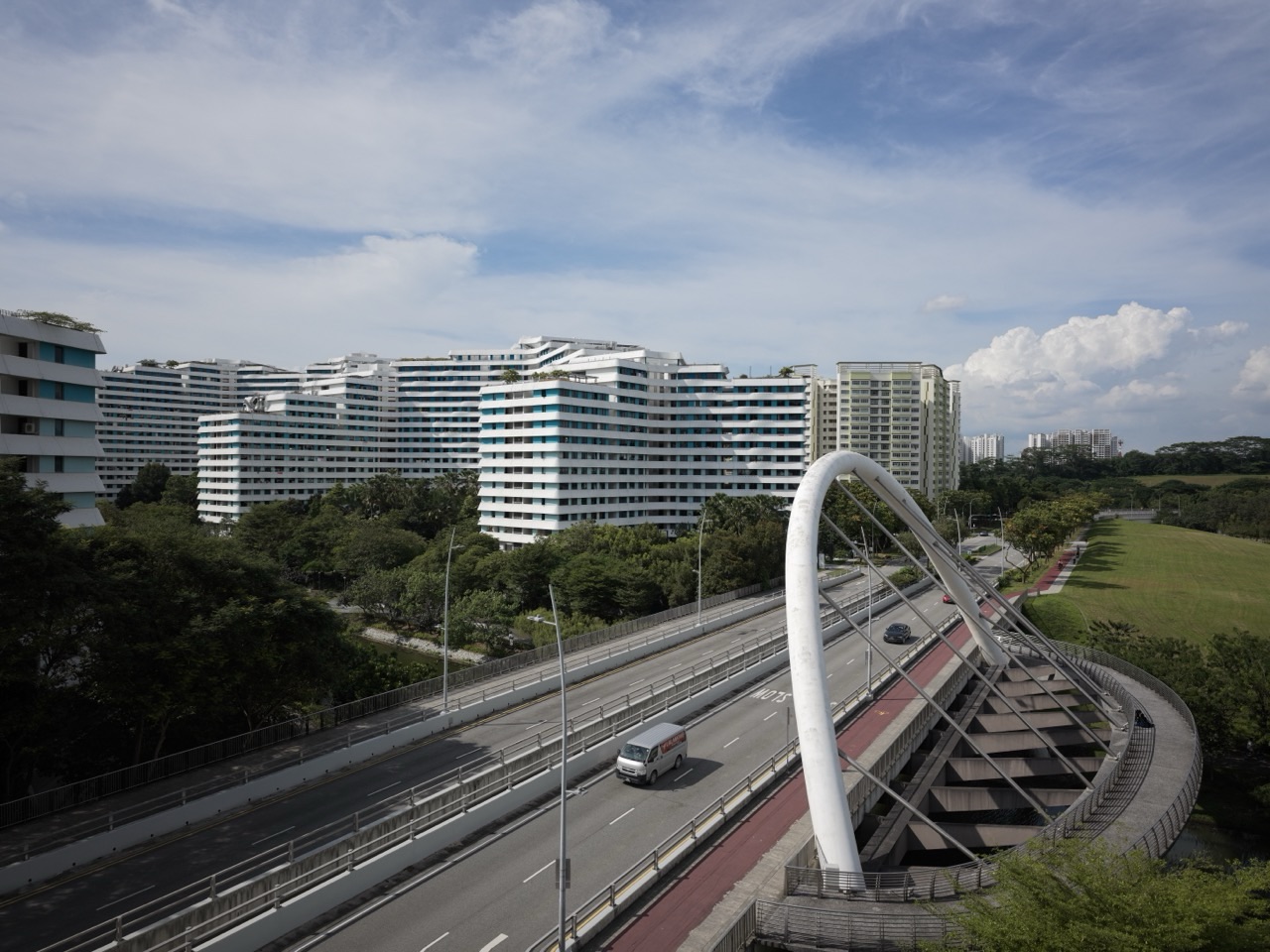
A Geography case study benefits from a clearly identified location. Punggol is a Singapore residential town with urban and coastal landscapes. The Waterway, bridges, HDB precincts and public facilities create recognisable spaces that residents use differently.
A student can compare a hypothetical outdoor event along the Waterway with an indoor reading session. Their choices depend on actual health advice, access, mobility and the facility’s opening arrangements—not solely whether one location appears greener.
Place-based analysis should also recognise scale. A regional haze event is not caused simply by Punggol’s housing layout; fires may be far beyond Singapore, with smoke transported through the atmosphere. Local planning influences how residents respond, while upstream fire management concerns the source conditions.
For an accessible scientific foundation, read Why Is Punggol Hazy?. This K226 guide specialises in syllabus-specific enquiry and judgement, not another generic account of smoke chemistry.
Weather Versus Climate: A Mandatory Distinction in Reasoning
Weather refers to atmospheric conditions at a place and time, such as wind direction, rainfall, humidity and temperature. Climate refers to characteristic patterns and variability assessed over longer periods.
A single smoky afternoon cannot by itself establish a permanent climate trend. El Niño and the Indian Ocean Dipole may influence regional dryness and fire susceptibility, but the climate label does not itself ignite a fire. The outcome also depends on land conditions, ignition and transport winds.
Similarly, one shower over Punggol does not prove that regional peat fires have stopped. Rain can reduce local airborne particle concentration while new smoke remains possible from elsewhere.
The K226 Climate cluster includes weather, climate change and climate action; use appropriate timescales and distinguish physical drivers from community responses when explaining them.
Climate Action Is Not a Single Tree-Planting Slogan
Climate and environmental action occur at several scales. A Punggol family can check advisories and adjust activities. A building operator can manage suitable indoor air. Government agencies can monitor and communicate pollution. Regional actors can collaborate on sustainable peatland management and safer fire prevention.
These responses are complementary but not interchangeable. A portable filter reduces particles from air that passes through it; it does not restore a peatland. A planted roof may offer shade and biodiversity benefits; it is not a certified system removing smoke from all of northern Singapore.
A strong Geography judgement names the intended objective, likely effectiveness, cost, accessibility, feasibility and possible limitations.
This is especially helpful for six-mark AO3 questions: evaluate an intervention with relevant criteria rather than merely listing several good-sounding activities.
Tourism: Visitor Choices and Reliable Information
G2 Geography K226 explicitly studies tourism activity, tourism development and sustainable tourism. Environmental conditions may influence whether visitors choose a long outdoor walking itinerary, seek indoor options or adjust time spent at a destination.
But a fictional photograph of a quiet Waterway path does not prove visitor numbers fell because of haze. Weather, weekday timing, seasonality, facility access and other factors may explain the number of people observed.
The effect on a visitor also differs from the effect on a local resident or tourism worker. A tourist may reschedule a recreational itinerary more easily than an outdoor employee can change a full shift.
A sound tourism answer distinguishes observed visitor behaviour, possible reasons, economic and social implications and sustainable responses, with evidence appropriate to each claim.
Extended Fieldwork: What the Official 10 Weeks Mean
The K226 syllabus specifies extended fieldwork over 10 weeks, supporting geographical methods and deeper study of relevant content. Students should learn how a sustained inquiry can move from an initial question to a method, repeated data collection, analysis and evaluation.
That does not mean learners must deliberately remain outdoors in polluted conditions for ten weeks. An inquiry can use official archived air-quality information, maps, document analysis, safe indoor interviews and a school-approved study of access or community resilience.
For any real fieldwork, the school’s safety, consent, privacy and data collection protocols govern the activity. A student’s weather observation cannot replace a calibrated PM2.5 instrument.
A useful alternative is a source-based fieldwork simulation with fictional respondent data, openly labelled fictional. It develops the method without sending pupils to seek smoke exposure.
Original Geography Worked Question 1 · Define a Geographical Scale
Question. A fictional family in Punggol sees a haze update for Singapore’s North reporting region. Is the region the same thing as one specific HDB block?
Model response. No. The official reporting region covers a wider area, while a block is a much smaller local place. A regional outdoor value cannot be relabelled as a certified reading at each flat.
Reasoning. Use the concept of spatial scale. A good answer identifies both the large and smaller unit.
Teacher’s check. Ask the learner to identify the relevant cluster or concept, the evidence supporting the response, and at least one claim the provided information does not establish. For the evaluation question, encourage a reasoned judgement linked to stated criteria rather than a list of unconnected advantages and disadvantages.
Data boundary. All described classmates, sampling results, activity changes and numerical particle values are fictional. These are original teaching exercises, not actual K226 examination questions or live Punggol conditions.
Original Geography Worked Question 2 · Observation Versus Inference
Question. A pupil says, “The distant flats appear pale, so PSI must be 200.” Evaluate the inference.
Model response. It is not established. A photograph can show appearance, but humidity and lighting also affect visibility. A PSI value requires the official measurement and its correct period and region.
Reasoning. Don’t merely write “wrong”; explain what evidence would be required.
Teacher’s check. Ask the learner to identify the relevant cluster or concept, the evidence supporting the response, and at least one claim the provided information does not establish. For the evaluation question, encourage a reasoned judgement linked to stated criteria rather than a list of unconnected advantages and disadvantages.
Data boundary. All described classmates, sampling results, activity changes and numerical particle values are fictional. These are original teaching exercises, not actual K226 examination questions or live Punggol conditions.
Original Geography Worked Question 3 · Sense of Place
Question. Why might a postponed Waterway bicycle ride matter to a local resident even if it is not an essential journey?
Model response. The Waterway may be associated with recreation, family memories and a sense of belonging. Changing a familiar activity can affect how a resident experiences place.
Reasoning. Link the personal experience to the geographical concept rather than claiming all residents feel identically.
Teacher’s check. Ask the learner to identify the relevant cluster or concept, the evidence supporting the response, and at least one claim the provided information does not establish. For the evaluation question, encourage a reasoned judgement linked to stated criteria rather than a list of unconnected advantages and disadvantages.
Data boundary. All described classmates, sampling results, activity changes and numerical particle values are fictional. These are original teaching exercises, not actual K226 examination questions or live Punggol conditions.
Original Geography Worked Question 4 · Built and Natural Features
Question. Identify two built features and one natural or ecological feature that may be considered in a Punggol precinct study.
Model response. Possible built features are HDB housing blocks and pedestrian bridges. A natural or ecological feature could be vegetation; water landscapes may also include engineered infrastructure.
Reasoning. Recognise that some environments contain both natural processes and designed elements.
Teacher’s check. Ask the learner to identify the relevant cluster or concept, the evidence supporting the response, and at least one claim the provided information does not establish. For the evaluation question, encourage a reasoned judgement linked to stated criteria rather than a list of unconnected advantages and disadvantages.
Data boundary. All described classmates, sampling results, activity changes and numerical particle values are fictional. These are original teaching exercises, not actual K226 examination questions or live Punggol conditions.
Original Geography Worked Question 5 · Environmental Sustainability
Question. Does a roof garden automatically certify lower PM2.5 indoors?
Model response. No. A roof garden can provide shade and habitat benefits, while indoor fine-particle concentrations depend on ventilation, infiltration, filtration and indoor sources.
Reasoning. Distinguish ecosystem-service benefits from unmeasured building performance.
Teacher’s check. Ask the learner to identify the relevant cluster or concept, the evidence supporting the response, and at least one claim the provided information does not establish. For the evaluation question, encourage a reasoned judgement linked to stated criteria rather than a list of unconnected advantages and disadvantages.
Data boundary. All described classmates, sampling results, activity changes and numerical particle values are fictional. These are original teaching exercises, not actual K226 examination questions or live Punggol conditions.
Original Geography Worked Question 6 · Hazard Versus Vulnerability
Question. Why might two residents face different difficulties during the same regional haze episode?
Model response. Their health, age, duration outdoors, home conditions and access to alternatives may differ. The shared hazard does not mean identical vulnerability.
Reasoning. Use the concepts of exposure and vulnerability rather than describing one person as careless.
Teacher’s check. Ask the learner to identify the relevant cluster or concept, the evidence supporting the response, and at least one claim the provided information does not establish. For the evaluation question, encourage a reasoned judgement linked to stated criteria rather than a list of unconnected advantages and disadvantages.
Data boundary. All described classmates, sampling results, activity changes and numerical particle values are fictional. These are original teaching exercises, not actual K226 examination questions or live Punggol conditions.
Original Geography Worked Question 7 · Spatial Pattern
Question. A fictional map shows three indoor public spaces around an MRT station. What geographical question could the clustering raise?
Model response. Whether transport accessibility or town-centre services influence where indoor facilities are concentrated.
Reasoning. A visible spatial association suggests a possible relationship; it does not by itself prove the cause.
Teacher’s check. Ask the learner to identify the relevant cluster or concept, the evidence supporting the response, and at least one claim the provided information does not establish. For the evaluation question, encourage a reasoned judgement linked to stated criteria rather than a list of unconnected advantages and disadvantages.
Data boundary. All described classmates, sampling results, activity changes and numerical particle values are fictional. These are original teaching exercises, not actual K226 examination questions or live Punggol conditions.
Original Geography Worked Question 8 · Weather and Climate
Question. Is a single unusually smoky afternoon proof of a long-term change in climate?
Model response. No. It is a short-period observation. A climate trend requires data over longer timescales and appropriate analysis.
Reasoning. Climate and weather are related but distinct variables and periods.
Teacher’s check. Ask the learner to identify the relevant cluster or concept, the evidence supporting the response, and at least one claim the provided information does not establish. For the evaluation question, encourage a reasoned judgement linked to stated criteria rather than a list of unconnected advantages and disadvantages.
Data boundary. All described classmates, sampling results, activity changes and numerical particle values are fictional. These are original teaching exercises, not actual K226 examination questions or live Punggol conditions.
Original Geography Worked Question 9 · El Niño and Fires
Question. A student writes “El Niño creates the smoke itself.” Correct the statement.
Model response. El Niño may influence regional weather and dryness, but smoke is produced by actual combustion. Ignition, fuel and transport are additional factors.
Reasoning. A geographical causal chain helps avoid a one-factor explanation.
Teacher’s check. Ask the learner to identify the relevant cluster or concept, the evidence supporting the response, and at least one claim the provided information does not establish. For the evaluation question, encourage a reasoned judgement linked to stated criteria rather than a list of unconnected advantages and disadvantages.
Data boundary. All described classmates, sampling results, activity changes and numerical particle values are fictional. These are original teaching exercises, not actual K226 examination questions or live Punggol conditions.
Original Geography Worked Question 10 · Rainfall and Source Fires
Question. A Punggol shower is followed by a lower fictional PM2.5 reading. Does that prove fires overseas stopped?
Model response. No. Local rain can affect nearby particles, and wind changes may also matter. The condition of overseas fires requires separate evidence.
Reasoning. Distinguish conditions at the receiving place from conditions in the source region.
Teacher’s check. Ask the learner to identify the relevant cluster or concept, the evidence supporting the response, and at least one claim the provided information does not establish. For the evaluation question, encourage a reasoned judgement linked to stated criteria rather than a list of unconnected advantages and disadvantages.
Data boundary. All described classmates, sampling results, activity changes and numerical particle values are fictional. These are original teaching exercises, not actual K226 examination questions or live Punggol conditions.
Original Geography Worked Question 11 · Wind Direction
Question. A wind is described as southeasterly. Which direction is its origin?
Model response. From the southeast, blowing generally towards the northwest.
Reasoning. Meteorological wind naming refers to the origin. Check an appropriate height and time before suggesting a plume route.
Teacher’s check. Ask the learner to identify the relevant cluster or concept, the evidence supporting the response, and at least one claim the provided information does not establish. For the evaluation question, encourage a reasoned judgement linked to stated criteria rather than a list of unconnected advantages and disadvantages.
Data boundary. All described classmates, sampling results, activity changes and numerical particle values are fictional. These are original teaching exercises, not actual K226 examination questions or live Punggol conditions.
Original Geography Worked Question 12 · Read a Simple Data Trend
Question. A fictional PM2.5 series is 35, 65, 50 and 80 µg/m³. Does it rise continuously, and what is the range?
Model response. It does not rise continuously, since it falls from 65 to 50. The range is 80−35=45 µg/m³.
Reasoning. Describe the variable and the pattern. The result is not an official 24-hour PSI.
Teacher’s check. Ask the learner to identify the relevant cluster or concept, the evidence supporting the response, and at least one claim the provided information does not establish. For the evaluation question, encourage a reasoned judgement linked to stated criteria rather than a list of unconnected advantages and disadvantages.
Data boundary. All described classmates, sampling results, activity changes and numerical particle values are fictional. These are original teaching exercises, not actual K226 examination questions or live Punggol conditions.
Original Geography Worked Question 13 · Choose an Inquiry Question
Question. Which is more researchable: “Haze is terrible, isn’t it?” or “How do Punggol families find the latest official haze advice?”
Model response. The second. It is specific and can be investigated through an ethically designed survey or official-information audit.
Reasoning. A research question should be neutral enough to avoid directing participants towards a preferred answer.
Teacher’s check. Ask the learner to identify the relevant cluster or concept, the evidence supporting the response, and at least one claim the provided information does not establish. For the evaluation question, encourage a reasoned judgement linked to stated criteria rather than a list of unconnected advantages and disadvantages.
Data boundary. All described classmates, sampling results, activity changes and numerical particle values are fictional. These are original teaching exercises, not actual K226 examination questions or live Punggol conditions.
Original Geography Worked Question 14 · Sampling Bias
Question. A pupil interviews only five friends in the same class and claims all Punggol families understand NEA’s PM2.5 guide. What is wrong?
Model response. A convenience sample from one class is unlikely to represent all families. The claim exceeds the sampling evidence.
Reasoning. Representativeness, consent and recruitment procedures matter.
Teacher’s check. Ask the learner to identify the relevant cluster or concept, the evidence supporting the response, and at least one claim the provided information does not establish. For the evaluation question, encourage a reasoned judgement linked to stated criteria rather than a list of unconnected advantages and disadvantages.
Data boundary. All described classmates, sampling results, activity changes and numerical particle values are fictional. These are original teaching exercises, not actual K226 examination questions or live Punggol conditions.
Original Geography Worked Question 15 · Safe Geographical Methods
Question. Must a student stand outdoors in haze to collect valid data?
Model response. No. Official archived readings, appropriate maps, safely conducted interviews and document analysis can provide useful evidence, subject to school guidance.
Reasoning. A method is not better merely because it increases physical risk.
Teacher’s check. Ask the learner to identify the relevant cluster or concept, the evidence supporting the response, and at least one claim the provided information does not establish. For the evaluation question, encourage a reasoned judgement linked to stated criteria rather than a list of unconnected advantages and disadvantages.
Data boundary. All described classmates, sampling results, activity changes and numerical particle values are fictional. These are original teaching exercises, not actual K226 examination questions or live Punggol conditions.
Original Geography Worked Question 16 · Evaluate Photo Evidence
Question. Two photos taken at 7am and 6pm show different skyline colours. Can the difference be assigned entirely to smoke?
Model response. No. Sun angle, exposure and other atmospheric conditions differ. Comparable measurements and controlled variables would be needed.
Reasoning. State the limits of each source and its context.
Teacher’s check. Ask the learner to identify the relevant cluster or concept, the evidence supporting the response, and at least one claim the provided information does not establish. For the evaluation question, encourage a reasoned judgement linked to stated criteria rather than a list of unconnected advantages and disadvantages.
Data boundary. All described classmates, sampling results, activity changes and numerical particle values are fictional. These are original teaching exercises, not actual K226 examination questions or live Punggol conditions.
Original Geography Worked Question 17 · Tourism and Evidence
Question. A park path is empty in a photograph. Can the student conclude the tourism industry lost money because of haze?
Model response. No. The photo does not establish visitor counts, spending or cause. It may be taken at a quiet time or under other conditions.
Reasoning. Use suitable time-series and visitor-spending data before an economic conclusion.
Teacher’s check. Ask the learner to identify the relevant cluster or concept, the evidence supporting the response, and at least one claim the provided information does not establish. For the evaluation question, encourage a reasoned judgement linked to stated criteria rather than a list of unconnected advantages and disadvantages.
Data boundary. All described classmates, sampling results, activity changes and numerical particle values are fictional. These are original teaching exercises, not actual K226 examination questions or live Punggol conditions.
Original Geography Worked Question 18 · Sustainable Tourism Response
Question. Suggest one reasonable tourism-operator response when long outdoor activity is inappropriate under current health advice.
Model response. Communicate verified conditions and offer a suitable indoor or rescheduled alternative where available, without promising that every facility is open.
Reasoning. A response must be feasible and appropriate to the operator and activity.
Teacher’s check. Ask the learner to identify the relevant cluster or concept, the evidence supporting the response, and at least one claim the provided information does not establish. For the evaluation question, encourage a reasoned judgement linked to stated criteria rather than a list of unconnected advantages and disadvantages.
Data boundary. All described classmates, sampling results, activity changes and numerical particle values are fictional. These are original teaching exercises, not actual K226 examination questions or live Punggol conditions.
Original Geography Worked Question 19 · Evaluate an Air-Purifier Proposal
Question. A community proposes that every household buy the same expensive purifier. Give two reasons to question the proposal.
Model response. Rooms, budgets and occupants differ; equipment may be poorly sized or unnecessary in some circumstances. Targeted support and actual smoke-CADR needs should be considered.
Reasoning. Judge effectiveness, equity and feasibility rather than assuming one product fits everyone.
Teacher’s check. Ask the learner to identify the relevant cluster or concept, the evidence supporting the response, and at least one claim the provided information does not establish. For the evaluation question, encourage a reasoned judgement linked to stated criteria rather than a list of unconnected advantages and disadvantages.
Data boundary. All described classmates, sampling results, activity changes and numerical particle values are fictional. These are original teaching exercises, not actual K226 examination questions or live Punggol conditions.
Original Geography Worked Question 20 · Six-Mark Evaluation Practice
Question. Original practice proposition: “Planting more trees in Punggol is the most effective way to prevent transboundary haze.” Evaluate.
Model response. Tree planting may support urban comfort, biodiversity and environmental stewardship, but it cannot alone prevent remote vegetation fires or stop regional smoke transport. Upstream land and fire management and regional cooperation are more directly related to preventing source emissions, while neighbourhood plans help residents adapt. A defensible judgement depends on whether the goal is source prevention or local resilience.
Reasoning. A stronger evaluation weighs benefits, scale and limitations before reaching a conditional overall judgement. This is practice, not an official six-mark marking scheme.
Teacher’s check. Ask the learner to identify the relevant cluster or concept, the evidence supporting the response, and at least one claim the provided information does not establish. For the evaluation question, encourage a reasoned judgement linked to stated criteria rather than a list of unconnected advantages and disadvantages.
Data boundary. All described classmates, sampling results, activity changes and numerical particle values are fictional. These are original teaching exercises, not actual K226 examination questions or live Punggol conditions.
Building a Six-Mark AO3 Answer Step by Step
For K226, SEAB explicitly includes 6-mark judgement questions in the Tourism and Climate sections. A good response should establish a clear viewpoint while recognising relevant constraints and alternatives.
Suppose the proposal is to install vegetation around every school to solve haze. First define the objective: reducing urban heat, improving appearance, or eliminating regional smoke at source? Then identify potential benefits: shade and amenity may help local comfort. Next evaluate limitations: trees are not a certified replacement for indoor particle filtration, and planting locally cannot extinguish distant fires.
Finish with an overall judgement that reflects the objective: planting can contribute to sustainable neighbourhoods, but transboundary source prevention needs regional fire management and the immediate household decision still relies on current official health advice.
A response that only repeats “trees are good for the environment” does not evaluate the claim’s scale or mechanism. Avoid inventing a numerical mark award for any one sentence; follow official levels guidance.
Distinguish Source Prevention, Exposure Reduction and Recovery
Source prevention targets conditions before smoke is generated, such as reducing unsafe ignition, restoring suitable peatland hydrology and supporting effective land management.
Exposure reduction concerns how people behave and manage their immediate surroundings during poor air, including adjusting prolonged outdoor activity and appropriately managing occupied indoor rooms.
Recovery concerns how people resume ordinary life when conditions improve: revisiting school or outdoor arrangements, maintaining equipment and managing settled dust without excessive spending.
A proposed intervention may address one of these well but not the others. K226 geographical judgement improves when the student can say exactly what an action aims to change and how success would be measured.
A Ten-Week Extended Fieldwork Simulation
Weeks 1–2: Formulate a specific, ethically suitable question about access to authoritative environmental information or the ways households choose indoor alternatives. Review the school-approved methods and consent requirements.
Weeks 3–4: Design source checks, map features and a clear data-recording template. Pilot it with fictional sample entries and revise ambiguous questions.
Weeks 5–7: Gather permitted data safely, or use archived official datasets and publicly available document analysis. Record dates, methods and limitations.
Weeks 8–9: Describe distributions, compare perspectives and evaluate sampling quality. Avoid explaining away contradictions merely because they do not fit the initial hypothesis.
Week 10: Present a careful conclusion, discuss limitations and propose a feasible next step.
This is an illustrative inquiry sequence aligned with the syllabus’s extended-fieldwork emphasis. It is not a compulsory project title, a sanctioned fieldwork site or a directive to carry out data collection during haze.
What a Strong Geography Tutor Should Diagnose
A weak K226 answer may be caused by a misunderstanding of scale, misuse of a map, a missing geographical concept, careless graph interpretation or an evaluation that never reaches a reasoned judgement.
Feedback should name the exact gap. For example, “You described the tree-planting benefit, but did not compare it with upstream fire prevention” is actionable. “Write more” is not.
Students need to practise reading command words such as describe, explain, compare, suggest and evaluate. An explanation identifies processes; an evaluation weighs proposals against criteria.
Use new scenarios after correction. If the student can handle a different urban hazard with the same conceptual framework, the learning has become transferable.
Frequently Asked Questions
What is the official 2027 G2 Geography subject code?
K226, according to SEAB’s school-candidate list.
Is haze an explicitly compulsory K226 case study?
No. This article uses haze to apply geographical concepts; the official syllabus determines assessed topics and questions.
How many papers are there?
Two papers, each 1 hour 45 minutes, 50 marks and 50%, as published by SEAB.
Is Tourism included in G2 Geography?
Yes. Paper 1 includes a structured Tourism question. The full syllabus also has tourism development and sustainable tourism content.
Does K226 include fieldwork?
Yes. Geographical Methods is assessed and the syllabus describes an extended 10-week fieldwork learning experience.
Are G2 judgement questions worth nine marks?
No. The published K226 structured questions include 6-mark AO3 judgement items; G3 K329 has a different scheme.
Must students collect smoke outdoors?
No. Safe and ethical alternative methods can use archived data, source analysis and suitable indoor inquiry.
Is a satellite hotspot proof of legal blame?
No. It is a detection that requires further source and responsibility assessment.
Can a school announce new opening hours through this guide?
No. Only the relevant school or operator can confirm its arrangements.
Where can I find current Punggol air quality?
Use NEA and the correct North-region guidance for the intended activity.
Connected Punggol Geography and Climate Reading
Begin with the Punggol Haze Geography Case Study 2026 for another general source-work approach, then use Punggol Haze Climate Change and Monsoons for background weather mechanisms.
For sustainable urban design, read Punggol Haze and Urban Design. For regional prevention, use Punggol Haze and Peatland Restoration.
The Punggol Haze Complete Guide links the entire learning and family ecosystem. This guide is specifically 2027 SEC K226 course and assessment-aware practice, not a replacement for official syllabus documents.
Official Sources and Editorial Notes
Compiled 18 October 2026. All worked prompts, invented datasets and named classroom situations are original instructional material. They do not reproduce SEAB examination questions or assert a live particle reading.
- SEAB: 2027 G2 Geography K226 Official Syllabus PDF
- SEAB: 2027 G2 Syllabuses for School Candidates
- NEA: Live Haze Readings and Personal Guide
- NEA: Air-Pollution FAQ
- ASEAN Specialised Meteorological Centre
Geography is strongest when the learner can connect people, places and processes, assess the credibility of information and offer a judgement that recognises both opportunities and limits.
Punggol Haze Geography and Humanities: New 2027 Learning Guides
Continue from Primary Social Studies into 2027 SEC G2 Geography K226, G3 Geography K329 or combined Social Studies and Geography K229. These are different syllabuses with original worked questions, not official examination papers. For real air-quality decisions consult NEA’s latest North-region readings.


