
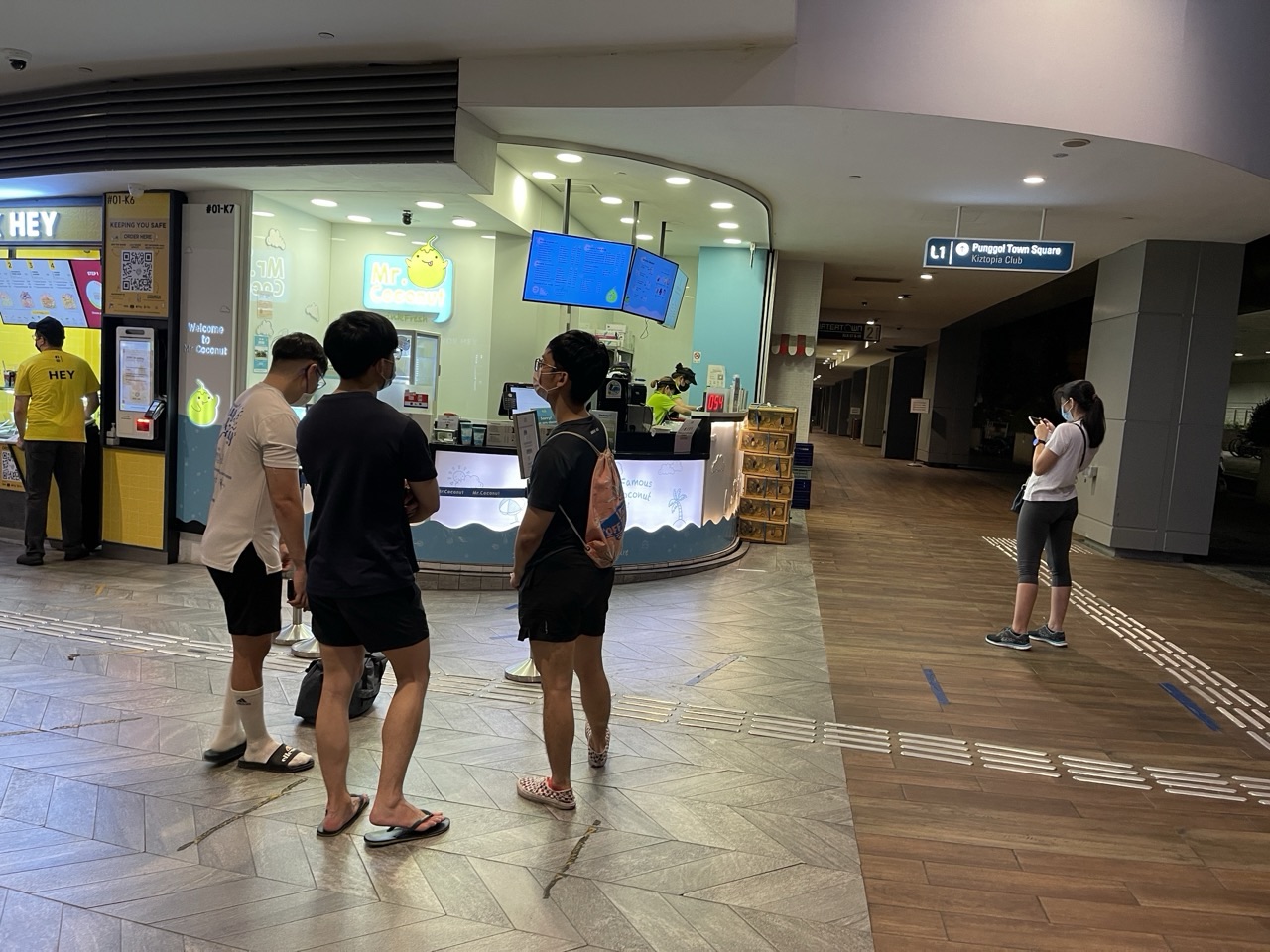
What is a good first independent outing for a teenager in Punggol? Choose one familiar, public, transport-friendly destination such as Punggol Regional Library at One Punggol, a known food venue near Punggol MRT, or—when the relevant entry rules have been checked—the Comics & Games Library near Punggol Coast MRT. Keep the first trip short, agree on the start and finish, identify the exact meeting point and route home, and make sure a responsible adult and the teenager agree on communication and safety expectations. Independence is not the same as being left without a plan.
How to plan a teen outing in Punggol depends on the individual student’s maturity, experience, needs, school and family arrangements—not on a universal age at which every child should travel alone. Some families may begin with an accompanied route that the teen leads, then a short approved trip with a friend or a nearby errand. Others may prefer to wait or keep the outing supervised. The aim is to build practical confidence with MRT/LRT navigation, responsible spending, respect for shared spaces, basic contingency planning and the freedom to enjoy time with friends.
Important for 17–18 October 2026: NEA forecasts PSI 150–220 for 18 October, unhealthy to very unhealthy. Children and older people are advised to minimise outdoor activity for next-day planning, and everyone should check the latest one-hour PM2.5 guidance for immediate decisions. Start with an indoor route plan and a conversation rather than encouraging teens to spend time outdoors during unsuitable conditions. A library, book, game or home-based planning exercise can still be enjoyable; the first actual outing can happen on a later safer date.
A teen-friendly Punggol outing in 30 seconds
| Goal | Possible anchor | Simplest preparation | What can go wrong |
|---|---|---|---|
| First short solo errand | One familiar open food or shop stop near home | Route with parent, clear return time | Wrong exit or change in vendor hours |
| First library trip | Punggol Regional Library at One Punggol | Correct station, library zone rules, return arrangement | A programme or seat may be unavailable |
| Meet one friend | Known MRT-linked public destination | Both families agree on boundaries and end time | Late arrival or friends choosing new destinations |
| Comics and games | Punggol Coast pop-up library | Check exact venue entry, age and game rules | Wrong Punggol station, no table |
| Group of 3–4 teens | One agreed public cluster | Budget, meeting point, adult contact plan | Group splitting and missed messages |
| Haze or thunderstorm day | Indoor activity or postpone | Official updates and travel safety | Outdoor waiting or exposed transit path |
| Needs closer supervision | Accompanied test trip | Teen leads navigation; adult manages safety | Overestimating readiness |
What the first trip is actually meant to teach
Independence starts with a clear destination
A vague plan like ‘go around Punggol’ is not useful for a first unsupervised trip. Punggol includes central MRT, East and West LRT loops, Punggol Coast and various neighbourhood centres. A first trip should have a real named purpose: select a book, meet a friend for food, attend a confirmed programme or buy one item. The route home is part of the destination choice.
Choose a single public place near an appropriate transport route. Explain the difference between Punggol MRT and Punggol Coast MRT. If the teen cannot yet describe the exit and return journey, practise with an adult instead of assuming it will be obvious on arrival.
Being trusted and being supervised are not opposites
Parents may want young people to learn how to make decisions while still setting sensible boundaries. An accompanied trial lets a teenager choose the train, read signs, find the correct exit and pay for a small purchase while an adult remains responsible. Gradually reducing support may suit some families; others will need a different plan.
The adult’s job is to match freedom to actual readiness rather than create a dramatic first test. Do not set the trip up so a teen feels ashamed of asking for help. If a route or situation does not work, learn what happened and plan a smaller version.
Communication works best when expectations are specific
A constant stream of status messages can spoil a social outing, but a vague ‘call me sometime’ is equally unhelpful. Agree on an arrival check, one contact method, a latest return time and what to do when a phone battery runs low or messages are delayed. Respect that teens can enjoy their privacy within family safety arrangements.
Tell a trusted adult the destination and expected return. Do not demand real-time public posting of the teen’s location. If the agreed contact method fails, use a pre-agreed safe alternative, such as approaching authorised station or venue staff rather than wandering around.
The budget is more than the price of lunch
A teen’s allowance may need to cover transport, food, drinks and a possible unexpected expense. A simple budget can distinguish what must be paid from what is optional. Agree before the trip whether the child may buy an extra item or join a paid activity. A library visit may have no entrance charge, but transport still matters.
There is no need to give exact financial rules to every household. Choose a reasonable family-specific spending limit, a payment method the teen knows how to use and a backup plan if the card fails. The pocket-money budgeting guide offers the education-focused explanation.
Friends can disagree without the trip falling apart
One friend may want the mall, another the library and a third wants to extend the outing. A first independent trip goes more smoothly when its boundaries do not change simply because someone proposes a new destination. Young people should know they can decline a detour without losing face and contact a parent when plans genuinely need to change.
Agree what the group may do, where they may go and whether splitting up is permitted. The safe answer to an unplanned isolated or unfamiliar route is often ‘not today’. Group pressure should not replace the child’s own good judgement or agreed family boundaries.
Public places still have behaviour and access rules
Punggol Regional Library has zone-specific quiet and service rules. A pop-up comics library may have self-service entry conditions; game tables are shared and may be occupied. Shopping malls and transit systems have safety and security rules. An independent outing should be enjoyable without treating public spaces as the group’s private venue.
Read signs, keep noise appropriate, return materials correctly and follow staff instructions. Never bypass a booking or access requirement because the place appears free in a travel article. Avoid filming strangers or other children for social media without consent.
The return journey is where planning pays off
A pleasant afternoon can become stressful if the group loses track of time, runs toward a closing venue or selects a final destination with a difficult way home. Central Punggol and Punggol Coast are different hubs. LRT loops also require attention to the correct direction. The ending should be built into the plan from the beginning.
Set a reasonable leaving time that includes walking, possible waiting and checking the train direction. If a train is disrupted, use current operator information and a pre-agreed adult contact instead of taking an unplanned route alone.
Safety decisions are not social-media performances
A young person may feel pressured to photograph their outing, make a video or disclose where they are to friends online. There is no obligation to prove independence to an audience. Public posting of school uniforms, regular commuting routes or exact locations can introduce unnecessary privacy risks.
Keep personal details and friends’ photos private unless there is appropriate permission. Ask before recording strangers or uploading images of classmates. A first trip should be remembered as a good real-life experience, not content that must be shared publicly.
Weather and haze can change a trip even if the destination is indoors
An indoor cinema or library does not mean the entire journey is sheltered. A walk to the bus stop, waiting outside a mall or travelling during lightning and heavy rain may introduce risk. Haze can change the appropriateness of any outdoor exposure, especially for children or someone with respiratory conditions.
Check current NEA/MOH and MSS advice before travel. When an indoor alternative is not reasonably safe to reach, postponing the outing is appropriate. A cancelled day is not a failed step toward independence.
A good parent–teen conversation leaves room for both voices
The teen should have real input into what sounds enjoyable; parents should explain safety concerns and listen to the teen’s practical ideas. A discussion that is only a lecture can encourage hiding plans, while complete silence can leave expectations unclear. A short concrete agreement is usually better.
Ask three questions: ‘Where do you want to go?’, ‘How would you get back?’, and ‘What would you do if plans changed?’ Work out the details together. The point is competence and trust, not winning an argument.
Four sensible places to start—and what each one teaches
Punggol Regional Library at One Punggol
This is a useful first outing for a student who likes reading, quiet time or a simple purposeful destination. The library sits in the wider One Punggol hub, which includes community and food facilities. A teen can learn to identify an appropriate book area, borrow or browse responsibly, follow space rules and finish on time.
Start from the correct transit point and use current library opening details. Do not assume special maker equipment, every study zone or a facilitated programme is available without conditions. The One Punggol guide supplies venue-specific orientation.
An everyday food venue near Punggol MRT
A small meal or agreed purchase near a familiar central transport point can teach budgeting, navigation and courteous service interaction without adding complex activities. The teen can check a menu, buy something within the agreed limit and meet a friend at a named public location.
Choose a suitable operator actually open at the intended hour and confirm dietary needs where relevant. The Punggol Food Guide covers food clusters; this article deliberately does not invent present-day restaurant slots or menu prices.
Punggol Coast Comics & Games Library
For readers and teens who enjoy graphic novels or tabletop games, the NLB Comics & Games Library at Punggol Coast Mall offers a distinct alternative to the main Regional Library. It is near Punggol Coast MRT, not the central Punggol LRT interchange. Entry and material use depend on the pop-up’s current terms.
Check the exact location, any NLB-compatible card/eCard or day-pass requirement, operating hours and rules. A game table may be unavailable, and not every item can be borrowed in the same way. The dedicated comics library guide owns entry details.
A familiar public area with a short return route
For a teen not yet ready to travel across town, the first independent activity can be a small agreed errand or short visit in the immediate neighbourhood. It does not need to involve Coney Island, a long waterfront circuit or a late-evening destination. Progress may look like choosing the correct lift or shop and returning as planned.
Avoid isolated areas, unsafe crossings, unfamiliar extended routes or access behind closed barriers. The parent can practise the route together first. A familiar public location is often a better starting point than a fashionable but complicated attraction.
A five-stage practice plan that respects different readiness
Stage 1: plan the outing together at home
Let the teen select one activity and explain the correct transport stop, entrance, permitted area and return route. Review the weather and any current venue restrictions. The parent can help find an alternative if a facility is unavailable. No actual solo travel is needed at this stage.
Good outcome: both understand the plan and safety boundaries. Poor outcome: setting a trip without knowing which Punggol station serves the destination. Try again with a smaller route.
Stage 2: an accompanied navigation test
Travel together on a suitable day, but allow the teen to read signs, identify exits and make simple decisions while the adult retains responsibility. The teen can practise checking the payment method, reading one current operator notice and recognising the meeting point.
Good outcome: the teen learns the real route rather than remembering a diagram. If the route proves inconvenient or confusing, revise it. Do not turn a mistake into a public embarrassment.
Stage 3: one short approved errand or destination visit
Depending on the teen’s actual readiness and family rules, agree on a limited time and known location. Some families will still accompany the child or remain nearby, while others may allow a short trip. The important part is that the plan and contact arrangements remain realistic.
Good outcome: the agreed activity and return occur without pressure to extend. If the teen needs help, contacting an adult promptly is a sign of good judgement rather than failure.
Stage 4: an outing with one or two friends
Discuss the friends’ destination and the boundaries that apply. Agree on who will meet whom, whether parents have exchanged relevant contact information, spending and departure time. Use public transport and a familiar cluster whenever possible.
Good outcome: the group can enjoy time together while making decisions within the plan. If a friend unexpectedly proposes a distant destination, the teen can decline or seek parental agreement first.
Stage 5: reflect and adjust future freedom
After the outing, ask how the route worked, whether the money was enough, what felt easy or uncertain and whether the teen wants to try a slightly different activity. The discussion is not a courtroom cross-examination; it helps both sides improve the next decision.
Good outcome: confidence grows based on demonstrated skills and honest communication. No family is required to progress to a later stage by a certain age.
Twenty practical checks for a teen’s first Punggol trip
1. Correct MRT station
Check: Decide whether the trip uses Punggol or Punggol Coast MRT. Avoid: The stations are not interchangeable. Keep this part brief so planning supports the actual leisure rather than swallowing it.
2. LRT direction
Check: Check whether the relevant stop is on the East or West Loop. Avoid: Do not follow an unfamiliar platform sign by guesswork. Keep this part brief so planning supports the actual leisure rather than swallowing it.
3. Exact meeting place
Check: Choose a named public entrance or signed point. Avoid: ‘Meet at the mall’ may be too vague. Keep this part brief so planning supports the actual leisure rather than swallowing it.
4. Finish time
Check: Agree on when to leave the destination, not only when to be home. Avoid: Transport and crossings need time. Keep this part brief so planning supports the actual leisure rather than swallowing it.
5. Food budget
Check: Decide how much can be spent on the main activity. Avoid: An optional snack can use the remaining budget quickly. Keep this part brief so planning supports the actual leisure rather than swallowing it.
6. Transport fare
Check: Confirm the teen’s payment card or valid fare arrangement. Avoid: Do not rely on an outdated price in a guide. Keep this part brief so planning supports the actual leisure rather than swallowing it.
7. Backup contact
Check: Identify a trusted adult and contact method. Avoid: Do not rely on public social posting. Keep this part brief so planning supports the actual leisure rather than swallowing it.
8. Phone charge
Check: Check the device has enough power for agreed communication. Avoid: A flat battery needs a pre-agreed plan. Keep this part brief so planning supports the actual leisure rather than swallowing it.
9. Weather check
Check: Read the latest haze, rain and lightning guidance. Avoid: An indoor venue is not automatically risk-free to reach. Keep this part brief so planning supports the actual leisure rather than swallowing it.
10. Venue opening
Check: Confirm that the chosen activity is operating. Avoid: A library programme is different from normal opening. Keep this part brief so planning supports the actual leisure rather than swallowing it.
11. Return route
Check: Explain which station or stop the teen should use to come back. Avoid: Do not improvise an unfamiliar shortcut. Keep this part brief so planning supports the actual leisure rather than swallowing it.
12. Friend changes plan
Check: Agree what to do before adding a new destination. Avoid: Group pressure should not override family rules. Keep this part brief so planning supports the actual leisure rather than swallowing it.
13. Personal privacy
Check: Avoid posting exact school or household routes publicly. Avoid: Photos can reveal more than intended. Keep this part brief so planning supports the actual leisure rather than swallowing it.
14. Public behaviour
Check: Follow staff instructions and shared-space rules. Avoid: Do not turn a library into a loud private gathering. Keep this part brief so planning supports the actual leisure rather than swallowing it.
15. Safe crossing
Check: Use designated crossings and wait for signals. Avoid: A short cut across a road is not an acceptable plan. Keep this part brief so planning supports the actual leisure rather than swallowing it.
16. If lost
Check: Approach authorised staff in a safe staffed area and contact a trusted adult. Avoid: Do not follow an unknown person’s private directions blindly. Keep this part brief so planning supports the actual leisure rather than swallowing it.
17. If a train is disrupted
Check: Check the operator’s current instructions and call a responsible adult. Avoid: Do not take a distant alternative without agreement. Keep this part brief so planning supports the actual leisure rather than swallowing it.
18. If a friend feels unwell
Check: Seek appropriate adult or emergency help based on the situation. Avoid: Do not conceal a health concern to preserve the outing. Keep this part brief so planning supports the actual leisure rather than swallowing it.
19. If spending runs out
Check: Use the agreed backup and contact plan. Avoid: Do not borrow from strangers or share sensitive financial details. Keep this part brief so planning supports the actual leisure rather than swallowing it.
20. What counts as success
Check: A safe enjoyable trip and a reliable return. Avoid: Longer distances are not the goal. Keep this part brief so planning supports the actual leisure rather than swallowing it.
Three sample itineraries that do not invent live availability
The 45-minute first library browse
Travel via an agreed known route to Punggol Regional Library, choose an ordinary suitable area, browse or read a little and return to the pre-agreed meeting point. A parent may accompany the teen for the first attempt. The outing is complete without a maker workshop or booked seat.
This is particularly suitable when a family wants to practise navigation in one transport cluster. On a haze-affected day, postpone travel or use a library eBook at home instead.
The 75-minute comics-and-games outing
Meet a friend near Punggol Coast MRT, use the current mall directions to reach the Comics & Games Library and browse one genre. Try a game only if a suitable table and item are available and within the agreed time. End with a clearly planned return.
Do not treat the pop-up as a conventional retail board-game shop or assume it will have reserved seats. Separate Punggol Coast from Punggol MRT before setting out.
The one-hour simple food-and-conversation meetup
Choose one open food centre or suitable commercial public area near a familiar station. Agree on the meal or drink budget, where the friends will meet and who leaves first. Make an extension optional and subject to the families’ rules.
If the group cannot find a seat together, choose a known alternative or shorten the visit. Avoid drifting into a distant park or waterfront after dark just because everybody wants to keep chatting.
How to handle an unexpected change without panic or overconfidence
An ordinary independent outing may have small disruptions: a shop is closed, a friend is late, the path is busy, the return bus is delayed or the sky turns stormy. The first response is to use the agreed plan: stay in a known safe public space, check authoritative operator information and contact the trusted adult if needed. Changing a plan responsibly is not the same as failing at independence.
For urgent safety concerns, young people should seek help from appropriate staff or emergency services. In Singapore, police emergency assistance is reached via 999 and ambulance or fire emergency assistance via 995. These numbers are for genuine emergencies, not lost property or missed transport. For non-emergency travel uncertainty, official station, mall or library staff can be useful, alongside family contacts.
A parent can help without turning every unexpected event into a loss of trust. Ask what happened, what the teen knew at the time, which response was sensible and what would improve the next plan. A route that was too complicated can become a shorter route next time. This is about practical learning, not a test that somebody passes or fails forever.
Frequently asked questions: Punggol teen independence
What is the best first independent outing for a teen in Punggol?
One familiar public, MRT-linked destination, such as a suitable library visit or agreed food stop, with family-approved timing and return arrangements.
At what age should a teenager travel alone?
There is no single suitable age for every young person. Readiness depends on maturity, experience, individual needs, route complexity and family arrangements.
Can a teen travel to Punggol Coast alone?
Some families may agree to it after an appropriate trial, while others will supervise or wait. The teen must know it is a separate MRT station and have a clear route and return plan.
Is Punggol Regional Library near Punggol MRT?
It is at One Punggol in the central town and can be reached using current public transport and walking directions. Check the exact entrance.
Is the Comics & Games Library the same as Punggol Regional Library?
No. The Comics & Games Library is an NLB pop-up at Punggol Coast Mall, near Punggol Coast MRT.
Do we need to book a library visit?
Ordinary browsing differs from special programmes, reserved rooms, workshops or equipment. Check the actual zone’s rules.
Can teens use a pop-up game table without a reservation?
Available games and table space depend on NLB’s current rules and capacity; do not assume any particular table or title is available.
Can a teen meet three friends?
Where families agree, they can choose a suitable public destination, budget and return plan. Larger groups require more coordination and clearer boundaries.
How much pocket money should they bring?
Set a family-specific limit accounting for travel, planned food and optional purchases. Avoid giving one universal dollar amount as appropriate for all.
What if a teen has no phone?
Use an agreed adult contact and reliable meeting/return plan appropriate to the person’s needs and route. A phone is useful but is not itself a substitute for safety decisions.
What if the phone battery dies?
Follow the pre-agreed plan, such as approaching authorised staff and contacting the trusted adult. Do not wander far to find an unknown charging point.
What if the group changes destination?
The teen should follow family-agreed boundaries and seek permission before significant changes. Declining an unplanned detour is a reasonable choice.
Is Punggol Waterway Park appropriate for a first solo outing?
A short familiar public area may be suitable for some teens, but water edges, shared paths, weather and supervision needs matter. It need not be part of the first trip.
Should parents use constant GPS tracking?
Families may choose communication arrangements consistent with their needs, privacy expectations and applicable rules. Clear check-ins and a return plan remain essential; location data alone does not make a route safe.
What if the teen is anxious about navigation?
Begin with an accompanied practice trip in which the teen leads the route. Confidence can grow without forcing premature independence.
Can the first trip be a simple errand?
Yes. A short familiar purchase or library visit can be a meaningful practice opportunity when the family agrees.
What if the teen has a mobility or sensory need?
Adapt the destination, travel route, timing and supervision to the individual’s actual needs. Check end-to-end lifts, quieter options and operator conditions.
What if haze is unhealthy?
Follow NEA/MOH guidance, especially for children, and postpone unnecessary outdoor travel or use a safer indoor-at-home option. Read current one-hour PM2.5 for immediate decisions.
What if rain and lightning begin?
Use appropriate safe indoor shelter, avoid exposed waterfronts and contact a trusted adult if the travel plan needs to change. Follow official weather alerts.
How can a teen practise paying for food?
Agree on a budget, payment method, privacy boundaries and what to do if a purchase fails. Ask the seller politely about relevant menu or allergy details.
Is it okay to leave friends and go home on time?
Yes. Keeping an agreed return time is a responsible decision. A friend does not need to be offended when somebody has family commitments.
How do parents assess success?
Look for correct navigation, communication, good judgement and an enjoyable safe return rather than a long distance or expensive destination.
Where are more teen activities in Punggol?
The Punggol teenagers’ activities guide owns the broader leisure list; this article focuses on first-outing preparation and safety.
Related Punggol articles for families and teens
- Things to Do in Punggol for Teenagers — wider destinations.
- Family Life in Punggol — household routines and independence.
- Book and Games Day in Punggol — casual reading and games.
- Punggol Comics & Games Library — entry and facilities.
- One Punggol Community Hub — ordinary library and meal details.
- Make Your Own Punggol Map — route planning without travelling.
- Punggol LRT Guide — actual East and West Loop connections.
- Punggol Pocket Money Learning — budgeting and spending.
- Group Outings in Punggol — coordination for friends.
- Punggol Lifestyle Planner — time, weather and energy.
- eduKateSG School Journey and After-School Routine — wider student life.
Official source checks and update note
Check LTA MRT/LRT network map, NLB Punggol Regional Library, People’s Association One Punggol hub, NEA 17 October 2026 haze advisory, Meteorological Service Singapore, and Singapore Police Force emergency contacts. Updated 17 October 2026. This article is not a school, legal or child-protection determination of when a young person is old enough to go out alone; make decisions with the responsible family and actual individual circumstances.


