
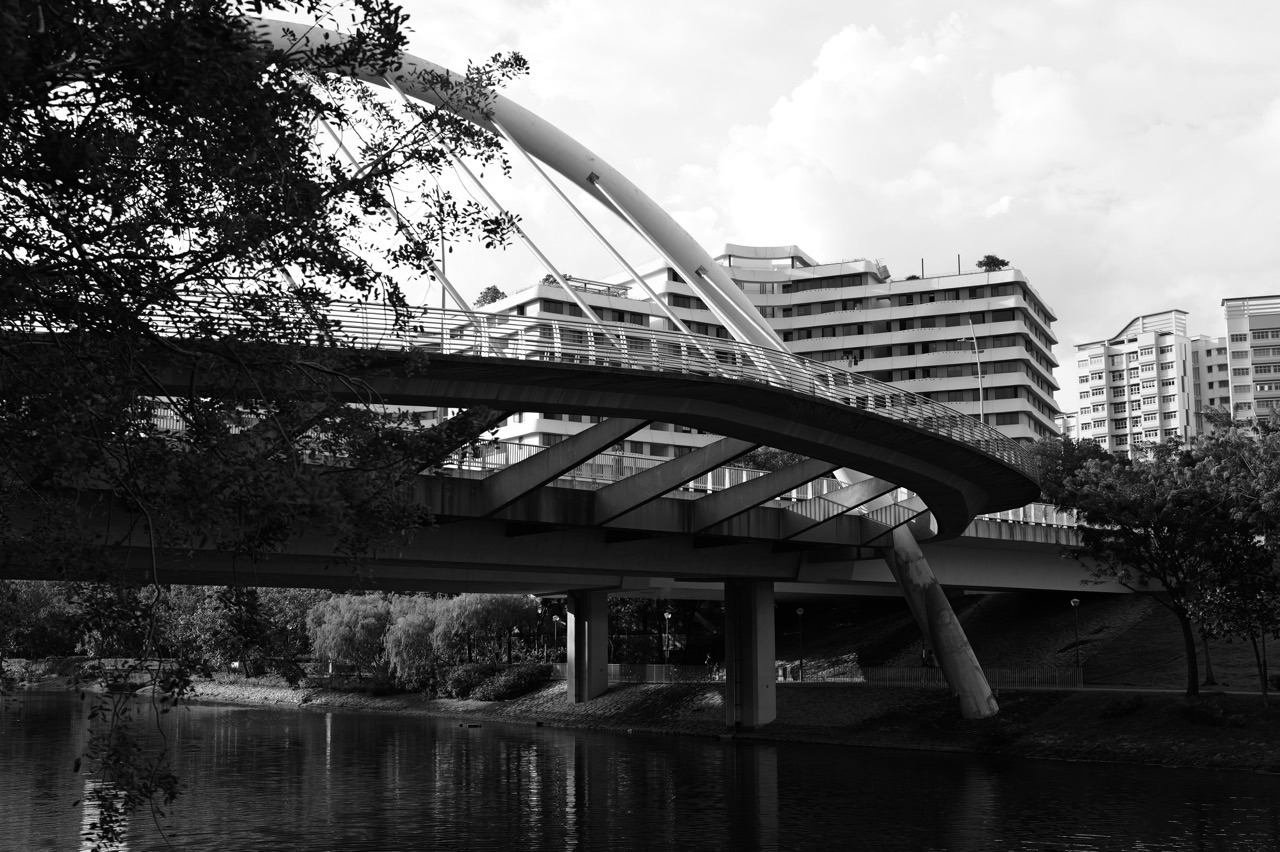
Can you go stargazing in Punggol? Yes, but set realistic expectations for a bright Singapore town. On a clear evening, a family can sometimes see the Moon, a handful of bright stars and one or more bright planets when those objects are above the horizon. You do not need a telescope to begin. Choose a familiar, open and safely accessible public viewing spot or a suitable view from home, confirm the weather and air quality, then try observing one object for 10–20 minutes. Punggol Waterway Park has public areas that can provide a view of the sky, but not every path or secluded waterfront corner is sensible to use at night.
Night-sky watching in Punggol for children, teenagers and beginners is more about noticing than promising a spectacular Milky Way photograph. Singapore’s streetlights, buildings, clouds and occasional haze make faint stars hard to see. The Moon is often the easiest starting point when visible; Venus, Jupiter, Mars, Saturn and Mercury can be seen with the unaided eye at some times, but none is guaranteed to appear on the particular evening you choose. Use a current sky map or reputable astronomy app to confirm visibility, direction and timing for Singapore before stepping outside.
Updated 17 October 2026. This article provides a repeatable Punggol family activity, not a live forecast of tonight’s sky or a list of guaranteed astronomical events. Check Meteorological Service Singapore for clouds, thunderstorms and lightning and NEA for air quality. Coney Island Park closes at 7pm and is not a suitable after-hours stargazing destination. Punggol Point Park has been affected by upgrading works in 2026; do not try to enter closed areas for a darker view. For the Moon-only activity, see the existing Moon Watching in Punggol guide.
Stargazing in Punggol at a glance
| If you want to… | Try… | What to prepare | Do not assume… |
|---|---|---|---|
| Watch the Moon | A safe, familiar public or home viewpoint | Current Moon visibility and cloud cover | The Moon must be visible every night |
| Find a bright planet | Reputable sky map set to Singapore | Correct date, time and horizon direction | A bright light is always a planet |
| Introduce a child to astronomy | 10–20-minute supervised look and sky notes | Short time, weather fallback, safe route | A telescope is required |
| See many faint stars | Know the limits of an urban sky | Low-glare safe position, clear sky | The Milky Way will be visible |
| Learn a constellation | One recognised pattern from a current star map | Direction, season and local sky conditions | All constellations show all year |
| Photograph the Moon | Stable, safe position and basic phone settings | Do not obstruct people or go near water | Phone zoom equals telescope detail |
| View an astronomical event | Check a current official event guide | Date, local visibility, weather and timings | An overseas forecast applies unchanged to Singapore |
Why the night sky looks different in Punggol from a dark-sky photograph
City lights remove the faintest stars first
The glow above an urban area comes partly from artificial light scattered by the atmosphere. NASA explains that light pollution washes out fainter stars and weak objects, leaving mainly the brighter night-sky features visible. Punggol has homes, roads, commercial buildings, public lighting and developing districts, so its sky should not be compared with a remote observatory’s long-exposure photographs.
A realistic family goal is seeing one interesting object and learning to identify it, not counting hundreds of stars. If a child sees only the Moon, that can still be a useful and enjoyable observation. Do not walk into an isolated or unlit area simply to avoid streetlights.
Clouds and haze are not the same thing as darkness
A dark-looking part of the sky is not necessarily a clear view. Clouds can block celestial objects; haze and other atmospheric conditions can reduce contrast or visibility. Thunderstorm risk is a separate safety issue. The fact that a waterfront has open views does not override real-time weather or NEA air-quality advice.
Check current conditions before leaving. A hazy sky does not mean that the Moon or planets have stopped being above the horizon, but poor visibility may make the observation unsatisfying. Do not turn a short astronomy outing into outdoor exertion against health advice.
The Moon is an excellent first object because it changes visibly
The illuminated part of the Moon seen from Earth changes as the Moon moves around us relative to the Sun. This creates phases, not because Earth’s shadow covers the Moon every month. Over successive visits, the shape and position change in a way people can record using simple sketches. A crescent Moon is different from a full Moon, but one is not objectively more worthwhile to observe.
Before the evening, check whether the Moon will be above the horizon. The phrase ‘Moon watching tonight’ should not imply it will definitely be visible at the chosen hour. A daytime Moon is also possible; never point optical equipment toward the Sun while searching for the Moon.
A bright planet can look like a star
Venus and Jupiter are often striking when visible, while Mars and Saturn can be observed without a telescope during suitable parts of their orbits. Mercury is more challenging because it remains close to the Sun in the sky. Unlike stars, planets appear to move against the stellar background across weeks and months. That is a useful observation even without specialist equipment.
Do not identify a particular light by brightness alone. Aircraft, drones and satellites also appear in the sky. Verify direction and time using a current sky chart and consider motion, colour and surrounding star patterns. Never mistake an artist’s planetary ‘parade’ illustration for a guaranteed local view.
Constellations are patterns, not shapes physically joined in space
People have long used visible star patterns as landmarks and storytelling tools. A constellation links stars by an apparent pattern seen from Earth, even though the stars are often very far apart from each other. From Singapore’s low latitude, the part of the sky visible changes with the time of night and season. Buildings and light pollution can also prevent viewing an entire pattern.
Pick only one simple pattern confirmed visible on the intended date. If you cannot identify it from a safe place, stop and try another evening. The goal is learning to compare a map with reality, not forcing a particular star story to appear in the sky.
A telescope is useful but not a requirement
NASA’s beginner skywatching guidance makes clear that eyes alone can show bright stars, the Moon and some planets; binoculars or telescopes reveal additional detail. Beginners often assume they need expensive optics to begin. But setting up equipment adds transport, alignment and safety considerations, and a poorly chosen eyepiece will not fix cloud cover.
Try several naked-eye evenings before buying equipment. If you want guided optical observation, Science Centre Singapore has dedicated astronomy programmes at its observatory, which is not in Punggol. Check actual ticket and event availability instead of claiming there is a permanent Punggol telescope station.
A safe familiar location beats a secluded ‘dark’ spot
The best location for astronomical contrast may be away from intense artificial light, but personal safety is a higher priority. A well-known public area with a clear view and straightforward return route is a better beginner choice than an unfamiliar isolated shoreline. Children need direct appropriate supervision. Punggol’s parks and promenades have their own opening hours and access restrictions.
Start from a known point near your home or usual route. Do not cross fencing, climb onto an elevated structure, stop on a cycle path or stand next to an unprotected water edge. The observation can be done from home if that is safest and the sky is visible.
The best activity may last only fifteen minutes
A person can check a star map, step outdoors, find the Moon or one bright planet, make a small note and return home in fifteen minutes. That is a complete outing. There is no reward for staying until the last person is cold, tired or ready to sleep. For a schoolchild, the next morning still matters.
Define the stopping time before going out. Make sure the household has an indoor fallback, and avoid letting a promising view turn into a late-night expedition. Astronomy is a lifelong interest; there will be other observing opportunities.
Where to try beginner skywatching around Punggol
A safe view from home
The simplest astronomy location is often a permitted balcony, window view or shared outdoor area where safety conditions are suitable. You can observe the sky without travelling or exposing children to a late-night route. A window may restrict directions and show reflections, so not every object visible in an app will be visible from a particular home.
Never lean out, climb railings or allow children to use unsafe ledges to increase the view. If looking through glass, reflected indoor lights may interfere. Turn off unnecessary nearby lights where safe and permitted rather than trespassing elsewhere.
A known central Punggol Waterway public path
NParks lists Punggol Waterway Park as open 24 hours, and its wide waterway landscape can provide opportunities to see some open sky. However, the park spans many areas; lighting, path width and personal safety differ by location. Choose a familiar public segment close to your regular transport route, not an invented ‘secret stargazing point’.
Remain on safe public paths, avoid water edges and keep out of cycling lanes. A short look at the Moon is enough. If your group is unfamiliar with the area, prefer a visit at an earlier suitable evening time rather than a midnight outing. See the Waterway Park guide for basic park features.
An appropriate publicly accessible part of Punggol Coast
Punggol Digital District includes publicly accessible landscape and pedestrian areas, with Punggol Coast MRT providing transport access. Parts of the district are still being developed. For a casual evening sky look, use only an open public location with a safe return, and expect building lights to limit faint stars.
Do not enter closed SIT campus areas, building rooftops, service decks or construction sites. A public mall and an adjoining workplace are not the same thing. Verify the current pedestrian approach before travelling.
A familiar neighbourhood public space close to an LRT stop
People living around Oasis, Coral Edge, Sam Kee, Samudera, Nibong or other stops may have a suitable public space nearby. The value is convenience: you can spend ten minutes looking up, then return home without a long journey. Each location has different building obstructions and lighting.
Do not promise every small park, block deck or roof garden permits evening entry. Follow actual estate and park signage. Check accessible pathways and any building management restrictions.
Where not to go at night: Coney Island and closed Punggol Point areas
Coney Island Park is a valuable nature destination, but NParks lists opening hours of 7am to 7pm. It is not an after-hours stargazing site. Punggol Point Park has also been subject to upgrading closure. An old waterfront photograph cannot establish current safe access.
Do not enter after closing, climb gates or work fencing, or assume an adjacent promenade automatically grants access to a closed park. An evening skywatch from a legal familiar location is the better choice.
What you can and cannot promise to see
The Moon
What may be visible: Usually the best beginner target when above the local horizon and not obscured by clouds. Its apparent shape changes during the month, and a simple sketch can capture the phase. Limit: The Moon is not guaranteed above the horizon at your particular observing time. A sky app or almanac can tell you when to look.
Venus
What may be visible: Very bright when suitably positioned, often visible around dawn or dusk rather than all night. Beginners can use a current sky chart to confirm whether it is an evening or morning object. Limit: Do not search near the Sun through binoculars or a telescope. Mercury and Venus near the Sun require extreme caution; if the timing is unsuitable, do not try.
Jupiter
What may be visible: A bright planet during suitable seasons and positions. The exact nights and times when it is visible from Singapore change from month to month. Limit: Do not claim it is the brightest light in the sky on every date, or confuse it with Venus or aircraft.
Mars
What may be visible: Can be visible to the naked eye under suitable conditions and vary considerably in brightness over time. Limit: Its colour alone is not a dependable identification; verify it with an up-to-date map.
Saturn
What may be visible: Can be visible to unaided eyes when well placed, though its famous rings require suitable optical equipment to see in detail. Limit: Do not expect visible rings in ordinary phone photographs.
Mercury
What may be visible: Sometimes visible briefly low near the horizon at suitable solar elongations, but often difficult in urban conditions. Limit: Never use ordinary optical equipment near the Sun. It is a poor casual beginner target when visibility is uncertain.
Bright stars and asterisms
What may be visible: May be visible on clear nights despite urban light pollution. Their seasonal position can be checked with a location-specific star map. Limit: A pattern pictured in an international astronomy article may not be visible from Punggol at your chosen hour.
Satellites or moving points
What may be visible: Some artificial satellites can be seen as lights moving steadily across the sky under favourable conditions. Limit: Do not confidently identify every moving light as a satellite. Aircraft, drones and other sources can be misidentified.
Meteor showers
What may be visible: Some meteor events occur annually, but local visibility depends on timing, weather, sky brightness and the object’s position. Limit: Do not promise a dramatic shower from Punggol; a shower peak on another continent is not automatically ideal locally.
Beginner’s 20-minute Punggol skywatching routine
Before leaving home: choose one object
Look at a reputable sky map set to Singapore and your intended date/time. Confirm that the Moon or a particular planet is above the horizon and not blocked by buildings or clouds. Check weather and lightning. If the sky is likely overcast, defer without frustration.
Do not rely on a generic article that says Venus is visible ‘tonight’ without a local date. Astronomy is time-sensitive, and visibility shifts.
At the viewing place: check the ground first
Choose a lawful, well-understood place where you can stand or sit safely. Keep away from water edges, roads, cycle lanes and unlit slopes. Adults supervise children. Know the route home before looking at the sky.
The first priority is personal safety, not reducing light pollution at any cost. Never cross barriers for a darker view.
Minute 1–5: let your eyes look at the broad sky
Take a moment to notice the brightest features visible in your actual field of view. Compare them with the app or chart, allowing for different direction labels and building obstructions. A small amount of patience can help you adapt to bright and dim features.
Do not use a phone flashlight repeatedly in others’ faces or shine a laser into the sky. Avoid high-powered laser pointers altogether in this context because of aviation and eye hazards.
Minute 6–12: identify only one object
Find the Moon or one clearly confirmed bright target. If a planet is indicated, check whether the pattern of nearby stars and its direction make sense. Someone can read aloud one interesting fact while another looks, but there is no need for a science lecture.
If you cannot identify the object confidently, record ‘bright point above the east-side buildings’ and research it later. A guess is not a reliable sighting.
Minute 13–16: make one observation
Sketch the Moon’s apparent outline, record a direction, note the clouds or draw the relative positions of two bright points. Include the date and approximate time. This lets a later observation be compared honestly rather than relying on memory.
Do not expect a phone to capture dim stars accurately. Technical photograph settings are optional; the observation can be entirely on paper.
Minute 17–20: go home on time
Finish before fatigue or unsafe weather makes the outing unpleasant. Talk briefly about what was clear and what remains uncertain. Save the map or a note for another suitable night. A cloudy evening is still useful information: next time you can choose a better window.
Children do not need a late bedtime because the adult wants another photograph. The habit matters more than a single night’s result.
A seven-evening sky diary that does not require clear skies every day
Evening one: find your safe viewpoint
Check what part of the sky is visible from a comfortable public or home location. Note which buildings or trees block the horizon. If the weather is poor, simply save the route and skip the outdoor visit.
The seven evenings can be spread across several weeks rather than completed consecutively. The point is building the habit of checking the real sky, the correct local time and the evidence before naming an object.
Evening two: compare Moon position
If the Moon is visible, draw its shape and approximate position relative to a fixed building feature. If not, note cloud cover and check when the Moon might be in view on another day.
The seven evenings can be spread across several weeks rather than completed consecutively. The point is building the habit of checking the real sky, the correct local time and the evidence before naming an object.
Evening three: use a star map responsibly
Choose one current bright object indicated by a reputable map and try to identify it. Record confidence rather than pretending every point is known.
The seven evenings can be spread across several weeks rather than completed consecutively. The point is building the habit of checking the real sky, the correct local time and the evidence before naming an object.
Evening four: notice the influence of lighting
Compare how much sky you can see near a bright streetlight and away from direct glare, while remaining in safe public space. Do not cross roads or enter isolated areas simply for this exercise.
The seven evenings can be spread across several weeks rather than completed consecutively. The point is building the habit of checking the real sky, the correct local time and the evidence before naming an object.
Evening five: learn a constellation indoors first
Read about one seasonal constellation or asterism from a reliable source. Look for it outside only if the actual conditions and location-specific chart say it should be visible.
The seven evenings can be spread across several weeks rather than completed consecutively. The point is building the habit of checking the real sky, the correct local time and the evidence before naming an object.
Evening six: talk about clouds and visibility
Notice how an overcast or hazy sky changes what you can identify. It is reasonable to make this an indoor reading exercise when air quality or lightning makes outdoor activity inappropriate.
The seven evenings can be spread across several weeks rather than completed consecutively. The point is building the habit of checking the real sky, the correct local time and the evidence before naming an object.
Evening seven: share one verified observation
Pick a sketch, note or photograph and explain what it actually shows. If a star or planet identification is uncertain, say so. A short accurate account is more valuable than a dramatic claim.
The seven evenings can be spread across several weeks rather than completed consecutively. The point is building the habit of checking the real sky, the correct local time and the evidence before naming an object.
Photographing the Moon and night sky without expensive equipment
Phone cameras can capture a bright Moon or an evening scene, but exposure and zoom limits make detailed Moon and planet images difficult. Try stabilising the device, tapping the bright target if the camera allows exposure adjustment, and including a safe foreground element such as a bridge silhouette. A visually attractive waterway photograph does not automatically show a planet accurately, and a bright patch in a photo may be lighting or an optical artefact.
For group photography, use a designated wider area where you can stop without obstructing public routes, and respect the privacy of bystanders. Never stand in the road, on bridge railings or near an unprotected water edge. Do not use a drone or high-powered light to improvise a skywatching event without understanding the relevant restrictions. A sketch or memory note is often the simpler option.
How to make the sky an everyday Science conversation
Punggol provides a real setting for distinguishing observation, model and explanation. A child can see the Moon’s shape, then learn the orbital geometry that explains phases. A teenager can ask why city lights hide fainter stars or how a planet differs from a star. An adult can use a date-specific star map to challenge their first guess. These are opportunities for curiosity, not proof that a twenty-minute night walk raises examination grades.
The eduKate ecosystem includes Moon Watching in Punggol for phases and repeated notes, Earth and Space Science in Punggol for more formal explanations, and Punggol Map Scale and Geographical Thinking for general navigation and evidence skills. Let the child choose the level of discussion. Someone who simply enjoys the Moon and then goes home has had a perfectly good evening.
Frequently asked questions about stargazing in Punggol
Can you see stars in Punggol?
Yes, some bright stars may be visible on clear nights, but urban light pollution, clouds and haze limit the number seen. Visibility changes with time, season and location.
Where is the best stargazing spot in Punggol?
For a beginner, choose a familiar lawful public place or suitable safe home view with an unobstructed portion of sky. There is no verified single Punggol location guaranteed darker or better than every other.
Can we see the Milky Way from Punggol?
Do not count on it. Singapore’s urban light pollution makes faint galactic features very difficult to observe. NASA recommends truly dark environments for that type of skywatching.
Can we see planets without a telescope?
Mercury, Venus, Mars, Jupiter and Saturn can be visible to unaided eyes at suitable times. Their exact current visibility from Singapore must be checked on a local sky chart.
Can I see Jupiter tonight in Punggol?
This evergreen guide does not provide a real-time planetary position. Check a current astronomy sky chart set to Singapore with the actual date and time.
Is the Moon visible every night at 8pm?
No. Its rising and setting times change through the lunar month, and clouds can block it. Check local lunar timing before planning an observation.
Why is the Moon sometimes visible during the day?
The Moon’s position relative to Earth and the Sun can put it above the horizon while the Sun is up. Do not point binoculars or telescopes near the Sun to search for it.
Why does the Moon change shape?
Its phases occur because our viewpoint of the Moon’s sunlit half changes as it orbits Earth, not because Earth’s shadow normally covers it each month.
Are bright moving lights necessarily satellites?
No. Aircraft, drones and other objects can resemble moving lights. Use a verified tracker or observational clues rather than guessing.
What is light pollution?
Artificial light scattered into the sky can reduce contrast and obscure fainter stars and objects, particularly in developed urban areas.
Is Punggol Waterway Park open at night?
NParks lists it as open 24 hours, but the safety and suitability of a specific path, lighting, crowding and access need individual checking.
Can I go to Coney Island after 7pm for stargazing?
No. NParks lists Coney Island Park opening hours as 7am–7pm. Do not enter after its closing time.
What about Punggol Point Park?
The park has been affected by upgrading closure in 2026. Check current NParks access notices and do not cross closures for a sky view.
Can I bring children on an evening astronomy outing?
Yes when the location, time, weather, supervision and child’s rest needs are suitable. Keep the first attempt short, safe and familiar.
Do I need binoculars or a telescope?
No. Start with naked-eye observations of suitable visible objects. Optics can extend what you see but add safety and equipment considerations.
Can I use a laser pointer to identify stars?
Avoid laser pointers in public skywatching, particularly near aircraft routes and people. A finger pointed safely from the ground or a sky-map screen is sufficient.
What if haze obscures the sky?
Use current NEA and MOH advice. A night of poor air quality is a good reason to skip or replace outdoor watching with indoor astronomy reading.
What if there is lightning or heavy rain?
Do not stay in exposed parks or waterfronts during unsafe thunderstorm conditions. Follow Meteorological Service Singapore advice and postpone.
Can I photograph a planet with an ordinary phone?
Some very bright objects may appear as points of light, but detailed planetary images generally require appropriate optics and technique. Do not mislabel a phone artefact as a clear planetary photograph.
Is there a telescope observatory at Punggol Waterway Park?
This guide does not identify a verified permanent public telescope facility at the Waterway. Science Centre Singapore runs public observatory programmes at a separate location; check their official schedule.
What should I write in a night-sky diary?
Record local date and time, weather, viewing direction, what you actually observed and how certain you are of the identification. A small sketch is enough.
Where do I find broader evening activities in Punggol?
Use the Punggol night activities guide for food and leisure, or the Punggol lifestyle planner for time and weather decisions.
Related eduKate Punggol guides
- Moon Watching in Punggol — the dedicated Moon-phase and observation guide.
- Things to Do in Punggol at Night — other evening options.
- Sunrise and Sunset Spots in Punggol — daylight and photography considerations.
- Punggol Waterway Park Guide — public routes and park access.
- Punggol Calm Outings — short low-pressure activities.
- Punggol Nature Without Hiking — daylight nature alternatives.
- Punggol Lifestyle Planner — weather, timing and energy decisions.
- Punggol Haze Photography — visibility and health context.
- Earth and Space Science in Punggol — broader astronomy learning.
- First Weekend in Punggol — newcomer-friendly exploration.
Primary sources and 2026 accuracy note
Consult NASA Skywatching FAQ, NASA Planetary Alignments and Planet Visibility, NASA Light Pollution Notes, Science Centre Singapore Observatory, Meteorological Service Singapore Lightning Information, NParks Punggol Waterway Park, NParks Coney Island Park and NEA Haze Information. Updated 17 October 2026. This article makes no claim that a particular planet or meteor event will be visible on a future date without a fresh local check.


