
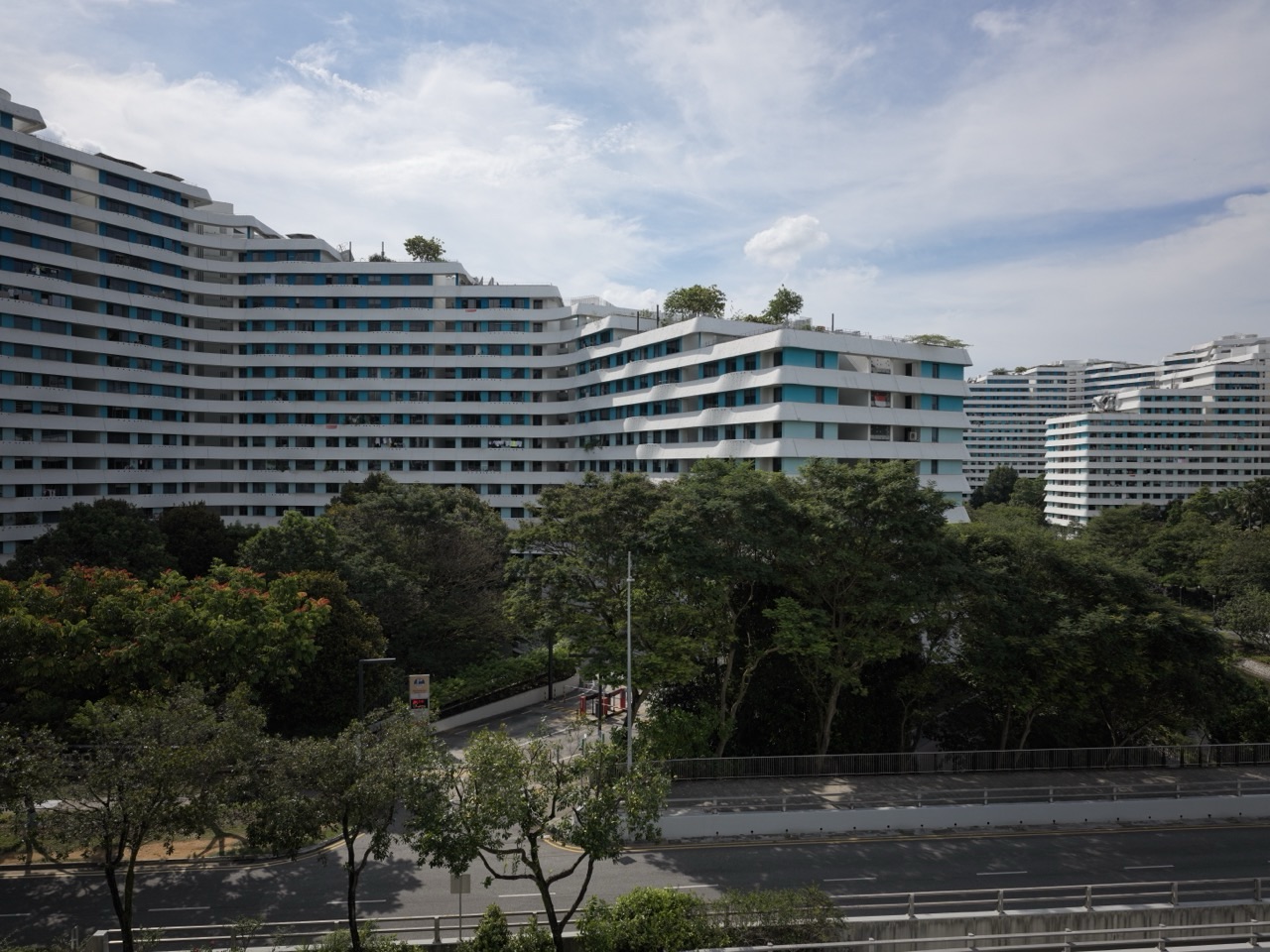
The largest Science classroom above Punggol has no walls.
The Sun crosses the sky. The Moon changes appearance across the month. Artificial satellites pass overhead. Shadows change direction. Tides respond to gravitational interactions. Weather moves through the atmosphere while Earth rotates beneath the sky.
Earth and space Science gives students a chance to connect everyday observation with enormous scales.
This article continues the Journey of Learning Advanced Science in Punggol by looking upward.
The Sky Changes Because We Are Moving Too
It is easy to say that the Sun “moves across the sky”.
From Earth’s surface, that is exactly what appears to happen. But the daily apparent motion is mainly produced by Earth’s rotation.
This is a powerful model-thinking lesson: what we observe depends on our reference frame.
Shadows Record Solar Geometry
A vertical object casts different shadows through the day.
Shadow direction and length change as the Sun’s apparent position changes.
Students can therefore use shadows as indirect evidence of geometry in the Earth-Sun system.
This connects back to Light and Optics in Punggol.
The Moon Does Not Produce Its Own Visible Light
The Moon is seen because sunlight reflects from its surface.
Its phases arise because we see different portions of the Moon’s sunlit half as the Moon orbits Earth.
The phases are not caused by Earth’s shadow except during a lunar eclipse.
Correcting that misconception is a classic example of replacing an intuitive model with a better one.
Gravity Organises Orbits
The same gravitational interaction that pulls objects toward Earth also helps keep the Moon and artificial satellites in orbit.
An orbiting object is continually falling toward Earth while also moving sideways fast enough to keep missing the surface.
This idea feels strange at first, but it is one of the most elegant links between everyday mechanics and space Science.
Satellites Are Physics Turned Into Infrastructure
Satellites support communications, navigation, weather monitoring, Earth observation and scientific research.
A satellite system combines mechanics, electronics, energy, thermal control, sensors, data and communications.
This makes space technology a natural extension of research, AI and future learning.
Tides Connect Space to Punggol Water
The gravitational interactions involving the Moon and Sun contribute to tidal patterns on Earth.
Students living near waterways and the northeastern coast have a local reason to care about this large-scale effect.
The actual water level at any location also depends on coastline geometry, weather, wind, atmospheric pressure and local hydrodynamics.
This is another systems lesson: a simple astronomical driver interacts with a complex local environment.
Seasons Are About Axial Tilt
Earth’s seasons are caused mainly by the tilt of Earth’s rotational axis, not by dramatic changes in distance from the Sun.
The tilt changes solar angle and day length across the year in higher latitudes.
Singapore lies close to the equator, so seasonal temperature changes are smaller than in temperate regions, although rainfall patterns still vary through monsoon systems.
Scale Is the Hard Part
Space Science forces the mind to work across enormous scales.
| Scale | Example |
| metres | student, building, telescope |
| kilometres | Singapore, Earth radius scale |
| hundreds of thousands of kilometres | Earth-Moon distance scale |
| hundreds of millions of kilometres | Earth-Sun distance scale |
| light-years | distances between stars |
Scientific notation and order-of-magnitude reasoning become essential because ordinary intuition breaks down.
Light Is Our Messenger
Most astronomical information reaches us through electromagnetic radiation.
By studying brightness, spectrum, colour, wavelength and timing, scientists infer temperature, composition, motion and distance.
This means optics and atomic Science eventually become tools for understanding the universe.
Urban Light Changes What We See
Artificial lighting makes cities safer and more usable at night, but it also brightens the sky and reduces visibility of faint stars.
Students can compare the night sky from different urban environments and learn why astronomical observation depends strongly on local lighting and atmospheric conditions.
A Simple Moon Observation Project
- Observe the Moon at roughly the same time on several clear evenings.
- Record its visible shape.
- Note where it appears in the sky.
- Sketch or photograph it safely.
- Compare observations across several weeks.
- Use a Moon-phase model to explain the pattern.
The student learns that repeated observation can reveal a cycle that no single night makes obvious.
Earth and Space Science Connects Everything
- Physics explains gravity, motion and light.
- Chemistry explains stars, atmospheres and planetary materials.
- Biology asks where life can exist.
- Mathematics handles scale, orbit and measurement.
- Technology extends our senses with telescopes, satellites and sensors.
How eduKate Can Teach Space Without Losing the Syllabus
A tutor can use space as an extension that strengthens core concepts rather than distracting from them.
A Moon-phase question reinforces models. Satellite orbits reinforce forces. Tides reinforce gravity and systems. Shadows reinforce light. Spectra reinforce atoms and waves.
Continue the Journey
- Previous: Genetics and Inheritance.
- Earlier: Forces, Moments and Stability.
- Earlier: Weather and Atmosphere in Punggol.
- Return to the Punggol Science Tuition hub.
Advanced Science changes scale without changing its discipline. Whether the student studies a leaf, a bridge or the Moon, the same habits remain: observe carefully, build a model, test it against evidence and keep improving the explanation.
Browse more learning guides
Use the Punggol Science article index to find another topic, or return to Learning Routes to choose a subject or school-year guide.


