
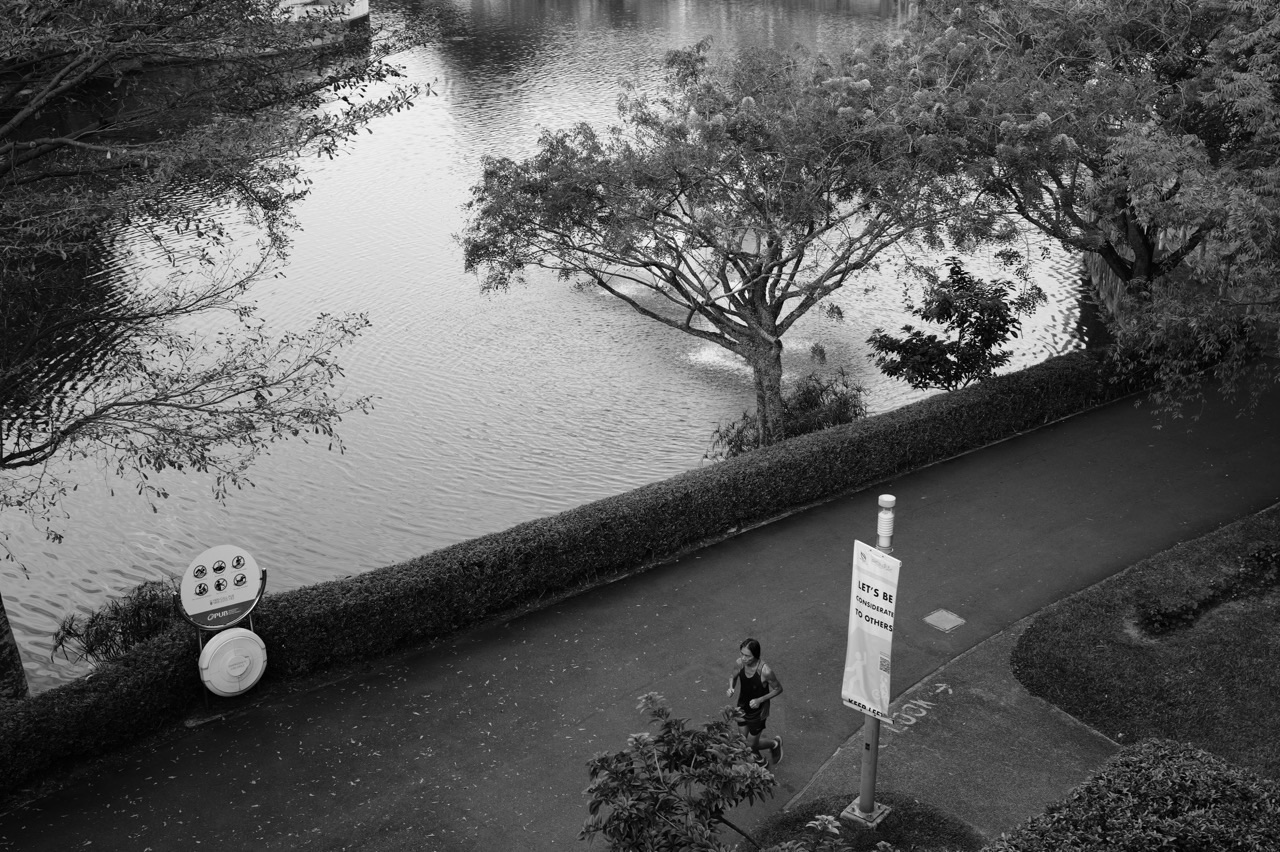
How do you restart walking, running or cycling in Punggol after haze interrupts your week? Use a flexible seven-day schedule rather than cramming missed workouts together. For a healthy adult who feels well and whose intended exercise is permitted under MOH’s current haze guidance, the sequence might include an easy first session, recovery, a second manageable session, strength or mobility, a review day, an optional longer outing and rest. Recheck the NEA one-hour PM2.5 reading for immediate outdoor plans and tomorrow’s PSI forecast for scheduling. Any symptoms or individual medical restrictions change the answer.
This 2026 Punggol haze exercise restart planner provides a seven-day diary, alternative choices for walkers, runners and recreational cyclists, and a clear decision process for altered readings. It is a practical training calendar, not another all-purpose article on when outdoor sport becomes suitable. For that broader question, read When to Restart Outdoor Exercise in Punggol After Haze. This guide helps people who have already decided that a particular level of movement is suitable plan the week without unnecessary pressure or false medical precision.

Quick planner: Before Day 1 · Day 1 · Day 2 · Day 3 · Day 4 · Day 5 · Day 6 · Day 7 · Walker track · Runner track · Cyclist track
The restart plan begins after an air-quality decision
Many Punggol exercise articles explain whether to go outside. This one answers the next practical question: what should the following seven days look like once outdoor activity is appropriate again? The two decisions must remain separate. First check current one-hour PM2.5, tomorrow’s PSI forecast and your individual health. Only then decide whether today’s planned session should be easy, indoors, postponed or skipped. The seven-day plan is conditional, not permission to train regardless of the air.
The related Punggol haze recovery guide gives broad return-to-activity advice. This page provides an adaptable schedule, an effort diary and scenario choices for healthy adults who already have some exercise experience. It is not a rehabilitation prescription for someone recovering from an illness or living with a medical condition. Those individuals need their healthcare professional’s guidance, especially if breathing difficulty, chest pain, dizziness or other troubling symptoms are present.
Write four facts before the first session
The diary begins with four short entries: your usual pre-haze exercise routine; the days you missed or changed; how you currently feel; and the latest official air-quality inputs for the intended activity. It is perfectly acceptable if the usual routine was only two walks per week. The goal is to restart something sustainable, not to adopt another person’s ambitious training volume. Avoid guessing the exact inhaled PM2.5 dose from a regional reading.
Next, choose one realistic first session and a shorter alternative. A familiar loop near the Punggol Waterway or an indoor mobility session may be enough. If you have been unwell, do not assume feeling better for five minutes provides full medical clearance. After exercise, record any symptoms or excessive fatigue. These observations are useful planning inputs, but they cannot diagnose the cause of illness or prove the air was safe at a particular corner.
Day 1: a gentle re-entry, not a fitness test
For a healthy adult who feels well and whose air-quality guidance permits the chosen activity, Day 1 can be an easy walk or short comfortable session with a clear turnaround. The aim is to learn how the body responds to ordinary movement after the interruption. Do not begin with maximal sprints, an endurance challenge or a personal record simply because the sky looks clearer. Choose a route close to home or transport, and leave enough energy to finish comfortably.
If the next one-hour reading is less favourable than expected, change the session before starting; an indoor low-demand alternative or rest is valid. If cough, wheeze, chest discomfort or unusual breathlessness develops, stop and seek appropriate medical advice. Day 1 is successful when you make a good decision and finish feeling capable, even if the watch shows less distance than usual.
Day 2: keep recovery visible in the timetable
A common error after several missed sessions is to schedule daily intense training to catch up. Day 2 provides a useful pause. Depending on fitness and health, it might be a rest day, relaxed mobility, gentle indoor strength or ordinary walking. Someone who normally trains only occasionally may need even more recovery. There is no universal requirement to exercise every day in this example plan.
Recovery also makes room to deal with delayed school, work or family responsibilities. If the first day exposed unexpected symptoms or poor tolerance, reassess before doing more. The alternative is not automatically to push through. Appropriate medical evaluation may be needed. A sustainable routine includes rest, and one lost interval session is not a debt that must be repaid to the running app.
Day 3: choose the next easy session if conditions allow
If Day 1 went comfortably, the individual remains well and current environmental advice permits it, a second easy session may fit the routine. A walker could take a manageable neighbourhood walk, a runner a conversational jog, or a cyclist a short familiar ride. Match intensity to the person’s actual baseline. An athlete’s easy run and a beginner’s easy walk can both be appropriate without being comparable distances.
If the sky appears clear but the one-hour PM2.5 band has risen, revise the outdoor session accordingly. If tomorrow’s PSI forecast is poor, avoid locking in a long route merely because a friend is available. The plan is meant to survive changed air. Keep travel and heat in mind as well; Singapore humidity and temperature create separate demands that a haze reading does not measure.
Day 4: strength and mobility, without inventing indoor safety
On a suitable day, a healthy adult might use controlled bodyweight movements, balance or flexibility work instead of adding another long aerobic workout. Exercises can include comfortable sit-to-stands, wall push-ups or stretches chosen according to ability. Technique and safe breathing matter more than maximum repetitions. A person with significant medical limitations should follow existing clinician or physiotherapist instructions rather than this generic example.
An indoor session is not automatically air-purified. Filtration, outdoor leakage and ventilation differ among homes and gyms. If the room is uncomfortable or someone is unwell, rest or improving the environment may be the better plan. The point of Day 4 is variety and sustainable progress, not forcing a high-intensity workout behind a closed door as compensation for the haze.
Day 5: review the log before increasing anything
Take two minutes to compare the first four days: what was planned, what actually happened, whether the official air inputs changed and how the body responded. If the first sessions felt unusually difficult or symptoms developed, do not increase the workload. Seek appropriate advice where needed. If everything was comfortable, the routine may continue in a way suited to pre-haze fitness and current conditions. This is not a rigid progression algorithm.
People often measure improvement only by faster pace or longer distance. A haze-aware diary records a more important competence: the ability to change a plan based on credible information. If work, schooling or family commitments make Day 5 inconvenient, moving the session is reasonable. The goal is to enjoy consistent movement across months, not perfectly comply with a seven-column template.
Day 6: an optional longer session—only if it genuinely fits
Some experienced runners and cyclists normally reserve a weekend day for a longer outing. Day 6 can be that day only if the air, health, fitness and weather genuinely support it. For someone returning after a prolonged or illness-related break, a longer session may be inappropriate. Use the latest NEA reading and MOH advice, not an automatic schedule. The weekend PSI forecast helps with a provisional route, and the current one-hour PM2.5 informs the immediate choice.
An 8.4-kilometre park connector is an available Punggol attraction, not a compulsory target. Start with an easy-to-shorten segment instead of a distant turnaround. Cycling can involve long exposure and variable effort, so a shorter route may be sensible. For groups, decide who will announce changes and where participants can exit. Nobody should be pressured to continue if the air deteriorates or symptoms appear.
Day 7: recover, reflect and plan the next ordinary week
The final day need not involve another workout. A rest day, gentle walk or appropriate leisure activity may be the better choice. Review whether the week kept exercise enjoyable, and decide which two or three habits are worth continuing. A week interrupted by haze can still be productive if it preserves safe decision-making and prepares for later training without unnecessary strain.
For the next week, return to a regular plan suited to experience, health and goals rather than extending a strict ‘haze recovery’ mode indefinitely. If air quality remains variable, keep the same conditional checks. A child in CCA should follow the school’s actual programme; someone with chronic disease should follow their clinician’s plan. A fitness schedule is a guide to choices, not an entitlement to ideal environmental conditions.
Example track A: the recreational walker
A resident who normally walks three times a week could plan Day 1 as an easy familiar walk if suitable, Day 2 as rest, Day 3 as another manageable walk, Day 4 as gentle mobility, Day 5 as a review, Day 6 as an optional enjoyable short outing and Day 7 as rest. These are categories rather than prescribed minute totals. Someone older or recovering from illness may need a different plan guided by a healthcare professional.
Consider the full journey, including time to reach the park, rest and return home. Step-count competitions should not push anyone into prolonged outdoor exposure on a poor-air day. A comfortable social walk may be worth more than hitting an arbitrary target. Punggol Waterway’s benches and paths are useful when conditions are suitable, but are not evidence that the air contains fewer fine particles.
Example track B: the already-active runner
A runner with an established training routine could reserve Day 1 for an easy re-entry, Day 2 for recovery, Day 3 for a second easy outing, Day 4 for strength or mobility, Day 5 for review, Day 6 for a longer session only if appropriate, and Day 7 for rest. Notice what is missing: an obligation to perform every hard interval missed during the haze. The schedule is deliberately conservative and can be reduced at any point.
For a runner who has been ill, who has asthma symptoms or who lacks a current medical clearance where required, this example does not apply automatically. Reassess and obtain professional advice. Pace can be a useful training variable, but breathing discomfort is not something to ‘beat’ by finding a better split. Punggol’s running routes guide supplies route inspiration when normal outdoor exercise is again suitable.
Example track C: the recreational cyclist
A recreational cyclist might choose a short familiar first ride on a suitable day, maintain a rest day, inspect equipment on Day 3, and consider another comfortable outing later in the week. No one needs to travel to the furthest coastal destination simply because the bicycle is ready. Check tyres, brakes, helmet, lights and the proposed return route. Haze decisions and ordinary road safety decisions work together.
Cyclists sometimes underestimate exposure duration because the bicycle makes distances feel easy. Add time spent waiting, riding to the start and stopping for refreshments. A long, slow ride still involves prolonged time outdoors. If air quality worsens, use a suitable indoor alternative or rest rather than treating a shorter distance as automatically safe. For children, the route and effort should fit their abilities and the official advice for their age group.
Children and school athletes do not follow the adult seven-day template
This article’s schedule is an example for healthy adults with an established baseline. Schoolchildren and teenagers should follow their own age-appropriate activity guidance and the school’s actual PE or CCA arrangements. Haze can prompt an organiser to change a training session or event. A child should never be encouraged to double sessions because they missed outdoor practice earlier in the week. Symptoms and any individual medical plan take priority.
Parents can preserve the child’s enthusiasm by discussing what they look forward to when the programme resumes, checking equipment or practising a non-strenuous skill where appropriate. If the school makes an official timetable change, that message controls the arrangement; a parent-group rumour does not. Punggol haze school-day guidance explains the school side and the haze health guide covers children with respiratory risks.
Older adults, pregnancy and chronic heart or lung disease
The MOH advisory identifies groups that may require stricter limits on outdoor activity. An individual who is pregnant, elderly or has chronic heart or lung conditions should not use a generic runner’s return-to-training plan as medical clearance. The appropriate activity depends on their health, current symptoms and personalised advice. A comfortable home mobility routine may be sufficient for one person; another may need to avoid outdoor activity while the official advisory calls for it.
No online seven-day chart should direct changes to prescribed medication, instruct someone to ignore shortness of breath or set a universal exercise dose for a vulnerable person. Where there is severe breathing difficulty, chest pain or another emergency, seek urgent care. A respectful fitness culture makes room for a person to decline participation without explaining their private health history to a whole group.
The conditional rule for every day of the schedule
Before an immediate workout, check the relevant NEA one-hour PM2.5 and MOH guide. Normal, Elevated, High and Very High bands bring progressively stronger precautions. For healthy people, Elevated means reducing strenuous outdoor exercise, High means avoiding it, and Very High means minimising outdoor activity. For vulnerable people the restrictions become stricter sooner. This public guidance applies even when a week-long template is printed on the fridge.
The following day’s 24-hour PSI forecast is useful for scheduling, but it is not a substitute for the current one-hour reading. A training plan should always carry three possible outcomes: proceed in a suitable way, substitute with a lower-exposure appropriate option, or rest. Changes do not destroy the plan; they are part of how the plan works.
How to distinguish normal effort from a symptom that needs care
A person may feel ordinary muscle tiredness after resuming exercise. But a new or worsening cough, wheeze, unusual shortness of breath, dizziness or chest discomfort needs attention rather than a stronger motivational slogan. It is not possible to attribute a particular symptom to haze without assessment. The safest course for concerning symptoms is to stop activity and seek appropriate medical advice.
If someone has a written asthma action plan or clinician-directed exercise restrictions, follow those. Do not increase inhaler doses based on a training diary. A regional air-quality figure can assist decisions about outdoor exposure but is not a personal health monitor. Distinguishing environmental information from medical assessment protects both fitness and trust.
The national activity goal is not a one-week catch-up quota
HealthHub describes Singapore’s adult physical activity guidance as aiming for at least 150–300 minutes of moderate aerobic activity a week plus strength-building activities on two days, where suitable. This is a broad long-term public health recommendation for healthy adults, not an instruction to squeeze a particular number of minutes into the first week after haze or illness. People with chronic conditions should consider professional advice about suitable participation.
Someone who usually moves less can start with small, enjoyable steps and build over time. Someone who normally trains more does not have to reduce every week to the example given here. The important relationship is between appropriate effort, health, recovery and regularity. Haze interrupts the outdoor environment, not the underlying principle that long-term movement should be sustainable.
Worked log: what to write after a postponed Waterway run
A runner plans an easy Waterway Park outing. The current official air reading and MOH guidance call for reducing the intended outdoor exertion, so the runner substitutes a comfortable indoor movement session. In the diary they write the date, planned activity, official time-stamped input, actual action and any symptoms. They do not record a fabricated pollutant dose or conclude that a shorter distance makes all exposure harmless.
When the next planned session approaches, the runner checks fresh readings and personal wellbeing again. If conditions allow, an easy workout may proceed. If not, the routine adapts once more. This simple log trains the habit of making evidence-based decisions and makes a missed run look like what it truly is: one controlled scheduling change rather than the collapse of a fitness journey.
Frequently asked questions: the seven-day Punggol haze workout planner
Do I have to train every day? No; this is a flexible sample with rest and options. What if the air gets bad again on Day 3? Follow the latest advisory and substitute or postpone. Is a clear skyline sufficient? No; check the NEA time-stamped reading. Can I do hard intervals after several missed workouts? There is no obligation to make up sessions; progression should match fitness, symptoms and any professional advice.
Does this apply to a child with asthma? No adult training plan should override the child’s medical and school instructions. Is the Waterway Park Connector 8.4 km? NParks lists the full connector as 8.4 km, but shorter routes are possible. Why not just use the existing Punggol haze return guide? That guide explains whether and when to return; this one gives a concrete, adjustable seven-day scheduling framework.
A restart week succeeds by making the next week easier
The best seven-day training plan is not the one that produces the largest totals after a smoky period. It is the one that leaves the person healthy, interested in movement and able to continue. A schedule with room for weather, haze, illness and recovery is more useful than an idealized list that works only under perfect conditions.
When Punggol’s outdoor air is suitable, enjoy the waterway at a comfortable pace. When it is not, keep an appropriate indoor option or rest. The fitness habit survives because the decisions are sound, not because every planned kilometre is completed.
| Example day | If current guidance and health allow | If outdoor effort is unsuitable |
|---|---|---|
| Day 1 | Easy familiar re-entry | Low-demand indoor mobility or rest |
| Day 2 | Rest or gentle recovery | Rest |
| Day 3 | Second comfortable session | Indoor alternative or postpone |
| Day 4 | Controlled strength/mobility if appropriate | Rest or clinician-guided alternative |
| Day 5 | Review log, symptoms and forecast | Review without physical demands |
| Day 6 | Optional longer session only if suitable | Cancel/postpone or low-demand indoors |
| Day 7 | Rest and plan the next week | Rest and continue to monitor responsibly |
Example for generally healthy adults with an established baseline, not a prescriptive medical rehabilitation schedule. Each day’s suitability depends on fresh official readings and personal circumstances.
Continue across the local haze reading library
This practical worksheet is deliberately different from an all-purpose venue directory or broad air-quality explainer. For the latest conditions, use NEA and MOH. The other Punggol guides below cover specific decisions in greater detail.
- The existing haze recovery guide: whether and when to return outdoors
- Punggol outdoor activities during haze
- The best running routes in Punggol
- Four-week beginner exercise programme for Punggol
- Punggol haze symptoms and sensitive groups
- NEA one-hour PM2.5 versus PSI forecast
- eduKateSG Waterway Park and indoor workouts during haze
Official sources and review notes
Reviewed 17 October 2026. Activity menus and training examples are illustrative, not medical clearance, an operator booking or a verified particulate reading at an individual address. Actual venue access, programme availability, school notices, smoke levels and personal health may change.


