
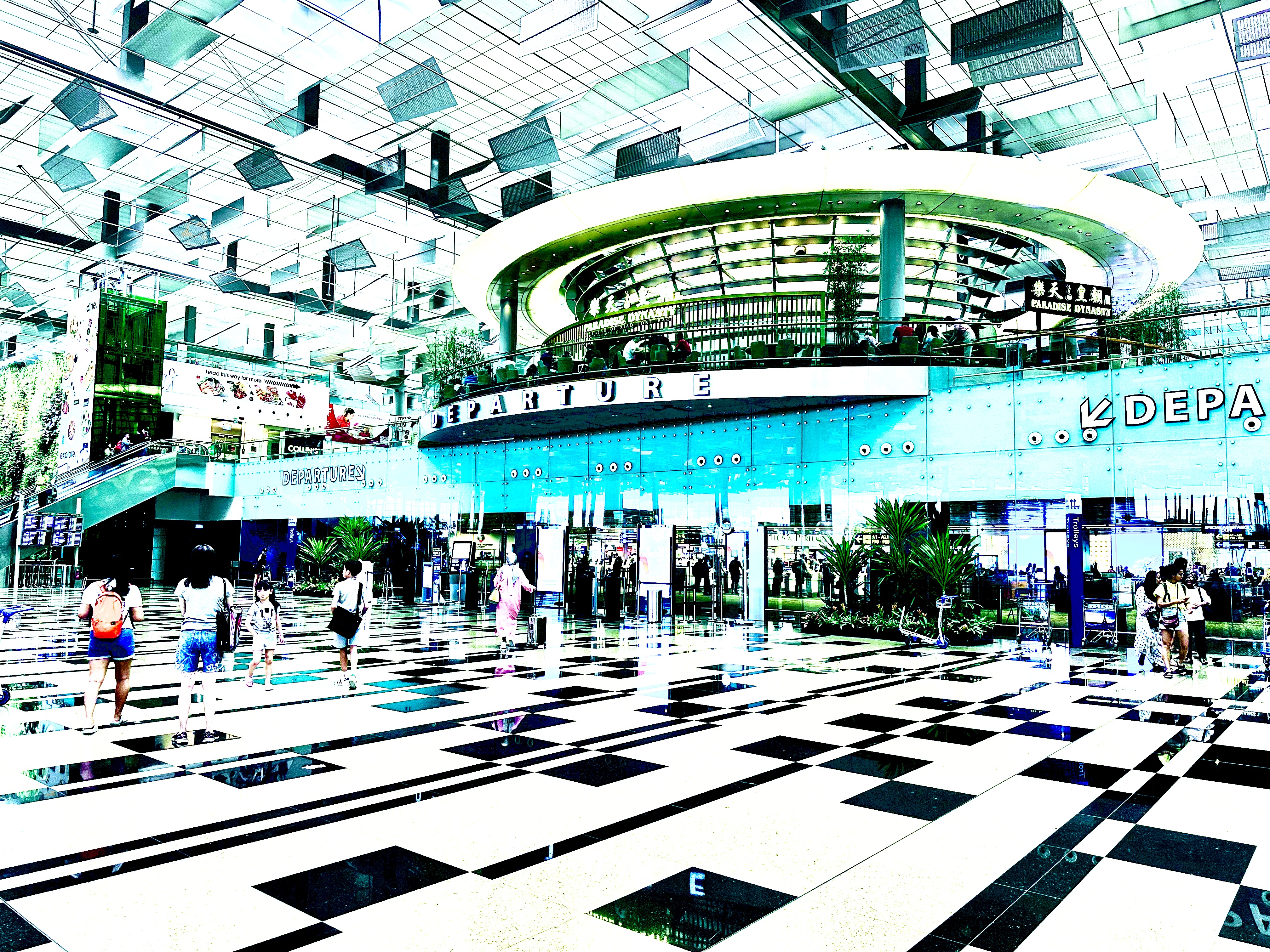
Can haze delay a flight from Singapore? Yes, if it affects the visibility and safety requirements for airport operations—but a high PSI does not automatically mean Changi Airport is closed. Airport operators and air-traffic authorities use aviation-specific weather, runway visibility, navigation systems and operational procedures. Travellers departing from Punggol should check their individual airline and flight status, rather than assuming a smoky-looking evening sky proves a cancellation.
For searches such as Singapore haze flight delay 2026, Changi Airport haze cancellations, Seletar Airport visibility, Punggol to Changi flight planning and does PSI stop aircraft taking off, this guide answers the operational and family-travel questions directly. The Civil Aviation Authority of Singapore (CAAS) documented precautions during the 2013 haze, when Changi continued operating and Seletar faced a temporary closure. Those events are historical examples, not proof that any particular flight is delayed today.
The quick answer: air pollution and flying use different measurements
A family’s PM2.5 or PSI reading is primarily about the quality of the air people breathe. Aviation authorities need meteorological visibility, runway visual range, wind and other flight-safety information. A dramatic air-quality headline does not establish that an aircraft cannot land.
During the June 2013 haze, CAAS said Changi had instrument landing systems, runway lights and low-visibility procedures. The airport could continue certain operations with additional safeguards. By contrast, Seletar, whose operations then depended on visual conditions, closed temporarily when visibility fell below its applicable minimum.
A parent in Punggol therefore has two independent tasks. Protect the family during the ground journey using current NEA health advice. Confirm the actual flight operation with Changi’s flight-status service and the airline. Do not substitute one for the other.
Where to check a Singapore flight first
Start with Changi Airport’s official flight-status information or the appropriate airport operator’s current pages. Then check the airline’s own app, website or message for your exact flight number and date.
Airport information and airline messages serve complementary roles. The airport reports operational flight information, while the airline normally manages individual ticket conditions, rebooking, check-in, missed connections and other passenger arrangements.
If a connecting flight in another country is affected, checking only Singapore’s departure board may not tell the whole story. You also need information from the connecting airport or carrier.
Never use a haze screenshot to announce that all flights on the following morning are cancelled. Aviation decisions are made for specific operations and can change with conditions.
What CAAS recorded during the June 2013 haze
CAAS published a 24 June 2013 release on maintaining safe operations at Changi. It stated that, beginning on 19 June 2013, operators increased separation between aircraft landings and take-offs as a precaution. Runway and approach lighting could also be used during daylight.
The release described instrument landing systems that provide guidance for approaching aircraft under appropriate low-visibility conditions. It also said no significant delays had occurred by the time of that release, despite the preventive measures.
That is an important distinction. A reduction in operational capacity or extra safeguards may create delays, but the existence of safeguards does not itself prove that a particular passenger flight was late.
The CAAS statement reported the conditions and capabilities relevant to June 2013. It should not be pasted into a 2026 article as a guarantee of identical current runway thresholds, equipment or operational decisions.
Why Seletar’s 2013 experience was different
On 20 June 2013, CAAS announced that Seletar Airport had closed temporarily because of prolonged poor visibility.
The release described visibility fluctuating around 700 to 1,200 metres, below Seletar’s stated 1,500-metre minimum operating requirement at that time. CAAS reported two arrivals diverted and eight departures cancelled during the closure announcement.
The statement shows why it is dangerous to generalise from one airport to another. Airfield equipment, aircraft types, operating approvals and procedures vary. The same wider haze episode can affect two airports in different ways.
These are historical observations, not a claim that Seletar follows an unchanged 2013 rule today. For current operations, rely on CAAS, the airport and the airline.
What runway visual range means
Runway visual range (RVR) is a specialised measure used in aviation. It concerns the distance over which runway markings or lights can be seen under relevant conditions. It is not simply the distance to the nearest HDB block or a person’s estimate from a balcony.
An airline pilot and air-traffic controller use authorised operational data and procedures. A resident who cannot see distant buildings through haze may have noticed reduced visibility, but that photograph is not a certified RVR report.
Similarly, the 24-hour PSI is not measured in metres. A PSI of 200 cannot be converted by a simple multiplication into an RVR of 200 metres.
The two measures ask different questions: What is the air-quality index? and What visibility is available for an aviation operation?
Why Changi can operate with low visibility
Changi is a major international airport with lighting, navigation equipment, procedures and trained personnel intended for safe operations in varied weather. CAAS’s historical release specifically described the role of instrument landing systems (ILS) in guiding an aircraft during approach.
An instrument approach uses approved equipment and procedures rather than relying only on the pilot seeing the runway from a great distance. There are still applicable minimum conditions and safety requirements; an instrument landing system does not make visibility irrelevant.
The final decision about a flight depends on many factors, including the aircraft, crew, weather, runway systems, airspace and operator approvals. It cannot be inferred from a photograph or a single neighbourhood PSI reading.
A responsible travel guide therefore avoids declaring that “Changi never closes for haze” or that “any severe haze automatically closes Changi”.
What happens to flight schedules if operations slow
Extra aircraft separation, changes in runway use or other precautions may reduce the number of movements an airport can handle over a period. If scheduled demand exceeds the capacity available, some flights may face delays, sequencing changes or other disruptions.
But the effects may not be equal. A flight that is already on the ground, an approaching aircraft, an outbound aircraft awaiting clearance and a connection booked through another hub face different circumstances.
A delayed departure may also be caused by weather at a destination, an aircraft arriving late from a previous sector, maintenance or other operational matters. Haze in Singapore should not be blamed without appropriate confirmation.
The practical question for a family is the flight number, status, airline instruction and next action, not whether the whole airport appears smoky.
Worked example: timing a Punggol family departure
Imagine a fictional family flying from Changi with a scheduled departure at 9:15am. Their airline requires check-in or bag drop to be completed by an earlier specified time. Instead of calculating backward from a generic “arrive two hours early” claim, they should check the airline’s actual cut-off.
Suppose a hypothetical airline says checked baggage must be accepted at least 60 minutes before departure. The deadline in that example would be 8:15am. If the family wants 45 minutes of buffer before that cut-off, their target arrival at the relevant check-in area would be 7:30am.
This is arithmetic about an invented policy example, not a real airline’s current rules or a verified Punggol-to-Changi travel time. The trip duration itself should be checked using current transport information, service conditions and the number of travellers.
If an official flight update changes the departure time, reread the airline instructions before changing your arrival plan. Some airlines require passengers to follow the original reporting time even when flights are delayed.
The ground journey can matter more than the sky
A Punggol traveller may take the MRT and transfer through the rail network, use a taxi, arrange a private vehicle or combine several modes. Each option has practical considerations such as luggage, children, elderly relatives and the distance from the home to transport.
Haze may affect comfort during uncovered portions of the trip. Under poorer air-quality conditions, a person who is more susceptible to pollution may need a different activity plan for long outdoor walks.
NEA’s current one-hour PM2.5 personal guide is relevant for near-term outdoor exposure, while airline and airport status information governs the flight itself.
For the separate issue of using a vehicle’s ventilation and cabin recirculation, the Punggol Haze Car Cabin Guide addresses practical air-management choices.
What about an airline delay notification?
Read the message carefully. Does it confirm a delay, request an updated reporting time, offer a rebooking option or merely warn that conditions might affect the schedule? An advisory about possible disruption is not the same as a confirmed cancellation.
Keep the flight number, date, route and booking reference available privately. Avoid posting a full ticket barcode, passport details or passenger contact information in public community groups.
If the airline issues instructions about check-in, boarding or connections, those instructions take priority over guesses circulating among travellers. If the message seems suspicious, open the airline’s official site or app directly rather than following an unfamiliar link.
During fast-changing situations, the most helpful family message is short: “Flight status checked at [time], airline says [confirmed detail], and the next review is [time].”
Connecting passengers: one delay can affect another
A flight leaving Changi may still be scheduled on time even if a connection in another airport is at risk. Conversely, an aircraft arriving late from overseas can delay its onward departure even when Singapore’s own conditions are acceptable.
For a single through-booking, the airline’s arrangements for a missed connection may differ from a journey built from separately purchased tickets. Ticket conditions and local passenger rights vary.
Do not assume that the second airline will automatically rebook the entire trip if the two sectors were purchased separately. Keep the original booking documents and ask the relevant carriers what applies to the actual itinerary.
A haze event is only one possible source of operational disruption. The precise cause reported by the operator may matter for insurance or compensation.
What should a family do if the flight is cancelled?
First, confirm cancellation through the operating airline or the official airport status. Second, review the airline’s options for rebooking, refund or accommodation based on the actual booking and applicable rules. Third, check any onward accommodation or connecting transport that might need a change.
Keep written evidence of the cancellation notice and any reasonable expenses. If travel insurance is involved, ask the insurer which causes, documents, purchase dates and waiting periods matter to the policy.
Avoid booking an expensive replacement ticket on speculation before understanding the original carrier’s arrangements, unless the urgency and personal circumstances justify that choice.
The already published Punggol Haze and Insurance Claims explains insurance questions in greater detail. This article focuses on airport operations and travel decisions rather than interpreting particular policy wording.
Does haze automatically entitle passengers to compensation?
No universal rule can be stated. What a passenger may receive depends on the operating carrier, itinerary, ticket terms, applicable consumer or aviation law, cause of disruption and any travel-insurance coverage.
A severe weather or visibility disruption is not necessarily treated the same way as a maintenance-related delay. There may be differences between the airline’s duty to provide assistance and any insurer’s contractual coverage.
The best action is to preserve a dated and specific airline notification, ask what remedy is available and check the relevant terms rather than assuming a high PSI produces an automatic payment.
Never claim “all haze flight delays are insured” or “weather delays are never covered.” Both are overgeneralised.
A brief checklist for Punggol travellers
Before leaving: Check the live NEA guidance for your ground exposure, the exact airline flight status, check-in cut-offs and necessary documents. On the way: Allow a sensible contingency for transport and travelling companions, without inventing a journey time. At the airport: Monitor the gate and airline messages, and follow instructions from airport staff. If disrupted: Keep evidence, clarify rebooking and connection arrangements, and contact the insurer if a relevant policy applies.
For travellers with chronic heart or lung conditions, an unavoidable trip may need additional medical planning. A public haze indicator cannot replace their individual care advice.
An airline status update can change; checking it once the night before is not enough for a genuinely uncertain journey.
The historical Changi visibility thresholds need careful labels
CAAS’s 24 June 2013 release reported that, under its then-current arrangements, Changi could normally accept landings when RVR was above 550 metres, with more stringent measures available between 300 and 550 metres. It said landings could not be accepted below 300 metres in those conditions.
These figures were published for the June 2013 situation and must not be silently republished as 2026 operating minima. Aeronautical procedures, equipment and approvals can change.
For technical aviation operations, the relevant current information is provided by CAAS and the authorised aeronautical publications, not a local neighbourhood website.
A history lesson can use those numbers to show why airport operations depend on visibility rather than PSI, but passengers should not attempt their own runway-operability forecast from them.
Why visibility does not track PSI perfectly
Air quality and visibility both respond to atmospheric particles, but they are not the same measure. Humidity, particle size, colour, gases, cloud and lighting influence how far objects appear visible. NEA warns that smell and visibility are not reliable proxies for pollution concentration.
A driver may see a hazy distance over the Waterway, yet the actual visibility observed along an airport runway could be different. Airport instruments and operational standards are designed for their setting.
That is why a photographic “proof” that Changi is shut is especially weak. The image may be taken many kilometres away or under different lighting and weather conditions.
The Punggol Haze Photography Guide explains how camera processing can further alter perceived visibility.
Punggol school holidays and pre-booked family trips
Families often arrange travel around school timetables, tuition schedules and childcare commitments. An unexpected flight disruption can affect multiple dates, not just the departure hour.
Create a minimal contingency plan: identify which commitments are time-sensitive, who can communicate with a caregiver and how any missed lessons or appointments can be rearranged if necessary. Avoid prematurely telling children that a holiday is cancelled before the airline has confirmed it.
Where a child has health needs, protect routine medication and necessary documents. If a future flight is still operating, decide on travel based on official requirements and personal circumstances rather than unrelated social-media rumours.
Travel disruption planning need not become alarmist. A contact list and an accurate booking record often provide more value than repeatedly watching unverified updates.
An example that separates ‘possible’ from ‘confirmed’
Imagine that a family sees a news headline saying “Haze may reduce visibility at Singapore airports.” They then write in a group chat: “Our 10pm flight has been cancelled.”
The headline describes a possible hazard, while the family has asserted a specific operational decision that is not documented. The correct next step is to consult the airline’s flight-specific status.
Suppose the airline’s official app actually says “scheduled”. The family may continue preparing, monitoring for genuine updates rather than declaring a cancellation. If it later changes to “delayed”, they follow the new instructions.
This is information literacy with real consequences: careless language can cause missed transport, lost money and unnecessary worry.
How airport staff protect safety before convenience
Airports may need to increase separation between movements, use additional lighting and follow low-visibility procedures. Airlines and air-traffic controllers use operational requirements rather than a passenger’s personal schedule to determine whether an operation can proceed safely.
A delay can be frustrating, but a traveller should not treat a safety-driven hold as incompetence or attempt to pressure ground staff into bypassing procedures.
The appropriate response is to ask for accurate information, available options and care arrangements. For complaints or disputes about a confirmed service issue, use the carrier’s authorised customer channels.
An operational decision is not a statement about the relative importance of a passenger’s holiday. It reflects the safety requirements of a complex shared transport system.
Five myths about haze and aviation
Myth: “PSI 200 automatically closes Changi.” There is no such universal direct conversion. Aviation uses its own operational visibility and safety criteria. Myth: “If Seletar closed in 2013, Changi must have closed too.” The 2013 CAAS announcements describe different outcomes. Myth: “An orange skyline photo proves my flight will be diverted.” Photographs do not measure runway visual range or identify a confirmed decision.
Myth: “All weather disruptions create the same passenger rights.” Terms, jurisdictions and causes differ. Myth: “Once the aircraft is marked delayed, passengers can ignore check-in instructions.” Reporting requirements must be confirmed with the airline.
Correcting these misconceptions does not guarantee an on-time flight. It helps travellers act on the evidence actually available.
Frequently asked questions
Does Singapore haze always cause Changi Airport delays?
No. Haze may affect visibility and require precautions, but the actual outcome depends on the applicable aviation conditions. In the June 2013 CAAS release, significant delays had not occurred by the release date despite additional safety measures.
Did Seletar Airport close during the 2013 haze?
Yes. CAAS announced a temporary closure on 20 June 2013 after visibility fell below Seletar’s then-applicable operating requirements. This is a historical event, not a current status report.
Is PSI the same as runway visual range?
No. PSI is an air-quality index, while runway visual range is a specialised aviation visibility measure expressed as distance.
Should I leave Punggol earlier just because the sky is smoky?
Plan based on the actual transport arrangement, flight status, airline cut-offs and your household’s needs. Do not assume a journey-time change without evidence, but allow appropriate contingency.
Can Changi operate in low visibility?
CAAS documents equipment and procedures that support safe operations under specified low-visibility conditions. The applicable minima and decisions are determined by the current aviation system, not by a neighbourhood air-quality article.
Where can I check whether my flight is delayed?
Use Changi Airport’s official flight information and confirm details with your operating airline.
Does an airline have to refund every haze-related delay?
Not automatically. A refund, rebooking or other remedy depends on the booking, circumstances, applicable requirements and the airline’s actual policy.
Can a connecting flight be disrupted even if Changi is operating?
Yes. Weather and operational conditions at other airports or on an aircraft’s previous sector may affect connections.
Should I rely on an airport rumour in a chat group?
No. Use official airport and airline updates, and confirm the date and flight number.
Is an N95 required for every airport trip during haze?
NEA says N95 respirators are generally not needed for brief commutes or ordinary indoor environments. The appropriate precautions depend on the current official health guidance and individual circumstances.
Continue through the Punggol haze reference library
For the ground journey and vehicle ventilation, see Punggol Haze Car Cabin. For insurance questions, use Punggol Haze and Insurance Claims. For immediate health advice, see Punggol Haze Check.
For the wider physics of smoke transport, see Why Is Punggol Hazy? and Punggol Haze Data Literacy. This guide’s unique role is aviation visibility, flight status and family-travel decisions.
Official sources and editorial note
Reviewed 17 October 2026. CAAS statements from June 2013 are clearly identified as historical rather than live flight operations or permanent aviation minima.
- CAAS: Assuring Safe Aircraft Operations at Changi During Haze, 24 June 2013
- CAAS: Seletar Airport Temporary Closure During Haze, 20 June 2013
- CAAS: Aeronautical Information Services and Current Publications
- Changi Airport: Flights, Status and Airline Contacts
- NEA: Haze Readings and Health Advisories
- NEA: Air Quality, Visibility and Smell FAQ
For Punggol travellers, the rule is simple: trust the airline for your flight, the aviation authorities for safe operations, and NEA for the air you breathe during the journey.
Punggol Haze: Further Reading in This Series
Continue through these connected guides, each covering a different question about haze around Punggol. For today’s decisions consult NEA’s live air-quality advice.


