
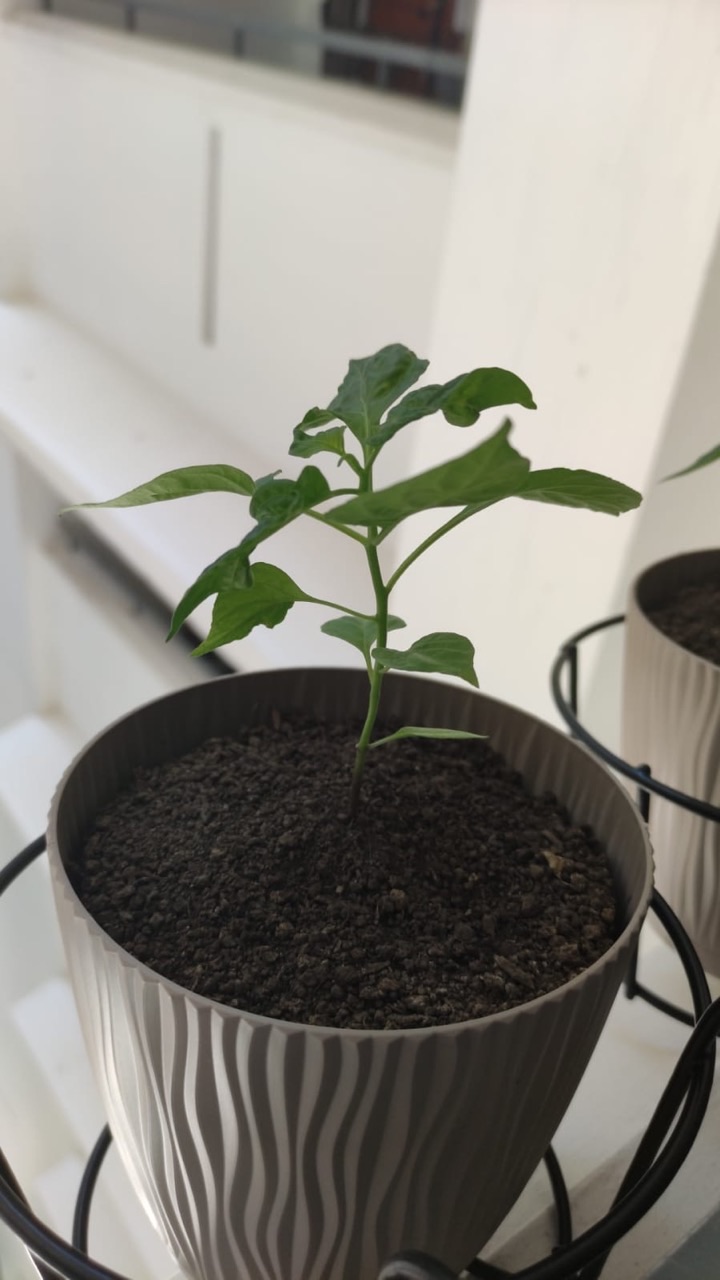
Can indoor plants clean Punggol haze air? A normal number of houseplants is not proven to remove fine smoke PM2.5 at a meaningful rate in a lived-in HDB room. The famous plant air-purifying studies were often done in sealed test chambers for particular gases; peer-reviewed analysis found effects too small to replace normal air exchange. You can still enjoy a peace lily, pothos or air plant without calling it a HEPA filter.
This 2026 guide distinguishes plant biology, VOCs, PM2.5, oxygen, humidity and HDB corridor rules. It complements Punggol balcony gardening, but focuses on the specific question: are potted indoor plants a substitute for haze filtration? The answer is no under realistic household conditions.

Quick topic links: The short answer: enjoy houseplants, but do not call them HEPA · VOC removal and PM2.5 are different questions · Peace lily and snake plant claims · Pet and child safety comes before air-cleaning claims · A fair classroom experiment · The plant claim checklist
The short answer: enjoy houseplants, but do not call them HEPA
Can plants protect a Punggol HDB flat from smoke?
A normal number of potted houseplants cannot be relied upon to remove Singapore haze PM2.5 at a meaningful rate in an occupied Punggol bedroom. Plants can make a space pleasant, offer a calming gardening activity and teach children about living systems. But the US Environmental Protection Agency warns that real-world air cleaning from a reasonable number of houseplants is far smaller than ordinary ventilation for the gaseous pollutants evaluated in laboratory research. The famous ‘plants purify the air’ message has been stretched much further than the evidence allows.
What to do instead when outdoor smoke worsens
Use NEA’s current one-hour PM2.5 and MOH’s health advice for outdoor decisions. Indoors, reduce unnecessary smoke entry, manage indoor particle sources and consider a suitably sized high-efficiency particulate air cleaner if one is useful to the household. Keep appropriate ventilation working and restore suitable outdoor-air access when conditions improve. No particular decorative palm, peace lily or snake plant should be advertised as an N95 replacement or a tested air-cleaning device for an entire HDB room.
Why the famous NASA plants study gets overstated
A laboratory chamber is not an HDB living room
Plant-air cleaning claims often trace back to sealed or nearly sealed laboratory chambers where researchers observed some reduction in selected gaseous contaminants over hours or days. Those experiments demonstrate biological and physical processes under controlled conditions, not that one small potted plant in a room with real airflow will remove haze particles at the rate of an electrical purifier. The chamber volume, lack of natural ventilation and pollutant type are crucial details. Removing a selected VOC in a sealed test is not the same as catching regional smoke.
What the EPA says about extrapolating results
The US EPA explains that most early houseplant experiments used small chambers without normal air exchange and that extrapolation to ordinary homes and offices is highly uncertain. It notes no convincing real-building evidence that a practical number of ordinary potted plants removes significant indoor pollutants under typical use. A Punggol parent can appreciate the plant without making an unsupported health claim. Good science keeps the experiment’s conditions visible rather than copying only the most impressive percentage.
The 2020 peer-reviewed review put numbers on the claim
What Cummings and Waring evaluated
A study by Bryan Cummings and Michael Waring, published in the Journal of Exposure Science & Environmental Epidemiology in 2020, reviewed 12 prior studies and translated 196 experimental results into comparable clean-air delivery rates for volatile organic compounds (VOCs). Its median single-plant VOC cleaning-equivalent rate was approximately 0.023 cubic metres per hour under those reported conditions. The authors concluded that passive potted plants are not a practical replacement for ordinary building air exchange.
Be exact about the pollutant studied
The 0.023 m³/h figure is an estimate for VOC removal from the studies reviewed, not a certified smoke PM2.5 CADR. It must not be pasted into an advertisement as proof that one houseplant captures a measured amount of regional haze. Similarly, the review’s calculation that many plants per square metre would be needed for an effect comparable to ventilation concerns that VOC-removal context. A careful educational article can show why the numbers are small without pretending the study tested HDB smoke filtration in Singapore.
A worked calculation with real scientific units
Twenty houseplants in a fictional study room
Take the study’s reported median VOC clean-air equivalent of 0.023 m³/h per plant. If, for illustration, twenty plants behaved independently at that same median rate, the combined figure would be 20 × 0.023 = 0.46 m³/h of VOC equivalent cleaned air. Now imagine a 12 m² room with a 2.7 m ceiling, giving 32.4 m³ of volume. One room volume of air exchange each hour would be 32.4 m³/h in that simplified comparison. The plant-equivalent number is roughly seventy times smaller.
What the calculation cannot conclude
This classroom-style arithmetic does not show how fast plants remove PM2.5, does not prove every Singapore home has one air change per hour, and cannot be used to estimate individual health benefits. The reviewed experiments had large variability and different test designs; summing median values assumes uniform plants and no complex interactions. The legitimate result is narrower and more useful: typical passive plant VOC-removal effects are tiny compared with ordinary building ventilation in the studied context. For smoke particles, choose a separately tested particulate air cleaner.
VOC removal and PM2.5 are different questions
What a chemical gas has to do with haze
Volatile organic compounds are a diverse group of gases that may arise from products or indoor sources. PM2.5 refers to airborne fine particles measured by mass concentration. An air purifier with a physical high-efficiency filter can trap particles passing through its filter, whereas a gas-cleaning process may require adsorption, chemical treatment or ventilation. A houseplant’s ability to absorb some gaseous molecules says very little about its ability to process the smoke particle load in an occupied room.
Do not swap the numbers on two advertisements
A seller might cite the sealed-chamber removal of benzene and then label a small plant ‘95% haze protection’. That leap is scientifically unjustified. The relevant evidence should identify pollutant, rate, air volume, duration, method and room conditions. A plant can be alive and beneficial for enjoyment while still not providing a useful mechanical equivalent to a smoke-rated filter. Our Punggol purifier technology article distinguishes HEPA, ozone, UV and other marketing claims using these same principles.
Leaves can accumulate dust without purifying a whole room
Deposition happens, but how much?
Particles may settle on plant leaves, windowsills, walls, furniture and floors. This is why a leaf can become visibly dusty. Deposition, however, is not the same as rapid removal of the room’s airborne fine particles at a rate adequate for haze health protection. Smoke can enter continuously from outside or be generated by cooking, and a few leaf surfaces have limited area compared with an engineered high-efficiency filter and fan.
Why the appearance of a leaf is not an air-quality measure
A dusty pothos does not reveal how many micrograms of PM2.5 occupied the bedroom during the past hour. It may have accumulated larger ordinary household dust over days, not just regional fire smoke. Cleaning leaves gently according to horticultural needs can help the plant’s appearance, but it should not be called a validated air-cleaning intervention. Do not shake dusty foliage deliberately around a child with asthma to test how much haze it has trapped.
Photosynthesis and the indoor CO2 myth
Plants use CO2 in light, but occupancy and ventilation matter
Photosynthesis uses light energy, water and carbon dioxide to make organic compounds and release oxygen. NParks GardeningSG’s updated 2026 Gardening 101 teaches the process as a normal aspect of plant biology. But a potted plant’s CO2 use depends on light, leaf area, health and species; it does not make a crowded study room exempt from ventilation needs. The rate and timing in a household differ from a simplified textbook equation.
Sleeping in a room with plants is not a ventilation plan
Plants also respire, including at night, and their net gas exchange changes with light and conditions. An ordinary bedroom does not become a sealed oxygen-supply chamber because it contains a snake plant or peace lily. Similarly, it is not accurate to claim that a normal houseplant will suffocate a sleeper by using all room oxygen. The sensible response is adequate designed ventilation and ordinary room comfort, not exaggerated claims about midnight photosynthesis. The Punggol indoor CO2 guide explains why HEPA and fresh-air supply have different jobs.
Which indoor plants grow reasonably in Singapore?
Choose a plant because you can care for it
NParks GardeningSG describes satin pothos (Scindapsus pictus) as suitable for semi-shaded indoor spaces receiving sufficient indirect light, with moderate watering. It also lists decorative options such as snake plants, spider plants, African violets and peace lilies for certain corridor-light conditions. Species differ considerably in growth, watering, pot size and pet safety, so it is better to match an actual window and household than buy a plant because a video calls it a ‘haze filter’.
Light remains the real gardening variable
Haze may change apparent sunlight and shadows over a short period, but an indoor plant’s long-term needs depend on consistent light availability, water, nutrients and drainage. A Punggol HDB home with a shaded service yard is different from a bright west-facing balcony. Use actual NParks plant-care guides and avoid leaving moisture pooling under a pot. An attractive healthy plant is a small domestic achievement even if it has no meaningful role in clearing regional particulate pollution.
Peace lily and snake plant claims
The popular label is not a performance certificate
Some older horticultural articles—including general plant feature pieces—refer to a peace lily as reportedly air-cleaning. That is an understandable shorthand for historical laboratory findings, but it does not mean a particular plant has been certified by NEA as an air purifier for smoke haze. The systematic review published in 2020 explains why normal houseplants have too little passive gas-cleaning capacity to substitute for ordinary air exchange. Neither claim requires treating the plant as useless for all other purposes.
Keep species choice separate from medical protection
If the family enjoys a snake plant, select and care for it for its appearance, resilience and educational value. If someone has a respiratory condition, use actual NEA/MOH precautions and prescribed care for that condition. A retail description promising ‘releases oxygen all night, 100% cleans smoke’ mixes plant biology with an unsupported health claim. A child can learn how to question that wording without being discouraged from growing or observing plants.
Potted plants, humidity and mould
Overwatering adds a different household problem
The US EPA warns that over-damp planter soil can encourage microorganisms that may affect allergic individuals. In a humid Singapore home, an oversized wet saucer or a pot with poor drainage can contribute local moisture problems. Regional haze may already have caused the family to keep external windows closed temporarily, so water management remains important. A healthy plant should not require constant wet soil, and visible mildew or odour deserves appropriate investigation.
A dehumidifier and a watering schedule do different things
HDB moisture concerns involve condensation, water leaks, humidity and ventilation. An ornamental plant pot is not a substitute for repairing a damp wall or managing an air-conditioning leak. Water each species appropriately, keep saucers clean and check the soil before adding more. If mould covers a substantial area or somebody has significant respiratory symptoms, obtain competent advice instead of repeatedly spraying household chemicals on the plants. The Punggol HDB mould and humidity guide covers wider building conditions.
HDB corridors have fire safety limits for plants
The permission comes from building management too
SCDF’s residential-estate fire safety guidance says potted plants along common corridors are subject to the Town Council or Management Corporation allowing their placement, and the corridor must retain at least 1.2 metres of clear unobstructed escape passage. Staircase landings are not storage areas for pots. The rule protects escape and emergency crew access; a lovely green display does not justify blocking a person’s wheelchair or the fire brigade’s route.
A Punggol estate example
An HDB household might place several small pots outside its front door because a neighbour said plants clean haze air. Even if the pots are beautiful, that is not a reason to reduce the clear passage. Check the actual estate management rules and consider keeping plants inside the unit or in appropriate dedicated gardening spaces. Do not use the corridor as a private purification chamber. Shared access and fire safety remain important on smoky days as well as clear days.
Do corridor plants clean the air entering your flat?
Leaves are not a filtration wall
A row of corridor pots is not an engineered particle barrier. Outdoor smoke moves with airflow and can pass around plants and through open-sided HDB common spaces. Leaf deposition may occur, but the amount of fine smoke removed by a few pots is not independently shown to protect occupants. A corridor that looks lush should not be advertised as a certified low-PM2.5 zone.
Why a cleaner entrance is a different issue
Good housekeeping may reduce loose ordinary dust near a doorstep, and residents can avoid generating additional smoke or obstructing drains. Those habits are worthwhile. But they do not change the official regional pollution category or make a long outdoor session safe for a vulnerable person. Use a properly sized room air cleaner if relevant, limit unsuitable smoke entry and respect the corridor’s legal purpose. The atmosphere outside a household remains a shared environmental system.
Pet and child safety comes before air-cleaning claims
Check the plant itself
Some ornamental plants contain substances that may irritate or be harmful if chewed or swallowed by pets or children. A plant called ‘non-toxic’ on a social post may also be misidentified. Ask for the scientific name and consult suitable veterinary, plant and health sources if that risk matters. Do not buy a houseplant because it was advertised as an N95 substitute, then put it in a position where a curious toddler or pet can access it unsupervised.
Falling pots and drainage also matter
In a high-rise Punggol home, pots should be stable, set away from ledge edges and placed so they do not drip onto neighbours or obstruct shared pathways. Avoid using an unstable shelf to create a ‘vertical clean-air forest’. A plant is a household item that needs safe storage, light and water. These ordinary considerations have clearer evidence than exaggerated promises about indoor smoke removal.
Air plants are attractive but not air filters
What Tillandsia really means
NParks’ August 2026 air-plant guide explains that Tillandsia species do not need conventional soil because they absorb water and nutrients through their leaves under appropriate conditions. The name ‘air plant’ refers to the plant’s growth biology, not a device that pumps dirty indoor air through a HEPA-like system. An air plant can make a pleasant small decorative arrangement, but its name should not be taken literally as an air purification certification.
How to enjoy them responsibly
Follow NParks’ species guidance for light and water, keep the plant out of unsafe reach and avoid overwatering. If the family already has an effective air cleaner, don’t discard it because a hanging Tillandsia looks more natural. There is no conflict between enjoying living greenery and using verified engineering controls where appropriate. The garden benefits may be aesthetic, educational and personally satisfying, without an implausible medical promise.
What a plant’s value actually can be
Gardening is a meaningful indoor activity during haze
A child who cannot go for a long outdoor Waterway walk may still enjoy observing roots, drawing leaf shapes, learning propagation or taking care of a small pot. These are age-appropriate science activities with real benefits for curiosity and routine. Some adults find plant care calming; that personal experience should not be inflated into a clinical claim that plants detoxify lungs.
The wellbeing benefit is not the same as filtration
A brighter mood or a nicer-looking room is a legitimate reason to keep houseplants. It does not require proving that the plant removes a precise mass of smoke. An educational article should distinguish subjective wellbeing from measured air-quality performance, and teach children to ask how each effect would be tested. Punggol families can enjoy indoor gardening during a poor-air week and still use official NEA readings for exposure.
Can plants and a HEPA cleaner coexist?
Absolutely, if the room remains safe and practical
A family can have a few ornamental plants and a well-maintained air purifier in the same room. Keep leaves, vines and furniture away from the cleaner’s intake and outlet so the designed airflow is not obstructed. Protect electrical equipment from water, use stable pot supports and avoid spilling damp soil near power connections. The plant’s moisture and light needs should not force the family to keep windows open during a period of severe external smoke.
Do not create a new source of indoor pollution
Overwatered soil, scented chemical sprays, incense used as ‘plant care’ or indoor burning can add other exposures. Good plant maintenance and appropriate air filtration solve different household problems. When outdoor conditions improve, restore suitable ventilation as NEA advises. The room’s environmental quality depends on occupants, sources, particles, gases, moisture and ventilation—not simply how many green leaves are visible.
A fair classroom experiment
Compare the claim before you test anything
A Punggol Secondary 1 student can begin with the scientific question: ‘Do ordinary houseplants meaningfully lower PM2.5 during haze in a lived-in room?’ A credible controlled experiment would require appropriate validated measurement, comparable conditions, repeated observations and consideration of outside air, ventilation and indoor sources. The student should not burn paper, incense or candles to deliberately create indoor smoke. Nor should they shut mandatory vents just to make plant effects look larger.
A safer data-literacy assignment
Read the peer-reviewed review and EPA guidance, identify the pollutants they discuss, compute the illustrative VOC CADR comparison and annotate its limitations. The student might then grow a plant and record light, watering and new leaf growth as a separate horticultural investigation. This separates a legitimate plant science project from an unsafe home air pollution experiment. A conclusion that the existing evidence is insufficient for smoke protection is a strong scientific answer.
The false equivalence between oxygen and clean air
More oxygen does not mean fewer smoke particles
People may say, ‘Plants release oxygen, so they clean the haze.’ But photosynthesis and particle filtration are different mechanisms. Oxygen release from a few leaves does not physically remove all smoke aerosols from a large room. Ordinary air already contains abundant oxygen; air-quality management is concerned with the specific pollutants and fresh-air supply, not simply topping up oxygen through ornamental plants.
CO2 numbers need ventilation thinking
A normal number of houseplants also cannot guarantee that CO2 generated by several people in a small enclosed room remains low. An air cleaner’s HEPA filter likewise does not remove ordinary exhaled CO2. NEA’s indoor ventilation guidance and the Punggol CO2 and haze guide explain the distinction. The family should not seal its HDB bedroom indefinitely with plants and a purifier and assume every air and gas concern is solved.
Practical money decisions
Plants and purifiers serve separate household budgets
A small inexpensive plant might cost less to buy than an electrical purifier, but comparing their prices as if they delivered the same haze-cleaning service is misleading. A houseplant needs appropriate care, water, light and potting material; a smoke-rated purifier needs filters, power and space. If the objective is meaningful reduction of airborne fine particles, spend effort understanding actual smoke CADR and source control before treating greenery as equivalent technology.
Avoid buying dozens of plants to chase the lab figure
The research indicates that impractically large numbers of passive houseplants would be needed to rival normal ventilation for VOC removal in typical buildings. Cramming pots into a bedroom could obstruct movement, add moisture and create cleaning burden without proving a haze benefit. One or two well-chosen ornamental plants are easier to care for and enjoy; the family can then use genuine particle filtration if their circumstances call for it. A calm spending plan protects wellbeing better than a panicked ‘grow your own purifier’ purchase.
Two worked Punggol examples
A family has three pots and a smoke-rated purifier
Imagine a family keeps a pothos, snake plant and small herb pot in a Punggol living room. A haze advisory prompts them to shut external windows for a period and operate their appropriately sized purifier. The family does not count the plants as an additional HEPA filter or tell the child that they can now run outdoors. They maintain drainage and ensure the plants do not block the purifier. When outside air improves, they restore suitable ventilation.
Another family has no purifier
A different household has limited money and enjoys plants but cannot buy an additional appliance immediately. They still have sensible options: check official air readings, reduce unnecessary outdoor exposure, avoid extra indoor smoke sources, use the building’s designed ventilation safely and seek appropriate help if vulnerable people develop symptoms. They do not buy twenty pots in the hope of constructing a cheaper certified filtration system. Both examples are fictional and illustrate choices, not exact measurements of indoor air.
The plant claim checklist
Six questions that expose exaggerated advertising
Which pollutant was measured: PM2.5, VOCs or CO2? Was the experiment a sealed chamber or a real occupied building? How much air was cleaned per unit time? Were ventilation and humidity measured? Was the result replicated independently? Did the author distinguish a plant’s ecological or aesthetic value from proven health protection? If the seller cannot answer even the first two questions, a dramatic percentage is not a credible haze-cleaning claim.
Choose evidence over a beautiful headline
A real plant is valuable without being a respiratory appliance. Grow it well, keep soil reasonably dry between suitable waterings, protect shared walkways, and enjoy the domestic greenery. For particulate smoke, choose practical exposure reduction and tested particle filtration. For clinical symptoms, use medical care. Good 21st-century science writing becomes clearer when it separates questions instead of pretending one cheerful object can do every job.
Plant biology versus actual smoke filtration
| Approach | What it offers | Does it reliably remove haze PM2.5? |
|---|---|---|
| One or two ordinary houseplants | Greenery, learning and limited biological exchange | Not demonstrated at meaningful real-room rates |
| Sealed-chamber VOC experiment | Evidence of selected gas processes under lab conditions | Not a realistic smoke CADR certification |
| Window ventilation when outdoor air is suitable | Outdoor-air exchange and dilution | May dilute some pollution but can admit haze when outside is poor |
| Properly sized high-efficiency cleaner | Mechanical collection of particles in circulated air | Can meaningfully reduce particles with adequate smoke CADR |
| Overwatered soil | Moisture supporting the plant | Not a haze solution; may encourage microorganisms |
| Decorative corridor pots | Community greenery where permitted | Not a certified clean-air barrier; maintain 1.2m escape route |
Frequently asked questions about plants and haze air
Can a snake plant clean PM2.5 haze from my HDB flat?
A normal potted snake plant is not a demonstrated substitute for an appropriately sized HEPA air cleaner. Some plant studies examined selected gases under sealed-chamber conditions, not real-world smoke PM2.5 in occupied HDB homes. Follow NEA/MOH exposure advice and use suitable filtration if needed.
Did NASA prove indoor plants purify all the air?
No. Early chamber experiments showed that some plants could remove selected contaminants under controlled conditions. The EPA and later peer-reviewed analysis warn that results from small, unventilated chambers do not establish useful whole-room pollutant removal by a practical number of houseplants.
What does the 0.023 m³/h plant figure mean?
It is the median single-plant equivalent clean-air delivery rate for selected VOC removal from a published review of older chamber studies, not a tested PM2.5 smoke-cleaning CADR. It illustrates why passive gas removal from typical potted plants is small relative to ordinary ventilation in realistic rooms.
Could 100 plants remove enough smoke to replace HEPA?
The published VOC review does not establish that 100 potted plants would filter airborne PM2.5 at a useful rate. Hundreds of plants also add maintenance, moisture, space and fire-escape concerns. Do not convert the VOC result into a smoke purifier specification.
Do plants provide enough oxygen for a sealed bedroom?
No. Photosynthesis varies with light and plant conditions, and ordinary houseplants do not replace appropriate designed ventilation for a room with people. Nor is there a basis for claiming a normal number of plants will consume all oxygen at night. Use ventilation and ordinary household safety practices.
Will a peace lily absorb haze toxins?
Historic marketing may refer to laboratory gas-removal findings, but that does not prove clinically useful removal of smoke PM2.5 in a real bedroom. Enjoy the plant if suited to the household, with sensible light and watering, without treating it as a medical device or certified smoke filter.
Can wet plant soil worsen indoor air?
Over-damp soil may encourage microorganisms and mould that can affect susceptible people, according to the EPA. Use appropriate drainage and watering, repair leaks and seek help for persistent significant dampness. A plant’s soil conditions are different from the external haze concentration.
Can potted plants be kept outside my HDB door?
If the Town Council or managing corporation permits them, SCDF requires at least a 1.2-metre unobstructed escape passage in common corridors. Staircase landings must remain clear. Do not block wheelchair access, firefighting equipment or neighbours’ exits to create a decorative green wall.
Are air plants actual air purifiers?
Tillandsia species absorb water and nutrients through their leaves and may grow without soil; ‘air plant’ describes this growth habit. It does not mean they mechanically filter haze particles from a room. NParks explains their normal horticultural care.
Why keep plants at home if they don’t purify haze?
Plants can be enjoyable decoration and offer gardening, learning and wellbeing activities. Those purposes are worthwhile without exaggerating their air-cleaning power. Keep the indoor environment safe and use evidence-based haze exposure controls separately.
Related eduKate Punggol home-air and science guides
- HEPA purifiers, windows and cleaner HDB air
- Ozone, ionisers and the scientific meaning of smoke CADR
- Why photosynthesis and HEPA do not replace ventilation
- Balcony plants, laundry and outdoor dust
- HDB moisture, condensation and mould
- PM2.5 consumer sensor limits and placement
- Purifier costs, electricity and filters
- Science and Geography haze learning projects
- One-hour PM2.5 and forecast PSI
- Punggol Haze Complete Guide 2026
- eduKateSG Things to Do in Punggol
Research and Singapore gardening / fire-safety sources
- US EPA: Improving Indoor Air Quality and Houseplant Limitations
- US EPA: Indoor Air Pollution, professional overview of plant studies
- Cummings & Waring: Peer-reviewed 2020 VOC study (PubMed)
- Drexel University: Academic record, clean-air rates
- NParks GardeningSG: Gardening 101 (updated June 2026)
- NParks GardeningSG: Satin Pothos requirements
- NParks GardeningSG: Corridor gardening practices
- NParks: Eight Air Plants for the Home (August 2026)
- SCDF: Corridor fire safety, 1.2m clearance and potted plants
- NEA: Singapore haze and household air guidance
- NEA: Air cleaning devices and CADR
Fact-checked 18 October 2026. The study’s 0.023 m³/h median relates to VOC-equivalent removal from chamber studies, not PM2.5 smoke CADR. All worked numbers are illustrative rather than measurements in a Punggol home. Plant species, watering needs, safety and real-room conditions vary.


