
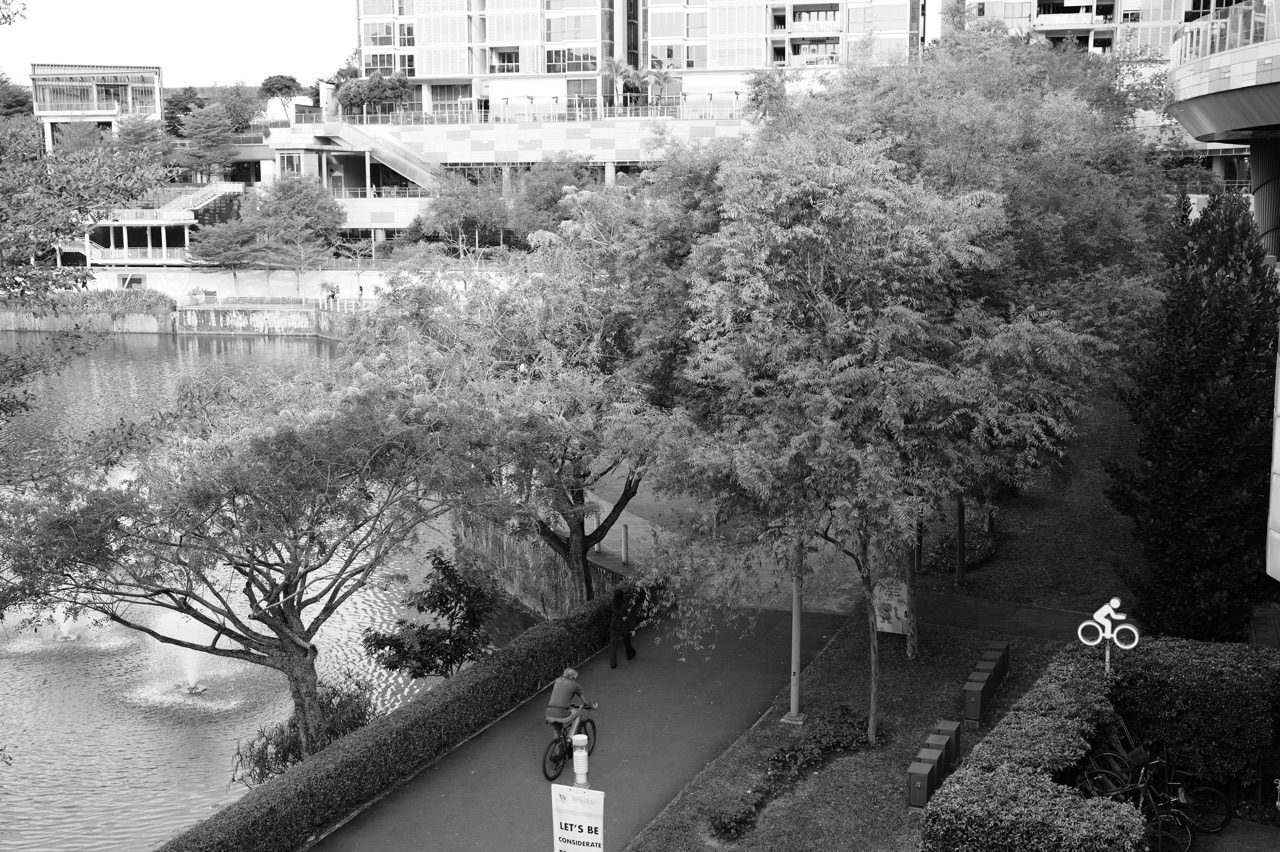
When is it safe to exercise outside in Punggol after haze? Do not rely on one rain shower, a clear-looking skyline or a friend’s run photo. Recheck the latest NEA one-hour PM2.5 band before an immediate workout, the 24-hour PSI forecast for longer plans, and MOH’s current guidance for your health group. If air-quality advice now permits your intended effort, you feel well and any personal medical advice allows it, restart sensibly rather than squeezing all missed runs and cycling sessions into one day. Symptoms, intensity and time outdoors matter as much as the map.
Punggol has beautiful places to return to. Punggol Waterway Park, its park connectors, the Northshore waterfront and Coney Island offer walking, cycling and nature activities when conditions permit. This guide is specifically about the return: a cautious first session, a realistic weekly restart, outdoor exercise for children and older residents, and how to avoid overdoing it after a disrupted haze period. If you need decisions during active haze rather than the recovery period, read the existing Punggol outdoor activities guide or eduKateSG’s broader indoor workout and haze-running reference.

Jump to: An ‘all-clear’ for exercise is a decision, not a colour in the sky · Feeling unwell changes the answer even on a better-air morning · Coney Island needs an access plan as well as suitable air · Cyclists: preserve a shorter and easier first ride · Children, school PE and CCA: the return belongs to the programme · A sample return-to-movement week, not a medical prescription · A worked example: why shorter distance is not the same as exposure certainty · The best part of the first good-air day is enjoying it
An ‘all-clear’ for exercise is a decision, not a colour in the sky
The sky over Punggol Waterway may look bright immediately after rain, and the water may sparkle through a camera lens. Neither proves the regional PM2.5 concentration is low or that tomorrow’s outdoor plan will stay suitable. Smoke transport depends on weather, regional fires and changing conditions. A photograph captures light; NEA’s monitoring describes pollutant measurements with units, times and averaging periods. Good exercise decisions should not confuse the two.
A useful sequence is to check the one-hour PM2.5 before the planned activity, interpret the current MOH band for your health category and consider how long and hard the session will be. Check the 24-hour PSI forecast when organising a longer outing or tomorrow’s club ride. A brief improvement is a reason to reassess, not permission to disregard future readings.
Know the current MOH effort guidance before returning
Singapore’s one-hour PM2.5 bands are Normal 0–55 µg/m³, Elevated 56–150, High 151–250 and Very High 251 or above. At Elevated, healthy persons should reduce strenuous outdoor activity for the next hour and vulnerable persons avoid strenuous outdoor activity. At High, healthy persons should avoid strenuous outdoor activity and vulnerable persons avoid all outdoor activity for that hour. At Very High, healthy persons should minimise all outdoor activity and vulnerable persons avoid outdoor activity.
It is also important not to exaggerate the advice. MOH notes that for healthy people, a short haze episode generally does not cause major health problems beyond irritation, and activity may often continue at reduced intensity or duration outside the worst conditions. A correct return decision is therefore neither ‘all exercise is forbidden’ nor ‘full-speed intervals are fine if I can see blue sky’. Health status and individual symptoms still make a difference.
One hour now, 24 hours later: plan with both clocks
Your evening running friend sends a screenshot showing a lower one-hour PM2.5 band. That may help with an activity occurring around the measured period, but it is not tomorrow morning’s forecast. If a group is deciding whether to travel to Coney Island on Sunday, the next-day 24-hour PSI forecast matters as well. Before setting off, recheck the newest reading. The two forms of information should work together, not compete for a single number.
This makes exercise planning less frustrating. You can pencil in a park-connector route based on the forecast, keep a shorter alternate if conditions worsen and confirm the actual effort on the day. Parents and coaches should communicate the decision point in advance. If someone in the group has chronic heart or lung disease, the group’s decision may need to be more cautious than the plan suited to healthy adults.
Feeling unwell changes the answer even on a better-air morning
Air-quality conditions might improve while a person still has a cough, throat irritation or worsened asthma symptoms. A lower regional PM2.5 reading does not diagnose or clear that person for exercise. If you are unusually breathless, wheezing, experiencing chest tightness or otherwise unwell, avoid pushing through a workout and seek medical advice appropriate to the symptoms. People with chronic heart or lung conditions should follow their established treatment plans and individual clinical guidance.
For chest pain, severe breathing difficulty, collapse or other emergency symptoms, obtain urgent medical assistance; Singapore’s emergency ambulance number is 995. A friend who had no symptoms during haze is not a medically meaningful comparison. Recovery starts with the body you have today, not the performance you intended to achieve last week.
You have not lost a season of fitness after a few cancelled sessions
Runners often respond to interrupted weeks with an unhelpful urge to catch up. Two missed runs and one postponed interval session feel like a debt. They are not. Long-term fitness is built through months of sensible training, including recovery. When conditions again permit the intended activity and you feel well, return at a comfortable level and avoid compressing all missed intensity into the next forty-eight hours.
A person who is new to running or recovering from illness needs different advice from a trained athlete. There is no universal number of kilometres that every body should complete on the first day back. A short conversational-pace session and checking how you feel afterwards are generally more sensible for a healthy established exerciser than an all-out test. If health symptoms persist, seek professional guidance before restarting.
Make Punggol Waterway Park your first easy return, not a racecourse
The Waterway’s bridges, landscaped paths and green views are ideal for noticing the town at a calmer pace. NParks identifies an 8.4-kilometre Punggol Waterway Park Connector, but the full route is an option, not an obligation. Your first suitable-air outing after a haze interruption could be an easy shorter out-and-back from a familiar entrance, with a plan to turn around early if you feel uncomfortable.
If returning with young children, build in rest and a clear pickup or public transport option. A route that stays close to an easy exit can be more rewarding than one that demands completion simply because it is on a watch app. Even when the air improves, consider heat, humidity, traffic around crossings, hydration and general fitness. Punggol Waterway Park’s four-zone guide offers destination orientation; this article focuses on the exercise decision.
Coney Island needs an access plan as well as suitable air
Coney Island Park is a wonderful place for nature and cycling when conditions are suitable, but it is not open around the clock. NParks lists opening hours of 7am to 7pm and entrances near Punggol Point and Lorong Halus Wetland. The park has no carpark on the island itself. A family should consider the travel time, outdoor route, opening hours, heat and current official air-quality guidance before choosing a return visit.
Avoid assuming that the park is safer from smoke simply because there are trees or sea breezes. Also avoid an ambitious late-afternoon start that could leave people rushing to exit by closing time. If someone’s health or the haze forecast makes the longer journey unsuitable, choose a nearby short walk or postpone. Nature remains there for a later date; it does not demand a visit on the first afternoon the sky looks brighter.
Punggol Point access and upgrading: check the right destination
People often say ‘Punggol Point’ as though it were one single unchanging site. Punggol Point Park, the jetty, nearby promenade, park-connector links and surrounding commercial areas can have different access arrangements. The local Punggol Point Park upgrading guide records significant park and jetty restrictions during 2026–2027. Do not use an old fitness route without checking current NParks and site notices.
For a restarted cycling or walking plan, choose a route that you can actually enter and exit, and consider the likelihood of closures and detours. A beautiful map from a previous year is not a substitute for the latest access instructions. Extra wandering because the planned route is blocked can increase time outdoors and strain, making it especially unhelpful during a fragile return to regular exercise.
Runners: a sensible first run back
If you are a healthy regular runner, feel well and the official guidance permits outdoor exertion, a return might begin with a comfortable short run or walk-run rather than the fastest interval session you had planned before the haze. Keep the effort conversational, identify an easy turnaround and make room for stopping if symptoms appear. The following day, check your recovery rather than immediately booking another intense workout.
A practical training note needs only three lines: current official band and forecast, what you actually did, and how you felt. Do not try to compute the exact amount of pollution inhaled from pace and distance alone; breathing rates, particle concentrations and other factors complicate exposure. The local Punggol running routes guide offers ordinary route choices; consult it after you decide that an outdoor session is suitable.
Cyclists: preserve a shorter and easier first ride
Cycling is enjoyable because the network offers many possible turns. It also makes it easy to travel farther than intended and accumulate outdoor time. On the first suitable-air day, pick a short known segment and resist the temptation to complete a massive loop to ‘make up’ missed kilometres. Check helmet, brakes, lights and tyres before leaving, and arrange a return plan. Keep your speed and effort comfortable if rebuilding after inactivity.
A bicycle outing should not become a workaround for an official recommendation to avoid strenuous outdoor activity. Fast cycling and prolonged riding can be highly demanding. Riders with symptoms or existing medical conditions should follow clinical advice. Children need a route and supervision suited to their age. The successful ride is the one that ends comfortably, not the one with the largest screenshot on a fitness app.
Walkers: when to leave the indoor step-count routine
During haze, people may replace park walks with safe indoor walking or normal household movement. Returning outdoors can be a pleasant change: a short stroll from a familiar block, a few minutes by the water and a clear return home. If official readings and personal health support it, the outing need not have a step-count target at all. Enjoy the sunlight, architecture and conversations without converting every walk into a performance task.
Older adults or people with mobility limitations may need a supported route, accessible seating and a plan for rest. Even good air does not eliminate heat, fatigue or fall risks. A person who feels dizzy or unusually breathless should not be encouraged to finish a circuit. Protecting independence over years is more important than matching a neighbour’s daily steps.
Gym and strength routines after several days indoors
Some residents use haze as an opportunity for indoor strength or mobility practice. When the air improves, there is no need to discard those gains. A balanced week might retain one or two comfortable strength sessions while reintroducing outdoor walking or running. For a healthy person with established exercise experience, this can maintain variety without overloading the first return days. New exercisers and those with medical conditions should start according to their own capacity and professional advice.
An indoor gym is not automatically free of haze particles simply because it is air-conditioned; the facility’s filtration and airflow matter. SportSG and private venues also have their own operating arrangements. Check booking availability, schedules and current guidance. A sensible training programme works across indoor and outdoor environments rather than depending on one location being available every day.
Children, school PE and CCA: the return belongs to the programme
When the official conditions improve, schools may restore PE and CCA activities according to their own operational instructions. Parents should not assume that a better screenshot automatically restores a cancelled match or excursion. Organisers still need to confirm staff, equipment, venues, safety and the participants’ wellbeing. Some students may have medical reasons for a slower return, especially after respiratory symptoms or an interruption to normal care.
For a child, the best message is simple: ‘When the school says the activity is going ahead and you’re feeling well, enjoy it. Tell the teacher if breathing is uncomfortable.’ A child does not need to make up every missed PE period with extra evening exercise. The Punggol haze school-day and Parents Gateway guide explains official communications and who makes the decisions.
Older residents and people with chronic conditions: individual advice comes first
For an older adult, a short park walk may be a meaningful part of daily independence. But age, existing heart or lung disease, medication and recent symptoms can alter the risk. A good-air day is not automatically an all-clear for a person who is still symptomatic. Continue clinician-directed rehabilitation or home exercise plans and seek medical advice when necessary before taking on more demanding outdoor activity.
If a family member accompanies an older walker, let the person set a comfortable pace, provide a practical way to return and avoid hot or crowded routes. A park bench and quiet conversation can be a fine destination. This approach is not about discouraging activity; it is about making movement sustainable and inclusive. A town becomes healthier when its outdoor spaces can be enjoyed by people with different capacities.
Rain does not issue an all-clear certificate
An afternoon downpour can temporarily change visibility and local air conditions, and may reduce some airborne pollution. However, the effect is not a fixed promise for the next several hours. Regional smoke transport, winds and continuing fires can alter concentrations again. That is why ‘It rained at noon, so evening intervals are safe’ is not a reliable rule. Check the newest NEA reading and advisory before the actual activity.
The reverse also matters. A grey cloud does not automatically prove dangerous particle concentrations, and a bright sky does not prove they are low. Photographs and personal impressions are useful observations, but they answer a different question from a measured pollutant band. This is an excellent real-world lesson for students and adults: reliable decisions require the appropriate form of evidence.
A sample return-to-movement week, not a medical prescription
Imagine a healthy adult who ordinarily walks most days, runs twice and cycles at the weekend. After several days when official haze guidance led to reduced outdoor exercise, the first suitable-air day could feature a comfortable shorter walk. A later day might reintroduce an easy short run, followed by rest or light indoor mobility. If air conditions remain suitable and the person feels well, a modest ride could return at the weekend. There is no need to schedule all missed workouts into this same week.
This is an illustrative example for a healthy accustomed exerciser, not an individual medical clearance. If the forecast worsens again, substitute an appropriate indoor option or rest. If symptoms or illness have interrupted exercise, the progression may need to be slower and clinician-directed. The emphasis is on making movement a long-term pleasure rather than a short-term repayment of missed sessions.
Sporting events and group runs: know who decides
A community run, school CCA, coached session or competitive event has obligations that an independent walker does not. The organiser may consider SportSG guidance, 24-hour PSI forecasts, one-hour PM2.5 readings, participant health, facility operations and the safety of staff. A participant’s personal opinion that the air ‘looks fine’ cannot override a cancellation or operational notice. Check the official organiser channel before travelling.
If a group changes the session, provide a concrete alternative rather than leaving members waiting at an outdoor meeting point. Make it easy for someone with respiratory symptoms to opt out without embarrassment. The atmosphere can change during an event, so the organiser needs a plan to respond rather than one decision made days earlier. Good sport is also good organisation.
Dog walks and family outings should not confuse human and animal guidance
As outdoor plans restart, pets may be keen to return to their usual routes. Human haze guidance does not precisely describe a dog’s individual risk; animals vary, and veterinary advice is needed for unusual breathing symptoms. Rather than adding a very long dog run immediately, a familiar short walk and close observation may be more practical. Avoid fitting animals with improvised human respirators.
If an animal has been coughing, wheezing or showing distress, contact a veterinarian. A pet walker also has to consider their own health and official readings. The local Punggol haze pets and veterinary guide handles this separate topic in depth. The point here is simply that restarting the whole household’s outdoor life does not have to happen in one afternoon.
A worked example: why shorter distance is not the same as exposure certainty
A Punggol runner plans a six-kilometre route at six minutes per kilometre. The arithmetic gives thirty-six minutes of running. An eight-kilometre route at the same pace would take forty-eight minutes. Those calculations are useful for understanding how long the route might occupy, but they cannot directly calculate inhaled PM2.5 dose. The regional concentration may change, the person’s breathing rate matters, and the route’s actual exposure cannot be inferred from pace alone.
Use the mathematics to compare time commitments, not to claim a precise health outcome. A shorter easy return with an option to stop makes good planning sense for many healthy exercisers once official advice permits activity. A student can then ask a richer science question: what data would be needed to estimate inhalation exposure? eduKate Punggol’s air-pollution chemistry guide explores the relevant environmental science without pretending a simple clock is a medical device.
Common myths when Punggol’s air finally feels better
Myth one: ‘Blue sky means high-intensity exercise is safe.’ Check the measured band and advisory. Myth two: ‘A single shower resets the entire weekend.’ Conditions can change again. Myth three: ‘An N95 makes an unsuitable hard workout suitable.’ A mask does not replace exposure reduction and appropriate effort. Myth four: ‘Every missed session must be repaid.’ Recovery is an ordinary component of training. Myth five: ‘The whole Waterway connector is the minimum distance.’ A short route is still a real outing.
A sixth myth is that everyone’s return should look the same. A healthy adult, child with asthma, older walker and competitive cyclist have different capacities and needs. A seventh is assuming every park gate is open because the air is improving; access and upgrading restrictions are separate. Correct the myths with simple checks, realistic routes and permission to choose a modest day.
Frequently asked questions: restarting Punggol outdoor exercise
Can I run after the rain? Recheck official PM2.5 and MOH advice rather than treating rainfall as an all-clear. What if the current band is Normal? Normal activities are generally permitted by the one-hour guide, subject to personal health and other conditions. Should I resume a full eight-kilometre run immediately? Not automatically; consider fitness, symptoms, actual readings and a sensible shorter option. What if I have asthma? Follow prescribed care and obtain individual medical advice if symptoms persist or worsen.
Can I visit Coney Island in the evening? NParks lists opening hours 7am–7pm; allow adequate time to leave. Can I cycle rather than run when haze is Elevated? Cycling can still be strenuous, so change of sport is not a loophole. When does a school CCA restart? Follow the school organiser’s actual instruction. Do I need to catch up on missed training? A sustainable plan allows rest and gradual progress.
The best part of the first good-air day is enjoying it
When haze interrupts outdoor habits, a town can feel smaller. Punggol’s waterway, paths, bridges and park connections have not lost their appeal; they have simply been waiting for a more suitable moment. A comfortable short return can feel better than an exhausted attempt to complete a whole month’s ambitions at once.
Read the current official guidance, listen to your body and respect individual medical advice. Pick a route with an easy exit, keep the pace sensible and let the joy of returning be enough. The Gold Standard of a good Punggol exercise day is not that you did everything. It is that you can come back to enjoy the neighbourhood again.
| If you are planning… | Check this first | Reasonable next decision |
|---|---|---|
| A short outdoor walk now | Current one-hour PM2.5; your health | Go only if guidance suits the activity; keep an easy return |
| Tomorrow’s long run or club ride | 24-hour PSI forecast and SportSG/organiser notices | Pencil in a plan, then recheck before starting |
| A child’s PE or CCA | Latest school notice, health needs | Follow organiser; do not force make-up intensity |
| Coney Island outing | Air quality plus NParks hours (7am–7pm) | Allow time for travel, park access and return |
| A person recovering from breathing symptoms | Personal medical instructions and symptoms | Seek assessment where needed; postpone exertion |
Related guides in the Punggol haze knowledge hub
For today’s readings use the Punggol PM2.5 and PSI check plus NEA’s live haze service. This page addresses a narrow question, while the HDB indoor-air guide, the health and symptoms guide, the Waterway and Coney Island outdoor guide and the smoke, wind and regional haze explainer address different ones.
- Punggol 48-hour family haze preparedness
- School communications, PE, CCA and Parent Gateway
- Punggol MRT/LRT commuting and outdoor work
- Indoor things to do in Punggol during haze
- Returning to outdoor exercise when air quality improves
- Earlier Punggol family haze routines
- Punggol running routes and distances
- Punggol Waterway Park local route guide
- eduKateSG haze exercise reference
- Punggol school PE and CCA communications
Official sources and review note
Information reviewed on 17 October 2026. These are educational and lifestyle ideas, not an hourly live haze report, a guarantee of venue admission or medical clearance. Check the source’s latest notices, opening arrangements and official health instructions before an outing or workout. Indoor venues differ in ventilation and filtration; ‘indoors’ is not a promise of zero PM2.5.


