
Yes. A child entering mainstream Secondary 1 in 2027 after the November 2026 PSLE will generally work towards the Singapore-Cambridge Secondary Education Certificate (SEC), not the old separate GCE O-Level, N(A)-Level or N(T)-Level certificates. SEAB confirms that SEC examinations begin from 2027 as part of Full Subject-Based Banding, with separate papers at subject levels G1, G2 and G3. A pupil beginning Secondary 1 in January 2027 on the usual four-year secondary journey would normally reach the end of Secondary 4 in 2030, subject to the school’s progression arrangements and any subsequent policy changes. The SEC records the subjects and levels actually examined, rather than placing the child into one permanent old stream.
For Punggol parents collecting 2026 PSLE results on Tuesday, 24 November at 11.00am, the immediate choice is still the right Posting Group and secondary school for 2027 entry, not an exact SEC examination score forecast four years in advance. Within Punggol, the mainstream choices are Edgefield Secondary, Greendale Secondary, Punggol Secondary and Yusof Ishak Secondary; none of these should be misrepresented as an Integrated Programme school. This guide explains PG1, PG2, PG3 and subject levels, how the new certificate works, what the historical local cut-offs mean, what parents can ask about progression and how to preserve future JC, polytechnic or ITE opportunities without promising outcomes prematurely.
Quick parent summary
• From 2027, the SEC replaces the separate GCE N(T), N(A) and O-Level examinations for applicable cohorts.
• G1, G2 and G3 are subject levels; PG1, PG2 and PG3 are entry Posting Groups.
• The SEC records the subject and level actually sat, so a pupil may have different subject levels.
• A 2027 Secondary 1 pupil on a normal four-year track would usually sit terminal Secondary 4 exams around 2030, not in 2027.
• Admission to JC, polytechnic, ITE or other routes depends on later subject eligibility and prevailing rules—not just the 2026 PSLE Score.
• Compare each Punggol school’s correct historical COP column and actual subjects, support and daily travel.
• Submit the six S1 preferences by 30 November 2026 at 4.30pm.
Why parents still use O-Level and N-Level language
For many years Singapore families knew a secondary system described through Express, Normal (Academic) and Normal (Technical), followed by separate O-Level and N-Level examinations. Parents, relatives and even older educational brochures may continue using those names. They are familiar, but they are not a complete description of the learning arrangements for the 2027 Secondary 1 cohort.
Under Full Subject-Based Banding (Full SBB), mainstream secondary pupils may learn in mixed form classes and study individual subjects at levels G1, G2 or G3. Entry Posting Groups guide the usual starting subject levels, while eligible pupils may take particular subjects at more or less demanding levels based on applicable criteria and subsequent progress. A pupil can have a strong subject without every subject following the same level; likewise a pupil may need more support in one area without being described as a permanently weaker student.
The SEC reflects that structure at the national-examination stage. Instead of treating a child as belonging to one named stream that defines all subject papers, the certificate indicates what the child offered and at which respective level. Parents should ask about the actual subject-level pathway rather than promising an old certificate or discouraging a child based on an outdated label.
The difference between the Posting Group and a subject’s G level
| Term | Used for | What a parent should understand |
|---|---|---|
| PG1 | Ordinary Secondary 1 school entry route | Most subjects generally begin at G1; individual offers may vary |
| PG2 | Ordinary Secondary 1 entry route | Most subjects generally begin at G2; eligible subject-level flexibility may apply |
| PG3 | Ordinary Secondary 1 entry route | Most subjects generally begin at G3 |
| G1 | Level of a specific secondary subject | The student may sit the SEC paper offered at G1 in that subject |
| G2 | Level of a specific secondary subject | The student may sit the SEC paper offered at G2 |
| G3 | Level of a specific secondary subject | The student may sit the SEC paper offered at G3 |
| SEC | National certificate under Full SBB | Lists the examined subjects and their respective levels |
A child entering through PG2 does not automatically sit an entire set of G2 papers forever. For example, an eligible pupil might study Mathematics at G3 while another subject is taken at G2, subject to entry criteria, school provision and later decisions. Conversely, one advanced subject does not automatically move the whole pupil to PG3, because the Posting Group is about entry and the G level is about a subject.
There are still rules and demands. Some subject-level options depend on the PSLE Achievement Level for that specific subject, later school results, timetabling and the school’s offerings. A family should not promise G3 Science or Mathematics simply because a student likes it, nor assume a child who starts at G1 cannot make academic progress.
What will the SEC actually look like?
SEAB explains that the SEC is jointly examined and awarded by SEAB, MOE and Cambridge International Education. There will be subject papers at G1, G2 and G3 levels. The certificate will reflect the subjects and subject levels the student sat for. SEAB also states that the overall standards of the examinations do not change merely because the existing GCE qualifications are combined under a different certificate name.
The following published grading structures illustrate why parents should not combine every SEC grade into one old ‘O-Level points’ expression without checking the relevant progression rules. Different subject levels have different grade labels.
| SEC subject level | Published grading labels | Historical examination standard alignment |
|---|---|---|
| G1 | A, B, C, D, E | Previously N(T)-Level aligned |
| G2 | 1, 2, 3, 4, 5, 6 | Previously N(A)-Level aligned |
| G3 | A1, A2, B3, B4, C5, C6, D7, E8, 9 | Previously O-Level aligned |
These grade scales come from SEAB’s official SEC explanation, updated May 2026. They do not mean a G1 subject grade and a G3 subject grade can simply be added as if they were on the same scale. The official post-secondary admissions exercises use specified subject eligibility and, where applicable, grade-mapping procedures. By the time a 2027 Secondary 1 pupil graduates, parents must follow the then-current rules rather than assume a 2026 internet table will still be complete.
Does the child entering Secondary 1 in 2027 take the SEC in 2027?
No, not ordinarily. 2027 is the year the SEC examination begins nationally for relevant graduating candidates. A pupil joining Secondary 1 in that same year is at the start of secondary education, not at the national school-leaving examination. On a usual four-year programme, Secondary 1 is 2027, Secondary 2 is 2028, Secondary 3 is 2029 and Secondary 4 is 2030.
That is a planning illustration rather than a promise that every student must graduate in exactly four years. Some pupils may have a different progression route or later examination arrangements, and official examination rules can evolve. What matters for parents today is to choose an educational setting in which the child can build foundations and obtain appropriate subject-level advice, not to plan a precise 2030 grade average from the 2026 PSLE result.
How the 2026 PSLE Score influences the starting group
| 2026 PSLE Score | Ordinary 2027 entry route | Common initial subject level |
|---|---|---|
| 4–20 | PG3 | G3 for most subjects |
| 21–22 | PG2 or PG3 option band | G2 or G3 starting path; check personal form |
| 23–24 | PG2 | G2 for most subjects |
| 25 | PG1 or PG2 option band | G1 or G2 starting path; check personal form |
| 26–30, meeting the required English and Mathematics grades | PG1 | G1 for most subjects |
| 31–32 or a case without ordinary eligibility | Do not assume an ordinary PG route | Seek advice from the primary school |
The options need to come from the child’s actual result documents. A numerically smaller PSLE total indicates stronger aggregate performance. For scores in an option band, parents compare two different school-entry situations before selecting one Posting Group. The selected ordinary group applies across the six school choices; a child should not mix a PG2 cut-off at one school and a PG3 cut-off at another on the same form.
The start of the timetable is not the entire secondary journey. For a pupil with Mathematics stronger than English, the right subject-level questions differ from those for a pupil with stronger writing than numerical fluency. Parents should look at individual PSLE ALs, secondary subject support and later progress. A Posting Group can guide planning but should not be treated as a permanent educational identity.
What parents should compare at the four Punggol schools
For the completed 2026 Secondary 1 intake following PSLE 2025, the four Punggol mainstream schools had the following historical cut-off points. These figures are not the yet-unknown final cut-offs for 2027 Secondary 1 admission.
| Punggol secondary school | Historical PG3 | Historical PG2 | Historical PG1 |
|---|---|---|---|
| Edgefield Secondary | 14 | 23 | 27 |
| Greendale Secondary | 16 | 23 | 27 |
| Punggol Secondary | 19 | 24 | 27 |
| Yusof Ishak Secondary | 15 | 22 | 27 |
At PG3 Score 16, Greendale had an old endpoint of 16, Punggol Secondary had 19, Edgefield 14 and Yusof Ishak 15. This is a previous admissions comparison, not a judgement that one school will provide a better SEC education. At PG2 Score 24, the old local PG2 values were 22–24, so a parent should broaden the school list if necessary. At Score 25, a child may have a PG1/PG2 choice; the two columns yield very different historical outcomes.
The 2026 intake cut-offs reflect the last pupil posted in that group and can change in 2027 with applicants and vacancies. A school with an old COP of 19 does not guarantee a place to a 2026 PSLE pupil with Score 18. Nor does a past more competitive COP prove that every pupil in that school learns more effectively. Use MOE SchoolFinder for current information.
Edgefield Secondary: what to ask about SEC preparation
Edgefield Secondary at 36 Punggol Field, Singapore 828814 highlights enterprise, inventive thinking and character education through sport. A parent can ask how students develop core English and Mathematics skills, how subject-level decisions are reviewed and which opportunities are offered to all pupils. An Applied Learning Programme is not the same as a separate examination stream; it complements the broader learning journey.
Greendale Secondary: design alongside academic foundations
Greendale Secondary at 51 Edgedale Plains, Singapore 828866 highlights Design, Technology and Engineering, along with outdoor adventure. Engineering tasks can use Mathematics, Science, language, collaboration and careful evaluation. Parents should investigate the school’s actual subject combinations and how it supports pupils who enjoy making things but find the symbolic parts of Mathematics difficult.
Punggol Secondary: environmental learning and subject progression
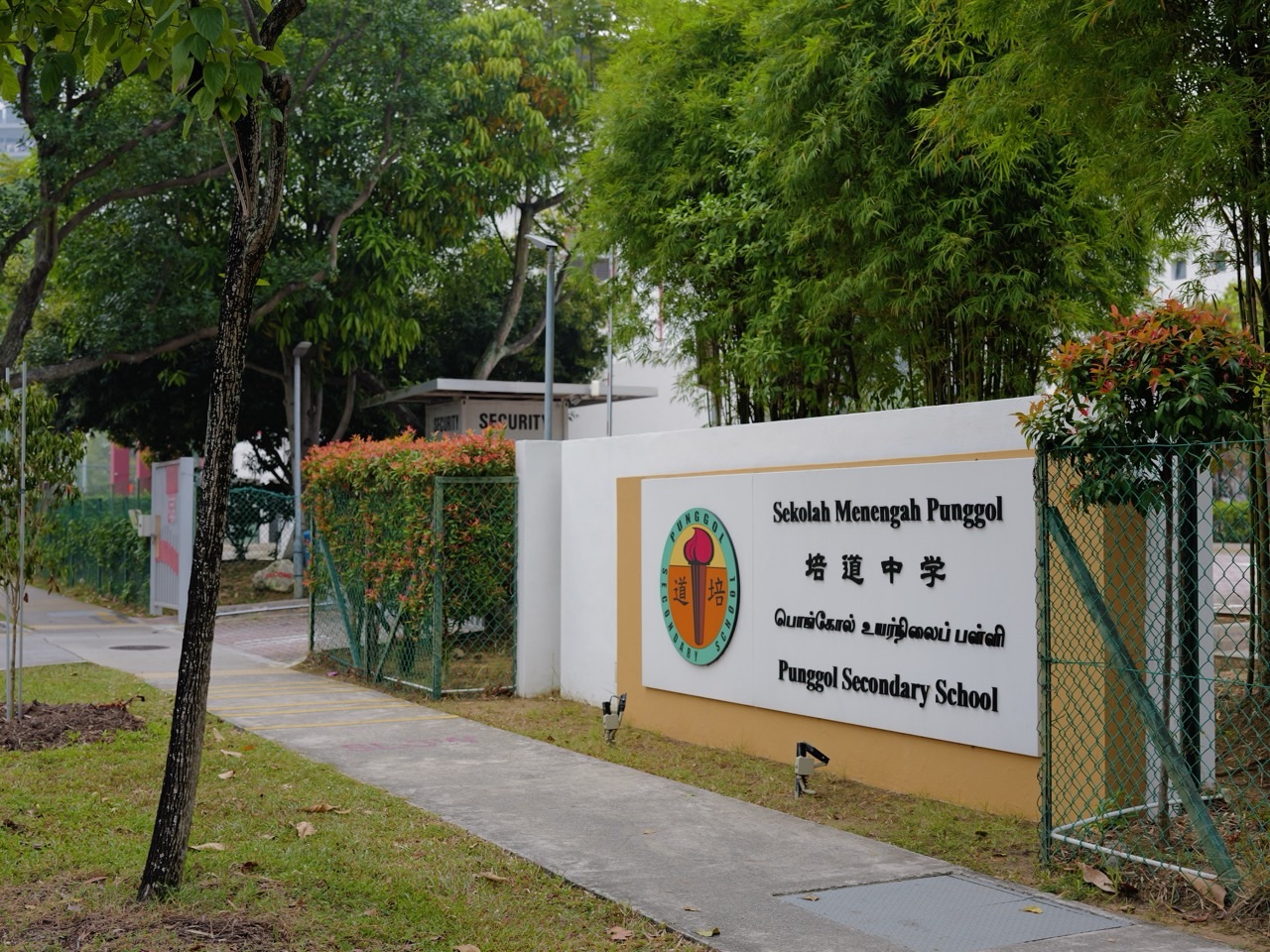
Punggol Secondary at 51 Edgefield Plains, Singapore 828870 highlights sustainability, environmental education and youth leadership. Such activities can help connect the theory of Science, Mathematics and Humanities with the surrounding world. Ask about subject-support systems, individual level changes when appropriate, and how teachers help pupils communicate their reasoning clearly.
Yusof Ishak Secondary: smart-city STEM and a balanced curriculum
Yusof Ishak Secondary at 8 Sumang Walk, Singapore 828676 highlights smart-city STEM and leadership. Parents should ask which learning is part of the ordinary curriculum, which activities require a selected CCA place, and how pupils receive feedback in core subjects. A modern technology theme does not mean an automatic advanced SEC Science offer for every child.
Will a PG1 or PG2 student still have pathways after SEC?
Yes, students can work towards post-secondary education appropriate to their eventual SEC subjects and results. The relevant destinations include ITE, polytechnics, and eligible pre-university pathways, each with their own entry criteria and progression routes. It would be inaccurate to tell a PG1 pupil that every destination is automatically available, just as it would be inaccurate to claim that entry through PG1 fixes the child’s future at age twelve.
MOE has announced changes to post-secondary admissions from 2028, including criteria designed to recognise different subject combinations. Those arrangements may matter during the child’s later schooling, but families must consult the rules in force at the time of application. A future JC requirement is not identical to a future polytechnic or ITE requirement. Eligibility in English, Mathematics and particular subject levels can matter.
Parents can explain this positively without promising a career: build competence, maintain strong attendance, ask about subject choices, learn how to study and understand the progression requirements when they become relevant. A pupil who develops a new talent in Secondary 2 or 3 should be supported to explore it within the school’s actual subject options.
What a good Secondary 1 plan looks like under Full SBB
| Transition area | Parent question | Possible evidence after settling in |
|---|---|---|
| English comprehension | Can the child read and explain a multi-step task? | Clearer written answers and questions asked when confused |
| Mathematics foundations | Are fractions, ratio, integers and first algebra steps stable? | Fewer recurring conceptual errors |
| Science reasoning | Can the child connect observation, evidence and explanation? | Increasingly clear reasoning rather than memorisation alone |
| Subject-level fit | Is the academic pace suitable for each subject? | Specific teacher feedback and a review when warranted |
| Organisation | Can the child track assignments, timetable changes and materials? | Reliable weekly routines |
| CCA and wellbeing | Is there time for friends, sport, rest and family? | Sustainable participation and sleep |
A school can have an excellent programme and still be unsuitable if the child cannot manage the journey or has unaddressed learning needs. A practical approach follows the teaching principles in eduKate’s Clementi Secondary 1 Mathematics reference: identify the misconception, explain the underlying idea, practise with relevant examples and check for genuine independent understanding. Parents should not respond to uncertainty about SEC by automatically adding several tuition classes to the child’s week.
If the child is managing lessons well, let them read, explore and participate. If there is a specific problem in algebra, comprehension or written explanation, seek targeted feedback from teachers and consider additional support only where it solves a genuine need. Appropriate challenge does not have to mean nonstop examination rehearsal.
Seven questions to ask any secondary school
- Which subjects and G levels can this child actually be offered at Secondary 1, given the personal PSLE results?
- How does the school review a subject level when a pupil becomes stronger or finds the pace unsuitable?
- What school subject combinations are available at upper secondary, and when do pupils receive guidance?
- How is the SEC qualification explained to pupils and parents?
- How does the school help a pupil who has different strengths in English, Mathematics and Science?
- Which Applied Learning Programme, Learning for Life Programme and CCA experiences are school-wide and which require selection?
- How does the school communicate guidance on JC, polytechnic, ITE and other progression routes when the pupil reaches the relevant year?
Questions about the SEC should be concrete. Instead of asking ‘Will my child get an O-Level certificate?’, ask what subject-level pathway the school offers and how future national examination entry works. Instead of asking ‘Can my child go to university?’, ask what skills and subject decisions will need to be built through the next four years. A child starting Secondary 1 does not have to settle every later qualification choice today.
What about the Integrated Programme and IB?
The Integrated Programme is a distinct multi-year education pathway available at specified schools. It is not another word for PG3 or a compulsory route for a high PSLE score. The four mainstream secondary schools physically inside Punggol do not offer IP. If a family wants an IP route, it must compare schools outside the town and check each school’s entry track, subject progression and pre-university qualification.
Some IP schools lead to the Singapore-Cambridge GCE A-Levels at pre-university level; others offer an IB Diploma path. These are not interchangeable with ordinary four-year SEC preparation, and schools with both IP and non-IP routes may publish separate cut-offs. A family should not describe every child with PG3 Score 4–8 as automatically admitted to IP or overlook the school-day travel from Punggol.
For an undecided pupil, an accessible mainstream Punggol school with suitable subject-level stretch and strong support can be an excellent choice. A pupil who actively wants a particular IP curriculum and is academically eligible may value that option more. The correct decision is about an actual school’s programme and the child’s readiness, not a universal hierarchy.
The official dates for the 2026 PSLE-to-2027 S1 decision
| Milestone | Announced 2026 timing |
|---|---|
| PSLE results | Tuesday, 24 November at 11.00am |
| S1 Portal opens | Tuesday, 24 November at 11.30am |
| S1 school choice closes | Monday, 30 November at 4.30pm |
| Posting result | Tentatively Friday, 18 December; await final confirmation |
The official dates are set out in the SEAB 17 November 2026 announcement. One parent with valid Singpass can submit through the MOE S1 Portal. The family should include two or three schools with less stringent previous COPs where suitable, rank six actual preferences and save submission confirmation. If help is needed, contact the primary school before closing time.
Frequently asked questions
Will my child take O-Levels in 2030?
On the normal mainstream Full SBB route, pupils will be working under the SEC qualification framework rather than the previous separate O-Level and N-Level certificates. The official examination system already changes from the 2027 graduating cohort. Confirm the current framework as the child progresses.
Is PG3 the same as the old Express stream?
PG3 is the S1 entry route that usually leads to initial G3 subjects, but Full SBB uses mixed form classes and individual subject levels. It is misleading to treat the child as permanently belonging to an old stream with no subject flexibility.
Can a pupil take G3 Mathematics and G2 English?
Individual subject levels can differ when the student meets the relevant criteria and the school’s timetable and offerings support it. Ask about the actual personal grades and rules rather than assuming every combination is automatically available.
Does SEC mean standards are lower?
SEAB explicitly states that combining the certificates does not change the overall standards of the examinations. G1, G2 and G3 papers retain their respective subject-level standards.
Will all children get the same SEC grades?
No. Grading scales differ by subject level. G1 uses A–E, G2 uses 1–6, and G3 uses A1 through 9. The certificate records the subjects and levels actually sat.
If the child enters PG1, can they ever go to a polytechnic?
The student’s eventual progression depends on their subject levels, SEC grades and the post-secondary rules that apply at the time. Do not make a blanket promise or refusal solely from the Primary 6 Posting Group.
Is IP a better version of SEC?
They are different education pathways with different structures and qualifications. Decide by actual school eligibility, readiness, curriculum, support and journey rather than declaring one route universally superior.
Official sources and related eduKate guides
- SEAB: what the SEC is, grading structures and examination standards
- MOE: Full Subject-Based Banding and Posting Groups
- SEAB: confirmed 2026 PSLE and S1 Posting dates
- MOE SchoolFinder: group-specific historical cut-offs and school profiles
- eduKate Punggol: all four local schools and their 2026-entry COPs
- eduKate Punggol: IP, IB and mainstream secondary pathways
- eduKate Punggol: reading PSLE results and the S1 options
Parent conclusion: The 2026 PSLE result tells a family where the child can begin Secondary 1; it does not fix every future examination subject or post-secondary destination. Choose an eligible school where the pupil can study at appropriate levels, build strong English and Mathematics foundations, develop interests and thrive in daily life. The SEC is the future national qualification framework, but the immediate action is a truthful six-school application submitted by 30 November 2026 at 4.30pm.


