
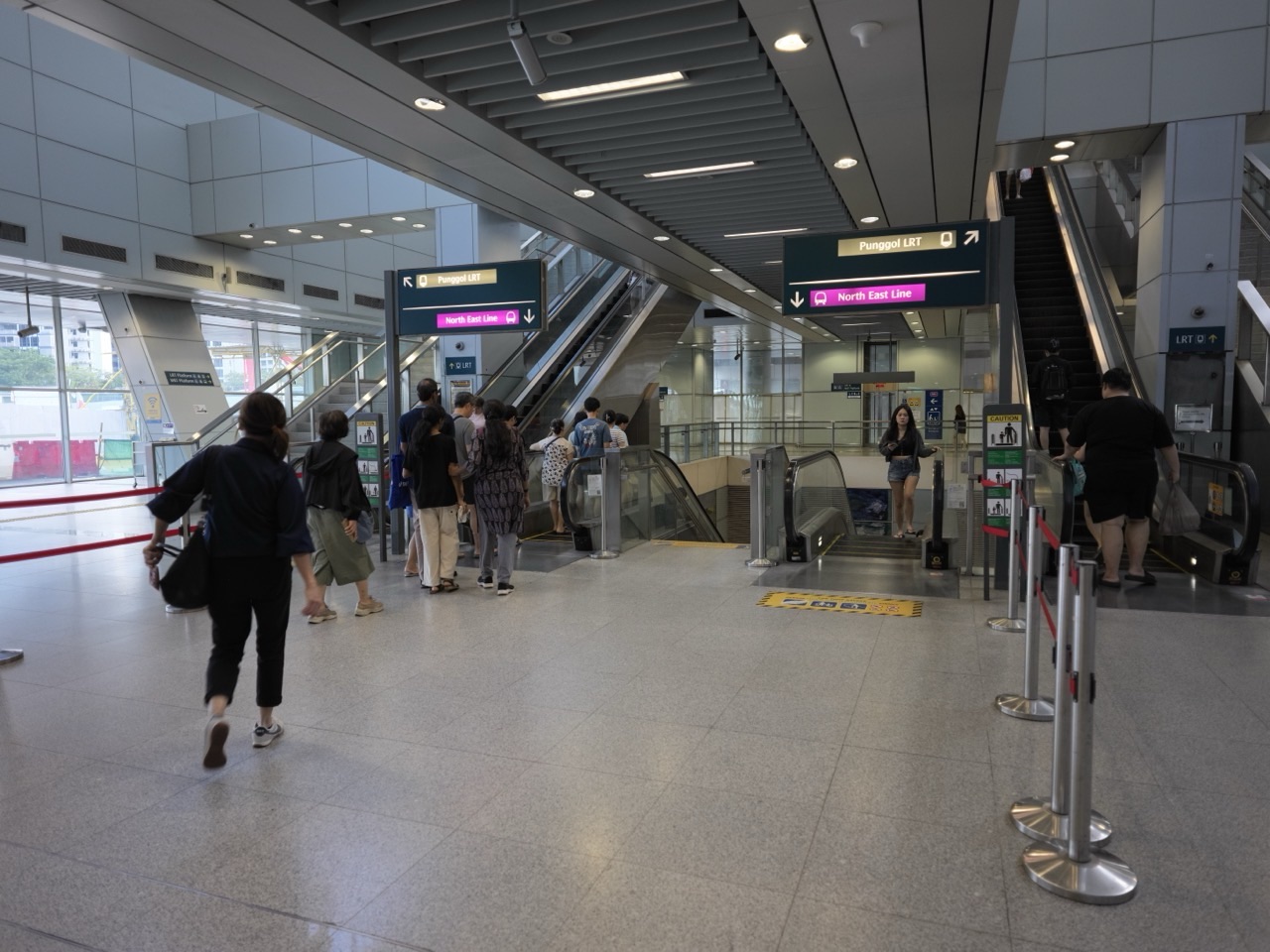
Did you know that none of the four mainstream secondary schools inside Punggol offers the Integrated Programme (IP)? Families who want the six-year IP route should look beyond town to schools such as Catholic High in Bishan, CHIJ St. Nicholas Girls’ School in Ang Mo Kio, Raffles Institution or Raffles Girls’ School, Cedar Girls’ and Victoria School, St. Joseph’s Institution or Anglo-Chinese School (Independent). These schools are not one uniform option: some routes lead to A-Levels, while the IP routes of SJI, ACS(I) and Methodist Girls’ School lead to the IB Diploma.
For a Punggol Primary 6 pupil, the first question is not which school has the most impressive name. It is whether the child is eligible for the particular IP track, enjoys its kind of learning, can manage a realistic weekday journey, and is comfortable with the qualification and campus that follow in Years 5 and 6. G3, G2 and G1 describe individual subjects under Full Subject-Based Banding; IP is a separate programme, and IB is a final diploma pathway, not a subject level. Ordinary Secondary 1 posting, DSA-Sec and specialised-school admissions each have distinct rules.
- No Punggol mainstream secondary school is an IP school; a Punggol IP shortlist requires out-of-town commuting.
- Catholic High, CHIJ St. Nicholas and Singapore Chinese Girls’ School lead from Joint IP to Eunoia JC and A-Levels.
- Raffles Girls’ School and Raffles Institution lead to RI Years 5–6 and A-Levels; Cedar Girls’ and Victoria School lead to Victoria JC.
- SJI has a boys-only Year 1 IP leading to an IB Diploma; ACS(I) and Methodist Girls’ School also have IB-leading IP routes.
- IP is not necessarily IB. Check the final school, qualification and campus, not just the first four years.
- Compare admission eligibility and a real school-day journey; do not invent cut-offs for a cohort not yet posted.
- A conventional SEC route at Punggol, Sengkang or Hougang remains a valid and flexible pathway to JC, polytechnic or ITE.
First make three separate boxes: Full SBB, IP and IB
A Punggol family may hear ‘PG3’, ‘G3’, ‘IP’ and ‘IB’ in the same parent conversation and understandably wonder whether they are competing labels. They are not. The Posting Group is used in mainstream Secondary 1 admission; G1, G2 and G3 identify the demand level of individual subjects. Under Full Subject-Based Banding, a student may take different subjects at different levels when the eligibility criteria and school arrangements allow.
The Integrated Programme is a school-based six-year route for students who are prepared for a more continuous pre-university curriculum. The usual IP structure enables students to progress through Years 1–4 without taking the national Secondary 4 SEC as the ordinary checkpoint, before an A-Level or IB Diploma endpoint. Admission is track-specific, sometimes within a school that also offers a separate SEC route.
The IB Diploma Programme is a two-year pre-university qualification. A school can offer an IB-leading IP route from Year 1, and an eligible student from a different secondary route may later apply for an IB programme through the institution’s separately published admissions process. It would therefore be inaccurate to treat the word ‘IB’ as if it referred to a Punggol Secondary 1 subject band.
Before visiting any campus, write the three boxes on one page. Put an intended school and its programme under the correct box. That simple distinction prevents parents from comparing an IP cut-off to an ordinary PG2 cut-off or treating an IB diploma offer as a promise for every student admitted to a school.
- Full SBB: Posting Group for admission and individual G1/G2/G3 subject levels.
- IP: a continuous six-year route with defined track, destination and academic expectations.
- IB Diploma: a pre-university qualification; not every IP route ends in IB.
- For schools with more than one track, check the specific track and not just the school name.
Why the Year 5 and Year 6 destination matters at age twelve
Choosing an IP school in Secondary 1 can also be choosing the future school community and examination system for the last two years before university. A parent may be comparing two secondary campuses that appear similar on a map but lead to different pre-university institutions. That is too important to leave hidden in the fine print.
A student in the Catholic High, CHIJ St. Nicholas or Singapore Chinese Girls’ School Joint IP normally continues to Eunoia Junior College after Year 4. A pupil from Cedar Girls’ or Victoria School’s IP continues to Victoria Junior College. Raffles Girls’ School IP pupils continue to Raffles Institution for Years 5–6. A Methodist Girls’ School IP student continues to Anglo-Chinese School (Independent) for the IB Diploma years.
These transitions bring new classmates, campus journeys, subject combinations and academic expectations. Even when the future is six years away, families should know the intended endpoint. Ask how Year 4 prepares students for Year 5, what subject choices may be available then, and whether changing interests are accommodated.
Do not assume the final destination and examination automatically suit a pupil just because the school’s Year 1 environment sounds appealing. A child who thrives with inquiry may value IP, while another equally capable student may prefer to complete the SEC and make a fresh pre-university decision at sixteen.
Bishan and Ang Mo Kio: Catholic High School and CHIJ St. Nicholas Girls’ School
Catholic High School is a boys’ school with a dual-track secondary curriculum: a Joint Integrated Programme and an SEC programme. The school’s official pages distinguish the IP route to Eunoia JC from the SEC route, whose students sit SEC examinations and apply to post-secondary institutions according to their results. A parent must therefore verify which track the child is actually considering.
CHIJ St. Nicholas Girls’ School is a girls’ school and a Joint Integrated Programme partner. It has its own school community, ethos, languages and daily routines; a girl’s comfort with that setting should be part of the conversation. Neither a close bus route nor a competitive PSLE result can replace eligibility for the correct programme.
Both schools sit in the broader north-central corridor rather than inside Punggol. Some families may reach them by using the North East Line and transferring, while others find a more practical bus or rail combination from their own block. There is no defensible single commute time for all Punggol children. Test the journey at the school’s required reporting time and again after activities.
The Joint IP has signature elements in academic enrichment, independent pursuits and wider readiness. Ask the school how those experiences reach an average pupil, rather than assuming every student will participate in every advanced programme. Academic fit, school culture, gender eligibility and the six-year A-Level destination all matter.
- Official Joint IP details: Catholic High dual-track overview.
- Girls’ school Joint IP: CHIJ St. Nicholas Joint IP.
- Future partner: Eunoia Junior College Joint IP.
The third Eunoia partner: Singapore Chinese Girls’ School
Singapore Chinese Girls’ School is also a Joint IP partner. Its official programme materials confirm that the pathway links SCGS, Catholic High, CHIJ St. Nicholas and Eunoia JC. The partnership means families can compare three distinct secondary schools whose IP pupils ultimately share a common pre-university destination.
SCGS is a girls’ school farther from Punggol than the town’s own four local mainstream schools. Parents should not describe it as a ‘near Punggol school’ without testing the actual journey. A family might value its culture or specific programme enough to accept that journey, but the decision needs a deliberate weekly timetable.
One question worth asking is how the child’s life might change across the transition to Eunoia. It is tempting to plan only for the first school uniform, but academic subject choices and school community will change. Future transport should be acknowledged without pretending that today’s services will remain identical for six years.
A child who is genuinely excited by a school’s approach is likely to engage more meaningfully than one who thinks the family selected it only because the PSLE score was ‘good enough’. Listening to the child is not the same as surrendering every adult responsibility; it is a necessary part of testing fit.
Read the school’s current IP admissions entry separately from any SEC track. Where a school lists multiple tracks or affiliations, use the exact score range for the track and year.
- School programme owner: SCGS Joint IP overview.
- Parent check: school identity, language environment, track eligibility, transport and Year 5 destination.
Raffles Institution and Raffles Girls’ School: the Bishan/Braddell direction
Raffles Institution’s secondary programme admits boys and continues into its Years 5–6 pre-university stage. Raffles Girls’ School admits girls at the lower-secondary stage, with its IP route continuing into Raffles Institution’s Years 5–6 programme. The school names are related, but the pupil’s Year 1 campus, school experience and entry conditions are not interchangeable.
These programmes emphasise a sustained academic journey with space for student research, enrichment, independent learning and character development. They can fit a pupil who already handles complex tasks with curiosity, has strong foundations and is prepared to continue learning beyond immediate examination preparation. They can also be demanding. Parents should investigate the actual workload and mentoring systems rather than relying on the word ‘rigorous’.
For a Punggol family, the journey toward Bishan or Braddell may involve a rail connection and school-gate walking. Consider the entire morning and the return after CCAs. A child who spends too many hours travelling may lose the time needed for reading, rest or friendship, regardless of academic aptitude.
A strong PSLE result does not by itself mean the family must prefer the Raffles route to a closer school. Discuss the child’s motivation, ability to recover from difficulty, interests outside examinations and willingness to participate in that community. When a child is reluctant, find out why before deciding the hesitation is simply a lack of ambition.
Both the Raffles entry criteria and any DSA arrangements are governed by their current admissions pages. Do not use a historical IP cut-off as a guarantee or compare it with a neighbourhood school PG3 endpoint as if they represented the same programme.
Cedar Girls’ and Victoria School: east-side IP routes to Victoria JC
Cedar Girls’ Secondary School and Victoria School are partners in the Victoria–Cedar Alliance IP, which continues to Victoria Junior College for Years 5 and 6 before the A-Levels. Cedar is a girls’ school and Victoria School is a boys’ school. Their school cultures, secondary campuses and personal-fit questions deserve separate treatment even though the later JC partner is shared.
A Punggol family may prefer investigating the eastern corridors before exploring much farther western schools. That can be sensible, but a school in the east is not automatically quick to reach. Rail transfers, bus options, walks and the campus reporting time will determine the actual journey from the child’s home.
Parents should ask how academic enrichment, humanities, Sciences, Mathematics, project work and co-curricular life develop from Years 1–4. Where students proceed to VJC, ask what transition support is provided. The objective is a six-year learning journey, not a two-stage publicity brochure.
If a pupil is more interested in a full range of ordinary subject-level choices with a Secondary 4 checkpoint, compare the nearby mainstream schools as well. The IP’s continuity is a strength for some learners, but the earlier flexibility to revisit a qualification route may matter to others.
Check the distinction between a school’s IP and any other admissions track. If one school has different track-specific entry records, the family must use the correct row on SchoolFinder.
- Route: Cedar Girls’ IP → Victoria Junior College → A-Levels.
- Route: Victoria School IP → Victoria Junior College → A-Levels.
- Ask: What is assessed in Years 1–4, and how do students prepare for the JC transition?
- Consider commuting and safety after activities, not only the morning rail trip.
Dunman High and Temasek JC: farther east-side possibilities
Dunman High School operates a six-year Integrated Programme leading toward A-Levels within the school’s broader Junior High and Senior High structure. Its school culture and Chinese heritage may be relevant to some families. An interested child should ask what daily language use, humanities and science demands look like, rather than rely on a general academic reputation.
Temasek Junior College also has a six-year Integrated Programme beginning at secondary level. A Punggol family should investigate the correct campus arrangements for the intended intake because TJC has undergone campus changes and the newest planned arrangements can differ from an older transport map.
The further a route extends from Punggol, the more deliberate the travel audit must be. A direct-looking journey on a map may be fragile during peak hours. A longer trip that is comfortable and reliable can sometimes be better than one with a shorter optimistic estimate but multiple transfers.
Ask the child which programme elements genuinely attract them. If the answer is only ‘the school has a lower cut-off,’ broaden the conversation. There is no educational virtue in placing an adolescent on an exhausting daily route for a label they do not understand.
Strong pupils should also consider whether they have time to sleep, exercise, keep friendships and develop an interest that is not immediately graded. These capacities support learning over years.
St. Joseph’s Institution: the IB-leading IP route
St. Joseph’s Institution is especially important to explain correctly because it runs two secondary tracks for boys: an Integrated Programme and a four-year SEC programme. The IP is a six-year route with the International Baccalaureate Diploma Programme in Years 5 and 6. Its two-year IBDP is co-educational, admitting boys and girls to the pre-university stage; that does not mean girls are admitted to SJI Secondary 1.
The school describes its IP teaching through core learning, application and integration. Its six-year structure connects subject foundations with inquiry and purposeful real-world work. These concepts are valuable only when parents ask how an actual Year 1 pupil studies, receives feedback and responds when a project does not work.
For a boy who enjoys applying ideas across subjects and is curious about independent inquiry, SJI may be worth researching. The child should also understand what the IB Diploma entails in Years 5–6. It combines subject knowledge with sustained writing, analysis, inquiry and service; it is not an easy alternative to A-Levels.
SJI’s SEC track is a legitimate different route. A pupil on SEC does not obtain an automatic six-year IP progression merely by attending the same institution. Eligible SEC students may apply for the two-year IBDP separately based on results and the institution’s current criteria. Parents must verify which programme is being offered at the point of admission.
For Punggol families, evaluate transport into central Singapore and late return after CCA. We should not invent a thirty-minute commute without an origin address and live timetable.
- Official school explanation: SJI two-track education.
- Official IP: SJI Integrated Programme.
- Official IB: SJI IB Diploma Programme.
- Admissions: SJI admissions, including gender and track distinction.
Anglo-Chinese School (Independent) and Methodist Girls’ School: two routes to ACS(I) IB
Anglo-Chinese School (Independent) offers an Integrated Programme leading to the IB Diploma. Methodist Girls’ School’s secondary Integrated Programme also leads to the IBDP at Anglo-Chinese School (Independent) in Years 5 and 6. These are linked endpoints, but they are not the same Year 1 school experience. Parents should consider the actual secondary school and the future pre-university transition.
Methodist Girls’ School’s official 2026 admissions information confirms that it has a dual track: IP and SEC. Its IP leads to IBDP at ACS(I); its SEC students take the national examinations and have later post-secondary options. A parent who hears ‘MGS goes to IB’ must ask which track? The SEC pupil does not automatically receive the same six-year destination.
ACS(I) and MGS are in western or west-central Singapore rather than local to Punggol. Travel can be a substantial part of the daily routine. The family should check fees and financial assistance too, rather than guessing from the school name. Independent schools can have different fees and support arrangements from government mainstream schools.
Ask about the student’s writing stamina, comfort with inquiry, ability to plan projects, language study and willingness to engage across arts, humanities, maths and sciences. IP/IB is not solely a mathematics contest; the IB Diploma has breadth and requirements outside the final written exams.
Parents whose child thrives in a familiar east-side community should feel free to compare that option alongside a faraway IB route. One choice is not morally superior. The school, family and child are choosing years of daily living, not a trophy.
- Methodist Girls’ IP owner: MGS Integrated Programme leading to ACS(I).
- MGS DSA current-year conditions: MGS DSA-Sec and track distinctions.
- IB destination: ACS(I), after the appropriate IP pathway.
- Ask: What would the Punggol–west journey look like every school day?
What the IB Diploma really asks a sixteen-year-old to do
The two-year IB Diploma Programme commonly includes six subject areas and three core elements: Theory of Knowledge (TOK), an Extended Essay (EE), and Creativity, Activity, Service (CAS). These elements are not decorative additions. They ask a pupil to think critically about knowledge, conduct a sustained independent piece of research, and participate in purposeful activities beyond academic papers.
SJI’s official IBDP description, for example, sets out six subjects, Higher Level and Standard Level selections, an extended essay, TOK and CAS. Subject availability differs by institution and year, so a family should inspect the actual offerings rather than assume every school provides every language, science or arts combination.
The Extended Essay demands planning a question, finding relevant evidence, evaluating sources, drafting and revising. TOK asks students to examine the conditions under which claims can be considered knowledge. CAS involves an appropriate range of experience and reflection. A child who enjoys investigation and sustained projects may find these elements meaningful.
On the other hand, a student who struggles to organise long-term tasks or who needs more practice producing clear analytical writing should know that early. This is not proof the learner cannot pursue IB. It is a reason to develop time management, reading and explanation skills across secondary school rather than treating IB as a destination that will somehow teach those foundations automatically.
A-Levels involve their own serious demands, subject prerequisites and examination pressure. The point is not to rank IB above or below A-Levels. It is to understand which mode of learning and assessment fits the pupil and the future options they may want.
- IB Diploma typically: six subject groups, with Higher and Standard Level choices.
- Theory of Knowledge: questions about knowing and justification.
- Extended Essay: sustained independent research and writing.
- Creativity, Activity, Service: structured experiences and reflection.
- Official SJI programme description: IB subject and core requirements.
A strong score alone is not an IP personality test
Selective IP schools naturally have competitive admission records, but a numerical PSLE result does not show every aspect of readiness. Imagine a student who earned a strong score through sustained daily structure and thrives on carefully guided practice. That student may do wonderfully in an IP school with strong mentoring, but might also prefer a conventional SEC school where the four-year national qualification checkpoint provides a concrete transition stage.
Now imagine a student who routinely asks why an explanation works, reads beyond the syllabus and enjoys creating an original project. The continuous IP curriculum might create room for that curiosity. Even here, the school must be a social and emotional fit, and the family has to investigate teaching, support and travel, not just independence.
A third child may have exceptional ability in one subject and require more time in another. Full SBB allows families to think subject by subject, with individual G-level arrangements and later progress where criteria are met. It would be inaccurate to describe this as a failed IP student. Specialised strengths can lead to meaningful academic and career pathways through more than one route.
Parents can use the PSLE score to determine eligibility, while using observation and the pupil’s own words to assess fit. The two kinds of information are complementary, not competing. The better plan respects both.
DSA-Sec and standard posting are not interchangeable
Direct School Admission for secondary school can allow a pupil to be considered on the basis of specific talents and interests alongside stated academic and programme eligibility. DSA places and school choices are governed by the rules for that year. Each school publishes talent areas and selection processes, and those may change from year to year.
An offer through DSA is not a free reservation that a family can keep while shopping for an ordinary posting place. MOE’s rules require successful DSA pupils to honour the relevant commitment, and successful applicants do not participate in ordinary six-choice posting in the same way. An outcome also depends on meeting the stipulated PSLE Posting Group eligibility for the offer.
A parent should ask: What exactly is the child being selected for? Is it the IP track or a separate SEC track in a dual-track school? What training or programme obligations follow? Does the pupil want to sustain this area of interest for several years? Can the family manage the associated journeys and commitment?
Never assume an excellent performance in a school audition cancels the requirement to satisfy published admission conditions. Equally, do not rule out exploring DSA simply because the child is not the very top scorer if a particular talent genuinely matches an approved route. Read the rules, speak with the school and make the choice with your child.
DSA preparation should cultivate real skill, not a rehearsed performance that the pupil would dislike continuing. The objective is a good match that endures beyond the admissions interview.
- Distinguish the DSA track from standard PSLE merit posting.
- Verify programme-specific offers and published academic eligibility.
- Check commitment conditions before submitting preferences.
- Do not invent DSA cut-offs or assume portfolio work guarantees a place.
- Official MOE information: MOE Direct School Admission — Secondary.
How a Punggol family should audit the commute
For families living near Punggol MRT, the North East Line creates access toward Serangoon and the city. For families on the east or west LRT loops, the first feeder journey can add meaningful time before the main line begins. A school in Ang Mo Kio, Bishan, Toa Payoh, central Singapore or the east may require transfers or a bus connection, and its final campus gate may be some distance from the station.
Do not publish or trust a single ‘Punggol to Raffles: 25 minutes’ type of number. It would conceal the starting address, exact school entrance, morning report time, platform waits and route variability. Parents should test the complete weekday journey themselves. If the child will travel independently, test it with them, including what to do if a service is disrupted.
The second journey matters as much as the first. When CCA finishes later than ordinary dismissal, which trains and buses remain practical? Is the final walk well lit and sheltered? Does the child have enough time to eat dinner, prepare for class and sleep? These are educational conditions because a tired pupil cannot make full use of a demanding programme.
Some families have a caregiver who can provide a lift on certain days. That may help, but it should not be the only contingency. Sibling schedules, work shifts and illness can change. Build a plan that still works when no adult can drive.
- Walk from home to the first stop and from the last stop to the correct school gate.
- Test rail or bus connections at the actual morning arrival window.
- Try the route after the likely CCA dismissal time.
- Identify a safe alternative in rain or service disruption.
- Count total time across five days, not a single best-case journey.
- Protect dinner, exercise, reading, sleep and family time.
Family example: boy considering Catholic High or a Punggol school
A fictional boy scores strongly and is eligible to investigate Catholic High’s IP. He also enjoys the design work at a Punggol school and wants to remain close to his weekend sports club. The family should compare the correct Catholic High IP track with the local SEC route, noting the different qualification checkpoints and eventual Year 5 destination.
They might visit both schools, speak with teachers about pace and independent projects, calculate the real school-day journey and ask the boy what he wants from ordinary weeks. If the IP programme genuinely motivates him, the longer commute may be worth considering. If he prefers the local school and thrives with its teaching and CCAs, that is not a failure to use his PSLE result.
The decision is not a moral verdict on which school is more ambitious. It is an informed commitment to the environment in which this learner can build lasting capability.
Family example: girl weighing a girls’ IP environment and IB route
A fictional girl has strong language and Mathematics results. Her family researches CHIJ St. Nicholas Joint IP and Methodist Girls’ School IP. The two paths are easy to confuse when reduced to a list of elite schools, but they have different programme endpoints: the former leads to Eunoia JC and A-Levels, the latter to ACS(I) for the IBDP.
Her parents ask which learning style appeals to her: Does she enjoy extended inquiry and sustained personal research? Does she prefer a particular school environment, culture or co-curricular community? They verify track-specific admissions and the journey for the first four years, then consider the campus changes after Year 4.
They can also retain a Punggol or Sengkang mainstream option on their research list. The student might discover she values a nearby setting and the freedom to reassess her JC or polytechnic route after the SEC. Both routes can be respected without pretending they offer identical structures.
Family example: child at PG2 asking whether IP has been lost forever
A fictional child enters a mainstream secondary school through PG2, takes some subjects at G2 and is especially strong in English. The family wonders whether missing a selective Year 1 IP school means the child has no demanding later academic path.
That conclusion is false. Under Full SBB, subject-level opportunities can be reviewed according to results and school criteria. The student can build a strong SEC profile, investigate the relevant post-secondary eligibility rules, and consider JC, polytechnic or other pathways based on actual grades and subject requirements. Some schools may also offer selective later transfer or admissions points, though these are not guaranteed and must be checked with the institution.
The right next step is not to promise that the pupil will ‘upgrade to IP’. It is to build the student’s strongest reliable learning profile in the current school, identify a particular goal and review the published criteria when that goal becomes timely.
A child who masters a skill through patient practice may reach a place that would have seemed distant at age twelve. The family should support that process without using school labels as permanent identities.
The hidden household cost of a faraway IP place
Fees matter, especially at independent schools. Transport, meals, uniforms, devices, materials, enrichment trips and CCA-related expenses can also add up. Different institutions have different fee and financial-assistance arrangements, and the family’s eligibility for aid may matter much more than a standard published fee on its own.
Do not guess a specific term’s fees from a school’s fame. Request the latest school fee schedule and ask about Ministry of Education assistance or school-based bursaries. Distinguish recurring costs from exceptional optional trips and equipment. Ask whether a genuine financial concern can be discussed confidentially with the school.
The time cost also belongs in the household budget. If travel forces a parent to change a work shift or means a pupil loses substantial sleep, it is a real constraint. A school that looks affordable on tuition charges alone may still be costly in family time.
Parents should feel able to ask about resources without embarrassment. Financial feasibility is part of a responsible school choice, not an indication of how much the family values education.
How to read score ranges for IP without overclaiming
The previous cohort’s IP PSLE score range indicates the outcomes of one completed admission exercise. Where the school offers an SEC and IP track, those ranges must be read separately. A label such as ‘4 to 7’ does not mean that everyone scoring seven is assured a place next year; demand, citizenship, choice order, balloting and any relevant programme conditions affect actual results.
Some SAP or bilingual programme records include letters linked to Higher Chinese performance. Do not ignore the official notation. Similarly, affiliation can create separate categories. Use the MOE SchoolFinder school-specific listing for the intended year’s publicly available historic data rather than a generic ranking copied from social media.
For the 2027 Secondary 1 intake, the final actual cut-off cannot be known until the 2026 PSLE school posting exercise ends. A parent guide that prints ‘2027 cut-off 6’ before that point as a verified outcome is misleading. Write down the intake year next to every number you use.
An IB route is often competitive and academically demanding, but the decision should not be based entirely on who posts the smallest score. Stronger score numbers are a doorway to investigate, not an obligation to choose the most selective door.
- Choose the right school and specific IP or SEC programme.
- Read the relevant previous intake and affiliated/non-affiliated category.
- Check Higher Chinese annotations when applicable.
- Treat the old endpoint as a planning clue, not a guaranteed admission threshold.
- Keep SchoolFinder open when constructing the actual six choices.
A six-school decision process for Punggol families
First agree on whether the child genuinely wants an IP route. If the answer is uncertain, investigate a few schools rather than turning the whole choice exercise into an IP-only contest. Some families will end up with a mix of eligible IP and SEC schools on the standard preference list, subject to how that year’s posting system permits the child’s options.
Second, filter the schools by track, gender, PSLE eligibility and any programme condition. A girls-only secondary school cannot be a Year 1 option for a son. An SEC track at SJI or Catholic High is not the IP track simply because the school name is the same.
Third, group feasible schools by travel. A Punggol family might find Catholic High and Raffles in one central corridor, Cedar and Victoria on an eastern route, and MGS or ACS(I) much farther west. Those are directional prompts; live door-to-door travel determines the actual practical comparison.
Fourth, read each school’s own description and attend a school visit if possible. Ask about Year 1 work, classroom support, opportunities to develop existing strengths, character education, CCA allocation and how learners manage long projects.
Fifth, rank schools in the child’s genuine order of preference, keeping a realistic spread of admission outcomes. Read MOE guidance on using all six school choices. A shortlist made only of aspirational IP entries can leave the family dissatisfied with the allocation process even when the child had other perfectly suitable options.
Finally, keep a plan for the school where the pupil is actually posted. Once the result is known, the family’s job is to help the child belong, learn, travel safely and build useful routines rather than repeatedly debate an outcome that cannot be revised by wishing.
- Agree whether IP, SEC or a combination is worth exploring.
- Filter for gender, programme, subject and official admissions eligibility.
- Check the qualification and Year 5/6 partner.
- Complete live journey trials in morning and after CCA.
- Ask the child for reasons, worries and ordinary-week preferences.
- Rank six genuine choices under the applicable MOE rules.
Frequently asked questions about IP and IB for Punggol children
Which IP secondary school is in Punggol? None of the four mainstream schools inside Punggol offers IP. Investigate institutions outside town and measure the commute.
Is Nan Chiau High an IP school? No. It is a Special Assistance Plan school and should be compared under its actual programme rather than mislabelled IP.
Is G3 the same as IP? No. G3 is an individual subject level in the Full SBB mainstream framework, not a six-year IP place.
Is IB always an IP programme? No. The IB Diploma is a pre-university qualification, and schools such as SJI separately admit eligible students to their two-year IBDP.
Which IP route leads to Eunoia JC? Catholic High, CHIJ St. Nicholas and Singapore Chinese Girls’ School’s Joint IP.
Which IP route leads to Victoria JC? Cedar Girls’ and Victoria School through the Victoria–Cedar Alliance.
Which schools’ IP routes lead to the IB Diploma? ACS(I), MGS (which continues to ACS(I)) and SJI are prominent examples.
Can girls apply for SJI Secondary 1 IP? No. SJI’s Secondary 1 admission is boys-only; its Years 5–6 IBDP is co-educational.
Does admission to SJI’s SEC route imply entry to IBDP? No. The school has distinct tracks and later applicants must meet the published IBDP requirements.
Does the child need to sit SEC in IP Year 4? The ordinary IP structure generally bypasses the national Secondary 4 SEC checkpoint. Check the school’s current programme rules.
Are A-Levels easier than IB? Neither route is appropriately described that way. Subjects, modes of assessment, student interests and preparation differ.
Could the child still reach university from a conventional secondary school? Yes, through post-secondary qualifications and admissions requirements. No single secondary programme guarantees a university place.
Should the family prioritise a prestigious school even with a long commute? Only when the programme and the student justify the repeated journey and the household can sustain it.
Can the child transfer into IP later? Some schools announce later-year admission windows under specific conditions, but availability and successful selection are not guaranteed. Contact the institution.
Can DSA be used instead of standard posting? DSA has separate eligibility, selection and commitment rules. A successful DSA placement changes participation in regular S1 posting.
Official sources and a parent’s next action
Last reviewed 14 November 2026. This is independent education guidance. For the actual 2027 Secondary 1 intake, verify current eligibility, school tracks, admissions dates, fees and campus arrangements from MOE and each school. Never treat historical intake results as a confirmed future cut-off.
Start with MOE SchoolFinder and MOE DSA-Sec guidance. Check programme destinations at Eunoia JC Joint IP, Catholic High dual track, SCGS Joint IP, SJI dual-track/IP/IB overview and MGS to ACS(I) IBDP.
Read the nearby alternative: Four Punggol mainstream secondary schools and Sengkang and Hougang choices. For a longer Punggol regional IP comparison, see IP Schools Near Punggol. The learning approach that underpins eduKate’s school-transition teaching is illustrated by Secondary 1 Mathematics first-principles guide.
Give your child two programme examples with different endpoints, such as Catholic High’s A-Level Joint IP and SJI’s IB-leading IP, and ask them what they think they would actually do for six years. Then test one campus route from your own door. A credible decision is made from eligibility, learning fit and daily life together.


