
If your Punggol child obtains AL1 or AL2 in a Standard PSLE Mother Tongue Language, Higher Mother Tongue may be an option in secondary school even if the overall PSLE Score is not among the lowest. From the 2026 Secondary 1 cohort, MOE expanded eligibility so pupils who achieve AL1 or AL2 in their Mother Tongue, or Distinction or Merit in Higher Mother Tongue at PSLE, may offer Higher Mother Tongue at secondary school regardless of their overall PSLE Score, subject to the applicable school arrangements. This is important for families collecting 2026 PSLE results on Tuesday, 24 November at 11.00am: a strong language result should be discussed on its own merits rather than lost inside the overall total.
For Secondary 1 entry in 2027, Punggol parents should compare Edgefield Secondary, Greendale Secondary, Punggol Secondary and Yusof Ishak Secondary, while also considering suitable reachable schools outside the estate. The right question is not simply ‘Which school is a Chinese school?’ or ‘Should we immediately choose a SAP school?’ It is whether the pupil meets the actual posting and language eligibility, whether the chosen school provides the relevant Higher Chinese, Higher Malay or Higher Tamil arrangements, what language learning will demand, and whether the whole school experience and daily travel are appropriate. The S1 Portal closes 30 November 2026 at 4.30pm.
Quick parent summary
• Since 2026, PSLE Mother Tongue AL1/AL2 or Higher Mother Tongue Distinction/Merit can qualify a pupil to offer secondary Higher Mother Tongue regardless of total PSLE Score.
• Read the individual’s Mother Tongue result and overall Posting Group separately.
• Higher Chinese, Higher Malay and Higher Tamil are language subject options, not separate admission Posting Groups.
• Check each school’s actual current offerings and any external language arrangements; do not assume every school teaches every language at every level onsite.
• A SAP school and a Higher Chinese subject offer are not the same thing.
• Historical Punggol PG1/PG2/PG3 cut-offs still matter for school admission and are not guarantees for 2027.
• Build six genuine school preferences after checking language support, other subjects, CCAs and travel.
The 2026 Higher Mother Tongue change parents should know
MOE announced the expansion in the 2025 Committee of Supply updates: from 2026, Secondary 1 pupils who do well in Mother Tongue—defined for this policy as AL1/AL2 in Mother Tongue or Distinction/Merit in Higher Mother Tongue at PSLE—may offer Higher Mother Tongue in secondary school regardless of overall PSLE Score. Previously, the standard framework linked access more tightly to specified overall scores and language results. A family using an older pre-2026 chart may therefore misunderstand its child’s language opportunities.
The purpose of the change is to recognise a pupil’s particular strength in a language without requiring exceptional results across every other PSLE subject. A child with a strong Chinese, Malay or Tamil result may be ready for more demanding language work even when Mathematics or Science requires consolidation. That child should not be told their language potential has vanished because the total was higher than expected.
The phrase ‘may offer’ still requires appropriate school processes. It does not mean every student must take Higher Mother Tongue, that a specialist teacher is available in every school building for every language, or that all students who request it automatically receive a timetable that suits them. The family should check the current arrangements and the student’s overall workload.
Standard Mother Tongue and Higher Mother Tongue: what is the difference?
| Question | Standard Mother Tongue (MTL) | Higher Mother Tongue (HMTL) |
|---|---|---|
| Purpose | Develop language competence through the mainstream subject | Provide further challenge to pupils with strong ability or interest |
| PSLE result | Achievement Level such as AL1 or AL2 | Grades such as Distinction or Merit for the Higher paper |
| 2026 eligibility update | AL1/AL2 can support HMTL opportunity regardless of overall score | Distinction/Merit can support HMTL opportunity regardless of overall score |
| Secondary entry route | Child still needs a valid PG1/PG2/PG3 or other actual school route | Does not replace the S1 school posting process |
| What parents must check | The school’s actual MTL teaching and support | The school’s HMTL offer, timetable, academic fit and current conditions |
A good Mother Tongue result is a reason for a specific conversation, not an obligation to choose the most demanding possible level. Higher language work can mean longer texts, more advanced vocabulary, sustained reading, writing and cultural or literary study. Ask the child whether they enjoy using the language and whether they are willing to read and practise independently. A pupil who loves Chinese literature may welcome that challenge; another may enjoy ordinary language lessons and prefer more time for Mathematics or music.
The appropriate language decision should be revisited with the school as the student learns. If a pupil finds Higher Mother Tongue overwhelming alongside other subjects, ask what guidance is available; do not assume that struggling for a term proves the child’s original PSLE result was wrong. Conversely, language confidence may grow with practice and appropriate teaching.
Do not confuse a SAP school with an HMTL classroom
Special Assistance Plan (SAP) schools have a particular educational and bicultural heritage, while Higher Mother Tongue is a subject that may be offered in suitable school arrangements. A pupil does not necessarily need to enter a SAP school to learn Higher Chinese, and attending a SAP school is not the same as simply taking Higher Mother Tongue. SAP schools may have school-specific language requirements and posting considerations that must be checked.
A Punggol family researching a SAP school can look at Nan Chiau High School, 20 Anchorvale Link, Singapore 545079, in neighbouring Sengkang. It is a SAP secondary school but not an Integrated Programme school. Its historical posting route and school culture should be examined independently. The family should not assume that a high Mother Tongue AL alone secures a place there, and should verify the school’s current offering and actual score requirements.
Where a school uses Higher Chinese results as a factor in SAP admission at an equal PSLE Score, those are specific rules for the relevant SAP route. They should not be confused with the ordinary citizenship, choice-order and ballot tie-breakers or with the broader opportunity to offer HMTL in a secondary school. A parent must check the actual year’s admission regulations for the named SAP school.
Should a child with Chinese AL1 choose Nan Chiau instead of a Punggol school?
Not automatically. Suppose a child enjoys Chinese reading and receives MTL AL1, but also likes the applied learning and manageable daily journey at a Punggol school. The family should ask whether the desired HMTL route is available through that school and then compare real learning, CCA and commute. Nan Chiau’s SAP programme may be attractive for a pupil seeking that bicultural environment; it is a separate choice with its own admissions selectivity and transport from the family home.
A pupil’s Mother Tongue strength does not remove the need to study English, Mathematics and Science. If the total score or Posting Group makes a school historically very competitive, language enthusiasm cannot be used to declare an otherwise unverified ordinary school place guaranteed. Build six genuine choices rather than relying on one sought-after name.
Different families will make different decisions. One may value a nearby mainstream school with good student support and an HMTL offer; another may select a farther school for its language environment after testing the journey. The right answer requires the actual pupil, actual school, actual score and actual subject arrangements.
Punggol’s four mainstream school choices
Edgefield Secondary School, 36 Punggol Field
Edgefield highlights the Growing the Edgefield Mindset programme, including entrepreneurship, initiative and group problem-solving. A strong language learner may enjoy communicating ideas and discussing real-world projects, but parents must ask the school specifically about its current HMTL arrangements and whether any classes are held outside the ordinary timetable or campus. Do not infer language provision solely from an enterprise programme.
Greendale Secondary School, 51 Edgedale Plains
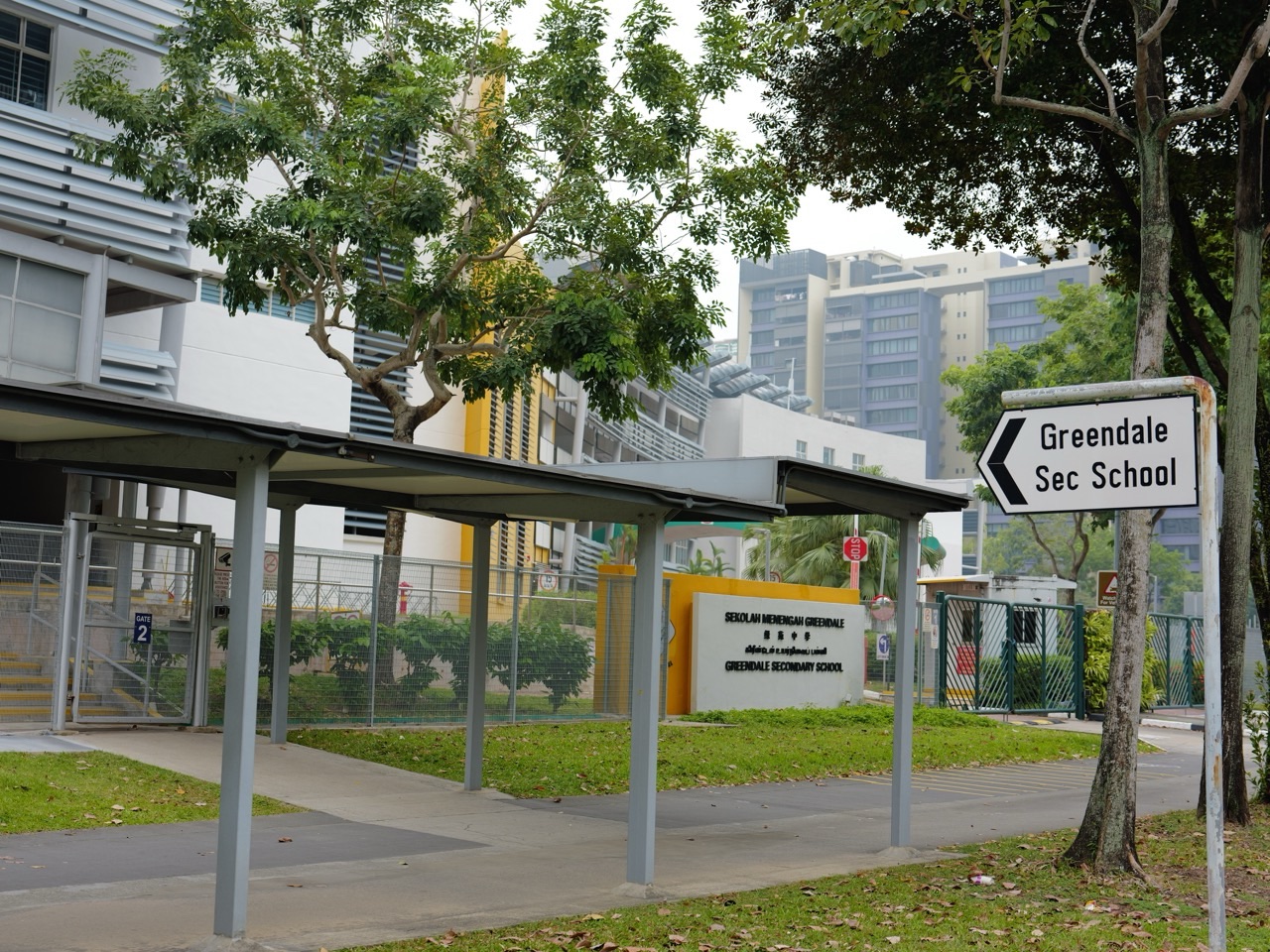
Greendale’s design, technology and engineering activities offer a different way to use communication and reasoning. A pupil who enjoys coding and strong Chinese or Malay may appreciate both interests. Ask about actual Mother Tongue and Higher Mother Tongue pathways, how subject levels are managed under Full SBB and which CCAs the child could realistically join.
Punggol Secondary School, 51 Edgefield Plains
Punggol Secondary highlights sustainability and youth leadership. A child might apply language through environmental presentations, community service or reading about society. Such opportunities are educationally useful, but the family’s HMTL decision must still be checked against the school’s actual subject offering and workload. An AL1 in Mother Tongue is not by itself a promise of a particular extracurricular project.
Yusof Ishak Secondary School, 8 Sumang Walk
Yusof Ishak’s smart-city STEM learning and leadership may interest a pupil whose language strength sits alongside technical interests. For families in Sumang or western Punggol, the route may be practical; others should travel-test it. Ask how a new Secondary 1 pupil can study an appropriate Mother Tongue subject while balancing the other core subjects and CCA commitments.
Use the correct 2026-entry cut-offs for school admission
These are the past final-admitted totals from the completed 2026 Secondary 1 intake based on PSLE 2025, not confirmed 2027 cut-offs. They do not say which schools currently offer a particular HMTL class, and they do not replace an admission form.
| Punggol school | PG3 historical COP | PG2 historical COP | PG1 historical COP |
|---|---|---|---|
| Edgefield Secondary | 14 | 23 | 27 |
| Greendale Secondary | 16 | 23 | 27 |
| Punggol Secondary | 19 | 24 | 27 |
| Yusof Ishak Secondary | 15 | 22 | 27 |
A pupil with overall Score 18 ordinarily follows PG3. The historical PG3 values at the four local schools were 14, 16, 19 and 15. Punggol Secondary’s old PG3 endpoint of 19 was numerically less stringent than 18; the others were more competitive. A pupil with Score 24 ordinarily follows PG2, and the relevant local historical values were 23, 23, 24 and 22. The same HMTL strength can exist in either case, but the eligible school comparison is different.
At Score 25, a family may have a PG1/PG2 option, subject to the personal form. The four local schools’ old PG1 endpoints were all 27, while the PG2 endpoints were 22–24. A parent should not select PG2 solely because the language subject is advanced, nor select PG1 solely because the old cut-offs look easier. Compare the full academic pace, individual subject-level opportunities and real schools available under the chosen route.
In each case, a previous cut-off is a historical outcome of one cohort’s scores and choices. It is not a promise of a 2027 seat or a measure of the school’s language-teaching quality. MOE encourages two or three schools with prior cut-offs less stringent than the child’s result where suitable; include those while maintaining schools the child genuinely wants to attend.
What if the child qualifies for HMTL but the preferred school does not teach it onsite?
Do not assume the opportunity disappears without first asking the school. Some language programmes may use special arrangements, inter-school resources or MOE language centres; the exact availability, administrative process and timetable need confirmation for the particular language and cohort. It would be dishonest to promise every pupil a specific offsite class or travel subsidy without checking current school and MOE instructions.
Ask who coordinates the language subject, whether there is an entry assessment or confirmation process, where lessons are held, what materials are needed, and how attendance is managed alongside CCA. If an offsite arrangement is possible, add the journey to the weekly family schedule. A distant language class can matter just as much as the ordinary school commute.
A family may reasonably decide that the total weekly burden is too high, while another may be willing to make an additional language journey. The child should be involved in the decision, because the pupil will have to read, write and attend classes—not just carry an attractive credential on paper.
How Higher Mother Tongue fits into the SEC future
From 2027, the Singapore-Cambridge Secondary Education Certificate (SEC) combines the former separate O- and N-Level qualifications under Full SBB. SEAB lists Higher Chinese, Higher Malay and Higher Tamil under the G3 SEC subject syllabuses, and its current information describes a single written Mother Tongue examination period in September under the SEC framework. A pupil entering Secondary 1 in 2027 would normally reach their terminal secondary examination later, not take it immediately in the first year.
Parents should avoid promising a precise future bonus-point calculation for JC, polytechnic or another destination on the basis of the pupil’s Primary 6 HMTL grade. Those later pathways depend on the qualifications and rules in force when the student applies. The immediate task is deciding whether the pupil enjoys and can manage additional language learning now.
A practical parent meeting script: eight questions about HMTL
- Does my child’s PSLE Mother Tongue AL1/AL2 or Higher Mother Tongue Distinction/Merit meet the current secondary HMTL criteria?
- Does this receiving school offer the specific language—Higher Chinese, Higher Malay or Higher Tamil—for the 2027 cohort?
- Is the teaching onsite, offsite or through another approved arrangement, and who organises it?
- How many lessons, assignments and assessments are expected in a normal week?
- Will taking HMTL conflict with CCA or another subject-level timetable?
- How do teachers help a pupil who enjoys the language but is developing English, Mathematics or Science foundations?
- What support and review are available if the pupil finds the overall workload too demanding?
- Does this particular school’s admission route or SAP status introduce additional requirements beyond general HMTL eligibility?
Ask about the child’s actual subject strengths, not an abstract identity as a ‘language student’. A pupil may be strong in Tamil and Science, or Chinese and Mathematics, or Malay and the arts. The HMTL option can be part of a broad education, not an instruction to specialise narrowly at twelve.
How parents can nurture language without excessive tuition
Language grows with meaningful exposure: books at an appropriate level, conversations, writing for a purpose, listening, and opportunities to explain an idea. A strong AL1 or AL2 result does not mean the child has completed language learning, just as a weaker result does not mean the child will never enjoy the language. Choose reading that builds curiosity, and let the student discuss what a text actually means.
For a pupil who wishes to stretch, keep a reading journal or ask them to retell a news item in their own words. For one who needs confidence, begin with manageable stories and everyday communication rather than punishing long memorisation exercises. Tuition is optional and should respond to a specific gap. The receiving school should remain the primary source for the HMTL syllabus and assessment expectations.
Parents may also want to discuss the balance between advanced Mother Tongue and core language literacy in English. A pupil should be encouraged to read in both languages where appropriate. The aim is fluent communication and intellectual growth, not simply collecting extra subject labels.
The 2026 PSLE results and six-school deadline
| Event | Officially announced timing |
|---|---|
| PSLE results collection | Tuesday, 24 November 2026 at 11.00am |
| S1 Portal opens | 24 November at 11.30am |
| Ordinary six-choice submission closes | Monday, 30 November at 4.30pm |
| Posting outcome | Tentatively Friday, 18 December; final confirmation to follow |
The SEAB 17 November 2026 release confirms the S1 timetable and recommends school choices based on culture, programmes, subjects, CCAs and the child’s interests. A parent can submit through MOE’s S1 Portal using Singpass. Need help? Contact the primary school before the deadline rather than waiting for a school to promise a Higher Mother Tongue offer.
Frequently asked parent questions
Can a PG2 pupil with Mother Tongue AL1 take HMTL?
MOE expanded HMTL opportunities from 2026 for students with qualifying Mother Tongue or Higher Mother Tongue results regardless of overall PSLE Score. The pupil must still follow the official school and subject arrangements; ask the receiving school to confirm.
Does HMTL AL1 mean the same thing as Standard MTL AL1?
No. Standard MTL PSLE uses AL1–AL8, while PSLE Higher Mother Tongue results include Distinction, Merit and other grades. Check what is actually printed on the child’s result slip.
Do all four Punggol schools teach every Higher Mother Tongue onsite?
Do not assume that. Subject offerings, delivery location and timetables need school-specific verification. MOE SchoolFinder and the receiving school are better sources than a generic promise.
Do we need a SAP school to take Higher Chinese?
Not necessarily. SAP is a school designation with distinct educational and admission considerations; HMTL is a language subject opportunity. Verify the pupil’s eligibility and each school’s actual arrangements.
Does a Higher Chinese grade guarantee Nan Chiau High admission?
No. Nan Chiau High is a SAP school in Sengkang with its own admission criteria and historical score range. Higher Chinese may matter under relevant SAP rules, but the family must check the actual posting route and full eligibility.
What if the child loves Malay or Tamil rather than Chinese?
The expanded HMTL policy also addresses Higher Malay and Higher Tamil. The family should ask about the specific language’s current provision, not assume rules apply only to Chinese.
Should we choose a school only because it offers HMTL?
Usually not. Include the language opportunity in a broader assessment of academic support, CCAs, school culture, travel and the child’s wishes. Six credible school options matter more than a single unverified subject promise.
Official sources and eduKate reading
- MOE Committee of Supply: HMTL eligibility expansion from 2026
- SEAB: SEC language examination framework
- Nan Chiau High School: official Sengkang school contact and location
- MOE SchoolFinder: verify school language subjects and historical cut-offs
- SEAB: confirmed 2026 results and S1 posting dates
- eduKate Punggol: four local schools compared
- eduKate Punggol: how to read the 2026 PSLE result slip
- eduKate Punggol: Full SBB and SEC explained for the 2027 Secondary 1 cohort
Parent conclusion: A strong Mother Tongue result is worth recognising in its own right. Since 2026, an AL1/AL2 MTL or Distinction/Merit HMTL result can open a secondary HMTL opportunity regardless of overall PSLE total. But eligibility for advanced language learning is not the same as guaranteed admission to a particular school. Confirm the child’s actual S1 Posting Group, check language provision and daily workload, and build six schools where the child can learn well and grow.


