
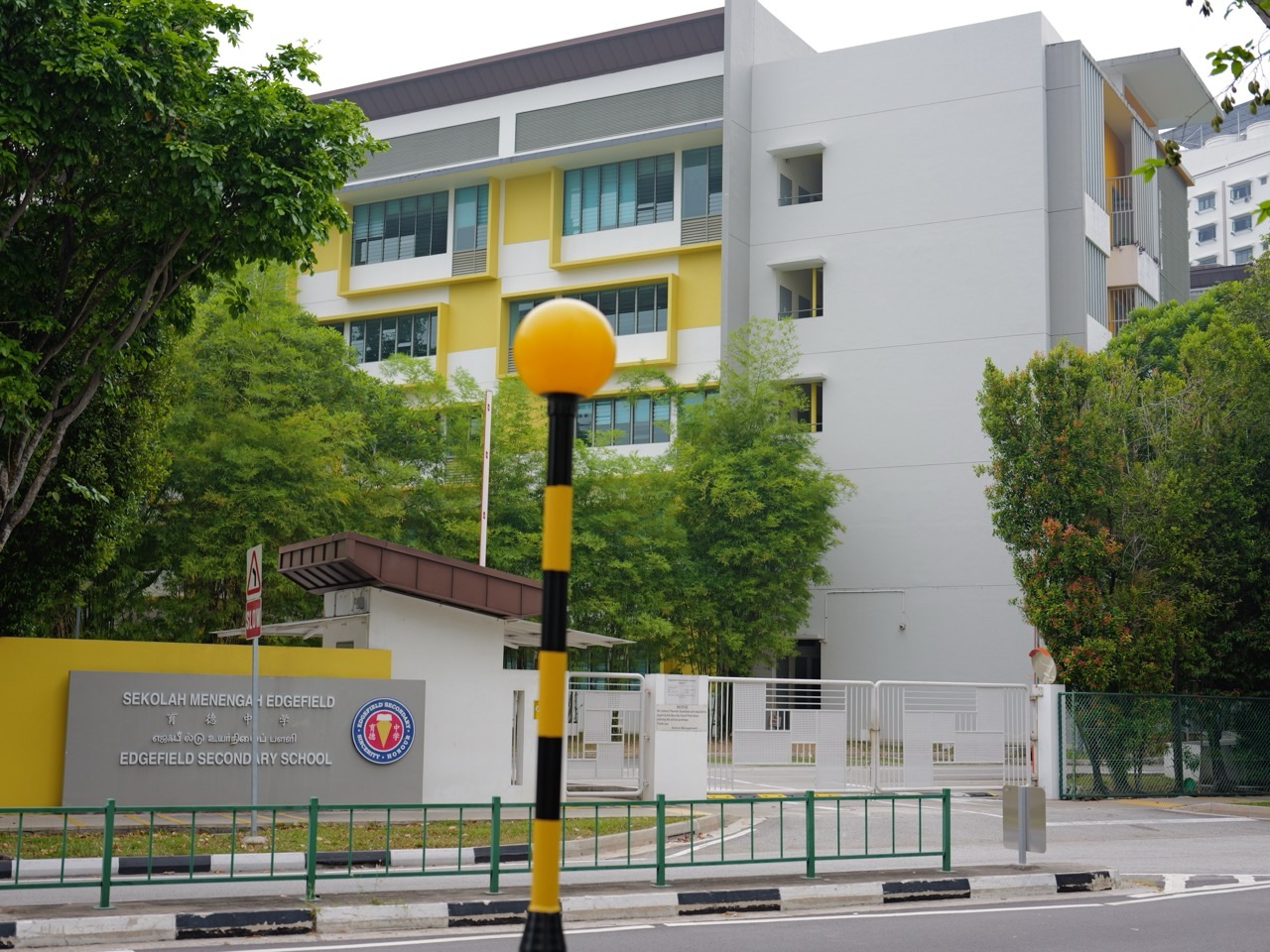
If your Punggol child scores between 4 and 12 at the 2026 PSLE, investigate suitable Integrated Programme (IP) schools—but do not assume the child must choose IP simply because their score is strong. Punggol’s four mainstream local secondary schools are Edgefield Secondary, Greendale Secondary, Punggol Secondary and Yusof Ishak Secondary, and none of these is an IP school. A family wanting a six-year IP route must look beyond Punggol, for example at eligible tracks in Catholic High, CHIJ St. Nicholas Girls’ School, Cedar Girls’, Victoria School, Raffles Institution, Raffles Girls’ School, St. Joseph’s Institution or Anglo-Chinese School (Independent), each with its own entry and gender or programme conditions. A local mainstream PG3 education under Full Subject-Based Banding remains a valid option.
For children receiving 2026 PSLE results on Tuesday, 24 November at 11.00am, the important question is whether the pupil genuinely wants and can thrive in a particular six-year curriculum, the Year 5 and 6 destination, and the daily journey from Punggol. A score of 4, 7, 10 or 12 does not have identical implications at every selective IP school; previous admission ranges are track-specific historical outcomes, not promises for the 2027 Secondary 1 intake. This guide contrasts IP with the mainstream SEC pathway, explains the four local schools’ previous PG3 COPs, offers worked parent-child scenarios and shows how to prepare six real school preferences before the S1 Portal closes on 30 November 2026 at 4.30pm.
Quick parent summary
• A strong PSLE Score can open IP options for research, but it does not guarantee any named IP school.
• None of the four mainstream secondary schools inside Punggol currently runs IP.
• IP usually follows a six-year route, with its own A-Level or IB Diploma destination and without the usual Secondary 4 SEC checkpoint.
• Mainstream schools use Full SBB: PG3 for entry and G3 for most starting subjects, with individual subject-level flexibility.
• The Punggol schools’ previous 2026-entry PG3 endpoints were Edgefield 14, Greendale 16, Punggol Secondary 19 and Yusof Ishak 15.
• Check each IP school’s specific Year 1 track, gender rules, historical score range, language conditions, fees and future campus.
• Compare actual morning and late CCA travel; rank six schools the child would genuinely attend.
A strong PSLE Score is a doorway, not a command
Some families feel that a score of 4 or 5 comes with a social expectation: the child should choose the most selective school possible. That turns an examination result into an instruction about the next six years. The PSLE is useful for establishing admission eligibility and measuring demonstrated academic performance, but it cannot tell you how a twelve-year-old feels about extended independent inquiry, specialist school traditions, travel, friends or the type of assessment they will prefer at sixteen.
A child who loves research, reading and building arguments over several weeks may enjoy a continuous IP programme. Another with equally strong academic foundations may prefer a mainstream local school, take a broad range of subjects at G3, enjoy sports or arts, sit the Secondary Education Certificate (SEC), and make a fresh decision about junior college, polytechnic or other options later. Neither family has to defend its decision as morally superior.
The family’s first question should be whether it has two or three concrete schools the child would be curious to attend. If the answer is ‘I only know their names’, investigate school programmes and actual travel before assigning an automatic ranking.
IP, IB, PG3 and G3 are four different ideas
| Term | What it means | Common mistake to avoid |
|---|---|---|
| Integrated Programme (IP) | A continuous school-specific six-year secondary and pre-university route | Assuming every pupil with Score 4–12 has an IP place |
| International Baccalaureate Diploma (IBDP) | A two-year pre-university qualification at specified institutions | Treating IB as the same thing as every IP programme |
| Posting Group 3 (PG3) | Ordinary mainstream Secondary 1 school entry route | Assuming PG3 is a named six-year IP |
| G3 | An individual subject level under Full Subject-Based Banding | Calling it an entire unchangeable school stream |
| SEC | The national secondary examination framework from 2027 | Assuming an IP pupil and a mainstream SEC pupil have identical Year 4 checkpoints |
IP and mainstream are different structures, not simply the first and second ranks of one academic ladder. At an IP school, the pupil usually follows a planned continuous curriculum into the pre-university stage without the standard Secondary 4 SEC examination checkpoint. The final qualification might be A-Levels or the IB Diploma, depending on the actual institution. In mainstream Full SBB, pupils study individual G-level subjects and take the SEC examinations according to the subject levels they offer.
Some institutions offer both IP and a separate four-year SEC route. A parent must distinguish those tracks on the school’s actual admissions information and preference form. The fact that an institution has ‘IP’ in its promotional materials does not mean every student admitted under its name is placed on the six-year track.
The four local Punggol schools remain serious options
| Local co-educational school | Address | 2026-entry PG3 cut-off | Learning focus to ask about |
|---|---|---|---|
| Edgefield Secondary | 36 Punggol Field, Singapore 828814 | 14 | Growing the Edgefield Mindset: innovation and enterprise |
| Greendale Secondary | 51 Edgedale Plains, Singapore 828866 | 16 | Design, technology and engineering; outdoor adventure |
| Punggol Secondary | 51 Edgefield Plains, Singapore 828870 | 19 | Environmental sustainability; community and youth leadership |
| Yusof Ishak Secondary | 8 Sumang Walk, Singapore 828676 | 15 | Sustainable smart-city STEM and leadership |
These are historical final-admitted PG3 totals from the 2026 Secondary 1 intake following PSLE 2025, not admissions guarantees for 2027. The lower the numerical PSLE Score, the stronger the aggregate performance. A child with Score 8 is numerically stronger than each of those previous PG3 endpoints, but there is no advance certainty: the next cohort’s applicants, vacancies and choices may be different.
The table does not imply that a school with old COP 14 is intrinsically better than one with COP 19. It records how an earlier cohort’s choices and places produced different end points. The schools differ in programmes, everyday culture, subjects, CCAs and travel convenience. For an unusually strong pupil who likes practical science, a Punggol school could be a fulfilling place to develop technical curiosity; for one who loves language and original inquiry, another school or IP track may feel more natural.
Parents should ask whether the receiving school provides appropriate stretch and feedback for a high-performing child. Challenge can mean deeper reading, open-ended problems, communication, leadership and research—not merely accelerating several years of Mathematics topics.
Which Integrated Programme destinations might a Punggol family investigate?
The following examples identify genuine types of programmes available outside the town. They are not a list of guaranteed admission options for all scores from 4 to 12. Schools can have distinct affiliation categories, Higher Chinese rules, programme tracks and co-educational or single-sex Year 1 entry. Check the exact MOE SchoolFinder profile and the institution’s own admissions page.
| School/partnership | Year 1 entry context | Typical Year 5–6 route |
|---|---|---|
| Catholic High School Joint IP | Boys’ entry; distinguish IP and separate SEC track | Eunoia Junior College, A-Levels |
| CHIJ St. Nicholas Girls’ School Joint IP | Girls’ entry; confirm actual route | Eunoia Junior College, A-Levels |
| Singapore Chinese Girls’ School Joint IP | Girls’ entry; check track-specific admissions | Eunoia Junior College, A-Levels |
| Raffles Institution and Raffles Girls’ School | Year 1 schools have different gender entry arrangements | Raffles Institution pre-university years, A-Levels |
| Cedar Girls’ Secondary and Victoria School | Cedar girls; Victoria boys; separate campuses | Victoria Junior College, A-Levels |
| St. Joseph’s Institution IP | Boys’ Year 1 IP; separate SEC route | IB Diploma programme |
| Anglo-Chinese School (Independent) IP | Boys’ secondary IP route | IB Diploma programme |
| Methodist Girls’ School IP | Girls’ secondary IP route, distinct SEC track | ACS (Independent) IB Diploma years |
The family should not group all these schools under a single score range. A school with two routes can report two very different previous cut-offs. Some of the SAP or bilingual schools show Higher Chinese performance annotations alongside total scores. Boys’ and girls’ Year 1 eligibility can differ from the later pre-university programme’s co-educational admission arrangements. The specific year, track and eligibility category must accompany every number on your shortlist.
What happens after Year 4 may matter more than the school name now
The Catholic High–CHIJ St. Nicholas–SCGS Joint IP is connected to Eunoia Junior College for pre-university study leading to A-Levels. Cedar and Victoria’s IP paths are associated with Victoria Junior College. Raffles Girls’ School pupils on the IP route continue to Raffles Institution’s pre-university stage. These relationships help parents understand what ‘six years’ actually means in terms of eventual school communities and qualifications.
SJI’s Year 1 IP leads towards the IB Diploma, as does ACS (Independent)’s IP and the MGS IP route continuing to ACS (Independent). These routes are not identical to the A-Level pathways. IB involves substantial breadth and forms of assessment that can include research, writing and sustained independent project work. Parents should ask what ordinary pupils learn across the six years rather than assume a school with an impressive entrance automatically fits the child.
A pupil who has never visited the intended later campus may be making a six-year commitment without understanding where it leads. You do not need to predict their eventual university subject at age twelve, but you should know the programme’s destination, major curriculum structure and whether the pupil would value that approach.
Scenario 1: PSLE Score 6, high curiosity and strong independent study habits
Consider a fictional child from Punggol who scores 6 and spends free time reading science books, asking questions and writing about how things work. The family may investigate academically selective IP programmes that offer structured research and independent inquiry. An IP option could be appropriate if the child is genuinely interested, meets the exact programme’s admissions conditions and can manage the daily journey.
However, score 6 does not mean the child should be promised Raffles Institution, Raffles Girls’, or another named school. Every IP has its own past cohort figures, rules and applicants. The parent should prepare a shortlist with multiple realistic educational environments and ask whether the child actually wants a six-year continuous curriculum.
The family should compare at least one local mainstream school as a benchmark. A direct, predictable Punggol journey may allow more sleep, sport and family time, while an out-of-town IP school may offer a curriculum the child values enough to justify travel. It is the real preference and lifestyle that matters.
Scenario 2: PSLE Score 9, likes mathematics and wants friends close to home
Imagine a pupil with Score 9 who has strong Mathematics foundations but no desire for a long commute or early pre-university specialisation. The four Punggol schools’ previous PG3 endpoints of 14, 16, 19 and 15 were all numerically less stringent than Score 9. The family can seriously investigate those local schools, while recognising that old cut-offs cannot guarantee any 2027 place.
The pupil might prefer Greendale’s design and technology projects, Yusof Ishak’s STEM and smart-city questions, Edgefield’s enterprise work or Punggol Secondary’s environmental learning. The family should ask how high-performing students are challenged, what differentiated feedback looks like, and how pupils are encouraged to develop leadership, creative thinking and strong reading habits.
A parent who thinks ‘score 9 is too good for Punggol’ should reconsider what that sentence implies. A strong PSLE result does not place a child above classmates or make it inappropriate for them to attend a mainstream school. Learning quality is determined by the education they receive, the effort they make and whether the setting supports their growth.
Scenario 3: PSLE Score 12, interested in IP but unsure about school access
A score of 12 ordinarily falls within PG3, but many selective IP schools had substantially more competitive historical cut-offs for particular tracks in the completed earlier exercise. It would be misleading to claim every IP is within reach merely because the score is between 4 and 12. The family can investigate any programmes for which the child is eligible, but should also prepare realistic alternatives and not fill all six preferences with schools whose old ranges were much more competitive.
For the local Punggol mainstream comparison, Score 12 was numerically stronger than all four previous PG3 endpoints. That provides a meaningful local shortlist to research, still without a guarantee. The child may find that a strong local school with G3 subjects and appropriate enrichment better fits daily needs than a very distant school that the family knows only by reputation.
The helpful parent conversation is: ‘What would you like to learn in that school, and what would a normal Tuesday feel like?’ This invites an answer about teaching, projects, classmates and the journey instead of a vague statement about prestige.
Three tests before committing to IP
1. The academic experience, not just the admissions score
Ask whether the child likes investigating a problem without an immediate model answer, reading independently and receiving feedback on longer projects. Also ask about support when a pupil falls behind. IP is not a guarantee that a strong Primary 6 pupil will always find every lesson easy, and a higher workload is not automatically a better education.
2. The actual six-year programme and qualification
Find out whether the route leads to A-Levels, an IB Diploma or another clearly stated qualification, and whether the child changes campus after Year 4. A school with both SEC and IP tracks should be examined as two separate pathways where applicable. The pupil’s first four years and later two years can differ meaningfully even within one named institution.
3. A sustainable commute and family budget
A family near Punggol MRT may use the North East Line to reach central routes, while one living on the LRT loops must add the first local journey. A school that appears only a few stations away may still require a transfer, bus trip and walk to the gate. Test the morning report time and the return after a late CCA day; avoid printing an invented number of minutes as if every Punggol flat were identical.
Some IP routes are in independent schools with different fees from local government schools. Ask about the actual cost, the student’s citizenship fee category, relevant bursaries or scholarships and other school expenses. The family should not choose a programme assuming that a scholarship has been awarded or that every additional school activity is free.
When a mainstream PG3 route may fit better
A pupil may want to finish the four-year secondary stage with an SEC qualification and decide later between JC, polytechnic or other suitable post-secondary routes. This can be valuable for children whose interests are changing rapidly or who prefer to reassess qualifications after gaining subject experience. Full SBB supports subject levels that reflect individual strengths, with later changes governed by the applicable criteria and school decisions.
The SEC replaces the former separate O- and N-Level examinations from 2027; G3 subject papers align with the former O-Level standards, while G1 and G2 papers reflect their respective levels. A 2027 Secondary 1 pupil on an ordinary four-year route would normally face the terminal secondary national examination around 2030, subject to progression. A mainstream route is not an automatic barrier to high achievement or later university entry, though the actual qualifications and post-secondary admission requirements matter.
Many pupils benefit from a nearby school that leaves enough time for independent reading, sports, music and friendships. The SEC route may provide a familiar examination milestone at Secondary 4. Another pupil may be eager for IP continuity and extended inquiry. Neither structure wins a universal comparison; each should be considered in light of actual student readiness.
How the other Punggol schools can help a strong pupil grow
| School | Possible area of intellectual challenge | Question parents should ask |
|---|---|---|
| Edgefield Secondary | Innovation, enterprise and problem-solving | What do pupils do when they have already mastered core material? |
| Greendale Secondary | Design thinking, engineering and outdoor learning | How are interested pupils extended beyond introductory projects? |
| Punggol Secondary | Sustainability, community research and leadership | What opportunities develop deeper investigation and communication? |
| Yusof Ishak Secondary | Sustainable smart-city STEM and leadership | How do ordinary students join inquiry and technology activities? |
These are inquiry prompts, not guarantees that every pupil enters a specialist programme or CCA. Ask about what every Secondary 1 student encounters and what is selectively allocated. A school with challenging subjects and constructive feedback can help a strong pupil grow regardless of whether it carries an IP label.
A six-choice method for Score 4–12 families
- Read the official total and each individual subject AL; confirm that the child has the expected PG3 and any IP-specific eligibility.
- Ask whether the child actually wants an Integrated Programme, a mainstream SEC route or to investigate both.
- Identify the exact programme at each target school. Do not confuse SJI IP with SJI SEC or another school’s IP with its four-year route.
- Check gender, affiliation, Higher Chinese SAP annotations and school-specific admission criteria where relevant.
- Use the historical 2026-intake ranges only as references; do not invent final 2027 cut-offs or admission probabilities.
- Compare one or two possible IP destinations with the four Punggol local schools and any suitable Sengkang alternatives.
- Test the real school-day and late CCA journey, and consider fees, family commitments and the child’s wellbeing.
- Shortlist six genuinely acceptable eligible preferences, including two or three schools with less stringent previous COPs where suitable.
- Rank those choices in authentic preference order, verify the portal’s programme entries and submit before the deadline.
- Retain the confirmation and prepare to support the child at whichever school they are actually posted to.
The ordinary S1 posting process considers academic merit, and in same-score competition uses citizenship, school-choice order and computerised balloting where applicable. Choice order matters in a tie, so do not automatically rank a selective IP school first when the child actually prefers a mainstream school. Likewise, do not claim that a local school is a guaranteed backup from a favourable past cut-off.
What if the pupil has a confirmed DSA-Sec placement?
Direct School Admission has its own application, offer acceptance and commitment arrangements. A successful confirmed DSA-Sec candidate may not take part in ordinary six-school posting in the same way. The family must follow the actual accepted school’s conditions and MOE’s current instructions, rather than keeping a DSA place as an unofficial reserve while entering an incompatible standard S1 list.
A pupil who was not offered a DSA place can still investigate ordinary posting options where eligible. DSA rejection does not define the pupil’s academic ability, and the ordinary PSLE Score remains an important route. Parents should not invent a late DSA application procedure after results day unless the school officially offers one.
How to talk to a high-scoring but undecided child
Begin by acknowledging that a strong result creates possibilities rather than obligations. Ask for three real school preferences and why each appeals. A child may value a particular sport, reading culture, friendship or safe journey more than an adult expects. Respect that information while making sure the school is academically and administratively possible.
Next explain the long-term difference between IP continuity and the mainstream SEC checkpoint without frightening the pupil. They do not need a complete career plan. They should understand that a school involves ordinary weekdays, teachers, homework, CCAs and people, not merely a graduation certificate. Encourage them to visit or view current school resources and ask questions.
Finally, avoid referring to the Punggol schools as ‘fallback schools’ in a way that insults the students who attend them. A school with historically less stringent admission figures may be a genuine first choice for a child because the environment, programmes and commute are right. Education should be discussed in terms of opportunity and growth, not an inherited hierarchy of names.
The official result-day and school-choice dates
| Event | Timing |
|---|---|
| 2026 PSLE results collection | Tuesday, 24 November at 11.00am |
| MOE S1 Portal opens | Tuesday, 24 November at 11.30am |
| School-choice submission closes | Monday, 30 November at 4.30pm |
| S1 posting results | Tentatively Friday, 18 December; final confirmation to follow |
SEAB’s 17 November 2026 release confirms the S1 submission timeline and encourages families to compare school culture, programmes, subjects, CCAs and the child’s interests. One parent with valid Singpass can submit through MOE’s S1 Portal. Families needing assistance should contact the primary school before closing time. The announced posting-results date remains tentative.
Frequently asked questions
Does Score 4 guarantee Raffles or another IP school?
No. An excellent PSLE result may make certain programmes worth researching, but actual admission depends on the school’s eligible track, applicant pool, vacancies and rules. Check its specific past admission category and current MOE profile.
Can a child scoring 12 still consider IP?
A family can research programmes that fit the child’s official eligibility, but many selective IP historical endpoints may be more competitive than 12. Never name a school as guaranteed from the numerical total alone. Include credible SEC school choices.
Is there an IP school inside Punggol?
None of Punggol’s four mainstream secondary schools—Edgefield, Greendale, Punggol Secondary and Yusof Ishak—currently offers IP. Families seeking IP must compare eligible programmes outside the town.
Will every IP pupil take the SEC at Year 4?
The usual IP structure is a continuous six-year route without the ordinary Secondary 4 national SEC checkpoint, leading to the school’s stated pre-university qualification. Verify the specific institution’s current pathway.
Does mainstream PG3 mean the old Express stream exactly?
PG3 is an entry group guiding the usual starting G3 subjects, while Full SBB uses mixed form classes and individual subject levels. The old stream label is not a precise substitute for the current framework.
Is IB the same as the Integrated Programme?
No. IB is a pre-university diploma qualification; some IP routes lead to it while others lead to A-Levels. An eligible student from another secondary route may also apply to specific later IB programmes where the school permits, under separate conditions.
Is the nearest local school automatically better for wellbeing?
Not always. A short journey can help, but the pupil also needs suitable academic challenge, peers, school support and activities. A longer direct route may be manageable if the child truly values that school. Test both alternatives.
Should a strong-scoring pupil take extra tuition automatically?
No. If the pupil has solid foundations, independent work habits and healthy school engagement, extra classes may not be necessary. Seek targeted help for an identified learning need rather than trying to manufacture prestige through more worksheets.
Official sources and related eduKate articles
- MOE SchoolFinder: exact school track, historic score range and programme
- MOE: S1 Posting and official school-choice rules
- SEAB: mainstream SEC qualification under Full SBB
- SEAB: 2026 PSLE result release and submission dates
- eduKate Punggol: all four local schools and historical PG3 COPs
- eduKate Punggol: detailed IP, IB and SEC school routes outside Punggol
- eduKate Punggol: the Score 11 school-choice and IP comparison
- eduKate Punggol: the SEC route explained for the 2027 Secondary 1 cohort
- eduKateSG: immutable Clementi Secondary 1 learning reference
Final parent move: For PSLE Scores 4–12, use the stronger result to explore suitable programmes, not to impose a prestige requirement. Compare the actual six-year IP track, qualification, fees and travel with the four Punggol mainstream schools’ G3 opportunities and the later SEC checkpoint. The best school is where the child can learn deeply, remain well and develop character, and the final application should contain six authentic, eligible, thoughtfully balanced choices submitted on time.


