
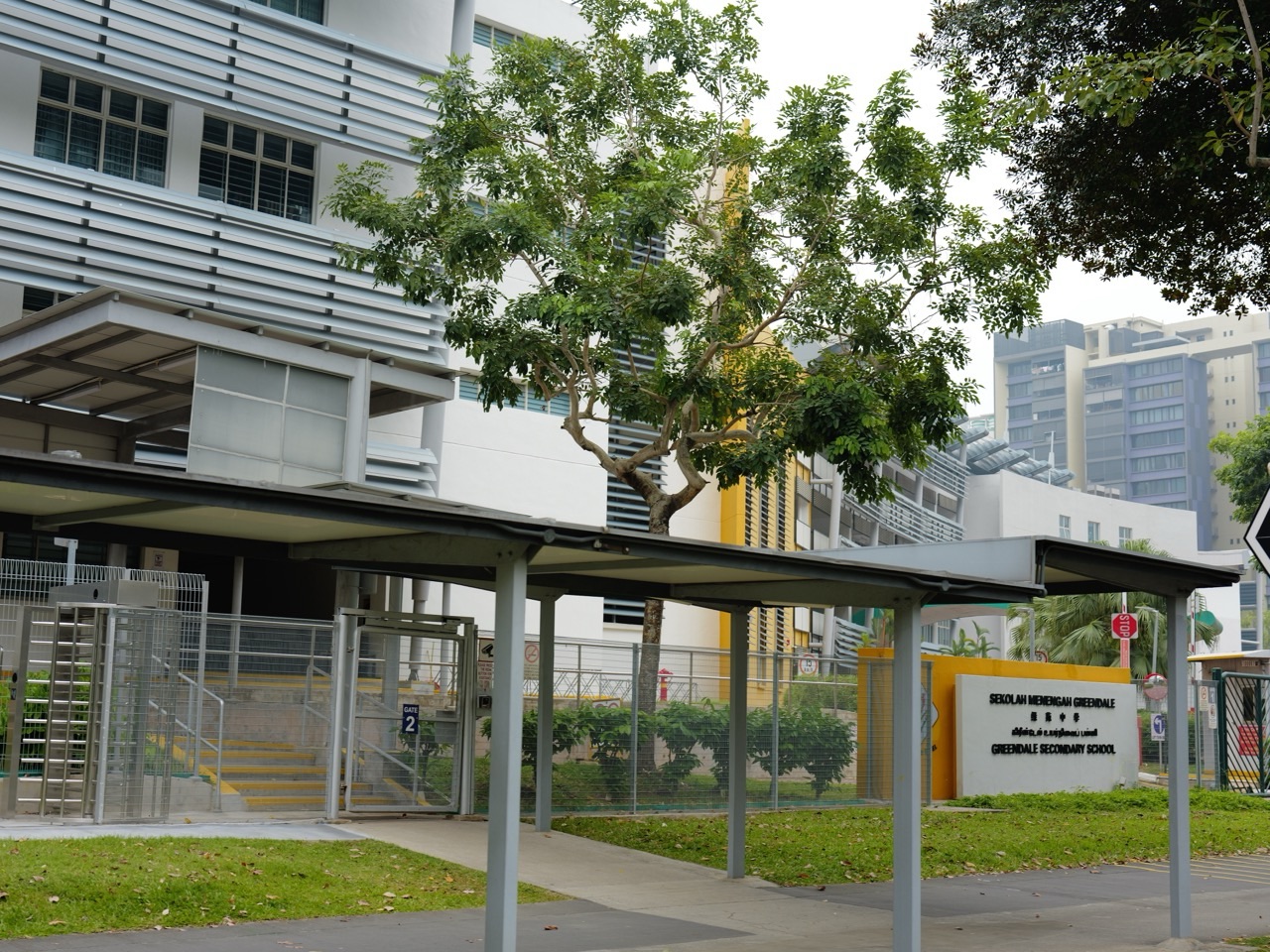
For a Punggol pupil who loves coding, robotics or engineering, start with schools that offer genuine opportunities to design, build, test and explain—not simply those with the word “STEM” on a poster. For the 2026 PSLE results released at 11.00am on Tuesday, 24 November 2026, the family’s first obligation is to confirm the child’s actual PSLE Score and Posting Group. Four mainstream schools physically in Punggol deserve consideration: Edgefield Secondary, Greendale Secondary, Punggol Secondary and Yusof Ishak Secondary. Among them, Greendale publishes a design, technology and engineering Applied Learning Programme, and Yusof Ishak publishes school-wide smart-city STEM activities and a separate STEM Club.
The right school for a future Secondary 1 pupil is one where a coding interest can develop alongside appropriate English, Mathematics and Science teaching, a realistic CCA allocation, friendships and sustainable travel. A coding workshop does not guarantee a Robotics CCA place; a Robotics CCA does not necessarily mean the school offers an examinable Computing subject at the child’s future G level. This guide separates those opportunities, compares local school profiles and 2026-entry historical Posting Group cut-offs, and gives families a six-choice decision method for Secondary 1 entry in 2027 without inventing a guaranteed admission or future career.
Quick parent summary
• Check the child’s official PSLE Score, individual subject ALs and available PG1/PG2/PG3 routes.
• Greendale’s published Design, Technology and Engineering ALP includes design thinking, coding and building.
• Yusof Ishak’s S4TEM@YI ALP includes coding, aeronautics and urban farming; its separate STEM Club has specific activities.
• Edgefield offers innovation and enterprise learning plus clubs; investigate actual current Art, Robotics and other CCA listings.
• Punggol Secondary’s environmental sustainability learning can involve data, design and evidence, even without a robotics-only ALP label.
• Ask separately about school-wide exposure, CCA recruitment and whether the examinable Computing or D&T subject is actually available at the relevant level.
• Compare the correct historical school cut-off and submit six acceptable choices before 30 November 2026 at 4.30pm.
What does a twelve-year-old actually mean by liking robotics?
A child might enjoy assembling a kit, playing with programmable toys, writing short scripts, building a simple website, or watching engineering videos. These are related but not identical interests. Coding focuses on giving instructions to computers and reasoning about how a program behaves. Robotics combines programming with physical mechanisms, sensors, materials, electronics and testing. Design and Technology may involve understanding users, creating prototypes and evaluating how an object works. A student may enjoy one and dislike another.
Ask the pupil to show one project they have made and to explain what was difficult about it. A child who persevered through a bug may enjoy repeated design cycles. A child whose favourite part was presenting a completed model may enjoy communication and enterprise. Another who liked drawing mechanisms rather than writing code may prefer design. Knowing the specific activity can make school visits far more productive.
Parents need not demand an advanced portfolio from a Primary 6 pupil. A school with introductory projects can be a valuable learning environment for a beginner, while a child with substantial experience may want more demanding activities. What matters is whether the school gives pupils opportunities to learn, not whether a school advertises the most impressive competition photographs.
Three opportunities parents must distinguish
| Opportunity | What it normally means | What a parent must verify |
|---|---|---|
| Applied Learning Programme (ALP) | A school-wide or broadly accessible approach linking subjects with real situations | Which Secondary 1 experiences actually reach all pupils? |
| Robotics, Infocomm, STEM or engineering CCA | An ongoing extracurricular activity with training and possible competition | Does the school offer it for the cohort? How do trials, vacancies and preference rankings work? |
| Examinable Computing, Design & Technology or another subject | Formal teaching and assessment under the school’s actual subject offerings | Which upper-secondary subjects and G levels are available, and how are students selected? |
An ALP can develop computational thinking without being an examinable Computing subject. A club can involve coding without guaranteeing access to a formal G3 Computing class later. A school may also teach digital literacy through ordinary lessons without advertising a dedicated robotics club. These distinctions matter because a parent should not base four years of education on one misunderstood programme title.
The 2027 Secondary 1 child will study across many subjects. Their interest in building robots can motivate learning, but they will also need language comprehension, written explanation, mathematical reasoning and the ability to work with people. The goal is not to turn a twelve-year-old into a software engineer by age thirteen. It is to give the pupil a broad school education in which a real interest has room to develop.
Greendale Secondary: design, code and build
Greendale Secondary is at 51 Edgedale Plains, Singapore 828866. Its official Design, Technology and Engineering ALP page describes design thinking, coding with Arduino microcontrollers and hands-on building activities. That makes it a sensible candidate to investigate when a pupil likes practical technology. Its broader school profile also describes Outdoor Adventure Education and student leadership experiences.
At an open house or through the school’s official contact, ask how the ALP progresses from Secondary 1 to Secondary 2, what every pupil actually does and which opportunities depend on elective participation. A student who loves robots may be particularly interested in whether the school offers CCA activities using programming and engineering competitions. Do not assume the ALP automatically allocates the child a place in a related specialist CCA.
Greendale also publishes a DSA-DTE programme page for pupils who applied through the talent route. This is not equivalent to ordinary post-PSLE admission or a guarantee of the same experiences for every Secondary 1 pupil. Parents should ask which elements are common to all, which belong to DSA participants and which are available through general CCA recruitment.
Yusof Ishak Secondary: sustainable smart-city STEM
Yusof Ishak Secondary is at 8 Sumang Walk, Singapore 828676. Its S4TEM@YI ALP describes school-wide opportunities involving coding, aeronautics, urban farming and sustainable city questions. The school also has a distinct STEM Club that publishes examples including drone programming, glider engineering, biodiversity and urban farming.
A parent should ask what a child with no previous coding experience could do in the first term, and what is available to a pupil who already programs confidently. The club’s published description and training schedule are useful starting information, but 2027 CCA places, times and competition participation should be confirmed by the school after posting. Avoid promising a drone or a specialist project to a child based on a page that may change.
For some families around Sumang and western Punggol, Yusof Ishak’s location may create a simpler school-day journey. Families near Edgedale or Riviera may face a different route. A technology club that meets after ordinary lessons can make the return trip particularly important. Test the actual door-to-gate route and a late-CCA return rather than inventing travel times.
Edgefield Secondary: innovation and purposeful problem-solving
Edgefield Secondary is at 36 Punggol Field, Singapore 828814. Its Growing the Edgefield Mindset (G.E.M.) ALP connects innovation, enterprise and collaborative problem-solving. Its official CCA directory lists club categories including Art, Robotics and Aviation, alongside sports and performing arts.
For a child who likes coding as a way to build useful things, Edgefield’s enterprise and design emphasis can be worth exploring. Ask whether the relevant club is recruiting, whether beginners can join and how project groups operate. The school may offer entrepreneurship activities in which ideas are tested with real users; these can develop problem framing and communication as well as technical confidence.
Do not assume that naming Robotics on a CCA directory means every applicant gets that club, or that the pupil will have identical opportunities to students selected by another admission route. The question is what the actual incoming Secondary 1 student can do, not whether a robotics image appears online.
Punggol Secondary: using evidence to solve real problems
Punggol Secondary is at 51 Edgefield Plains, Singapore 828870. Its environmental sustainability and community leadership directions can give students real-world questions involving data, measurement, observation and making improvements. A pupil who enjoys technology may find value in studying how information and design solve environmental or community problems.
The school should not be described as a dedicated Robotics school merely because digital tools might support those projects. Instead ask what technology experiences are explicitly offered, which CCAs exist in the current cohort, and how interested pupils can learn to analyse data or prototype solutions. A child can develop computational thinking through a wide range of problems, not only a robot competition.
Parents should also ask about the quality of ordinary Mathematics, Science and English support. Engineering and computing eventually depend on mathematical reasoning and clear explanations. A school that helps the pupil understand foundations may support their technology ambitions better than one with impressive equipment but a poor fit for the student.
The Punggol historical score table for 2027 parents
The following are historical last-posted cut-off points for the Secondary 1 intake of 2026, following PSLE 2025. They are not admissions guarantees for the upcoming 2027 intake, which follows PSLE 2026. A numerically lower PSLE Score indicates stronger aggregate performance; a previous COP is a retrospective outcome, not a ranking of robotics facilities.
| Punggol school | Past PG3 COP | Past PG2 COP | Past PG1 COP |
|---|---|---|---|
| Edgefield Secondary | 14 | 23 | 27 |
| Greendale Secondary | 16 | 23 | 27 |
| Punggol Secondary | 19 | 24 | 27 |
| Yusof Ishak Secondary | 15 | 22 | 27 |
A pupil scoring 14 under PG3 may investigate all four school profiles, including Greendale and Yusof Ishak, while recognising that even a favourable historic comparison does not reserve a seat. A PG3 pupil scoring 18 finds that only Punggol Secondary’s previous PG3 endpoint of 19 was numerically less stringent; the other three were more selective. A child who likes engineering should still build a suitable six-school list rather than treating a STEM programme as a reason to ignore admission history.
A pupil scoring 21 or 22 may have a PG2/PG3 option. That choice changes which school range is relevant, and the appropriate starting subject pace. The family should compare both options before selecting one Posting Group for the ordinary six-school list. A pupil with Score 25 may have a PG1/PG2 option; the four Punggol schools all had previous PG1 endpoints of 27 but PG2 endpoints of 22–24. None of this is a judgement on the child’s ability to learn coding.
What about Computing at G1, G2 or G3 and the future SEC?
The Singapore-Cambridge Secondary Education Certificate (SEC), which begins for national examination cohorts from 2027, recognises subjects at individual G1, G2 and G3 levels. Schools vary in which elective subjects they provide at upper secondary, and not every pupil in a lower-secondary STEM ALP will necessarily take examinable Computing. Ask each school to show its current upper-secondary subject offering and its criteria for later subject choices rather than relying on an old timetable.
A 2027 Secondary 1 pupil would normally reach Secondary 3 subject selection around 2029 and a four-year programme’s terminal examinations around 2030, subject to the pupil’s progression and future rules. No parent should promise an exact Computing subject or future diploma place four years ahead simply because the pupil enjoyed robotics at twelve.
Coding can still be useful even if Computing is not an eventual examinable subject. It develops debugging, logic and structured reasoning. Design and Technology develops empathy, prototyping and evaluation. Science helps students interpret physical systems; Mathematics supports quantities, algorithms and relationships. English helps them write design explanations and communicate findings. The best school keeps those subjects connected without shrinking the child’s education to one technical interest.
Three parent-child scenarios
The beginner who loves building kits
This pupil enjoys assembling mechanisms but has not written code. The parent should seek introductory activities that make the student comfortable trying, failing and improving. Greendale’s design-and-build ALP and Yusof Ishak’s school-wide STEM work are both worth investigating. Edgefield’s innovation opportunities may also be attractive, while environmental projects at Punggol Secondary could offer applied problem-solving. The right question is which school can engage this pupil while teaching core subjects well.
The experienced programmer who wants to compete
A child with substantial coding experience may look for specialist clubs, competitions and opportunities to mentor or collaborate. Check the latest CCA recruitment arrangements at individual schools, rather than assuming an ALP means unlimited competitive robotics places. Ask whether admission to a particular team involves trials and whether additional practice times will affect family travel.
The strong creative thinker with uneven Mathematics
A pupil may love coding and design but struggle with fractions, ratios or algebraic expressions. Those foundational gaps may become more visible in technical projects. The parent should check both the school’s project opportunities and how its Mathematics teachers offer feedback. A short targeted bridging plan may help, but automatic high-volume tuition is not necessary for every interested pupil. The student’s school-entry Posting Group and individual subject level options should be checked against actual eligibility.
A six-school decision method for technology-interested pupils
- Identify whether the child mainly enjoys coding, building, robotics competitions, engineering design or presenting ideas.
- Check the child’s exact PSLE Score and personalised Posting Group options before naming schools.
- At each shortlisted school, separate school-wide ALP activities from optional or selected CCAs.
- Ask what introductory learning is available and what more demanding projects exist for experienced pupils.
- Confirm the school’s current subject offering and never promise future examinable Computing solely from an ALP.
- Record the correct historic 2026-intake COP for the child’s selected PG1, PG2 or PG3 route.
- Find two or three schools with historically less stringent relevant cut-offs where suitable, including schools beyond Punggol if the local range is narrow.
- Test the normal morning and late CCA journey from the family home.
- Rank six schools in genuine preference order, verify school codes and save the official submission confirmation.
MOE advises families to include two or three schools whose previous cut-offs were less stringent than the child’s score where suitable. For PG3 Score 16, a previous PG3 COP of 19 is less stringent; COP 14 is more stringent. These are historical comparisons, not admission probabilities. The ordinary posting rules consider academic merit and, for equal scores where needed, citizenship, preference order and computerised balloting.
Results day to Secondary 1: the confirmed timeline
| Milestone | 2026 timing |
|---|---|
| PSLE results released | Tuesday, 24 November, 11.00am |
| S1 Portal opens | Tuesday, 24 November, 11.30am |
| Ordinary school-choice deadline | Monday, 30 November, 4.30pm |
| Posting results | Tentatively Friday, 18 December; await confirmation |
These dates are from SEAB’s 17 November 2026 announcement. One parent with Singpass can submit the ordinary preferences through MOE S1 Posting. If the child has a confirmed DSA-Sec offer, follow the official personalised instructions instead of assuming the same ordinary six-school requirements.
Frequently asked parent questions
Is Greendale automatically the best robotics school in Punggol?
Greendale’s published Design, Technology and Engineering ALP makes it an important option to research, but it cannot be called universally best for every learner. Compare current CCA allocation, ordinary teaching, the child’s interests and the actual route.
Can every Yusof Ishak pupil join STEM Club?
Do not assume automatic CCA allocation. The school’s published STEM Club activities are genuine, but recruitment rules and places for incoming pupils should be confirmed with the school.
Does a STEM ALP mean G3 Computing will be available for my child?
No automatic conclusion follows. School-wide project learning, a CCA and the upper-secondary examinable subject are different offerings. Check the actual current curriculum and selection criteria at the school.
Can a PG2 or PG1 pupil learn robotics?
A Posting Group is not a permanent description of the child’s curiosity. The pupil may participate in available school-wide and co-curricular activities subject to school arrangements. Individual examinable subject levels are governed by separate academic criteria.
Should we choose a distant technology school even if the commute is difficult?
Only after a realistic journey test and a discussion about workload, rest, safety and the child’s motivation. A suitable nearby school may provide meaningful technology exposure while reducing travel fatigue.
Official sources and eduKate reading
- Greendale Secondary: official DTE Applied Learning Programme
- Yusof Ishak: official S4TEM@YI ALP
- Yusof Ishak: STEM Club and recruitment enquiry starting point
- Edgefield: official CCA directories
- MOE SchoolFinder: actual subject offerings and historic score ranges
- SEAB: SEC and subject-level examinations
- eduKate Punggol: general CCA selection and school comparison
- eduKate Punggol: Science interest and Mathematics foundations
Parent conclusion: Choose a school where a coding or robotics interest can grow without neglecting language, mathematical foundations, wellbeing or travel. Greendale, Yusof Ishak, Edgefield and Punggol Secondary each offer useful experiences to investigate, but no programme title promises a particular club, examinable subject or 2027 place. Confirm formal eligibility, separate curricular and CCA offerings, and submit six meaningful school preferences before the deadline.


