
G1 Art in Singapore helps secondary-school students observe more carefully, communicate through visual images, explore different materials, make design decisions and explain what their work means. Under Full Subject-Based Banding (Full SBB), G1 is a subject level, while Posting Group 1 (PG1) is an admission arrangement. A teenager does not have to be a naturally talented illustrator to learn successfully. The most helpful starting question is: can the child describe what they noticed, explore an idea through sketches, try a suitable medium and explain why the result communicates the intended message?
For the 2027 Singapore-Cambridge Secondary Education Certificate (SEC), G1 Art is syllabus K126. The published scheme has a 90-minute Art Examination Paper 1 worth 40% and a Portfolio Paper 2 worth 60%. The portfolio requires 10 screens of visual materials and two artworks using different media, completed through an 18-hour period within eight weeks under the examination arrangements. These are the requirements for the 2027 graduating cohort, not a compulsory examination task for every Secondary 1 pupil. A child entering Secondary 1 in 2027 would ordinarily reach the national examination around 2030, when the applicable syllabus must be checked again.
- 2027 subject: SEC G1 Art K126; earlier reference 6128.
- Paper 1: 1 hour 30 minutes, 40 marks, worth 40% of the final grade. It includes short knowledge questions, written responses and a design-oriented art task.
- Paper 2: portfolio, 60 marks, worth 60%; 10 screens of visual materials (35 marks) and two art works in different media (25 marks).
- Portfolio timing: the published 2027 syllabus specifies 18 hours within eight weeks, following the examination procedures.
- Important design requirement: the visual materials explore at least two art forms or media, one of which must be design.
- What students learn: observation, visual qualities, design concepts, artistic processes, media exploration and cultural context.
- What matters at home: keep honest studies and explain changes between an initial sketch and a developed idea.
- Before choosing the subject: check whether the school offers examinable G1 Art and how it manages portfolio supervision.
- Useful parent question: what did the student intend to communicate, and how do the visual choices help the viewer understand it?

Quick answer: what happens in a G1 Art classroom?
Students look closely, make preliminary studies, try materials, consider how images are understood, discuss artists’ work, develop their own visual ideas and respond to feedback. A teacher may bring in a street photograph, an object, a work by a Singaporean artist or an ordinary public sign as a starting point. Learners might draw, paint, experiment digitally, make a collage or work in a design-oriented form. The lesson is not automatically successful because the student leaves with a colourful product. The teacher also cares whether the student observed something meaningful and can explain the choices that shaped the outcome.
Lower-secondary Art teaching and upper-secondary examinable G1 Art are related but should not be treated as identical. The 2027 K126 paper and portfolio describe what candidates sitting that particular national examination must produce. Each school’s Secondary 1 timetable, topic progression, support and possible subject combinations are set through its own arrangements. Parents should ask which art experiences their child currently receives and what would be required for later subject selection. It is premature to build a full examination portfolio for a new Secondary 1 entrant solely because the online 2027 syllabus is available.
PG1 versus G1: why the school label does not define the artist
Posting Group 1 is an entry arrangement under Full SBB; G1 Art is the level of an individual subject. A learner may show stronger creative thinking in Art than in another subject, or may find drawing comfortable but need help with analysis and written explanations. A child’s subject level should not become a prediction about their capacity to observe, imagine or make. The relevant questions are what the school actually offers, what the student can do now, what progress the teacher sees and whether the child is ready for the demands of the chosen level.
Parents can also avoid comparing unlike results. A percentage scored in Art at one level should not be read as identical evidence to the same percentage from a different paper or subject. The task conditions, portfolio requirements and assessment objectives matter. A student who is beginning to understand design constraints may be making substantial progress even before their drawings appear polished. School feedback should describe specific accomplishments such as purposeful experimentation or clear visual communication rather than telling a child that they are either “artistic” or “not artistic.”
The three learning domains: perceive, communicate and appreciate
The 2027 K126 framework describes learning through perceiving, communicating and appreciating. Perceive means observing the visual world carefully and noticing details that may be overlooked. Communicate means using images, forms and materials to express an idea that another person can interpret. Appreciate means thinking about the work, its context and its relationship to viewers, culture and personal experience. These domains overlap: an artist observes a scene, makes a picture and later decides whether the picture conveys the intended feeling or message.
For a simple family activity, look at a bus-stop shelter or a piece of public signage. First ask what shapes, colours, lines and spaces appear. Then ask what the design communicates and who is meant to use it. Finally, ask whether a different viewer, such as an older person or someone with limited vision, might interpret it differently. The child has practised all three domains without an expensive studio or a long worksheet. The point is to connect seeing with meaning, rather than present art as a competition for the prettiest object.
Observation: how to see beyond the first outline
A beginner drawing a water bottle may produce a symbol that looks like every bottle they have ever seen. A student who observes a real bottle notices that the neck is narrower than the body, the edges appear curved from certain viewpoints and the reflected light changes across the surface. This is a shift from drawing a remembered icon to gathering visual information. A short observation sketch can be rough and still be useful. It captures relationships, proportion and material clues that later support the student’s visual decisions.
Try a five-minute exercise using a safe household object: a mug, pencil case or shoe. Ask the child to draw only the big shapes and then mark one surprising detail they had not initially noticed. A second sketch from a different angle can reveal how the object changes with viewpoint. Do not judge the task solely by realism. The learning occurs when the child notices evidence and adjusts the drawing accordingly. A quiet explanation such as “I made the handle smaller because it did not occupy half the cup” demonstrates the observation process.
Line, shape, colour and texture: the language of images
Images communicate through qualities that viewers can recognise even when they do not know formal art vocabulary. A thick, jagged line may convey a different impression from a fine, smooth one. A repeated geometric shape can create order. Contrasting colours can direct attention. Texture can suggest roughness, softness or weathering. Students should learn to identify these choices and explain their effects in context. An examiner may ask what feature makes a visual stimulus effective. “The artist used blue” describes a fact; “the limited cool palette reinforces a calm atmosphere” begins to connect evidence to interpretation.
However, associations are not universal rules. Red does not always mean danger; it may carry celebratory or cultural meanings in a particular context. Colour also interacts with scale, placement and surrounding imagery. A strong response acknowledges the specific work rather than treating art vocabulary as a rigid code. Ask the student to compare two versions of an original classroom design and explain what changed. If the revised poster makes the date easier to see, the learner has linked composition to a communication outcome.
Composition and visual hierarchy: where does a viewer look first?
A visual composition organises elements within a space. In an event poster, the title may need to be prominent, followed by the date, venue and action. If every element has the same size and colour, the viewer may not know where to begin. Students can experiment with placement, contrast, scale and empty space to guide attention. The K126 syllabus gives weight to visual qualities and design concepts, so the learner should be able to explain how an arrangement helps or prevents a viewer from understanding the content.
Use a hypothetical community clean-up poster as an exercise. Version A has large decorative illustrations but a tiny date; Version B makes the date and meeting point clear while using restrained graphics. Ask which version better serves the audience and why. Then allow the student to redesign the weaker version. This is design thinking rather than merely colouring a worksheet. The revised outcome can be tested by asking an unfamiliar reader to identify the essential information after a brief glance. A beautiful poster that hides the time is not necessarily effective design.
Art and design: both creative, but they ask different questions
Art can express personal memory, emotion, interpretation or cultural reflection. Design often begins with a user, purpose and constraint, such as helping someone navigate a building or understand a public notice. The two can overlap, and the 2027 G1 Art portfolio explicitly expects exploration that includes design. A student might create an expressive painting about rain and also design a shelter-wayfinding sign. Both require visual decisions, but their success is considered through different questions. The painting may be examined for personal expression and coherence, while the sign should also communicate efficiently to intended users.
Parents should not dismiss design as “less artistic” because it has an everyday function. Designers make choices about accessibility, legibility, material and cultural meaning. Nor should every expressive artwork be forced into a commercial problem statement. Ask what the particular work intends to do, then evaluate it on appropriate terms. This prevents a student from adding decorative elements to a functional design merely to make it appear more like an artwork, or removing meaningful expressive features from a personal piece because they are not obviously practical.
Context: how public art tells a story about a place
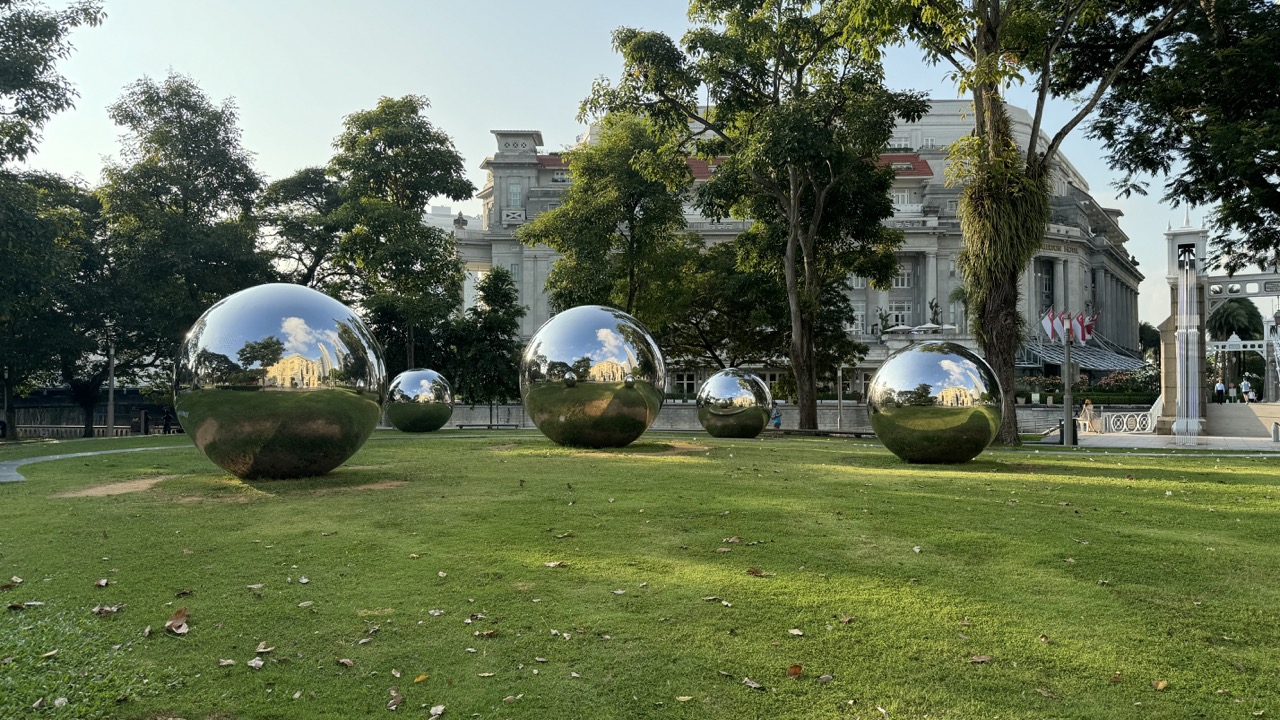
Singapore’s public places include murals, sculptures, architecture, historic displays and visual identities. Art can reflect memories of communities or invite residents to reconsider familiar surroundings. In Punggol, a student can observe how colour and shape appear in parks, residential buildings, libraries and shared community spaces. These examples can provide ideas without requiring a claim that any particular artwork has a specific intention unless the artist or commissioning body has explained it. The student should distinguish “I notice a circular form” from “the artist definitely intended to represent unity.”
That distinction is especially useful when discussing cultural work. A learner can investigate what a visual motif means in a documented tradition, but should avoid attributing one fixed meaning to every work from the same community. Ask who made the work, when and for what audience, and what source supports the interpretation. The aim is respectful cross-cultural awareness rather than collecting stereotypes. A local museum’s description or an artist’s statement can help; a random social media caption may be less reliable. Context improves analysis when it is connected to what the viewer can actually see.
Sketchbooks: why the first idea is often not the best
A sketchbook is useful when it records a developing line of thought, not only the final drawing. A learner may begin with an image of crowded school bags, notice repeated shapes, try different layouts and discover a clearer way of expressing busyness. The early sketches may not be beautiful; they show experimentation. Students should keep studies that reveal an important discovery and annotate changes in plain language. “I removed the background pattern because it competed with the main figure” communicates a decision better than “I made it nicer.”
The hardest part can be choosing when to stop exploring and begin refining. Too little exploration produces a predictable first solution; endless exploration can prevent completion. A simple study timetable helps: research the subject, produce several alternatives, select a direction, test one media technique and make a developed version. This is a learning routine, not a substitute for the timed 2027 examination portfolio. For assessed coursework, follow the school teacher’s precise rules on time, allowed assistance and evidence.
Media exploration: what does a material let the artist say?
Pencil, ink, paint, collage, photography, digital imaging and three-dimensional materials offer different qualities and demands. A pencil may capture tonal observation quickly; collage can place contrasting images together; photography records a particular viewpoint; digital tools allow layers and revisions. A student should choose media because they support an intention, not simply because one is fashionable. Ask how the chosen material contributes to the theme and what becomes easier or harder when using it. This gives the learner a practical reason to experiment.
The 2027 portfolio requires visual exploration across two or more art forms or media, with design among them. This prevents a narrowly repeated set of images from representing the full exploration. It does not require a family to buy every art supply available. School resources and teacher-approved materials are appropriate starting points. Some paints, solvents, cutters and heated equipment require safety precautions or supervision. A parent can support careful planning and responsible material use without turning the home into an unsupervised workshop.
Personal voice: what makes work more than a copy of a reference?
Studying existing artwork can teach composition, techniques and cultural context. But copying a reference without independent thinking does not demonstrate a student’s own development in the same way as making a purposeful adaptation. Suppose the child admires a photograph of a rainy street. Rather than reproduce it exactly and claim it as original, they could investigate the reflections, viewpoints and colour relationships, then use those observations to create a different scene that matters personally. The source should be acknowledged where appropriate. This respects both the original creator and the student’s learning.
Personal voice does not demand a dramatic life story. A student can explore everyday experiences such as waiting at a bus stop, sharing a room or noticing a changing neighbourhood. What matters is a coherent intention that can guide decisions. The student should be able to say why they chose the subject, what they wanted viewers to notice and how particular visual choices were supposed to help. Over time, these explanations become clearer and more distinctive. The portfolio can then show a developing idea rather than a random collection of unrelated attractive pictures.
The 2027 Paper 1: why there is a written Art examination
| 2027 Art component | Marks | Weight | Time / format |
|---|---|---|---|
| Paper 1, Section A | 5 | Part of 40% Paper 1 | Fill-in, matching and multiple-choice questions |
| Paper 1, Section B | 15 | Part of 40% Paper 1 | Short-answer analysis |
| Paper 1, Section C | 20 | Part of 40% Paper 1 | Short visual/design task and explanation |
| Paper 2, Part A | 35 | Part of 60% portfolio | 10 screens of visual materials |
| Paper 2, Part B | 25 | Part of 60% portfolio | Two artworks in different media |
The published 2027 Paper 1 is a 90-minute examination marked out of 40. Section A checks relevant knowledge, Section B uses short answers to discuss artwork and design, and Section C requires a concept sketch and explanation in response to a stimulus. All questions are compulsory. The paper assesses art forms and media, visual qualities and design concepts, context and artistic processes. A learner who only practises colouring may struggle with interpretation, while a learner who memorises definitions but cannot sketch a response will also be underprepared. The paper connects knowing, seeing and making.
At home, a safe practice task is to show the student a simple fictional poster and ask what message it conveys, what makes the title readable and how one change could improve the design. The learner writes two short sentences and makes a small alternative sketch. That sequence is closer to meaningful Art reasoning than asking for a long essay on every familiar term. The official specimen paper, available through the SEAB syllabus index, gives the proper appearance of the examination. Use it only when age-appropriate and avoid presenting it as a Secondary 1 weekly test.
The 2027 Paper 2 portfolio: 10 screens and two distinct artworks
The 2027 K126 portfolio contributes 60% of the final subject result and carries 60 marks. Part A consists of ten screens of visual materials including research, drawings, experiments or in-progress works and journal spreads. It must explore two or more art forms or media and include design. Part B requires two artworks using different media, and those works must not be the same as the works already selected for the visual materials. The purpose is to demonstrate investigation, development and resolved artistic expression, not merely to fill a prescribed number of slides with decorative material.
SEAB specifies that the portfolio is completed in 18 hours within eight weeks. The school internally assesses the work, and examination authorities externally moderate it. This makes authentic process evidence and supervision important. Parents should not assemble the portfolio, produce artwork on the student’s behalf or use generative tools to replace the student’s assessed work. Helping the teenager set reminders, find a quiet place to reflect or discuss the meaning of teacher feedback is different from creating the submission. When uncertain, the school’s Art teacher should clarify what assistance is allowed.
How to choose and arrange ten screens without filling them with repetition
A screen should contribute a visible part of the story: interests, visual research, material experiments, comparisons, development, evaluation or the connection to a final work. Ten nearly identical sketches communicate less exploration than a small number of meaningfully different tests. A learner can label what was discovered and why the discovery affected the next decision. For example, an early photograph might reveal interesting silhouettes; a drawing can abstract those forms; a digital composition can compare arrangements; a final screen can explain the intended effect. Each screen should be relevant to the overall investigation.
The student should not copy a sample portfolio as though it were a compulsory template. The actual examination brief, teacher guidance and marking criteria take priority. A portfolio is evidence of a student’s decisions; two learners who respond to different themes may use different sequences of research and experimentation. Parents can ask whether each page answers a question: What did I notice? What did I try? What changed? Why does this matter to my intended work? If a page answers none of these, it may be filler rather than useful evidence.
How to approach the two finished works responsibly
The two artworks in the 2027 portfolio must use different media. Different media provide opportunities to demonstrate contrasting skills and purposes, but two different tools do not automatically guarantee strong work. The student should connect each piece to a coherent intention and show how its chosen medium serves that intention. One work might emphasise expressive colour, while another explores a design concept through digital or three-dimensional means where approved. The example is illustrative only; students must follow the actual assignment’s constraints, available equipment and teacher supervision.
Strong reflection considers whether the finished works communicate effectively and what remains limited. A student may find that a collage feels too crowded or that a drawing’s important figure becomes lost in the background. Explaining the problem and what might be revised is useful. Avoid writing grand statements that cannot be supported by the work. “I wanted the central figure to appear isolated, so I increased the empty space around it” is more informative than “My artwork proves that everyone feels lonely.” Art interpretation can invite viewers into a conversation without requiring the artist to claim universal truths.
Art examination deadlines: managing time without taking over
The 18-hour, eight-week portfolio arrangement means a student’s time should be spent on work that advances the submission, not endless decoration. A sensible planning conversation includes the brief, early research, alternatives, experiments, developed works, documentation and final checking. The teacher will set the official examination process. A parent can help a child record ordinary calendar reminders, but should not supervise or replace a formally timed assessment session. Work authenticity and supervision are central to fair assessment.
If a student is behind, the right move is to speak with the teacher about what remains possible under the rules. Completing all the portfolio decisions at home, inventing earlier sketches or borrowing somebody else’s artwork would defeat the purpose and may breach assessment requirements. Learning to manage unfinished work honestly is also a valuable skill. A student can improve the quality of the remaining steps by clarifying the intention, prioritising essential evidence and working within the permitted conditions. Panic rarely makes creativity more coherent.
Art, copyright and AI-generated reference images
Students can research artists and visual material, but they need to respect attribution, permission and authenticity. A photograph or artwork available online is not necessarily free for unrestricted reuse. A reference may help observation or stimulate an idea, yet its role should be documented according to the school rules. Generative image tools introduce further questions: Is the output allowed, how was it created and does it replace the student’s own exploration? A student must follow the current school and SEAB coursework rules rather than assume that an AI-created image automatically counts as personal artistic work.
A useful practice approach is to make original observational photographs of ordinary household objects, draw from life and use appropriately licensed educational examples. Parents should avoid asking a child to upload identifiable classmates or other people’s private images to unapproved tools. If a portfolio explores a community issue, students can collect general visual information responsibly without intruding on individuals. This strengthens visual literacy and ethical judgment together. An artist’s voice is more credible when the work makes its sources and decisions clear.
Four weeks of calm foundational Art learning for Punggol families
Week 1 — Observe a real subject and identify the idea
Ask the student to select a manageable visual subject such as shadows from a balcony, stacked stationery or reflections after rain. Make two five-minute observation sketches from different viewpoints and record three details noticed after looking closely. Then ask what feeling or question the subject might express. The purpose is to establish a baseline: does the child observe, draw from memory alone or struggle to explain an idea? Keep the first studies, including mistakes, because they show the starting position. There is no need to turn the activity into an examination portfolio.
Week 2 — Explore visual options deliberately
Choose one feature such as colour, line quality or composition and make three small variations. Try the subject with different dominant shapes, more empty space or a changed point of view. Ask which option makes the intended message clearest and what evidence supports the choice. Keep materials safe and inexpensive. The student should say why one change matters rather than copying an adult’s preferred design. This develops a habit of making and explaining artistic decisions. A limited, purposeful experiment can teach more than producing a large polished image immediately.
Week 3 — Connect the idea to design and another medium
Turn an aspect of the theme into a practical design problem, such as creating a clear information sign for a fictional community activity. Ask who needs to read it, what information matters first and how the visual hierarchy supports them. Explore a second medium such as a teacher-approved simple collage or digital draft, but do not introduce hazardous tools. Compare the expressive piece and the functional design. The learner should see that a design can be artistic and purposeful while still respecting the needs of its audience.
Week 4 — Reflect and check independent progress
Give the student a new object or visual stimulus they have not practised. Ask them to describe its visual qualities, sketch one alternative response and explain why they made that choice. Compare the specificity of the explanation with Week 1. Can they identify evidence rather than use only “nice” or “beautiful”? Can they explain a design trade-off without parental prompting? If progress is visible, keep practising lightly. If an important barrier persists, seek the Art teacher’s advice before adding lessons or buying more equipment.
Three students, three different problems in G1 Art
Alicia can draw accurately but struggles to develop ideas
Alicia makes careful copies of photographs but her sketchbook shows almost no alternatives. Her teacher asks her to explore a theme of waiting, using a Punggol bus-stop experience as inspiration. Alicia studies repeated shapes, viewpoints and the contrast between crowded and empty spaces. She then produces three original compositions instead of another replica of the photograph. Her learning moves from technical copying to personal visual decisions. The improvement is not simply that the final work looks better; she can now explain the connection between observation and expressive intent.
Kai Kai has a strong idea but crowded presentation
Kai Kai wants to design a poster encouraging neighbourhood recycling. He uses many bright colours, four decorative fonts and several illustrations, but the collection date is hard to find. His tutor asks him to show the draft to a reader who has only a few seconds. The reader misses the important action. Kai Kai revises the visual hierarchy, simplifies the layout and makes the time and location prominent. His design becomes more effective because he understood the audience. The challenge was not a lack of creativity but the ability to use visual choices purposefully.
Mira enjoys experimenting but cannot complete a resolved work
Mira tries many media and fills pages with exciting fragments. She changes direction whenever another technique looks interesting. The teacher asks her to choose one intention, list two criteria for a successful piece and set a manageable deadline for developing it. Mira selects a limited colour palette and makes a finished study that she can explain. Her exploration remains visible, but it now leads to a coherent result. This is an important transition from enjoying individual techniques to managing an artistic process from beginning to reflection.
What G1 Art can teach beyond examination marks
Visual literacy helps students read advertising, public notices, photographs, social media and diagrams more carefully. A person who notices framing, contrast, omitted context and implied messages may be less likely to take every image at face value. Art also gives students ways to express ideas that do not fit easily into a short written answer. These outcomes can be valuable across careers, design interests, community life and personal development. They should not be exaggerated into a guarantee that every Art student will become more successful in every other academic subject.
Art-related interests may connect later with visual communication, design, animation, architecture, media, museums or creative industries, but any specific course has its own eligibility rules. A G1 Art result cannot guarantee entry to a particular diploma. Parents should consult school education and career guidance materials and current admissions information when those decisions arise. For a Secondary 1 pupil, it is usually more helpful to nurture curiosity and reliable studio habits than to set a definitive career target too early. A teenager may discover new interests as their observation, confidence and skills develop.
When extra tuition helps—and when it is not the right answer
A child who has difficulty reading a design brief, organising an explanation or working through basic measurements may benefit from targeted academic support. But the national Art portfolio involves school supervision, authenticity and specific materials and deadlines. A generic tuition provider should not promise to complete or authenticate assessed artwork. eduKate provides small-group tuition in Punggol in its offered programmes; families should confirm whether suitable Art-specific support is actually available rather than assume every examinable subject has a matching tutorial.
Sometimes school feedback and a quiet home drawing routine are enough. If a learner is making steady progress, adding more classes can reduce the time available to observe and create independently. If a specific difficulty persists, ask the Art teacher which part is missing: observation, design concepts, material handling, reflection or time management. Support should fit that diagnosis. The best outcome is not a child whose parents produce a beautiful portfolio, but a student who can investigate an idea, make meaningful choices and take responsibility for their own work.
Frequently asked questions about G1 Art
Is G1 Art the same as Posting Group 1?
No. PG1 concerns secondary admission, while G1 identifies the level of the Art subject. Individual subject arrangements are handled by the school under Full SBB.
What is the 2027 G1 Art code?
SEC G1 Art is K126 in 2027; its pre-SEC reference code was 6128.
How much is the 2027 Art examination worth?
Paper 1 is worth 40% and consists of a 90-minute, 40-mark examination. Paper 2 is a portfolio worth 60%.
What is required in the 2027 portfolio?
Ten screens of visual materials exploring at least two art forms or media, including design, plus two artworks using different media.
Does the portfolio take a whole year?
The published 2027 syllabus specifies 18 hours within eight weeks for Paper 2 under the examination arrangements.
Can students include somebody else’s artwork as their own?
No. Follow attribution, originality and permitted-source requirements. Parents must not create or fabricate assessed work for the student.
Is drawing accuracy everything?
No. Observation, idea development, visual communication, design choices, media exploration and reflection all matter.
Are students allowed to use digital art?
Digital approaches may form part of relevant Art exploration where permitted, but approved methods and authenticity rules are determined by the syllabus and school.
Does every secondary school offer examinable G1 Art?
Do not assume so. Confirm the actual subject combination and resources with the school.
Can a student practise Art without buying expensive supplies?
Yes. Simple observation sketches and teacher-approved materials can develop meaningful skills. The school should advise on requirements for assessed work.
Will G1 Art guarantee a design or media diploma?
No. Future courses have their own admissions criteria, subject requirements and portfolio processes. Check current official guidance for the relevant year.
What should a parent do if the student is struggling?
Ask the teacher for one concrete target, such as clear visual hierarchy, observation or explaining a design decision. Repair that first instead of increasing every type of practice.
Official references and useful next reading
- SEAB: official 2027 G1 SEC subject list and specimen-paper links.
- MOE/SEAB: 2027 SEC G1 Art K126 syllabus PDF.
- How PG1 Works at Punggol: G1 Art K126, portfolio and written paper.
- Punggol Secondary 3: comparing Art, Design and Technology and Nutrition and Food Science.
- Singapore Education 2027: understanding G1, G2 and G3.
Start here: ask your child to observe one ordinary scene, make two small sketches and explain one deliberate change between them. Art learning becomes stronger when a student can see, make and give a reason—not merely finish more pages.


