
PG3 means Posting Group 3, the Secondary 1 entry group under Full Subject-Based Banding; it does not guarantee a place in a junior college, polytechnic, institute or university. For Punggol families, the important long-term question is how a child’s actual G3 and other subject levels, school experiences and eventual results support suitable options after secondary school. Singapore’s first Singapore-Cambridge Secondary Education Certificate (SEC) examinations take place in 2027 for the relevant graduating cohort, replacing the separate N- and O-Level examinations under Full SBB.
The dates matter. A child entering Secondary 1 in 2027 will not sit the inaugural 2027 SEC simply because they are PG3; a typical four-year secondary journey would place their graduation later, and the rules in force for that later cohort must be checked. For students graduating in 2027, a new Post-Secondary Admissions Exercise begins in 2028, bringing applications for JC, Millennia Institute, polytechnics and ITE pathways into a coordinated process. This guide explains the distinction between an entry group, actual subject qualifications, future options and sensible family planning.
- PG3 is an S1 admission group; G3 is an individual subject level broadly mapped from the former Express standard.
- Full SBB began with the 2024 Secondary 1 cohort; that cohort reaches its first SEC examinations in 2027.
- SEC shows subject achievements at the levels offered, potentially including G1, G2 and G3 according to the student’s actual programme.
- Entering Secondary 1 in 2027 is not the same as graduating in the first SEC year.
- JC, Millennia Institute, polytechnic and ITE are different post-secondary pathways; admission depends on current course and subject criteria.
- From the 2028 admissions year, a new MOE Post-Secondary Admissions Exercise (PSE) applies to relevant routes.
- MOE announced revised JC admissions using L1R4 instead of L1R5 from the 2028 admission exercise; details must be read from official sources.
- Interest-based routes such as DSA-JC, Poly-EAE and ITE-EAE continue subject to their published requirements.
- Punggol families should combine academic foundations, school guidance, subject-choice decisions, CCA and personal interests.
- Never infer a guaranteed destination from PG3 alone; verify policy for the cohort and programme actually applying.

From PG3 at Punggol to SEC and post-secondary choices
1. Definition lock: school entry, subject level, qualification and destination
A useful map has four stages. Posting Group 3 describes how the child enters mainstream secondary school through the PSLE posting framework. General 3 describes the academic level of a particular subject. The SEC is a future national qualification recording subjects examined at their applicable levels. JC, Millennia Institute, polytechnic and ITE are possible destinations after secondary school, each subject to its admission framework. Confusing these stages leads to false promises.
Imagine a parent who says, ‘My child entered through PG3, so JC is assured.’ That statement skips years of learning and the actual admissions requirements. A PG3 student can experience changing interests, different subject strengths and choices during secondary school. Even strong examination preparation should be organised around real eligibility rather than the assumption that an early label determines the final route.
At the same time, PG3 should not be used as a pressure tool. A child with strong academic readiness still needs space to explore. Technical curiosity, care for people, business interests, languages, design and scientific enquiry may lead to different educational plans. The question is not which route sounds most impressive to an adult. It is which route can develop the student’s strengths and support meaningful future work.
Write the four stages as separate headings in a family notebook. Under each, record only confirmed information. For entry, note the actual posting result. For subjects, record the school’s official levels and options. For qualifications, check the relevant SEC requirements. For destinations, use published admission criteria for the intake year. This makes a complicated conversation manageable.
2. Why 2027 is an examination milestone, not a universal graduation date
Singapore introduced Full Subject-Based Banding for Secondary 1 students in 2024. The first mainstream cohort following that sequence reaches the new Singapore-Cambridge Secondary Education Certificate examinations in 2027. MOE describes the SEC as replacing the former separate N- and O-Level examinations for the relevant students, with results reflecting the actual subject levels offered. That is a national structural change.
A child who is still in Primary 6 in 2026 and enters Secondary 1 in 2027 begins a different timeline. They are not an SEC candidate that same year. They will progress through their secondary programme before sitting the relevant examinations. Families should therefore distinguish announcements about the first SEC cohort from rules that will apply when their own child graduates several years later.
The difference matters when reading headlines. A news article about 2027 SEC arrangements may help explain the direction of the system, but it cannot confirm every school subject combination or admissions rule for a later cohort. Parents should keep the policy announcement date beside the child’s expected examination year. That simple habit prevents accidental use of the wrong timeline.
For a Punggol student entering Secondary 1, the near-term task remains adjustment: reading more precisely, building algebra, learning Science explanations and managing a wider timetable. It is sensible to understand SEC early, but harmful to turn the first weeks of Secondary 1 into an imagined final-examination countdown.
3. What the SEC qualification actually records
The SEC reflects the subjects students offer at their respective General levels, subject to the current national framework. Under Full SBB, one student may study a combination of levels that differs from a classmate’s. Therefore, the meaningful academic record is the subject-by-subject profile, not a single statement that every child must carry an identical stream certificate. The certificate recognises different patterns of learning within the new structure.
This does not mean that subject levels have become interchangeable. G1, G2 and G3 represent different academic demands. Post-secondary programmes may specify particular subject levels, grades and combinations for entry. Families should examine requirements carefully rather than assume any pass in a subject has identical admission value. Flexibility is valuable precisely because it allows a more specific match between learner and pathway.
Take two hypothetical students. One excels in English, Mathematics and Science at G3. Another has a mixed profile with a particularly strong subject. Their records should be read accurately, and the appropriate next step depends on actual qualification rules and aspirations. Comparing the number of G3 subjects as if it were a character score misses the point of subject-based recognition.
For each school year, maintain a simple record of the child’s subjects, current levels, curriculum progress and official advice about future choices. When discussing post-secondary possibilities, place the published admission criteria beside that record. This is better than drawing an arrow from PG3 directly to a particular institution and leaving the difficult middle years unexplained.
4. Secondary 1 and Secondary 2 are foundation years
Many parents begin planning for JC or polytechnic as soon as PSLE results are released. Early ambition can be useful, but the work that matters in lower secondary is concrete: learning to write clear English, reasoning with Mathematics, explaining Science concepts and reading Humanities sources responsibly. A student who masters these skills has more choices later because they can handle increasingly complex schoolwork.
English has a special role because it is both a subject and the language through which many other school questions are understood. A child may understand a Science concept yet lose marks through an imprecise explanation. Mathematics similarly supports scientific measurement, finance and technological subjects. These connections justify protecting fundamentals before creating elaborate plans for future course names.
Ask the child to show a piece of work they found difficult and explain how they corrected it. If they understand the correction only while looking at the answer, independent retrieval is still needed. A small routine of explanation, fresh practice and later review can produce more durable learning than a stack of unexamined worksheets.
Lower secondary is also when students begin identifying interests through CCA, project work and school programmes. A teenager who enjoys designing practical solutions may discover an aptitude that was not obvious at PSLE. Those discoveries should inform later subject choices. The purpose of the foundation years is to build capability and curiosity, not to restrict the child to a career prediction made at twelve.
5. Subject choices in upper secondary deserve careful timing
As students approach upper secondary, schools provide guidance about subject combinations and eligibility. The options depend on the school’s offerings, applicable MOE policies, student performance and readiness. Entry through PG3 does not automatically entitle a student to every combination. Parents should check subject prerequisites and the actual timetable before treating a desired combination as certain.
An academically interested child may be drawn to Additional Mathematics, particular Sciences or Humanities combinations. Ask whether the foundations are stable and whether the workload is manageable alongside other commitments. The most demanding combination is not always the most useful one for every future route. A well-chosen set of subjects can allow deeper learning and stronger final performance.
Suppose a student enjoys computing and design but has struggled with algebra. The family should not simply order more advanced Mathematics worksheets. First investigate which concepts are unstable, what the school recommends and which future courses actually require particular subjects. The plan may involve repair, extension or a different subject balance. It should be built from evidence.
Upper-secondary subject decisions can have future consequences, so discuss them early enough to understand options but not so early that conjecture replaces school advice. Keep a list of questions to ask at the appropriate briefing. Record any official eligibility or subject-level decisions, then update the family plan rather than continuing to debate a superseded assumption.
6. Junior college is one possible route, not the PG3 default
Junior college prepares eligible students for a pre-university curriculum, commonly leading to A-Level or other applicable routes. It can be suitable for students who want further academic study before selecting a degree or other next stage. But an S1 posting group is not the admission criterion. Students must satisfy the official requirements applying to their post-secondary application year and chosen institutions.
MOE announced that from the 2028 admission exercise, junior-college admission criteria will use an L1R4 aggregate instead of the earlier L1R5 structure, with additional subject conditions. A parent planning for that year must read the precise official requirements, including which subjects may be counted, rather than assuming that a phrase such as ‘five subjects’ tells the whole story.
Consider a learner who loves Biology but finds timed examinations difficult. The family can explore JC as an aspiration while also studying other science and healthcare learning pathways. The discussion should include teaching style, programme length, academic readiness and the teenager’s genuine interests. A route is valuable when it fits a student, not because it outranks another in family conversation.
Keep JC planning at the appropriate scale. In Secondary 1, encourage sound habits and curiosity. Later, use school counselling, current admissions materials and actual assessment evidence. Revisiting the plan is not indecision; it is sensible adaptation as the student’s abilities and preferences become clearer.
7. Millennia Institute belongs on the family map
Some parents remember only junior colleges when discussing pre-university education, but Millennia Institute is another option with its own programme structure and admission requirements. It should be researched on its own terms rather than described vaguely as a spare choice. The right fit depends on a student’s preferences, readiness and the most current eligibility criteria.
A young person may benefit from comparing the pace, subjects and learning environment of different pre-university options. Families should use official institution material to check duration, offerings, academic conditions and student support. A name alone does not convey how the course will feel on an ordinary weekday.
When discussing longer-term plans, ask the teenager what kind of learning they enjoy. Do they like sustained academic reading and theoretical questions? Are they more motivated by laboratory, project or applied work? The answers can change with experience, which is why an early conversation should remain exploratory.
Do not make promises about Millennia Institute placement based on PG3 or an estimate of SEC grades. Use the relevant application rules when the time comes. The value of naming the route now is to keep the family’s map complete and encourage informed rather than prestige-driven decisions.
8. Polytechnic education is a distinct applied pathway
Polytechnics offer diploma programmes across many fields and generally place significant emphasis on disciplinary and applied learning. For a student who enjoys investigating problems, working on projects or connecting theory to practice, a diploma may be a compelling route. It is not a consolation prize for someone who did not choose JC. It has its own demands, entry criteria and progression possibilities.
Parents should look beyond broad labels such as engineering, business or health sciences. Courses can differ in subject requirements, learning style and the kind of problems students tackle. A child who says they like technology may actually enjoy writing code, designing user experiences, maintaining systems or studying how organisations make decisions. Those interests point to different questions for later course research.
MOE’s transition to the SEC and 2028 post-secondary admissions means families should pay attention to how subject levels and results are recognised for the intake they are considering. Do not import an outdated entry-score formula from a former examination pathway. Check current official information for the precise course and applicant group.
During secondary school, encourage the child to make or explain something rather than only collect course brochures. A small project, thoughtful CCA contribution or school-based investigation can reveal what the learner enjoys about applied work. The evidence from doing is often more useful than a prestige ranking.
9. ITE pathways develop specialised skills and offer progression
The Institute of Technical Education provides vocational and applied education with routes such as Higher Nitec programmes, subject to current offerings and admission arrangements. These programmes should be discussed with respect. Skilled practical work underpins healthcare, engineering, digital systems, hospitality, transport and many other fields. Families lose useful options when they treat applied education as a social label rather than examine what students actually learn.
An ITE pathway has specific programme structures and possible progression routes, which should be verified from official institutional materials for the year. Eligibility can depend on subject results, levels and the programme applied for. The family should not make promises about direct entry or later diploma progression without checking the current rules.
Suppose a teenager is enthusiastic about practical electronics and learns best when they can build and test. That interest is valuable information. The family can explore technical training and also compare related polytechnic or other routes, depending on actual eligibility. No pathway should be selected merely because an adult assumes that certain learners belong there.
Strong communication, numeracy, teamwork and careful reasoning remain useful in technical education. A PG3 student should cultivate these foundations even if their ambitions change. The goal is to choose a programme that helps the learner acquire meaningful skills, not to defend an old school label.
10. What changes with the 2028 Post-Secondary Admissions Exercise
MOE announced a new Post-Secondary Admissions Exercise, or PSE, beginning with the 2028 admissions cycle. Students graduating with the first SEC results can apply across relevant post-secondary pathways when results are released. The coordinated structure is intended to support decisions across JC, Millennia Institute, polytechnics and ITE programmes using the applicable criteria.
An important policy detail is the role of choice order in posting tie-breaks under the new exercise. MOE’s 2026 announcement describes the sequence of citizenship, choice order, gross aggregate score and computerised balloting where applicants have the same net aggregate, subject to the framework. Families should check the full current instructions for the route they actually use, rather than apply a simplified internet summary blindly.
A coordinated exercise does not mean every applicant becomes eligible for every programme. Academic prerequisites and programme conditions remain relevant. Nor should parents assume that an admissions timetable published for 2028 will remain unchanged for a child applying years later. Treat the first year as an important example of the system’s direction and verify subsequent updates.
To prepare well, teach the teenager to distinguish a preferred course from a merely possible course. The family can learn to rank authentic choices, examine admissions rules and ask what the learning experience includes. This is a useful decision-making skill whether the student eventually chooses JC, a diploma, technical education or another approved pathway.
11. Early-admission routes can recognise interests and talent
MOE has stated that routes such as Direct School Admission for junior colleges, Polytechnic Early Admissions Exercise and ITE Early Admissions Exercise continue within the revised system, subject to published requirements. These avenues may allow students to demonstrate interests, abilities and achievements beyond a single aggregate. They are not guaranteed bypasses of academic criteria or commitments.
Families can help the student build a truthful record of meaningful work over time. Useful evidence might include an explained project, relevant CCA contribution, reflective writing about a challenge or a sustained interest in a field. A folder filled with photographs of unrelated achievements is less informative than a small portfolio showing what the student learned and can actually do.
Ask the teenager to explain one project without a script. What was the problem? What choices were made? What failed? How was the design or performance improved? These questions reveal understanding and self-awareness. A student who can discuss the limits of their work often demonstrates stronger judgement than one who makes exaggerated claims.
Application requirements vary by route and year. Check official deadlines, selection methods, commitments and academic conditions, and never confuse a school’s marketing event with a formal admission offer. A family should encourage genuine exploration first; the useful portfolio grows from real activity rather than frantic credential collection.
12. CCA and projects matter even when an examination is approaching
Secondary school should develop more than the capacity to reproduce answers on a timed paper. CCA, service, creative work and collaborative projects can reveal the student’s interests and teach practical habits. They also become the context in which young people practise leadership, communication, responsibility and recovery from setbacks. These capabilities support both further study and future life.
A child involved in an environmental project might learn to measure waste, compare information and persuade a group to change its habits. That experience combines numeracy, science, communication and ethics. A student in performing arts might learn to rehearse, accept critique and manage nerves. The immediate value does not depend on whether the activity becomes a formal admissions item.
Parents should avoid replacing every non-examination activity with tuition as the child gets older. There may be periods when examination revision takes priority, but a sustainable plan preserves appropriate rest and engagement. Motivation often benefits when teenagers can see why learning matters in a real setting.
Record reflections sparingly but accurately. After an activity, ask what decision was difficult, what evidence guided the choice and what would be improved next time. A short sincere explanation is more valuable than polished claims about leadership written only for a future application.
13. A school-based example from Punggol
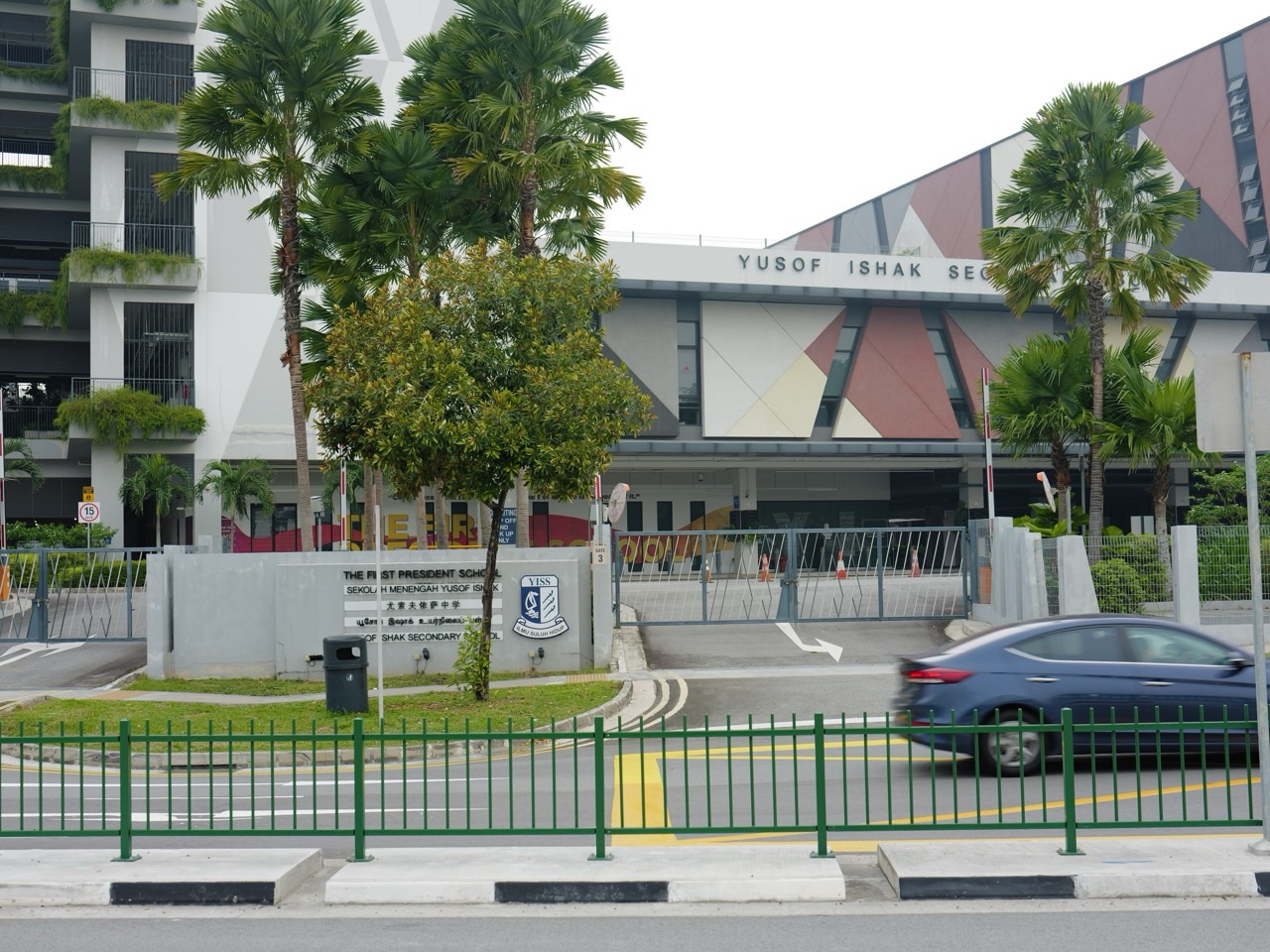
Consider a fictional PG3 learner living near Waterway Point who begins at a Punggol secondary school. In Secondary 1 the child enjoys Science but repeatedly loses marks in algebra. The family does not decide immediately that the student must choose a Science-heavy career or give up on technical interests. They ask the teacher to identify the algebra difficulty, practise the relevant concepts and observe whether the child improves independently.
In Secondary 2 the student joins a design or environmental project and discovers that planning a test is enjoyable. The family visits programme information for several possible future routes, including JC and polytechnic options, without treating any as guaranteed. They ask which subjects will be important if the interest continues. At the appropriate time, the school provides the official subject-choice guidance.
Later, the student may decide that applied engineering appeals more than a purely theoretical route, or they may find a new love of academic research. The direction can change. What matters is that English, Mathematics and the relevant sciences remain strong enough for the options being considered. The family checks actual admissions requirements rather than building a career narrative from one Primary 6 score.
This example is illustrative, not a claim about a particular school’s timetable or admission outcomes. It shows why planning should be an iterative process. Learn, observe, compare, choose and revise. A student’s future becomes clearer through evidence collected over several school years.
14. An honest four-year planning rhythm
During Secondary 1, focus on adjustment and foundations. Learn how Full SBB works, confirm subject levels, make sense of the school timetable and build confidence in English, Mathematics and Science. Encourage CCA participation and help the child seek assistance before a repeated difficulty grows. This is the wrong year to overload every evening with speculative preparation for a future course.
During Secondary 2, look more closely at subject strengths, school feedback and emerging interests. Attend relevant briefings and research upper-secondary subject arrangements. Keep the student involved. A child should understand why a subject might be demanding and what alternatives are available. Use formal guidance rather than relying solely on an older sibling’s experience.
During Secondary 3, review the actual subject combination, assessment trends and future aspirations. Explore published post-secondary requirements carefully and identify any gaps that need focused teaching. Continue meaningful CCA and project involvement. The plan should have several sensible pathways, not one fragile dream that collapses if a single test goes badly.
During the graduating year, follow the official SEC syllabus, examination dates and admissions notices for that cohort. Practise independent examination execution and assemble truthful application evidence where appropriate. After results, evaluate actual eligible courses and the updated admissions process. Decisions should grow more precise as the information becomes real.
15. What tuition can and cannot do for future options
Tuition can strengthen a subject foundation, improve reasoning, help a child interpret feedback and provide structured practice when a genuine need exists. It cannot promise that PG3 admission will become a particular SEC grade or that a specific institution will offer a place. Parents should be wary of any language that compresses years of effort and admission rules into an unconditional guarantee.
A constructive tutor begins with real work. Is an English response unsupported by the text? Is the student misusing algebraic transformations? Does a Science answer lack the causal link? Has the learner developed a timing problem under examination conditions? These are specific issues that can be observed, taught and tested. Broad exhortations to ‘work harder’ do not substitute for diagnosis.
Small-group tuition may be useful when the tutor can see each student’s working closely and provide immediate correction. The family should still assess class fit, schedule and the ability to transfer what is learned to independent schoolwork. Effective extra support should gradually reduce the amount of adult prompting required, rather than creating permanent dependence.
Future options are protected by stable knowledge, good judgement and honest evidence of readiness. A child may change their mind about course preferences several times. Teaching that builds durable skills remains valuable across those changes; teaching aimed only at a speculative destination may become wasted effort.
16. A Punggol family decision sheet for the future
Place the student’s actual subjects in the first column, current level and results in the second, and observed interests in the third. In a fourth column, list possible future pathways with links to official admission requirements. Mark each item as confirmed, historical or still to verify. This keeps a family plan honest as policies evolve and the teenager’s strengths change.
Add a section for practical life. What commuting range could the household manage for a post-secondary institution? Does the child prefer a project-based programme or a more theoretical curriculum? Are there caregiving, financial or other family constraints that deserve early discussion? These issues matter, but should not be confused with academic eligibility itself.
Once each year, invite the student to explain one option they like and one they would not currently choose. Ask for reasons rooted in actual learning experiences. If the answer changes next year, record the new evidence rather than accuse the child of being inconsistent. Exploration is one of the purposes of secondary education.
Keep the future map flexible. PG3 is where one school chapter began; it is not the final description of the learner. Good planning uses the latest official criteria, develops strengths, repairs weaknesses and respects the young person who will live with the choice.
Frequently asked questions about PG3, SEC and future options
Will a PG3 student entering Secondary 1 in 2027 sit the 2027 SEC?
No. The 2027 SEC is the inaugural examination year for the relevant graduating Full SBB cohort, which began Secondary 1 in 2024. A student entering Secondary 1 in 2027 has several years of secondary education ahead and must follow the examination framework applicable to their eventual graduating cohort.
Is PG3 enough to qualify for junior college?
No. PG3 describes Secondary 1 posting. JC admission depends on the actual national qualification, applicable subject and grade requirements, and the admissions rules in force for the student’s year. MOE announced revised L1R4 criteria from the 2028 admission exercise, which should be read in full rather than reduced to a slogan.
Are polytechnics only for students who cannot enter JC?
No. Polytechnic diploma programmes provide distinct applied and disciplinary learning routes. Students should compare content, assessment style, interests and current eligibility rather than treat the institution types as a simple ranking of personal worth.
Does SEC give every student the same subject levels?
No. The certificate reflects the subjects and General levels actually offered by the student under the applicable system. Different profiles can lead to different eligible routes. Confirm exact requirements with current MOE, SEAB and institution materials.
What is the PSE in 2028?
The new Post-Secondary Admissions Exercise announced by MOE for 2028 coordinates applications across relevant post-secondary options for the first SEC cohort, subject to programme requirements. Later cohorts should check their own year’s official arrangements; the 2028 rules are not a timeless guarantee.
Will early-admission options still exist?
MOE announced that routes including DSA-JC, Poly-EAE and ITE-EAE continue, subject to published criteria and exercise instructions. Students should develop genuine interests, preserve truthful evidence of work and check current deadlines and obligations.
When should my child choose a future career?
An early interest can guide exploration, but a fixed career decision at twelve is unnecessary. Secondary 1 and 2 are useful for building foundations, trying activities and learning what different fields involve. Later subject and pathway decisions should use stronger evidence and formal guidance.
What if our first choice of future pathway is no longer realistic?
Recheck actual qualifications and current admission requirements, then explore alternative routes that match the student’s strengths. A change of plan is not proof that earlier learning was wasted. English, numeracy, communication, scientific reasoning and independence remain useful across many paths.
Your next step
Write down the child’s actual posting group, subject levels and current learning goals. Keep a separate page for possible JC, Millennia Institute, polytechnic and ITE routes. Replace assumptions with current official admission criteria as the child grows older. For now, build a strong Secondary 1 routine, support genuine interests and let later choices reflect evidence rather than prestige alone.
Sources, official policies and further reading
MOE Full Subject-Based Banding: https://www.moe.gov.sg/microsites/psle-fsbb/ . MOE 2024 SEC and post-secondary explanation: https://cos.moe.gov.sg/2024-announcements/ . MOE 2026 announcement of the 2028 Post-Secondary Admissions Exercise: https://cos.moe.gov.sg/2026-announcements/ . MOE revised junior college criteria: https://cos.moe.gov.sg/2025-announcements/ . Local school guide: https://edukatepunggol.com/2026/09/25/secondary-schools-in-punggol-compared-cut-off-points/ . Verify SEAB syllabuses, institution prerequisites and the actual cohort’s policies from official documents.
Independent Punggol parent guide, policy context reviewed as at 1 November 2026. No school posting, examination grade or post-secondary offer is guaranteed. Properly taught kids shine a bright light into the future.


