
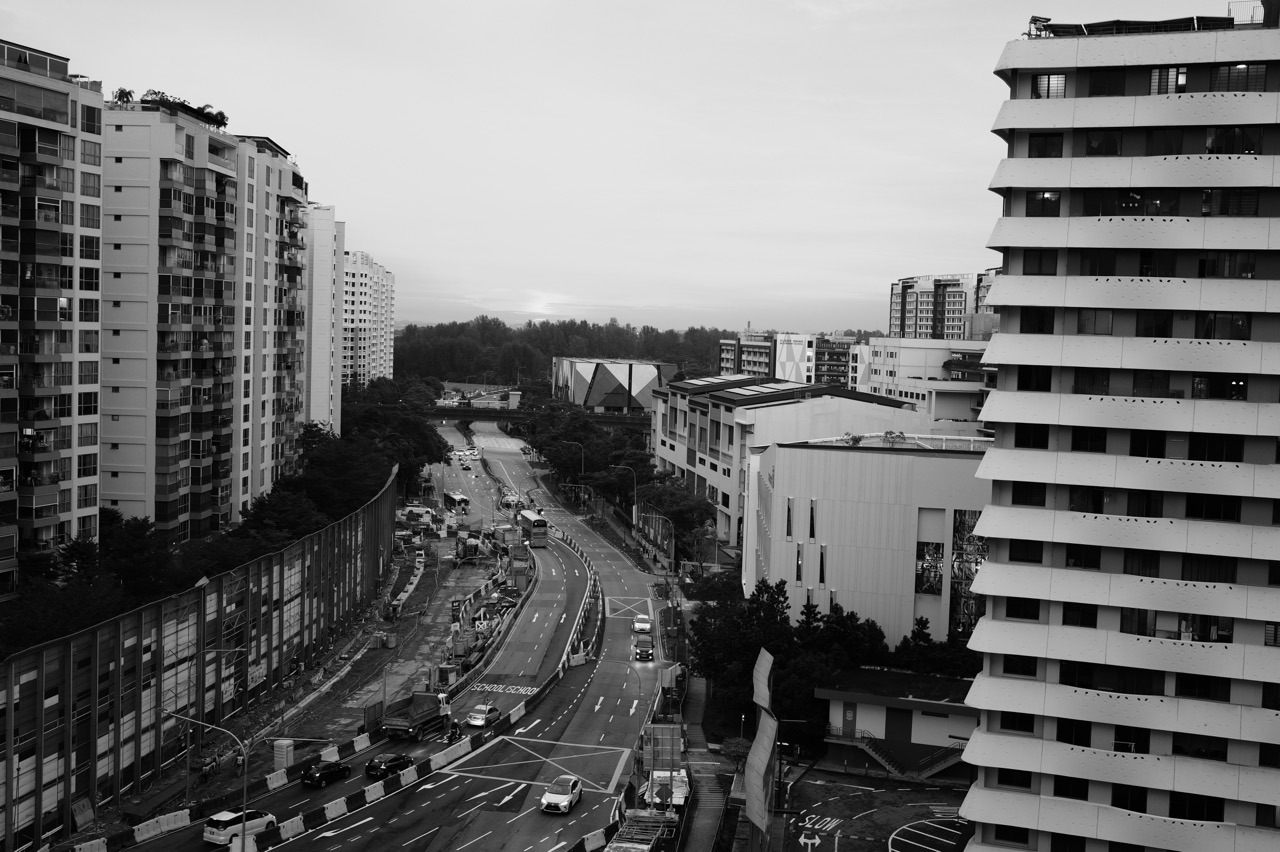
Construction in Punggol can temporarily change the way residents walk to school, reach an MRT or LRT station, collect groceries and return home. The useful response is to read the actual notice, identify the affected section, check the dates and responsible organisation, then test a safe alternative before the next important journey. A construction hoarding does not prove that a future facility is open, and an artist’s impression does not establish today’s accessible route. This guide explains how to plan around ordinary disruptions without relying on rumours.
Different parts of Punggol are changing at different speeds. The developing Punggol Digital District, maintenance around established HDB estates and transport or utility projects can affect local journeys in different ways. There is no single town-wide construction timetable that can tell you whether the path beside your block is available. Residents should use the posted site notice, official agency updates, current transport information and what can be safely observed on the ground. The goal is a workable family routine—not pretending that every inconvenience is a crisis.
- First identify the exact location, works description, operator or agency, and stated start and end dates.
- Check whether a date refers to construction, a temporary diversion, partial access, testing or an official opening.
- Never cross barriers, enter a worksite or use an apparently short route that has been closed.
- Practise a realistic alternate trip to school, work, shops or a care appointment before the affected day.
- Consider a wheelchair, stroller, schoolchild, delivery or late-shift worker separately; one detour will not fit everyone.
- Confirm bus, LRT and MRT information through the current operator or LTA rather than an old route diagram.
- Report specific blocked or unsafe footpaths through the responsible agency or OneService; use urgent channels for immediate hazards.
- Review the plan as notices and site conditions change, then retire outdated screenshots and shortcuts.
Why a small diversion can change a large part of the day
A path closure of a few metres can create a surprisingly large problem when it blocks a crossing or the only convenient connection between a residential block and a station entrance. A parent may need to reach the correct school gate at a fixed time. An older person may depend on a lift and a sheltered route. A worker may have an early reporting time. The apparent size of the construction site tells you little about the effect on daily life.
Punggol has a strong network of neighbourhood walkways, LRT stations and public facilities, but not every home has identical access. A diversion near a busy junction may require a different crossing, another lift or a longer approach. Compare complete journeys from front door to destination rather than measuring the distance between a worksite and an estate name on a map.
The practical question is: which part of your day actually changes? Write down the specific trip, usual departure time and critical arrival point. A lunch walk can often be postponed. A school collection or medical appointment may need a carefully checked alternative. Ranking the consequences prevents a family from treating every notice as equally urgent.
This article is deliberately about living through construction. It does not predict completion dates or offer a separate historical tour of Punggol’s projects. It helps residents turn information into safe decisions while accepting that future developments may be delayed, altered or opened in stages.
Read a construction notice in five parts
Start with the name of the responsible organisation. It may be a public agency, a contractor working for an agency, a building owner or another authorised party. Then identify the exact work area, not merely the name of the general district. Third, locate dates and times. Fourth, look for the pedestrian, bicycle and vehicle arrangements. Fifth, find a legitimate contact or current information channel for questions.
Do not assume the date printed in large type is the day a new station, road or shopping facility will open. It may mark the start of survey works, a trial closure, a scheduled traffic switch or the end of one construction phase. Words such as ‘expected’, ‘temporary’, ‘subject to’ and ‘from’ carry different meanings. Read the caption and legend, not just the headline.
If the notice is difficult to read, photograph it from a safe public place without obstructing pedestrians. Crop or transcribe only the relevant information for a private family plan. Do not publish another person’s face or personal details unnecessarily. Keep the date you photographed the notice because conditions may change after it was displayed.
When two notices seem inconsistent, check which agency issued each and whether they refer to different stages. Contact the project owner or relevant authority for clarification if the distinction affects safety. A single social-media photograph may be genuine but incomplete. Careful reading avoids both complacency and unnecessary alarm.

Separate planned infrastructure from services that are open today
Punggol Digital District is intended to integrate SIT’s campus, JTC’s business park and public connections. URA’s planning guidance describes pedestrian and cycling networks, including routes that are part of the district’s intended design. Planning material is valuable for understanding direction, but it is not a live access map for every passage or building. A planned connection may exist in drawings before it can be used by a resident.
Use precise language at home. Say, ‘The plan shows a future link,’ when the source is a planning document. Say, ‘The agency announced an opening,’ only when an official operational announcement supports that. If you have personally used a path, that is useful evidence of your experience at that time, not proof that its hours or access will never change.
This distinction matters to parents making school travel plans, renters evaluating an address and workers choosing shift schedules. An appealing future shortcut should not be included in a guaranteed commute unless it is operating under relevant current conditions. A delayed facility can affect a real family’s morning routine more than an online discussion acknowledges.
For context rather than day-to-day clearance, read URA’s Punggol Digital District overview and JTC’s official district information. For today’s travel, use current signs and the appropriate transport or agency update.
Begin with the safe path out of your own block
Before planning across town, inspect the route from your front door to the ground-level exit. Lift lobbies, covered links and paths between blocks may be affected by repairs or temporary barriers even when the main road looks unchanged. Do not move safety barriers or squeeze behind a hoarding. If an entrance is closed, follow the permitted alternate route and seek clarification where the signs are unclear.
Think about the return trip. You may leave in dry weather and return carrying groceries in heavy rain. A child may be able to manage the detour with an adult but not independently. A person using a mobility aid may face a barrier that others barely notice. Treat these as separate scenarios, not proof that somebody is being difficult.
If common areas are obstructed by construction material outside authorised zones, report the precise location to the responsible management or municipal channel. Avoid using a public complaint as a substitute for an immediate safety decision. If a route is unsafe now, select a safer alternative rather than waiting beside the obstacle for a reply.
A good path plan should answer four questions without opening ten messages: where to go, where to cross, where to wait and how to return. The plan can be a simple written description and a current map link. It does not need to be a perfect diagram.
Rehearse the school journey before the first affected morning
A new diversion is not the right surprise to introduce five minutes before a child’s school assembly. Adults should check the changed route in advance and rehearse the journey when appropriate. Confirm the school’s relevant entrance, current arrival instructions and safe crossing points. Do not assume that an alternative gate will be opened simply because it seems convenient on a map.
For younger children, practise with a responsible adult. Point out the route change, which barriers mean stop, and whom to ask for help if the plan no longer matches reality. Older pupils may be able to travel independently after an age-appropriate rehearsal, but they still need a fallback contact and a way to report safely if the route is blocked.
A school pickup may be more complicated than arrival. Parents, caregivers and student-care providers need to know where the child will wait and who is authorised to collect them. Avoid sharing the child’s daily movements publicly. Send necessary details to the responsible adults through the school’s accepted channels.
If a route becomes unsuitable, contact the school for appropriate guidance rather than improvising an unsafe crossing. A slightly longer journey can be the right choice when it is understandable and dependable. Reliability matters more than winning back three minutes on a map.
Test the real transport chain, not just the nearest station
Punggol residents may use the North East Line, Punggol LRT, buses or a combination. A closure near an entrance changes how those services are reached even when the services themselves still run. Calculate the walk, accessible route, waiting, transfers and final approach. An LRT station symbol alone does not tell you which entrance is currently most practical.
Check current LTA and operator updates for changes to services, road arrangements or station access. Do not repost old bus diversions as though they apply permanently. Temporary instructions may be scoped to a weekend, a particular work stage or a single night. The date and direction of travel are part of the information.
For a worker with a strict start time, try a second route before relying on it. A backup that requires a bus service outside its operating hours is not a backup. Consider the trip home as carefully as the outward journey, particularly for late shifts and those who require lift access.
Keep route instructions simple. ‘Usual route unless the signed footpath is closed; then use the marked crossing and confirm the bus stop’ is more actionable than a long paragraph of speculation. If the situation has changed, re-check the posted directions rather than forcing an outdated plan.
Make a separate plan for wheelchair and stroller journeys
An apparently minor diversion can have very different consequences for someone who cannot use steps, a family with a stroller or a resident who needs frequent rests. Check whether the alternative path remains continuous and suitable for the particular person. Avoid assuming an accessible station automatically makes the entire journey barrier-free. The approach from home and the route after alighting are equally important.
Ask the traveller what assistance is useful. A person using a wheelchair may prefer to choose a longer route with a reliable surface rather than accept a hurried offer to be lifted over a step. Do not attempt unsafe physical manoeuvres or move mobility equipment without consent. Where specialist help is needed, use the relevant professional or operator support.
If a temporary works plan does not provide clear accessible directions, contact the project owner or appropriate authority with a specific question. Describe the actual barrier rather than making general claims about the town. Include the time, location and effect on the journey where relevant.
Accessibility should be included when the household first reads the notice, not added as an afterthought once someone has already been stranded. A safe alternative planned in advance protects independence and dignity. It also makes life easier for caregivers and others who share the route.

Construction noise is governed by rules, not by one universal curfew
Residents commonly assume all construction must stop at a single hour. Singapore’s NEA guidance is more detailed. Permissible noise limits vary by time of day and site circumstances, while the ‘no-work’ rule applies to certain sites near residential and other noise-sensitive premises during specified weekend and public-holiday periods. Some work may qualify for permits or exemptions subject to conditions.
NEA’s published FAQ states that weekday construction may continue after 7pm subject to tighter applicable noise limits. For affected sites within 150 metres of residential or noise-sensitive premises, the general no-work period is from 10pm on Saturday to 7am on Monday, with other stated holiday rules and exceptions. Do not quote those provisions as if they ban every kind of site activity in Singapore at the same moment.
A resident should first identify the type of noise and its likely source. Construction work on a permitted site differs from a neighbour’s private renovation, traffic noise or aircraft noise. The responsible reporting channel and applicable rules may be different. Record observations accurately, without guessing decibel levels from the sensation of loudness.
Consult NEA’s construction-noise FAQ and its no-work rule information. Use current official explanations rather than a forwarded chart with an unknown date.
Plan sleep and study around what can actually be controlled
You may not be able to change the whole construction schedule, but you can reduce some unnecessary strain. A student with an assessment coming up can choose a reliably quieter study period or suitable library session where available. Someone working from home can arrange a meeting in a quieter room or suitable venue when practical. The point is to protect essential tasks without pretending life must be put on hold.
If construction sound is persistent, document relevant dates and hours rather than continually checking from the window. A simple record can help when speaking to the right agency. However, do not measure the situation with an uncalibrated phone app and claim you have established a statutory offence. Regulatory measurements and assessments need the proper methods.
Use home adjustments that are safe and proportionate. Closing a window at a particular time may reduce noise but can also affect ventilation and comfort. Never block fire exits, tamper with electrical equipment or make unapproved alterations. Seek suitable maintenance or professional advice for real building defects.
Children and older residents may react differently to repeated disturbance. Talk about the specific effect—sleep, concentration, communication or anxiety—without assuming everyone experiences it identically. A consistent quiet routine and a clear expectation of when a disruption is temporary can be helpful, even when the construction itself cannot be eliminated immediately.
Dust and air quality require careful attribution
Dust near a works area may be visible, while regional haze can affect a much wider area. They are not identical problems. A resident should avoid claiming a construction site caused every respiratory symptom or all measured air pollution without evidence. Observe the location and circumstances, check official air-quality information where relevant and seek professional medical guidance for health concerns.
At home, use sensible cleaning and ventilation practices appropriate to the situation. Do not climb onto dangerous ledges or use industrial chemicals to remove ordinary settled dust. If dust appears to enter through defective fixtures, report the building issue through the relevant party. The source and the response should be established rather than assumed.
For outdoor activities, consider the weather and applicable health advice. Heavy rain, lightning and heat can affect safety independently of construction. A sheltered detour may also be longer, so a resident may choose a different errand time rather than push a tired child or older person through a difficult route.
When reporting a suspected dust problem, describe what can be verified: when it was observed, where it appeared and what the visible conditions were. Avoid speculating about the chemical content or health effects of material you have not identified. A factual report is easier for an agency or contractor to investigate.
Keep delivery drivers and visitors informed without oversharing
A temporary entrance change can cause repeated failed deliveries and confused visitors. If the affected entrance belongs to your residence, give necessary directions to people who genuinely need them. Choose a safe meeting point and describe the accessible route where relevant. Avoid providing door access codes, private occupancy details or images of children as shortcuts.
For larger deliveries, check whether the appropriate lift or loading location is available and whether management requires arrangements. An item left beside construction barriers or at a restricted access point is not necessarily delivered safely. Coordinate timing with the seller and the responsible person at home.
Visitors unfamiliar with Punggol may rely on an app that has not yet captured a temporary path. A short factual message can help: ‘Follow the signed public entrance from this side; the usual walkway is temporarily closed.’ Do not send someone through an unfinished site because it appears shorter.
Recheck directions as the works proceed. Temporary closures sometimes move between stages. Once the normal route is restored, update the instructions and stop circulating old detours. Good information has a lifespan, and a family should recognise when that lifespan has ended.
A family route card prevents five people guessing differently
Prepare a one-page route card for the journeys most affected. Include the destination, the usual route, the current alternative, the notice date, a relevant official source and a fallback contact. Keep it focused. A family does not need to build a live engineering dashboard to handle an altered school run.
The card should reflect the traveller. A schoolchild may need a simple landmark and adult contact. An older person may need the accessible entrance and a place to rest. A worker may need a reliable departure time and backup service. Several people using the same home can have different versions without creating a contradiction.
Do not place private schedules or identities on publicly accessible notice boards. Sharing the route card within the household is usually enough. If a caregiver or authorised school pickup person needs it, share only the relevant part. Convenience should not compromise personal safety.
Review the card at the end of each week or when a new notice appears. Cross out obsolete instructions. If the construction has ended and a route is genuinely usable again, return to a simpler plan. The purpose is to reduce attention spent on the disruption, not make the household permanently organised around it.
Use OneService when municipal infrastructure needs attention
Singapore’s OneService app accepts feedback about municipal matters such as roads and footpaths, common facilities, lighting and cleanliness. Its current instructions encourage a clear category, photos, details and an accurate location. Reports are routed to the responsible agency or town council, which may need to inspect the site or undertake further assessment. That makes OneService useful when the problem is more than personal inconvenience.
A good report might say: ‘The temporary walkway near this junction was obstructed on this date, leaving no clear pedestrian passage.’ Add the specific location and a photograph taken safely. Do not stand in traffic to capture a dramatic image. A clear report can be more useful than an angry message with several speculative claims.
Use OneService’s app guidance for the current reporting and tracking process. If an issue is an immediate safety hazard, use the relevant urgent contact rather than relying on routine feedback response times. OneService’s own guidance distinguishes urgent cases from normal municipal reports.
A report number helps with follow-up, but it is not a promise that the problem will be resolved by a particular time. Some improvements require technical assessment or coordination. Keep reasonable records and follow the relevant agency’s instructions; do not create duplicate speculative reports merely because another person’s screenshot has a different status.
Who is responsible depends on the problem
A blocked public path, HDB common-area maintenance issue, station-access problem and private building works may involve different owners or agencies. Do not assume every problem belongs to the town council. Start with the sign, the property or facility operator and the relevant official website. Where the responsible organisation is unclear, OneService can help route suitable municipal reports.
Describe one problem at a time. If a construction fence blocks a route, that is a different issue from the noise of a nearby machine or a water leak inside the flat. Each may require a separate responsible party and evidence. Combining every frustration into a single accusation can make it harder to identify what action is needed.
If the problem is inside a rented home, use the landlord’s agreed reporting channel for tenancy-related maintenance, subject to safety and legal obligations. If it concerns newly completed HDB flat defects, use the relevant HDB process. An infrastructure article cannot replace the correct terms of a housing agreement.
The household’s immediate job is to remain safe and use an available lawful route. Administrative escalation can follow. No sensible complaint process requires a resident to keep walking through an unsafe area while waiting for a reply.
Read online construction claims as evidence, not certainty
Neighbourhood chats can circulate useful photographs of changed paths, but they can also confuse a past closure with a current one. Look for the original source, date and precise location. A picture of a crane does not establish a new mall’s opening date; a map of proposed roads does not confirm a temporary access change next week. Ask what the evidence actually proves.
Avoid turning speculation into a headline. ‘A resident photographed fencing near the entrance on Tuesday’ and ‘the entire district will be closed for months’ are very different claims. The first can be a limited observation; the second requires reliable official support. Good local writing separates them and makes uncertainty visible.
If an official announcement changes, update the family plan rather than accusing everyone involved of deception. Infrastructure programmes can have stages, approvals and safety checks. The public needs clear information, but a proposed completion date and confirmed operational status are not the same kind of fact.
Teach children an easy verification habit: read the issuing agency, find the date and ask whether the notice describes planning, works or opening. This small civic literacy skill also applies to school facilities, transport diversions and community projects far beyond Punggol.
Shopping and medical appointments need a fallback route
A grocery trip is usually flexible, but it becomes difficult when the only practical entrance is closed while the household is already carrying heavy bags. Choose an alternative shop or delivery arrangement where appropriate. Compare the true route from the flat, not just the shop’s advertised address. A smaller nearby centre may be more convenient than a longer journey to a larger mall during works.
Medical appointments can have stricter arrival times and accessibility needs. Confirm the appointment location and any transport arrangements early. If a route is disrupted, contact the healthcare provider or relevant service rather than assuming an appointment can always be delayed without consequence. Follow professional guidance for urgent medical needs.
For older residents or people using mobility aids, choose a route with appropriate access and time for a comfortable pace. A short distance with an unsuitable crossing can be worse than a longer safe alternative. The person travelling should be involved in the choice.
One useful weekly practice is to list the two journeys that cannot be postponed and test their alternatives. Routine errands can be moved around them. This approach keeps the family focused on what matters rather than reorganising every activity because one path is temporarily unavailable.
Avoid making children’s play routes into construction shortcuts
Construction areas can attract curiosity, especially when a child sees unusual machines or new structures. Explain the difference between observing from a lawful public place and entering a restricted worksite. Barriers, warning signs and designated crossings are there for safety. A good nature walk or photography outing never requires crossing a fence or approaching dangerous machinery.
Check the current route to playgrounds and courts. Temporary access changes can affect how children reach familiar spaces, even when the play area itself remains open. Younger children may need adult supervision, while older pupils should know whom to contact if the normal crossing or entrance is blocked.
Do not make children responsible for deciphering contradictory construction notices alone. An adult can read the details, verify them and provide an age-appropriate instruction. A child needs a safe plan, not an engineering debate.
A changing town can still be educational. Children can compare an old route and a new safe route, read notices critically and understand why public projects are staged. The lesson should be civic awareness and safety, not excitement at entering places that have not been opened to the public.
Make accessibility part of every project update
Temporary access changes should be evaluated for people who cannot simply climb steps or cross uneven surfaces. Ask where the continuous suitable route begins and ends. A posted arrow may direct most pedestrians but fail to answer what someone using a wheelchair or stroller needs to know. A resident can report that gap with a specific description rather than making assumptions about the designers’ intentions.
If an alternative route includes a lift, check whether it is operating when the journey matters. Some closures occur at times when fewer people are around, but those times may coincide with essential shifts or care appointments. Do not rely on a route you have never tested if a failure could leave someone stranded.
When asking the responsible project team for clarification, focus on functional access: ‘How can a wheelchair user reach this entrance while the works are in progress?’ A precise question is easier to answer than a complaint that uses accessibility only as a rhetorical device.
Importantly, do not speak over the person affected. If they want to report their own experience, help them reach the right channel without taking control. Inclusive planning works best when people who use the route are treated as participants in the decision rather than as passive recipients of assistance.
The first seven days of a temporary route change
On day one, read the notice and determine which essential journeys are affected. On day two, check the current official transport or agency information. On day three, walk the permitted alternative safely at a suitable time, where applicable. Day four is for adjusting household instructions and making sure all responsible adults know the route. These steps may be combined if the disruption is imminent.
During the middle of the week, observe whether the timetable works. Does the detour add waiting? Does a child understand the correct crossing? Is the evening return safe and clear? Record practical adjustments instead of endlessly measuring the same inconvenience. A resident may discover that a different departure time solves the problem better than a complicated multi-transfer journey.
Toward the weekend, check whether the works are moving to another stage. Some notices refer to a fixed period; others may be revised. Replace outdated screenshots and stop using a temporary instruction once it no longer applies.
The plan is deliberately light. It does not require a family to predict every construction scenario. It asks them to respond to the actual change, protect important journeys and update information when it becomes stale.
A fictional Punggol family’s detour during the school week
Imagine a fictional family living between an LRT stop and a school. One parent leaves for work early, another handles an afternoon pickup and a grandparent occasionally visits. A signed footpath diversion changes the usual approach to the crossing. Their first reaction is to search a chat group, where they find two photographs with different dates. The family decides to check the notice at the actual site and verify the current instructions.
The parent rehearses the permitted route with the child, who learns a new safe crossing and a backup contact. The second parent records a practical pickup time, allowing for an extra few minutes without assuming the delay will be the same every day. The grandparent receives a simple route card instead of a series of confusing screenshots.
A neighbour reports that a temporary barrier blocks part of the designated path. The family does not move the barrier or confront the workers aggressively. They choose a safe alternative and make a factual report to the appropriate responsible channel. The first week becomes manageable because each person knows what to do.
This is an invented illustration, not a report about a particular Punggol site. Its value lies in showing how one clear information source and a tested route can prevent repeated arguments. The family may still dislike the inconvenience, but it no longer dominates every morning.
A fictional shift worker’s problem near a developing district
Consider a second fictional resident whose workplace requires an early start. He rents a room in northern Punggol and normally uses a particular station approach. A temporary diversion is signposted for an evening, but an online post omits the date and makes it sound permanent. He checks the official information and the actual signage rather than changing his entire work routine based on the repost.
He tests a lawful alternative before the next shift and considers the return journey as well. He also verifies whether the accessible entry he uses is affected, because a different approach matters when he is tired after work. The new route is slightly longer but predictable.
When a delivery driver asks for directions, the resident gives only the relevant public entrance information, not a code or private details of his shared home. When the temporary arrangement ends, he updates his saved directions.
Again, the example is hypothetical. It shows how workers can handle changing geography without pretending that all construction is bad or that every newly planned connection is ready. The practical objective is a dependable ordinary day.
Frequently asked questions about building works in Punggol
Does a construction completion date mean a new facility opens that day? No. Site completion, testing, approvals, phased access and operational opening are distinct milestones. Read the wording of the original announcement and look for a confirmed opening notice from the responsible organisation. Do not promise access based on an artist’s impression or a construction countdown.
Can construction always operate after 7pm? The answer depends on applicable noise limits, site conditions, day and permits. NEA’s published information distinguishes weekday periods, weekend restrictions for affected sites and certain permitted or safety-critical work. Use current NEA guidance rather than a blanket claim that every sound after a certain hour proves a breach.
Where should residents report a broken or blocked public path? Identify the responsible agency or management. OneService can receive many municipal reports and route them, while urgent hazards may require direct contact. Give the precise location and time and a safe photograph where useful. A general complaint without an exact site may delay the investigation.
How can I tell a schoolchild about a temporary detour? Give one current route, a safe crossing, a backup adult and a clear instruction not to enter restricted areas. Rehearse where appropriate. Update the school or authorised caregiver when the change affects collection arrangements.
Your next step: one route, one current notice, one backup
Choose the journey most likely to be affected in the next seven days. Find the current official notice, read its scope and identify the safe public alternative. Ask the person travelling whether the route suits their needs. Confirm any transport or destination timing that matters. Write the plan down in one place, then review when the project enters another stage.
Use OneService for suitable municipal reports, NEA for construction-noise questions and LTA for transport information. When interpreting district plans, see URA and JTC. These sources answer different questions, so use the one suited to the actual issue.
The town’s changes can create future opportunities while imposing real temporary costs on daily life. Residents deserve accurate notices and usable access. Families can also reduce uncertainty by verifying dates, keeping routes safe and making realistic contingency plans. Both parts matter.
Living well in Punggol means responding to the town as it is today, understanding what is proposed for tomorrow and never confusing the two. A changing path need not become a changing life when the important journeys are protected.


