
PG3 means Posting Group 3, a Secondary 1 admission group under Singapore’s Full Subject-Based Banding (Full SBB). A student entering through PG3 generally begins most subjects at G3 level, but PG3 itself is not a Science or Humanities syllabus and does not lock every future subject to one level. In Punggol secondary schools, the practical preparation for Science and Humanities is to learn how to observe accurately, interpret sources, explain causes, use evidence and make reasoned conclusions.
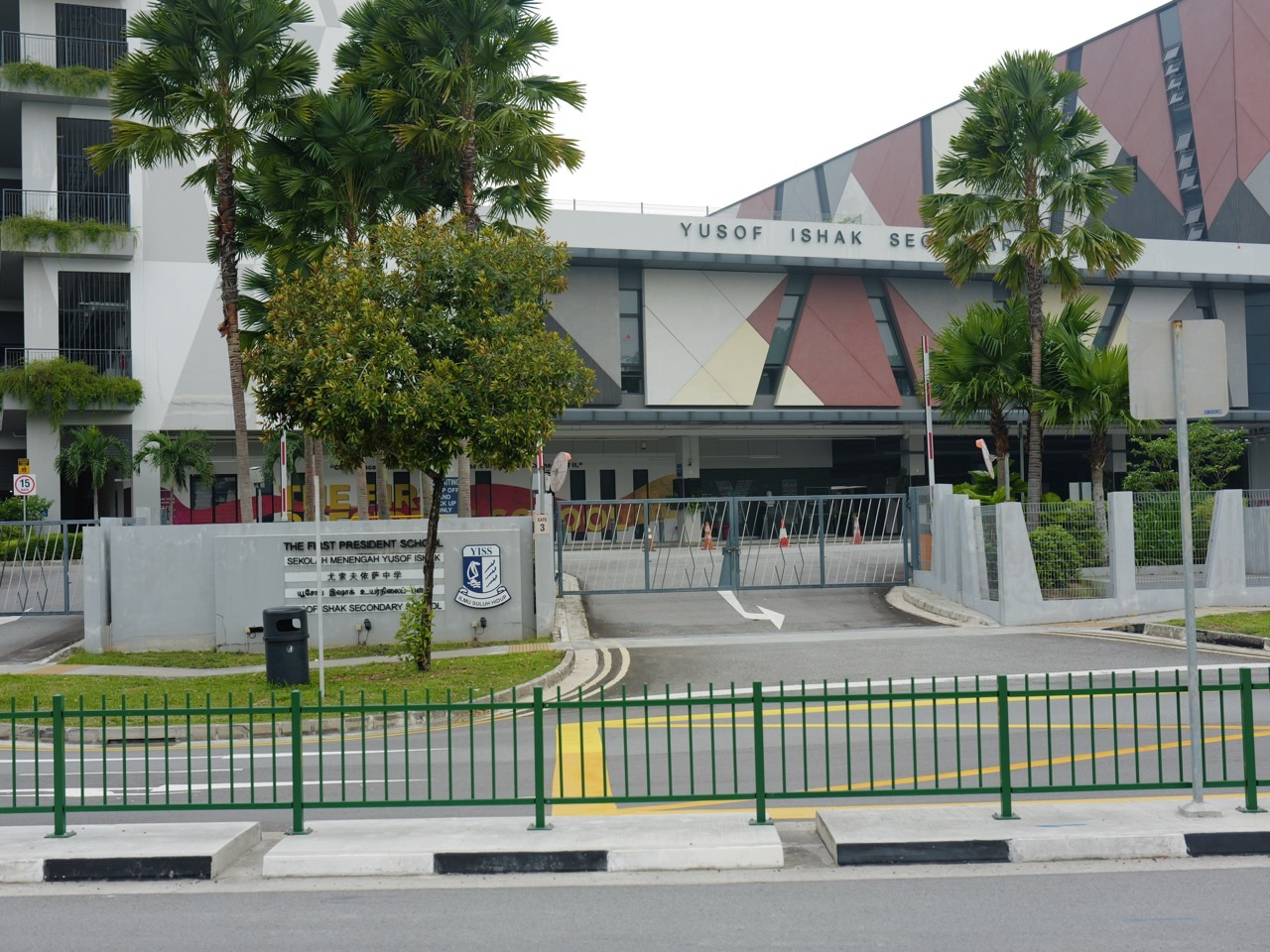
Science and Humanities may look like subjects full of facts, yet a student who simply memorises a textbook often struggles with unfamiliar questions. Science asks whether evidence supports a proposed explanation, while History and Geography teach students to read sources, contexts, patterns and claims. For families looking at Edgefield Secondary, Greendale Secondary, Punggol Secondary, Yusof Ishak Secondary or another suitable school, the better question is how a child can learn these thinking habits independently within the school’s current curriculum.
- PG3 is a school-posting route; G3 is the level of an individual academic subject.
- Lower-secondary Science rewards careful observations, concepts, data handling and explanations.
- Humanities work develops historical source evaluation, geographic interpretation and reasoned argument.
- An everyday Punggol example can be used to practise evidence without claiming it is a school field trip.
- Read questions carefully: describe, explain, compare, infer and evaluate ask for different responses.
- Repair the particular misconception before giving the child another large set of worksheets.
- Check a school’s actual subject arrangements, programmes and assessment criteria with official sources.
At a glance: two ways of thinking
| Science question | Humanities question | Shared thinking skill |
|---|---|---|
| What changed in the measurement? | What pattern appears in the evidence? | Accurate description |
| Which variable might explain it? | Which context might explain it? | Reasoned interpretation |
| What else must be controlled? | What else must be corroborated? | Checking limits of a claim |
| How can the explanation be tested? | What additional source would help? | Evidence-based inquiry |

Guide contents
- What PG3 means for Science and Humanities
- The difference between remembering a fact and making an explanation
- How to observe scientifically without guessing
- A fair test is more than repeating an experiment
- Read a table before drawing a conclusion
- Graphs, axes and the danger of visual shortcuts
- Scientific explanations require precise vocabulary
- Why scientific diagrams need explanatory labels
- Humanities begins with asking what a source can tell us
- Historical reliability is not the same as agreement
- Geography connects patterns to human choices
- Use Punggol Waterway as a learning prompt, not a made-up project
- What command words mean in a G3 answer
- How to write a two-paragraph evidence answer
- A twelve-question diagnostic without a high-stakes test
- The four-step repair routine
- How Full SBB should change the parent’s language
- Science, Humanities and future subject combinations
- A weekly timetable that leaves room for curiosity
- When the school or a tutor should step in
- Choosing school options with the subject experience in mind
- The durable skill: make claims proportionate to evidence
What PG3 means for Science and Humanities
Begin with the admission framework. A pupil entering a mainstream secondary school through Posting Group 3 usually starts most subjects at G3. Under Full SBB, subjects may be taken at levels appropriate to individual strengths, interests and learning needs. A school’s actual timetable and school-based decisions matter. Parents should not describe PG3 as a single four-year Science-and-Humanities course, because that would blur admission and curriculum.
Lower-secondary students generally encounter broad introductions to scientific and humanities ideas before later subject choices. That early breadth serves a purpose. A young person cannot make informed decisions about a future laboratory science, geographical topic or history course without first experiencing the methods and questions those disciplines ask. The first years are a time to discover both competence and interest.
For Punggol parents, this means reading beyond marketing labels. Ask the receiving school what the current lower-secondary learning experience looks like, what fieldwork or projects are offered, how source skills are taught and how students receive feedback. Do not assume every school uses the same order of topics or has an identical assessment programme.
The difference between remembering a fact and making an explanation
Imagine a pupil remembers that metal often expands when heated. That is a fact. A question asking why a gap is left between certain structures requires the pupil to connect temperature, material behaviour and a practical consequence. An answer which merely repeats ‘metal expands’ may be too thin. Good explanation identifies a relationship that accounts for the situation.
The same distinction appears in Humanities. Knowing the year of an event does not by itself explain why groups acted differently or how a source supports a claim. A learner must connect evidence to context, motive or consequence, while acknowledging what the available material does not establish. This is the core shift from information recall to disciplined reasoning.
Try asking your child to complete three sentences: ‘I observed …’, ‘A relevant concept is …’, and ‘Therefore, my explanation is …’. Then ask what new evidence could change the conclusion. The exercise teaches that a conclusion is not simply an answer delivered with confidence.
How to observe scientifically without guessing
A scientific observation reports what was noticed or measured. An inference is a conclusion drawn from observations and background knowledge. If a glass of cold water becomes wet on the outside, the observation is the appearance of droplets on the external surface. The explanation is that water vapour from the surrounding air can condense on the cool surface. Writing ‘the glass leaked’ as an observation would already introduce an unsupported explanation.
A parent can teach this using ordinary, safe examples: condensation on a bottle, a shadow changing during the day or the way sugar dissolves in water. Do not turn the kitchen into a hazardous laboratory. Use a simple notebook with separate columns for observation, possible explanation and evidence that would help distinguish alternatives.
Students who learn this distinction become less likely to invent causes in practical questions. They also become more careful readers of claims they encounter online. Scientific discipline begins with being willing to say exactly what was seen and exactly what remains uncertain.
A fair test is more than repeating an experiment
Suppose a student wants to know whether the temperature of water affects how quickly a spoonful of sugar dissolves. The student should think about what is deliberately changed, what is measured and which conditions need to stay consistent. If the amount of sugar, stirring and cup size all change at once, a faster result cannot be attributed confidently to temperature alone.
The concept of a fair test is not a magic phrase. It is a question about causal evidence. Ask: ‘What else could explain the result?’ and ‘How could we make the comparison more informative?’ The child’s answer reveals whether they understand why control variables matter. A scientifically literate student recognises that a well-presented table does not repair a poorly designed investigation.
When doing any practical activity, follow school safety rules and choose only low-risk demonstrations. The thinking can often be practised with a written scenario, avoiding heat, chemicals or equipment entirely. The purpose is experimental reasoning, not entertainment.
Read a table before drawing a conclusion
Science students frequently face tables of measurements. The first step is to understand the headings and units. A table might list time in minutes and water temperature in degrees Celsius. A pupil should identify which variable is increasing, whether the data form a pattern and whether there are exceptions. Only then should the child explain what the evidence suggests.
For an original example, imagine water temperatures of 28, 31, 34 and 37 degrees at four equally spaced time points. The sequence shows an increase of three degrees at each recorded interval. It does not prove that the temperature would continue rising indefinitely, nor does it establish the cause without information about the setup. Good interpretation describes the observed pattern and limits extrapolation.
Ask the child to make two claims: one that is directly supported and one that cannot yet be proved. This develops calibration. In examinations and adult life, careful statements are often more useful than dramatic certainty.
Graphs, axes and the danger of visual shortcuts
A graph is a compact language for quantities, not a decoration to paste into an answer. A student must read the horizontal and vertical axes, units, intervals and legend before interpreting the line or bars. The slope may show a rate of change, but the significance depends on what the axes represent. A rising line can describe a rise in population, distance, price or temperature; each demands different language.
Use an example from ordinary travel. Imagine a graph of cumulative distance travelled against time during a journey. A horizontal section means the recorded distance is not changing during that interval, while a steeper increasing section indicates faster travel if distance and time are plotted appropriately. It does not automatically mean a train stopped because of a breakdown; the graph alone cannot reveal that cause.
Encourage the child to describe what a graph shows before speculating about why it happened. This habit also protects against misleading internet infographics that hide scales or select only convenient time periods.
Scientific explanations require precise vocabulary
Words such as evaporation, condensation, density, force and energy have meanings that are more specific than everyday speech. A pupil may use ‘heat’ and ‘temperature’ interchangeably in ordinary conversation, but science distinguishes related quantities and processes. The answer should use the concept requested by the question, not merely an impressive scientific term.
Teach each word with a plain-language explanation, a correct example and a contrasting example. Density concerns mass per unit volume; it is not simply whether an object feels heavy. A small dense object can have less mass than a large less-dense one. That distinction becomes easier when the student can compare equal volumes or describe how changing size changes the comparison.
After several days, ask the child to explain the term without looking at notes and apply it in a new situation. Memorising a glossary is the beginning of vocabulary learning, not its completion.
Why scientific diagrams need explanatory labels
A drawing of a simple system can reveal relationships that are difficult to see in prose. Yet a diagram with arrows that have no labels can introduce more confusion than clarity. Students should identify what each component represents, the direction of a process if relevant and which parts are actually supported by the description in the question.
For instance, in a diagram illustrating light travelling toward a mirror, rays, the normal and the angles need proper interpretation. An angle measured from the mirror surface is not interchangeable with an angle measured from the normal. A student who understands the reference line can reconstruct the rule instead of relying on a remembered picture.
Make diagram reading an oral task. Ask the child to describe what the arrow means, what is missing and which measurement would answer the question. The skill is as much about language as drawing.
Humanities begins with asking what a source can tell us
History and Geography both use sources, but they ask different kinds of questions. Historical sources might include letters, photographs, official records and later recollections. Geographic information might include maps, demographic tables, site observations and environmental measurements. In each case, the student needs to identify who produced the material, what it represents and what question it can legitimately answer.
Imagine two photographs of the same street taken years apart. They may show changes in buildings or transport, but they cannot alone establish why every change happened. A newspaper headline may indicate a contemporary concern, but it does not automatically represent everyone’s opinion. Distinguishing usefulness from completeness is a foundational Humanities skill.
Parents can help by asking, ‘What does the source show?’, ‘What does it leave out?’ and ‘What other evidence would you want?’ These questions train disciplined curiosity instead of rote suspicion.
Historical reliability is not the same as agreement
A common source-based response says a source is unreliable because it is biased. That sentence rarely provides enough reasoning. Every source is produced from a perspective, and the important question is how its origin, purpose, content and context affect what it can support. A personal diary may be highly useful for understanding one individual’s feelings while being a poor source for a population-wide statistic.
Two sources can disagree because they observe different parts of an event, were produced at different times or have different purposes. Students should compare the precise claims instead of forcing an overall judgement that one must be entirely true and the other false. Corroboration strengthens a conclusion only when the details and contexts genuinely align.
Try a classroom-style exercise with two fictional accounts of a cancelled school event. One student says the rain made it unsafe; another says the organisers lacked equipment. Ask what information would test each account. The purpose is to learn evidence-based comparison, not to guess which fictional narrator sounds more confident.
Geography connects patterns to human choices
Geography often combines natural processes with human decisions. A map may show settlement patterns, transport lines, green areas or drainage features. The student should describe the pattern before making claims about cause. A concentration of shops near a transport hub may be consistent with accessibility, but local planning and other factors can also matter.
Punggol offers familiar topics for discussion: waterways, public housing, transport connections and park spaces. These can serve as examples of how physical environments and human needs interact. A family can discuss a park on a walk without claiming that the school requires a particular field trip or that a feature proves an official planning intention.
Ask the child to distinguish observation, interpretation and policy claim. ‘This path connects the park to a residential area’ can be checked by walking. ‘It was designed specifically to improve exam results’ is a speculative claim without evidence. That distinction is transferable to real research.
Use Punggol Waterway as a learning prompt, not a made-up project
A family walk by Punggol Waterway can be an opportunity to practise observation. Look for differences in shade, surface materials, plant cover or pedestrian use. Describe what is visible without collecting dangerous samples or entering restricted spaces. If the child wants to compare two sections, take notes at similar times and recognise that one visit is limited evidence.
For a Science prompt, ask how shade might affect how warm a surface feels and what could be measured safely to investigate. For Geography, ask how a route’s accessibility might influence how people use a park. For History, ask what records would be needed to reconstruct how a neighbourhood changed across decades. The same place produces different disciplinary questions.
These are family exercises created for this guide. They are not descriptions of official projects at any Punggol secondary school. Parents should verify current school programmes directly when comparing actual offerings.
What command words mean in a G3 answer
Describe means report relevant features or patterns. Explain asks for reasons or mechanisms. Compare asks for similarities and differences based on a stated basis. Infer asks for a reasoned conclusion drawn from evidence. Evaluate asks for a supported judgement that considers criteria and limits. Students lose time when they treat all five as requests for the same fact paragraph.
Take the statement ‘The number of cyclists counted at a location rose during the morning.’ A description might state the increase. An explanation would require investigating a plausible reason rather than simply restating the trend. An evaluation might ask whether the count alone supports a claim that the whole estate is becoming more cycling-oriented; the answer would consider sampling and alternative explanations.
Write the command word at the top of a practice response and ask the pupil to underline the sentence that performs it. If the answer never moves beyond restating the stimulus, the teaching target is the reasoning move.
How to write a two-paragraph evidence answer
For a question requiring a short argument, one paragraph can make a supported claim and the next can consider an alternative or limitation. The learner should use accurate evidence, explain why it matters and avoid repeating the same phrase as though length equals depth. A useful structure is claim, supporting detail, explanation and link to the task.
Consider a fictional source about two neighbourhood groups disagreeing over a new road. One group values a shorter travel time; another worries about noise. A good answer would identify each group’s concern, link it to the relevant statement and explain why they could view the same proposal differently. It would not invent a survey of residents that the source never supplied.
Give feedback on evidence and reasoning separately. A well-written paragraph can still be unsupported, and a relevant quotation may still need interpretation. Identifying the problem precisely makes revision achievable.
A twelve-question diagnostic without a high-stakes test
Select three short Science tasks about variables, units and graph reading. Add three explanation questions that require an observation-to-concept link. Use three History source questions: who created the source, what it reveals and what it does not reveal. Finish with three Geography questions about patterns, scales and possible reasons. All tasks can be original and based on safe, familiar material.
Do not score the diagnostic as a forecast of secondary examinations. Record where the child needed prompts, where the concept was understood and where vocabulary blocked the answer. A learner who understands a chart but cannot express the conclusion needs a different lesson from one who reads the axes incorrectly.
Follow up with one short teaching session on the clearest gap. Then ask an analogous but unfamiliar question a few days later. Improvement in independent reasoning is the evidence you want.
The four-step repair routine
First, isolate the mistake. Is the student confusing observation and inference, misreading units, quoting irrelevant evidence or giving an unexplained claim? Second, explain the relevant principle with one clear model. Third, ask the child to apply it under guidance. Fourth, remove the guidance and return later with a different question.
Imagine a pupil says, ‘This graph proves that all local residents prefer cycling.’ Instead of marking only ‘wrong’, ask which population was measured, whether the data are representative and which alternative interpretations remain possible. The correction teaches a method for limiting claims. A second question about public transport can test whether the child learned the method rather than the answer.
Store a few recurring errors in a correction notebook. Add the checking action that would have caught each one. Good revision creates new control over thinking.
How Full SBB should change the parent’s language
A child in PG3 may study many G3 subjects and still find particular topics difficult. Another pupil taking a subject at a different level may demonstrate strong insight in a project or discussion. Full SBB is intended to provide more flexible learning pathways and shared school experiences. Parents can support that goal by avoiding language that ranks classmates as people according to subject levels.
Tell the child that a challenging lesson is information about what needs practice. The right question is not ‘Why are you not as good as another student?’ It is ‘What exactly did the task require, and what can we do differently?’ This language makes effort actionable and reduces the temptation to hide confusion.
School staff determine actual subject-level arrangements under current criteria. The family should discuss a persistent concern with the relevant teacher rather than assuming an academic label gives an automatic right or obligation to change levels.
Science, Humanities and future subject combinations
Lower-secondary experiences can reveal interest in Physics-like modelling, living systems, chemical change, historical interpretation, geographic patterns or literature. Yet a child in Secondary 1 should not be pushed into choosing a permanent identity. The upper-secondary subject-combination exercise is governed by the school’s eventual offerings, academic criteria and available places.
If the pupil enjoys a topic, encourage deeper reading and asking better questions. If the pupil dislikes one assessment, identify whether the issue is comprehension, content, attention or the topic itself. A single grade should not decide which field the student will supposedly love for life. Preferences become more reliable through repeated exposure.
Later subject options may include different Science and Humanities combinations, depending on the school and year. Use the school’s official subject-selection information when that decision arrives; avoid constructing a fictitious universal menu today.
A weekly timetable that leaves room for curiosity
Choose two short sessions during the week: one for Science explanations or graph reading, and another for a historical or geographical source. Use a third optional session to revisit an error. Each can be brief enough to fit alongside ordinary homework and CCA commitments. Focus on one transferable thinking move rather than covering an enormous chapter.
Encourage the child to read for interest, visit a safe public space, ask a question about the built environment or compare two descriptions of an event. The family does not need laboratory equipment or premium resources. Curiosity grows when questions connect school concepts to things a young person can actually observe.
Keep evenings sustainable. A student who sleeps poorly because every subject has an extra class will struggle to concentrate on the very reasoning skills being taught. The right programme should produce greater independence, not a longer list of paid sessions.
When the school or a tutor should step in
If several attempts still fail, bring a precise example to a Science or Humanities teacher. ‘My child identifies the data trend but cannot explain what it means’ is a useful starting point. ‘My child memorises History facts but cannot assess a source’s usefulness’ is another. Both help the teacher identify a teachable skill.
External help can be useful when it provides a clear diagnosis, shows a good example, guides one attempt and checks whether the child can handle a new task alone. A tutor should not simply dictate model answers for memorisation. The student must learn how the conclusion was built from evidence.
When the child is progressing with classroom teaching, ordinary reading and school consultation, extra tuition may not be needed. Ask what the child can now explain independently before adding another recurring commitment.
Choosing school options with the subject experience in mind
A Punggol family comparing local secondary schools should ask about current lower-secondary curriculum, fieldwork or project opportunities, assessment habits and the availability of subject support. These questions help investigate the actual learning environment. Do not assume that a school with an impressive exhibition offers every featured activity to every pupil.
Schools can also differ in their later subject combinations. A pupil fascinated by a particular field should review the current offerings and speak to the school, while understanding that future availability can change. Admission-year Posting Group eligibility and school cut-off points are separate from a curriculum preference, so both need verification.
The best local school choice is one where the student can participate, feel supported, travel sustainably and encounter the ideas that will help them grow. A school’s name alone cannot guarantee any of those outcomes.
The durable skill: make claims proportionate to evidence
Across all these examples, the central habit is the same. Observe carefully, identify what the material really supports, explain the connection and be willing to say what remains unknown. A scientifically trained learner should not call every correlation a cause. A historically thoughtful learner should not treat every source as either wholly true or worthless. A geographically informed learner should notice both patterns and exceptions.
These habits are useful when reading headlines, comparing product claims, assessing a graph in the news or planning a neighbourhood improvement. That is why Science and Humanities deserve space in the first two secondary years, even before upper-secondary subject combinations become important.
PG3 may describe the start of the pathway. The capacity to reason with evidence is what makes the pathway worthwhile.
Frequently asked questions
Is PG3 the name of a Science syllabus?
No. PG3 is a school Posting Group. G3 is the level at which an individual subject may be taught and examined, subject to the school’s actual arrangements.
Do all PG3 entrants take identical Humanities classes?
Do not assume identical timetables across schools. Check the receiving school’s current lower-secondary subject and class arrangements.
Should my child memorise the whole textbook?
Understanding concepts, diagrams, data and source-evaluation methods is more useful than trying to retain a whole book without application.
What is the difference between observation and inference?
Observation describes what is noticed or measured; inference draws a conclusion from that evidence and relevant background knowledge.
Why is reliability not the same as agreement?
Two sources can disagree and still offer useful evidence. Assess origin, purpose, context and the precise claims rather than using disagreement alone as a verdict.
Does a local Punggol field example count as a school programme?
No. The Punggol Waterway exercises in this article are original family learning suggestions, not claims that any particular school runs them.
What should a student do when a question says ‘evaluate’?
Make a reasoned judgement using the stated criteria and evidence, while recognising limitations and alternative explanations.
How can I check Science graph-reading skills?
Ask your child to explain the axes and units, describe a valid trend, and name at least one conclusion the graph cannot establish.
Does PG3 guarantee a pure Science combination later?
No. Later combinations depend on school offerings, academic requirements, student choices and capacity.
Can weaker Humanities performance be improved?
Yes, when the specific issue is diagnosed—such as missing evidence, weak contextual understanding or overgeneralisation—and practised with new tasks.
Should a PG3 pupil take extra Science or Humanities tuition immediately?
Not automatically. Start with classroom feedback and short independent tasks; seek targeted help if a defined gap persists.
Where are the official rules?
Use current MOE Full SBB material and the receiving school’s official information. For future SEC syllabuses, use SEAB, with the correct examination year.
Continue the Punggol PG3 guide series: PG3 Mother Tongue and Higher Mother Tongue · PG3 Secondary 3 combinations and SEC pathways · PG3 Secondary 1 posting appeals and transfers
Official sources and related Punggol learning guides
- MOE: Full Subject-Based Banding overview
- SEAB: 2027 SEC G3 school-candidate syllabus list (for later-year context)
- SEAB: SEC subject levels and examination structure
- What is PG3: English and Mathematics readiness
- What is PG3: choosing Punggol schools by learning fit
- Punggol Secondary School local guide
Your next step
Choose one Science graph and one historical or geographic source. Ask your child to describe what each shows, make one justified inference, and identify one thing that remains uncertain. Keep those answers. Repeat a different task a week later and look for greater precision and independence. Use the receiving school’s current information when deciding on subject help or school options.


