
PG3 is Posting Group 3, a Secondary 1 entry route under Full Subject-Based Banding. It does not choose a career, guarantee a junior-college place or require a twelve-year-old to decide which university degree to pursue. Education and Career Guidance (ECG) helps secondary students discover their interests, strengths, values and learning options over time. For Punggol pupils, the useful start is to connect school experiences with real questions about what people do at work, why those roles matter and which skills can be developed.
MOE’s ECG approach combines curriculum learning, experiences, guidance and the MySkillsFuture Student Portal, which allows secondary students to explore industries, occupations, schools and courses and reflect on their own goals. A child entering through PG3 usually begins most subjects at G3, but later subject combinations and post-secondary choices depend on actual learning, school criteria and rules in force at the relevant time. Families should encourage exploration without treating early assessments, career quizzes or Punggol Digital District publicity as promises of employment.
- PG3 is a school-entry category, not a career prediction or a permanent academic identity.
- ECG builds self-awareness, curiosity about work and informed education choices over several years.
- MySkillsFuture’s Secondary Student Portal includes tools for discovering interests, exploring options and planning goals.
- Career-interest results are conversation starters, not scientific assignments to one lifelong occupation.
- Learning experiences in school ALPs, CCAs and community activities can reveal strengths beyond examinations.
- Punggol Digital District and SIT provide local contexts to discuss technology and work, not guaranteed internships or admission.
- Check MOE’s current SEC, PSE, JC, polytechnic and ITE requirements when the child actually approaches those decisions.
- Parents should ask what the child wants to learn next rather than demand a final career answer at age twelve.
Definition lock: distinguish four kinds of future planning
| Term | Meaning | What to do now |
|---|---|---|
| PG3 | Secondary 1 entry Posting Group | Prepare for actual school and subject learning |
| ECG | Education and Career Guidance | Discover interests, values and skills |
| Subject combination | Later selection of actual upper-secondary subjects | Read school criteria when the decision arises |
| Post-secondary admission | Formal application based on future qualifications | Use official cohort-year rules, not predictions |

Guide chapters
- ECG begins with questions, not a job title
- Definition lock: ECG is not an admissions scheme
- What MOE means by self-awareness and self-directedness
- Interests, abilities and values are different
- MySkillsFuture is a planning tool, not a fortune teller
- How to use the portal without turning it into homework overload
- Build a portfolio of learning experiences, not self-promotion
- The first year is for exposure and belonging
- PG3 subject levels do not tell the full story of capability
- Explore occupations through real tasks
- Punggol Digital District provides a local conversation starter
- SIT is a post-secondary institution, not a Secondary 1 destination
- Do not reduce careers to salaries alone
- Talk to working adults without treating an anecdote as a census
- How CCAs reveal strengths that grades may miss
- ALP and LLP experiences are another form of exploration
- The importance of communicating clearly in every occupation
- Mathematics is a way of thinking, not a job gatekeeper slogan
- The difference between a route and a destination
- A short career-interest quiz is not destiny
- A three-question reflection after a learning journey
- Help the child tolerate an undecided future
- How to make a realistic four-year ECG notebook
- What to ask the school’s ECG contact
- What a good ECG year really achieves
ECG begins with questions, not a job title
A new secondary-school pupil may say they want to be a doctor, game developer, teacher or footballer. Another may say they have absolutely no idea. Neither answer is a complete career plan, and neither should cause panic. Education and Career Guidance helps students develop enough self-understanding and information to make better decisions as opportunities arise.
At twelve or thirteen, the most useful career question is often ‘What kind of problem do you enjoy working on?’ A child might enjoy explaining ideas, fixing mechanisms, helping younger children or designing posters. These interests can change, and one hobby rarely maps to a single occupation. The goal is to notice patterns through experience rather than freeze an identity based on one conversation.
Parents can ask the student to give a concrete example of a task they enjoyed. ‘I liked making a model because I could test it’ is evidence about interest; ‘I want a rich job’ is a broad aspiration that still needs exploration. Both can be discussed respectfully.
Definition lock: ECG is not an admissions scheme
Education and Career Guidance is a developmental process supporting choices across education and working life. Secondary 1 posting, Direct School Admission, subject combinations and post-secondary admission exercises are separate administrative processes with their own rules. ECG can help pupils understand and prepare for these decisions, but participation in an ECG lesson does not confer admission.
PG3 ordinarily guides many initial subjects to G3 under Full SBB. That starting arrangement may influence the pupil’s educational experience but cannot determine their eventual occupation. A pupil can discover new strengths, adjust suitable subject levels under school guidance and choose later combinations with more evidence than was available at PSLE.
Families should keep two folders, conceptually or literally: ‘What I am learning about myself’ and ‘Official requirements for a future application’. The first can evolve through reflection; the second must be checked against real rules and dates.
What MOE means by self-awareness and self-directedness
MOE describes ECG as supporting self-awareness, self-directedness, adaptability and lifelong learning. These are practical habits. A student knows which tasks they enjoy and why, can evaluate what they need to improve, and is willing to investigate new possibilities instead of waiting for an adult to assign a future. No single questionnaire can provide all of that understanding.
Imagine a child who thinks they dislike Science because they find written explanations difficult, but loves building small mechanical models. The family can distinguish an interest in applied problem-solving from the current difficulty with scientific writing. Better explanation skills may make more areas accessible. A fixed label such as ‘not a Science person’ could shut down possibilities too early.
Ask the pupil to identify one strength, one developing skill and one activity they have not yet tried. That conversation helps build a habit of realistic self-assessment rather than overconfidence or resignation.
Interests, abilities and values are different
Interest is what attracts attention or motivates engagement. Ability is what the student can currently perform, which can improve through teaching and practice. Values are considerations the child finds important, such as helping others, creativity, stability or autonomy. These three can overlap, but they do not mean the same thing. A child may be interested in coding without yet being skilled at it, or perform well in Mathematics without wanting every future activity to involve numbers.
An ECG conversation should avoid treating a poor grade as proof that an interest is illegitimate. Instead, investigate the underlying skill requirement. If the pupil wants to design software, what kind of coding and problem-solving would be involved? Which part do they enjoy, and what would they need to learn next? The answer can inform a reasonable experiment.
Values also deserve nuance. A student who says they want meaningful work may not yet know what makes work meaningful in different professions. Let them explore through conversations and examples rather than impose an adult’s preferred definition.
MySkillsFuture is a planning tool, not a fortune teller
MySkillsFuture for Students provides a portal for school-age education and career exploration. Its official Secondary FAQ explains features such as Discover Yourself, Explore Opportunities, Plan Your Journey and a portfolio for saving activities and reflections. Some information can be browsed without login, while additional personalised features require an account. The school can guide students through the appropriate setup.
Interest-assessment tools can suggest patterns in preferences, but they are not medical tests or conclusive forecasts of ability. A pupil should answer honestly instead of selecting what they think will impress a parent or teacher. When the result suggests an unfamiliar field, use it as a reason to learn about that field, not as a compulsory destination.
Parents can explore the public parts of the portal and discuss career examples with the child. Account-specific information belongs to the student’s authorised login arrangements and should be handled privately.
How to use the portal without turning it into homework overload
Choose a single question before opening the site. The child might want to know what a civil engineer does, how a museum curator works or what learning is needed to become a nurse. Browse the relevant occupation description, then ask what tasks the role actually involves. A clear question produces more useful learning than clicking through dozens of unrelated job titles.
After the exploration, record one interesting fact and one unanswered question. For example, a pupil may discover that an occupation involves collaboration as much as specialist technical knowledge. The child can then consider whether they enjoy the kind of teamwork described. This is a small inquiry, not a declaration that the role is ‘the one’.
Follow the school’s instructions when using the portal during ECG lessons. The platform and its features can change, so current official user guides should take priority over screenshots from earlier years.
Build a portfolio of learning experiences, not self-promotion
The MySkillsFuture portal includes options to save interests, activities and reflections. A young pupil’s portfolio need not look like a graduate’s professional résumé. It can document a project they completed, a skill they practised, a challenge they handled and an activity that changed their view of a subject. The most valuable evidence is specific and honest.
Suppose the pupil helped organise a class reading exchange. They could record the task, who contributed, what problem arose and how they adjusted the plan. That account demonstrates communication and responsibility. A vague statement such as ‘I am an outstanding global leader’ says much less unless grounded in authentic work.
Parents should not rewrite children’s reflections into grand claims or invent awards. Reflection can be modest and still useful. An accurate portfolio helps a pupil notice development across several years.
The first year is for exposure and belonging
Secondary 1 brings new subjects, teachers, CCAs and a different school routine. Students often discover interests in experiences they have never tried: debate, outdoor education, art, technical design or service. Families should not immediately convert every new interest into a tuition package or career announcement. Let the pupil participate, receive feedback and decide what remains engaging after the novelty fades.
One useful family review asks, ‘Which activity did you want to return to even when it became difficult?’ That reveals sustained interest. Another asks, ‘Which task became easier because you practised?’ That reveals developing ability. Both observations are more reliable than the first week’s excitement alone.
An ECG approach should support the child’s adjustment rather than add pressure to choose a future before making friends in a new school.
PG3 subject levels do not tell the full story of capability
A child taking most subjects at G3 may find one area challenging while showing strong communication or practical ability elsewhere. Full SBB recognises that strengths can differ by subject. A pupil should not be told that PG3 automatically means one destination, or that taking a subject at another level would erase the possibility of an interesting future.
Later pathways will have formal requirements, and it is important not to minimise those. A particular course may require defined subject-level combinations and grades. Yet those are questions to verify for the actual cohort at the right time, not reasons to make broad predictions about a new Secondary 1 pupil’s worth or career.
Parents should describe what the student can currently do, what is improving and what opportunities exist for learning. The entry group is one piece of information, not the whole portrait.
Explore occupations through real tasks
A job title can sound impressive while concealing the daily work. Ask the child to investigate what a person in a particular occupation actually does during a typical week. Does the role involve writing, practical measurement, customer interaction, long periods of concentration or shift work? What responsibilities and constraints matter? A realistic description helps pupils evaluate interest.
For a teacher, the work extends beyond explaining a topic to include lesson planning, assessment and communication. For an engineer, the work includes collaboration, testing, documentation and safety. For a designer, it can involve feedback, revision and deadlines. These are general illustrations; specific roles differ across employers and specialisations.
Encourage respectful questions about both enjoyable and difficult parts of work. A teenager should learn that every occupation contains tasks that are less glamorous than its publicity photographs.
Punggol Digital District provides a local conversation starter
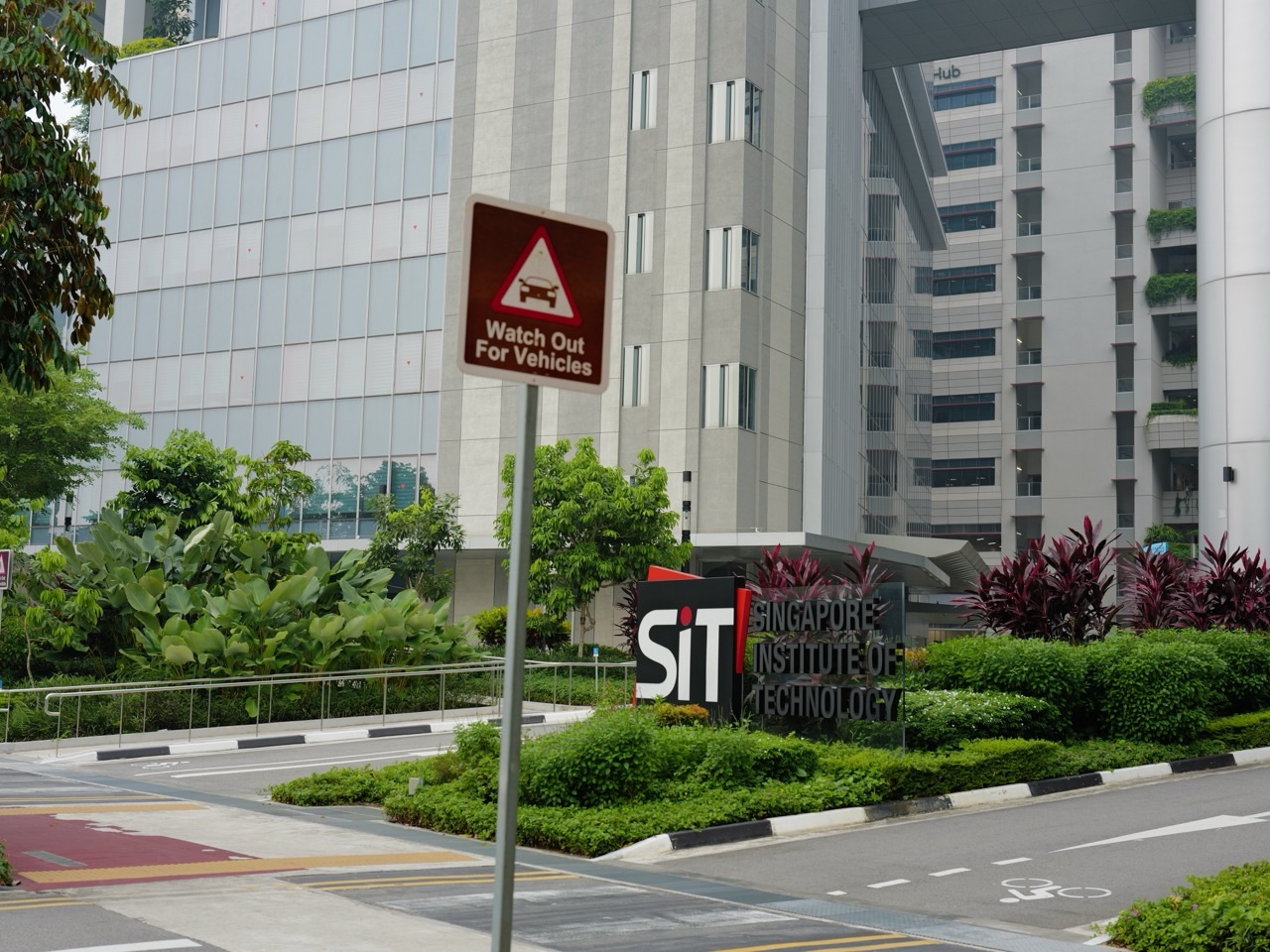
Punggol Digital District brings together education, technology and commercial activity, with the Singapore Institute of Technology’s Punggol campus situated within the wider area. Families can use the neighbourhood to ask questions about software, engineering, sustainability, operations and services. Seeing a modern campus may make technical fields feel more tangible, but proximity does not guarantee internships, admission or employment.
A child can investigate what skills different digital industries use. Some roles involve coding, but others require design, project management, cybersecurity awareness, data interpretation, accessibility testing or communication. The district should not be presented as a place where every Punggol teenager can simply walk into a corporate project.
Use official institution and employer information when making claims about programmes or job opportunities. A local observation is a prompt for research, not proof of a formal school partnership.
SIT is a post-secondary institution, not a Secondary 1 destination
The Singapore Institute of Technology is a university with its own admissions processes and degree programmes. A photograph of its Punggol campus can encourage pupils to imagine future study, but a PG3 placement does not give a university place. Admissions criteria and course options will evolve before a new Secondary 1 pupil reaches that stage.
Students can explore why different institutions offer distinct learning experiences. Junior colleges, polytechnics, ITE and universities have different educational purposes and requirements. A family that treats one route as inherently respectable and every alternative as failure limits the child’s capacity to make informed choices later.
ECG encourages understanding of options and personal fit. Formal entry requirements must be checked from the relevant institution when an application becomes realistic.
Do not reduce careers to salaries alone
Pay matters in adult life, and students should eventually learn how to evaluate earnings, costs and financial responsibilities. But salary figures presented without context can be misleading. A role may involve shift work, qualifications, changing demand or other conditions that affect suitability. A reported average is not a guaranteed starting salary for every worker.
Ask the child to consider four dimensions: what the work involves, what skills it requires, what contribution it makes and what conditions of employment are typical. Only then does a discussion of income become meaningfully grounded. Young pupils can learn that society depends on many kinds of essential work, not only occupations with highly visible salaries.
Parents should avoid using earnings as the sole measure of intelligence or character. Respect for different occupations is a valuable part of career education.
Talk to working adults without treating an anecdote as a census
A teenager can learn by asking a working adult about the skills and routines of their job. An uncle, neighbour or family friend may provide an accessible first account. Ask what the person does, what training they needed, what changed in their field and what they find difficult. Make sure the adult is willing to discuss their experience and respect their privacy.
One person’s story is valuable evidence of their experience, not proof that every employer or worker in the industry has the same conditions. If a pupil hears that a career is ‘always stressful’ or ‘always secure’, they should compare the statement with broader current information. This encourages a respectful but critical approach.
Finish with one question about what the child might try next. A job conversation becomes educational when it leads to a skill, activity or further research.
How CCAs reveal strengths that grades may miss
Co-curricular activities can involve teamwork, planning, performance, physical movement, design and service. A pupil may discover they enjoy teaching younger children, rehearsing music or organising a group project. Those experiences provide information about interests and capabilities that a timed examination cannot fully measure.
Encourage reflection without claiming every CCA must lead directly to a profession. A child in a sports CCA need not become an athlete. They may learn communication, perseverance or event organisation. A pupil in a technology club may discover they prefer presenting an idea to writing code. Both insights are useful.
Formal LEAPS 2.0 attainment and awards follow separate school rules. ECG focuses on understanding experiences and future possibilities, not automatically converting every activity into a qualification.
ALP and LLP experiences are another form of exploration
Punggol secondary schools have different Applied Learning and Learning for Life Programme themes, including entrepreneurship, engineering design, environmental learning, outdoor adventure and leadership. These can expose students to authentic tasks and responsibilities. The experience may help a teenager discover an interest that had never been visible in the primary-school timetable.
Ask the student to explain one decision made during a programme. Did they test a prototype, interpret data, cooperate with a team or consider a community need? What did they enjoy, and what would they like to improve? Those questions generate meaningful ECG reflection. A student can learn from a project that failed, provided the process was thoughtful.
Do not assume school signature programmes guarantee a corresponding tertiary course, internship or DSA talent route. Their educational value is the learning experience itself.
The importance of communicating clearly in every occupation
Students often divide the future into ‘English jobs’ and ‘Mathematics jobs’. Real work usually requires both specialist knowledge and communication. A laboratory technician must record findings; a software developer explains requirements; a healthcare worker communicates with patients; a business owner manages information and relationships. The language demands differ, but clarity remains important.
Ask the pupil to describe a school project to someone who has not seen it. Can they explain the problem, what they tried and why the result mattered? If the listener is confused, the student can refine the explanation rather than add more jargon. This is career-relevant practice in a safe learning context.
Building communication competence supports options without requiring the child to select one occupation now. G3 English learning can become useful across many fields.
Mathematics is a way of thinking, not a job gatekeeper slogan
Some occupations use advanced Mathematics extensively; others require practical numeracy and logic. Students should investigate the actual requirements rather than assume every well-paid job needs Additional Mathematics or that poor performance on one algebra task closes every future pathway. A particular degree or diploma may have formal prerequisites, so those should be checked later.
Within secondary school, focus on accurate interpretation, proportional reasoning, estimation and clear methods. These skills are useful for comparing costs, analysing data and understanding risk. A pupil who can explain why an equation balances is developing a transferable habit of disciplined reasoning.
Parents should neither minimise subject requirements nor turn one mark into a forecast of lifelong earning capacity. Skill develops through appropriate teaching and sustained practice.
The difference between a route and a destination
Education pathways can lead through JC, Millennia Institute, polytechnic, ITE or other approved programmes, depending on the student’s eventual qualifications and interests. Those routes have different learning styles, qualifications and admission rules. None is a synonym for personal worth. For PG3 families, the first obligation is to understand the Secondary 1 experience before planning a precise future aggregate.
MOE’s new post-secondary admissions arrangements begin in 2028 for the first SEC graduating cohort, but a child entering Secondary 1 in 2027 belongs to a later cohort. The rules relevant to that child may be updated before the application year. Any future recommendation must carry a date and distinguish a broad route from an official eligibility decision.
The family can explore options without assuming that the route most admired today will still be the most suitable several years later.
A short career-interest quiz is not destiny
An interest questionnaire can help a child notice recurring preferences, but responses may reflect recent exposure and mood. A pupil who has just enjoyed a robotics workshop may select technology-related interests enthusiastically, while one who has never tried design may undervalue it. This does not make the questionnaire useless; it means results need to be interpreted as hypotheses for exploration.
Ask what questions produced a particular result and whether the student recognises the description. Then invite one low-stakes experiment: read about an occupation, try a project or ask an adult about the work. Record whether the experience confirmed or changed the impression. Iterative learning is more reliable than treating a score as an assignment.
A teenager should feel free to revise their interests. The purpose of ECG is informed agency, not the creation of another label.
A three-question reflection after a learning journey
Where a school offers an ECG talk, institution visit or industry learning journey, pupils can prepare with three questions: What will I observe? Which task or responsibility interests me? What information would help me judge whether the field suits me? The actual visit should follow school arrangements and safety procedures.
After the experience, ask the child what surprised them and what they had misunderstood. They may discover that a role involves more teamwork, administrative work or continuous training than expected. That is useful progress. A change of mind after good information is not failure.
Parents should distinguish a school-arranged visit from a guaranteed placement or employer offer. An afternoon of exploration does not create an employment entitlement.
Help the child tolerate an undecided future
Some parents feel anxious when a capable PG3 pupil cannot name a career. That anxiety can lead to repeated comparisons with cousins or classmates who already have ambitions. Yet early certainty is not always better than informed openness. A child may need to develop knowledge of occupations, institutions and personal strengths before choosing any direction responsibly.
A productive family statement is, ‘You do not need a final answer today; you need to keep learning and exploring.’ Then set a small action—talk to someone, read about a field or try an unfamiliar activity. This preserves forward movement without inventing certainty.
Notice when career discussions become stressful. The goal is growth and curiosity; if the pupil becomes reluctant to discuss interests, change the conversation from destinations to recent experiences and concrete strengths.
How to make a realistic four-year ECG notebook
Start with four pages, one for each secondary year. In Secondary 1, record interests, new subjects and one learning habit. In Secondary 2, record the evidence behind subject-combination preferences and questions for teachers. In Secondary 3, note deeper experiences, skills and relevant pathway requirements. In the graduating year, use current official admissions information and qualified guidance to make specific choices.
The notebook should be revisable. A student may dislike a field after trying it or become interested in an activity not previously considered. Keep dated reflections rather than erasing earlier views. Those changes can reveal how learning influences identity over time.
Do not let the notebook become a parental performance tracker. Its owner should be the pupil, with adults providing questions, information and practical support.
What to ask the school’s ECG contact
Families can enquire how ECG is delivered through CCE, class activities, MySkillsFuture, talks and counselling. Ask whom a student can approach for guidance, whether there are school-specific learning journeys and what resources support later subject or education choices. The actual offerings can vary across Edgefield, Greendale, Punggol and Yusof Ishak Secondary, and programme dates should be verified.
If a child has a particular educational support need or a major anxiety about choices, discuss the situation through appropriate private school channels. ECG advice should recognise the pupil’s abilities and circumstances rather than offer generic assurances that every route is open regardless of requirements.
Keep questions concise: ‘What experiences can my child try in Secondary 1?’ and ‘How can we help them reflect on the experience?’ Those are more relevant than asking for a guaranteed university destination.
What a good ECG year really achieves
A good first year does not produce a permanent career label. It gives a teenager a broader vocabulary for describing strengths, interests, values and the skills required for different roles. The student becomes more capable of asking practical questions and investigating education routes without relying entirely on parental assumptions.
Progress can be small: a pupil learns what an architect does beyond drawing buildings, discovers that laboratory work involves documentation, or recognises that teamwork is central to a profession they admired. Each insight can guide another exploration. It is a better outcome than a confident but unsupported declaration about lifelong success.
PG3 helps describe the beginning of school. ECG helps students learn how to make later choices with evidence, adaptability and respect for their own developing interests.
Frequently asked questions
Does PG3 determine whether a child enters JC or polytechnic?
No. Later admission depends on the student’s qualifications and official requirements in force at the relevant time.
Is ECG the same as choosing a Secondary 3 combination?
No. ECG is a wider developmental process; subject selection is a later school-based decision it can help inform.
What is MySkillsFuture for Students?
An official education and career exploration portal with information, self-discovery tools and planning features for students.
Can a career-interest quiz decide a child’s job?
No. It suggests preferences to explore, not a fixed assignment or proof of ability.
Can parents access a student’s portal account?
Parents can explore public features; personalised access follows the student’s authorised login and the platform’s current guidance.
What if the pupil has no career idea in Secondary 1?
That is common. Encourage exploration of subjects, activities and real occupations without forcing a lifelong decision.
Does Punggol Digital District guarantee an internship?
No. Proximity to employers or SIT does not automatically provide school placements, internships or admission.
Can CCAs contribute to ECG?
Yes. Activities can reveal interests and transferable skills, though CCA awards and formal recognition are separate processes.
Should families compare jobs only by salary?
No. Consider tasks, qualifications, working conditions, interests, contribution and the reliability of pay information.
Is an industry talk an employment offer?
No. A talk or learning journey is an exploration experience; actual programmes have separate eligibility rules.
Will 2028 PSE rules automatically apply unchanged to a younger cohort?
Do not assume so. Verify the official admission requirements when the child approaches the application year.
Where can a student get help?
Start with the form teacher and the school’s ECG guidance channels, and use official MySkillsFuture resources.
Continue the PG3 Punggol series: PG3 Reading and Research at Punggol Regional Library | PG3 Character, Citizenship and National Education | PG3 Physical Education, NAPFA and Active Living
Official ECG information and Punggol learning routes
- MySkillsFuture Secondary Student Portal: current features and FAQ
- MySkillsFuture for Students: purpose and education planning
- MOE Education Conversations: purposeful, student-centred learning
- MOE 2026 announcements on learning and future capabilities
- SIT Singapore Institute of Technology: official site
- PG3: Punggol school Applied Learning and Learning for Life programmes
- PG3: Secondary 3 combinations and SEC pathways
Your next step
Ask the child to identify one school activity they enjoyed and which skill it involved. Together, explore one occupation using MySkillsFuture’s official information, record a question about the daily work and choose one low-stakes experience to try. Keep admissions requirements in a separate, date-checked file for when those choices actually arise.


