
PG3 is Posting Group 3, the Secondary 1 admission route that ordinarily starts most subjects at G3 level under Singapore’s Full Subject-Based Banding. It does not prescribe a special reading list or automatically turn a child into a strong researcher. For Punggol secondary-school families, the practical priority is to help pupils move beyond finding a paragraph that seems relevant: they must read for meaning, distinguish evidence from interpretation, compare trustworthy sources, record references and explain what they have learned in their own words.
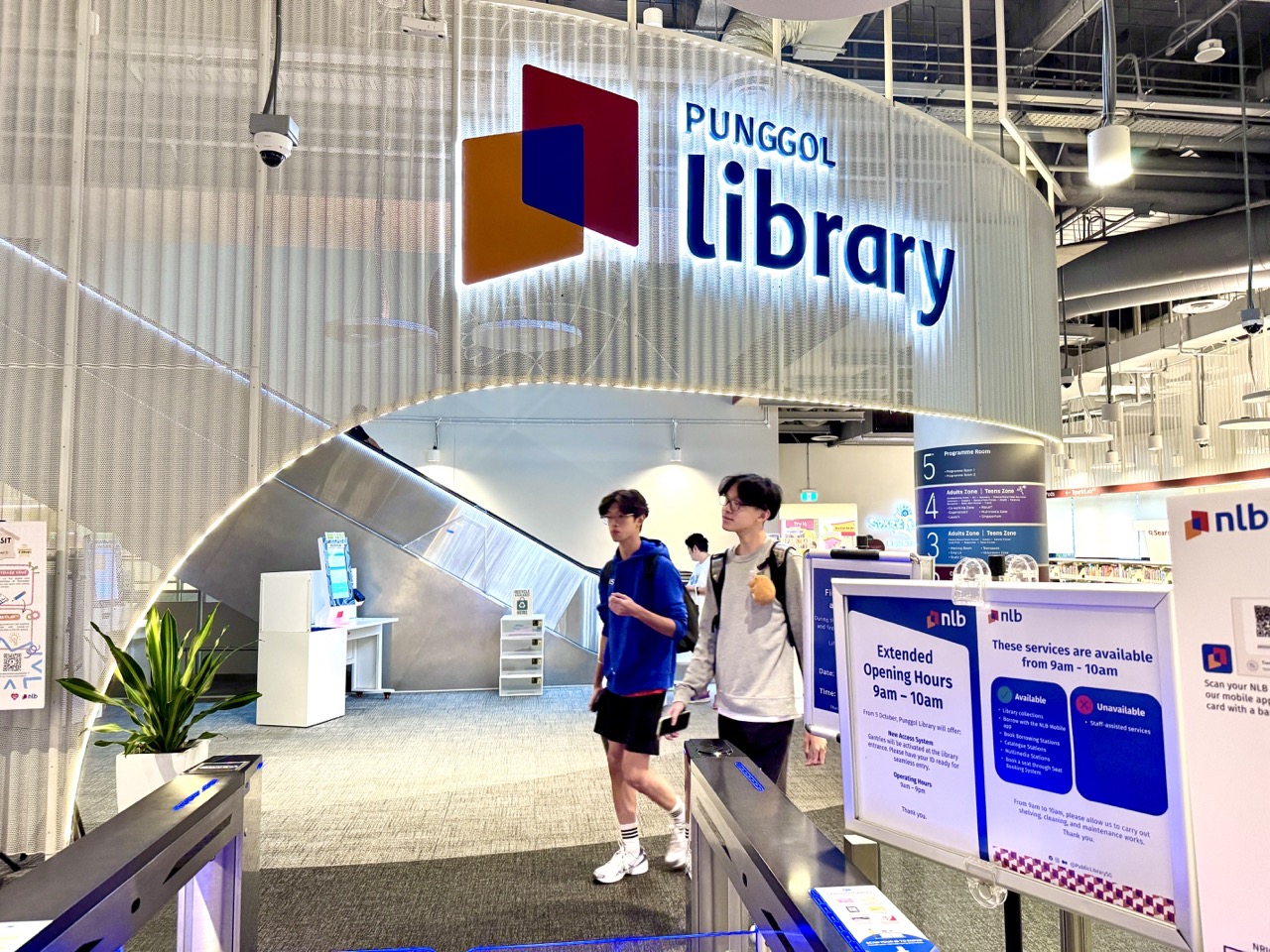
Punggol Regional Library at One Punggol provides a local setting for building those habits through books, reference materials and study spaces. NLB also describes a Comics & Games Library at Punggol Coast Mall, offering another way to explore reading and visual storytelling. These are public-library services, not guaranteed school lessons or exclusive PG3 facilities. Parents should combine the receiving school’s English, Humanities and Science assignments with a manageable independent reading routine and verify current library arrangements before visiting.
- PG3 is a posting group; G3 reading expectations come from actual subjects and school syllabuses.
- Read for understanding before searching for a model answer or copying online summaries.
- Use the Punggol Regional Library collection, suitable study areas and NLB digital materials.
- Match a source to the question: fiction, primary record, reference guide and opinion serve different purposes.
- Record author or publisher, title, date, page or URL, claim and limits.
- Teach annotation, paraphrasing, comparing sources and evidence-led explanations.
- Build a weekly routine with genuine reading choice, not an exhausting holiday book quota.
- Check NLB borrowing, access, study-area and event rules for the actual date of visit.
Definition lock: what each reading activity actually teaches
| Activity | Learning target | Parent’s useful question |
|---|---|---|
| Read a book | Meaning, stamina and curiosity | What surprised you and why? |
| Annotate a passage | Find a main claim and relevant evidence | Why is this detail important? |
| Compare sources | Verify publisher, date and support | Do these sources independently agree? |
| Write a response | Original explanation with references | Which sentence is supported by which source? |

Guide chapters
- Why this is a PG3 learning guide rather than a library directory
- Definition lock: reading, research and information literacy
- Why G3 English requires more than fast reading
- Reading in Science and Humanities has a different purpose
- What Punggol Regional Library offers as a local starting point
- A public library is different from a school library
- A second local option: comics, graphic novels and games
- Choose books with both challenge and ownership
- The ten-minute preview before committing to a book
- Annotate for meaning rather than painting the whole page
- Paraphrasing is not replacing every third word
- How to check a source without distrusting everything
- Two independent sources do not always mean two independent facts
- Distinguish a fact, interpretation and forecast
- Read long articles in small logical units
- Use a research question narrow enough to answer
- How a bibliography protects the student’s own ideas
- Reading fiction also builds interpretive judgement
- Mother Tongue reading deserves equal attention
- Making a weekly library visit realistic for a Punggol family
- A four-week reading and research sequence
- When a student dislikes reading
- What to ask the receiving Punggol secondary school
- The next step is a question worth answering
Why this is a PG3 learning guide rather than a library directory
A family can find a library address with a quick search. The more important question is what a Secondary 1 pupil will do once inside. A student may borrow an impressive stack of books and still have difficulty explaining a two-paragraph argument. Another may read one accessible nonfiction chapter carefully, identify a central idea and use it to answer an unfamiliar question. The second student is demonstrating a more transferable academic habit.
Under Full SBB, PG3 describes entry and typical starting subject levels. It does not rank students’ interests or determine public library entitlements. Many of the reading strategies here will benefit pupils in other Posting Groups too. This article focuses on demands commonly encountered when a PG3 entrant begins G3 English and works with increasingly complex Science and Humanities material.
The goal is not to turn a public library into a second tuition centre. It is to create an environment where reading feels purposeful, independent and connected to curiosity. Learning is more likely to last when the teenager can choose a topic and defend what they understood.
Definition lock: reading, research and information literacy
Reading means constructing meaning from written or multimodal material. Research involves asking a question, locating relevant evidence and evaluating what the evidence supports. Information literacy is the ability to find, assess, use and communicate information responsibly. These ideas overlap but should not be collapsed into the single instruction ‘Google the answer’.
For example, a child can read a short article about a transport improvement and summarise its main claim. Research begins when they ask how the claim was established, which evidence was used, whether the information is recent and what other source might support or challenge it. Information literacy appears when they label the source accurately and do not present a prediction as a confirmed fact.
Parents can teach all three through ordinary questions rather than a formal research paper. Ask what the author claims, where the evidence appears and what remains uncertain. The child gradually learns to distinguish knowledge from an attractive sentence.
Why G3 English requires more than fast reading
In Secondary English, pupils increasingly encounter inference, tone, argument, purpose and audience. Reading quickly can help with time management, but speed without comprehension makes a student miss qualifications such as ‘may’, ‘some’ or ‘under these conditions’. The central skill is noticing which words change the meaning of a claim.
Consider an original sentence: ‘The new route may reduce average travel time during selected weekday periods.’ The writer has not established that every person will travel faster at every hour. A careful reader identifies the modal ‘may’, the word ‘average’ and the restriction to selected periods. If the student writes ‘the route always makes travel faster’, the summary has become stronger than its evidence.
Practice with short paragraphs. Ask the pupil to underline words that limit a claim and then paraphrase the argument without losing those conditions. This supports comprehension across subjects, not only the English examination.
Reading in Science and Humanities has a different purpose
A Science question may ask a student to interpret a table, identify an experimental condition or explain why an observation supports a concept. The relevant words are often quantities, variables and causal terms. A Humanities source may require checking origin, audience, purpose and historical or geographic context. A good reader adapts strategy to the subject instead of using one generic annotation code.
Suppose a chart shows the number of visitors to a public space increasing over four weekends. The student can describe the recorded trend, but the chart alone cannot explain whether better transport or fine weather caused it. That distinction belongs to both scientific and humanities reasoning. A claim about causation needs additional evidence.
Parents can help by asking what type of text the child is reading. Is it a story, a set of instructions, a report, an advertisement or a source extract? Once the genre is identified, the pupil can ask better questions.
What Punggol Regional Library offers as a local starting point
NLB’s official library information describes Punggol Regional Library at One Punggol as a multi-storey public learning space with collections and facilities serving different ages and needs. Its offerings include teen-oriented areas and accessible features. This makes it a useful place for young people to encounter topics beyond prescribed school textbooks.
A visit should begin with the current NLB location page. Check the opening hours, service arrangements and rules relevant to the actual date. Study seating, event programmes and access facilities may operate differently at different times. Families should not assume that every zone is available for private tuition or that the library guarantees a quiet seat during a busy weekend.
Ask the student to choose a nonfiction topic, a literary work and a source that challenges an existing assumption. Those selections can create a more productive visit than moving from shelf to shelf without an intention.
A public library is different from a school library
School libraries support the learning community inside a particular institution, while NLB public libraries serve residents more widely. A school may offer teacher-guided reading, class visits or project support through its own library, but the details depend on that school. Punggol Regional Library does not automatically coordinate each secondary school’s curriculum or award marks for a student’s visits.
Parents sometimes confuse access with a compulsory programme. The fact that public resources are nearby does not mean a student is required to join a club or borrow a fixed number of books. The child can explore interests at a suitable pace, under current borrowing rules. Likewise, a school library’s reading competition is not a universal MOE condition.
Use both resources for their strengths. The school provides teachers and task-specific guidance; NLB offers a broad collection and additional opportunities for voluntary discovery.
A second local option: comics, graphic novels and games
NLB’s official Nodes page describes the Comics & Games Library at Punggol Coast Mall, launched in 2025, with a collection of comics, graphic novels, game-inspired books and board games. It is a public-library extension, not a substitute for the Punggol Regional Library’s full range of materials. Its status, admission method and hours should be checked before a future visit.
Some parents dismiss comics as inferior reading because they contain images. Yet visual storytelling asks readers to infer transitions, interpret expressions, notice omissions and connect dialogue with pictures. A student can analyse point of view or how a panel sequence builds suspense. The skill is still interpretation, although the medium is different.
Encourage the teenager to explain one visual choice and one textual choice in a graphic narrative. The exercise can become a bridge to prose reading without implying that every comic is suitable for every age or assignment.
Choose books with both challenge and ownership
A pupil who only chooses easy familiar books may never encounter more complex language, while a pupil forced to read only difficult texts may associate reading with failure. A balanced plan contains accessible enjoyment, a manageable challenge and occasional topic exploration. The student should participate in selection because interest is a resource for sustaining practice.
Suppose a student loves football. A biography, a book on sports science and a story about a team can extend that interest through different genres. The goal is not to declare sport the only topic the child will ever read. It is to use current curiosity as an entry point, then gradually widen the collection to history, fiction, science or art.
Parents can offer two or three options instead of a compulsory stack. Ask the pupil what they hope to discover, not merely how many pages they intend to finish.
The ten-minute preview before committing to a book
Before borrowing, inspect the title, author, table of contents, opening pages and a section from the middle. Does the pupil understand enough to begin? Is the subject genuinely interesting? Is the material age-appropriate, and does it align with the intended purpose? A short preview protects the child from turning every selection into an obligation.
Ask the student to state one question they hope the book will answer. For fiction, this might concern a character’s decision; for nonfiction, it might concern how a machine works or why a historical event matters. If the answer is simply ‘because the cover looks cool’, that can still be a valid starting interest, but the child should understand what they are choosing.
After a few chapters, let the pupil reconsider. Stopping a poorly matched book after a fair attempt can be reasonable. Completing every unsuitable title is not proof of intellectual discipline.
Annotate for meaning rather than painting the whole page
Highlighting becomes unhelpful when every sentence is marked. A useful annotation records the task’s main idea, a relevant supporting detail and an uncertainty or question. Students can use sticky notes, a separate notebook or approved digital tools depending on library and school rules. They should not write in borrowed books or damage library materials.
Consider a paragraph about water use. The child might note ‘main claim: conservation reduces waste’, ‘support: measured daily consumption’ and ‘question: whose households were measured?’ These notes reveal the structure of an argument instead of merely decorating the page. They also make later revision easier because the learner remembers why the passage mattered.
Ask the pupil to explain annotations aloud. If the child cannot say what a highlighted sentence contributes, the next move is rereading with a clearer purpose rather than highlighting more text.
Paraphrasing is not replacing every third word
Students sometimes believe paraphrasing means swapping words for synonyms while keeping the original sentence structure. That can produce awkward prose and may still be too close to a source. Proper paraphrasing begins by understanding the idea and expressing it accurately in the student’s own organisation and wording, with source acknowledgement when used in a project.
For example, a source says that a library offers resources for several age groups. A suitable paraphrase might explain that children, teenagers and adults can use different collections and facilities. The student should not invent a claim that every area is open to everyone at all times. A faithful paraphrase retains the original limits.
Use a ‘read, close, explain, check’ routine. Read the passage, close it, explain the idea without looking, then reopen the source to verify accuracy. Add the reference rather than pretending the information came solely from the student’s experience.
How to check a source without distrusting everything
Good information literacy is not automatic suspicion. It is proportionate checking. Identify who created the content, its date, purpose, evidence and suitability for the question. An NLB page may be authoritative for current library arrangements; an MOE page for school policy; a first-person account for someone’s personal experience. Each source has strengths and limits.
Suppose a social media post claims that a school has changed its examination requirements. The student should locate the current school or MOE notice before repeating the claim. If the post contains a photograph from a previous year, that image may still be genuine but insufficient for a 2027 decision. Authentic material can still be outdated or misapplied.
Teach a friendly question: ‘What source would you trust for this particular fact, and why?’ That is more useful than telling a child to distrust the entire internet.
Two independent sources do not always mean two independent facts
A student may find three websites repeating the same statement and conclude it has been verified. Yet all three may be copying one original source, and the original may be outdated or wrong. Source independence matters. Where possible, return to the official document, first-hand data or the earliest reliable publication rather than treating repeated text as separate confirmation.
Try a hypothetical example in which several blogs report a new student programme. Ask whether each site links to the same press release and whether the institution has issued a current announcement. The pupil can learn to trace a claim rather than collect URLs until a bibliography looks long.
This habit is especially important when generative AI summarises many pages. A fluent answer with several citations still needs verification that those citations exist and actually support its claims.
Distinguish a fact, interpretation and forecast
Many school research tasks mix different statement types. A fact might be that a library has a named facility on an official current page. An interpretation might be that the facility encourages collaboration. A forecast might be that usage will increase over the next year. These can all be reasonable statements, but they require different levels of evidence.
Ask the pupil to label three sentences from an article with F, I or P for fact, interpretation or prediction. Then ask what additional evidence would strengthen the weaker claims. The student should learn that uncertainty is not a reason to avoid all conclusions; it is a reason to state conclusions with the right degree of confidence.
That approach helps in Humanities source questions, scientific investigations and ordinary consumer decisions. It teaches the child to describe what is known without pretending everything is certain.
Read long articles in small logical units
A long secondary-school passage can overwhelm a reader who tries to remember every sentence in one sweep. Instead, divide the text by meaningful sections, write a short summary of each and identify how one part connects to the next. The student may find that an article introduces a problem, explains a mechanism, considers evidence and reaches a qualified conclusion.
For a four-paragraph text, ask the child to give each paragraph a three-to-five-word label. Then arrange the labels into a simple outline. If the final paragraph repeats an earlier idea, ask what new qualification or implication it adds. This teaches structure, not just factual recall.
Gradually increase complexity as the pupil becomes more independent. The aim is to help a reader navigate demanding material without relying on an adult to explain every paragraph first.
Use a research question narrow enough to answer
‘Everything about Punggol’ is too broad for a Secondary 1 research project. A more manageable question might ask how different public spaces support reading or community activity. A still narrower task could compare the services offered by a regional library and a small pop-up collection using current official descriptions. The student can collect evidence without claiming to explain every aspect of town planning.
Define the unit of comparison, evidence type and time period. If a question involves opening hours, use the current public notice rather than a personal memory. If it involves usage patterns, avoid making up statistics from one visit. Good research respects the difference between a useful observation and a comprehensive survey.
Parents can help make a question smaller without solving it. Ask what the pupil can realistically check in a week and what claim would be defensible with those sources.
How a bibliography protects the student’s own ideas
A bibliography records where borrowed information came from and gives readers a way to check the work. The school’s required citation style should take priority. For a simple early project, the pupil can record the author or institution, title, publication date where available, URL or page and access date. This is better than copying a random link at the end after forgetting what it supports.
Use a source table with four columns: claim, source, specific evidence and limitations. When writing, the student can see which sentence has support and which still needs work. If a cited webpage was updated, note that fact. The table prevents citations from becoming decorative labels attached to unrelated claims.
Explain that acknowledging sources does not make the pupil’s work less original. The original contribution lies in choosing evidence, interpreting it thoughtfully and building a coherent explanation.
Reading fiction also builds interpretive judgement
Nonfiction is not the only useful material for a G3 learner. Fiction asks readers to follow motivations, unreliable narrators, changes in perspective and implications that are never stated directly. Those habits can support sophisticated comprehension. Students should enjoy stories as stories rather than treat every chapter as an examination drill.
After reading, ask one open question: ‘Why might the character have kept silent?’ Encourage the child to identify a line or event that supports the answer and consider another possibility. Do not demand an invented hidden meaning behind every small detail. Sometimes a simple event is just part of the plot.
A balanced reading life includes pleasure and analysis. A teenager who willingly returns to books can develop stamina and vocabulary in ways that a relentless short-answer worksheet routine may not encourage.
Mother Tongue reading deserves equal attention
Chinese, Malay and Tamil reading can open access to different stories, cultural contexts and ways of expressing an idea. Some families focus exclusively on English because many G3 school subjects use it. Yet bilingual development is a meaningful educational goal, and suitable Mother Tongue reading can strengthen confidence and enjoyment. A child’s needs depend on their actual language background and syllabus.
Choose accessible material in the relevant language and ask the pupil to summarise it naturally. Discuss a phrase that cannot be translated word-for-word without losing nuance. Avoid using automated translation as the sole judge of whether an expression is correct. School feedback and reliable language resources matter.
The programme should be sustainable. A small amount of regular, interesting reading is generally more useful than a large compulsory list that makes the pupil dread the language.
Making a weekly library visit realistic for a Punggol family
Families have different transport routes, CCA schedules and caring responsibilities. The idealised plan of spending several hours in a library every weekend may not be practical. A realistic routine could involve borrowing a book monthly, reading at home and visiting when the family is already at One Punggol. Digital library resources can supplement physical visits where suitable.
Ask the child to manage borrowed items responsibly, know the due dates and follow current NLB loan rules. A student who repeatedly loses books may need a simpler storage routine rather than an ambitious borrowing quota. Keep the system easy enough for the pupil to maintain without constant reminders.
Do not assume a pop-up library or particular study zone remains unchanged for years. Check NLB’s current pages before describing it as a permanent feature.
A four-week reading and research sequence
In week one, select one enjoyable book and practise writing a short paragraph about its main idea or central conflict. In week two, choose an informational article and distinguish the main claim from supporting details. In week three, compare two sources on a small question and record the publisher, date and evidence. In week four, produce an original response that explains a conclusion and cites the actual source.
Keep sessions brief and allow reading for pleasure outside the formal exercise. The teaching objective should change weekly rather than repeat a difficult test every day. A child who can recognise an unsupported claim after four weeks has made progress that may not immediately show up in a timed examination mark.
Review whether the pupil needs fewer hints, can recover information after several days and is willing to question a confident statement. Those are stronger measures of readiness than the raw number of borrowed books.
When a student dislikes reading
A reluctant reader may have had discouraging experiences, struggle with decoding or comprehension, lack appealing choices or simply prefer other activities. The causes differ, so the response should not be an automatic penalty or a declaration that the child is lazy. Ask what the student finds difficult and where enjoyment still appears: comics, short nonfiction, sport, gaming lore or practical manuals can all provide an entry point.
Choose manageable texts and discuss them without turning every page into a graded interrogation. If persistent reading difficulties affect school functioning, speak with the teacher and seek appropriate guidance. A reader may need targeted language instruction or access support rather than a longer weekend reading target.
Celebrate specificity. ‘You noticed that the author qualified the claim’ is constructive feedback. ‘Finally you read a proper book’ can discourage the very habit the family hopes to build.
What to ask the receiving Punggol secondary school
Ask how English reading is supported across subjects, whether the school has library or reading programmes, what resources students may access and how research assignments are taught. The school may use its own library, digital platforms or teacher-selected readings. The actual arrangements should be verified rather than inferred from an older school brochure.
For a PG3 entrant, ask what happens when a student understands vocabulary but struggles with lengthy inference or source-based answers. Does the school provide feedback on the reasoning process? How are pupils taught to cite sources and distinguish original work from copied material? These are relevant questions whether the child attends Edgefield, Greendale, Punggol, Yusof Ishak Secondary or another suitable school.
Keep the school-choice decision broader than the library. Reading resources are important, but belonging, support, transport and the whole curriculum also matter.
The next step is a question worth answering
Reading is not a race to complete every title in a recommendation list. Research is not a competition to find the longest bibliography. A capable student can ask a clear question, choose credible evidence, explain it accurately and change a view when the evidence does not fit. These skills support every later subject and many decisions beyond school.
Start with one book that the child wants to read and one small question about the world. Visit Punggol Regional Library or use appropriate NLB resources, then invite the pupil to explain what they learned. If a claim is uncertain, show how to check it without embarrassment.
PG3 marks an entry route, not a final reading identity. A teenager’s reading life can expand throughout secondary school as confidence, interests and methods develop.
Frequently asked questions
Is Punggol Regional Library only for PG3 students?
No. It is an NLB public library; school Posting Groups do not determine basic public library access.
Does PG3 have a special national reading list?
No. Use the actual subject syllabus and receiving school’s instructions; build independent reading interests in addition.
Can comics count as meaningful reading?
Comics and graphic novels can develop inference and visual literacy. Choose appropriate material and complement it with other texts.
Must students visit the library every weekend?
No. A manageable mix of reading at home, public-library visits and digital resources can suit different families.
Can students use AI summaries instead of reading?
A summary may omit nuance or be wrong. Follow school rules and ensure the pupil reads, verifies evidence and explains ideas independently.
What is the most important first research skill?
Identifying exactly what the question asks and which evidence can answer it.
How can students avoid accidental copying?
Understand the source, paraphrase faithfully, cite the relevant reference and follow school academic-integrity rules.
Do identical claims on several websites prove a fact?
Not always. The websites may repeat one source. Check original and independently relevant evidence.
Are library study spaces always available?
No. NLB access, hours, seating and programmes may change; verify current information before visiting.
Do school and public libraries have the same role?
No. A school library serves its school community and programme, while a public library provides resources for the wider public.
Can Mother Tongue reading help?
Yes. Appropriate reading in Chinese, Malay or Tamil can support bilingual comprehension and authentic language use.
Where should parents check the Punggol library’s status?
Use the current NLB Punggol Library page and NLB’s information on library nodes or digital resources.
Continue the PG3 Punggol series: PG3 Character, Citizenship and National Education | PG3 Education and Career Guidance | PG3 Physical Education, NAPFA and Active Living
Official sources and Punggol learning pathways
- NLB Punggol Library: location, services and current information
- NLB public library Nodes: Punggol Coast Comics & Games Library
- NLB about public libraries and digital collections
- MOE Education Conversations: reading spaces and literacy skills
- Committee to Promote Chinese Language Learning: 2026–2027 secondary reading resources
- PG3 G3 English and Mathematics readiness for Punggol
- PG3 digital research and Student Learning Space
Your next step
Choose a small, interesting question with your child. Use one appropriate book and one trustworthy current online source, record each reference, then ask for a paragraph that states a claim, explains the evidence and acknowledges uncertainty. Check the receiving school’s actual assignment and citation rules before submitting schoolwork.


