
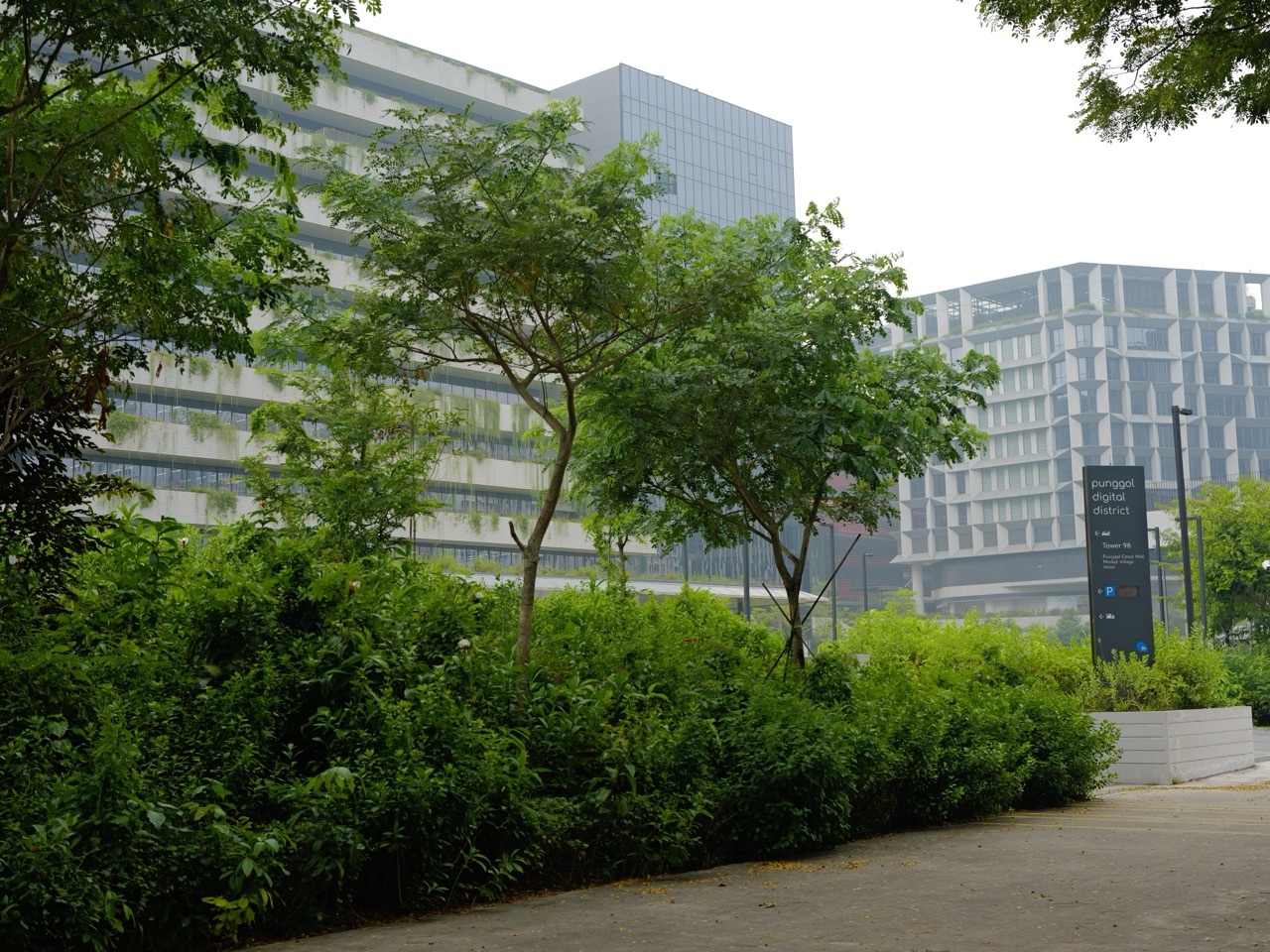
Punggol Digital District has a specifically announced hospitality development: JTC awarded the Tower 98 hotel and serviced-residence site to Verdant View in March 2026, with Habyt named as operator of a planned 224-key accommodation property. For businesses in Punggol, Sengkang, Seletar and Pasir Ris, the 2027–2037 opportunity is not to assume that all 224 rooms are already occupied or that every local supplier will win a contract. It is to understand the business of accommodation and the services a properly licensed operator may purchase: housekeeping, laundry, building maintenance, secure booking technology, guest transport, food, accessibility, corporate travel administration and visitor experiences. The challenge is to supply a narrow service safely, repeatedly and at a price that survives normal weeks as well as busy ones.
JTC’s 18 March 2026 award announcement describes a hotel and serviced-residence concept intended to support visiting researchers, partners and investors working with Punggol Digital District. The proposed project is associated with a 60-year lease and an operator experienced in flexible living, but its award does not establish that guest rooms are open in November 2026. Singapore’s Hotels Licensing Board separately requires relevant hotel premises to obtain a Certificate of Registration and the hotel keeper to obtain a licence before operating, subject to the applicable conditions. Suppliers should distinguish construction, pre-opening procurement, actual operation and future expansion rather than merge them into one imaginary hotel market.
- Local anchor: Tower 98, Punggol Digital District, with a 224-key hotel and serviced-residence development announced by JTC in March 2026.
- Named awardee and operator: Verdant View and Habyt, according to JTC’s award announcement.
- Potential guests: Visiting researchers, business partners, investors and other lawful accommodation customers; actual future demand remains unverified.
- Supplier roles: Approved housekeeping, laundry, facilities support, technology integration, food service, guest assistance and suitable local experiences.
- Regulatory distinction: Hotel operation requires relevant Hotels Licensing Board approvals; an external service supplier has its own obligations based on its activities.
- Main costs: Rooms and facilities upkeep, labour, utilities, distribution commissions, insurance, technology and quality assurance.
- Performance indicators: Occupancy, room revenue, guest satisfaction, incident handling, service cost and repeat customer relationships.
- 2027–2037: A scenario-planning window, not a guaranteed Tower 98 opening, booking count or supplier revenue.

Why hospitality belongs in the Punggol industrial economy
Most residents think of hotels as places for travellers to sleep. For businesses, a hotel is a complex operating system. Rooms must be cleaned, equipment maintained, reservations administered, guests checked in, premises secured and emergencies managed. A service failure can affect customers immediately and may damage the operator’s reputation. That means one accommodation property can purchase many specialised activities even though guests only see a simple finished experience.
Punggol Digital District adds another layer. A visitor may arrive for a technology project, university collaboration, investment meeting or company visit rather than for conventional sightseeing. Such guests may need reliable internet access, suitable working space, transport information and longer stays. Their needs can differ from a leisure family arriving for a weekend. A supplier should identify the actual guest segment and operator requirements instead of treating the hotel as a general tourist attraction.
What the March 2026 Tower 98 award establishes
JTC’s announcement identifies Verdant View as the successful tenderer for Tower 98’s hotel and serviced-residence development and Habyt as the proposed operator. It states a planned 224 keys, along with opportunities for hospitality innovation and industry training. The announcement is a valuable source because it names a real project and the parties associated with it. It is not evidence that a hospitality supplier has been appointed or that all operating conditions have been finalised.
The founder’s first step is to verify the current project stage. A developer purchasing fit-out services is not the same customer as an operator purchasing daily room cleaning. An owner considering long-term building technology may have different procurement authority from a manager deciding on guest supplies. Without understanding who buys at each stage, a business can waste months approaching the wrong organisation. The project should be followed through official announcements rather than assumed to be open because the calendar has reached 2027.
A hotel key is not a guaranteed guest
The phrase 224-key development describes planned accommodation capacity, not 224 daily purchases. A hotel may have unoccupied rooms, temporarily unavailable inventory, longer-stay guests and variation in occupancy across the year. Commercial results depend on location, demand, product design, price, service and distribution. A founder providing laundry or breakfast must not multiply 224 by an imaginary full-occupancy figure and call it a firm order forecast.
A useful proposal starts with the operator’s actual forecast, when available under a legitimate engagement, and tests several outcomes. How does demand change during university holidays, major business meetings or ordinary weekends? A visiting researcher staying two weeks may generate a different housekeeping and dining pattern from a one-night traveller. Supplier contracts should accommodate genuine variation instead of relying on a single headline room count.
Serviced residences can have different operating needs
A serviced residence often caters to guests who stay for longer periods and may want facilities supporting daily life. An ordinary hotel room may have different turnover and service frequencies. The precise Tower 98 operating mix and contract obligations will depend on the eventual approved design and operator. A business should not assume that every room receives the same daily cleaning or meal service.
For instance, frequent guest turnover creates more room preparation and laundry handling, whereas longer stays may create more periodic maintenance and resident service needs. A supplier should ask how occupancy is structured and what the customer actually requires. An excellent short-stay operation cannot simply be copied into a longer-stay property without considering guest routines, staffing and clear communication.
The Hotels Licensing Board is the correct operational authority
The Hotels Licensing Board’s August 2026 application guidance states that a hotel operator needs a Certificate of Registration for the premises and a Hotel-Keeper’s Licence for the responsible person. Applications use GoBusiness, and supporting documents can include URA permission, building completion or inspection information and relevant fire safety documentation. A pre-opening inspection checks conditions such as guest registration, reception, signage and security systems.
A company thinking about managing accommodation needs to understand these obligations rather than advertise a property as open before approval. Service suppliers should also identify their own legal requirements. A cleaning contractor and an operator are not automatically subject to identical licences. A food business inside a property may need SFA approval. A transport service must follow the rules for its actual activity. Hotel licensing is only one layer of the overall operating framework.
Accommodation must not be confused with unlicensed short-term letting
An entrepreneur may see a future hotel and assume nearby residential units can be offered as equivalent short stays. Singapore has land-use and accommodation rules that restrict how residential properties can be used. A normal HDB flat or private residential unit cannot automatically be marketed as a hotel room. The exact permissible use depends on the property and applicable URA, HDB and hotel legislation.
This is important for readers searching “Punggol hotel business” because a quick online rental listing may appear to offer low startup cost. The responsible first step is to check legal use and licensing before taking bookings. Commercial opportunity does not justify creating an illegal accommodation operation or misleading visitors about the property type. A genuine supplier may instead serve an authorised hotel or serviced residence under a transparent contract.
Corporate visitors form a distinct customer market
Punggol Digital District includes companies, an applied university, industry associations and public-sector participants. Visitors may arrive for technical collaboration, staff training or project meetings. Some may stay longer than a conventional weekend tourist. A supplier supporting these customers should consider practical services: accurate transport instructions, convenient meal options, reliable work areas, equipment support and lawful business-travel administration.
However, proximity to a bank or university does not establish an exclusive accommodation arrangement. A company may book visitors elsewhere in Singapore under existing travel policies. The hotel may compete with other options and the visitor may choose to commute. A business proposal should not claim guaranteed bookings from nearby institutions without a signed agreement. Market research must distinguish potential guests from customers who are actually committed.
Guest journeys begin before arrival
The guest’s experience begins with searching, selecting and booking accommodation. The property must provide accurate information about the room, location, rules, payment and arrival process. A technology supplier may help manage reservations, messaging and channel updates. The product’s value is reducing confusion and maintaining accurate records, not merely producing an elegant interface.
A reservation system needs reliable integration with actual room availability. Overselling inventory can create serious customer problems. Payment information must be protected, cancellations processed according to applicable terms, and contact details used for proper purposes. A supplier that handles these tasks must understand confidentiality and escalation. Technology that fails during a busy arrival period can become more costly than the monthly licence fee saved by buying a cheap system.
Hotel distribution adds commissions and pricing complexity
Accommodation can be sold through direct booking, corporate arrangements and third-party platforms. These channels may have different commissions, cancellation conditions and payment schedules. A room rate displayed to a traveller is not necessarily the net amount the operator retains. A revenue-management supplier should understand the full economics before claiming to improve profitability.
Imagine that a hotel receives S$160 for a room night but pays a meaningful commission through a particular booking channel. Its effective revenue differs from a direct booking at the same listed price, although direct distribution can also involve marketing and technology costs. A good analysis considers the complete acquisition and servicing cost. A dashboard reporting only gross room revenue may mislead the operator.
Understand occupancy, average room rate and RevPAR
Hotel performance is often discussed through occupancy, average room rate and revenue per available room, or RevPAR. Occupancy measures the proportion of available rooms sold during a period. Average room rate relates room revenue to rooms sold. RevPAR compares room revenue with the number of available room nights. Each measure reveals something different, and none alone shows profit.
The Singapore Tourism Board’s published 2025 results reported a nationwide hotel average occupancy rate of 81.9%, average room rate of S$273.56 and RevPAR of S$224.04. These are Singapore-wide historic industry figures, not a forecast for Punggol Tower 98. A founder must not apply them directly to a new property and claim a guaranteed sales level. Local guest mix, product category and operating stage will differ.
A fictional 224-room economics exercise
Suppose a hypothetical 224-key property makes all keys available and achieves 65% occupancy over a thirty-day month, with an average realised room rate of S$170. It would sell approximately 4,368 room nights and generate about S$742,560 in gross room revenue before adjustments. This is a teaching exercise, not a prediction or actual Tower 98 pricing. The numbers change dramatically if occupancy, availability or average rate changes.
The property must then fund wages, cleaning, utilities, distribution, maintenance, systems, insurance and other expenses. Some costs remain even when rooms are empty. A laundry contractor should not treat the gross room revenue as its own prospective income. Its opportunity depends on the operator’s contracted service, quantities and price. A realistic supplier model begins with the precise activity it may be asked to perform.
Housekeeping is a quality and workforce business
A clean room is expected, but the work behind that standard is detailed. Staff need training, suitable products, safety procedures and a way to report damage, maintenance issues or lost property. The operator must decide the cleaning standard for different room types and stay patterns. A contractor may be assessed through room readiness, inspection outcomes and reliable staffing rather than simply how many rooms employees can rush through.
Housekeeping is vulnerable to underpricing. A low quotation can become uneconomic when the contract requires more frequent cleaning, higher staffing or complex handovers. The supplier should calculate labour hours per room type, travel within the property, linen handling and supervisor time. Staff safety and dignity matter. A business that achieves low costs only by creating unsustainable workloads may struggle with turnover and quality.
Laundry and linen management have hidden logistics
A hospitality property needs clean and suitable linen available when guests arrive. Laundry suppliers must handle collection, processing, quality checks and timely delivery, potentially under large daily volume swings. The operator needs a dependable stock level so a delayed laundry vehicle does not make rooms unavailable. This creates an opportunity for specialised textile services and inventory systems.
The business should define quality standards and responsibility for damaged or missing items. A contractor may need contingency capacity during peaks. It also needs to consider the full cost of water, energy, transport and replacement. A low price per item is not good value if the service frequently causes delays or poor guest experiences. Performance contracts should make the acceptable standard measurable.
Maintenance and room availability are financially linked
An accommodation room cannot generate the same revenue when an essential service is unavailable. Air conditioning, plumbing, locks, lighting, internet connectivity and furniture all need maintenance. A facilities supplier should understand the operator’s priorities and the consequences of delay. A technician arriving quickly is valuable only if the problem is handled safely and correctly.
Some work requires qualified or licensed professionals. A small general handyman business should not claim competence in every electrical, fire-safety or building system. The contract should identify approved scopes and appropriate escalation. Good maintenance documentation can help spot recurring faults and plan replacements before they disrupt stays. The supplier’s value lies in dependable performance, not an unrealistic claim that nothing will ever break.
Hotels need security without making guests feel watched
Hospitality operators need appropriate access controls, incident procedures and privacy protection. The Hotels Licensing Board’s application guidance includes requirements concerning electronic video surveillance in specified areas. That does not justify intrusive surveillance inside private guest spaces or unlimited access to recordings. Operators must follow applicable law and conditions and protect information appropriately.
A technology supplier providing access systems or monitoring should define who can see data, when access is authorised and how incidents are reviewed. Systems must be reliable even during network outages. A hotel should have suitable procedures for lost keys, suspicious activity and emergency access. The business objective is a safe, welcoming environment, not the greatest possible volume of collected personal information.
Guest data protection is a commercial obligation
Booking records can contain names, contact details, travel information and payment-related data. A hotel or its vendor should collect and use information for lawful purposes and protect it under applicable Singapore requirements. Suppliers must not sell guest contact lists or copy records into unapproved systems. A hospitality business can damage trust quickly through careless handling of information.
A software vendor should explain where data is stored, who can access it, how long it is retained and what happens when the contract ends. The product should also support correction of inaccurate information and reliable incident response. Guest privacy is part of service quality; it should be designed into systems before a property opens rather than handled only after a complaint.
Food and beverage services may be outsourced or internal
A hotel might operate a restaurant, provide breakfast, offer limited refreshments or arrange food through partners. The actual Tower 98 model should be verified rather than invented. A food supplier needs to understand whether it is selling directly to hotel guests or under a contract with the property. The two arrangements involve different pricing, quality control and operational responsibilities.
Relevant food businesses must follow Singapore Food Agency requirements for their actual activity. A central kitchen supplying prepared food to another operator needs to understand food-processing rules, while a retail outlet may require different approvals. Quality, hygiene and delivery windows matter particularly when guest expectations are time-sensitive. A new food supplier should never assume a hotel opening automatically creates a contract for its menu.
Visitor transport is useful only when reliably arranged
A guest visiting Punggol may use MRT, buses, licensed point-to-point transport or other lawful services. An accommodation provider can add value through accurate directions and appropriately arranged transfers. But this does not mean a hotel or supplier can operate an unlicensed transport business without checking the applicable rules. Vehicle access, parking and passenger safety must be considered.
A local transport company should evaluate demand by time period and guest segment. Someone arriving with heavy luggage has different needs from a university visitor making a short trip to the next building. A shuttle that runs nearly empty all day may not be economical. A booking or concierge partnership may be a better solution. The business model should match real journeys, not the assumption that every guest wants a dedicated vehicle.
Accessible hospitality is both an obligation and a service advantage
Visitors may have different mobility, vision, hearing or cognitive needs. Accommodation providers should follow relevant building and accessibility requirements, while making information and assistance understandable. A booking page that fails to explain accessible facilities can create disappointment even when the physical building is well designed. Suppliers of signage, software, furniture or guest services need to work with the actual operator’s accessibility policies.
A responsible vendor should test its product with suitable users and avoid blanket claims that every room or journey is accessible. Staff should know the correct process for offering assistance. A service that respects different needs can improve guest experience without using disability as a marketing prop. Accurate, specific information is more valuable than a vague promise of universal convenience.
Technology pilots require consent and limits
JTC’s Tower 98 announcement refers to hospitality technology testbedding and partnerships. That can be interesting for companies developing smart-building or guest-service tools, but it is not automatic permission to experiment on guests. A proposal must define what technology is being tested, which information is collected and what safeguards protect users. The operator and relevant partners must approve the project.
A small test might involve a synthetic-data reservation workflow or an authorised energy reporting system. It should have clear measurements and a stopping rule. If a product adds work for hotel staff or makes guest experiences worse, the team should report the result rather than call the trial successful simply because it was deployed. Responsible innovation improves operations without treating paying guests as unwilling research subjects.
A local business should not assume the hotel buys only locally
Accommodation operators may use established national supply contracts for furniture, toiletries, food, laundry, maintenance or software. A Punggol business might have a proximity advantage for certain urgent services, but it should not expect preference solely because it is nearby. The actual buyer may be the developer, operator, owner or a separate facilities contractor.
A small supplier should prepare a precise capability statement with real references, service standards and insurance information. It should identify which stage of the project needs the product. The right entry point may be pre-opening fit-out, operational maintenance or a niche guest service. Being clear about the contract stage saves the founder from pursuing opportunities that have already been assigned.
Pre-opening procurement is different from recurring operations
Before a hotel opens, procurement may involve furniture, fixtures, rooms technology, signage, equipment, software and training. Once operating, recurring services may involve housekeeping, laundry, maintenance, food and customer support. A construction subcontractor may have no role in everyday guest services. Similarly, a cleaning provider may not have a path to sell to the developer’s technical design team.
A business plan should map these stages rather than write “hotel supplier” as one broad opportunity. Some orders will be one-off; others can repeat for years. One-off contracts may require significant working capital, while recurring contracts require dependable staffing and contingency planning. A vendor should choose the model it can actually finance and deliver.
A fictional housekeeping service contract
Imagine a small local company offered a monthly housekeeping contract. It must estimate staff hours, daily room preparation, supervisor checks, equipment, consumables, leave coverage and the effect of changing occupancy. If the operator requests more frequent cleaning or an additional service, the supplier should know how the contract can be adjusted.
The business might charge S$35,000 per month, with illustrative allocated costs of S$27,000 for labour, S$2,500 for consumables and S$2,000 for supervision and administration. That leaves S$3,500 before other overhead and risk. These figures are invented for teaching, not a published Punggol service tender. A single staff shortage or unexpected scope change could remove the margin. Financial honesty makes the service more sustainable.
A fictional guest-tech supplier
A software startup wants to offer a simple digital guide to nearby business and leisure amenities. It develops a prototype using current, publicly verifiable information rather than scraping private guest records. The operator can review descriptions and choose whether to integrate with booking or concierge systems. The company measures whether guests can find useful information without calling the front desk repeatedly.
The technology must be easy to maintain. An out-of-date bus timetable or incorrect restaurant location can damage usefulness. The vendor should allow staff to correct information and clearly distinguish confirmed details from suggestions. A small practical tool can be valuable without pretending to manage the entire property.
A fictional linen supplier
A laundry company hopes to win an accommodation contract. It first understands linen volumes by room category, delivery frequency, acceptance standards and the operator’s contingency expectations. It calculates energy, water, labour, transport and replacement costs. It then prices a service it can reliably maintain rather than a one-off promotional discount.
The buyer may require a trial or evidence of work for similar properties. The supplier should show actual processes and honest capacity. If the volume exceeds its facilities, it should consider a legitimate partnership or decline rather than promise an impossible turnaround. A dependable smaller supplier can build a reputation through quality and transparent communication.
Small meetings and visitor experiences can form another market
Guests coming for research or business may need meeting support, local information or carefully organised experiences after work. A local operator might provide a permitted guided activity, technical meeting services or accessible transport coordination. But the business must identify who pays and whether any permits, insurance or professional qualifications apply. A tourist experience is not automatically suitable for every business traveller.
The supplier should test demand with actual buyers rather than assume all visitors want the same sightseeing route. Some guests may prefer a quiet evening, convenient dining or a short walk. A business that understands time constraints and offers accurate, honest options may serve the market better than an elaborate package that nobody needs. Where activities occur on public waterfronts or protected areas, follow the relevant rules.
Staff training affects both guest experience and profitability
Hospitality requires people who can communicate clearly, handle complaints and respond to unexpected situations. Training should cover real roles rather than generic slogans about excellent service. A front-desk employee needs different skills from a technician or laundry supervisor. The operator and suppliers should define who trains staff and how standards are maintained when people change jobs.
A service provider must budget for training and supervision. A company that continually uses unfamiliar casual staff may struggle with consistency. Proper shift planning, workplace safety and staff development support long-term reliability. Growth in room count or hotel demand is not useful if the organisation cannot maintain service quality.
The sustainability claim needs measured evidence
Accommodation consumes electricity, water, linens, consumables and food. Vendors may offer systems to reduce resource use, but environmental claims should be supported by appropriate comparisons. A water-saving fitting is useful only when it works safely and provides acceptable performance. A laundry schedule that reduces energy but leaves guests without clean linen may not be a successful service.
An operator can compare resource consumption under similar occupancy and operating conditions. Suppliers should describe the measurement boundary, costs and trade-offs. A project may have environmental value even when the immediate financial payback is long, but the business case should be transparent. Copying sustainability claims from the district’s overall design does not prove a particular vendor’s effect.
Why nationwide hotel statistics can mislead a local founder
Singapore’s tourism industry can perform strongly overall while individual locations and accommodation categories have very different demand. STB’s national 2025 occupancy and room-rate figures are useful as historical context, but they do not predict Tower 98 performance. A founder considering a supply contract should not multiply the national average by the planned number of rooms and assume the result will become its customer’s purchasing budget.
Instead, the supplier should ask for a legitimate demand forecast or build conservative scenarios based on the service actually sold. Some costs rise with occupied rooms; others remain almost fixed. The company also needs to know whether operating contracts are national or property-specific. Better assumptions produce better decisions, even if the numbers appear less exciting.
2027–2029: verify readiness and win narrowly scoped work
The first part of the planning horizon may include completion, licensing, opening and stabilisation of the announced development, subject to official progress and approvals. A supplier should check current status rather than assume a particular opening day. If the operator is not yet taking bookings, the supplier cannot treat future guests as actual current revenue. Pre-opening and steady-state procurement should be analysed separately.
A small firm can use this period to strengthen existing business relationships, build a credible service record and contact appropriate decision makers through legitimate channels. It should not buy expensive equipment solely on the expectation of one future hospitality contract. The first goal is an offer that remains viable even if the accommodation project or purchasing decision takes longer than hoped.
2030–2033: focus on service consistency and customer retention
If the property is operating and the market supports stable demand, suppliers may be able to develop repeatable service relationships. The opportunity still depends on actual purchasing decisions. A company should learn from room-turnover patterns, maintenance incidents or guest-service data shared under a legitimate contract. It should refine staffing and cost instead of assuming more guests automatically produce better margins.
Expansion to other hotels or serviced residences elsewhere in Singapore may be more realistic than waiting for a second property in Punggol. A strong supplier can transfer documented quality methods while adapting to each customer’s requirements. The 2030–2033 years are internal planning checkpoints, not a published JTC procurement timetable.
2034–2037: keep the business useful when guest habits change
Over a decade, booking platforms, technology, business travel patterns and customer expectations may change. A supplier heavily dependent on one hotel, software vendor or distribution platform could face significant risk. It should keep records portable, maintain staff skills and diversify cautiously where the service remains strong. A contract renewal should reflect current costs and performance rather than an outdated opening-year business case.
The long-term value is dependable quality, ethical data handling and the ability to solve real operational problems. No founder can guarantee the occupancy or exact room configuration of a property in 2037. A hospitality business survives by meeting guests’ needs and adjusting honestly to change.
Checklist before pitching a Punggol hotel supplier contract
- Is the project proposed, under development, licensed or actually operating?
- Who is the buyer: developer, owner, hotel operator or existing contractor?
- What precise product or service is being purchased?
- Do the hotel’s and supplier’s activities require different licences or permissions?
- Are guest numbers, room turnover and service frequencies confirmed or assumed?
- What training, safety and confidentiality controls are needed?
- How will the service handle peak periods, complaints and staff shortages?
- Are response times and warranties realistic?
- Who owns guest data and what may the supplier access?
- Does the quoted price include labour, transport, equipment and supervision?
- What happens when rooms are temporarily unavailable or occupancy falls?
- Is the supplier relying too heavily on one future customer?
- What happens at contract renewal or termination?
- How will performance be measured without confusing gross revenue with profit?
These questions are practical rather than pessimistic. A hotel may be a promising customer, but it needs reliable partners. A small company that makes a precise promise and keeps it has a stronger commercial foundation than one advertising a long list of services without the staff or systems to deliver them.
Frequently asked questions
Has Tower 98’s 224-key development been officially announced?
Yes. JTC awarded the Punggol Digital District hotel and serviced-residence site to Verdant View in March 2026 and named Habyt as operator of a planned 224-key property. That award is not evidence that the property is already operating.
Can any person open a hotel in a Punggol residential flat?
No general permission should be assumed. Hotel and accommodation activities must comply with the applicable Hotels Act, land-use and other regulatory requirements. Ordinary residential property cannot simply be relabelled as a lawful hotel.
Does the hotel need a hotel-keeper’s licence?
The Hotels Licensing Board states that relevant hotel operations require a Certificate of Registration and a Hotel-Keeper’s Licence before commencement, subject to the applicable criteria and inspection requirements.
Is every visitor to Punggol Digital District a potential paying hotel guest?
No. People may commute, stay with relatives or use other accommodation. The property must compete for actual demand. A supplier should use genuine contracts and evidence rather than assume every employee or student requires a room.
Does a 224-key plan guarantee 224 rooms occupied every night?
No. Keys describe planned accommodation capacity, not occupancy or bookings. Financial performance depends on availability, demand, prices, operating costs and the guest mix.
Will Punggol hotel suppliers automatically profit through 2037?
No. Contracts, service quality, competition, staffing and procurement decisions determine results. The date range is a planning horizon rather than a guaranteed market.
Your Next Step: prepare one practical hotel-service proposal
Choose a service the business can genuinely perform, such as approved room cleaning, laundry, visitor information or a properly scoped technology product. Identify who would purchase it and what stage the Tower 98 project has reached. Build a conservative proposal using real operating requirements, appropriate licences and full cost rather than projected occupancy alone. Test the service with suitable customers where possible and preserve financial flexibility if a procurement decision is delayed.
Official sources and further reading: JTC’s Tower 98 award announcement, 18 March 2026, Hotels Licensing Board’s application requirements, Hotels Licensing Board’s licence renewal requirements, Singapore Hotels Act, JTC’s Punggol Digital District overview and Singapore Tourism Board’s 2025 hotel statistics. Consult current official and commercial information before relying on an opening date or contract.


