
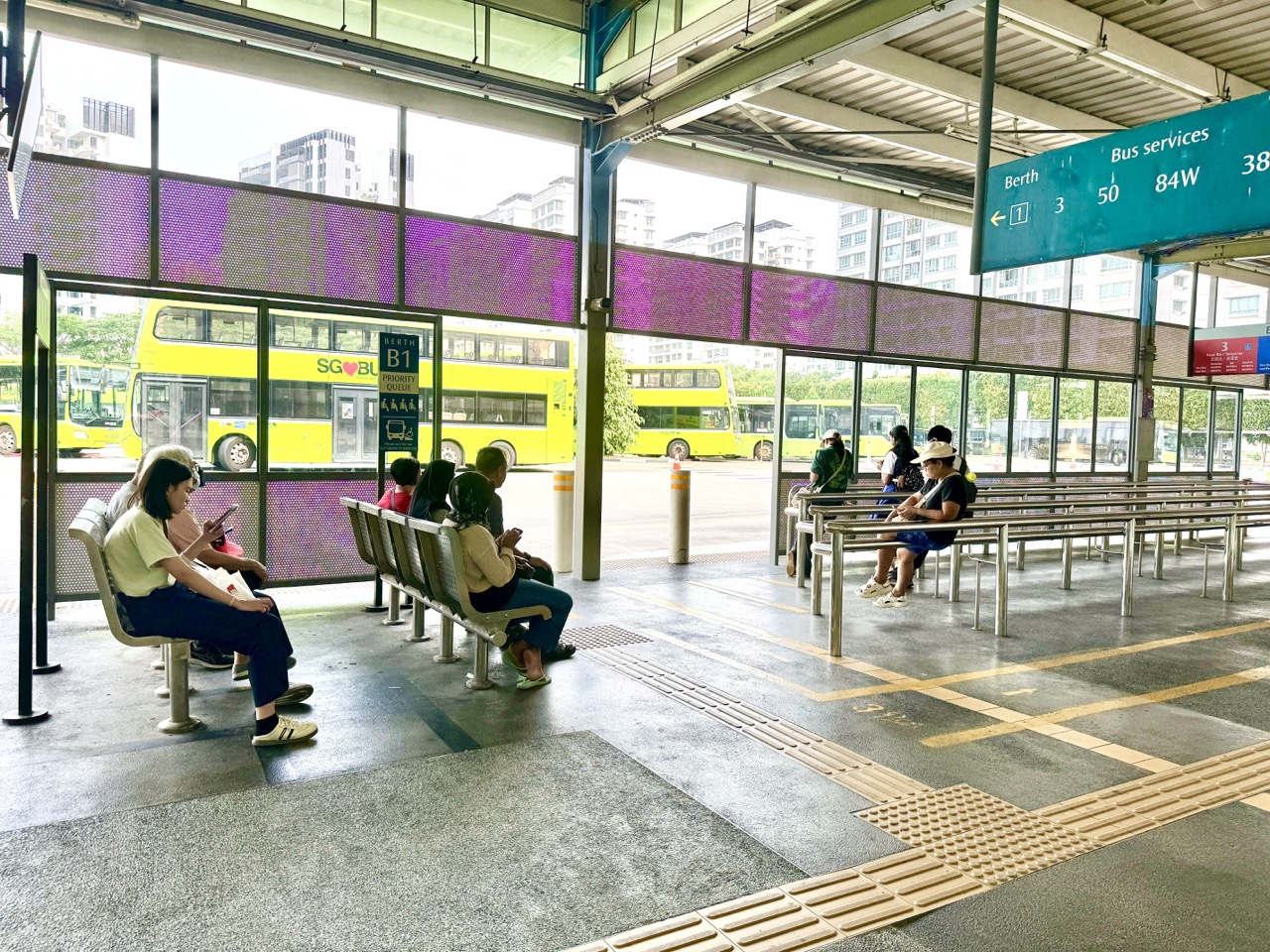
Quick answer: If you want the right bus in Punggol, verify three separate things: the physical bus stop code, the bus service and its direction, and the latest available estimated arrival. LTA’s Bus Stops dataset gives a unique five-digit identifier for a physical stop, while its Bus Routes dataset shows where each service actually goes. Live bus arrival predictions are estimates generated from onboard transmissions, not guaranteed departure times. Use the stop code rather than a vague landmark name, check the route before boarding and keep a sensible fallback if an electronic display is missing or inaccurate.

A parent standing beside the road may see two bus stops with nearly identical names, one on either side. A map app may show the same bus service number at both. A digital board might predict a bus in five minutes, but the vehicle is delayed. None of these situations is mysterious once the different information systems are understood: stop identity, route direction and arrival prediction answer three different questions.
This guide concentrates on how bus stop codes, route panels, digital passenger information and MyTransport.SG work. It is not a list of every current Punggol bus route, timetable or interchange berth. Existing eduKatePunggol articles already cover local bus-interchange photography and transport changes. Here the objective is a reusable method that prevents families from walking to the wrong side of the road or trusting an estimate as a promise.
Three checks before leaving the bus stop
| Check | Answers | Does not answer |
|---|---|---|
| Five-digit bus stop code | Which physical stop you are at | Whether your preferred service is arriving immediately |
| Service number and route direction | Where the bus is travelling | Exact next arrival time |
| Estimated arrival display | Predicted time using recent system data | A guaranteed pickup |
| Onboard destination and next-stop information | Where this particular bus is headed | A promise that every interchange transfer will be instant |
| Service notice or planned route update | Whether a known route change applies | That an older saved map remains correct |
1. A bus stop code identifies a place, not a whole neighbourhood
LTA’s public data describes each bus stop using a unique five-digit code, its road name, a description and geographical coordinates. The number identifies a particular physical boarding location. The description may reference a nearby block, institution or landmark to help commuters find it. It does not mean every stop with the same general neighbourhood name is interchangeable.
Two stops opposite the same road can have different codes because buses travelling in opposite directions usually serve different sides. A traveller searching only for ‘Punggol’ or a shopping centre name can easily pick a result on the wrong side. Entering the code in a route planner helps resolve that ambiguity.
Stop codes are especially useful for family coordination. Rather than saying ‘wait at the bus stop near the big building’, send the actual code and road or landmark description. This is more precise than a photograph of an old shelter that might have changed after works.
Punggol example
A child is meeting a grandparent at a bus stop near Punggol Central. The parent sends the code on the pole and a nearby landmark, rather than assuming the grandparent knows which side of the road to wait on.
2. Why stop names can be similar
Stop descriptions are intended for wayfinding and may use opposite, before, after or a nearby building or block number. Such names are useful but are not always unique enough for a hurried commuter. A bus stop by a school and the stop directly opposite it may be described using the same institution with a different directional cue.
The road name and unique code give a more stable way to distinguish the physical locations. A stop description can also be updated as surrounding developments change. That does not mean the underlying location instantly moves, nor does it guarantee every map application reflects the change at the same moment.
Read the stop pole and route panel instead of relying exclusively on a familiar phrase. If an article lists a landmark-based stop name, it should include the specific stop code when available and verify the information with LTA before promising a route.
Punggol example
A visitor sees two results involving a Punggol school. They check which five-digit code is shown on the pole before boarding, instead of inferring the correct direction from the school name alone.
3. The route direction is a separate fact
A bus service may run outbound and inbound trips, circular routes or variations that share a service number but differ in the sequence of stops. The number alone therefore does not always tell the entire story. LTA’s Bus Routes data identifies the ordered stops on service directions, while information on bus panels and onboard systems helps commuters recognise destinations.
A student who needs to reach a particular institution should check the service’s direction and whether the institution appears later on that journey. Boarding at a stop on the opposite side of the road may take the traveller away from the intended place even if the bus number looks familiar.
For circular services, do not invent a second opposite direction simply because other routes have one. Some services are designated loops or have special variants. Check current operator and LTA route information before assuming a route pattern.
Punggol example
A family in Punggol sees the desired bus number on both sides of a street. They compare the subsequent stops and destination display to select the correct one, avoiding an unnecessary ride in the wrong direction.
4. Five digits are not the service number
A common confusion is mixing a five-digit stop identifier with a short bus service number. A bus stop code refers to the place where buses call. A service number refers to the public route operated by the bus. The two numbers describe completely different objects.
The stop remains identifiable even if the services calling there change over time, while a service can pass many different bus stops. LTA’s separate datasets reflect this distinction: Bus Stops holds location information; Bus Routes links services and stop sequences. Together they provide the foundation for a useful public journey planner.
Parents can teach children to look for both numbers without memorising the entire bus network. Once a child knows ‘where am I?’ and ‘which service am I waiting for?’, it becomes easier to ask the next question about direction or timing.
Punggol example
A Primary pupil writes the correct stop code on a travel plan and the desired bus service number beside it. Keeping the two columns distinct prevents a surprisingly common planning mistake.
5. A digital arrival time is a prediction
LTA’s bus ETA system receives information relayed by equipment onboard public buses and processes that data to estimate when vehicles will reach specific stops. These estimates appear on selected electronic bus-stop displays, interchange displays, the MyTransport.SG app and third-party applications that use LTA DataMall.
A prediction depends on the quality and recency of the data and on conditions that change after the calculation. Road congestion, dwell times, disruptions and transmission failures can make the displayed value differ from reality. This is true even if the underlying bus service is operating normally.
The correct language is ‘expected in about five minutes’ rather than ‘guaranteed to arrive in five minutes’. For an important appointment, build slack into the journey and confirm alternatives instead of treating one screen value as a contractual deadline.
Punggol example
A bus stop screen in Punggol shows a seven-minute arrival estimate. The family regards it as a useful planning indication but does not leave a young child unattended or schedule a tight transfer on that figure alone.
6. Why January 2026 was an instructive bus-data incident
On 21 January 2026, LTA publicly reported inaccuracies affecting bus ETA displays while stating that the buses themselves were continuing to operate. The problem was with the arrival-prediction system, not a universal shutdown of buses. Commuters observed misleading waits and missing timings across multiple information touchpoints.
On 22 January, LTA explained that memory cache buildup in onboard systems of some buses disrupted transmissions to central ETA servers. The authority undertook reconfiguration and device servicing. A later 7 February statement reported restoration of above 90 percent availability and continued stabilisation. The figures refer to the stated dates; they are not a claim about the network’s live performance today.
The incident makes a useful distinction for every Punggol commuter: a live bus can be running even when the prediction feed is incomplete. If a display appears unreliable, check current service notices and use route/frequency information or assistance rather than assuming no bus will ever arrive.
Punggol example
A parent remembers the January incident when a Punggol display shows an unexpectedly long wait. The parent checks for current service alerts and other evidence before concluding the service itself has stopped.
7. Information displays exist in different formats
LTA’s Passenger Information Display System, or PIDS, appears at selected bus stops and on equipped buses. An electronic panel can show approaching services, nearby destinations, service-specific arrivals and travel advisories. The set of features depends on the installed version and location.
Older static route panels remain useful because they provide an overview of the services calling at that location even when a digital ETA feed is missing. The new PIDS installations introduced from 2021 included visual information such as incoming buses and route messages. LTA’s 2024 reply explained that the rollout was continuing.
Do not assume every stop in Punggol has a large digital panel or that a display installed at an interchange is identical to one at a neighbourhood pole. Use the physical information actually provided, and fall back to an official app or a route map where needed.
Punggol example
At a small Punggol shelter without an electronic arrival panel, the commuter reads the route board and checks MyTransport.SG instead of claiming that the stop has no useful information.
8. An arrival display is not a map of the full journey
A bus arriving soon is not necessarily the most useful service to board. It might head in the wrong direction or take a much longer route to the destination. LTA’s PIDS features distinguish incoming buses from ‘quickest way to’ and route-specific information where installed. The distinction is important because speed of arrival and suitability of the overall journey are separate.
A family should begin with the destination and route direction, then evaluate the waiting time. If several services lead to the destination, compare estimated arrival and potential transfers. But if a service terminates before the destination, a short waiting time cannot make it the right one.
A good travel decision asks: Which bus reaches the correct stop? In which direction? At what expected time? Where will I alight? The answers belong together, and one number on a display is insufficient.
Punggol example
A traveller sees a bus arriving in two minutes, but a second bus in eight minutes offers a more direct route. The family chooses based on the complete journey, not simply the lowest number on the display.
9. A destination board can differ from a route description
Bus destination signs identify where the particular trip is headed, while route panels provide an ordered journey picture. A service may have special suffixes, variations or circular arrangements. These nuances can matter if a person boards based only on a familiar service number.
LTA’s 2024 reply notes that onboard PIDS features on new buses include the service number, destination, upcoming stops and audio announcements. The information helps commuters confirm that they are on the intended journey, especially when they do not recognise the surrounding roads.
Always check the displayed destination or relevant route if the bus is unfamiliar. If necessary, ask the bus captain a short question before moving further inside. It is easier to avoid a wrong-direction journey before boarding than to discover it several stops later.
Punggol example
A student boards at Punggol Coast and notices a destination that does not match the school route. The student checks before committing rather than assuming all buses of a similar colour serve the same area.
10. The service may have changed since a saved screenshot
Punggol is still gaining transport and employment destinations, and LTA periodically introduces or extends services to meet demand. In September 2026, LTA announced that Service 381 had been extended from Punggol East to Punggol Coast from 13 September. This is a dated example of an actual route enhancement, not a complete list of current Punggol services.
A screenshot saved before a route extension may omit newly served stops. Conversely, a proposed route map may show an upcoming change that has not yet begun. Check the effective date on an official announcement before describing a service as currently running.
Families can avoid confusion by treating route data as maintainable information. Keep links to the current official route finder and update important home-to-school plans when service notices change.
Punggol example
A family uses an old map to travel to the coast and finds it no longer reflects the service’s route. The updated LTA announcement resolves the discrepancy.
11. Bus frequency is not the same as ETA
Frequency describes how often buses are scheduled or generally dispatched over a time period. The ETA is a prediction of a particular approaching bus at a particular stop. A service can have a nominal peak-hour frequency but show a longer individual gap after congestion or bunching. Conversely, a very short next ETA may not describe the typical interval for that route.
LTA DataMall separates bus services and route information, including operating frequency information, from the real-time arrival dataset. This helps explain why the two numbers should not be interpreted as contradictions every time they differ.
For journey planning, frequency gives a broad expectation and ETA helps with an immediate decision. Neither removes the need to confirm last-bus times when travelling late. Operating hours vary by service and should be checked for the actual direction and stop.
Punggol example
A student sees that a route normally runs every ten to fifteen minutes but the next bus is predicted in twenty. The family understands this can occur without the published frequency being a precise clockwork promise.
12. The correct alighting stop matters as much as boarding
A traveller can board the right bus and still miss the destination by alighting too early or too late. Onboard next-stop displays and announcements can help, but a family should also learn the named stop and nearest appropriate pedestrian route before departure. A bus stop close in straight-line distance may be separated by a major road or a difficult crossing.
Look for the destination landmark and check the stop name or code on a journey planner. When travelling with children or older adults, the route from the alighting stop to the actual building entrance deserves attention. A steep ramp, construction diversion or unsheltered walkway may affect which stop is most practical.
If uncertain, ask for assistance before reaching the final seconds of a stop. Do not rush into the aisle or attempt to force a door open after a bus has begun moving.
Punggol example
A parent chooses an alighting stop for a Punggol appointment based on the step-free approach, not just on which bus stop appears nearest to the venue pin.
13. Bus stop codes work well for family meeting instructions
Place names can be ambiguous in a large town with repeated ‘Punggol’ road and facility names. A five-digit stop code is much more precise for arranging where a child or visiting relative should wait. Send the road name as well because a code alone may not be easy for someone to recognise from memory.
Meetup plans should also include an accessible nearby landmark and the side of the road where applicable. If the person will arrive by LRT, identify which exit and which crossing to use. A child should not be asked to cross a busy road independently merely because the parent sent a bus stop number.
Do not publish a minor’s live whereabouts broadly when coordinating a pickup. Share specific travel instructions with the intended family members, and keep a fallback plan if the bus is delayed.
Punggol example
A grandparent coming to Punggol for a school event receives a code, an actual stop description and an agreed safe meeting point, making the plan less dependent on vague familiarity with the town.
14. A stop may be temporarily relocated during works
Roadworks or traffic changes can require temporary bus-stop relocation. Current signs and service announcements should take priority over an old photograph or a saved map. A physically familiar shelter may be bypassed while passengers are directed to a nearby temporary stop.
The route may still serve the neighbourhood but through a different boarding location. Do not assume a missing ETA means a service has been removed without checking for diversion notices. Likewise, a stop code or description on a temporary notice should be read carefully to confirm where boarding now occurs.
During a diversion, remain on designated pedestrian paths. Do not walk behind barricades or across vehicle turning areas to reach the former stop. A correct transport plan is also a safe access plan.
Punggol example
A Punggol shelter is cordoned off for works, and a temporary sign points farther along the street. The family follows the notice rather than waiting at the closed shelter because an old app screenshot still shows it.
15. Interchange boarding berths are different from roadside stops
An interchange may have multiple berths, alighting areas and passenger holding spaces. The overall interchange has a name, but individual services may use specific platforms or queues. A commuter should check the actual interchange signage and current operator information rather than assuming the service boards at the same place as last year.
Local facilities can be renovated or reconfigured as passenger demand changes. Punggol has had ongoing transport-hub developments, so a dated picture of a temporary arrangement may not show the current access layout. Avoid writing undated instructions such as ‘always board at this bay’ without verifying the present operator map.
The five-digit stop code is useful for location identification, while berth information supports the immediate physical boarding process at a large terminal. The two may complement one another but are not interchangeable concepts.
Punggol example
A family arrives at Punggol bus interchange and checks the service’s current boarding queue rather than heading automatically to the berth used on an earlier visit.
16. Live app information may share the same upstream source
LTA makes bus arrivals available through its DataMall and MyTransport.SG channels, and third-party applications can use the same official data feed. This means two apps showing the same surprising ETA may not be independent confirmation. They may simply be displaying predictions from a common upstream system.
The January 2026 incident illustrates why this matters. An onboard transmission problem could affect several commuter-facing platforms simultaneously while the buses were still operating. Comparing a second app may be helpful for route layout or interface usability, but matching estimates do not always mean the predictions are independently verified.
Use a mix of evidence when something appears wrong: service notices, the actual approaching bus, route and frequency information, and an operator’s advice. Do not rely on a single shared-feed number for a high-stakes transfer.
Punggol example
Two phone apps show the same long wait near Punggol MRT. The commuter understands both might use LTA’s ETA data, and checks official service advisories before assuming the next bus has been cancelled.
17. Capacity icons and arrival time answer different questions
LTA’s Bus Arrival dataset provides real-time ETA information together with fields relating to load and other characteristics where available. A load indicator helps estimate how crowded a particular approaching bus might be. It is not a guarantee that every commuter will obtain a seat or be able to board with bulky belongings.
Occupancy can change at earlier stops before the bus reaches you. A prediction that the bus is not crowded can become outdated as passengers board elsewhere. A traveller with a stroller or mobility aid should make allowance for the actual space and the bus captain’s instructions on arrival.
The arrival time tells you when a bus is expected; a load indicator provides a different, less certain piece of information about space. Treat the combination as planning guidance rather than as a reservation of a seat.
Punggol example
An older resident sees an approaching bus with an apparently favourable load indication. They still assess the actual doorway and available seat space before boarding.
18. Last-bus planning is different from everyday waiting
At night, missing the final bus can create a much larger inconvenience than waiting a few extra minutes in the afternoon. LTA’s Bus Routes dataset includes first and last bus times for route directions and stops, but live operating notices or special-day changes may affect journeys. A late trip needs both schedule information and present conditions.
Check the last service for the actual stop and direction, not merely the terminal departure at a different end of the route. A trip through an interchange also needs transfer time, including the walk from an LRT platform to a bus boarding berth. A predicted bus in the app does not remove these physical steps.
When travelling with children late in the day, identify an authorised alternative before the journey becomes urgent. Do not stand indefinitely at a dark isolated stop because an outdated display promises a bus that may not be coming.
Punggol example
A family returning to Punggol after an evening event checks the actual final service and transfer timing before leaving, rather than relying on an undated transport screenshot.
19. Reading the onboard display helps prevent missed stops
Selected newer buses have onboard Passenger Information Display Systems with the service number, upcoming stops and audio announcements. These can support people unfamiliar with the route, including children, tourists and older residents. However, the display is an aid rather than the only way to know where a bus is travelling.
A passenger who sees a confusing or missing display can refer to a route map or ask for assistance. Do not rely on the bus’s colour or the familiarity of the seat layout to identify the route. Most buses share visual features even when they serve quite different destinations.
Parents can teach children how to recognise their alighting stop ahead of time, identify a visible nearby landmark and approach the exit safely before the bus stops. Panic at the last moment can create a greater hazard than riding one stop too far and re-planning.
Punggol example
A child learning the journey from a Punggol school uses the next-stop announcement as confirmation, while knowing the destination’s stop name before boarding.
20. A wrong bus can often be corrected calmly
Taking a service in the wrong direction is frustrating but seldom improved by rushing. Ask the bus captain for appropriate advice or use a journey planner to identify a safe subsequent stop and legal crossing. Do not try to alight outside a designated bus stop or instruct a child to dart across a multi-lane road.
After alighting, read the code on the new stop and compare it with the desired boarding side. Some routes form loops, so travelling farther can eventually bring the passenger toward another useful transfer. Do not assume the shortest turnaround point from a map without checking the actual bus pattern and safe access.
Children benefit from knowing whom they can ask for help and how to contact a parent. A mistake should trigger a simple recovery plan, not an impulsive unsafe crossing or a demand that the driver open a door between stops.
Punggol example
A student realises the bus is heading away from the intended Punggol station. They remain seated until a safe designated stop, then use current directions and family contact to resolve the journey.
21. Bus information can be a good data-literacy lesson
The bus-stop code is an identifier, the route panel is a network description, the frequency is a planning statistic and ETA is a changing prediction. These four fields illustrate different kinds of data. An identifier can remain stable while the measured or predicted values associated with it change.
At Secondary level, students can compare predicted and actual arrival times across several journeys and discuss uncertainty, but they should be cautious about drawing large conclusions from a small convenience sample. Time of day, weather, congestion and service demand may differ between observations. A sample from one stop cannot describe every Punggol service.
Use publicly displayed data and ethical observations rather than photographing identifiable passengers or tracking individual bus drivers. A transparent project records the time, stop code, route direction, source and whether the observed value was estimated or actual.
Punggol example
A Mathematics student makes a table with columns for stop code, expected arrival, actual arrival and difference. The work is explicitly a small learning exercise, not an official performance audit.
22. What a good Punggol bus plan looks like
Start with the intended destination. Identify the most suitable stop for boarding and the right direction, then verify the precise five-digit code and any accessibility needs. Use the current route and service information to check whether the bus reaches the chosen alighting stop. Finally, review ETA as an immediate estimate and leave appropriate time for walking and transfers.
If a display fails, distinguish the failure of the prediction from a change in the actual bus operation. Follow current service notices, and avoid assuming an outage or route cancellation from one blank screen. If the boarding location has changed due to construction, follow the current sign rather than a historical photograph.
The result is not a memorised list of bus numbers. It is a decision method that continues working as Punggol’s transport network changes. Good public-transport literacy makes journeys safer and reduces the everyday anxiety of standing at the wrong stop.
Punggol example
Before a family outing, share the boarding stop code, intended service and direction, alighting stop, and a fallback if the ETA proves unreliable.
Four complete family travel examples
Two stops facing the same road
A grandparent arrives at a stop near the family’s Punggol home, but it serves the opposite direction from the planned destination. The parent checks the five-digit stop code and discovers the mismatch. Rather than asking the grandparent to cross wherever convenient, the parent directs them to a safe signalised crossing. They confirm the code and relevant route panel on the other side. The case shows why a landmark alone is insufficient when two stops look similar.
An apparently broken ETA display
A screen shows a very long wait, but the operator has not announced a change and buses are visibly moving. The commuter remembers LTA’s 2026 explanation that ETA transmission can fail independently of service operation. They check the route and current advisories, then decide whether to wait or use a verified alternative. The family does not claim that all Punggol buses are cancelled based on one display. It separates data quality from actual transport.
The child’s first independent school bus
The family practices a route under supervision, recording the boarding code, direction, bus number, and intended alighting stop. They teach the child to recognise onboard announcements and to contact a trusted adult if something seems wrong. They also agree on a safe recovery strategy rather than an unsafe rush across the road. A simple printed card with the essential route information is more dependable than expecting the child to improvise from memory while stressed.
A service extension changes the route map
A household uses an older screenshot of a Punggol bus route and then reads LTA’s September 2026 notice about Service 381’s extension to Punggol Coast. The correct interpretation is that the current route may include stops missing from the old screenshot. The family checks the official effective date and live service data before deciding where to board. An official route change need not be a contradiction between sources; it may simply reflect different publication dates.
Frequently asked questions
1. What is a five-digit bus stop code?
LTA uses it to identify an individual physical bus stop. It is different from the bus service number.
2. Can two nearby stops have similar names?
Yes. Use the unique codes and direction to distinguish them.
3. Why is the ETA different from the actual arrival?
It is a prediction dependent on onboard transmissions, changing traffic and system quality.
4. Does a blank bus arrival display mean buses are cancelled?
No. LTA’s January 2026 incident showed predictions can fail while bus services operate.
5. What was restored by February 2026?
LTA reported more than 90 percent ETA availability by 7 February after its January system incident. That figure is dated, not a live status.
6. Do all Punggol bus stops have PIDS screens?
No. Installation and available display features vary.
7. Can I trust a second app as independent confirmation?
Many third-party apps use the same LTA DataMall arrival feed, so their data may not be independent.
8. What if my bus number operates in two directions?
Check route direction, terminal and the ordered stops before boarding.
9. How can I identify my stop while on the bus?
Use route information, onboard announcements where installed and verified landmark details.
10. What if my desired stop is closed for works?
Follow the current temporary stop and service notices, not an older map.
11. Where do I find last-bus timing?
Use current route and stop-specific official information, allowing time for transfers.
12. What should a parent send a child?
The correct stop code, bus number, direction, alighting stop, a safe route and a family contact plan.
Official information
LTA DataMall — Bus Stops, Bus Routes and Real-Time Bus Arrivals
LTA — Digital Passenger Information Displays at Bus Stops
LTA — Information Panels and Onboard Passenger Displays, April 2024
LTA — January 2026 ETA Transmission Problem
LTA — Root Cause of ETA Incident, January 2026
LTA — Arrival Predictions Returning to Normal, 7 February 2026
LTA — September 2026 Bus Connectivity Enhancements in Punggol
Related eduKatePunggol guides
Punggol Bus Interchange — Photos, Boarding and Safe Transfers
Things to Know About Punggol — Green Man Signals and Crossings
Things to Know About Punggol — Sheltered Walkways, Ramps and Step-Free Routes
Things to Know About Punggol — Service Roads and Safe Drop-Offs
A bus-stop code tells you where you are, a route tells you where a service goes, and an ETA helps estimate when it may arrive. Learn those three layers and you will navigate Punggol’s changing bus network with far more confidence than by memorising a few landmark names.


